
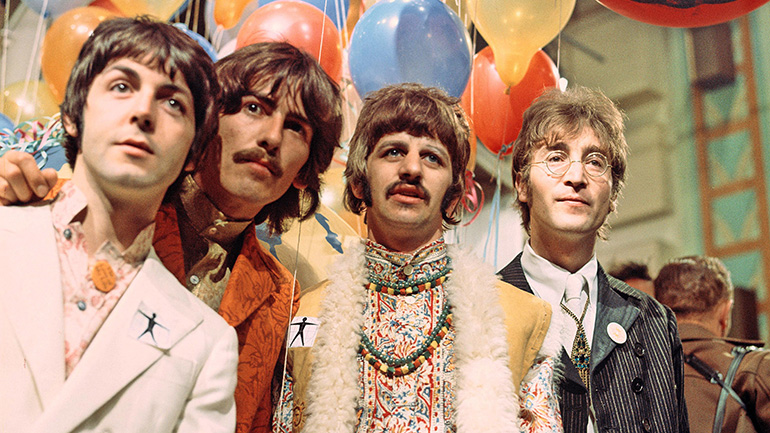
The Beatles are a four-piece rock band representing the 20th century that debuted in the United Kingdom in 1962. Their influence extended not only to their music, but also to their fashion, speech, and thought, creating a social phenomenon. One of the most notable aspects of their music is that their own musical development has directly influenced the musical development of the entire musical world and of their fans, who are their listeners.

Outline of the tracks
Drive My Car
This is Paul's work and the lead vocalist is also Paul. John helped a little with the lyrics.
Paul's lyrics were originally "You can buy me golden rings," but John said that the lyrics were silly, so the two discussed it and decided to use "You can drive my car.
Paul: "It's still a song about a girl with a light ass, but it made the main lyrics a little better."
There is a slight difference in the lyrics that Paul and John sing in the last verse.
Martin: "This wasn't intentional, it just happened. We were all in the heat of the moment and didn't realize it was happening. I found out after the whole thing was over that it wasn't worth going out of my way to bring them back and re-record that part. Life is short."
Paul played the lead guitar in the interlude (George describes it as "covered with Paul"). The riff is borrowed from Otis Redding's "Respect.
George said, "When (Paul) writes a song, he comes to the studio with all his parts memorized. He would come into the studio with all his parts memorized and say, 'Do this. He never gave me time to ask any questions. On "Drive My Car," I just played the riffs. You know, like in Otis Redding's "Respect," I played a riff on the guitar that went "dahn, dahn, dahn, dahn, dahn, dahn, dahn," like a line from that song. I played the riff on guitar, and Paul played the bass in time with mine. That's how we recorded it, and then we put the lead guitar parts together.
Respect/Otis Redding
Recording Details
1965
October 13.
First through fourth takes were recorded.
This was the first recording to be made after midnight.
October 25
Mono mixing is done based on the 4th take.
October 26
Stereo mixing was done based on the 4th take.
Norwegian Wood (This Bird Has Flown)
This is John's work and the lead vocalist is also John. Paul helped a little with the lyrics.
John: "I wrote this one, but Paul helped me with the lyrics. John: "I wrote this one, but Paul helped me with the lyrics. It's about a woman I was dating. I can't remember exactly who it was, but I wanted to put a smoke screen over it and write about an affair in a very elaborate way.
Paul: "In "Norwegian Wood," I was the one who decided to burn the house down. Not that it makes much sense."
Pete Shotton, a friend of John's "He also casually mentions that when he was a poor art school student, he and Stewart Sutcliffe often had furniture in the fireplace in their shared flat."
This is the first time the sitar, an Indian instrument, is used in a song by The Beatles, and George plays it. George first heard this instrument in the movie "Help!" and was completely captivated by it. It was David Crosby, then a member of The Byrds, who introduced George to the music of Ravi Shankar, an Indian musician who later became George's sitar master. It was also John who encouraged George to play the sitar in "Norwegian Wood.
George said, "I took a dirty sitar I bought in London. I played the part on 'Norwegian Wood' on it.
Engineer Norman Smith: "(Recording the sitar) is very difficult because the peaks are all over the place and the waveform is very complex. The meter needle suddenly swung to the red distortion zone, and I couldn't get a decent sound. I could have used a limiter, but then the sound would have lost its resonance.
The Japanese title "Norwegian Woods" is often said to be a mistranslation. This is because the word "woods" is usually pluralized as "woods," not "wood. Some say that "Norwegian furniture" is the correct translation, but this is also incorrect, and according to Paul, "Norwegian timber, pine trees" is the correct translation. According to "The Beatles Remastered CD Guide," Haruki Murakami, who wrote the best-selling novel "Norwegian Wood," was told by a woman who worked in George's office, "At first it was 'Knowing she would,' but the record company complained and changed it to 'Norwegian Haruki Murakami, who wrote the cellar novel, was told by a woman who worked in George's office that "at first it was 'Knowing she would' but the record company complained and changed it to 'Norwegian Wood. Also, Yasushi Furukawa, the governor of Saga Prefecture, has uploaded a text on this subject on his website. The "Guide to All 213 Beatles Songs" by Kunihiko Fujimoto also states, "When I interviewed a Scandinavian band called Pogo Pops in the mid-1990s, I asked them about it, and they said it was a play on words on 'Knowing she would. Surprisingly, that may be correct. The general meaning of "Isn't it good? Knowing she would?" is "Isn't it neat that you know she would let you do it? It is a bit like "Isn't it nice that you know she would let you do it?
It is said that John was influenced by Bob Dylan, who released a song called "4th Time Around" as an answer to this song (on the album "Blonde On Blonde"). John was offended by this, but Dylan has stated that he had no other intention.
4th Time Around/Bod Dylan
Recording Details
1965
October 12
First take recorded.
* ""
October 21
Recorded second through fourth takes.
October 25
Mono mixing is performed based on the 4th take.
October 26
Stereo mixing is performed based on take 4.
You Won't See Me
This is Paul's work and the lead vocalist is also Paul.
Paul: "I made it with just two simple notes. It has a Motown style, with a James Jamerson flair. He's an amazing bass player who plays a very melodic bass."
In the stereo version, Paul's coughing sound can be heard about three seconds into the intro.
*Recording Details
1965
November 11, 1965
First and second takes are recorded.
November 15
Mono and stereo mixing is done based on the second take.
Nowhere Man
John sings lead vocals.
John: "I spent five hours one morning trying to write lyrics that made so much sense and were perfect, and then I gave up and just laid down. Then the lyrics and the song all came to me at once, and "Nowhere Man" was born.
Paul: "It was a song about John himself as the sun was just beginning to rise after a night out. I think at that time he was trying to figure out how he was going to live his life, where he was going to go from here.
Recording details
1965
October 21
First and second takes are recorded.
October 22
Takes 3 to 5 were recorded.
October 25
Mono mixing is performed based on take 4.
October 26
Stereo mixing is performed based on take 4.
Think For Yourself
George's work, with lead vocals by George.
George: "'Think For Yourself' must be a song about someone in particular from the way it sounds, but now I can't remember who in the world inspired it. Maybe it was the government."
*Recording Details
1965
November 8.
First take is recorded.
November 9
Mono and stereo mixing is done based on the first take.
The Word
John is the lead vocalist on this song.
John: "'The Word' is a song that Paul and I wrote together, but I'm the main vocalist. If you read the lyrics, what we end up saying is that we should be smarter. It's from the marijuana era. It's about love, love and peace. The watchword is love, right?"
Paul: "It's really hard to write a good song with just one note, like 'Long Tall Sally,' for example. That's what we were trying to do from time to time. I think 'The Word' is close to that."
Recording Details
1965
November 10.
First three takes are recorded.
November 11
Mono and stereo mixing was done based on the 3rd take.
Although it is not certain, it is believed that the stereo mix from this day was used for the U.S. release.
November 15
Stereo mixing was done based on the 3rd take.
Although it is not certain, it is believed that the stereo mix from this day was used for the British version.
Michelle
Paul took the lead in writing this song, and Paul is the lead vocalist.
John: "We both wrote the song. We co-wrote the middle part."
The repetition of "I love you" in the middle part was suggested by John.
John: "We were staying somewhere together, and Paul came into the room and hummed the first few bars. With lyrics. Then he asked, 'What do you think we should do from here?' he asked. I was just listening to Nina Simone. I think it was "I Put A Spell On You. There was a phrase in it, "I Love You, I Love You, I Love You. That was the inspiration for the middle eight of "Michelle. I Love You, I Love You, I Love You. So I was always adding a little bluesy feeling to Paul's songs. Otherwise, you know? Michelle' would have been just a ballad.
Paul: "I wrote it in the finger picking style of Chet Atkins. The 'I Love You' part started out as the chorus."
I Put A Spell On You/Nina Simone
The repetition of "I Love You" starts around 1:55.
The French part was taught by the wife of Ivan Vaughan, a former member of the Quarrymen and a childhood friend of John and Paul.
Paul: "I just wanted to write something in French. A friend's wife teaches French. I asked her if she could write something in French. I asked her if she could write something in French. I wrote "Michelle" in French as a pun for a party or something. It was really nothing more than that. But after a while, I started to think it was a pretty good song, and I really started to put some lyrics to it.
Paul says this song was the first time he discovered the fun of bass.
Bob Dylan does not appreciate "Michelle.
Bob Dylan: "Some people sing 'Yesterday' and 'Michelle' to teenage girls to show them, 'I know the Beatles, too,' but clearly those two songs are just for show. Go to the Library of Congress. There are plenty of better songs. Tin Pan Alley has a million songs like 'Yesterday' and 'Michelle.
Alan Toussaint, pianist, singer, songwriter, and producer from New Orleans, USA: "Nothing beats the Beatles in melody and lyrics. I love Paul's bass lines. Michelle, Norwegian Wood, and Yesterday are all undeniably masterpieces. They keep going right and left in my mind.
Recording Details
1965
November 3
The first take was recorded, and the second take was made by tape reduction of the first take.
Tape reduction: Mixing parts recorded on several tracks and combining them into a separate tape recorder; when done within one tape recorder, it is called ping-pong recording. To use a ping-pong recording as an example, the drums on track 1 and bass on track 2 are mixed and recorded on track 3, and the drums and bass on track 3 are mixed and recorded on track 4, and the drums and bass on track 5. Track 3 would then contain the drums and bass, leaving tracks 1 and 2 free to record other instruments, etc.
November 9
Mono and stereo mixing is done based on the second take.
November 15
Mono mixing is performed based on the second take.
What Goes On
This song was written mainly by John, with Ringo on lead vocals.
John: "I wrote it. It was a very early song. Ringo and Paul wrote the new middle eight together when we were recording.
This song was the first time Ringo's name was credited as a composer. However, "I just thought of five words," he said.
Ringo said, "I always wanted to write a song like everyone else, and I tried, but I couldn't do it. I can write lyrics that are okay, but when I try to come up with a melody and sing it, people always say, 'Hmm, it sounds like something I've heard somewhere else. It's only when they say that that I realize that I've heard it before.
Paul: "I thought Ringo had spent three hours writing a great song, but it was a Dylan song.
The mono and stereo takes are different. The stereo version has George's guitar at the ending, but it is cut in the mono version.
Recording Details
1965
November 4
First take is recorded.
November 9
Mono and stereo mixing is done based on the first take.
Girl
This is John's work and lead vocalist is also John.
John: "This is about an ideal girl. Paul and I used to write lyrics together and we used to laugh about it. Like the guys in Tin Pan Alley would do. It wasn't until later that we started trying to write lyrics that fit the songs. I like the lyrics. It's one of the best."
Paul: "Listen to John's breathing. I asked the engineer to emphasize the high notes. That's why his breath sounds so loud, like percussion or something.
According to John, the "tit, tit, tit" in the background vocals is a reference to "tit.
Paul: "The Zorba-like part at the end was written by me after my Greek vacation with Jane."
*Zorba: The name comes from the movie "That Man Zorba," created in 1964 as a British-Greek-American co-production. Greek composer Mikis Theodorakis was in charge of the music, and the combination of this music by Mikis Theodorakis and the "Siltaki" dance choreographed for the film is often referred to as the "Zorba Dance. Some books describe the Zorba Dance as a traditional Greek dance, but this is incorrect.
From the movie "That Man Zorba".
Recording Details
1965
November 11.
First and second takes are recorded.
November 15
Mono and stereo mixing is done based on the second take.
I'm Looking Through You
This is Paul's work and lead vocalist is also Paul.
Paul: "This is a song about my love story where I was disappointed by Jane's lack of involvement. I'm looking through her heart, you know?
The U.S. version of "Rubber Soul" contains a version in which Paul misses his guitar twice in the intro (the reason is unknown).
Recording Details
1965
October 24
First take is recorded.
November 6
Recording of 2nd and 3rd takes
November 10
Recording of 4th take
November 11
Overdubbed vocals on the 4th take
November 15
Mono and stereo mixing is performed based on the 4th take.
In My Life
The lead vocalist is John. So who wrote this work?
Among all the Beatles' songs, there are two songs that John and Paul claim each other that they wrote. One is "Eleanor Rigby" and the other is "In My Life. John claims that he wrote this song with some help from Paul, and Paul claims that he wrote the entire composition.
John: "Paul helped me with the middle eight melody. All the lyrics were finished before Paul arrived. His contribution to the song was the harmonies and the middle eight. I wrote it. I was going to write about Penny Lane. I was trying to write about Penny Lane, you know, the town I remember and stuff. In My Life" begins with a bus ride into town from my house at 250 Menloav Ave. It starts out with me taking the bus from my house at 250 Menloav Ave. to town, listing all the places I remember. It was silly, but it was back when 'Penny Lane' hadn't even been written yet. Penny Lane and Strawberry Fields and Tramsheds...... was a stop right outside Penny Lane. It was the most boring thing I'd ever done on a holiday bus trip, and it didn't work at all. But as I lay there, lyrics about all the places I missed came to mind, and I spent days and hours trying to write lyrics that didn't come across as self-satisfied. I tried for days and hours to write lyrics that weren't self-indulgent, and just when I was about to give up, "In My Life" finally came to me. This is my first real masterpiece, I think, and the first time I consciously tried to incorporate some of my own literary elements into the lyrics, whereas before I had been writing a lot of random scribbles.
Paul: "Let me tell you about my memories of 'In My Life. When I went to John's house to write the song, he had prepared a nice lyric introduction. It was another nostalgia song about Liverpool, which is a common pattern in our songs. I don't mean that I want to go back to Liverpool. We all look back on our youth, don't we? Maharishi used to say that through the golden glass, everything looks beautiful, 'Those were the days when I used to claw my way through the night with my guitar in my hand. The Beatles became famous, so the fact that the two of us walked around the city like vagabonds, playing our guitars, becomes a romantic legend. It's like an essential scene in a movie. That was John's idea for the song, but I don't remember him preparing it. My memory may be at odds with John's memory. I said to him, 'If you don't have a song ready, let me do it. If you don't have the song ready, let me do it. And I went to the Mellotron in the middle of the stairs and wrote the song with Smokey Robinson and the Miracles in my head. And I was heavily influenced by "You Really Got A Hold On Me" and "Track Of My Tears. I try to take the songs I love and extract the spirit of them and try to create new songs. I remember I wrote all the melodies. When I analyze it, I think it is exactly my kind of song. I wrote the lyrics, of course, but the structure of the song is very me. I remember telling John, "Have a cup of tea and take a rest, and I'll finish it myself if I have enough time. I was inspired by Smokey Robinson and the Miracles, and I thought it would be melodic, but with a minor and harmony blues feel. Then I went back to my room and said, 'I've got it! I think it's a great song. What do you think?' And I played it to John, and he said, "Yeah," and we filled in the rest of the verses with that melody. John usually wrote the first verse of most of the songs we wrote together. I hate to say it, but it's kind of a template. As I recall, we wrote it together and added the introduction later. I think I came up with this one, too, imagining the Miracles record, and I think the guitar phrasing is very similar in feel to Smokey Robinson & the Miracles. So this song is based on John's inspiration with my melody and guitar riffs. I don't want to say for sure, but that's all I remember. It was a great song that we finished together, and John sang on it."
The truth will never be known now that John has passed away, but to summarize their statements, it seems fitting to say that the lyrics were written by John and the music was composed by Paul.
Paul also says
Paul said, "Of all the songs we wrote, it's nice to know that there are only two that we both remember differently.
This was also George's favorite song, and he performed it on his solo tour in late 1974 after The Beatles broke up. However, he received tremendous criticism when he changed the lyrics of "In My Life I Love You More" to "In My Life I Love God More.
In My Life George Harrison from his 1974 solo show.
He sings "In My Life I Love You More" for the second time, changing "You" to "God".
Recording Details
1965
October 18.
First to third takes are recorded.
October 22
George Martin's baroque piano overdubs are added to the third take.
October 25
Mono mixing is performed based on the third take.
October 26
Stereo mixing was performed based on the third take.
● Wait
Co-written by John and Paul, Paul wrote the chorus part. John and Paul also share the lead vocals.
Paul: "I wrote it while talking with Brandon de Wilde. He looked at me with great interest.
Brandon de Wilde: Actor who appeared in the movie "Shane" as a child actor.
This song was originally planned to be included in the previous "Help!" album, but was rejected and resurrected due to the lack of songs for "Rubber Soul. Overdubs have been added to the song to make it more in line with "Rubber Soul".
Recording Details
1965
June 17.
First through fourth takes are recorded.
Recording session for the album "Help! The song was not recorded for the album "Help!
June 18
Mono mixing was done based on the 4th take.
Recording session for the album "Help! The recording session for the album "Help!
November 11
Overdubs of tone pedal guitar, tambourine, maracas, and vocals are added to the fourth take.
The recording session take for the "Help!" album was used as is.
November 15
Mono and stereo mixing is performed based on the fourth take.
This is the second mono mixing, but it is believed that the mixing from this time was used.
If I Needed Someone
This is George's work, and the lead vocalist is also George.
George said, "This is a song I wrote in the low D chord position with a capotasto on the 5th fret" "This song is no different than countless others written in the D chord. There are countless songs written in D chord, and as long as you keep your fingers moving, you can find any number of little melodies. You can find this guitar line and its variations in many songs, and it's amazing how many new melodies are still created with the same note permutations.
The intro 12-string guitar phrase was inspired by "The Bells of Rhymney" released in 1965 by the American rock band The Byrds. The Bells of Rhymney" was originally a poem by English poet Idris Davies, with a melody by American folk singer Pete Seeger, recorded in 1958.
The Bells of Rhymney/The Byrds
Recording Details
1965
October 16
The first take is recorded.
October 18
George's vocals, John and Paul's backing vocals, and Ringo's tambourine are overdubbed onto the first take.
October 25
Mono mixing is performed based on the first take.
October 26
Stereo mixing based on the first take.

Related Articles
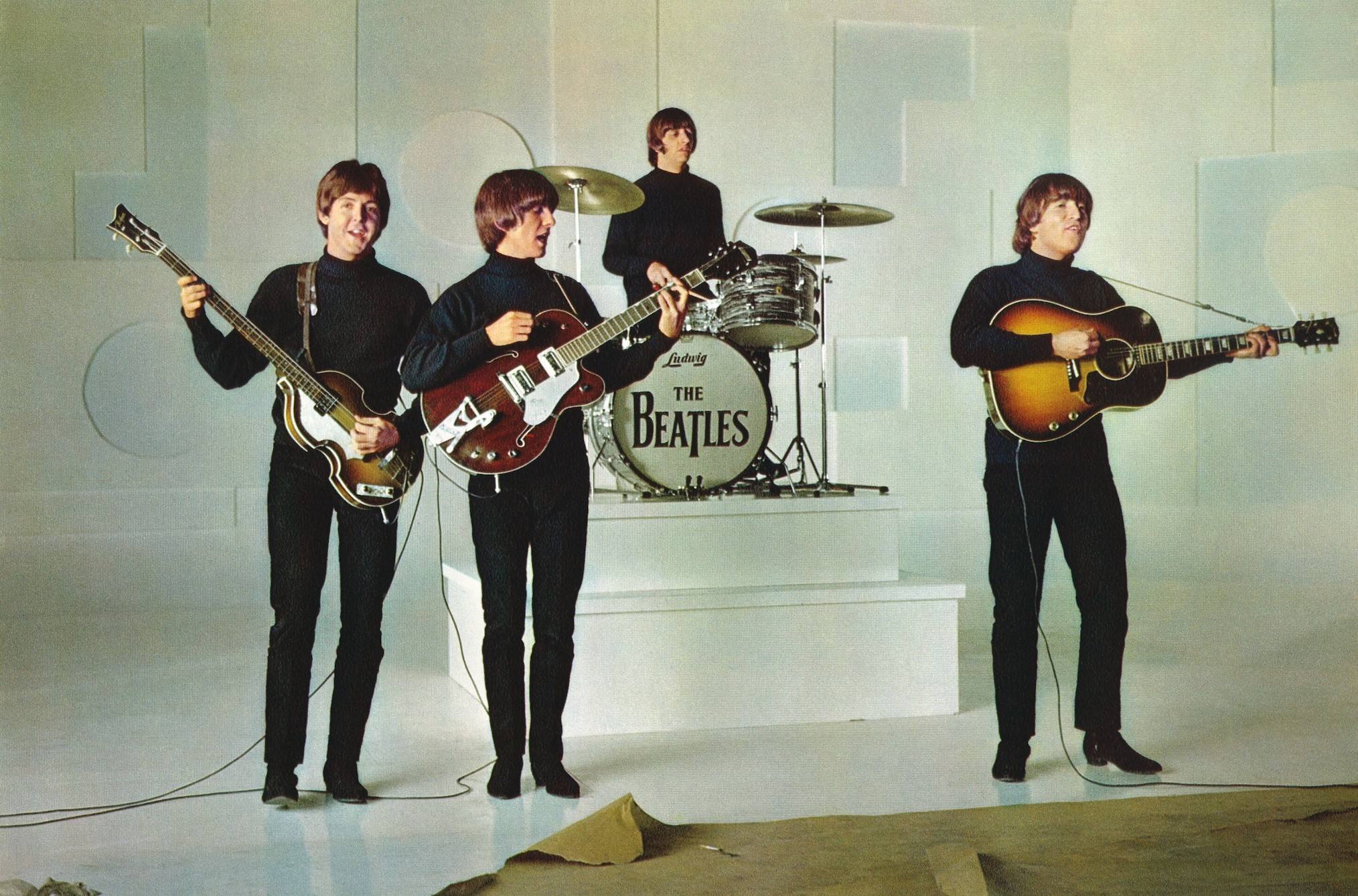
Summary of quotes and statements by The Beatles
The Beatles were one of the most popular rock bands of the 20th century, active from the 1960s to the 1970s, and made their record debut on October 5, 1962. The Beatles were ranked No. 1 on Rolling Stone's list of the 100 Greatest Artists of All Time, and are regarded around the world as one of the most influential rock bands of the 20th century. The band hails from Liverpool, England. Not only their music, but also their ideas and statements have attracted a great deal of attention and have had a great impact on the world.
Read Article

Yesterdays (film) spoiler alerts and discussion summary
Yesterday" is a stylish and heartfelt romantic comedy film produced in England. The main character, Jack, an unsuccessful singer-songwriter, is hit by a bus one day. He recovers from unconsciousness, but when he wakes up in the world, the legendary band "The Beatles" does not exist. For some reason, Jack is the only one who remembers the Beatles. The song "Yesterday," which he performed based on his memories, gradually changes Jack's ordinary life. This is a film that mixes fantastical elements with realism, and allows viewers to enjoy friendship, love, and anguish along with the Beatles' classic songs.
Read Article
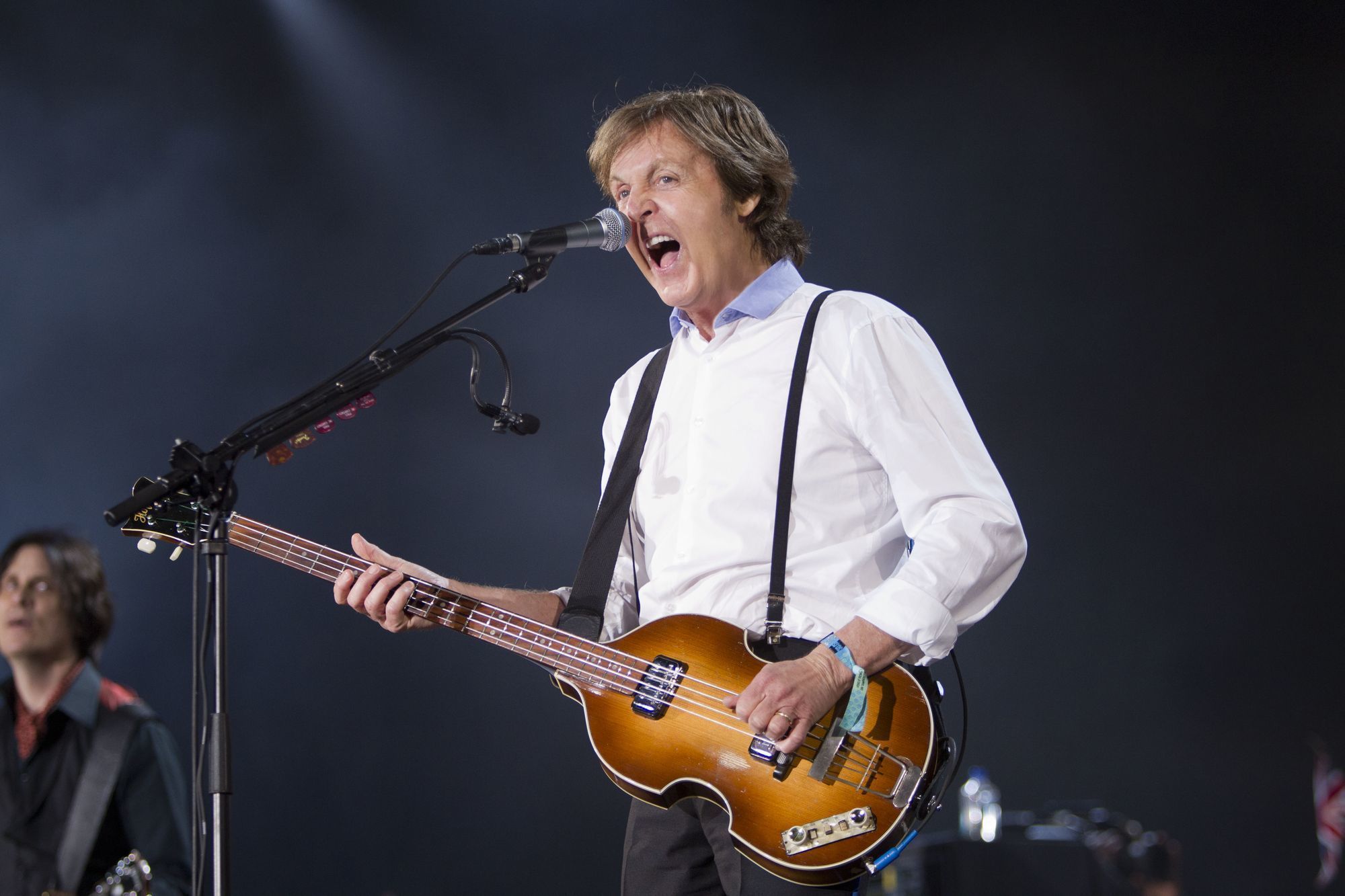
Paul McCartney was dead, former member Ringo Starr testifies! A new development in the urban legend?
Former Beatles drummer Ringo Starr stunned the world when he said in an interview with a publication that the "real" Paul McCartney died in a car accident on November 9, 1966. Here is Ringo's statement, urban legends about Paul, and his own reaction.
Read Article
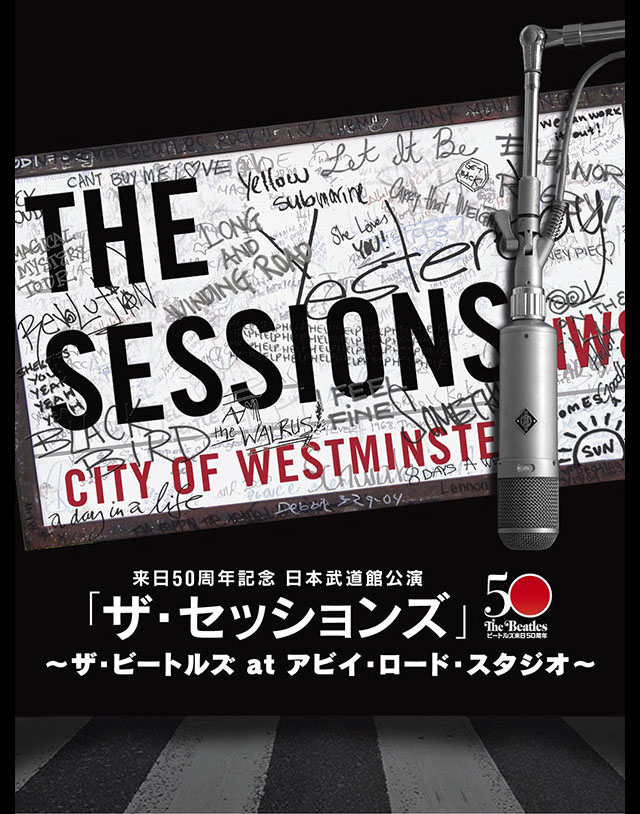
The Sessions, a recreation of the recording sessions of the legendary Beatles band, is coming!
It has been 50 years since the Beatles came to Japan. They were the first foreign artists to perform live at the Nippon Budokan on June 30 and July 1, 1966. On those very same days and at the same place, an event will be held to recreate the Beatles' recording sessions. The title of the event is "The Sessions. It is an attempt to perfectly recreate the Beatles' studio sessions at Abbey Road Studios using a variety of technologies.
Read Article
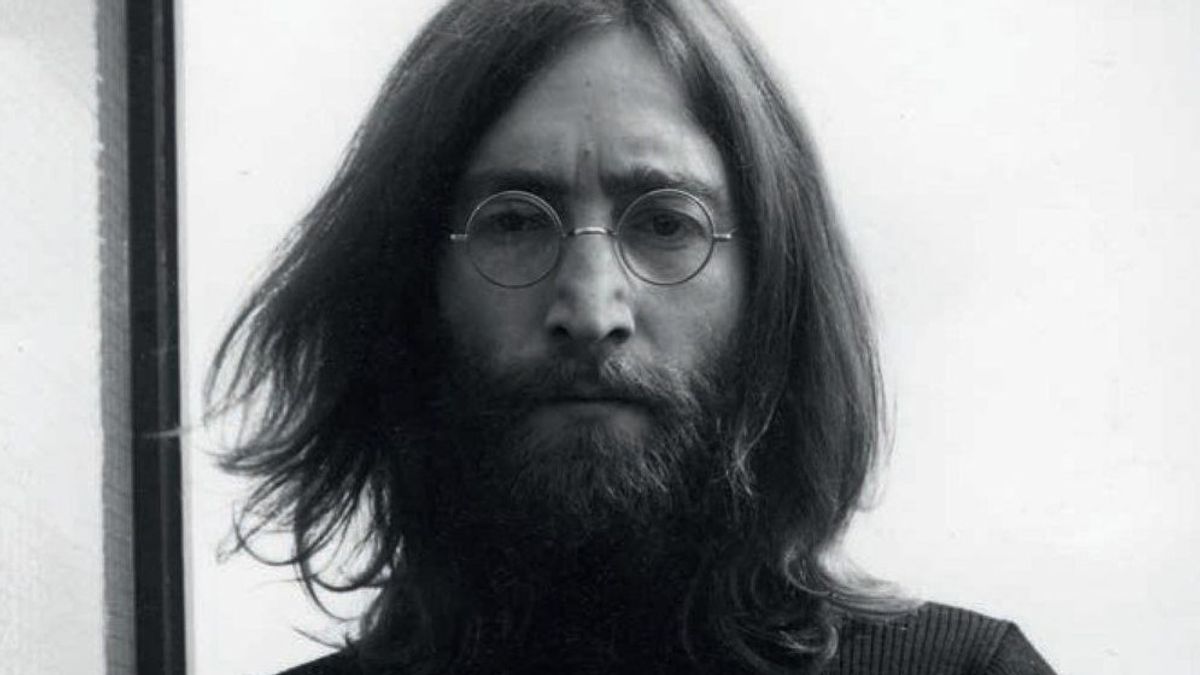
[John Lennon] Summary of celebrities and entertainers who died between the ages of 40 and 49 [Ken Maeda].
Entertainers and celebrities who have had a great impact on the world. Many of them have left this world at the young age of 40s. Diseases, accidents, suicides, assassinations.... In this article, we have compiled a list of such people. Although the causes vary, it is always painful to lose a person, no matter what time period or country.... We sincerely pray for the repose of their souls.
Read Article
![Paul McCartney] Summary of Hollywood stars and celebrities who are actually suspected of being anti-Japanese [Cameron Diaz](https://renote.net/files/blobs/proxy/eyJfcmFpbHMiOnsiZGF0YSI6NzA3OTE5MiwicHVyIjoiYmxvYl9pZCJ9fQ==--f54ed1968ea175d8f6be5ccbc0aac2b4b47ef326/5b111e621ae6624f008b472a.jpg)
Paul McCartney] Summary of Hollywood stars and celebrities who are actually suspected of being anti-Japanese [Cameron Diaz
The term "Hollywood star" is synonymous with world-famous performers. Of course, they are very well known in Japan, too! Some of them have openly stated that they "love Japan! but there are some who are suspected of being anti-Japanese. I don't know if it is true or not, but if these people are capable of world-class performances, they may be able to distinguish between their real intentions and their pretense in a matter of seconds.
Read Article
All Paul McCartney shows in Japan cancelled! Discussion of the possibility of a return visit to Japan!
Paul McCartney was scheduled to make his long-awaited return to Japan in May 2014, including his first Budokan concert in 48 years, but he became ill with a viral inflammation and canceled all shows shortly before the show. Many fans were disappointed and many wondered what would happen to him in the future. This article summarizes the situation at that time and the possibility of Paul's return to Japan for a replacement show, which he hopes to do.
Read Article
Paul McCartney suffered from "twisted intestines" and underwent emergency surgery in Japan!
Paul McCartney came to Japan for his first tour in six months, but canceled all shows due to poor health. The name of his illness was announced as viral inflammation, but it was later revealed that he had undergone surgery for intestinal sprain in Japan. The following is a summary of the illnesses that the great star suffered from in Japan.
Read Article
Paul McCartney cancels all shows! Explains the reason "viral inflammation"!
Paul McCartney, who was scheduled to return to Japan in May 2014, has become ill due to viral inflammation and has had to cancel all of his performances, including the Budokan concert. What is this "viral inflammation"? We will present a summary of Paul's sudden illness, which has several possibilities.
Read Article
Tags
Contents
- The Beatles Overview
- Members of The Beatles
- John Lennon
- Paul McCartney
- George Harrison
- Ringo Starr
- Former member of The Beatles
- Stuart Sutcliffe
- Pete Best
- People related to The Beatles
- Allan Williams
- Raymond Jones
- Brian Epstein
- George Martin
- A Brief History of The Beatles
- Birth and Death
- Major Events
- 1956-1961
- 1962-1966
- 1967-1970
- Analog release in the U.K.
- single
- 4-track EP
- album
- Analog release in the U.S.
- single
- 4-track EP
- album
- Analog release in Japan
- single
- 4-track EP
- album
- Solo Works
- Related Works
- The Beatles CDs
- The Beatles Discography
- original album
- Please Please Me
- With The Beatles
- A Hard Day's Night
- Beatles For Sale
- Help!
- Rubber Soul
- Revolver
- Sgt. Pepper's Lonely Hearts Club Band
- Magical Mystery Tour
- The Beatles
- Yellow Submarine
- Abbey Road
- Let It Be
- Editorial Albums & Other
- A Collection Of Beatles Oldies
- Hey Jude
- 1962-1966
- 1967-1970
- Rock 'N' Roll Music
- The Beatles At The Hollywood Bowl
- Love Songs
- Rarities (UK release)
- Rarities (U.S. version)
- The Beatles Ballads
- The Beatles Box
- Reel Music
- 20 Greatest Hits
- Past Masters Volume One
- Past Masters Volume Two
- Live At The BBC
- Baby It's You
- Anthology 1
- Free As A Bird
- Anthology 2
- Real Love
- Anthology 3
- Yellow Submarine Songtrack
- 1
- Let It Be... Naked
- love
- Mono Masters
- On Air - Live At The BBC Volume 2
- Live At The Hollywood Bowl
- Sgt. Pepper's Lonely Hearts Club Band (50th Anniversary Edition)
- The Beatles' most popular songs
- Love Me Do
- Please Please Me
- Twist And Shout
- From Me To You
- She Loves You
- All My Loving
- I Want To Hold Your Hand
- Can't Buy Me Love
- You Can't Do That
- A Hard Day's Night
- Long Tall Sally
- Baby's In Black
- Ticket To Ride
- Help!
- Yesterday
- Day Tripper
- We Can Work It Out
- Nowhere Man
- Paperback Writer
- Yellow Submarine
- Eleanor Rigby
- Strawberry Fields Forever
- Penny Lane
- A Day In The Life
- Hello Goodbye
- I Am The Walrus
- Lady Madonna
- Hey Jude
- Revolution
- Hey Bulldog
- Get Back
- Don't Let Me Down
- The Ballad Of John And Yoko
- Something
- Let It Be
- Free As A Bird
- Real Love
- The Beatles' backstory, trivia, small stories/episodes, anecdotes
- Dramatic departure of a member
- Paul's death theory
- The three major crises of 1966
- Mr. Toshitake Kotei
- Imelda Marcos
- Tommy Charles
- A Tribute to The Beatles