
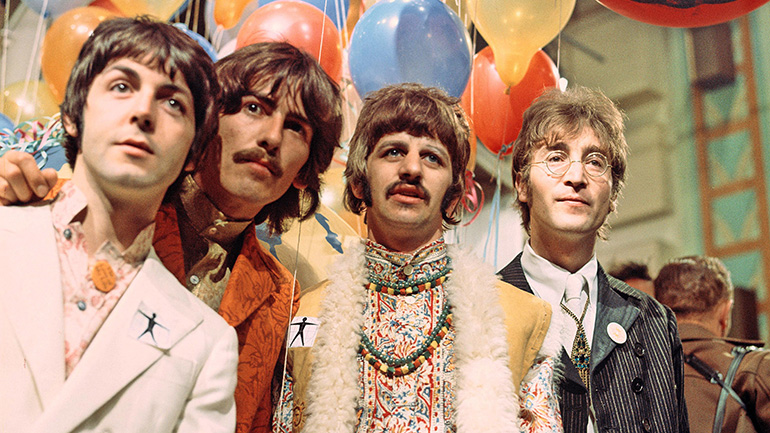
The Beatles are a four-piece rock band representing the 20th century that debuted in the United Kingdom in 1962. Their influence extended not only to their music, but also to their fashion, speech, and thought, creating a social phenomenon. One of the most notable aspects of their music is that their own musical development has directly influenced the musical development of the entire musical world and of their fans, who are their listeners.
Daydream/The Lovin' Spoonful
Recording Details
1966
June 8.
First through third takes were recorded.
At this point, the title was "A Good Day's Sunshine".
June 9
Overdubs of handclaps, Martin's piano, etc. are added to the first take.
Mono mixing was done based on the first take.
This mono mixing was not used.
June 22
Mono and stereo mixing based on the first take.
And Your Bird Can Sing
This is John's work and the lead vocalist is also John.
John himself does not appreciate this song.
John: "It's another one that still creeps me out." "It's one of those throw-away songs."
George: "If you listen to it (the CD), there are a couple of songs that are really good. Like 'And Your Bird Can Sing. That was Paul and I, or John and I, I think. We're hamming it up on the guitar. All the way through the middle eight. It was a pretty complicated line."
*Recording Details
1966
April 20.
The first and second takes were recorded.
Mono mixing was done based on the second take.
This mono mixing was not used.
April 26
Takes 3 to 13 are recorded.
John's vocals and Paul and George's backing vocals are overdubbed onto take 10.
April 27
Mono mixing is done based on the 10th take.
This mono mixing is not used.
May 12
Mono mixing is performed based on take 6 and take 10.
*This mixing was done for the American Capitol edited version of "Yesterday And Today". This means that three songs including "And Your Bird Can Sing" will be included on "Yesterday And Today" ahead of "Revolver". The mixing for the U.K. version will be done in the future, so there will be some differences in the mix.
May 20
Stereo mixing was done based on take 6 and take 10.
Two remixes were made, but the same mix was used for both the U.S. Capitol-edited version of "Yesterday And Today" and the U.K. version of "Revolver".
However, the first version of "Yesterday And Today" was a pseudo-stereo version made from a monaural master.
June 6
Mono mixing was done based on the 4th and 10th takes.
The mixing was done for the UK version of "Revolver".
For No One
Paul sings lead vocals on this track.
Paul: "I wrote this when I was on vacation skiing in Switzerland. We were at a rental villa buried in the snow.
John: "This is another one of his songs that I really like.
*Recording details
1966
May 9
First through tenth takes are recorded.
May 16
Paul's vocals are overdubbed onto take 10. Take 10 is tape reduced to make Take 13 and Take 14.
Take 11 and 12 are missing.
May 19
French horn overdubs were added to Take 14.
June 6
Mono mixing is done on Take 14.
This mono mixing was not used.
June 21
Mono and stereo mixing based on take 14.
Doctor Robert
This is John's work and the lead vocalist is also John. Paul helps a little.
John: "I wrote this. I think Paul helped me with the middle part. It was always my role to take and distribute the various drugs on tour. In the beginning. Later on, the road manager would do it for me.
The song is actually based on a real doctor in New York named Robert Freymann. He was a "speed doctor (a doctor who would prescribe large doses of amphetamines, LSD, and methamphetamines. By the way, speed means methamphetamine)" and was well known among New York artists such as Andy Warhol. Pete Shotton, a friend of John's, says that "Charles Roberts" was the model, but "Robert Freymann" is more likely. Incidentally, "Charles Roberts" is usually known as the person who developed the board war game.
Pete Shotton: "'Doctor Robert' is a song in which John half-ironically praises the real Dr. Charles Roberts of New York, ...... with an "S" in his ...... name. It's a song that praises him half sarcastically. Andy Warhol's cronies were great patrons because he wrote unusual prescriptions, and members of the Beatles were always in town when they went there. When John played me the acetate version of "Doctor Robert" for the first time, he was grinning a lot, but I'm sure he thought millions of listeners were going to sing along to this song without knowing what to expect.
Paul: "Yes, he was a joke. He would cure anybody of any disease by injecting them with stimulants and sedatives and this and that. He got New York high. That's what "Doctor Robert" is about. It's about a doctor who takes pills and does it all. It was one of those inside jokes, but if everyone who hears the song applies it to their own case, it's not just an inside joke, and that's the great thing about it. It's not just an inside joke, and that's the great thing about it. Everyone who hears our song will find their own level of meaning in it.
The mono version of "Yesterday And Today," which was included on "Yesterday And Today" in the U.S., has a slightly different ending than the other versions.
The mono version of "Yesterday And Today" fades out earlier than the other versions, but if you listen carefully to the end, you can hear the song complete properly, and you can hear someone (probably John) saying "OK. Something" right after the song ends.
Recording Details
1966
April 17.
Recordings of the 1st through the 7th takes
April 19
Vocal overdubs to take 7.
Mono mixing is done based on take 7.
This mono mixing is not used.
May 12
Mono mixing is performed based on Take 7.
*This mixing was done for the American Capitol edited version of "Yesterday And Today". This means that three songs including "Doctor Robert" will be included on "Yesterday And Today" ahead of "Revolver". The mixing for the U.K. version will be done in the future, so there will be some differences in the mixes.
May 20
Stereo mixing is done from the 7th take.
Remix 1 was used for the U.S. Capitol edit of "Yesterday And Today" and Remix 2 was used for the U.K. version of "Revolver". Therefore, even in stereo mixing, there were differences in the mix between the U.S. and U.K. versions.
However, the first version of "Yesterday And Today" was a pseudo-stereo version made from a monaural master.
June 21
Mono and stereo mixing was done based on the 7th take.
I Want To Tell You
This song was written by George and features George on lead vocals.
George: "This song is about those outpouring of feelings that are difficult to write, talk about, or convey."
*Recording Details
1966
June 2.
Takes 1-5 were recorded. George's vocals and John and Paul's backing vocals were overdubbed onto take 3. A fourth take is made by tape reduction of the third take (confusingly, there are two fourth takes).
June 3
Paul's bass guitar is overdubbed on the fourth take (the one created by tape reduction). This was the first time to overdub the bass guitar alone.
Mono mixing is performed based on the fourth take.
June 21
Stereo mixing was done based on the 4th take.
Got To Get You Into My Life
This is Paul's work and the lead vocalist is also Paul.
Paul: "I think this was the first time I used wind instruments. I wrote it around the time I was getting into marijuana. This song is about marijuana, not people.
John: "I think this is another masterpiece of his. It must have come about as a result of his LSD experience."
The ending is different in mono and stereo.
In mono, Paul sings "Every single day of my life" followed by his ad-lib vocals, but in stereo, he sings "Every single day" and then pauses before singing "of my" and "life" fades out. In the stereo version, the song "Every single day" is followed by "of my" and "life" is faded out. Also, the ending is a little longer in mono.
Recording Details
1966
April 7, 1966
First through fifth takes were recorded.
April 8
Takes 6 to 8 were recorded.
April 11
Guitar overdubs on take 8
April 25
Mono mixing is done on Take 8.
Work begins on making an acetate version of the album. An acetate is a test disc made for the members and staff.
May 18
The brass section is overdubbed onto Take 8. Take 8 is tape reduced to make Takes 9-11. Vocals were overdubbed onto Take 9.
Mono mixing was done based on take 9.
This mono mixing was not used.
June 17
Guitar overdubs on take 9.
Mono mixing is performed based on Take 9.
This mono mixing was not used.
June 20
Remix 8 is created by copying the mono remix 7 created based on take 9. The brass section from Take 8 was overdubbed to add more brass.
Mono mixing was done based on this 9th take of remix 8.
June 22
Stereo mixing was done based on remix 8 of take 9.
Tomorrow Never Knows
This is John's work and the lead vocalist is also John.
John: "The first psychedelic song I ever wrote," "The lyrics were taken from the 'Tibetan Book of the Dead' that I had. The title is a word that Ringo mistakenly uttered. It was to lighten the weight of the philosophical and heavy lyrics."
Paul: "That's the very LSD song. Probably the only one.
Martin: "John wanted it to sound like the Dalai Lama singing from a mountaintop. He actually said, 'That's the sound I want. He actually said to me, 'That's the sound I want. So I put his voice through a loudspeaker and turned it up. And it actually sounded like a stifled cry coming from the top of the mountain.
Each member of The Beatles created strange sounds at home and brought them to the studio, where they were used for backing tracks at different speeds and in reverse. John made eight tape loops and ran them through eight tape recorders, fading them in and out as he pleased. Paul made a tape loop of himself laughing, which sounds like a bird's chirp.
John: "The first backing you think of often doesn't come to fruition. For "Tomorrow Never Knows," I had in mind the sound of thousands of Buddhist monks chanting in the background. Of course, this was not feasible, so I ended up using a different approach. It turned out to be pretty boring, and I didn't like it very much. I should have stuck to my original idea of having the monks sing. I can see it clearly now. That was the sound I wanted.
The mono and stereo versions have different endings. The UK mono version has a standard version and a first pressing, each of which has a different version.)
There are some minor differences between the mono and stereo versions, such as the timing of sound effects and the presence or absence of organ and tambourine, which I will not describe here because it would be too complicated. However, I will list only the general differences between the first British monaural version and the stereo version.
No tambourine in the intro.
The amount of sound effects on the tape loop is less than stereo and more than mono on the standard version.
The guitar sound in the interlude is missing in the last bar.
The organ comes over too much in "It is knowing" of No. 4.
The ending is about 3 seconds longer than the others, so you can hear the continuation of the piano at the end.
For the reason why two patterns of British mono recordings were created, please refer to "Recording Details" below.
Recording Details
1966
April 6.
First through third takes are recorded.
April 7
Overdubs sound effects on take 3
April 22
Overdub George's sitar and John's vocals through Leslie's speakers on take 3
April 27
Mono mixing was done on the third take.
Remix 8 is used for the final version (this is the remix used for the mono version of the standard version).
June 6
Mono mixing is performed based on the third take.
Remix 10 to Remix 12 were made on this day, and once Remix 11 was chosen as the best, but it was switched to Remix 8 on the day of album cutting.
*Remix 8 was used for the regular mono version, but a certain amount of records using remix 11 were actually pressed and distributed. As a result, the monaural version differs between the first and regular editions in the UK.
June 22.
Stereo mixing is done based on the third take.
Sgt. Pepper's Lonely Hearts Club Band
Side A
Sgt. Pepper's Lonely Hearts Club Band
With A Little Help From My Friends
Lucy In The Sky With Diamonds
4. Getting Better
Fixing A Hole
She's Leaving Home
Being For The Benefit Of Mr Kite!
Side B
Within You Without You
When I'm Sixty-Four
Lovely Rita
Good Morning Good Morning
Sgt. Pepper's Lonely Hearts Club Band (Reprise) 6.
A Day In The Life
Eighth album released on June 1, 1967.
It was released after the single "Strawberry Fields Forever/Penny Lane" (a double A-side single) and The Beatles' first best-of album, "A Collection Of Beatles Oldies," but did not include any songs from the single.
The recording process is as follows.
● 1966.
November 24
Recorded the following songs
Strawberry fields Forever
November 25
Recorded "Pantomine:Everywhere It's Christmas" for the fan club.
November 28
Recorded the following songs
Strawberry fields Forever
Mono mixing of the following
Strawberry fields Forever
November 29
Recorded the following
Strawberry fields Forever
Mono mixing of the following
Strawberry fields Forever
December 2
Recorded "Pantomine:Everywhere It's Christmas" for fan club.
December 6
Recorded "Pantomine:Everywhere It's Christmas" for fan club.
Recorded the following songs
When I'm Sixty-Four
December 8
Recorded the following two songs
When I'm Sixty-Four
Strawberry fields Forever
December 9
Recorded the following two songs
Strawberry fields Forever
Mono mixing of the following
Strawberry fields Forever
December 15
Recorded the following
Strawberry fields Forever
Mono mixing of the following
Strawberry fields Forever
December 20
Recorded the following
When I'm Sixty-Four
December 21
Recorded the following two songs
When I'm Sixty-Four
Strawberry fields Forever
Mono mixing of the following songs
When I'm Sixty-Four
December 22
Mono mixing of the following
Strawberry fields Forever
December 29
The following mono mixing
When I'm Sixty-Four
Stereo mixing of
Strawberry fields Forever
Recording of the following
Untitled (later "Penny Lane")
Mono mixing of
Untitled (later "Penny Lane")
December 30
Mono mixing of the following
When I'm Sixty-Four
Recording of
Penny Lane
Mono mixing of the following
Penny Lane
1967
January 4
The following recordings were made.
Penny Lane
January 5
Recorded the following two songs
Penny Lane
Untitled
Untitled" was a sound effects tape made for the "Carnival Of Light" event in London, and to date has not been released. There were plans to include it on "Anthology 2," but George Harrison's objections prevented that from happening.
Mono mixing below.
Untitled
January 6
Recorded the following
Penny Lane
January 9
Recorded the following
Penny Lane
Mono mixing of the following
Penny Lane
January 10
Recording of the following
Penny Lane
January 12
Recorded the following
Penny Lane
Mono mixing of the following
Penny Lane
January 17
Recording of the following
Penny Lane
Mono mixing of the following
Penny Lane
January 19
Recorded the following
In The Life Of (later "A Day In The Life")
January 20
Recorded the following
A Day In The Life
January 25
Mono mixing of the following
Penny Lane
January 30
Mono mixing of the following
A Day In The Life
February 1
Recording of the following
Sgt. Pepper's Lonely Hearts Club Band
February 2
The following recording
Sgt. Pepper's Lonely Hearts Club Band
Mono mixing of the following
Sgt. Pepper's Lonely Hearts Club Band
February 3
Recorded the following
A Day In The Life
February 8
Recorded the following
Good Morning Good Morning
February 9
Recorded the following
Fixing A Hole
February 10
Recorded the following
A Day In The Life
February 13
Recorded the following
Not Known (later "Only A Northern Song")
Not Known (later "Only A Northern Song") was not included in "Sgt. Pepper's", but was included in the animated soundtrack "Yellow Submarine".
The following mono mixing was used.
A Day In The Life
February 14
Recorded the following
Only A Northern Song
Mono mixing of the following
Only A Northern Song
February 16
Recorded the following
Good Morning Good Morning
Mono mixing of the following
Good Morning Good Morning
February 17
Single "Strawberry Fields Forever/Penny Lane" released
Recorded the following
The following recording was done.
Mono mixing of the following
The following mono mixing of "Being for The Benefit Of Mr. Kite!
February 20
Recorded the following
The following mono mixing was done.
Mono mixing of the following
Good Morning Good Morning
February 21
Recorded the following
Fixing A Hole
Mono mixing of the following
Fixing A Hole
February 22
Recorded the following two songs
A Day In The Life
Anything (aka "Drum Track (1)")
Anything (aka "Drum Track (1)") is an experimental recording featuring Ringo on drums, congas, and tambourine. Unreleased.
Mono mixing below.
A Day In The Life
Stereo mixing below.
A Day In The Life
February 23
Stereo mixing of the following
A Day In The Life
Recorded the following
Lovely Rita
February 24
Recorded the following
Lovely Rita
February 28
Recorded the following
Lucy In The Sky With Diamonds
March 1
Recorded the following two songs
A Day In The Life
Lucy In The Sky With Diamonds
March 2
Recorded the following two songs
Lucy In The Sky With Diamonds
Mono mixing of the following
Lucy In The Sky With Diamonds
March 3
Recording of the following
Sgt. Pepper's Lonely Hearts Club Band
Mono mixing of the following
Lucy In The Sky With Diamonds
March 6
Recording of the following
Sgt. Pepper's Lonely Hearts Club Band
Mono mixing of the following
Sgt. Pepper's Lonely Hearts Club Band
Stereo mixing of the following
Sgt. Pepper's Lonely Hearts Club Band
March 7
Recorded the following
Lovely Rita
March 9
Recorded the following
Getting Better
March 10
Recorded the following
Getting Better
March 13
Recorded the following
Good Morning Good Morning
March 15
The following was recorded
Untitled (later "Within You Without You")
Mono mixing of
Untitled (later Within You Without You)
March 17
Recorded the following
She's Leaving Home
March 20
Recorded the following two songs
Beatle Talk
She's Leaving Home
Beatle Talk" is an interview with Brian Matthew, a BBC anchor.
Mono mixing of the following songs.
She's Leaving Home
March 21
Recorded the following two songs
Getting Better
Lovely Rita
Mono mixing of the following songs
Lovely Rita
March 22
Recorded the following
Within You Without You
Mono mixing of the following
Within You Without You
March 23
Recorded the following
Getting Better
Mono mixing of the following
Getting Better
March 28
Recorded the following two songs
Good Morning Good Morning
Being For The Benefit Of Mr. Kite!
March 29
Recorded the following 3 songs
Good Morning Good Morning
Being For The Benefit Of Mr. Kite!
Bad Finger Boogie (later to be called "With A Little Help From My Friends")
March 30
Recorded the following songs
With A Little Help From My Friends
March 31
Recorded the following
Mono mixing of the following two songs
Mono mixing of the following two songs
With A Little Help From My Friends
Mono mixing of the following two songs
April 1
Recorded the following songs
Sgt. Pepper's Lonely Hearts Club Band (Reprise)
Mono mixing of the following
Sgt. Pepper's Lonely Hearts Club Band (Reprise)
April 3
Recorded the following
Within You Without You
Mono mixing of the following
Within You Without You
April 4
The following mono mixing
Within You Without You
Stereo mixing as follows
Within You Without You
April 6
Mono mixing of the following
Good Morning Good Morning
Stereo mixing as follows.
Good Morning Good Morning
On this day, "Sgt. Pepper's Lonely Hearts Club Band" and "With A Little Help From My Friends" and "Sgt. Pepper's Lonely Hearts Club Band (Reprise)" and "A Day In The Life" were crossfaded.
April 7
Stereo mixes of the following four songs.
With A Little Help From My Friends
Being For The Benefit Of Mr. Kite!
Fixing A Hole
Fixing A Hole ・Lucy In The Sky With Diamonds
On this day, too, "Sgt. Pepper's Lonely Hearts Club Band" and "With A Little Help From My Friends" and "Sgt. Pepper's Lonely Hearts Club Band (Reprise)" and "A Day In The Life" were mixed without any intervals between the songs. Pepper's Lonely Hearts Club Band (Reprise)" and "A Day In The Life" were crossfaded.
April 17
Stereo mixing of the following four songs.
Getting Better
She's Leaving Home
When I'm Sixty-Four
Lovely Rita
April 19
Mono mixing of the following two songs.
Good Morning Good Morning
Only A Northern Song
Only A Northern Song" was not included in "Sgt.
April 20.
The following stereo mixing.
Sgt. Pepper's Lonely Hearts Club Band (Reprise)
Recorded the following
Only A Northern Song
April 21
Mono mixing of the following
Only A Northern Song
Recorded the following
Edit For LP End
*Sounds such as laughter, etc., recorded in the normally silent retraction groove after the end of the performance of the record.
June 1
Album "Sgt. Pepper's Lonely Hearts Club Band" is released.

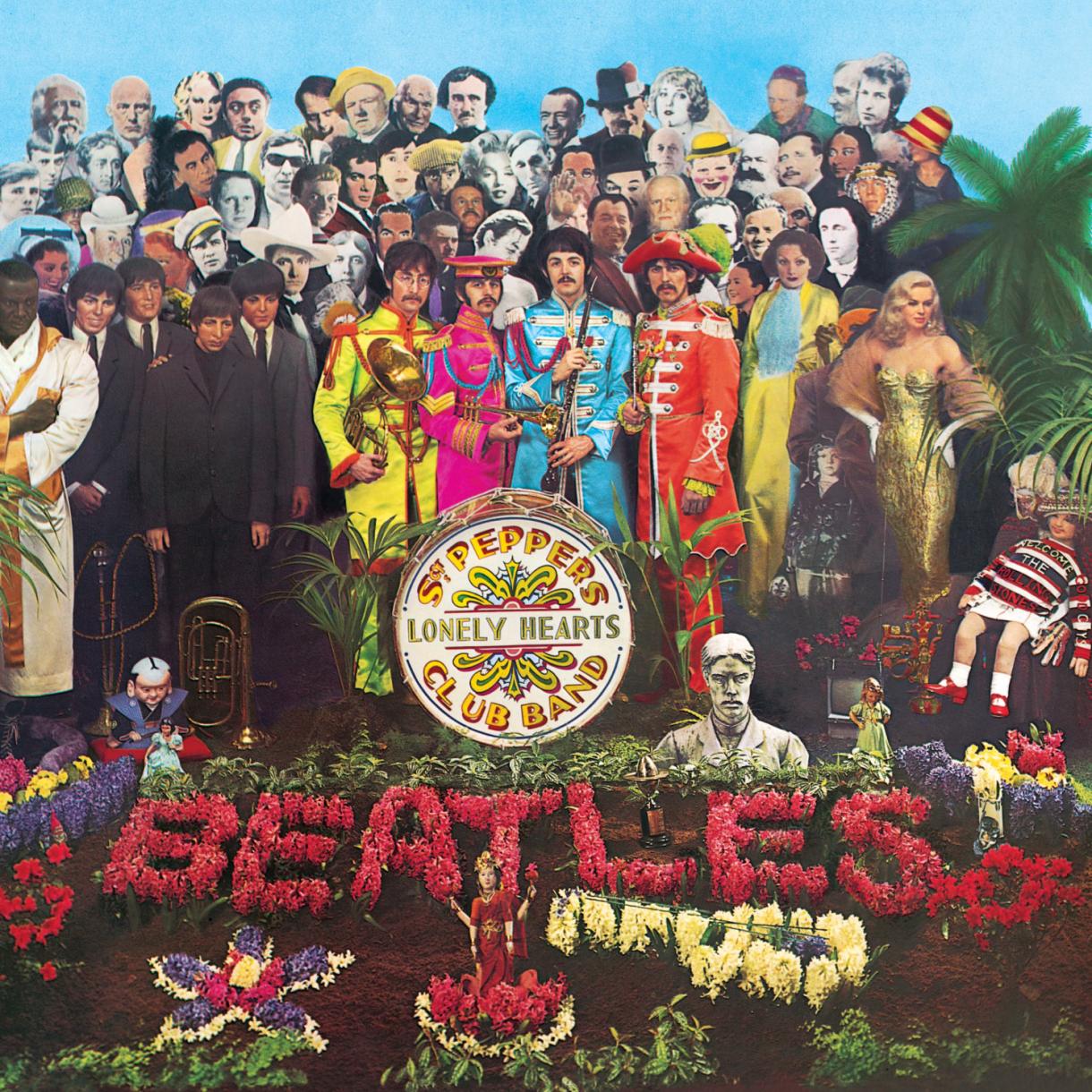
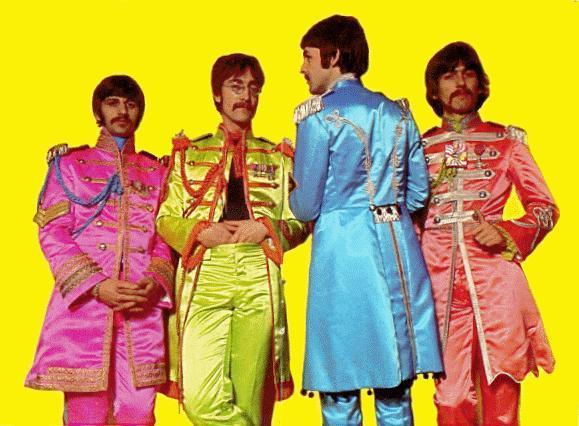
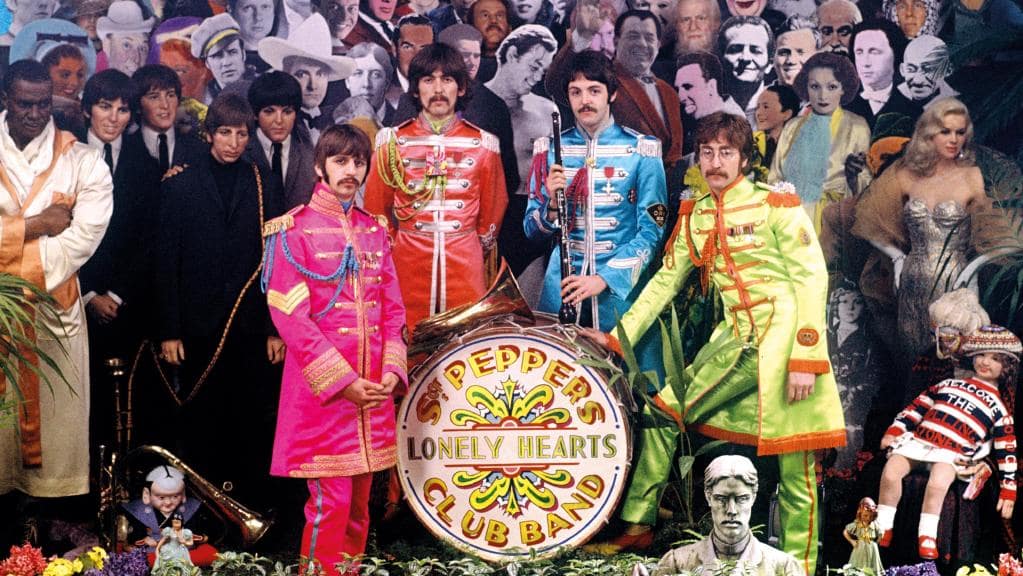
The cover was based on Paul's idea and was done by his friend Peter Blake. Paul said, "This is a big album, so I wanted the cover to be really interesting. We didn't want to have matching jackets or feel-good pictures of people in turtlenecks. I wanted it to be more pantomime, more Mr. Bojangles," he said. As for the mustaches that all the members sported, "In 1967, it was considered a revolutionary idea for young people to have mustaches," he said. Paul was the first to grow a mustache, which he did to cover the stitches from a scar around his mouth.
Around the same time, George also began to grow a mustache because Ravi Shankar, an Indian sitar player and George's sitar teacher, asked him to grow a mustache as a disguise before coming to India. George says, "The mustache was both a synchronicity and a statement of collective consciousness.
The jacket features four members of The Beatles in military uniform, a wax figure of The Beatles, two mannequins, a cloth doll of Shirley Temple, a doll of Fukusuke, and a statue of the Hindu goddess Lakshmi, along with 58 other celebrities. Sir Joseph Lockwood, then chairman of EMI, was concerned that "if we put so many celebrities on the album, we would immediately have a mountain of lawsuits," and visited Paul with a sample of an alternative jacket. At that time, Paul told the chairman, "It's unusual for me to be on a Beatles album cover. I think they're happy about it.
It was Brian Epstein's assistant, Wendy Hanson, who actually fought to get permission to use the likeness. She said, "Some people gave us permission, but of course some people didn't. For example, Fred Astaire was willing, but Shirley Temple said she couldn't give me an answer without hearing the album first. Marlon Brando and I hit it off perfectly, but Mae West wanted me to explain what I would be doing with Lonely Hearts Club Band.
No one ever sued me for infringement of their likeness rights, but then there weren't that many lawsuits, and perhaps it was also because, as Paul said, he was happy to be "on the Beatles' jacket.
Peter Blake, who designed the album cover, said, "Paul wanted it to look like a band you would see in a park, so we decided to make it look like a band that had just finished playing on stage right next to a flower bed in the park and was surrounded by a large audience. I think my biggest contribution was deciding that if we were going to have an audience, it should be anyone's audience.
The production costs for the cover were also enormous, and EMI charged a higher-than-usual list price for the album.
It was also the first time that lyrics were placed on the back jacket. Neil Aspinall, road manager, said, "The back jacket took a little time. We stayed until the very last minute. We were going to print the lyrics on the back, so along with the design, we had to decide on the order of the songs. This was a difficult process. I remember walking down Kingly Street in the West End with Paul and trying to think of an order in which the first letters of the songs would make some kind of snappy word. At first, we decided on the "S" in "Sgt. Then I tried to put the vowels next, but I couldn't find the right one. So I gave up and tried another arrangement," he says.
Both the U.S. and Japanese versions had the same jacket and the same tracks as the original U.K. release. However, the Japanese version was in stereo instead of mono. The first mono version of an analog album with the same specifications as the UK version was a limited reissue in the original mono series on January 21, 1982.
During this period, the Beatles stipulated in their contract that they would release the same album with the same cover and the same content worldwide. Therefore, after this album, albums that were independently edited from the original British version in the U.S. or Japan could no longer be released.
The album was ranked No. 1 in the charts of Melody Maker magazine in the U.K. for the first time on June 4, 1967. It then reigned at #1 for 22 weeks until October 28.
On the U.S. Billboard magazine charts, it first appeared at #8 on June 24, 1967. The following week, on July 1, it reached No. 1, and then reigned at No. 1 for 15 weeks until October 7.
Considered by many to be The Beatles' greatest album, it is consistently ranked No. 1 or higher in rock greats selections and rankings. Musically, many fans consider "Rubber Soul" and "Revolver" to be the Beatles' greatest albums, but in terms of the existence of the album itself, "Sgt.
Time magazine in the U.S. said, "Nothing shows off the new Beatles more dramatically than this album, each song of which is packed with content that can't help but evoke an emotional response. Intended to pit the younger generation against the older, each song has a space-age electronic effect, or a completely different lyrical mood. Above all, it is a testament to the fact that the Beatles blossomed as musicians," he praised.
Paul said, "The touring days are over. That was great, but back then we were trying to be artists. We didn't have to perform every night anymore, so it was very freeing. We could come up with all kinds of crazy ideas. I was listening to avant-garde artists, George was into Indian music. John was going to all kinds of museums and exhibitions. And then I met Yoko."
America was full of the hippie movement. There were a lot of bands with names like 'Laughing Joe & His Medecine Band' or 'Col Tuckers Medecional Blue & Conbound. So we played around with words like that. Sgt. Pepper's Lonely Hearts Club Band. When we got back to London, we told everyone about the idea. We thought, "Why don't we play as a different band? I've already written a song with that title.
Paul added, "The biggest influence on 'Sgt. I was totally blown away by that album. The moment I heard it, I thought, 'Oh my God. This is the first and only album that I've ever heard. What are we going to do? That was the starting point for everything. My idea was to make it an album about a fictional band that wasn't me. We always tried to play and think that we are not doing this. It was a good way to give the album a kind of distance. The idea for the cover was to put on crazy costumes as if we were another band, but in the end we just put on the costumes we've always wanted to wear. And we filled the walls with our heroes.
Called the world's first concept album, it features The Beatles performing as the fictional Sgt. Pepper's Lonely Hearts Club Band. The opening song is the "Sgt. Pepper's" theme song, followed by a medley of Ringo's "With A Little Help From My Friends" as Billy Sears, the singer. The second half of the show closes with another theme song from "Sgt. Pepper's," and "A Day In The Life" is performed as an encore. However, this concept is not applied to the entire album, and John and others have said, "It's not a concept album.
Since there were no 8-track recording decks available at the time, two 4-track decks were synchronized for recording.
Martin said, "It was Paul's idea. He came in and wrote a song called 'Sgt. Pepper's ~. He said that the band was them, the Beatles themselves. We recorded that song first, and then the idea for the album came to me.
Engineer Jeff Emerick said, "We went as far as our equipment would take us. From a technical standpoint, Sgt. We did a lot of work on it. It was a lot of work, and it wouldn't be possible today, but every time we changed tapes or copied something, we had to rearrange and re-bias everything in a very detailed way. For "Sgt. Pepper's," we had the luxury of using an entire track to dub the bass. Paul stayed after the session was over and layered all the bass. For Paul's amp, we used a tube C12 microphone. Sometimes we set them up in a figure eight configuration, sometimes we put them eight feet apart. Believe it or not, it wasn't until "Abbey Road" that we started connecting the guitar directly to the table," he said.
Regarding his bass playing, Paul says, "With 'Sgt. Pepper's~,' I introduced a more melodic bass line than I had before. In fact, the bass lines on "Sgt. Pepper's" are among the top five I've ever played.
Ringo said, "This album is our greatest accomplishment. It gave all of us so much scope. It gave us a lot of freedom to experiment with ideas and material. The great thing about the Beatles is that they took the best ideas from whoever had them. No one had an ego. So the songs were always of a high standard. The first thing on the album was going to be Sergeant Pepper. At first I thought it was going to be more of a rock opera, but after the first two songs, I was like, 'I don't care.
By the time we did that album, Martin had become indispensable. We started adding strings and horns and piano and stuff, and he was the only one who could transcribe all those instruments. Someone would say, 'I want this part to sound like Dedede Dolly,' and he would just score it. He was already a part of the band.
George said, "I wasn't really interested in it. I felt that the title track and album cover were all we needed. We had been recording more like a band, but things were a little bit different on that record. A lot of times it was just Paul playing piano and Ringo setting the tempo. It was kind of a work in progress, and it was a little boring. It was fun, but I was starting to lose interest in being part of the 'Fab Four' at that point.
John says, "People say that album was the first concept album, but that doesn't mean anything. None of my songs have anything to do with Sergeant Pepper's ideas. It's being called like a successful concept album, but if you listen closely, the only songs that are connected are the first two and the song before the last one, 'Reprise. All the other songs could have been on any other album.
John later added, "Paul sang 'Come see our show' on that album, and I was one of the people who didn't do that. I still had to write some songs, so I wrote part of "A Day In The Life" and "Mr. Kite" as a last-minute effort. I was so obsessed at the time that I could hardly move my body.
Martin said, "It was an incredible piece of work. We were walking on our own, developing our own personalities, growing day by day. It changed my life in a fundamental way. It was a very arduous, long recording process. I think now that if they hadn't done drugs, and if I had been the kind of person who did drugs, "Sgt. It would never have been as coherent as it was. I had to put up with him for a long time. They are always giggling, after all. Even if they hadn't been doing drugs, we could have done something like "Sgt. But it wouldn't have been as spectacular. Probably. He says, "I'm not sure.
Pete Townshend, guitarist for the British rock band The Who, called it "incredibly non-physical.
American musician Al Kooper said, "'Sgt. Pepper's' is, first and foremost, the album that changed drumming. Before that album, rock 'n' roll drum fills were all very similar, and they were all very basic. But this record has what I call "spatial fills," fills with tremendous gaps. That's the best thing about the music for me. And the drums sound much better. It's a great record forever. It's timeless.
John Sebastian of the American rock band Lovin' Spoonful said, "It was like a glove being slapped on my face. It was such an intense challenge. I don't think I could ever catch up to it, even if I did something similar.
Michelle Phillips of the American rock band Mamas & Papas said, "After 'Sgt. I turned the record over and over and over. That was the theme song for the guys who worked for the Monterey Pop Festival."
Roger McGuinn of the American rock band The Byrds said, "I was already soaked in psychedelic stuff when 'Sgt. I'm sure other people would have been blown away when they heard it. But when I listen to it again recently, there is no continuity that I thought existed back then.
Outline of the tracks
Sgt. Pepper's Lonely Hearts Club Band
This is Paul's work and lead vocalist is also Paul.
Paul: "We were sick and tired of being the Beatles. So we decided to make an album made by our alter egos.
John: "Paul wrote it after the U.S. tour. It was inspired by a band with a long name from the west coast.
Martin: "When we finished recording this song, Paul said, 'Why don't we do it like there really is a Pepper band and Sergeant Pepper is making the record? He said, 'Why don't we do it like there really is a Pepper band and Sergeant Pepper is making the record? I liked the idea terribly. From that moment on, 'Sgt. Pepper's' took on a life of its own."
Engineer Jeff Emerick: "The snare and bass drum Ringo plays on 'Sgt. Pepper's' and its reprise make a sound like thunder, but no one had ever heard anything like that at the time. In reality, the bass drum was just a piece of woolen cloth stuffed inside the snare. Then we started taking the skin off the front. Until then, bass drum recordings were solely for the purpose of getting the beat of the song. So when we brought it to the front, it was quite powerful and had an impact on the listener. I had placed the microphone about 6 inches away from the bass drum, slightly facing the floor, so that the wind pressure would not shake the vibrating version. But after I took the front skin off, I naturally started placing the mic in it. What we wanted was a crisp kick sound, so we stuffed mats and rags and stuff together to kill the sound and make it solid. Now we do this normally, but at the time it was groundbreaking."
The name "Sgt. Pepper's" was inspired by a vacation Paul took to Kenya. On the plane ride back from Kenya, his valet, Mal Evans, picked up a bag of condiments with "S" and "P" printed on them during the in-flight meal. When he mumbled "Salt and Pepper," the name "Sargent Pepper" was inspired.
The sound of the orchestra warming up at the beginning of the song was recorded during the recording of "A Day In The Life.
The sound of the audience cheering leading into the next song, "With A Little Help From My Friends," was taken from The Beatles' live performance at the Hollywood Bowl.
Jimi Hendrix opened his show at the Savile Theatre in London on June 4, 1967, just three days after the album's release, with a cover of "Sgt. Pepper's Lonely Hearts Club Band.
Sgt. Pepper's Lonely Hearts Club Band/Jimi Hendorix
Unfortunately, the video was not shot live at the Savile Theatre in London.
Recording Details
1967
February 1.
Recording of takes 1 to 9.
February 2
Paul's vocals and backing vocals are overdubbed onto take 9. A tape reduction of take 9 is made for take 10.
Mono mixing is performed based on the 10th take.
This mono mixing was done for the creation of the acetate. The acetate disc is a test disc made for the members and staff.
March 3
The brass section is overdubbed on Take 10.
March 6
Sound effects overdub on take 10.
Mono and stereo mixing was done on the 10th take.
With A Little Help From My Friends
This work was written mainly for Paul, with Ringo on lead vocals.
Paul: "I wrote this with John like a craftsman for Ringo. I think this is the best song for Ringo. I wanted to include the words 'I Get High' because it was written during the marijuana era."
American folk singer Richie Havens: "(Before I sing this song in concert on July 12, 1968) I'm going to sing my favorite song in the whole universe."
*Recording details
1967.
March 29.
Takes 1 through 10 are recorded. Tape reduction of take 10 was used to create take 11. Ringo's vocals are dubbed over the 11th take.
March 30
Overdubs guitar, tambourine, bass, and backing vocals from John and Paul on Take 11.
March 31
Mono mixing is performed based on the 11th take.
April 7
Stereo mixing based on take 11.
Lucy In The Sky With Diamonds
This is John's work, and John sings lead vocals. Paul helped with some of the lyrics.
The initials "Lucy," "Sky," and "Diamonds" are connected to form "LSD," and the song is sometimes considered a drug song (in fact, the BBC in the UK banned the song as a drug song). In fact, it was a picture that Julian, John's son, who was 3 years old at the time, drew in kindergarten. It depicted a girl floating in the sky with Eamond. When John asked what it was, Julien replied, "It's Lucy floating in the sky with diamonds," which inspired this song.
The Lucy in this picture was Lucy Vodden (formerly Lucy O'Donnell), who attended the same kindergarten as Julian. Unfortunately, she died of an immunological disease on September 22, 2009, at the young age of 46. In November of that year, Julian released a tribute song to her, "Lucy.
John: "My son Julian brought me a drawing one day of a girl in his class named Lucy. There were some stars in the sky in the background. The title of the picture was 'Lucy in the sky with diamonds. That was it.
Pete Shotton, a friend of John's: "I know, because I happened to be there that day, that when Julian came home from school with a drawing of his classmate Lucy's face against a background of exploding stars in various colors, John, who was usually unimpressed with his son's artwork, said, 'What's the title of that drawing? John, who was usually unimpressed with his son's drawings, asked what the picture was called. Julian replied, 'It's Lucy in the sky with diamonds, Dad.
John: "That song was inspired by 'Alice in Wonderland. Alice on a boat, I guess. Alice buys an egg and it turns into Humpty Dumpty, and the woman in the store turns into a sheep. Then the next moment, they are all in a boat that is going somewhere. That's how I imagined this song, and that's how I wrote it. To it I added the image of a woman who will one day come down from the sky and save me. That's "a girl with kaleidoscope eyes," or Yoko. But that was before I knew Yoko. If I had known her, it would have been 'Yoko In The Sky With Diamonds,' I think.
Paul: "A lot of people who come to us have a very knowing look on their face and say, 'I know, I know. I know, it's LSD. It's true that the newspapers were all talking about LSD at that time, but we never thought about it. But we never thought about it. All we were thinking about was making the whole thing look like Alice in Wonderland. It's just like in Alice's world, where you're on a boat going slowly down the river and there's a giant cellophane flower towering over your head. And when there is a crack in the river, "Lucy floating in the sky with diamonds" appears in the sky. This Lucy is a great god and a white rabbit.
John: "(When asked if "Lucy In The Sky With Diamonds" was some kind of code). (In response to the question, "Wasn't 'Lucy In The Sky With Diamonds' some kind of code? I saw a celebrity ...... I forget who it was, but ...... I saw him introduce a show about Lennon-McCartney. Yeah, that was (American jazz singer) Mel Torme. He said "Lucy In The Sky With Diamonds" was about LSD. The truth is this. My son brought home a drawing of a girl with strange eyes flying around. I said, 'What's this? and he said, 'This is Lucy in the sky with diamonds. I thought, 'This is beautiful,' so I immediately wrote a song about it. And when the song was written and the album was released, someone noticed that if you joined the first letters of the main words together, you get LSD. I didn't even think about that. Of course, I then went through all the songs to see what would happen if I joined the letters together. None of the other songs made any sense. None of them did. So it wasn't about that at all."
John said it was Paul who created the phrase "newspaper taxis," and he may have helped with the final verse.
John later criticized the song.
John said, "I heard 'Lucy In The Sky With Diamonds' on the radio last night, and it's the worst thing I've ever heard. It's just a bad track. I mean, the song itself is really good, but the production is just not up to par.
Comparing the mono and stereo versions, the stereo version is slightly faster and in a higher key. Also, in the stereo version, John repeats "high" right after "that grows so incredibly high" (in such a small voice that it is almost inaudible), but this is not present in the mono version.
*Recording Details
1967.
February 28.
*On this day, only rehearsals take place.
March 1
Takes 1 through 7 were recorded. Take 7 is tape reduced to make Take 8.
March 2
John's vocals, Paul's backing vocals, and George's lead guitar are overdubbed onto take 8.
Mono mixing is performed based on the eighth take.
April 7
Stereo mixing was done based on take 8.
Getting Better
Paul sings lead vocals. John helped with the lyrics.
Paul: "We wrote this song at my house in St. John's Woods. I remember the verse, 'it's getting better all the time,' but that was my idea, and John contributed the legendary 'it couldn't get much worse. John's version is the legendary "it couldn't get much worse". I thought John's turn of phrase was very good. I thought John's turn of phrase was very good, after all, it's an optimistic song. Even though it doesn't fit the spirit of the song, that sarcastic line really works. It's very John.
The title of the song, "Getting Better," was a favorite phrase of drummer Jimmy Nicole, who substituted for Ringo on the Beatles' first world tour when Ringo was hospitalized with tonsillitis. Whenever the band members would ask Jimmy, "How are you doing? he would always reply, "It's getting better.
John said that he wrote the part about being hard on women and beating them up.
John said, "I was always hard on my wife. I was cruel to women. I was cruel to women. It's experiences like this that make me want peace.
There is a difference between the mono version and the stereo version.
During the eight bars from "Me used to be angry young man" to "I'm doing the best that I can," a piano sound is heard from the right channel in stereo, but not in mono. According to "The Beatles Remastered CD Guide", "if it is there, it's been reduced to a very low level". It is true that I could hear the piano properly in stereo, but I could not hear it in mono.
*Recording details
1967
March 9.
Takes 1 through 7 were recorded. Tape reduction of take 7 was used to create takes 8 through 12. Take 12 is the best.
March 10
George's tambura, Paul's bass, and Ringo's drums are overdubbed onto Take 12.
March 21
The 12th take is tape reduced and the 13th and 14th takes are made. Paul's vocals and backing vocals were overdubbed onto Take 14.
March 23
Overdub Paul's vocals onto Take 14 and tape reduce Take 14 to make Take 15. Ringo's bongos are overdubbed onto Take 15.
Mono mixing is done based on the 15th take.
April 17
Stereo mixing is done based on take 15.
Fixing A Hole
Paul's work, lead vocalist is also Paul.
Paul "I wrote that one.
John: "That was Paul's song. John: "That's Paul's song, and once again, he's got a great lyric.
Paul wrote the song while repairing the roof of his farm in Scotland, and it was inspired by a hole in the roof that was actually leaking. However, the song's title was interpreted by some as a drug addict injecting drugs.
Paul: "The song is about a hole in a leaky roof, and filling that hole is just a metaphor for allowing your mind to wander at will, undisturbed by the rain. And it's also about fans. If you're a drug addict sitting in a room doing drugs, it can mean that. But I'm just saying that if the walls are scratched or not colorful enough, I'll paint them.
The "Complete Guide to the Beatles 213 Songs" by Kunihiko Fujimoto describes the intro harpsichord player as Paul, but many books describe George Martin playing it. According to "The Complete Beatles Recording Sessions" by Mark Lewison, Neil Aspinall wrote in the Beatles fanzine "The Beatles Book" that Paul played the harpsichord, but the session tapes show both bass and harpsichord playing at the same time. However, the session tapes show Paul playing both bass and harpsichord at the same time, which casts doubt on this theory, since bass playing is Paul's style.
Recording Details
1967
February 9.
First three takes are recorded.
February 21
Recorded take 1 (actually should have been take 4); tape reduction of take 2 from Feb. 9 to make take 3 (different take from take 3 on Feb. 9); overdub on take 3 (details unknown). An overdub on this third take (details unknown).
Mono mixing is performed based on the third take created on this day.
April 7
Stereo mixing was done based on the third take created on February 21.
She's Leaving Home
Paul sings lead vocals on this song. John helped with the lyrics.
Paul: "She's just a little girl in this song, much younger than Elinor Rigby, but the loneliness she carries is the same. The clue is an article in the Daily Mirror. In the article, a father whose daughter has run away from home says, "I gave her everything. I don't know why she ran away from home. But the truth is, he didn't give her everything she wanted. He didn't give his daughter what she really wanted. That's why she left."
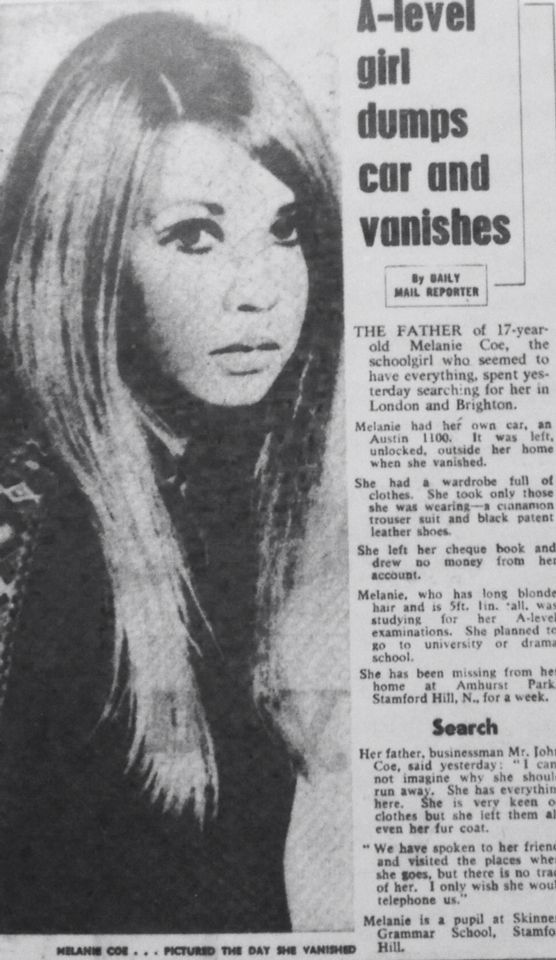
The Daily Mirror article to which Paul referred.
Strings and harp were arranged by Mike Leander. Until then, the strings for The Beatles had been done by George Martin. According to that George Martin, he was asked by Paul to call him tomorrow afternoon to do the arrangement for this song, but he said he couldn't do it because he had another recording session scheduled. So Paul contacted Leander, and Martin said he was very hurt because he did not wait for him.
Paul said, "I knew very well that Martin was busy, but I was itching to get started on that song arrangement. I was feeling inspired. But I think it's fair to say that Martin has a hard time forgiving me for the way I treated him. I had hurt him. I didn't mean to.
Martin was hurt, but he took the mature approach of conducting the orchestra that would perform Leander's arrangement of the score.
Paul: "It's a ballad, just like me back then. My daughters like it. One of my daughters. I guess it's a song that still works today."
Recording details
1967
March 17.
Takes 1-6 are recorded.
Only strings were recorded on this day.
March 20
Tape reduction of take 1 was made for takes 7-9. Take 6 is tape reduced to make Take 10. Paul's vocals and John's backing vocals were overdubbed onto Take 9.
Mono mixing is performed based on take 9.
April 17
Stereo mixing is done based on take 9.
Being For The Benefit Of Mr Kite!
The lead vocalist is also John.
John: "'Mr. Kite' was taken directly from another song. When I was looking for material for the song, I noticed the lyrics were looking at me from over there. It was a phrase from an old poster I had bought at an antique store. I think it was when I was shooting in Surrey or somewhere. I was taking a break, and I wandered into an antique store and bought a poster advertising an old variety show. Mr. Kite was the star of the show. It also said that the entire Henderson family, who until recently had been in the Pablo Funk troupe, would be in the show. There was also a wheel, a horse, a person going through a large barrel on fire, and the name of the horse, Henry. It also said that the band would start playing 10 minutes before 6:00, and that the location was Bishop's Date. See, here's the poster. See Mr. Kite's name at the top? There are only a few words that I thought of. I just pieced them together in order. I literally just transferred them from the poster to the lyrics.
Pete Shotton, a friend of John's: "John wrote 'Mr. Kite' by glancing sideways at the framed wall posters and looking for the right melodic pattern with his fingers.
Paul: "You couldn't come up with the Henderson family, no matter how hard you squeeze your brain.
This poster was purchased by John when he shot the promotional film for "Penny Lane/Strawberry Fields Forever," advertising the February 14, 1843 show.

Related Articles
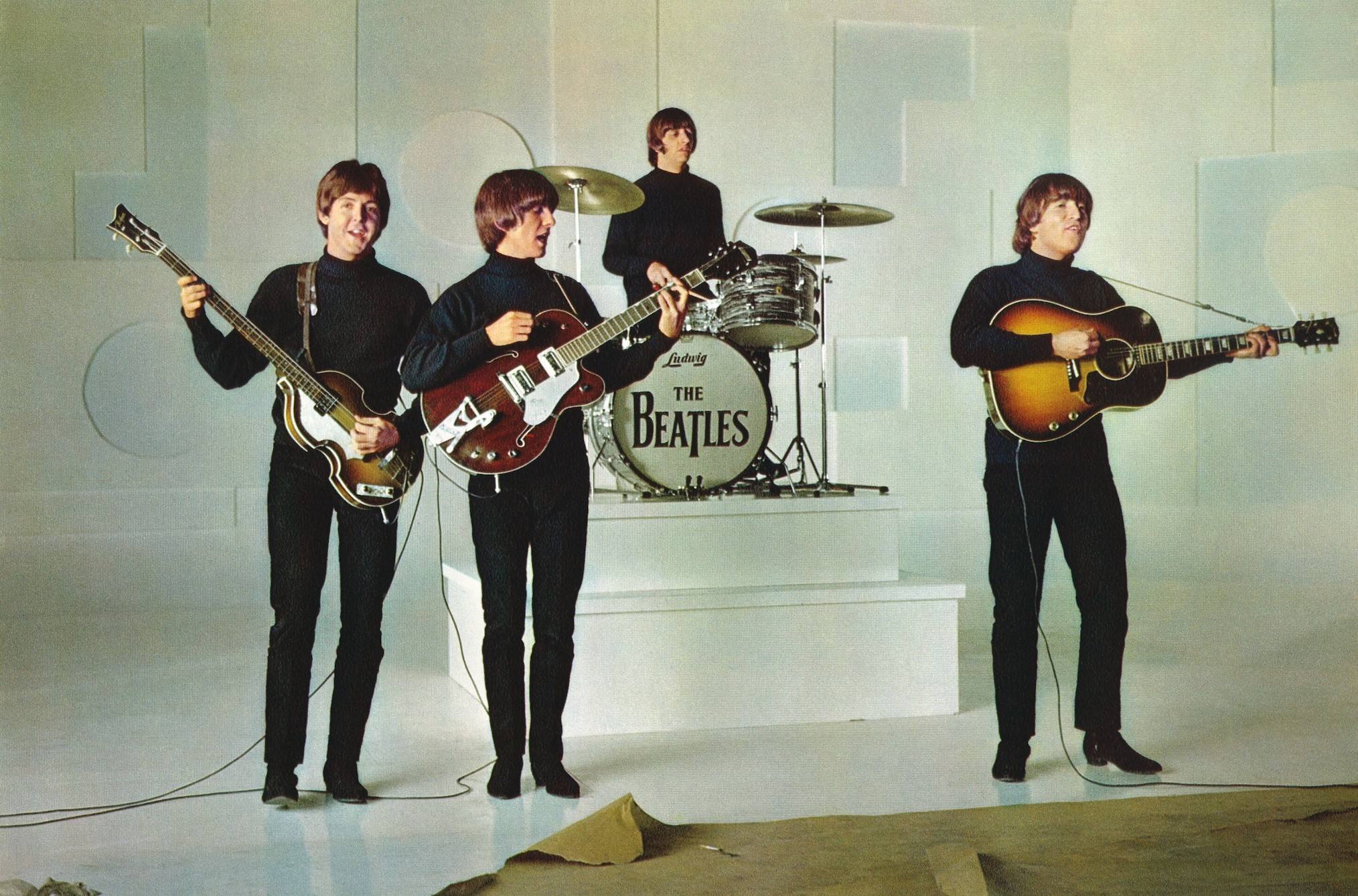
Summary of quotes and statements by The Beatles
The Beatles were one of the most popular rock bands of the 20th century, active from the 1960s to the 1970s, and made their record debut on October 5, 1962. The Beatles were ranked No. 1 on Rolling Stone's list of the 100 Greatest Artists of All Time, and are regarded around the world as one of the most influential rock bands of the 20th century. The band hails from Liverpool, England. Not only their music, but also their ideas and statements have attracted a great deal of attention and have had a great impact on the world.
Read Article

Yesterdays (film) spoiler alerts and discussion summary
Yesterday" is a stylish and heartfelt romantic comedy film produced in England. The main character, Jack, an unsuccessful singer-songwriter, is hit by a bus one day. He recovers from unconsciousness, but when he wakes up in the world, the legendary band "The Beatles" does not exist. For some reason, Jack is the only one who remembers the Beatles. The song "Yesterday," which he performed based on his memories, gradually changes Jack's ordinary life. This is a film that mixes fantastical elements with realism, and allows viewers to enjoy friendship, love, and anguish along with the Beatles' classic songs.
Read Article
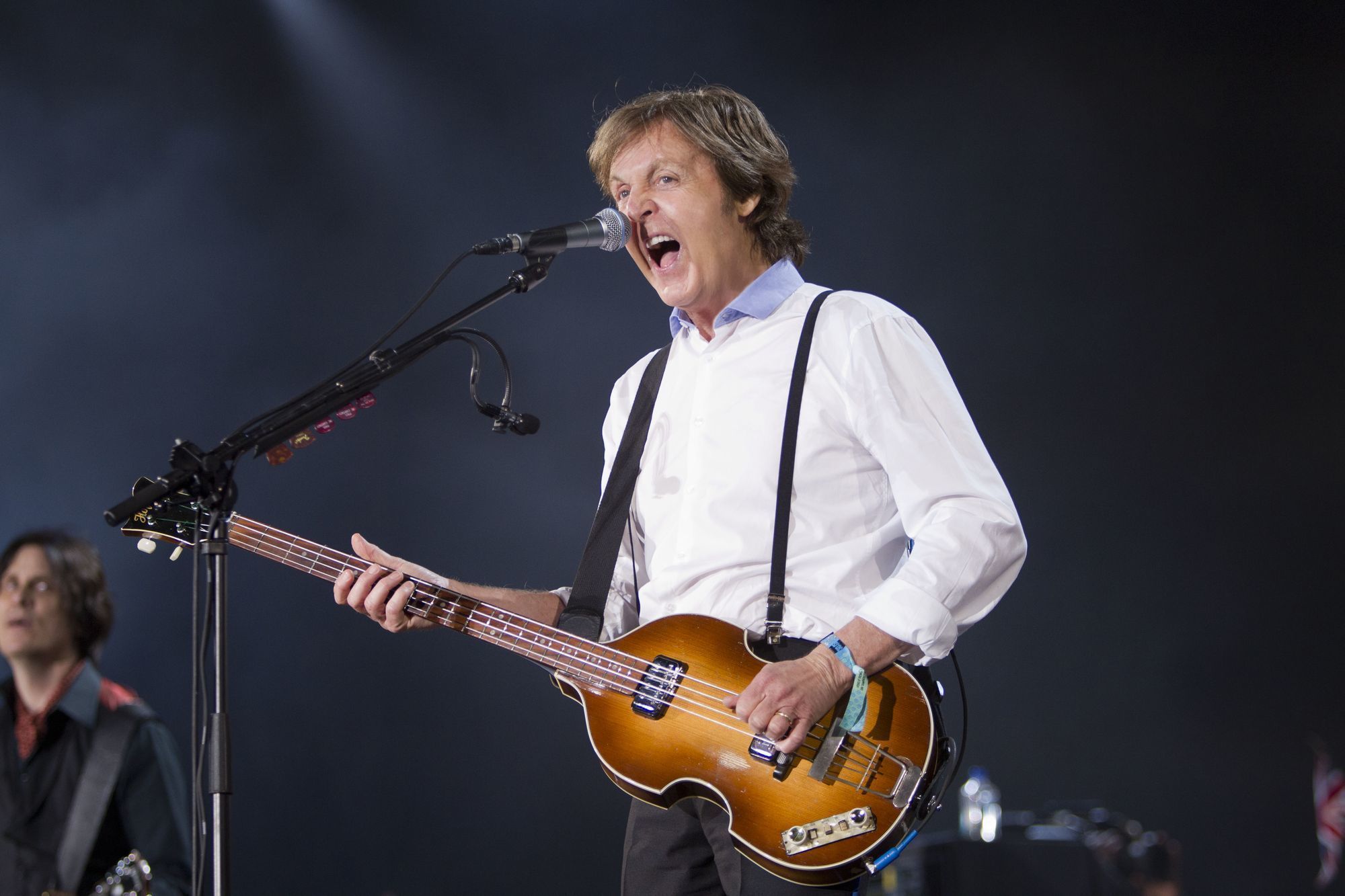
Paul McCartney was dead, former member Ringo Starr testifies! A new development in the urban legend?
Former Beatles drummer Ringo Starr stunned the world when he said in an interview with a publication that the "real" Paul McCartney died in a car accident on November 9, 1966. Here is Ringo's statement, urban legends about Paul, and his own reaction.
Read Article
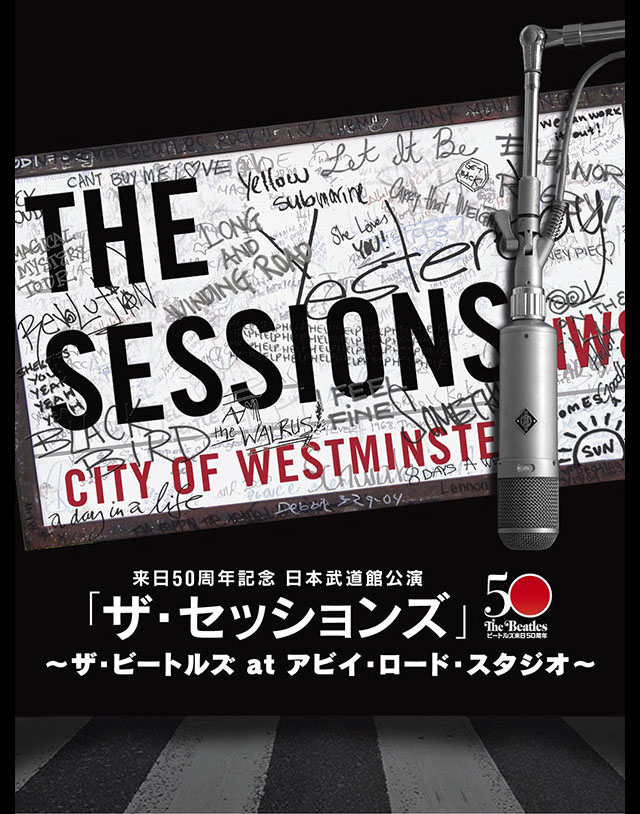
The Sessions, a recreation of the recording sessions of the legendary Beatles band, is coming!
It has been 50 years since the Beatles came to Japan. They were the first foreign artists to perform live at the Nippon Budokan on June 30 and July 1, 1966. On those very same days and at the same place, an event will be held to recreate the Beatles' recording sessions. The title of the event is "The Sessions. It is an attempt to perfectly recreate the Beatles' studio sessions at Abbey Road Studios using a variety of technologies.
Read Article
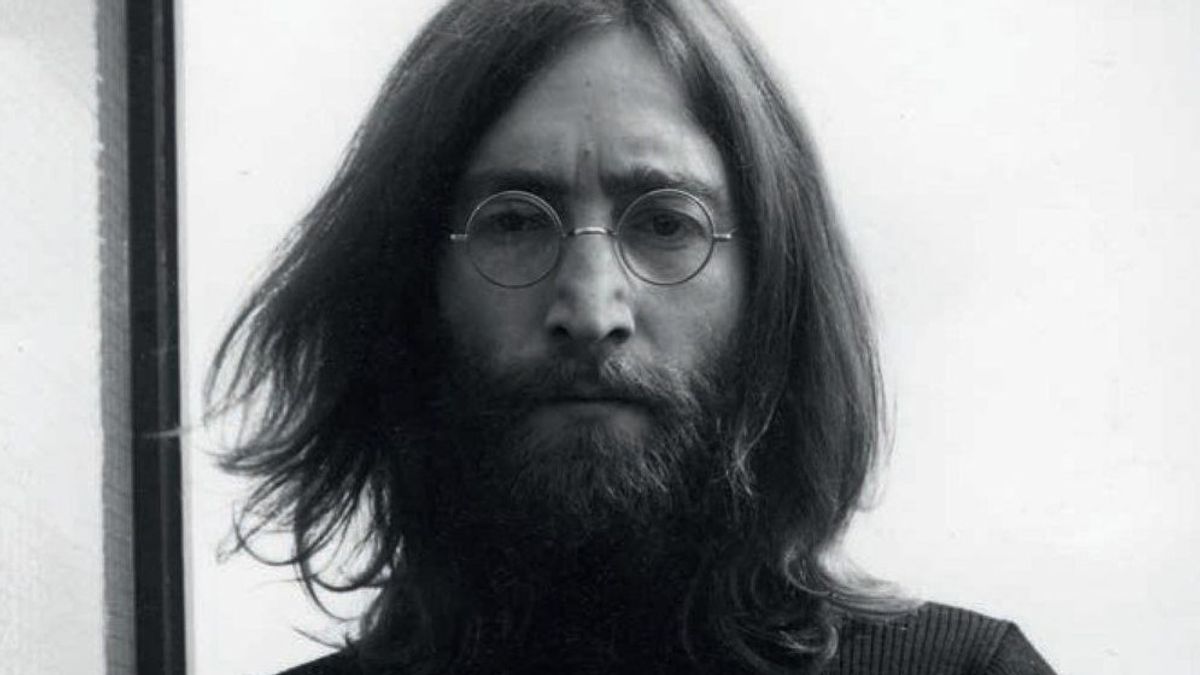
[John Lennon] Summary of celebrities and entertainers who died between the ages of 40 and 49 [Ken Maeda].
Entertainers and celebrities who have had a great impact on the world. Many of them have left this world at the young age of 40s. Diseases, accidents, suicides, assassinations.... In this article, we have compiled a list of such people. Although the causes vary, it is always painful to lose a person, no matter what time period or country.... We sincerely pray for the repose of their souls.
Read Article
![Paul McCartney] Summary of Hollywood stars and celebrities who are actually suspected of being anti-Japanese [Cameron Diaz](https://renote.net/files/blobs/proxy/eyJfcmFpbHMiOnsiZGF0YSI6NzA3OTE5MiwicHVyIjoiYmxvYl9pZCJ9fQ==--f54ed1968ea175d8f6be5ccbc0aac2b4b47ef326/5b111e621ae6624f008b472a.jpg)
Paul McCartney] Summary of Hollywood stars and celebrities who are actually suspected of being anti-Japanese [Cameron Diaz
The term "Hollywood star" is synonymous with world-famous performers. Of course, they are very well known in Japan, too! Some of them have openly stated that they "love Japan! but there are some who are suspected of being anti-Japanese. I don't know if it is true or not, but if these people are capable of world-class performances, they may be able to distinguish between their real intentions and their pretense in a matter of seconds.
Read Article
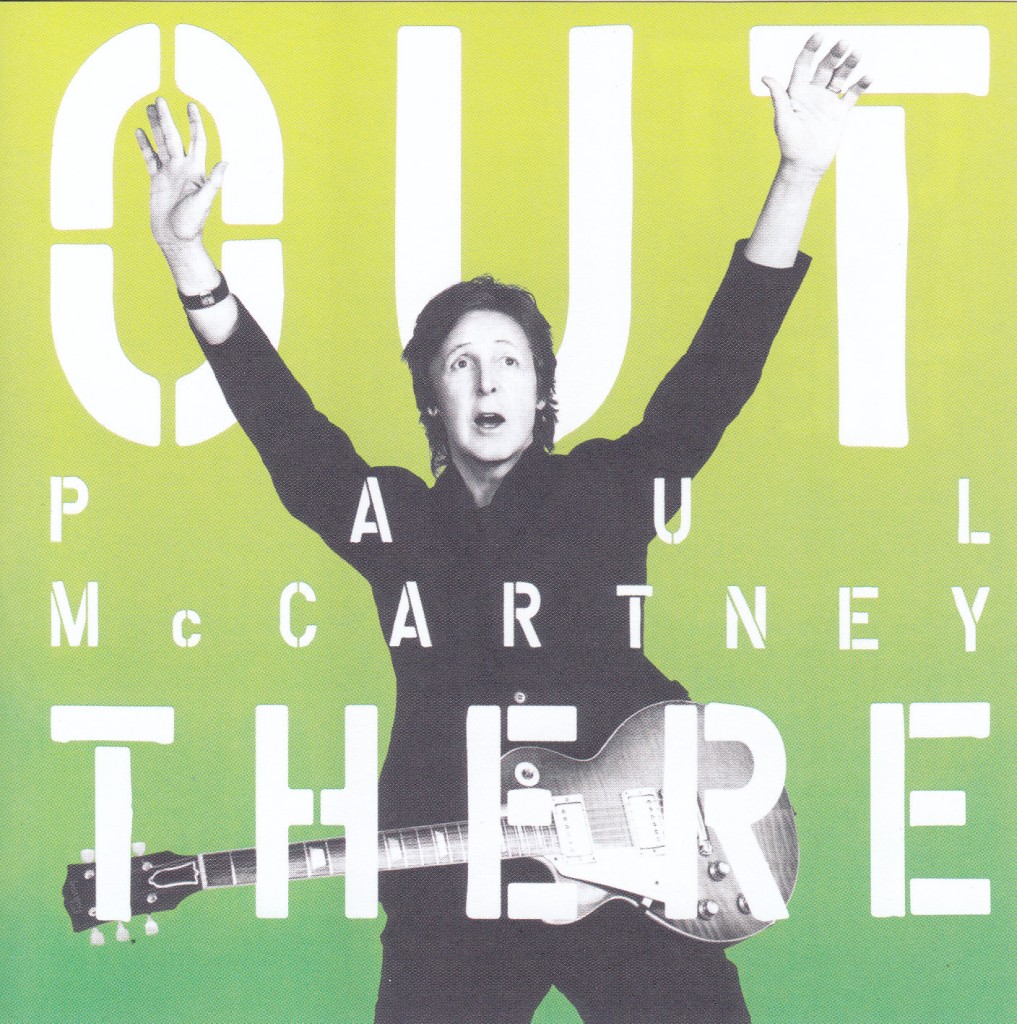
All Paul McCartney shows in Japan cancelled! Discussion of the possibility of a return visit to Japan!
Paul McCartney was scheduled to make his long-awaited return to Japan in May 2014, including his first Budokan concert in 48 years, but he became ill with a viral inflammation and canceled all shows shortly before the show. Many fans were disappointed and many wondered what would happen to him in the future. This article summarizes the situation at that time and the possibility of Paul's return to Japan for a replacement show, which he hopes to do.
Read Article
Paul McCartney suffered from "twisted intestines" and underwent emergency surgery in Japan!
Paul McCartney came to Japan for his first tour in six months, but canceled all shows due to poor health. The name of his illness was announced as viral inflammation, but it was later revealed that he had undergone surgery for intestinal sprain in Japan. The following is a summary of the illnesses that the great star suffered from in Japan.
Read Article
Paul McCartney cancels all shows! Explains the reason "viral inflammation"!
Paul McCartney, who was scheduled to return to Japan in May 2014, has become ill due to viral inflammation and has had to cancel all of his performances, including the Budokan concert. What is this "viral inflammation"? We will present a summary of Paul's sudden illness, which has several possibilities.
Read Article
Tags
Contents
- The Beatles Overview
- Members of The Beatles
- John Lennon
- Paul McCartney
- George Harrison
- Ringo Starr
- Former member of The Beatles
- Stuart Sutcliffe
- Pete Best
- People related to The Beatles
- Allan Williams
- Raymond Jones
- Brian Epstein
- George Martin
- A Brief History of The Beatles
- Birth and Death
- Major Events
- 1956-1961
- 1962-1966
- 1967-1970
- Analog release in the U.K.
- single
- 4-track EP
- album
- Analog release in the U.S.
- single
- 4-track EP
- album
- Analog release in Japan
- single
- 4-track EP
- album
- Solo Works
- Related Works
- The Beatles CDs
- The Beatles Discography
- original album
- Please Please Me
- With The Beatles
- A Hard Day's Night
- Beatles For Sale
- Help!
- Rubber Soul
- Revolver
- Sgt. Pepper's Lonely Hearts Club Band
- Magical Mystery Tour
- The Beatles
- Yellow Submarine
- Abbey Road
- Let It Be
- Editorial Albums & Other
- A Collection Of Beatles Oldies
- Hey Jude
- 1962-1966
- 1967-1970
- Rock 'N' Roll Music
- The Beatles At The Hollywood Bowl
- Love Songs
- Rarities (UK release)
- Rarities (U.S. version)
- The Beatles Ballads
- The Beatles Box
- Reel Music
- 20 Greatest Hits
- Past Masters Volume One
- Past Masters Volume Two
- Live At The BBC
- Baby It's You
- Anthology 1
- Free As A Bird
- Anthology 2
- Real Love
- Anthology 3
- Yellow Submarine Songtrack
- 1
- Let It Be... Naked
- love
- Mono Masters
- On Air - Live At The BBC Volume 2
- Live At The Hollywood Bowl
- Sgt. Pepper's Lonely Hearts Club Band (50th Anniversary Edition)
- The Beatles' most popular songs
- Love Me Do
- Please Please Me
- Twist And Shout
- From Me To You
- She Loves You
- All My Loving
- I Want To Hold Your Hand
- Can't Buy Me Love
- You Can't Do That
- A Hard Day's Night
- Long Tall Sally
- Baby's In Black
- Ticket To Ride
- Help!
- Yesterday
- Day Tripper
- We Can Work It Out
- Nowhere Man
- Paperback Writer
- Yellow Submarine
- Eleanor Rigby
- Strawberry Fields Forever
- Penny Lane
- A Day In The Life
- Hello Goodbye
- I Am The Walrus
- Lady Madonna
- Hey Jude
- Revolution
- Hey Bulldog
- Get Back
- Don't Let Me Down
- The Ballad Of John And Yoko
- Something
- Let It Be
- Free As A Bird
- Real Love
- The Beatles' backstory, trivia, small stories/episodes, anecdotes
- Dramatic departure of a member
- Paul's death theory
- The three major crises of 1966
- Mr. Toshitake Kotei
- Imelda Marcos
- Tommy Charles
- A Tribute to The Beatles