
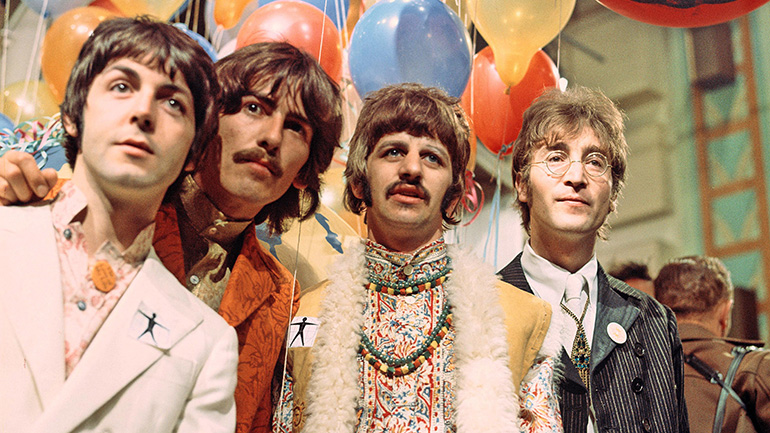
The Beatles are a four-piece rock band representing the 20th century that debuted in the United Kingdom in 1962. Their influence extended not only to their music, but also to their fashion, speech, and thought, creating a social phenomenon. One of the most notable aspects of their music is that their own musical development has directly influenced the musical development of the entire musical world and of their fans, who are their listeners.
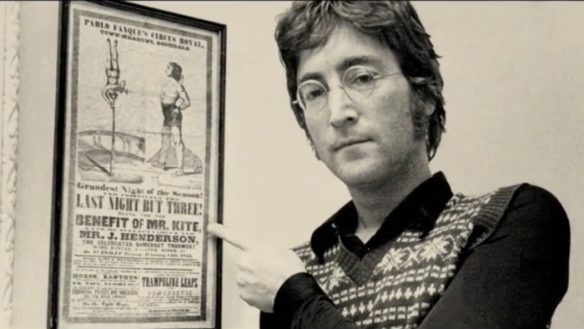
John points to the poster on which the song is based.
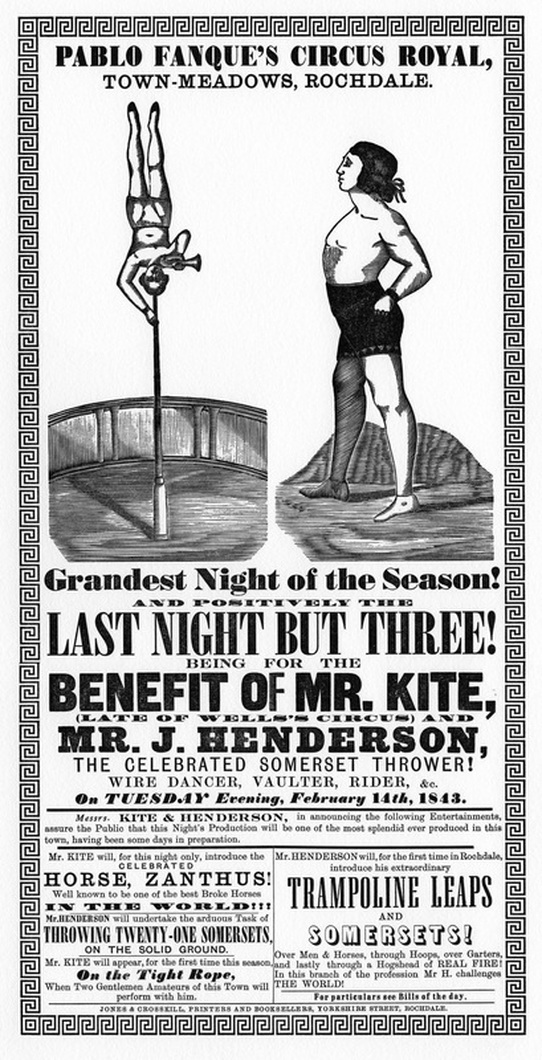
This is the poster.
John: "I'm not very proud of that song. John: "I'm not very proud of that song, because it doesn't really feel like a work of art. It's just a song that we put on Sgt. Pepper's because we needed a new song to put on Sgt. It had no meaning at all. All I did was borrow a few words from other sources, put them together, and add sounds to them. That's all there was to it. I didn't think it was good at all when I was making it, and I didn't want to take it seriously. But nobody believed me. It's really, really stupid because Henry the horse is about heroin. There is no meaning behind it. It's as pure as a watercolor painting."
Martin: "Paul sat down and asked me what I was going to do with Paul's music. Much of the arrangement, down to the individual notes, was Paul's idea, and all I had to do was just let it take shape. John, however, was not so clear on that point. John would talk about his ideas in metaphors. So I had to get inside his head and find out what he wanted. So it was more of a psychological approach. For example, with "Mr, Kite," I said, "This is a song about a festival square. It's a little bit unrealistic. I want it to have the feel of a sawdust or a circus ring. And I said, 'Well, I don't know, I don't know. So I had to first figure out how to make that image sound."
John wanted the sound of a real Steem organ, but Martin told him that there were no hand-played Steem organs in existence (only ones played with punch cards). So Martin tracked down an old Victorian-era steam organ tape and instructed the engineer to cut the tape into pieces about a foot apart, toss them in the air, and then splice them back together again, in no particular order. The result was an undulating sound that made no sense musically, but aurally was exactly what Martin was looking for.
*Some books describe the tape as "an old Victorian era Steem organ tape" as above, but "The Beatles Recording Sessions Complete Edition" by Mark Lewison describes it as "a tape of Sousa's March.
*Recording Details
1967
February 17.
Takes 1 through 7 are recorded. Tape reduction of take 7 was used to create takes 8 and 9. John's vocals were overdubbed onto take 9.
Mono mixing based on take 9.
This mixing was a rough remix and was not used as the master.
February 20
Recorded without take number.
The tape of the march being played was cut into pieces and randomly spliced back together to create a tape for sound effects.
March 28.
Overdubbed take 9 with George, Ringo, Mal Evans, Neil Aspinall's harmonica, John's organ, and Paul's guitar solo.
March 29.
Take 9 with overdubs of sound effects created on February 20.
March 31
Organ and glockenspiel overdubs on Take 9.
Mono mixing was performed based on take 9.
April 7
Stereo mixing was done on Take 9.
Within You Without You
This is George's work and the lead vocalist is also George.
George: "I wrote this song after I became interested in meditation. We had already graduated from LSD and were in the 'All You Need Is Love' era. We wrote the song at Klaus Foreman's house in Hampstead, London. I was playing the pedal harmonium there one night after dinner, and the song just came to me. The melody came first, then the opening words "We Were Talking". I finished the lyrics later. It was right around the time we were making "Sgt. I had been taking lessons with Ravi Shankar for a while, so I could play the sitar somewhat decently. I continued my study of Indian music, and at this time I was practicing "Sargam," a melody that forms the basis of various ragas. So during this period, I was eager to write music that used a different scale from Western music. What I think worked best was the instrumental part of the interlude. There, the rhythm is in 5/4 time, 1-2, 1-2-3, 1-2-1-2-3. It was the first time I had ever incorporated the irregular rhythms of Indian music.
John said, "That was one of George's best works. Of course, it's also my favorite song. It's a clear statement of his philosophy and music. He has a natural talent. Otherwise, he wouldn't have come up with that sound.
Peter Blake, who designed the cover for Sgt. Pepper's: "I still remember the night we recorded Within You Without You, there was a carpet on the floor and an Indian musician was sitting on it. The atmosphere was totally different from other times."
The ending laugh is added by George with a sarcastic note: "People who hear this song will be bored anyway.
*Recording details
1967.
March 15.
First take is recorded.
Mono mixing is done based on the first take.
This mixing was a rough remix and was not used as the master.
March 22
Overdub the first take with a dirrupa (Indian instrument). The first take was tape reduced to make the second take.
Mono mixing is done based on the second take.
This mono mixing was done to create an acetate disc. The acetate disc is a test disc made for the members and staff.
April 3
Violin and cello overdubs were added to the second take.
Mono mixing is done based on the second take.
This mono mixing was not used.
April 4
Mono and stereo mixing was done based on the second take.
The ending laugh was added on this day.
When I'm Sixty-Four
Paul was 15 or 16 years old when this song was recorded, and Paul sang lead vocals. John helped with the lyrics.
Paul: "This is a song I wrote when I was 15 or 16, when I was still in Liverpool, on a piano I had at home. It's a kind of cabaret song." "There are a lot of half-jokes in my songs, like 'When I'm Sixty-Four. There are a lot of half-jokes in my songs, like 'When I'm Sixty-Four,' but people take them seriously. Paul says, "Will you love me when I'm sixty-four? But I also say, "Will you still feed me when I'm sixty-four? I also say, "Will you still feed me when I'm sixty-four? If I were serious, I wouldn't say it like that. Lovely Rita is no different. I'm just kidding about the parking ticket officer being sexy.
I would never dream of writing a song like that.
This song was played at early shows to pass the time when the amps broke down or the power went out.
John: "When I was at Cavern, you sang it with the piano in the background when the amps broke down."
*Recording Details
1966
December 6.
First and second takes are recorded.
December 8
Paul's vocals are overdubbed onto the second take.
December 20
Overdubs John, Paul, and George's backing vocals on the second take.
A tape reduction of the second take is made for the third and fourth takes.
December 21
Clarinet overdub on take 4.
Mono mixing is done based on the 4th take.
This mono mixing is not used.
December 29
Mono mixing is performed based on the 4th take.
This mono mixing was not used.
December 30
Mono mixing was done based on the 4th take.
1967
April 17
Stereo mixing was done based on the 4th take.
Lovely Rita
Paul's work and lead vocalist is also Paul.
Paul: "When I was playing piano in Liverpool, I heard that in the U.S. a female parking enforcement officer is called a meter maid, and I thought, 'This could work. Soon after, "meter maid" became "Rita Meter Maid" and then "Lovely Rita Meter Maid. At first I thought it was going to be a song about some kind of grudge. Then I continued with "You took my car away and I'm so blue today. I thought, "Who would love a woman like this? I thought, "I'm not sure anyone would like this woman, but then it occurred to me that maybe I should just love her, and tell her that she's nice, even though she's crazy loyal to her duty like a soldier, carries a big bag over her shoulder, and stomps her feet loudly when she walks. The protagonist falls in love at first sight with a woman who writes down the license plate numbers of cars. The protagonist must be a shy office clerk or something, since she is so shy that she is attracted to the policewoman who is policing her parking. If that is the case, he should ask her out on a date by saying, "May I inquire discreetly when you are free to take some tea with me (May I ask you sometime?). May I inquire discreetly when you are free to take some tea with me? I'd like to have some tea with you. That's how I imagined this song. It's tea, not marijuana. It's like saying, "Come mow the grass," but tea could be taken as marijuana. Or it could be taken as something to do with an old teapot (marijuana). But I didn't care about marijuana, so I didn't change the lyrics. I wasn't trying to be clever and weave marijuana into the song to show that I'm not a genius.
Tony King, a colleague of Martin's who later became president of the U.S. Apple label: "We were all playing 'Lovely Rita' one night. That song has some interesting sounds in it, doesn't it? That was done with a comb and paper. Suddenly, George [Martin] said to me, 'Hey, can you go to the other studio where we're doing the recording session and see if anyone has a metal comb? Then we all went to the bathroom and ripped up the toilet paper. When we got the comb through, we had the luxury of taking an hour out of our precious recording time to find the right comb and the right strength of toilet paper.
John: "It's a very Paulish pop song. He writes songs like he writes novels. I don't know anything about secretaries or traffic cops.
Recording Details
1967
February 23.
Takes 1-8 were recorded. Tape reduction of take 8 was used to create take 9. Overdubbed piano, drums, guitar, and bass on take 9.
February 24
Overdub Paul's vocals onto Take 9. The second take is tape-reduced and takes 10 and 11 are created.
March 7
Backup vocals were overdubbed onto Take 11.
March 21
Martin's piano solo was overdubbed onto the 11th take.
Mono mixing is performed based on the 11th take.
April 17
Stereo mixing was done on the 11th take.
Good Morning Good Morning
This is John's work and the lead vocalist is also John.
John said, "When I'm composing at the piano, I often leave the TV on at a low volume, and if I'm not on it much, I can clearly hear the words on the TV. When I'm not riding very well and not getting much done, I can hear the words on the TV very clearly. It was a commercial for Corn Flakes.
Paul: "It's a song about his boring life at the time. John was watching the melodrama "Meet The Wife.
Martin: "We weren't afraid to put in pre-made sound effects. We had all kinds of sound effects records. For example, "Good Morning Good Morning" has a bunch of farm animal noises that were all dubbed from sound effects records. I can't tell you how happy I was when I realized that the chicken crowing at the end of 'Good Morning Good Morning' sounded remarkably similar to the first guitar note in 'Sgt. Pepper's Reprise. It allowed me to mix the two tracks together as if the former had morphed into the latter. It was a rare stroke of good fortune to edit that one."
Engineer Jeff Emerick: "We were having a little smoke. John came to me and said he wanted the sound of animals running away, but he wanted the first animal to run away when the second animal came out, the second animal to run away when the third animal came out, and so on, with the former animal either being prey to the latter animal or being terribly afraid of the latter animal. So, the sound of that animal was appropriate. So the animal sounds didn't come about by chance, but after a lot of thought and consideration.
Paul: "I think that was the first time we used sound effects extensively. There were horses, chickens, dogs, and a lot of other animals running around, right?
In later years, John criticized the song.
John said, "That was total garbage!
Paul played the lead guitar during the interlude.
*Recording details
1967
February 8
Takes 1-8 are recorded.
February 16
John's vocals and Paul's bass are overdubbed onto take 8. Take 8 is tape reduced to make takes 9 and 10.
Mono mixing based on take 8.
This mixing is a rough remix and is not used as the master.
February 20
Mono mixing was done based on the 10th take.
This mono mixing was not used.
March 13
The brass section was overdubbed onto Take 10.
March 28
John's vocals were overdubbed onto take 10. Take 11 is created by tape reduction of Take 10. Paul's guitar solo and John and Paul's backing vocals were overdubbed onto the 11th take.
March 29.
Overdubbed the 11th take with sound effects of animal noises.
April 6
Mono and stereo mixing was done on the 11th take.
The stereo mixing is used, but the mono mixing is not used.
April 19
Mono mixing was done based on the 11th take.
Sgt. Pepper's Lonely Hearts Club Band (Reprise)
This is Paul's work, and the lead vocalist is also Paul.
In the middle of the song, the audience suddenly starts laughing, and Paul says, "When I was a kid, I used to listen to the toys on the radio.
Paul said, "When I was a kid, there was a moment on the radio when Tommy Cooper didn't say anything and the audience started laughing. So I wanted to create a scene where you don't know why the audience laughed.
There is a difference between the mono version and the stereo version.
The mono version is one tempo slower than the stereo version in terms of the timing of the drums coming in during the intro. Also, the sound effects are slightly different.
Recording Details
1967
April 1
Takes 1 through 9 are recorded.
Mono mixing is done based on the 9th take.
April 20
Stereo mixing was done based on take 9.
A Day In The Life
This is a work that combines John and Paul's respective songs into one. Paul wrote the middle part of the song, and John wrote the front and back parts of the song in between. John and Paul each sang lead vocals on the parts they wrote.
John said, "One day I was reading the newspaper and two articles suddenly caught my attention. One was an article about the Guinness family heir who had died in a car accident. He died in a collision in London. That was on the front page. Then I opened to the next page, and there was an article about 4,000 holes in the road in Blackburn, Lancashire, that needed to be filled in as soon as possible. Paul made a short but beautiful insert called 'I'd love to turn you on'. He had had the phrase in his head for a while, but never had a chance to use it. I thought that part was really great, too."
*The Guinness heiress is Tara Brown, who on December 18, 1966, drove her beloved Lotus Elan through a red light and crashed into a parked van at an intersection in South Kensington at a high rate of speed of 100 miles per hour (about 160 km/h). She was 21 years old. Tara Brown was a close friend of The Beatles and other rock artists.
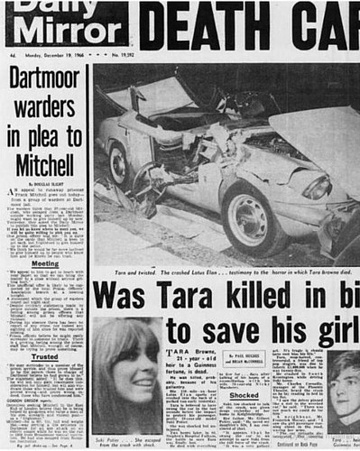
The Daily Mirror article on the death of Tara Brown.
John: "You know that crap about the 4,000 holes found in Blackburn, Lancashire? I couldn't decide on one word in that verse when we started recording. I had it down to 'Now they know how many holes it takes to ( )to Albert Hall. It's just a nonsense lyric, but I just couldn't come up with the last verb. What in the world does a hole have to do with Albert Hall? It was actually Terry Dolan (a friend of Brian Epstein's) who put the kibosh on this one. He said, 'How about Fill the Albert Hall, John? He said, 'What do you think of Fill the Albert Hall, John?
Engineer Jeff Emerick: "John's voice on 'A Day In The Life' was made with a tape echo. We used to feed the vocal microphone signal into a mono tape recorder. The tape recorder had a recording head and a playback head, so when I recorded vocals to tape, I could play back and feed back the sound as I recorded. There was a big potentiometer on the front of the tape recorder, and we kept turning up the recording level until we got a faint feedback. That's how we got that wobbly vocal sound. Of course, while singing, John would listen to his echoes through his headphones and use them to create a rhythmic atmosphere as he sang. The tape echo on the vocals was perfect for John's voice. He had a very sharp voice that clearly showed the effect of the echo."
When it was discovered that the song lacked a middle section, Paul was going to use it for another song and provided the lyrics. After some discussion, it was decided to use the lyrics with the stipulation that they be connected by a rhythmic interlude. It was George Martin who suggested that we decide on the length of that interlude.
Martin: "We had Mal Evans count the number of bars so that the tempo would not be off. On the record, you can hear him standing by the piano counting 'one, two, three, four. Mal had set an alarm clock at the end of bar 24 as a joke, and that sound is also included. I left these two in because no matter how hard I tried, I couldn't turn them off."
John asks Martin to turn it up to "an (orchestral sound) that sounds like the end of the world.
Martin: "John explained to me what he wanted me to do, to the point where I could write it into the score. And for the 'I'd love to turn you on' passage, I decided to have the cello and violin play two notes that respond to John's voice. Instead, he asked them to slide their fingers up and down between the frets, gradually increasing the intensity until the beginning of the orchestral climax. The climax was another challenge. First, I wrote the lowest note each instrument could play in the first bar, and the highest note each instrument could play in the last 24 bars, closest to the E major chord. Then I drew a wiggly line over the 24 bars to indicate approximately where the note should rise in each bar. I also instructed them to slide as gracefully as possible to the next note. However, while this was fine for stringed instruments, keyed instruments such as clarinets and oboes require the fingers to move from key to key. So I asked them to use their lips to make as many changes as possible."
Paul suggested that Martin and the orchestra go into the session in disguise.
Pete Shotton, a friend of John's, "was mostly a nice middle-aged adult. Each member of the orchestra was handed a paper mask or some other party item. For example, the orchestra leader was given a bright red false nose. The first violinist was given a giant gorilla hand and had to grab his bow while wearing it. After several rehearsals, the orchestra was finally able to produce a chaotic, disorderly sound that fit the Beatles' requirements."
Orchestra leader Eric Groenberg: "They asked the string players to create a unique effect that was very difficult to write down in the score, but they explained what they wanted with their own mouths. It was an enhancement of sound, or what might be called an increase in pitch. You know those spiral chords that start with a semitone whorl and gradually rise? It's that kind of thing. The effect was, in a sense, achieved by each individual playing on their own. Because the mix of different elements was the key to creating this particular effect.
Paul: "I suggested that the other parts of the piece should be written in musical notation, but for those 15 bars, all I had to do was give them a simple instruction: 'Start on the lowest note and end on the highest note. It was up to each member of the orchestra to decide how to reach that note, but it turned out to be a crazy crescendo. The interesting part was the trumpet player. The trumpet player, who is basically a drinker and a nonchalant type, reached the highest note faster than everyone else. The opposite is the string players. They looked at each other anxiously, like lambs, and said, 'You want it a little higher?' 'Yeah. I'll do the same. And then, "Do you want it a little higher? And then, "Do you want me to turn it up a little more? Everyone is very delicate and careful. They're all going up at the same time. But listen to that trumpet. The crescendo of that orchestra is a little bit inspired by the theories of Stockhausen and others. It's much more abstract.
Engineer Jeff Emerick: "For the final orchestral crescendo, I carefully manipulated the faders to gradually increase the volume to a peak. My technique at that point was a bit psychological. I would turn up the volume to a certain point and then turn the fader back down a little. I was able to do this because I had enough time to do so, but I think the key to this kind of thing is not so much technique as it is how much you can feel the music.
Martin: "I wanted to extend the piano chords at the end as long as possible. So I said to Jeff Emerick, 'This isn't the Beatles, this is where you show off your skills.
Publicist Derek Taylor: "The last chord was the sound that the four Beatles and George Martin made in the studio by hitting the pianos all together, and three pianos were used. They all struck the chord at the same time, and that too as hard as possible. At that moment, the engineer would quickly turn down the audio input fader, then slowly turn up the fader to the highest level as the sound gradually became quieter and quieter. This took 45 seconds each time, and was repeated three or four times, building up to a much thicker sound.
Martin: "One part of me said, 'I think you've gone a little too far. I'm overstepping my bounds,' and another part of me says, 'This guy is so amazing! Absolutely brilliant!" It's totally amazing! So I played our American visitor a bit of "A Day In The Life" before I put it all together. And when we got to that part, he just stood on his head. Ringo's use of the tam-tam was also innovative. Ringo's use of the tom-tom was also innovative. In "A Day In The Life," he uses the tom-tom to create a timpani-like sound, which is very unique.
Paul: "There was an article in the newspaper about a lucky man who had succeeded. And on the side of it was a picture of a man sitting in a big car. And when John saw the picture, he just had to laugh. Yes, it was a black comedy. The next part was originally a completely different song. The next part was originally a completely different song, but it just happened to fit in well with the first part. It's actually just a recollection of what it's like to run, jump on a bus, have a smoke, and then go to class. But we decided, 'Let's make a real ecstasy song. That's a memory from school, really, when I was blowing on a wood pine and listening to someone talk and being dreamy, and I wrote that song intentionally to provoke people. It's the only thing on that album that I intentionally wrote to provoke people. It's not that I didn't notice the lyric "I'd love to turn you on," but it was the truth that we wanted people to wake up to. It's not that I didn't notice the lyric, 'I'd love to turn you on. I remember thinking, 'I'll leave it at that for now, it's too dangerous to write any more. And then the BBC banned the song."
Leonard Bernstein, American composer and conductor: "Three bars of 'A Day In The Life' still sustain me, rejuvenate me, stimulate my senses and my sensitivity.
*Recording details
1967
January 19, 1967
First through fourth takes are recorded.
January 20
Takes 5 through 7 were made by tape reduction of take 4. John's vocals, Paul's vocals and bass, and Ringo's drums are overdubbed onto take 6.
January 30
A mono mixing was created based on take 6.
This mixing is a rough remix and is not used as the master.
February 3
Paul's vocals, bass, and Ringo's drums were overdubbed from take 6 (the take done on January 20 was rejected and re-recorded).
February 10.
Tape reduction of take 6 to make take 7. An orchestral overdub was added to take 7.
February 13
Mono mixing is performed based on Take 7.
This mono mixing is not used.
February 22
Takes 1 through 9 of the editing part are recorded.
*The ending piano reverberation sound was recorded in this editing part.
Mono and stereo mixing was done based on takes 6 and 7.
Tape editing based on mono remix 9 created by mono mixing and take 9 of the editing part.
The mono mixing is used, but the stereo mixing is not used.
February 23
Stereo mixing is done based on takes 6 and 7.
March 1
Piano overdubs were added to Take 6.
The overdub was of unknown use and was not used.
Magical Mystery Tour

Side A
Magical Mystery Tour
2. the Fool On The Hill
3. flying
Blue Jay Way
Your Mother Should Know
I Am The Walrus
Side B
1. Hello, Goodbye
Strawberry Fields Forever
3. Penny Lane
Baby You're A Rich Man
All You Need Is Love
In the UK, it was released on December 8, 1967 as a 2-CD EP with 3 songs (6 songs in total), and in the US, it was released as an album on November 27, 1967, 10 days earlier.
When the original album was released on CD in 1987, this U.S. Capitol-edited version was regarded as the "original album" and released on CD, so we will treat it as the ninth original album here as well.
It was released after the singles "All You Need Is Love" and "Hello Goodbye," and included all the songs from the singles (except for "I Am The Walrus," the B-side of "Hello Goodbye," which was not included on the UK EP).
The U.S. version consists of the six songs from the U.K. EP on side A, the singles "All You Need Is Love" and "Hello Goodbye" on side B ("I Am The Walrus" is on side A), and the single "St. Pepper's Lonely Hearts Club Band" from the previous album "Sgt. Club Band" and the single "Strawberry Fields Forever/Penny Lane" (both A-side singles) before the release of "Sgt.
The recording process is as follows
1966
November 24
Recorded the following songs
Strawberry fields Forever
November 28
Recorded the following
Strawberry fields Forever
Mono mixing of the following
Strawberry fields Forever
November 29
Recorded the following
Strawberry fields Forever
Mono mixing of the following
Strawberry fields Forever
December 8
Record the following
Strawberry fields Forever
December 9
Recorded the following
Strawberry fields Forever
Mono mixing of the following
Strawberry fields Forever
December 15
Recorded the following
Strawberry fields Forever
Mono mixing of the following
Strawberry fields Forever
December 21
Recorded the following
Strawberry fields Forever
December 22
Mono mixing of the following
Strawberry fields Forever
December 29
Stereo mixing of
Strawberry fields Forever
The following recordings
Untitled (later "Penny Lane")
Mono mixing of
Untitled (later "Penny Lane")
December 30
Recording of
Penny Lane
Mono mixing of
Penny Lane
1967
January 4
The following recordings were made.
Penny Lane
January 5
Recorded the following
Penny Lane
January 6
Recorded the following
Penny Lane
January 9
Recorded the following
Penny Lane
Mono mixing of the following
Penny Lane
January 10
Recording of the following
Penny Lane
January 12
Recorded the following
Penny Lane
Mono mixing of the following
Penny Lane
January 17
Recording of the following
Penny Lane
Mono mixing of the following
Penny Lane
January 25
Mono mixing of the following
Penny Lane
February 17
Single "Strawberry Fields Forever/Penny Lane" released
April 25
The following recordings are made
Magical Mystery Tour
April 26
Recorded the following
Magical Mystery Tour
April 27
Recorded the following
Magical Mystery Tour
Mono mixing of the following
Magical Mystery Tour
May 3
Recorded the following
Magical Mystery Tour
May 4
Mono mixing of the following
Magical Mystery Tour
May 9
Recorded the following
Untitled
7 hours of instrumental jam sessions. Unreleased.
May 11
Recorded the following songs
Baby, You're A Rich Man
Mono mixing of the following
Baby, You're A Rich Man
May 12
Recorded the following
All Together Now
Mono mixing of the following
All Together Now
All Together Now" was not included in "Magical Mystery Tour", but was included in the animated soundtrack "Yellow Submarine".
May 17
The following songs are recorded
You Know My Name (Look Up The Number)
You Know My Name (Look Up The Number)" was not included in the "Magical Mystery Tour", but appeared on the B-side of the single "Let It Be" released about three years later.
May 25.
The following songs are recorded
Too Much (later "It's All Too Much")
It's All Too Much" was not included on the "Magical Mystery Tour" but was included on the "Yellow Submarine" animation soundtrack.
May 31
The following songs are recorded
Too Much (later "It's All Too Much")
June 1
Recorded the following
Untitled
Instrumental jam session. Unreleased.
June 2
Recorded the following two songs
It's All Too Much
Untitled
Untitled" is an instrumental jam session. Unreleased.
June 7
The following songs are recorded
You Know My Name (Look Up The Number)
June 8
Recorded the following
You Know My Name (Look Up The Number)
June 9
Mono mixing of the following
You Know My Name (Look Up The Number)
June 14
Recorded the following
All You Need Is Love
Mono mixing of the following
All You Need Is Love
June 19
Recorded the following
All You Need Is Love
June 21
Mono mixing of the following
All You Need Is Love
June 23
Recorded the following
All You Need Is Love
June 24
Recorded the following
All You Need Is Love
June 25
Recorded the following
All You Need Is Love
June 26
Mono mixing of the following
All You Need Is Love
July 7
Single "All You Need Is Love/Baby, You're A Rich Man" released
August 22
Recorded the following songs
Your Mother Should Know
August 23
Recorded the following
Your Mother Should Know
September 5
Recorded the following
I Am The Walrus
September 6
Recorded the following three songs
I Am The Walrus
The Fool On The Hill
Blue Jay Way
Mono mixing of the following songs
I Am The Walrus
September 7
Recorded the following
Blue Jay Way
September 8
Recorded the following
Aerial Tour Instrumental (later "Flying")
Mono mixing of the following
Aerial Tour Instrumental (later "Flying")
September 16
Recorded the following
Your Mother Should Know
Mono mixing of the following
Blue Jay Way
September 25
Recorded the following
The Fool On The Hill
Mono mixing of the following
The Fool On The Hill
September 26
Recorded the following
The Fool On The Hill
September 27
Recorded the following two songs
I Am The Walrus
The Fool On The Hill
Mono mixing of the following songs
The Fool On The Hill
September 28
Recorded the following two songs
I Am The Walrus
Aerial Tour Instrumental (later "Flying")
Mono mixing of the following two songs
I Am The Walrus
Aerial Tour Instrumental (later "Flying")
September 29
Recorded the following songs
Your Mother Should Know
Mono mixing of the following two songs
I Am The Walrus
Your Mother Should Know
October 2
Mono mixing of the following two songs
Your Mother Should Know
Recorded the following
Hello Hello (later "Hello Goodbye")
October 6
Recorded the following
Blue Jay Way
October 12
Mono mixing of the following two songs
It's All Too Much
Blue Jay Way
It's All Too Much" was not included in "Magical Mystery Tour", but was included in "Yellow Submarine", the soundtrack of the animation.
The following were recorded.
Accordion (Wild) (later "Shirley's Wild Accordion")
Mono mixing of
Accordion (Wild) (Later "Shirley's Wild Accordion")
Accordion (Wild) (later "Shirley's Wild Accordion") was never released on vinyl. It was used as an insert song in the movie "Magical Mystery Tour".
October 19
The following songs are recorded
Hello Hello (later "Hello Goodbye")
October 20
Recorded the following two songs
The Fool On The Hill
Hello Hello (later "Hello Goodbye")
October 25
Mono mixing of the following songs
The Fool On The Hill
Recorded the following
Hello Hello (later "Hello Goodbye")
November 1
Mono mixing of the following two songs
All You Need Is Love
Lucy In The Sky With Diamonds
Work on the soundtrack for the animated film "Yellow Submarine". However, it was not recorded.
Recorded the following two songs
Untitled Sound Effects
Hello Goodbye
Untitled Sound Effects" was done for the animated film "Yellow Submarine".
Stereo mixing of the following tracks
The Fool On The Hill
November 2
Recorded the following
Hello Goodbye
Mono mixing of
Hello Goodbye
November 6
Stereo mixing of the following four songs
Hello Goodbye
I Am The Walrus
Your Mother Should Know
Magical Mystery Tour
November 7
Recorded the following
Magical Mystery Tour
Stereo mixing of the following three songs
Blue Jay Way
Flying
Magical Mystery Tour
Mono mixing of the following three songs
Blue Jay Way
Magical Mystery Tour
November 15
Mono mixing of the following
Hello Goodbye
November 17
Stereo mixing as follows
I Am The Walrus
November 24
Single "Hello Goodbye/I Am The Walrus" released.
November 27
Album "Magical Mystery Tour" is released in the U.S.
November 28
Christmas Time (Is Here Again)" is recorded for the fan club.
December 8
2-CD EP "Magical Mystery Tour" is released in the U.K.
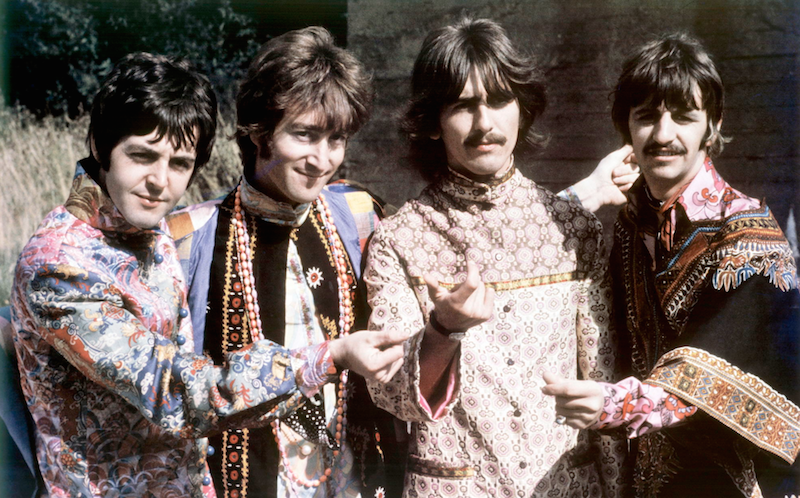
The jacket features a photograph of the members of the band dressed in animal costumes. The walrus in the front is John, the hippopotamus on the left in the back is Paul, the rabbit in the center is George, and the tori on the right is Ringo. Although the jacket gives a gorgeous impression, it lacks the artistic quality of the Beatles' previous jackets.
There was no album release in the U.K., and the album was released as a two-song EP with three songs, an anomalous specification. In the U.S., the album was released in its own edited version, with six songs from the U.K. EP on the A-side and three previously released singles on the B-side.
When the previous album "Sgt. Pepper's ~" was released, the contract stipulated that "an album with the same cover and the same content shall be released worldwide," but this was a rule that applied to the "original UK album," and since this was not the release of the original UK album, it was not possible to release the album in the US. However, this is the same rule as for the "UK original album," and it is thought that this unique American editing was possible because the album was not released as a UK original album this time.
The U.S. version was well received in the U.K. and sold well as an import, and was released in the U.K. on November 19, 1976. The album was officially recognized as the original album when it was digitally remastered on September 9, 2009.
The Japanese version of the album was released in two sets: the original British EP and the American version, both in stereo instead of mono. The mono EP was released for the first time in Japan on August 1, 1982 in "The Beatles EP Collection" (which contains both stereo and mono versions). The first mono analog album with the same specifications as the U.S. compilation was a limited reissue in the original mono series on January 21, 1982.
In the UK Melody Maker chart, it first appeared on the EP chart at #17 on December 16, 1967. It reached #1 on January 13, 1968.
In the U.S. Billboard magazine charts, it first appeared at #157 on December 23, 1967. It reached #1 the following day on January 6, 1968, and reigned at #1 for the next eight weeks until February 24, 1968.
This is the soundtrack to the TV show "Magical Mystery Tour" starring The Beatles. The TV show, an idea of Paul's, was the first project after the death of manager Brian Epstein.
The concept was for members of The Beatles and their associates to board a psychedelically colored bus and embark on an unpredictable journey, but the film was shot without a script or professional director, and lacked cohesion. The film was not well received, and although it was broadcast in the UK, it was not officially televised in the US until 1976.
In Japan, the film was first shown at Budokan on September 28, 1968, and was broadcast on TBS on October 6 of the same year under the title "The Mysterious Journey of the Beatles," but was hastily rebroadcast on October 10 due to an error that caused a discrepancy between the sound and images.
Paul's idea had its origin in his childhood memories of participating in a "mystery tour" in which only the driver knew the destination, and in a bus tour across the United States conducted by the American psychedelic group, the Merry Pranksters. The leader of the "Merry Pranksters" was Ken Kesey, the director of the movie "Cuckoo's Nest. The tour consisted of riding in a psychedelic painted bus called the "Furthur" around the U.S. while doing LSD, which was still legal in the U.S., and filming the events along the way.
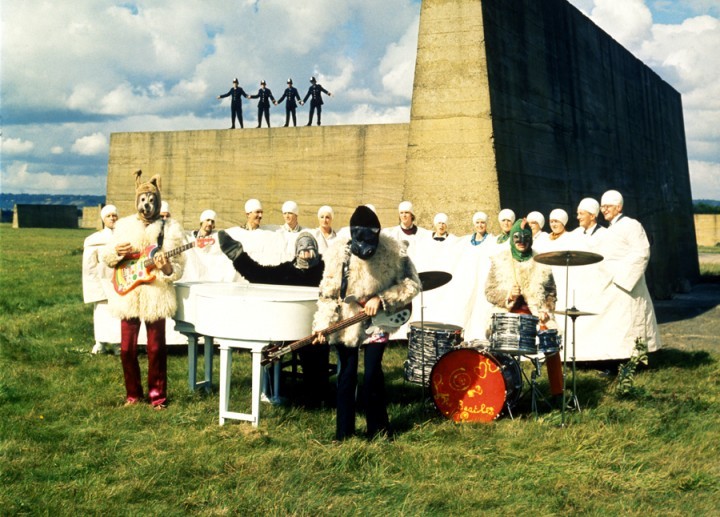
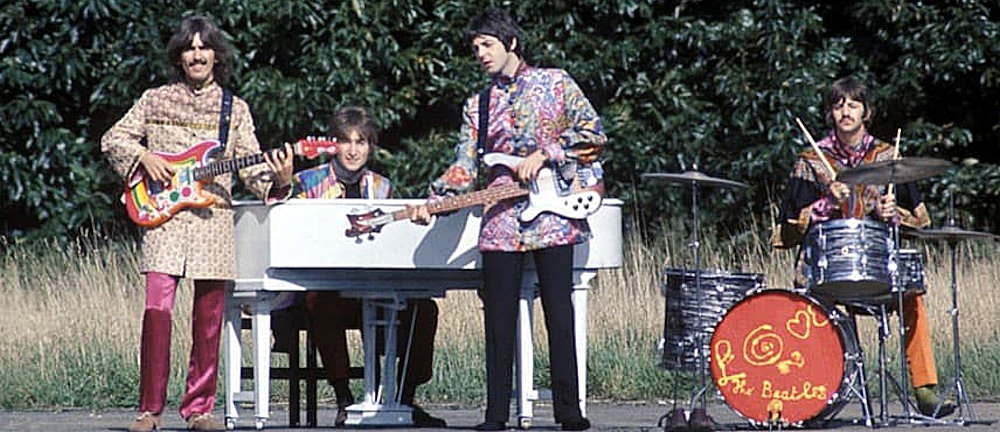
Six songs on the A-side of the album were used in the TV show. The scene of the band members wearing the jacket costume performing "I Am The Walrus," the scene of "Your Mother Should Know" at a dance hall, and the scene of "The Fool On The Hill," which seems to be a visualization of the lyrics of the song. from a current perspective, we can see images that could be considered the originals of MTV.
John has criticized the film as "the most expensive home movie ever made.
The five songs on the B-side are taken from the three most recently released singles, "Strawberry Fields Forever/Penny Lane," "All You Need Is Love/Baby, You're A Rich Man," and "hello Goodbye/I Am The Walrus. I Am The Walrus" is on the A-side because it was used in a TV program ("Hello Goodbye" is used in the closing credits of the program).
It was the last album released in both mono and stereo in the U.S. After the next album, "The Beatles", only the stereo version was released in the U.S.
Although the album was not well received as a visual work, it is musically very good, including Paul's "The Fool On The Hill," John's "I Am The Walrus," and the very strong singles "Strawberry Fields Forever/Penny Lane. The album has excellent musical content.
George said, "Paul at this time felt that someone had to do something. But I can't say I was really involved. I was an extra. But there was one good thing. It got the job done for us. Paul pulled us all together." He said.
John said, "I was still feeling funny. I felt like Brian was going to say, 'It's time to make a record. But Paul started doing it instead. Let's make a record. Let's make a movie. I think Paul thought that if he didn't come out and say, 'Let's make a record,' nobody would make a record.
John added, "Paul would come in out of the blue and say, 'I've written 10 songs, let's record them right now. Let's record it right now. Then I would say, 'Give me a few days. I'll write some songs. He was working with Mal Evans on the idea for Magical Mystery Tour, and later he said, 'This is my idea. And later he reported back to us and said, 'Here's my idea, here's the story. This is the story. But by that time, the production and everything was all done. And George and I were like, 'Fuck this movie, but we have to do it. But I guess we're going to have to do it.
Outline of the tracks
Magical Mystery Tour
This is Paul's work and the lead vocalist is also Paul. John helped write the lyrics.
Paul: "It's about drug trips. Roll Up' can also mean 'roll up a joint,'" says Paul. We also stuck to words that allude to drugs and tripping."
John: "Paul wrote it. I just helped with some of the lyrics."
There are subtle differences in sound effects between the mono and stereo versions.
The bus entering the second verse has a running sound followed by a brake sound and then a running sound again in stereo, but only the first running sound is included in mono.
In the simplified "Now" part, the trumpet is included for eight beats in stereo, but only for five beats in mono.
The singing of "The magical mistery tour is~" in the chorus and ending is clearly echoed in mono, but not in stereo.
*Recording details
1967
April 25.
First through third takes were recorded. Tape reduction of take 3 was used to create takes 4-8.
April 26
Overdubbed take 8 with Paul's bass, percussion by all members, Neal Aspinall and Mal Evans, and backing vocals by John, Paul and George. A tape reduction of take 8 was made to create take 9.
April 27.
Paul's vocals and backing vocals by John and George are overdubbed onto Take 9.
Mono mixing is performed based on take 9.
This mono mixing was done for the creation of the acetate. The acetate is a test disc made for the members and staff.
May 3
The brass section is overdubbed on Take 9.
May 4
Mono mixing is done on Take 9.
This mono mixing was not used.
November 6
Stereo mixing based on take 9.
November 7
Paul's vocals and sound effects are overdubbed onto Take 9.
Mono mixing was done based on take 9.
The Fool On The Hill
Paul's work with lead vocal by Paul.
Paul: "I think it reminded me of someone like Maharishi. I like the 'Perfectly still' part.
*Maharishi refers to "Maharishi Mahesh Yogi," the founder of [Transcendental Meditation], which is derived from Hinduism, and various organizations that promote it. Members of The Beatles traveled to India to meet him, but at the time of the release of "The Fool On The Hill," no contact had yet been made with Maharishi. Therefore, Paul's statement above is an afterthought.
John: "This is another good lyric. It means Paul has the ability to write the perfect song."
Recording Details
1967
September 6
The first take is recorded.
Demo recording was made on this day.
September 25
Takes 1-3 are recorded. A fourth take was made by tape reducing the third take. Paul's vocals, recorder, and Ringo's drums are overdubbed onto the fourth take.
Mono mixing was done based on the 4th take.
This mono mixing was done to create an acetate version. The acetate is a test disc made for the members and staff.
September 26th
Take 4 is tape reduced to make Take 5. An overdub is done on Take 5. A tape reduction of take 5 was made for take 6. Overdub on take 6.
(The details of the overdubs are unknown, but the piano, acoustic guitar, drums, bass, and Paul's vocals were "re-recorded.)
September 27.
Mono mixing is performed from the 6th take.
This mono mixing was not used.
October 20
A flute overdub was added to take 6.
October 25
Mono mixing based on take 6.
November 1
Stereo mixing based on take 6.
Flying
With the exception of "Cry For A Shadow" recorded in Hamburg and "12-Bar Original" on "Anthology 2" released after the breakup, this is the only instrumental song on the album for which all four members are credited as composers. Revolution 9" would be a different story if it is counted as an instrumental song).
Paul: "They needed an instrumental, and I wrote the melody. And I set the Mellotron to a trombone tone and played it. The credit for the song without a song goes to all four of us."
*As for the difference between mono and stereo, some books describe the 12 bars before the chorus comes in as having maracas in stereo and not in mono, but I (the author) have heard and confirmed that the maracas sound is present in both.
*Recording details
1967
September 8.
Recorded the first through the sixth takes. Tape reduction of take 6 was used to create takes 7 and 8. Mellotron overdubs on take 8.
September 28
Overdubbed mellotron, guitar, and percussion on take 8. Recorded 5 takes of tape loops and reverse overdubs. The fifth take of overdubs was overdubbed onto the regular eighth take.
Mono mixing is performed based on the eighth take.
November 7
Stereo mixing is done based on take 8.
Blue Jay Way
This is George's work and the lead vocalist is also George.
George wrote this song at a rented house on "Blue Jay Way" in the Los Angeles-Hollywood Hills with his wife Patti while waiting for their friend (The Beatles' publicist) Derek Taylor to arrive.
George said, "Terek was running late. He called and said he was going to be late, and I said, 'The house is on Blue Jay Road,' and he said, 'Don't worry, I can find it. He said, 'Don't worry, I can find him, I can always ask the policeman. I kept waiting. I was really jet-lagged, but I wasn't going to sleep until he got there. It was getting foggy, and it was getting late. So I wrote a song about waiting for him on Blue Jay Street as a little time-passing joke to keep myself awake. I didn't realize it at first, but there was a little Hammond organ in the corner of the rented house, and while I was messing around with it, I wrote the song. It was an unusual song in that I played E and F at the same time, just like in "I Want To Tell You" and "She's So Heavy (which I assume is a reference to "I Want You (She's So Heavy)").
There is a difference between mono and stereo in terms of sound effects.
The stereo version has sound effects throughout, such as a chorus inverted, while the mono version does not.
1967
September 6.
The first take is recorded.
September 7
Tape reduction of the first take was made for the second take. An overdub was done on the second take. Tape reduction of the second take was made for the third take. Overdub on take 3.
The details of the overdubs are unknown, but the organ, George's vocals, and John and Paul's backing vocals are overdubbed.
September 16.
Mono mixing is done based on the third take.
This mono mixing is not used.
October 6
Cello and tambourine overdubs were added to the third take.
October 12
Mono mixing is performed based on the third take.
November 7
Stereo mixing based on take 3.
Your Mother Should Know
Paul sings lead vocals on this song.
Paul: "Mothers and children can easily come to hate each other. That's why I called for peaceful relations between generations."
John: "Who's that? Paul, of course.
There is a difference in the sound of the drums' hi-hats between mono and stereo.
In mono, the hi-hat has a flanging effect, but not in stereo.
*Flanging effect: A method of creating an undulating effect by slightly delaying one note and covering it with the original note.
Recording Details
1967
August 22.
First through eighth takes were recorded.
August 23
Tape reduction of take 8 to make take 9. Overdubs were added to take 9.
The details of the overdub are unknown.
This was the last recording session before manager Brian Epstein's death.
September 16th
Takes 20 through 30 are recorded.
Take numbers are moved up for the remake.
September 29
Takes 50-52 are created by tape reduction of Take 9 created on August 23 (take numbers are moved up). John's organ and Paul's bass are overdubbed on Take 52.
Mono mixing was done on the 52nd take.
This mono mixing is not used.
October 2
Mono mixing is performed based on Take 52.
November 6
Stereo mixing is performed based on the 52nd take.
I Am The Walrus
This is John's work and lead vocalist is also John.
John: "I wrote the first line of the lyrics while on an acid trip one weekend, the second line the following weekend on an acid trip, and then I met Yoko and it was all filled in. The walrus (walrus) comes from "The Walrus and the Carpenter. Alice in Wonderland. It was a beautiful word for me. Later I realized that the walrus in the story is the bad guy and the carpenter is the good guy. I thought, oh, shit, I picked up the wrong one. I should have done I Am The Carpenter. I like this song. I like this song. It's from the days when I was into Hare Krishna and stuff like that. I haven't done that since.
About the backing vocalist, "Everybody's got one.
John: "You can call it whatever you want. It could be one penis, one vagina, one asshole. It doesn't matter what you call it.
According to Pete Shotton, a friend of John's, the origin of the song goes back to when he and John read a fan letter from a student at their alma mater, Quarry Bank. The letter mentioned that they were analyzing a Beatles song in their school's language arts class, which pleased them greatly. The letter reminded them of a song they used to sing while in school. Yellow matter custard, green slop pie. all mixed together with a dead dog's eye.
According to Shotton, John then scribbled "Yellow matter custard dripping from a dead dog's eye. Then John came up with the most ridiculous image ever: "semolina (dry pudding)," "pilchard (sardines, usually cat food)," and the result was "Semolina Pilchard climbing up the Eiffel Tower (sardines in semolina flour). The result is "Semolina Pilchard climbing up the Eiffel Tower". This was all done in an attempt to confuse the teachers at my alma mater.
Paul: "'sitting on a cornflake' is a pretty confusing state of affairs lyric."
The inspiration for the rhythm of the song came from the high-pitched sirens of police cars that John heard in the distance while he was at home. The siren was a repetition of two sounds, one going up and one going down.
This is one of the most different versions of the Beatles' song. Below is a brief list of the versions, along with the software in which they were recorded.
(A) The intro mellotron riff is played four times.
British monaural EP
UK analog single
U.S. mono LP
U.S. stereo LP
American "1967-1970" LP
U.S. analog single
CD singles
The Beatles Compact Disc EP Collection (includes both the 4 and 6 tracks)
Mono CD released in 2009
Video "Magical Mystery Tour
(B) The intro mellotron riff is six times.
Stereo EP
UK "1967-1970" LP
American "Rarities" LP
1967-1970" CD
The Beatles Compact Disc EP Collection (includes both 4 and 6 riffs)
Old CDs
Stereo CD released in 2009
German LP
The Beatles Box (From Liverpool With Love, The Beatles Box) LP
(C) Hi-hat, snare and tambourine can be heard after the first "I'm crying".
Stereo EP
UK "1967-1970" LP
The Beatles Compact Disc CD
The Beatles Compact Disc EP Collection
Old CD
Stereo CD released in 2009
American stereo LP
American "1967-1970" LP
German LP
American Rarities LP
The Beatles Compact Disc EP Collection (includes a barely audible version)
Video "Magical Mystery Tour
(D) After the first "I'm crying", hi-hat, snare and tambourine are almost inaudible.
UK mono EP
UK analog single
U.S. mono LP
U.S. analog single
CD single
The Beatles Compact Disc EP Collection (also includes an audible version)
Mono CD released in 2009
(E) Bass, drums, and tambourine are audible after the second "I'm crying".
Stereo EP
UK release "1967-1970" LP
1967-1970" CD
The Beatles Compact Disc EP Collection (all versions include the cut version)
Stereo CD released in 2009
Old CDs
American "Rarities" LP
The Beatles Box (From Liverpool With Love, The Beatles Box) LP
Video "Magical Mystery Tour
(F) After the second "I'm crying", the drums and tambourine in the left channel are cut, and only the bass and drums in the center are included.
American stereo LP
American "1967-1970" LP
German LP
(G) After the second "I'm crying," the bass, drums, and tambourine are all cut.
UK mono EP
UK analog single
U.S. mono LP
U.S. analog single
CD single
The Beatles Compact Disc EP Collection (all include audible versions)
Mono CD released in 2009
(H) There is a one-bar interlude before "Yellow matter custard".
U.S. analog single
Rarities" LP (U.S.)
The Beatles Box (From Liverpool With Love, The Beatles Box) LP
(I) There is no one-bar interlude before "Yellow matter custard".
UK mono EP
UK analog single
U.S. mono LP
U.S. stereo LP
British "1967-1970" LP
U.S. "1967-1970" LP
CD single
The Beatles Compact Disc EP Collection
The Beatles Compact Disc EP Collection" - "1967-1970" CD
Mono CD released in 2009
Stereo CD released in 2009
Old CDs
Stereo EP
German LP
Video "Magical Mystery Tour
If you want to get all the above versions, you need to buy both mono and stereo CDs released in 2009 to get versions of "A) B) C) D) E) G) I)". Unfortunately, "F) H)" is not available on the current CD releases, so you will need to get the analog versions.
Recording Details
1967
September 5.
Takes 1-16 were recorded.
September 6
Take 16 is tape reduced to make Take 17. John's vocals, Paul's bass, and Ringo's drums are overdubbed onto the 17th take.
Mono mixing is done based on the 17th take.
This mono mixing was done for the creation of the acetate. The acetate is a test disc made for the members and staff.
September 27
Take 17 is tape reduced, overdubs are added, and takes 18 through 24 are made. Take 20 was tape reduced to make Take 25. Overdubs were added to Take 25.
The details of the overdubs are unknown, but the violins, cellos, double bass clarinet, horns, and 16-voice chorus were overdubbed.
September 28.
Take 25 was tape reduced and overdubbed to Take 17.
Mono mixing was done based on Take 17.
This mono mixing is not used.
September 29
Mono mixing is done on the 17th take. A total of 17 remixes are made, of which mono remix 10 and mono remix 22 are edited, and a mono remix 23 is made by overdubbing the radio recordings.
November 6
Stereo mixing is done based on take 17 and mono remix 22.
This stereo mixing was not used.
November 17
Stereo mixing is performed based on take 17.
Hello, Goodbye
This is Paul's work and the lead vocalist is also Paul.
Paul: "I put a lot of echo on the tom-toms at the end, and it really brought the song to life.
John hated this song. One of the reasons was that this song became the A-side of the single, and his own song "I Am The Walrus" was relegated to the B-side. However, he admits only the ending.
John said, "It's not a great song at all. The only good part is at the end where everyone is improvising in the studio." "The ending is outstanding. It's just like 'Ticket To Ride,' one of my favorites."
Recording Details
1967
October 2, 1967
Takes 1-14 were recorded. Tape reduction of take 14 was made for takes 15-16.
October 19
Overdubbed take 16 with two guitars, Paul's vocals, and backing vocals by John and George. A tape reduction of take 16 was made for take 17.
October 20
Overdubbed viola onto take 17.
October 25th
Take 17 was tape-reduced and taken 18 through 21 were made. Paul's bass guitar was overdubbed on Take 21.
November 1
Take 21 is tape-reduced and takes 22-25 are created.
November 2
Paul's second bass is overdubbed onto Take 22.
Mono mixing is performed based on Take 22.
November 6
Stereo mixing is performed based on Take 22.
November 15
Mono mixing was performed based on the 22nd take.
The viola was removed from Take 22.
This was done because the viola player did not appear in the promotional film, which was highly likely to violate the "no pseudo-performances on TV" rule of the Musicians Union of Great Britain at the time.
Therefore, the promotional video for "Hello, Goodbye" does not include the viola sound.
In any case, this promotional film has been banned by the BBC because "Paul is just lip-synching, not actually singing.
Strawberry Fields Forever
This is a work by John, and the lead vocalist is also John.
Strawberry Fields" is the name of the Salvation Army orphanage near John's Aunt Mimi's house where he grew up, and the plural "Strawberry Fields" refers to the area including the building and the surrounding grove of trees. The orphanage ceased to function in 2005 and is now a convent.
John once said that "Help!" and "Strawberry Fields Forever" were the only "honest" songs in the Beatles' entire oeuvre.
John said, "The thought I wanted to express with this song is ...... what can I say, I mean, I've always been a hip person in some respects. I was like that in kindergarten. I was different from everyone else. No one I think is in my tree. Yes, I was shy and self-doubting. I was saying that I felt like no one was hip. I was either a lunatic or a genius. Then there is the "I mean it must be high or low. I thought it must be because there was something wrong with me. I thought it was because I could see things that other people couldn't see. I thought I had finally gone crazy, or that I was a crazy, conceited person. I could see things that other people couldn't see.
This song was completed by combining two versions in different keys and tempos by adjusting the pitch.
Martin: "John came into the studio in November of that year [1966], and we went about our usual business. I was sitting on a high stool and Paul was standing beside me. John stood in front of us and sang "Strawberry Fields Forever" on his acoustic guitar. It was a beautiful song without question. Then I added Ringo's drums, Paul and George's bass and electric guitar. It got heavier and heavier, and was no longer the gentle song it had been when I first asked. What we ended up with was a very strong heavy rock record."
A week later, John wanted to start the recording over with a new arrangement. He and Martin decided to use cello and trumpet. Martin wrote the score and the Beatles recorded the song again. Martin was satisfied with this version, but John liked both the beginning of the first version and the second half of the second, and asked Martin to put the two together. Martin pointed out to him that these versions had different tempos and were in different keys by a semitone.
However, when Martin listened to the two versions again, he realized that the difference in tempo between the two was inversely proportional to the keytone difference. By increasing the speed of the slower version and decreasing the speed of the other, the differences in key would cancel each other out. Thus, Martin stitched the two versions together using a tape recorder with adjustable speed.
The first version of "Let me take you down. 'Cause I'm going to Strawberry Fields" is about 60 seconds after the beginning of the song, between the words "'Cause I'm" and "going to".
John mumbles "cranberry sauce" at the end of the song, which was discussed as sounding like "I buried Paul," and was considered a factor in the Paul death theory.
Paul said, "There is no such thing as 'I buried Paul. John is saying 'cranberry sauce. That's John's signature humor. John often says things like "cranberry sauce" out of the blue. I think people go ah-ha when they hear him say something like that without knowing that he's a guy who can say 'cranberry sauce' on a whim.
*Recording details
1966
November 24
First take recorded.
November 28
Takes 2 to 4 are recorded.
Mono mixing is done based on the 4th take.
This mono mixing was done for the creation of an acetate disc. The acetate is a test disc made for the members and staff.
November 29
Recording of the 5th and 6th takes. Take 6 is tape reduced to make Take 7. John's vocal on Take 7 was processed by ADT, and piano and bass were overdubbed.
ADT: Abbreviation for Artificial Double Tracking. ADT: Artificial Double Tracking. A system that artificially creates the effect of double-tracking.
December 8
Takes 9 through 24 are recorded (Take 8 and Take 19 are missing).
December 9
Take 25 was created by tape reducing takes 15 and 24. Ringo's drums and percussion and George's swordmantel (Indian instrument) were overdubbed onto Take 25. Mono mixing was done on the 25th take for the acetate. Then overdubbed the 25th take with reverse cymbals.
December 15
Overdubbed trumpet and cello on Take 25. A tape reduction of Take 25 was made for Take 26. John's vocals and the mumble "Cranberry souce" were overdubbed onto Take 26.
Mono mixing was done based on the 25th take.
This mono mixing is not used.
December 21
John's vocals and piano are overdubbed onto take 26.
December 22
A mono remix of Take 7 (Remix 10) and a mono remix of Take 26 (Remix 11) were made. The two remixes, which are in different keys and tempos, are combined by fine-tuning the pitch to create mono remix 12, which is used as the master.
December 29
Remix 1 was created using stereo mixing from Take 7, and Remix 2 and Remix 4 were created using stereo mixing from Take 26. Stereo Remix 1 and Stereo Remix 4 are edited to create Stereo Remix 5. This is used as the master.
Penny Lane
Paul's work, with lead vocals by Paul.
Paul: "'Penny Lane' is the name of a street in Liverpool with a bus roundabout, a barber shop there, and a bank on the corner. So I put in the crap about the banker in the car. It's part factual, part nostalgia for that street. It's a lovely place. It's still the same, with the blue skies over the suburbs."
According to Martin, the idea of "using a fantastic high-pitched trumpet" came to Paul while listening to Bach's "Brandenburg Concerto. A piccolo trumpet is used, which has an octave higher sound than a regular trumpet.
Martin: "We had not prepared any score for the trumpet. We just wanted to put in a high-pitched sound. Paul came up with the melody he wanted for each part where he wanted to put that note, and I scored it for (trumpet player) David (Mason)."
Some of the lyrics intentionally use obscene slang. One is "finger pie," which is an old Liverpool epithet about women. Another is "keeps his fire engine clean," a reference to "the man himself.
Paul: "I put a joke or two in there. Paul: "I put a joke or two in there, like 'Four of fish and finger pie,' which women would never say like that. Not if you were talking to yourself, anyway. Most people wouldn't understand, but 'finger pie' was a naughty joke aimed at the Liverpool crowd.
There is a difference between the mono and stereo versions in the trumpet before the interlude.
The mono version has no trumpet from "It's a clean machine" to the interlude, while the stereo version has a mid-range trumpet solo in the right channel.
The promotional mono mix for U.S. and Canadian radio had a trumpet solo at the ending, but it was removed from the officially released version. The version with the ending trumpet solo is currently only available on "Rarities 2" and "The Beatles Box (From Liverpool With Love, The Beatles Box)" and is not available on CD.
*Recording Details
1966
December 29.
Takes 1-6 were recorded.
Mono mixing was done based on the 6th take.
This mixing was a rough remix and was not used as the master.
December 30
Take 7 is created by tape reduction of Take 6. Paul's vocals and John's backing vocals are overdubbed onto Take 7.
1967.
January 4
Overdubs John's piano, Paul's vocals, and George's guitar on take 7.
January 5
Paul's vocals are overdubbed on Take 7.
January 6
Overdub John's guitar, Paul's bass, and Ringo's drums on Take 7. Take 7 is tape reduced to make Take 8. Take 8 is overdubbed with John and Martin on piano, hand claps, and scat by John, Paul, and George. Tape reduction of take 8 to make take 9.
January 9
Overdubbed flute, trumpet, piccolo, and French horns on Take 9.
Mono mixing is performed based on take 9.
This mixing is a rough remix and is not used as the master.
January 10
Scats, hand bells, etc. are overdubbed onto Take 9.
January 12
Overdubs of trumpet, oboe, English horn, and double bass on take 9.
Mono mixing is performed based on take 9.
This mixing is a rough remix and is not used as the master.
January 17
Piccolo trumpet overdubbed on Take 9.
Mono mixing is performed based on Take 9.
The mono mix was sent to Capitol for the U.S. pressing, but was later redone because it was still insufficient. Although the mono remix was replaced by the original version in time for the official release, a few promotional singles were made with this remix, making it a collector's item.
January 25.
Mono mixing was done based on the 9th take.
Stereo mixing of this song was first done in 1971 for the West German release "Magical Mystery Tour". The stereo version that can be heard on the current CD is from this time, and until then, it was a pseudo-stereo version based on the mono version.
Baby You're A Rich Man
This work combines John and Paul's respective songs into one. John's song "One Of The Beautiful People" and Paul's "Baby You're A Rich Man" are combined into one song with the title refrain. The vocals are also shared between John and Paul.
John: "It's a forced combination of Paul's and my 'One Of The Beautiful People' song."
Paul: "I saw a lot of articles about Beautiful People back then."
Many books describe the song as "featuring Mick Jagger of The Rolling Stones on the chorus. It is true that Mick's distinctive voice can be heard in some parts of the background chorus, but some books question, "Isn't this John's voice?" Some books question whether this is John's voice. According to "The Beatles Recording Sessions Complete Edition" by Mark Lewison, "The session (of Baby You're A Rich Man) was captured on two tapes, and one of the tape boxes presents a question that cannot be discarded. In addition to the Beatles' group name, it says, "+Mick Jagger? in addition to the name of the Beatles' group. There is no doubt that Jagger stopped by the session. Even though he was ostensibly just observing, it is quite possible that he jumped in and sang in the background during the chorus near the end of the song.
Originally written for the animated film "Yellow Submarine," the song was included on the B-side of the single "All You Need Is Love" and thus was not included on the "Yellow Submarine" soundtrack.
The Middle Eastern-style phrase in the intro is an instrument called a "clavioline," which John plays. The "Clavioline" is a keyboard with an amplifier and is considered to be a very early electric instrument. Like a monophonic synthesizer, it can only produce single notes. It can cover about three octaves.
Famously, Tornados' "Telstar" uses this instrument as its main instrument. The keyboard solo in the interlude of Del Shannon's "Sad Street Corner" is played by a "Musictron," a modified version of the Clavioline.
Telstar/The Tornados
The Clavio line is used as the main line.
Runaway/Del Shannon
The keyboard solo in the interlude uses a musicotron with a modified Clavioline.
Recording Details
1967
May 11.
Takes 1-12 were recorded. Take 12 was tape reduced to create takes 1 through 2 (the reason for the reverted take numbers is unknown).
Mono mixing was done based on the second take.
Stereo mixing of this song was first done in 1971 when the West German release "Magical Mystery Tour" was made. The stereo version that can be heard on the current CD is from this time; before that, it was a pseudo-stereo version based on the mono version.
All You Need Is Love
This is a work by John, who also sang lead vocals.
The song was written to be broadcast on "Our World," a TV program simultaneously broadcast to 31 countries around the world on June 25, 1967, as the world's first attempt to use a space communications satellite. It was the 58th take that was used for the TV broadcast.
Our World" was a six-hour television program that was viewed by approximately 400 million people in 24 countries around the world, and The Beatles appeared as representatives of the United Kingdom.
Martin: "The song was never to be known. The concept was that viewers would see the recording of a new Beatles single on television with their own eyes. It was impossible to really do that, given the nature of modern recording. So we started with the basic rhythm track, which presented a bit of a problem. George wanted to play the violin, which he couldn't do, and he wouldn't let go of it. I wrote the score for this piece, which was rather perfunctory because I was given very little time to do it. ...... I cut together the French State, Bach's two-part Inventions, Greensleeves, and sprinkled in a bit of In The Mood. I cut together the French State, Bach two-part Inventions, Greensleeves, and sprinkled a little In the Mood. And then I put it all together in one song, but I changed the tempo a little bit so that they sounded like they could stand on their own."
Paul: "George Martin is always involved in our songs, but some songs are more involved than others. For example, he wrote the last part of 'All You Need Is Love,' but because In the Mood was copyrighted, we got into a bit of trouble. We wanted to give it a random feel, so we came up with all kinds of common melodies. But it was a hectic session, so I didn't give any specific suggestions, just said, 'I want the last part to go on and on and on and on. The arrangement he wrote was more disjointed than I had expected. Then, when it came time to put it together, we asked ourselves, "Can't we put Greensleeves on top of that Bach? And we said, 'Can we put In the Mood on top of that Bach? Martin is a wise man. Sometimes he agrees with us, sometimes he disagrees with us, but he always guides us well. But it's not as big a contribution as people think. There were times when he had the whole arrangement in mind, but we would change it so easily.
George: "John had an amazing sense of rhythm, always coming up with very unusual rhythms. For example, 'All You Need Is Love. In that song, the beat is all over the place and the tempo changes one after another. But when I asked him what he was actually doing, he couldn't answer anything. He just does it very naturally.
Paul: "The whole world could see the recording of this song at the same time. So we wrote a song about love, a message to the world. The world needs more, and that is love.
Brian Epstein: "It's a wonderful, beautiful, thrilling record. There's no room for misunderstanding. It makes it clear that love is everything."
Backing vocals for the televised recording session included such luminaries as
Mick Jagger, Keith Richards, Gary Rees, Marianne Faithfull, Jane Asher, Patti Harrison, Keith Moon, Graham Nash, Mike McCartney, Hunter Davis, etc.
*Recording details
1967
June 14.
Takes 1-33 were recorded. The 10th take was tape reduced as the best.
June 19
Overdubs lead and background vocals, drums, piano, and banjo on take 10.
June 21
A mono mixing was made based on the 10th take.
This mono mixing was done for the creation of the acetate. The acetate is a test disc made for the members and staff.
June 23
Tape reduction of Take 10. Takes 34-43 are recorded for overdubs to Take 10. The orchestra is overdubbed.
June 24
Recorded takes 44-47 for overdubs to take 10. Additional rhythm tracks were overdubbed.
June 25
Takes 48-58 are recorded. Takes 48-58 are used for "Our World," the world's first television program to be broadcast simultaneously to 31 countries via space communications satellite. The first three takes were recorded as rehearsal takes for the BBC, with Ringo's drum roll and some of John's vocals re-recorded overdubbed onto Take 58.
June 26
Mono mixing is performed based on Take 58.
November 1
Mono mixing is performed based on Take 58.
Used for the soundtrack of the animated film "Yellow Submarine".
At this point, the stereo version of "All You Need Is Love" is not made. Therefore, the version recorded on the "Magical Mystery Tour" album was a pseudo-stereo version based on the mono version.
The stereo version was created on October 29, 1968, when the soundtrack for the animated film "Yellow Submarine" was created.
The Beatles

Related Articles
Summary of quotes and statements by The Beatles
The Beatles were one of the most popular rock bands of the 20th century, active from the 1960s to the 1970s, and made their record debut on October 5, 1962. The Beatles were ranked No. 1 on Rolling Stone's list of the 100 Greatest Artists of All Time, and are regarded around the world as one of the most influential rock bands of the 20th century. The band hails from Liverpool, England. Not only their music, but also their ideas and statements have attracted a great deal of attention and have had a great impact on the world.
Read Article

Yesterdays (film) spoiler alerts and discussion summary
Yesterday" is a stylish and heartfelt romantic comedy film produced in England. The main character, Jack, an unsuccessful singer-songwriter, is hit by a bus one day. He recovers from unconsciousness, but when he wakes up in the world, the legendary band "The Beatles" does not exist. For some reason, Jack is the only one who remembers the Beatles. The song "Yesterday," which he performed based on his memories, gradually changes Jack's ordinary life. This is a film that mixes fantastical elements with realism, and allows viewers to enjoy friendship, love, and anguish along with the Beatles' classic songs.
Read Article
Paul McCartney was dead, former member Ringo Starr testifies! A new development in the urban legend?
Former Beatles drummer Ringo Starr stunned the world when he said in an interview with a publication that the "real" Paul McCartney died in a car accident on November 9, 1966. Here is Ringo's statement, urban legends about Paul, and his own reaction.
Read Article
The Sessions, a recreation of the recording sessions of the legendary Beatles band, is coming!
It has been 50 years since the Beatles came to Japan. They were the first foreign artists to perform live at the Nippon Budokan on June 30 and July 1, 1966. On those very same days and at the same place, an event will be held to recreate the Beatles' recording sessions. The title of the event is "The Sessions. It is an attempt to perfectly recreate the Beatles' studio sessions at Abbey Road Studios using a variety of technologies.
Read Article
[John Lennon] Summary of celebrities and entertainers who died between the ages of 40 and 49 [Ken Maeda].
Entertainers and celebrities who have had a great impact on the world. Many of them have left this world at the young age of 40s. Diseases, accidents, suicides, assassinations.... In this article, we have compiled a list of such people. Although the causes vary, it is always painful to lose a person, no matter what time period or country.... We sincerely pray for the repose of their souls.
Read Article
![Paul McCartney] Summary of Hollywood stars and celebrities who are actually suspected of being anti-Japanese [Cameron Diaz](https://renote.net/files/blobs/proxy/eyJfcmFpbHMiOnsiZGF0YSI6NzA3OTE5MiwicHVyIjoiYmxvYl9pZCJ9fQ==--f54ed1968ea175d8f6be5ccbc0aac2b4b47ef326/5b111e621ae6624f008b472a.jpg)
Paul McCartney] Summary of Hollywood stars and celebrities who are actually suspected of being anti-Japanese [Cameron Diaz
The term "Hollywood star" is synonymous with world-famous performers. Of course, they are very well known in Japan, too! Some of them have openly stated that they "love Japan! but there are some who are suspected of being anti-Japanese. I don't know if it is true or not, but if these people are capable of world-class performances, they may be able to distinguish between their real intentions and their pretense in a matter of seconds.
Read Article
All Paul McCartney shows in Japan cancelled! Discussion of the possibility of a return visit to Japan!
Paul McCartney was scheduled to make his long-awaited return to Japan in May 2014, including his first Budokan concert in 48 years, but he became ill with a viral inflammation and canceled all shows shortly before the show. Many fans were disappointed and many wondered what would happen to him in the future. This article summarizes the situation at that time and the possibility of Paul's return to Japan for a replacement show, which he hopes to do.
Read Article
Paul McCartney suffered from "twisted intestines" and underwent emergency surgery in Japan!
Paul McCartney came to Japan for his first tour in six months, but canceled all shows due to poor health. The name of his illness was announced as viral inflammation, but it was later revealed that he had undergone surgery for intestinal sprain in Japan. The following is a summary of the illnesses that the great star suffered from in Japan.
Read Article
Paul McCartney cancels all shows! Explains the reason "viral inflammation"!
Paul McCartney, who was scheduled to return to Japan in May 2014, has become ill due to viral inflammation and has had to cancel all of his performances, including the Budokan concert. What is this "viral inflammation"? We will present a summary of Paul's sudden illness, which has several possibilities.
Read Article
Tags
Contents
- The Beatles Overview
- Members of The Beatles
- John Lennon
- Paul McCartney
- George Harrison
- Ringo Starr
- Former member of The Beatles
- Stuart Sutcliffe
- Pete Best
- People related to The Beatles
- Allan Williams
- Raymond Jones
- Brian Epstein
- George Martin
- A Brief History of The Beatles
- Birth and Death
- Major Events
- 1956-1961
- 1962-1966
- 1967-1970
- Analog release in the U.K.
- single
- 4-track EP
- album
- Analog release in the U.S.
- single
- 4-track EP
- album
- Analog release in Japan
- single
- 4-track EP
- album
- Solo Works
- Related Works
- The Beatles CDs
- The Beatles Discography
- original album
- Please Please Me
- With The Beatles
- A Hard Day's Night
- Beatles For Sale
- Help!
- Rubber Soul
- Revolver
- Sgt. Pepper's Lonely Hearts Club Band
- Magical Mystery Tour
- The Beatles
- Yellow Submarine
- Abbey Road
- Let It Be
- Editorial Albums & Other
- A Collection Of Beatles Oldies
- Hey Jude
- 1962-1966
- 1967-1970
- Rock 'N' Roll Music
- The Beatles At The Hollywood Bowl
- Love Songs
- Rarities (UK release)
- Rarities (U.S. version)
- The Beatles Ballads
- The Beatles Box
- Reel Music
- 20 Greatest Hits
- Past Masters Volume One
- Past Masters Volume Two
- Live At The BBC
- Baby It's You
- Anthology 1
- Free As A Bird
- Anthology 2
- Real Love
- Anthology 3
- Yellow Submarine Songtrack
- 1
- Let It Be... Naked
- love
- Mono Masters
- On Air - Live At The BBC Volume 2
- Live At The Hollywood Bowl
- Sgt. Pepper's Lonely Hearts Club Band (50th Anniversary Edition)
- The Beatles' most popular songs
- Love Me Do
- Please Please Me
- Twist And Shout
- From Me To You
- She Loves You
- All My Loving
- I Want To Hold Your Hand
- Can't Buy Me Love
- You Can't Do That
- A Hard Day's Night
- Long Tall Sally
- Baby's In Black
- Ticket To Ride
- Help!
- Yesterday
- Day Tripper
- We Can Work It Out
- Nowhere Man
- Paperback Writer
- Yellow Submarine
- Eleanor Rigby
- Strawberry Fields Forever
- Penny Lane
- A Day In The Life
- Hello Goodbye
- I Am The Walrus
- Lady Madonna
- Hey Jude
- Revolution
- Hey Bulldog
- Get Back
- Don't Let Me Down
- The Ballad Of John And Yoko
- Something
- Let It Be
- Free As A Bird
- Real Love
- The Beatles' backstory, trivia, small stories/episodes, anecdotes
- Dramatic departure of a member
- Paul's death theory
- The three major crises of 1966
- Mr. Toshitake Kotei
- Imelda Marcos
- Tommy Charles
- A Tribute to The Beatles