
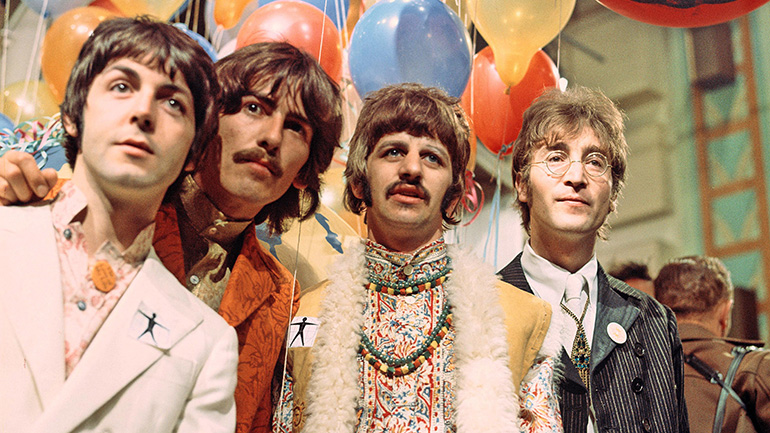
The Beatles are a four-piece rock band representing the 20th century that debuted in the United Kingdom in 1962. Their influence extended not only to their music, but also to their fashion, speech, and thought, creating a social phenomenon. One of the most notable aspects of their music is that their own musical development has directly influenced the musical development of the entire musical world and of their fans, who are their listeners.
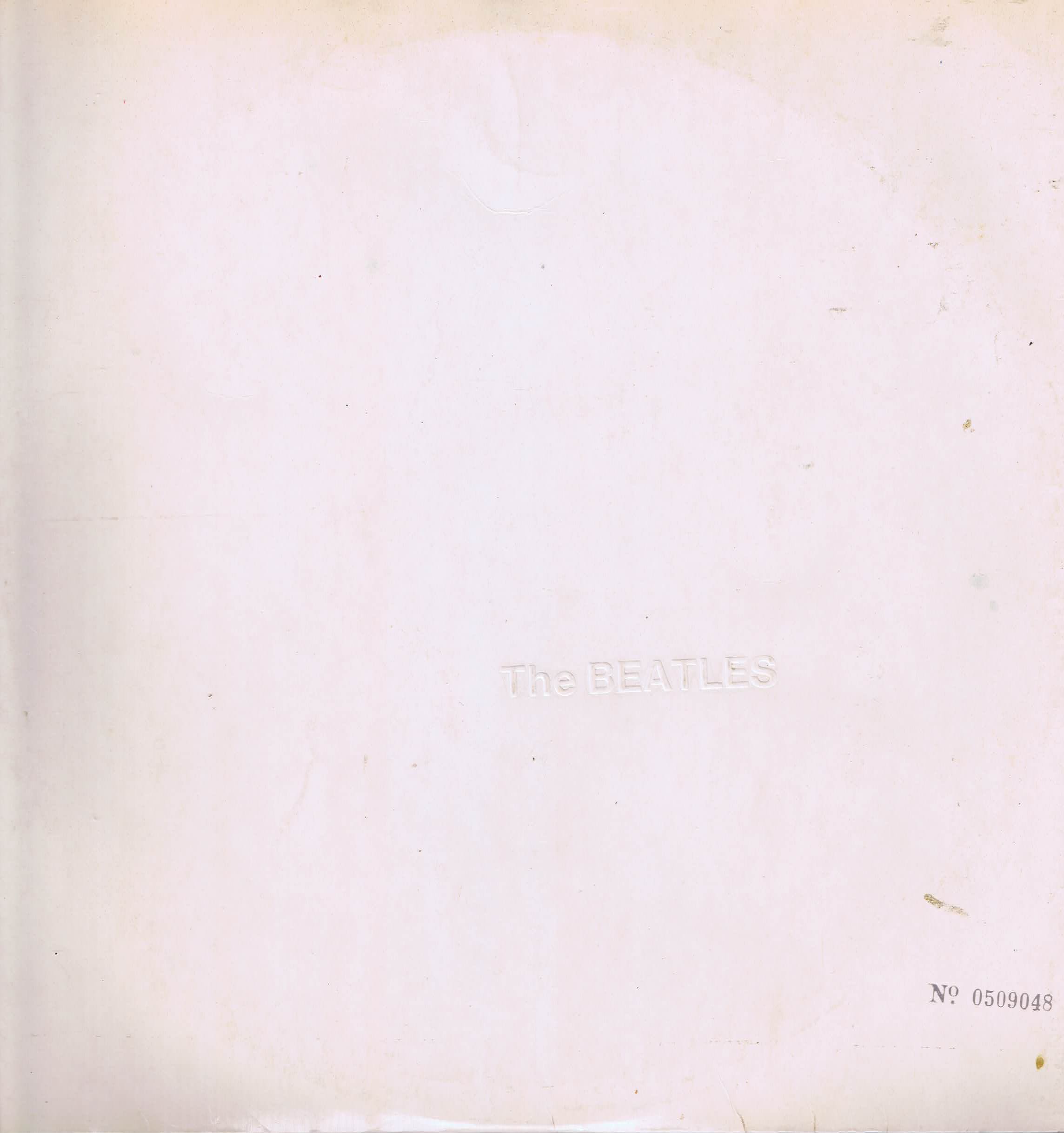
Side A
Back In The U.S.S.R.
2. Dear Prudence
3. Glass Onion
4. Ob-La-Di, Ob-La-Da
5. Wild Honey Pie
The Continuing Story Of Bungalow Bill
While My Guitar Gently Weeps
Happiness Is A Warm Gun
Side B
1. Martha My Dear
I'm So Tired
3. Blackbird
Piggies
Rocky Raccoon
Don't Pass Me By
Why Don't We Do It In The Road?
I Will
9. Julia
Side C
Birthday
2. Yer Blues
Mother Nature's Son
Everybody's Got Something To Hide Except Me And My Monkey
Sexy Sadie
Helter Skelter
Long, Long, Long
Side D
Revolution 1
2. Honey Pie
Savoy Truffle
Cry Baby Cry
Revolution 9
6. Good Night
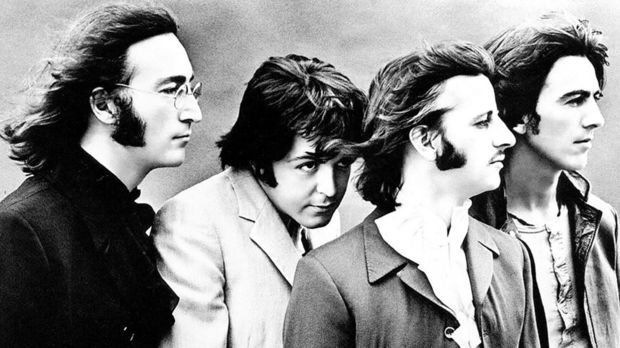
It was the tenth and first double album released on November 22, 1968. It was also the first Beatles album released on Apple, the label founded by The Beatles. This album was preceded by George's solo album "Wonderwall" (November 2) and John and Yoko's "Unfinished Music NO. 1 - Two Virgins" (November 11).
It was released after the singles "Lady Madonna" and "Hey Jude," but neither single was included.
The recording progress is as follows.
● 1968.
January 12
The following recordings were made.
Untitled (later "The Inner Light")
February 3
Recorded the following
Lady Madonna
February 4
Recorded the following
Across The Universe
February 6
Recorded the following two songs
The Inner Light
Lady Madonna
Mono mixing of the following two songs
The Inner Light
Lady Madonna
February 8
Recorded the following two songs
The Inner Light
Across The Universe
Mono mixing of the following two songs
The Inner Light
Across The Universe
February 11
Recorded the following
Hey Bulldog
Mono mixing of
Hey Bulldog
Hey Bulldog" was not included in "The Beatles", but was included in the animated soundtrack "Yellow Submarine".
February 15.
The following mono mixing was done.
Lady Madonna
March 15
Single "Lady Madonna/The Inner Light" released
May 30
The following recordings are made
Revolution (later "Revolution 1")
May 31
Recorded the following
Revolution (later "Revolution 1")
June 4
Recorded the following
Revolution (later "Revolution 1")
Mono mixing of the following
Revolution (later "Revolution 1")
June 5
Recorded the following
Ringo's tune (later "Don't Pass Me By")
June 6
The following two songs were recorded
This Is Some Friendly (a song called "Ringo's Tune," which later became "Don't Pass Me By")
Revolution 9
The following mono mixing.
This Is Some Friendly (called "Ringo's Tune" and later "Don't Pass Me By")
June 10
Recorded the following songs
Revolution 9
June 11
Recorded the following two songs
Blackbird
Revolution 9
Mono mixing of the following songs
Blackbird
June 20
Recorded the following
Revolution 9
June 21
Recorded the following two songs
Revolution (later "Revolution 1")
Revolution 9
Stereo mixing of the following two songs
Revolution 1
Revolution 9
June 25
Mono mixing of the following two songs
Revolution 1
Stereo mixing of
Revolution 1
The following tape edits
Revolution 9 (this edit version will be used in the final version).
June 26
Recorded the following
Untitled (later "Everybody's Got Something to Hide Except Me and My Monkey")
June 27
The following is recorded
Untitled (later to become Everybody's Got Something to Hide Except Me and My Monkey)
June 28
The following was recorded
Untitled (later Good Night)
July 1
Recorded the following
Everybody's Got Something to Hide Except Me and My Monkey
July 2
Recorded the following
Good Night
July 3
Recorded the following
Ob-La-Di, Ob-La-Da
July 4
Recorded the following
Ob-La-Di, Ob-La-Da
July 5
Recorded the following
Ob-La-Di, Ob-La-Da
July 8
Recorded the following
Ob-La-Di, Ob-La-Da
Mono mixing of the following
Ob-La-Di, Ob-La-Da
July 9
Recorded the following two songs
Ob-La-Di, Ob-La-Da
Revolution
Revolution" was rehearsal only.
July 10
Recorded the following
Revolution
July 11
Recorded the following two songs
Revolution
Ob-La-Di, Ob-La-Da
Mono mixing of the following songs
Ob-La-Di, Ob-La-Da
July 12
Recorded the following two songs
Don't Pass Me By
Revolution
Mono mixing of the following three songs
Don't Pass Me By
Ob-La-Di, Ob-La-Da
Revolution
July 15
Recorded the following two songs
Ob-La-Di, Ob-La-Da
Cry Baby Cry
Mono mixing of the following two songs
Revolution
Ob-La-Di, Ob-La-Da
July 16
Recorded the following songs
Cry Baby Cry
July 18
Recorded the following two songs
Cry Baby Cry
Helter Skelter
July 19
Recorded the following two songs
Sexy sadie
July 22
Recorded the following two songs
Don't Pass Me By
Good Night
July 23
Recorded the following two songs
Everybody's Got Something to Hide Except Me and My Monkey
Mono mixing of the following two songs
Everybody's Got Something to Hide Except Me and My Monkey
Good Night
July 24
Recorded the following two songs
Sexy sadie
Untitled
Untitled" is a collection of sound effects of unknown content. Unreleased.
July 25
The following recordings are made.
While My Guitar Gently Weeps
July 29
Recorded the following
Hey Jude
July 30
Recorded the following
Hey Jude
Stereo mixing of
Hey Jude
July 31
Recording of the following
Hey Jude
August 1
Recorded the following
Hey Jude
August 2
Recorded the following
Hey Jude
Stereo mixing of
Hey Jude
August 6
Mono mixing of
Hey Jude
August 7
Recorded the following
Not Guilty
Not Guilty" was unreleased, but was later included in "Anthology 3".
August 8
Mono mixing of the following songs
Hey Jude
Recorded the following
Not Guilty
August 9
Recorded the following two songs
Not Guilty
Mother Nature's Son
August 12
Recorded the following two songs
Not Guilty
Mono mixing of
Not Guilty
August 13
Recorded the following two songs
Sexy Sadie
Yer Blues
August 14
Recorded the following two songs
Yer Blues
What's The New Mary Jane
What's The New Mary Jane" was unreleased but later included in "Anthology 3".
Mono mixing of the following two songs.
Yer Blues
What's The New Mary Jane
August 15
Recorded the following songs
Rocky Raccoon
Mono mixing of the following
Rocky Raccoon
August 16
Recorded the following
While My Guitar Gently Weeps
August 20
Recorded the following 4 songs
Yer Blues
Mother Nature's Son
Etcetera
Wild Honey Pie
Etcetera" is an unreleased song with unknown content.
Mono mixing of the following two songs.
Mother Nature's Son
Wild Honey Pie
Editing of the following tapes
Revolution 9
August 21
Recorded the following
Sexy Sadie
Mono mixing of the following
Sexy Sadie
August 22
Recorded the following
Back In the U.S.S.R.
August 23
Recorded the following
Back In the U.S.S.R.
Mono mixing of the following
Back In the U.S.S.R.
August 26
The following tape edits
Revolution 9 (this edited version will be used in the final version).
August 28
Recorded the following
Dear Prudence
August 29
Recorded the following
Dear Prudence
August 30
Recorded the following
Dear Prudence
Single "Hey Jude/Revolution" is released.
September 3
The following recordings are made
While My Guitar Gently Weeps
September 5
Recorded the following
While My Guitar Gently Weeps
September 6
Recorded the following
While My Guitar Gently Weeps
September 9
Recorded the following
Helter Skelter
September 10
Recorded the following
Helter Skelter
September 11
Recorded the following
Glass Onion
September 12
Recorded the following
Glass Onion
September 13
Recorded the following
Glass Onion
September 16
Recorded the following two songs
I Will
Glass Onion
September 17
Mono mixing of the following songs
Helter Skelter
Recorded the following
I Will
September 18
Recorded the following
Birthday
Mono mixing of the following
Birthday
September 19
Recorded the following
Piggies
September 20
Recorded the following
Piggies
September 23
Recorded the following
Happiness Is A Warm Gun In Your Hand (later to become "Happiness Is A Warm Gun")
September 24
Recorded the following
Happiness Is A Warm Gun In Your Hand (later "Happiness Is A Warm Gun")
September 25
The following was recorded
Happiness Is A Warm Gun In Your Hand (later "Happiness Is A Warm Gun")
Mono mixing of the following
Happiness Is A Warm Gun In Your Hand (later "Happiness Is A Warm Gun")
September 26
Mono mixing of the following four songs
Happiness Is A Warm Gun
What's The New Mary Jane
Glass Onion
I Will
Recording of the following
Glass Onion
October 1
Recorded the following
Honey Pie
Mono mixing of
Honey Pie
October 2
Recorded the following
Honey Pie
October 3
Recorded the following
Savoy Truffle
October 4
Recorded the following two songs
Martha My Dear
Honey Pie
October 5
Recorded the following two songs
Savoy Truffle
Martha My Dear
Mono mixing of the following three songs
Honey Pie
Martha My Dear
Dear Prudence
Stereo mixing of the following two songs
Honey Pie
Martha My Dear
October 7
Stereo mixing of the following two songs
While My Guitar Gently Weeps
Mono mixing as follows
While My Guitar Gently Weeps
Recording of the following
It's Been A Long Long Time (later "Long Long Long")
October 8
Recorded the following three songs
It's Been A Long Long Long Time (later "Long Long Long")
I'm So Tired
The Continuing Story Of Bungalow Bill
October 9
Stereo mixing of the following.
The Continuing Story Of Bungalow Bill
The following mono mixing
The Continuing Story Of Bungalow Bill
The following two songs were recorded
Long Long Long
Why Don't We Do It In The Road
October 10
Recorded the following two songs
Piggies
Glass Onion
Stereo mixing of the following three songs
Glass Onion
Rocky Racoon
Long Long Long
Mono mixing of the following three songs
Glass Onion
Recording of the following
Why Don't We Do It In The Road
October 11
Recorded the following
Savoy Truffle
Mono mixing of the following three songs
Piggies
Don't Pass Me By
Good Night
Stereo mixing of the following three songs
Piggies
Don't Pass Me By
Good Night
October 12
Stereo mixing of the following four songs.
Everybody's Got Something to Hide Except Me and My Monkey
Helter Skelter
Mother Nature's Son
Ob-La-Di, Ob-La-Da
Mono mixing of the following four songs.
Everybody's Got Something to Hide Except Me and My Monkey
Mother Nature's Son
Ob-La-Di, Ob-La-Da
Long Long Long
October 13
Recorded the following songs
Julia
Mono mixing of the following 5 songs
Julia
Dear Prudence
Wild Honey Pie
Back In The U.S.S.R.
Back In The U.S.S.R.
Mono mixing of the following three songs.
Julia
Dear Prudence
Blackbird
October 14
Recorded the following
Savoy Truffle
Stereo mixing of the following seven songs
I Will
Birthday
Savoy Truffle
While My Guitar Gently Weeps
Yer Blues
Sexy Sadie
What's The New Mary Jane
Mono mixing of the following three songs.
Savoy Truffle
While My Guitar Gently Weeps
Long Long Long
October 15
Stereo mixing of the following three songs.
Happiness Is A Warm Gun
I'm So Tired
Cry Baby Cry
Mono mixing of the following two songs
I'm So Tired
Cry Baby Cry
October 16-17
The Beatles work 24 hours straight for the first and last time.
On this day, the Beatles work on "Back In The U.S.S.R." and "Dear Prudence," as well as "The Continuing Story Of Bungalow Bill" and "While My Guitar Gently Weeps," eliminating song spacing (crossfade) and "Revolution 9" beginning with "Can You Take Me Back? Revolution 9" was interspersed with the song "Can You Take Me Back" at the beginning of "Revolution 9".
Mono mixing of the following two songs.
Why Don't We Do It In The Road
It's All Too Much
Stereo mixing of the following two songs
Why Don't We Do It In The Road
It's All Too Much
It's All Too Much" was done for the soundtrack recording of the animated film "Yellow Submarine".
November 22
Album "The Beatles" is released.
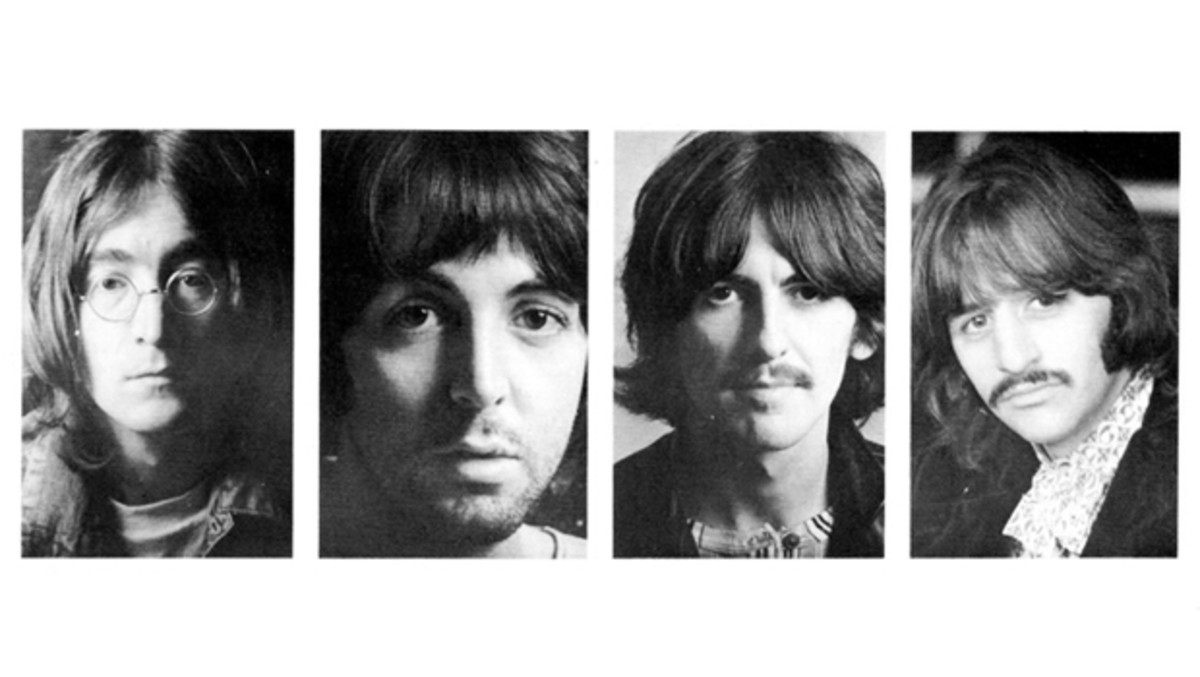
The cover was conceived by Paul and designed by British artist Richard Hamilton. As it is commonly called "White Album", it is completely white all over, as if it is the opposite of "Sgt. Pepper's~", and the analog version is embossed with the word "The Beatles". The CD version has "The Beatles" written in gray letters instead of embossed letters, and there is no serial number. The Beatles" in gray letters instead of embossed on the CD version, with no serial number. According to Paul, John had the serial number "A1", but Ringo now owns it.
As for the jacket, there were several candidates. One of them was later used for the cover of "The Beatles Ballads".
Both the U.S. and Japanese editions had the same jacket and the same songs as the original U.K. edition. However, no monaural version of "The Beatles" was released in the U.S. The U.S. monaural version was released in 1987. The monaural version in the U.S. first appeared on CD in 1987.
The Japanese version was also stereo, not mono. The first mono version of an analog album with the same specifications as the UK version was a limited reissue in the original mono series on January 21, 1982.
In the UK Melody Maker magazine charts, it first appeared at #3 on November 30, 1968. It reached #1 the following week on December 7, and then reigned at #1 for 11 weeks until the following February 15, 1969.
On the U.S. Billboard magazine charts, it first appeared at #11 on December 14, 1968. The following week, it reached No. 1 on December 28, and remained there for six weeks until February 1, 1969; it dropped to No. 2 on February 8, but returned to No. 1 the following week on February 15, and remained there for three weeks until March 1, for a total of nine weeks at No. 1.
It was The Beatles' first and only original double album, containing a total of 30 songs. Producer Martin initially argued that the album should be a single disc with fewer songs, but none of the members agreed. The members of The Beatles left for Rishikesh, India sequentially on February 16, 1968. Many of the songs on this album were written while at the meditation camp organized by Maharishi Mahesh Yogi. Donovan, an English singer and songwriter, also attended the camp, but he was the only one who brought his own guitar, so members of The Beatles borrowed guitars from Donovan to write songs and learned finger picking from him. The Beatles borrowed guitars from Donovan and learned finger picking from him.
Donovan said, "We went there to meditate, to self-discover, and to seek answers. The White Album is a unique work. And it's largely due to our trip to India. All the songs we wrote after India prove that we learned to sing the truth as poets and musicians.
Paul said, "We wrote a lot of songs in Rishikesh. John was also very imaginative. Then George got annoyed and said, 'We're here to meditate. We're here to meditate, not write songs for the next album. George is a little too strict.
Martin said, "Things changed a lot after Brian Epstein died, and the Beatles started going their own way. The White Album is the result. They came to me with a lot of songs and wanted to record them all. That's how the White Album came about. It was a great album, but I felt it was uneven. Some of the songs are great, and some are not so great.
The songs on the album are diverse, ranging from orthodox rock numbers to dexies, ska, blues, baroque, folk, country, classical, heavy metal, and music concrete, and Rolling Stone magazine called it "the history of modern Western music. Rolling Stone magazine called it "the history of modern Western music.
Chris Thomas, who would later become a renowned producer, joined the band as an assistant on this album. In Martin's absence, he has been supervising the recording sessions and playing harpsichord on George's compositions.
Chris says, "Actually, I thought the atmosphere was fine. But every day in the middle of a song, they would have to discuss who to hire at Apple and who to quit. But once we started playing, the vibe was really great, and it just rocked. And they were so funny. Paul would get things done quickly, but John would go at his own pace. But later, working with Paul, I realized how much he led the Beatles. He's incredibly talented. He's very precise.
The album was also recorded at Trident Studios in Soho, London. The studio was equipped with an eight-track recording deck, which facilitated one-man overdubs. Therefore, it is no longer necessary for all four members to participate in the performance, and less than half of the songs are performed by all members. This led to the reputation of the album as "like a collection of solo works.
During the recording of this album, Ringo felt alienated because he could not play the drums as Paul had instructed, and he "left" the band for about two weeks. During this time, he spent time relaxing on Peter Sellers' yacht. It was during this time that "Octopus's Garden," later recorded on "Abbey Road," was created.
Not only the relationship between Paul and Ringo was in a very bad mood during the recording of this album. Ringo feels that he is not needed, John has already lost his attachment to The Beatles and only sees Yoko, Paul tries to organize the group by showing leadership, and George rebels against Paul. The recording sessions proceeded in this atmosphere, and engineer Jeff Emerick left the band halfway through the recording because he could not stand the atmosphere.
George says, "Paul was always there to lend a hand. He would help me with one of my songs, after I had finished about 10 of his. Then he would finally help me with one of mine. That's ridiculous. In fact, it's very selfish.
John brought Yoko to the recording studio as a matter of course, and this annoyed the other members. One day, Yoko was there listening to a playback, and when John casually asked her what she thought of it, she replied, "I think it's pretty good, but it would be better if the tempo was a little faster. Everyone in the studio froze on the spot, and even John had shock and horror on his face. Jeff recalls that moment and says, "When Yoko interfered with The Beatles, that's when The Beatles started to fall apart.
Martin said, "Yoko came to the studio and was always by John's side. When she got sick, John brought a bed into the studio and put Yoko in it. Their spirits were completely united.
George said, "Yoko stepped right into us, or rather John stepped in with Yoko. It was the first time someone came to the studio who didn't know anyone but John. It was very strange to have her there all the time. I was uncomfortable.
Paul said, "I think Yoko showed John a lot of artistic paths. The trouble for us was that it started to destroy the organization that we had built. John couldn't be without Yoko anymore. But it was very uncomfortable for her to sit on top of the amps. I never knew how to say, 'Can I turn up the volume? I think John left the group to clear up any obstacles between the two of us. After all, we were The Beatles. It was a very strange feeling, as if we had become her retainers. The White Album was made in such a tense situation.
Ringo said, "It was impossible for us northern people to have Yoko in the studio all the time. The four of us have such a close relationship and are like a family, so Yoko's presence created a lot of tension. We don't like too much interference from others, even if John doesn't.
John said, "Paul always approached Yoko politely and said, 'Why don't you stay a little further back? I didn't know what was going on because it was going on out of my sight. We were glowing with the joy of love. Everyone around us was jittery, wondering what she was going to do in this session. We were just a couple who always wanted to be together. There was a crazy atmosphere around us. She said.
Many outside musicians also participated in the band, most notably Eric Clapton. The Beatles were also the first to include female vocalists (Yoko Ono and Ringo's wife Maureen).
Jackie Lomax, one of the outside musicians and a solo artist with Apple Records, said, "They played one song with every feeling they could think of. They would try a faster tempo, a slower tempo, three-quarter time, four-quarter time, six-eighths time. They were trying everything, sometimes getting crazy. It was weird. It was like we were trying to cut out the parts that didn't make sense, the parts that were overdone. We were able to do it that way because we didn't have any time constraints.
Paul later said, "People say this album is unconnected, that it's full of solos, but it's easy to say that after the fact. It's the Beatles' White Album. It's the Beatles' White Album.
Paul added, "The White Album is ....... It's a tense album. We were all in the middle of a psychedelic situation. We were all in the middle of a psychedelic situation, or we had just come out of it. Either way, it was a strange situation. I had never recorded in a studio with a bed in it, and people were constantly coming in to talk business and stuff. There was a lot of conflict. It was the strangest experience. We were about to break up, and that alone was enough to make me nervous.
I was very nervous about it," he said.
John later added, "The songs were kind of like me and the backing group, and Paul and the backing group, respectively. We had a lot of fun doing it that way, but after a while we broke up.
I've always said that I prefer double albums. I've always said I prefer the double album, because my music is better on a double album. My music is better on a two-disc set, because it's more raw. I don't like the production as much.
My songs on this album are simple and primitive. My songs on this album are simple and primitive, which is the opposite of Sgt.
George says, "I think it was a mistake, in a way, to do four sides. It's hard for the average listener to get into that much volume. I mainly listen to the first side. I like that one a lot.
Ringo said, "As a member of the band, I feel the White album is better than Sgt. I think, as a member of the band, I feel that the White album is better than Sgt. Unlike "Sgt. We were basically a session group for our own album, with an orchestra and everything.
American music critic Lester Banks said, "For the first time in rock history, a band of four solo artists made an album.
Film director Steven Spielberg said, "I wasn't a fan of The Beatles. I wasn't a fan of The Beatles because it wasn't music I discovered on my own. But when I heard the 'White Album,' I was converted.
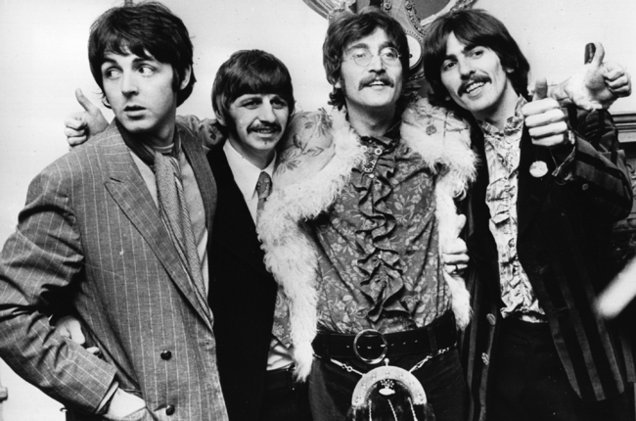
Outline of the tracks
Back In The U.S.S.R.
This is Paul's work and the lead vocalist is also Paul.
Paul: "I wrote it as a parody of the Beach Boys. And I took it from Chuck Berry's "Back In The U.S.A.," or something like that. I liked the idea of Georgian girls talking about a place like Ukranai in a California kind of way.
*Jerry Lee Lewis: one of the originators of rock and roll.
Mike Love of The Beach Boys provided the idea for the chorus when he was in India with Paul in early 1968.
John said, "Paul wrote it. I might have helped him a little bit."
Paul: "This is also about holding each other's hands across the ocean. I'm still conscious about that. Because they like us, too. Even if the Kremlin bigwigs don't, the kids do. And I think that's important for the future of humanity."
From August 22 to September 3, 1968, when the recording of this song began, Ringo "left" The Beatles because he felt he was not needed. Therefore, Paul plays the drums on this song.
Paul said, "Ringo must have been pretty pissed off when I took over for him because he couldn't handle the drums on 'Back In The U.S.S.R.'. It's a strange thing to be able to do something well that other people can't do well. It's like bluffing. It's like you're bluffing, 'Hey, at least I'm helping. And then paranoia comes in and it's like, 'I'm going to show him! I'm going to show him! I was very careful about that."
Brian Wilson, member of The Beach Boys: "I didn't even realize this song was a parody of The Beach Boys until someone said something about it. I think it's a very endearing song.
U.S.S.R. is the Union of Soviet Socialist Republics, a country that existed on the Eurasian continent from 1922 to 1991, but as of 2018 no longer exists on Earth.
There is a difference between mono and stereo in terms of where the jet sound effects are inserted. Also, the stereo version has a call-out during the interlude, but the mono version cuts it out altogether.
Recording Details
1968
August 22
First through fifth takes were recorded.
August 23
Overdub on take 5. A tape reduction of take 5 was made for take 6. Overdubs were added to take 6.
The details of the overdubs are unknown, but drums by John and Paul, bass by Paul and George, guitar by John and Paul, vocals and piano by Paul, Beach Boys-style backing vocals by John and George, and handclaps are overdubbed.
Mono mixing is done based on the sixth take.
October 13
Stereo mixing was done based on take 6.
Dear Prudence
This is John's work and the lead vocalist is also John.
John: "I wrote it in India. It's about Mia Farrow's sister. She had been meditating for so long that she was going a little crazy, and she couldn't come out of the little cabin where we were staying. She couldn't come out of the little lodge where we were staying. We were chosen to get her out, because she would trust us.
Paul: "John sang to her and she got better. I needed someone to talk to rather than meditate.
*Mia Farrow is an American actress. Her sister is Prudence Farrow (then 20 years old), the protagonist of the song. They both visited India with The Beatles in 1968 to study Transcendental Meditation at Maharishi Mahesh Yogi's ashram.
This song was also recorded during Ringo's absence, so Paul is playing the drums.
The three finger picking that John plays on this song was taught by Donovan in India.
In 2016, Rolling Stone magazine published an interview with Prudence Farrow. It is a bit lengthy, but is quoted below.
Prudence Farrow Brands, the protagonist of the famous "White Album" song, recalls her lively days with the Maharishi and the Beatles
In January 1968, then 20-year-old Prudence Farrow finally fulfilled a two-year dream of studying meditation under Maharishi Mahesh Yogi in Rishikesh, India. Accompanied by her sister, actress Mia, Farrow arrived in the country to find, among others, the Beatles members and their lovers. The Beatles' stay in India is as documented, but the four not only sought enlightenment under the Maharishi, they also wrote songs and produced a self-titled double album, commonly known as the White Album, which was released later that year.
Farrow focused on long hours of meditation in her room, unencumbered by the hustle and bustle that surrounded the Beatles at the camp, and her single-minded devotion to one thing inspired John Lennon, who wrote "Dear Prudence" (No. 63 on Rolling Stone magazine's list of the best Beatles' songs) and "The White Album" (No. 63 on Rolling Stone's list of the best Beatles' songs). 's top 100 songs, ranked #63), which was later included on The White Album. Lennon discussed the song in an interview with Playboy magazine, and the article appeared in 1981 after Lennon's death. According to Lennon, Farrow "wouldn't come out of the cabin where she was staying, so we dragged her outside, because she'd been cooped up for three weeks and wouldn't go outside. She was trying to find God before anyone else. At the Maharishi camp, they were competing to see who could have a cosmic experience first."
The teenage years of Prudence Farrow, daughter of filmmaker and screenwriter John Farrow and actress Maureen O'Sullivan, were tumultuous. A desire for spiritual fulfillment eventually led her into meditation and the world of the Maharishi. Today, Prudence Farrow Brands is married with children and teaches Transcendental Meditation in Florida. Her recently published memoir, Dear Prudence: The Story Behind the Song, chronicles her childhood in Hollywood to her time visiting India. This time Farrow spoke to Rolling Stone about her memories of the Beatles at the camp, the first time she heard "Dear Prudence," and what the song has meant to her over the past half century.
Why did you feel compelled to meet the Maharishi?
Because he was the one who popularized this meditation method. He was the only one who could really explain this method. It had been two years since I had wanted to study with Maharishi, so I had no idea how I would react when I actually met him. What I felt at that moment was this unparalleled peace and serenity. I had had that feeling during meditation, but this was a wonderful moment that went far beyond that. I broke down and cried on the ground.
Did you know that the Beatles were also going to India? They arrived at the training camp in Rishikesh a little after you and Mia arrived.
I knew that. I had always wanted to go to India. Mia called me and said that she wanted to go, but that the Beatles were going too. The Beatles had started meditating in the summer of 1967. The Beatles were very outspoken, and words and ideas like guru, India, and mantra quickly made the media. They made the news. I was too busy taking care of myself to pay attention to what was going on around me.
What was it like interacting with the Beatles at the camp? In particular, how was it with John and George, who stayed there for a long time?
I liked them. They were like me in many ways. The Beatles were going through pretty much the same things that people were going through at the time and saying the same things that normal people were saying. They were down to earth. As I wrote in my book, Maharishi tried to set up a special dining room for the Beatles so they could have a quiet time, but they said, "We want to be with everyone and we want to be treated the same way.
You were quite devoted to meditation, weren't you? You spent eight hours a day in your room.
I meditated for five days straight, not going to the bathroom, not sleeping, not eating. I think that's when Maharishi realized how serious I was. The older people in the course were sleeping, sunbathing on the roof, and going for walks. There were many who were a bit extreme, but I was one of them. I was so devoted to it that I took advantage of the lack of parental supervision.
John wrote "Dear Prudence" when he saw you getting so involved in meditation.
That's right. John probably wrote it after or just before I spent a lot of time in my room. From the beginning I was only interested in achieving my goals. In other words, I wanted to sweep away the darkness inside me, regain my health, and be able to live in reality. I knew that meditating would do that, but I did not understand how it was possible.
Did you know that the Beatles wrote songs and performed during their stay?
Yes, every afternoon I could hear John's guitar playing, and he would practice for a couple of hours, experimenting with different sounds and melodies. One night, I believe, John and George (Paul did not come) came to my room and played "Of La Di, Of La Da".
You wrote that you wanted to move to another room, but were they disturbing your meditation?
Yes, all the other participants in the lecture were staying in a quiet hut suitable for meditation. Our hut was supposed to be a "celebrity block" and not only the Beatles were staying there, but other celebrities and their associates as well. At night, John and George (and Paul for the duration of our stay) would join the others on the balcony outside our door for jam sessions.
Why didn't you meet the Beatles and fall for their star attraction?
I had been around famous people before that, but I wasn't really interested in them. To be honest, it didn't matter to me whether the Beatles were around or not. But I loved John and George. We were very much in sync in our thinking. They were musicians, but they were interested in many things. I, on the other hand, was only interested in one thing, and that was staying [at the camp] and getting the most out of meditation. I was much more extreme than they were.
John and George left the camp before completing the course; how did you react to the much-publicized disagreement between the two and Maharishi?
It was sad because it was really sudden. They had been meditating eight hours a day for two months. It was sad and unpleasant to see them leave. I can't tell you what happened. I kind of know what happened, but I don't want to speculate about something I don't know for sure. I was there when John said he was going back to Maharishi.
You then heard about "Dear Prudence" from your mother, who had a copy of "The White Album. You were at a family gathering at your mother's New York apartment playing a game called "Wink Killer".
It is a kind of psychological game. If you get winked at by the killer, you die, and the game is played while trying to guess who the killer is. But I don't want to look anyone in the eye because if I get winked at, I might get killed. My mother had the perfect opportunity to "kill" everyone. My mother went around to everyone and said that "Dear Prudence" would be next. She put on the record. While urging everyone to listen to it, she was actually killing them all. While the song was playing, my mother came up to me and said, "Isn't that a great song?" I looked up and she winked at me.
I heard that you were initially uncertain about how John portrayed you in the song.
John was really intelligent and extremely funny. I had no idea what he would write. I had no idea. John could write about anything. What made me happy was that John respected my privacy as much as possible.
What do you think of this song now?
This song encapsulates what the 60's were like. It is very positive and has really beautiful lyrics. I think it is an important song. I thought it was the most unpopular and obscure of the Beatles' songs, but I think it captures the atmosphere of the course in India and the exoticism of the land of India, where we experienced meditation in silence.
Source: rollingstonejapan.com
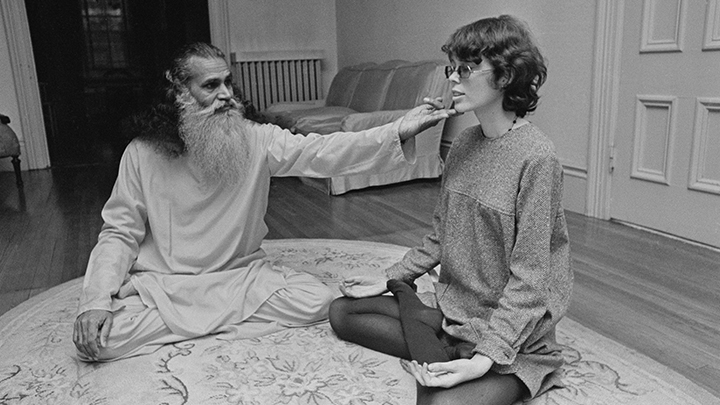
Prudence Farrow and Maharishi Mahesh Yogi.
Recording Details
1968
August 28
First take is recorded.
August 29
Paul's bass, John's vocals, background vocals, hand claps, and tambourine are overdubbed onto the first take.
August 30
Overdub on the first take.
The details of the overdub are unknown.
October 5
Mono mixing is done on the first take.
This mono mixing was not used.
October 13
Mono and stereo mixing is performed based on the first take.
Glass Onion
This is John's work and lead vocalist is also John.
John "I wrote that one. It's just a throwaway. The line, 'The Walrus was Paul,' I put that in there to confuse people even more. I put that line in there out of a sense of guilt because Yoko and I had almost left Paul together. I was ...... in my own way, and this is a very navel-gazing message to Paul. I'm just saying, "Here, take this little maboroshi, I'm out of here. I'm leaving.
The following existing songs by The Beatles appear in the lyrics
Strawberry Fields Forever
I Am The Walrus
Lady Madonna
The Fool On The Hill
Fixing A Hole
John: "Glass Onion made me laugh a lot. I got a lot of laughs out of 'Glass Onion,' just like I got a lot of laughs out of 'Sgt. If you stand up and play this song backwards, you'll get a secret message. The other day I was watching Mel Torme on TV, and he said that for some reason some of my songs were written to encourage drug use. But really, none of them were. This song was just my way of saying, 'Fuck you all.
Badfinger, which debuted on Apple Records, was formerly known as The Iveys, and "Glass Onion" was one of the candidates for the new band name.
There is a slight difference in the interlude between the stereo and mono versions.
In stereo, a faint, high-pitched "Oh Yeah" overlaps behind the third shout of "Oh Yeah" in the interlude, but it is cut off in mono.
Recording Details
1968
September 11.
Recording of takes 1-34.
September 12
Overdubs John's vocals and tambourine on take 33.
September 13
Overdubs drums and piano on take 33.
September 16th
Recorder overdubs on Take 33.
September 26th
Mono mixing is done on Take 33.
This mono mixing was not used.
A recording of sound effects is made.
The sound effects were not used.
October 10
Overdub the ending strings onto the 33rd take.
Mono and stereo mixing is done based on take 33.
Ob-La-Di, Ob-La-Da
Ob-La-Di, Ob-La-Da is a work by Paul, who also sings lead vocals.
The title of the song was taken from a quip by Nigerian conga player Jimmy Scott.
Paul says, "A guy I used to hang out with in the club (Jimmy Scott) used to say in a Jamaican accent, 'Ob-La-Di, Ob-La-Da life goes on. When I wrote that song, he was pretty miffed. I said, "Hey, Jimmy, you know what? And I said, "Hey, Jimmy, it's just an expression. That's just an expression. If you wrote the songs yourself, you'd get royalties. He said, "Nothing too much just out of sight. Nothing too much just out of sight. He was a master of that kind of language.
John: "I probably gave you a couple of lines of lyrics, but these are Paul's songs, his lyrics.
This one took a lot of work to record. This made the other members of the band, especially John and George, fed up.
Second engineer Richard Rush: "After four or five nights of 'Ob-La-Di, Ob-La-Da,' John showed up to the session in a completely foggy state. He must have been on drugs. All right! Let's do 'Ob-La-Di, Ob-La-Da,'" and he went straight to the piano and hit the keys twice as fast as he had ever hit them, and he couldn't get any faster. I went straight to the piano and hit the keys twice as fast as I had ever hit them. Yeah? He was really irritated. He was really irritated. But that's the version that ended up being used.
Pete Shotton, a friend of John's, wrote down the following exchange
(After what finally seemed like a perfect performance, Paul suddenly burst out laughing)
Paul: "Oh, shit! We have to do it all over again."
John: "Well, I think I'm okay."
George "Yes, it was. It was perfect.
Paul "But didn't you guys notice?"
John "Noticed what?"
Paul "I sang, 'Desmond goes home and puts make-up on his pretty face. ' When really I should have sung 'Molly.'"
At this point, George Martin plays back the tape and confirms that he did indeed sing it wrong.
Paul says, "Well, it doesn't sound bad, and it's ....... Let's leave it as it is. Let's make a little mess. People will wonder if Desmond is a two-faced man or if he has a penchant for cross-dressing."
*As for this episode, some books say that John said, "Let's leave it as it is because it's more interesting that way.
Stewart Copeland, drummer of the British rock band The Police: "The riffs of the whole song should be decided according to the lyrics and the melody. There's an accent on 'Ob-La-Di,' there's an accent on 'Ob-La-Da,' and then it gets ska-like around 'life goes on. There's a definite rhyme scheme to the lyrics, and that's probably why we ended up playing it with a ska beat. In fact, it's kind of a precursor to white reggae."
There is a difference in the intro between the mono and stereo versions.
The stereo version has hand claps in the intro, while the mono version has them cut out.
*Recording details
1968
July 3.
Takes 1 through 7 were recorded. Paul's vocals and acoustic guitar were overdubbed on take 7, but since the basic rhythm was better on take 4, it was decided that this was the best take and the acoustic guitar was overdubbed.
July 4
Overdub Paul's vocals and John and George's backing vocals on take 4. A tape reduction of take 4 was made for take 5. Paul's vocals are overdubbed onto take 5.
July 5
Overdub saxophone, bongos, and piccolo (which are quickly erased by overdubbing them with guitar over them as they are no longer needed) on take 5.
July 8.
Takes 1 through 12 are recorded. The first take was redone as a remake. The 12th take is tape reduced and the 13th take is made. Paul's vocals, backing vocals, and percussion (maracas, etc.) are overdubbed onto the 13th take.
Mono mixing was done based on the 13th take.
This mono mixing was made for Paul's take home.
July 9
Takes 20-21 are recorded. The take numbers are moved up because it is a remake. In the end, these two takes were not used. Overdub on take 13 (details unknown). The 13th take was tape reduced to make the 22nd take (the next number of the remake was used). Overdubs of handclaps, vocals, and percussion were added to take 22.
July 11.
Overdubbed saxophone and bass on Take 22. Tape reduction of Take 22 is made for Takes 23-24. Overdub on take 23 (details unknown).
Mono mixing was done based on take 23.
This mono mixing was made for Paul's take home.
July 12
Mono mixing is performed based on Take 23.
This mono mixing was made for Paul's take home.
July 15
Paul's vocals are overdubbed onto Take 23.
Mono mixing is done based on Take 23.
This mono mixing was not used.
October 12
Mono and stereo mixing based on take 23.
Wild Honey Pie
This is Paul's work and the lead vocalist is also Paul.
The song is less than one minute long, and Paul performs and sings the backing chorus all by himself.
Paul: "This was an instrumental fragment that I wasn't sure what to do with, but Patti (Harrison) said she loved it, so I decided to put it on the album.
*Recording details
1968
August 20.
First take is recorded.
Mono mixing was done based on the first take.
The Beatles Recording Sessions, The Complete Edition" by Mark Lewison states that mixing was done based on take 26, but this is believed to be an error for take 1.
October 13.
Steeo mixing was done based on the first take.
The Continuing Story Of Bungalow Bill
This is John's song and lead vocalist is also John.
John: "I wrote it about a guy in a meditation camp in the Maharishi. He took a little break and went and shot some poor tigers, and then he started talking to God again. And there used to be a character named Jungle Jim. I combined him with Buffalo Bill. It's kind of a teenage message song and a little joke at the same time.
The man mentioned here was named Richard Cook.
One line of "not when he looked so ferce" is sung solo by Yoko Ono, who became the first solo female vocalist to be included in The Beatles' works. In addition to Yoko Ono, Maureen, Ringo's wife, also sang backing vocals.
The Spanish guitar used in the intro was originally recorded as a Mellotron phrase sample. The Beatles Box (From Liverpool With Love, The Beatles Box) contains a version without the Spanish guitar and John's voice at the end of the song.
Recording Details
1968
October 8
First three takes are recorded.
October 9
Mono and stereo mixing is done based on the 3rd take.
While My Guitar Gently Weeps
George's work with lead vocals by George.
George: "I have a book on the Chinese I Ching, and it seems to me that the basis of the book is the Eastern idea that all things are related to each other. Not the Western view that things are merely the product of chance. This idea did not escape me when I visited my parents in the north of England. I decided that I would listen to any book and write a song about the first thing I heard. It must have something to do with that moment, that time. I picked up a book at random, opened it, and saw the phrase "gently weeps. Then I put the book back and started writing the song. I changed some of the lyrics before we finally recorded it.
The guitar solo on this song is played by Eric Clapton, a friend of George's.
George said, "I started working on this song with John, Paul, and Ringo, but none of them were interested at all. But I knew inwardly that this was a good song. The next day, Eric [Clapton] and I were on our way to the session and I said, 'We're going to play this song today. We're going to play this song today, and I want you to play guitar. He said, 'No, I can't do that. I can't do that. Nobody's ever played on a Beatles record. But I said, 'Hey, this is my song, and I want you to play it. And Eric came in, and the other three guys were playing great. He was there. I was able to concentrate on rhythm guitar and vocals. Eric played lead, and it was perfect. Then we listened to the playback, and he said, "It's good, but there's one problem: it doesn't sound like the Beatles. So I put him on ADT (Automatic Double Tracking) to give it a little bit of a blur. When we did that song, I played acoustic guitar and sang. Paul on piano, Eric and Ringo. That's how we recorded it. Then Paul overdubbed the bass.
George also performed this song on his solo tour in late 1974.
George said, "The original version that Eric played guitar on is not bad, but in a way, the version I did live is better. I mean, when I was in the Beatles, I didn't like the way I sang at all. I couldn't sing well. I was always very paranoid, very tense, and that made me delegate the way I sang.
The ending is slightly different between the mono and stereo versions.
The stereo version has the "yeah yeah yeah" vocal just before the ending fades out, but the mono version cuts it out.
*Recording Details
1968
July 25th
First take is recorded.
August 16
Takes 1 to 14 were recorded. Restarted from take 1 for the remake. The 14th take was tape reduced to make the 15th take.
September 3
Tape copy of Take 15 was made and made into Take 16. This was the first 8-track recording by The Beatles at EMI Studios, and was a copy of a 4-track tape onto an 8-track tape.
George overdubs the reverse Giller solo on the 16th take.
...September 5.
George's vocals, maracas, drums, and guitar are overdubbed on Take 16. George was not satisfied with the previous recordings and scrapped all of them. George records takes 17-44 as a remake.
September 6
Eric Clapton's guitar is overdubbed on Take 25.
October 7
Mono and stereo mixing is done on Take 25.
Neither mono nor stereo mixes were used on this day.
October 14
Mono and stereo mixing was done based on the 25th take.
Happiness Is A Warm Gun
This is John's work and lead vocalist is also John.
John said, "There was a gun magazine around and the cover was a picture of a gun just after firing. The title of the article was 'Happiness is a warm gun. I didn't read the article," he said. I thought, 'What a nice, crazy thing to say. I took bits and pieces from the three different songs and tried to incorporate all types of rock music. People say it's about drugs, but it's more about rock and roll than drugs. It's a kind of rock 'n' roll history. Why do people say it's about heroin injection? I saw somebody do something with injections once, and I don't even want to look at it.
Paul: "This song is one of my favorites from The Beatles (album)."
Ron Reagan, son of former President Ronald Reagan: "A long time ago, when I was about 13, I borrowed the White Album from my sister Patty. I remember my mother hearing me listening to 'Happiness Is A Warm Gun' and getting upset. She was really upset about it.
The song is in three parts, but in the third part, "When I Hold You," the drums keep the rhythm in 4/4 time while the other instruments and the song proceed in 3/4 time.
The versions in mono and stereo are different.
In stereo, the voice saying "down" fades in before entering "I need a fix," but not in mono.
The background chorus of the repeated part of "Mother superior jump the gun" comes in from the second time in stereo, but not from the third time in mono.
Recording Details
1968
September 23.
Takes 1 to 45 were recorded.
September 24
Recorded takes 46th to 70th
September 25
Take 53 and Take 65 are edited together and designated as Take 65. John's vocals, backing vocals by John, Paul, and George, organ, piano, tuba (deleted in the remix), snare drums, tambourine, and bass are overdubbed on Take 65.
Mono mixing was done based on the 65th take.
This mono mixing ended up not being used.
September 26
Mono mixing is performed based on Take 65.
October 15
Stereo mixing is performed based on take 65.
Martha My Dear
This is Paul's work and the lead vocalist is also Paul.
Martha" is the name of Paul's sheepdog.
Paul: "It was born as the kind of song you learn in a piano lesson. It was beyond my piano playing level, so it was pretty difficult to play."
*Recording details
1968
October 4
First take recorded. Overdubbed brass section on the first take.
October 5
Mono and stereo mixing is done based on the first take.
I'm So Tired
John's work, with lead vocals by John.
John: "I wrote this one. I wrote this one when I was in India. I couldn't sleep. I meditated all day and couldn't sleep at night. It's one of my favorite tracks, it just sounds so good, and it's sung so well.
*Recording details
1968
October 8, 1968
First through fourteenth takes are recorded.
October 15
Mono and stereo mixing was done based on the 14th take.
Blackbird
This is Paul's work and the lead vocalist is also Paul. John also helped with one line.
John: "I contributed one line of lyrics to that song."
Paul wrote the song as a metaphor for the black civil rights struggle, inspired by a newspaper article reporting on the mid-1968 riots against racial discrimination in the United States.
As for the tune, it was inspired by the "boule" from Bach's "Lute Suite No. 1," which George had played.
The insertion point of the birdsong sound effect differs slightly between the mono and stereo versions. In the ending, the birds chirp a little longer in stereo.
Bach: Lute Suite No. 1 "Boulez
Recording Details
1968
June 11.
Takes 1-32 are recorded.
Mono mixing was done based on the 32nd take.
This mono mixing was not used.
October 13
Mono and stereo mixing based on take 32.
Piggies
This is George's work and lead vocals are also by George. John wrote some of the lyrics, and George's mother, Louise Harrison, also provided input.
George said, "'Piggies' is a social message song. I was stuck on one line to put in the middle, and my mother came up with the lyric, 'What they need is a damn good whacking. What they need is a damn good whacking. It had to rhyme with 'backing' and 'racking,' but it also had to have nothing to do with American cops or California crackpots.
John: "I gave George the 'eating bacon with a fork and knife' crap."
The idea to use harpsichord came from engineer Chris Thomas, who played it himself.
The mono and stereo versions differ slightly in the insertion point and frequency of the pig-nagging sound effect.
*Recording Details
1968
September 19, 1968
Takes 1 through 11 were recorded.
September 20
Tape copy of take 11 was made and made into take 12. This was done by copying a 4-track tape to an 8-track tape. George's vocals are overdubbed onto the 12th take.
October 10.
Overdub the 12th take with strings.
October 11
Mono and stereo mixing is done on the 12th take.
Rocky Raccoon
Paul's work with lead vocals by Paul.
Paul: "For the first time on my favorite talking blues, I ironically parodied Westerns."
John: "Paul wrote it. It's so mien, isn't it? Do you think I would go out of my way to write a song about something like the Gideon Bible?"
Paul came up with the idea for the song while playing guitar with John and Donovan on the roof of a camp in Maharishi, India.
John plays harmonica, and this was John's last harmonica performance on a song by The Beatles.
The timing of the hi-hat coming in differs between the mono and stereo versions.
In stereo, it comes in right after the first chorus of "Only to find Gideon's Bible," but in mono, it fades in around the end of the next song "Rocky had come equipped with a gun.
*Recording Details
1968
August 15.
Takes 1-9 were recorded. Tape reduction of take 9 was used to create take 10. John's harmonica, Martin's honky-tonk piano, and backing vocals by John, Paul, and George are overdubbed onto the 10th take.
Mono mixing is done based on the 10th take.
October 10
Stereo mixing was done based on the 10th take.
Don't Pass Me By
This is Ringo's first solo album. This was Ringo's first solo work.
Ringo: "All of my songs are just slightly changed lyrics from songs that already exist. The other three were happy to point out the original songs to me. It's my first song. I was thrilled to finish it.
Playing fiddle is jazz bassist and promoter Jack Fallon. He was the one who arranged the deal for the Beatles to play a gig in Stroud, South England, on March 31, 1962, about 10 weeks before the Beatles auditioned for EMI.
Jack Fallon: "Usually country fiddles are played on double stops (a technique that uses a lot of double notes with two strings bowed), but George Martin and Paul, who did the arrangements, wanted me to do it on single notes. The double notes didn't give the country sound they originally wanted. So they were happy with that. Ringo was there, too, keeping an eye on his own songs.
Ringo: "I was thrilled when I recorded that crazy violinist playing.
That fiddle plays the ending differently in mono and stereo. Also, the mono version is recorded at a faster RPM than the stereo version.
*Recording Details
1968
June 5.
Takes 1-3 were recorded. The third take is tape reduced to make the fourth and fifth takes. Ringo's vocals are overdubbed on take 5, but are replaced by Paul's bass overdub. A tape reduction of take 5 is made for take 6.
June 6
Paul's bass is deleted from Take 5 and Ringo's vocals are overdubbed. A tape reduction of Take 5 is made for Take 7. Paul's bass is overdubbed on Take 7.
Mono mixing was done based on the 7th take.
This mixing is a rough remix and is not used as the master.
July 12
Jack Fallon's violin, Paul's guitar, and Ringo's piano were overdubbed onto Take 7.
A mono mixing was done based on the 7th take.
This mono mixing was not used.
July 22
The first four takes of the orchestral and piano parts are recorded for editing.
October 11
Mono and stereo mixing is done based on take 7 and take 4 for editing.
The first two takes of the editing part were recorded.
Paul sings lead vocals on this track.
Only Paul and Ringo participated in the recording.
John: "That was Paul. We recorded it in a different room, alone. That was the way it was done back then. When we came into the studio, he had finished the whole record. He did all the drums, piano, and singing. I can't speak for George, but I was always hurt when Paul would finish something without us. But that was the way it was back then.
Paul: "That was the only time, as far as I can remember, that John ever publicly mentioned that he was hurt. I mean, when Ringo and I did "Why Don't We Do It In The Road? It wasn't intentional. John and George were finishing something, and Ringo and I were free. We were just hanging out. So I said to Ringo, "Let's go. Let's do this. I heard John singing this song later. I heard John singing it later. It was very John. I think that's why he liked it. It's very John-like. And the idea. It's not my style. It's a song that John sparked in me. But with Revolution 9, he did the same thing. He did it alone, without me. But nobody talks about it. Now he's the nice guy and I'm the asshole.
During the "Let It Be" session, John sang a variation of "Why don't you put it on the toast? John sang a variation of the song "Why don't you put it on the toast?
The stereo version has hand claps in the intro, but the mono version has them cut out.
Recording Details
1968
October 9.
First through fifth takes are recorded.
October 10
Vocals, hand claps, bass, and drums were overdubbed onto take 5. A tape reduction of take 5 was made for take 6. Paul's guitar was overdubbed onto Take 6.
October 16-17
Mono and stereo mixing based on take 6.
I Will
Paul's work with Paul on lead vocals.
Paul: "The melody alone is perfect for this piece. Sometimes you get lucky and have a great melody. Donovan liked it in India."
Paul uses his mouth to make the bass sound. The timing of when that "mouth bass" comes in differs between mono and stereo. In stereo, it comes in right after the opening "knows," but in mono, it comes in after the first "I will".
Recording Details
1968
September 16.
Takes 1-67 were recorded. Tape copy of take 65 was made and used as take 68. This was done by copying a 4-track tape to an 8-track tape.
September 17
Overdubbed take 68 with background vocals, bass-imitated scat, and acoustic guitar.
September 26
Mono mixing is done on Take 68.
October 14
Stereo mixing based on take 68.
Julia
Julia is a work by John, and lead vocalist is also John.
John: "I wrote this. Julia is my mother, but this is a mix of Yoko and her mother. But this is a kind of synthesis of Yoko and her mother mixed into one. I wrote it in India."
The first part of the lyrics is taken from the work of poet Khalil Gibran.
Khalil Gibran: Lebanese poet. Khalil Gibran is a Lebanese poet. John took it from "Sand and Foam" of 1926.
The passage from "Sand and Foam" in 1926 is "Half of what I say is meaningless, but I say it so that the other half may reach you. The passage from "Julia" is "Half of what I say is meaningless, But I say it just to reach you, Julia.
Part of the lyrics, "seashell eyes, windy smile, calls me," is assisted by Donovan.
This song is the only one of The Beatles' songs that John recorded alone.
Recording Details
1968
October 13.
Takes 1-3 were recorded.
Mono and stereo mixing was done based on the third take.
Birthday
Paul was the main vocalist on this album, and he also sang lead vocals.
John: "We wrote it together. We wrote it in the studio. It was done right then and there. I think Paul wanted to write a song like 'Happy Birthday Baby,' an old '50s hit.
Chris Thomas, who produced on the song, "Paul came in first and started playing the 'Birthday' riff. Eventually the other guys came in, but by that time, Paul had finished writing the song exactly. We literally finished it in the studio."
Patti Harrison and Yoko joined the band for the backing chorus.
Recording Details
1968
September 18.
Takes 1 through 20 are recorded. Tape copy of take 20 and creation of takes 21-22. This was done by copying a 4-track tape onto an 8-track tape. Overdubbed the 22nd take (details unknown).
Mono mixing was done on the 22nd take.
October 14
Stereo mixing is done on the 22nd take.
Yer Blues
A work by John, lead vocalist is also John.
John: "I wrote this in India. I was trying to get closer to God, and I felt like killing myself.
Paul: "We played it in a small tape storage warehouse that was like a storage room, shoulder to shoulder.
The title "Yer" is slang for "Your. John did not want the title to be taken too seriously and chose the lighter "Yer" for the title instead of "Your" as Paul recommended.
Dylan's Mr. Jones" in the lyrics refers to the pessimistic man in Bob Dylan's song "Ballad Of A Thin Man.
The opening count was deliberately recorded on August 20, 1968, and only that count was added to the beginning of the master. It is a similar approach to that of "I Saw Her Standing There."
*Recording Details
1968
August 13.
Takes 1-14 were recorded. Tape reduction of take 6 was made for takes 15-16. Tape reduction of a portion of Take 14 was used to create Take 17.
Tape editing was performed to join the 16th and 17th takes together.
August 14
John's vocals are overdubbed onto edited versions of takes 16 and 17.
Mono mixing is performed based on the edited versions of takes 16 and 17.
This mono mixing is not used.
August 20
The first take of the editing part is recorded. It includes Ringo's count of "two, three" at the beginning of the song.
The mono remix made on August 14 is edited to include the first take of the editing part at the beginning, and this becomes the mono master.
October 14
Stereo mixing is performed based on the edited versions of the 16th and 17th takes and the first take of the editing part.
Mother Nature's Son
Paul's work, lead vocalist is also Paul.
Paul: "Influenced by (Nat King Cole's song) 'Nature Boy. Linda and I realized we were both nature lovers.
John: "Paul wrote it. That one comes from the Maharishi's dharma talk when he was talking about nature. I also wrote a song titled 'I'm Just A Child Of Nature. It became "Jealous Guy" a few years later. We were both inspired by the same Dharma talk of the Maharishi."
Technical engineer Alan Brown: "Paul wanted open effects on the drums to make it sound more like bongos. So we left the studio, set up the drums in the hallway, and set the mics much further away. We didn't have carpet then, so we got an interesting staccato effect.
Engineer Ken Scott: "Paul was downstairs with George Martin and the orchestral players doing the arrangements. Everything was going great, everybody was alive. It was going really well. Then suddenly John and Ringo came in, and suddenly the atmosphere was so tight you could cut it with a knife. Instantly. That kind of thing went on for about 10 minutes. And as soon as they left, it was good again. It was very strange.
Recording Details
1968
August 9, 1968
Takes 1 through 25 are recorded.
August 20
Overdub onto Take No. 24. Tape reduction of take 24 was made to make take 26. The details of the overdubs are unknown, but drums, timpani, acoustic guitar, and brass section were overdubbed.
Mono mixing was done based on the 26th take.
This mono mixing was never used.
October 12
Mono and stereo mixing based on take 26.
Everybody's Got Something To Hide Except Me And My Monkey
This is John's work and lead vocalist is also John.
It has the longest title among The Beatles' songs. John and Paul have different interpretations of "monkey" in the title (although John's "interpretation" is not correct since it is John's work).
John: "The title is simply what I think is good in the song. It's about me and Yoko. Because everyone else seemed to be paranoiac, except for the two of us who were glowing with love."
Paul: "Heroin terms like 'monkey' started coming up. I could only hope that it wouldn't get any worse."
John: "Fats Domino is doing a great version of this song."
Everybody's Got Something To Hide Except Me And My Monkey/Fats Domino
Recording Details
1968
June 26.
Rehearsals take place.
June 27
Takes 1-6 were recorded. Tape reduction of take 6 was made for takes 7-8. An overdub is added to take 8 (details unknown).
July 1
Overdub on take 8. Tape reduction on take 8 to make takes 9-10. Overdub on take 10. The details of the overdubs are unknown, but Paul's bass and John's vocals were overdubbed.
July 23.
John's vocals are overdubbed on take 10. Take 10 is tape reduced to make Takes 11 and 12. Backup vocals and hand claps were overdubbed onto Take 12.
Mono mixing was done on the 12th take.
This mono mixing was not used.
October 12
Mono and stereo mixing based on take 12.

Related Articles
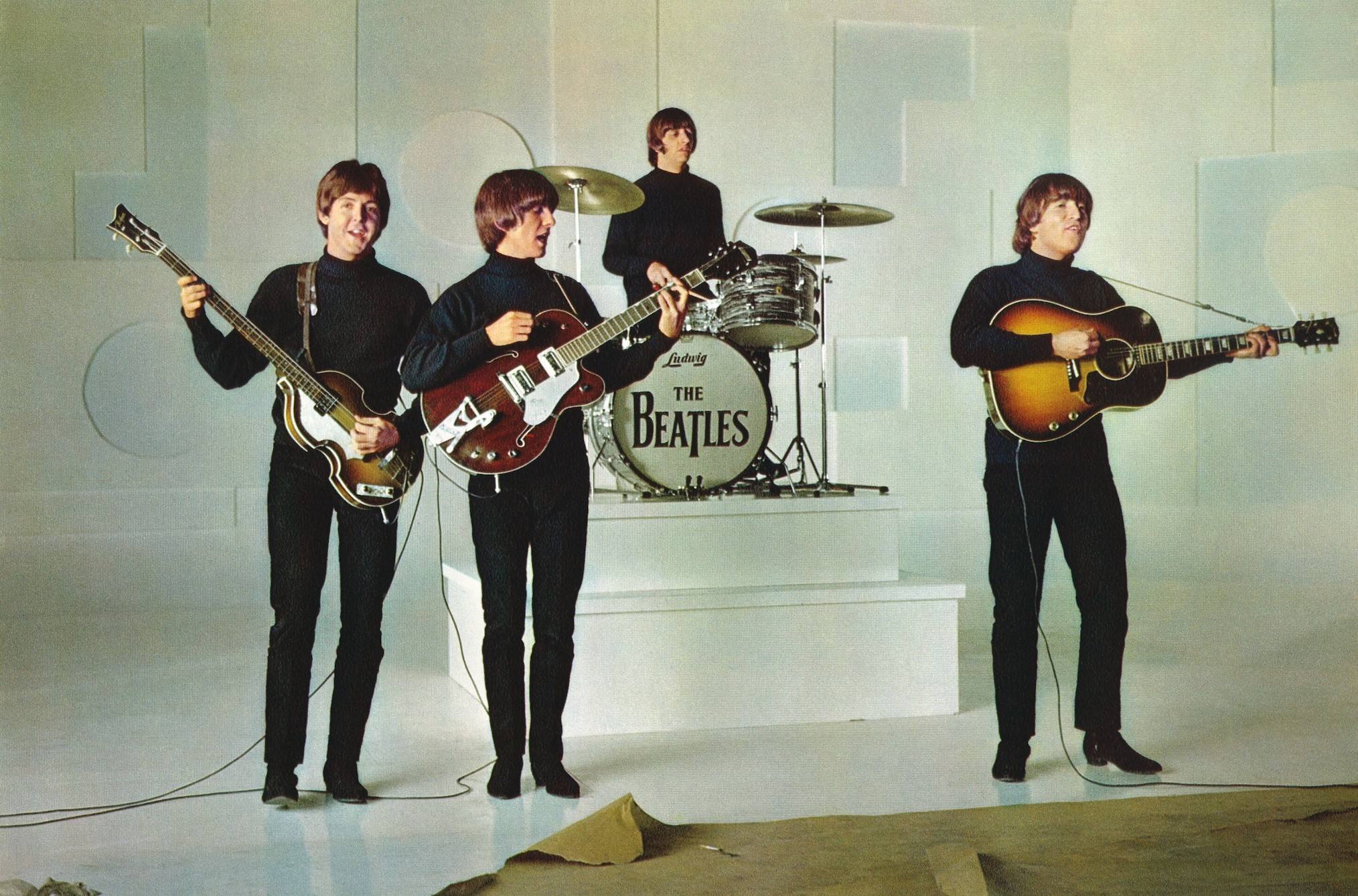
Summary of quotes and statements by The Beatles
The Beatles were one of the most popular rock bands of the 20th century, active from the 1960s to the 1970s, and made their record debut on October 5, 1962. The Beatles were ranked No. 1 on Rolling Stone's list of the 100 Greatest Artists of All Time, and are regarded around the world as one of the most influential rock bands of the 20th century. The band hails from Liverpool, England. Not only their music, but also their ideas and statements have attracted a great deal of attention and have had a great impact on the world.
Read Article

Yesterdays (film) spoiler alerts and discussion summary
Yesterday" is a stylish and heartfelt romantic comedy film produced in England. The main character, Jack, an unsuccessful singer-songwriter, is hit by a bus one day. He recovers from unconsciousness, but when he wakes up in the world, the legendary band "The Beatles" does not exist. For some reason, Jack is the only one who remembers the Beatles. The song "Yesterday," which he performed based on his memories, gradually changes Jack's ordinary life. This is a film that mixes fantastical elements with realism, and allows viewers to enjoy friendship, love, and anguish along with the Beatles' classic songs.
Read Article
Paul McCartney was dead, former member Ringo Starr testifies! A new development in the urban legend?
Former Beatles drummer Ringo Starr stunned the world when he said in an interview with a publication that the "real" Paul McCartney died in a car accident on November 9, 1966. Here is Ringo's statement, urban legends about Paul, and his own reaction.
Read Article
The Sessions, a recreation of the recording sessions of the legendary Beatles band, is coming!
It has been 50 years since the Beatles came to Japan. They were the first foreign artists to perform live at the Nippon Budokan on June 30 and July 1, 1966. On those very same days and at the same place, an event will be held to recreate the Beatles' recording sessions. The title of the event is "The Sessions. It is an attempt to perfectly recreate the Beatles' studio sessions at Abbey Road Studios using a variety of technologies.
Read Article
[John Lennon] Summary of celebrities and entertainers who died between the ages of 40 and 49 [Ken Maeda].
Entertainers and celebrities who have had a great impact on the world. Many of them have left this world at the young age of 40s. Diseases, accidents, suicides, assassinations.... In this article, we have compiled a list of such people. Although the causes vary, it is always painful to lose a person, no matter what time period or country.... We sincerely pray for the repose of their souls.
Read Article
![Paul McCartney] Summary of Hollywood stars and celebrities who are actually suspected of being anti-Japanese [Cameron Diaz](https://renote.net/files/blobs/proxy/eyJfcmFpbHMiOnsiZGF0YSI6NzA3OTE5MiwicHVyIjoiYmxvYl9pZCJ9fQ==--f54ed1968ea175d8f6be5ccbc0aac2b4b47ef326/5b111e621ae6624f008b472a.jpg)
Paul McCartney] Summary of Hollywood stars and celebrities who are actually suspected of being anti-Japanese [Cameron Diaz
The term "Hollywood star" is synonymous with world-famous performers. Of course, they are very well known in Japan, too! Some of them have openly stated that they "love Japan! but there are some who are suspected of being anti-Japanese. I don't know if it is true or not, but if these people are capable of world-class performances, they may be able to distinguish between their real intentions and their pretense in a matter of seconds.
Read Article
All Paul McCartney shows in Japan cancelled! Discussion of the possibility of a return visit to Japan!
Paul McCartney was scheduled to make his long-awaited return to Japan in May 2014, including his first Budokan concert in 48 years, but he became ill with a viral inflammation and canceled all shows shortly before the show. Many fans were disappointed and many wondered what would happen to him in the future. This article summarizes the situation at that time and the possibility of Paul's return to Japan for a replacement show, which he hopes to do.
Read Article
Paul McCartney suffered from "twisted intestines" and underwent emergency surgery in Japan!
Paul McCartney came to Japan for his first tour in six months, but canceled all shows due to poor health. The name of his illness was announced as viral inflammation, but it was later revealed that he had undergone surgery for intestinal sprain in Japan. The following is a summary of the illnesses that the great star suffered from in Japan.
Read Article
Paul McCartney cancels all shows! Explains the reason "viral inflammation"!
Paul McCartney, who was scheduled to return to Japan in May 2014, has become ill due to viral inflammation and has had to cancel all of his performances, including the Budokan concert. What is this "viral inflammation"? We will present a summary of Paul's sudden illness, which has several possibilities.
Read Article
Tags
Contents
- The Beatles Overview
- Members of The Beatles
- John Lennon
- Paul McCartney
- George Harrison
- Ringo Starr
- Former member of The Beatles
- Stuart Sutcliffe
- Pete Best
- People related to The Beatles
- Allan Williams
- Raymond Jones
- Brian Epstein
- George Martin
- A Brief History of The Beatles
- Birth and Death
- Major Events
- 1956-1961
- 1962-1966
- 1967-1970
- Analog release in the U.K.
- single
- 4-track EP
- album
- Analog release in the U.S.
- single
- 4-track EP
- album
- Analog release in Japan
- single
- 4-track EP
- album
- Solo Works
- Related Works
- The Beatles CDs
- The Beatles Discography
- original album
- Please Please Me
- With The Beatles
- A Hard Day's Night
- Beatles For Sale
- Help!
- Rubber Soul
- Revolver
- Sgt. Pepper's Lonely Hearts Club Band
- Magical Mystery Tour
- The Beatles
- Yellow Submarine
- Abbey Road
- Let It Be
- Editorial Albums & Other
- A Collection Of Beatles Oldies
- Hey Jude
- 1962-1966
- 1967-1970
- Rock 'N' Roll Music
- The Beatles At The Hollywood Bowl
- Love Songs
- Rarities (UK release)
- Rarities (U.S. version)
- The Beatles Ballads
- The Beatles Box
- Reel Music
- 20 Greatest Hits
- Past Masters Volume One
- Past Masters Volume Two
- Live At The BBC
- Baby It's You
- Anthology 1
- Free As A Bird
- Anthology 2
- Real Love
- Anthology 3
- Yellow Submarine Songtrack
- 1
- Let It Be... Naked
- love
- Mono Masters
- On Air - Live At The BBC Volume 2
- Live At The Hollywood Bowl
- Sgt. Pepper's Lonely Hearts Club Band (50th Anniversary Edition)
- The Beatles' most popular songs
- Love Me Do
- Please Please Me
- Twist And Shout
- From Me To You
- She Loves You
- All My Loving
- I Want To Hold Your Hand
- Can't Buy Me Love
- You Can't Do That
- A Hard Day's Night
- Long Tall Sally
- Baby's In Black
- Ticket To Ride
- Help!
- Yesterday
- Day Tripper
- We Can Work It Out
- Nowhere Man
- Paperback Writer
- Yellow Submarine
- Eleanor Rigby
- Strawberry Fields Forever
- Penny Lane
- A Day In The Life
- Hello Goodbye
- I Am The Walrus
- Lady Madonna
- Hey Jude
- Revolution
- Hey Bulldog
- Get Back
- Don't Let Me Down
- The Ballad Of John And Yoko
- Something
- Let It Be
- Free As A Bird
- Real Love
- The Beatles' backstory, trivia, small stories/episodes, anecdotes
- Dramatic departure of a member
- Paul's death theory
- The three major crises of 1966
- Mr. Toshitake Kotei
- Imelda Marcos
- Tommy Charles
- A Tribute to The Beatles