
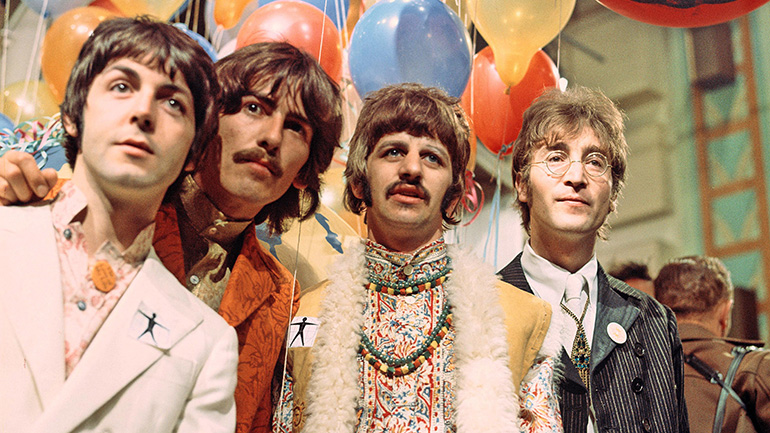
The Beatles are a four-piece rock band representing the 20th century that debuted in the United Kingdom in 1962. Their influence extended not only to their music, but also to their fashion, speech, and thought, creating a social phenomenon. One of the most notable aspects of their music is that their own musical development has directly influenced the musical development of the entire musical world and of their fans, who are their listeners.
Sexy Sadie
This is John's work and the lead vocalist is also John.
John: "That song was inspired by the Maharishi. I wrote it when we were packing up and leaving. I had a bad breakup with the Maharishi.
John's inspiration for the song came from his disillusionment with the Maharishi after Magic Alex Mardas told him a "rumor" while he was attending a Maharishi camp in India that the Maharishi had engaged in unsavory behavior toward women, including actress Mia Farrow, who was also at the camp. The original "Maharishi" was a "Maharishi" who was disillusioned with the Maharishi. Originally, the real name "Maharishi" was used, but George convinced him that it was too much, and the title was changed.
*Magic Alex Mardus: He met John Lennon through an introduction to Brian Jones of The Rolling Stones, and was a friend of The Beatles from 1965 to about 1969.
He was in charge of Apple Electronics, designing Apple Studios, etc., but he was wasting a lot of money by acting almost like a con man, saying he was going to create a 72-track recording machine, only to build 72 speakers into the wall.
In an interview with the New York Times Magazine in 2010, Magic Alex said, "I invented many electronic devices, none of which had anything to do with The Beatles' business. It is important to remember that these inventions, although in common use now, were not conceived by anyone else at the time."
He died of pneumonia in 2017. He was 74 years old.
The song starts differently in mono and stereo.
In stereo, the tambourine is struck twice in the intro, but only once in mono.
In stereo, the bass comes in with the start of the song, but in mono, it comes in at the first "sadie".
Recording Details
1968
July 19.
Recording of the 1st to 21st takes.
July 24
Takes 25 to 47 were recorded. Take numbers were moved up for the remake.
August 13
Takes 100 to 107 were recorded. Take numbers were moved up for re-make. Take 108 to 111 were created by tape reduction of Take 107.
August 21
Take 112 is created by tape reduction of Take 107. An overdub was added to Take 112. Tape reduction of take 112 was made to take 113-115. Overdub to take 115. Tape reduction of take 115 to create takes 116-117. Overdub on take 117. The details of the overdubs are unknown, but John's vocals, organ, bass, background vocals, and tambourine were overdubbed.
Mono mixing is performed based on the 117th take.
October 14
Stereo mixing is performed based on take 117.
Helter Skelter
Paul's work and lead vocals are also by Paul.
Paul: "(Referring to an interview with The Who guitarist Pete Townshend in Melody Maker magazine) He said that The Who made the loudest, grittiest rock 'n' roll he'd ever heard. He said, 'We've never done anything this rough before. And I thought, 'Yeah, let's do that. Let's do something like that. I like that kind of weirdness. So we decided to do the loudest, baddest, sweatiest rock number we could. That's 'Helter Skelter.
The Who song mentioned here is "I Can See For Miles.
I Can See For Miles/The Who
The first version was about 25 minutes long.
Technical engineer Brian Gibson: "The version for the album was already outrageous. They were totally blown away that night. But as usual, the Beatles were silenced no matter what they did in the studio. Everyone knew they were on drugs, but in the studio, they were the law unto themselves.
Helter Skelter" refers to the spiral slide at amusement parks in England. Helter skelter" means "disorder" or "confusion" in English.
The ending is completely different between mono and stereo.
In mono, only the drums come in to cover the guitar that remains after the performance stops. When the performance resumes, the drums fade out.
In stereo, all instruments including drums come in to cover the guitar that remains after the performance stops. The song fades out again, but then fades back in again, ending with Ringo's cry of "I've got blisters on my fingers! (I've got blisters on my fingers!)" by Ringo.
Recording Details
1968
July 18
First to third takes are recorded.
September 9
Takes 4 to 21 were recorded.
September 10
Overdubs on take 21 (details unknown)
September 17
Mono mixing is performed based on take 21.
October 12
Stereo mixing based on take 21.
Long, Long, Long
This song was written by George, and the lead vocalist is also George.
George said, "The 'you' in this song is God. I can't remember much about the song, but I think Bob Dylan's "Sad Eyed Lady Of The Lowlands" was the inspiration for the chords, which are a three chord progression from D to Em, D, and A. There was a bottle of "Blue Nun" wine on top of Leslie's speakers during the recording session. When Paul played the organ keys, the speakers began to shake and the bottle began to clink. You can hear it on the record. It's at the end of the song.
Sad Eyed Lady Of The Lowlands/Bob Dylan
Recording Details
1968
October 7.
Recording of the 1st to 67th takes.
October 8
George's second vocal, acoustic guitar, and Paul's bass are overdubbed onto take 67.
October 9
Recorded take 67 with Paul's backing vocals and Chris Thomas' piano overdubbed.
October 10
Stereo mixing is performed on Take 67.
October 12
Mono mixing is performed based on take 67.
This mono mixing was not used.
October 14
Mono mixing is performed based on take 67.
Revolution 1
This is a work by John, and the lead vocalist is also John.
Revolution" was also included on the B-side of the single "Hey Jude" released about 3 months before this album "The Beatles", but this is a different version and much slower version than the single.
John: "The Beatles were very tense with each other. I wanted to release the slow version as a single as a statement of the Beatles' position on Vietnam and the revolution. But George and Paul objected, saying the tempo was too slow."
As for the lyrics, the single takes a stand against violence by saying "count me out," or "take me out," but the slow version on this album sings "in," or "let me in," after "count me out," which causes some hesitation.
John: "It's yin and yang. We all have a violent impulse deep down in our consciousness."
John had trouble recording the vocals, and eventually sang the song lying on the floor, which was adopted.
Originally nearly 10 minutes long, the second half of the song was cut, but that second half became the basis for Revolution 9.
*Recording details
1968
May 30.
Takes 1 through 18 were recorded.
May 31
John's vocals and Paul's bass are overdubbed onto take 18. The 18th take is tape reduced to make the 19th take. Overdub Paul and George's backing vocals onto Take 19.
June 4
Overdub John's vocals (re-recorded) on take 19. The first and second takes of the tape loop are recorded. This tape loop was never used. A tape reduction of take 19 was made for take 20. Ringo's drums, percussion, and Paul's organ were overdubbed onto the 20th take.
Mono mixing was done based on the 20th take.
This mono mixing is not used.
June 21
Overdubs of trumpet and trombone are added to take 20. Take 20 is tape reduced to make takes 21 and 22. George's guitar is overdubbed on Take 22.
Stereo mixing was done based on the 22nd take.
This stereo mixing is not used.
June 25
Mono and stereo mixing is done based on the 22nd take.
Honey Pie
This is Paul's work and the lead vocalist is also Paul.
Paul: "I made this in 1964 under the influence of Fred Astaire."
John played the guitar solo in the interlude.
George "John did a great solo. Like Django Reinhardt or something. He'd play a series of perfect notes with his eyes closed. It was like listening to a little jazz solo."
The guitar solo is slightly different in mono and stereo.
In mono, the solo continues for eight bars, but in stereo, bars 5 through 7 are cut, and only two notes are restored in bar 8.
John does not like this song.
John "(when asked about this song, laughing) I don't even want to think about that song."
Recording Details
1968
October 1
The first take is recorded.
Mono mixing is done based on the first take.
This mono remix was made as a take-away for Martin's brass and woodwind arrangements.
October 2
Paul's vocals and guitar are overdubbed onto the first take.
October 4
Overdubs of brass and woodwinds were added to the first take.
October 5
Mono and stereo mixing was done on the first take.
Savoy Truffle
This is George's work and lead vocalist is also George.
George: "This is a funny song I wrote in the 60's when I was hanging out with Eric Clapton. Eric had a lot of cavities and had to get them fixed. He always had a toothache and ate a lot of chocolate. He had no patience, and once he saw a box of chocolates, he couldn't resist eating them all. When he came to my house, I put a box of "Good News" on the table and wrote a song based on the name of the chocolate on the back of the lid. On the box were "cream tangerine, montelimart," "ginger sling," "pineapple treat," "coffee desert," and "savoy truffle. There was "toffee" and "cherry cup" instead of "cherry cream," "apple tart" and "coconut fudge" instead of "coconut" and "caramel. I was stuck after writing two bridges, and then Terek Taylor wrote the middle lyric. That's 'You know that what you eat you are.
Good News: McIntosh is selling an assortment of chocolates.

This is the box of "Good News" released by McIntosh. George wrote the lyrics from the product names listed here.
Recording Details
1968
October 3
The first take is recorded.
October 5
George's vocals are overdubbed onto the first take.
October 11
Overdubs brass section on the first take
October 14
Guitar, organ, electric piano, and bongo overdubs on take 1.
Mono and stereo mixing was done on the first take.
Cry Baby Cry
This is John's work and the lead vocalist is also John.
John: "It's a boring song.
John wrote this song inspired by a copy of the phrase "cry baby cry, make your mother buy (cry baby, cry, make your mother buy)" from a baby formula commercial.
A short piece by Paul called "can you take me back," not listed in the credits, is inserted at the end of the song. This song was improvised during the "I Will" sessions.
*Recording Details
1968
July 15.
Rehearsals take place.
July 16
Takes 1-10 were recorded. The 10th take was tape reduced to make the 11th and 12th takes. Martin's harmonium and John's piano are overdubbed on take 12.
July 18
Overdubbed John's vocals, backing vocals, harmonium, tambourine, and sound effects on Take 12.
October 15
Mono and stereo mixing based on the first take.
Revolution 9
Revolution 9 is a song by John and Yoko, rather than by John. Although there are no lead vocals on this album, it would be wrong to count it as an instrumental piece. A more appropriate description would be that it is a music concoction.
*Music concrète: Created through the recording, processing, and reconstruction of human and animal voices, noise emanating from trains, cities, etc., sounds emanating from nature, musical sounds, electronic sounds, and musical compositions.
Source: ja.wikipedia.org
John: "I think it's somewhat influenced by Yoko. Once you hear her work, it's not just screeching and howling, but all these weird little pieces with words and talking and breathing, and you're like, 'Oh my God. The slow version of 'Revolution' for the album goes on and on, and I took the fade-out parts from it and layered things on top of it. I took the fade-outs and layered stuff over them. I layered about 20 tape loops over the basic rhythm of the original "Revolution," which I got from the EMI vaults. We were cutting up classics and making different sized loops. Then I brought in an engineer's tape of some test engineer talking "Number 9 Number 9. I edited all of that miscellany of sounds and noises together in front of about 10 tape recorders, some of which were only a few ...... inches long, some of which were a yard long, with loops hooked up to pencils. I fed them all in and mixed them on the spot. I made a few mixes until I got one I liked. Yoko was with me the whole time, deciding which loops to use." "It's like a picture of a revolution."
Pete Shotton, a friend of John's: "We were sharing LSD, smoking pot, and somehow fooling around with a Brunel tape recorder that John had pieced together. With the windows open to get some spring air and the tapes rolling in the back room, we kept yelling whatever came into our heads at the silent trees. We had no idea that this extraordinary night of revelry would be preserved for posterity. Becoming part of "Revolution 9" ......"
John: "This is the music of the future. Everyone can forget about the crap music we made. This is what's going to stay. Eventually everyone will be able to make music. You won't even have to learn how to play an instrument to write a song.
George: "'Revolution 9' is not a particularly Beatles number. George: "'Revolution 9' is not a particularly Beatles number, but it's a nice addition to an album that has so many different songs on it. It's a little heavy for me to listen to. In fact, I haven't listened to it at all.
The title "9" was chosen because John's birthday is October 9, and he himself considers "9" his lucky number.
*Recording Details
1968
June 6
Sound Effects takes 1-12 are recorded.
June 10
Recordings of sound effects takes 1-3 (same take numbers but different from those made on June 6)
June 11
Recorded several more takes of unnumbered sound effects.
June 20
Overdubs were done on the first and second sound effects takes to create the master version.
June 21
Overdubs to the master version (details unknown).
Stereo mixing is done based on the master version.
This stereo mixing was not used.
June 25
Stereo editing of the master version.
This stereo edited version is used as the final version).
August 20
Mono edit of the master version.
August 26
Mono edit of the master version.
This mono edited version will be used in the final version).
Good Night
Ringo sings lead vocals on John's work.
John: "'Good Night' was written for Julian (John and Cynthia's son). I wrote "Good Night" for Julian (John and Cynthia's son), just as I wrote "Beautiful Boy" (on John and Yoko's "Double Fantasy") for Sean (John and Yoko's son). But I gave it to Ringo and thought it was a little too glamorous.
Paul: "It's a song about John's tender side. I was singing it softly to Ringo."
The orchestra was arranged by George Martin.
John: "I told George Martin, 'Arrange it like Hollywood. Yes, sentimental.
Early versions of the song included the following lines from Ringo in the introduction: "Come along children.
It's time to toddle off to bed. It's time to toddle off to bed.
The mono and stereo versions differ in the way the orchestra enters the intro.
The mono version fades in almost without fade-in, while the stereo version fades in slowly.
Recording Details
1968
June 28.
First through fifth takes were recorded.
July 2
Ringo's vocals and backing vocals are overdubbed onto take 5. Takes 6-15 are recorded.
July 22
Discard all previous recordings and record takes 23-34. Overdub chorus, Ringo's vocals, and orchestra on Take 34.
July 23
Mono mixing is performed based on take 34.
This mono mixing is not used.
October 11
Mono and stereo mixing based on take 34.
Yellow Submarine
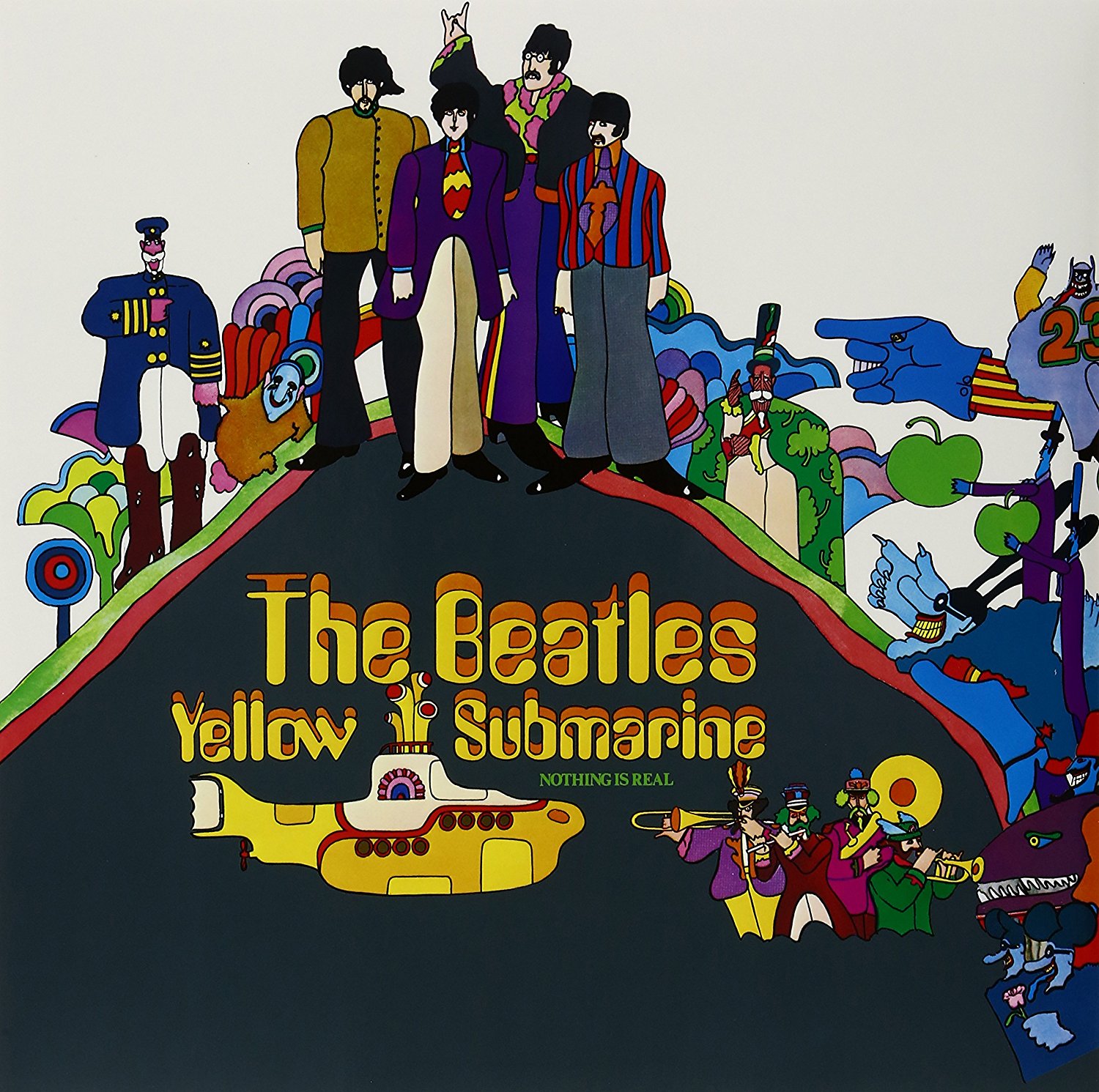
Side A
1. Yellow Submarine
Only A Northern Song
All Together Now
Hey Bulldog
It's All Too Much
All You Need Is Love
Side B
1. Pepperland
Sea Of Time
Sea Of Holes
Sea Of Monsters
March Of The Meanies
Pepperland Laid Waste
Yellow Submarine In Pepperland

Related Articles
Summary of quotes and statements by The Beatles
The Beatles were one of the most popular rock bands of the 20th century, active from the 1960s to the 1970s, and made their record debut on October 5, 1962. The Beatles were ranked No. 1 on Rolling Stone's list of the 100 Greatest Artists of All Time, and are regarded around the world as one of the most influential rock bands of the 20th century. The band hails from Liverpool, England. Not only their music, but also their ideas and statements have attracted a great deal of attention and have had a great impact on the world.
Read Article

Yesterdays (film) spoiler alerts and discussion summary
Yesterday" is a stylish and heartfelt romantic comedy film produced in England. The main character, Jack, an unsuccessful singer-songwriter, is hit by a bus one day. He recovers from unconsciousness, but when he wakes up in the world, the legendary band "The Beatles" does not exist. For some reason, Jack is the only one who remembers the Beatles. The song "Yesterday," which he performed based on his memories, gradually changes Jack's ordinary life. This is a film that mixes fantastical elements with realism, and allows viewers to enjoy friendship, love, and anguish along with the Beatles' classic songs.
Read Article
Paul McCartney was dead, former member Ringo Starr testifies! A new development in the urban legend?
Former Beatles drummer Ringo Starr stunned the world when he said in an interview with a publication that the "real" Paul McCartney died in a car accident on November 9, 1966. Here is Ringo's statement, urban legends about Paul, and his own reaction.
Read Article
The Sessions, a recreation of the recording sessions of the legendary Beatles band, is coming!
It has been 50 years since the Beatles came to Japan. They were the first foreign artists to perform live at the Nippon Budokan on June 30 and July 1, 1966. On those very same days and at the same place, an event will be held to recreate the Beatles' recording sessions. The title of the event is "The Sessions. It is an attempt to perfectly recreate the Beatles' studio sessions at Abbey Road Studios using a variety of technologies.
Read Article
[John Lennon] Summary of celebrities and entertainers who died between the ages of 40 and 49 [Ken Maeda].
Entertainers and celebrities who have had a great impact on the world. Many of them have left this world at the young age of 40s. Diseases, accidents, suicides, assassinations.... In this article, we have compiled a list of such people. Although the causes vary, it is always painful to lose a person, no matter what time period or country.... We sincerely pray for the repose of their souls.
Read Article
![Paul McCartney] Summary of Hollywood stars and celebrities who are actually suspected of being anti-Japanese [Cameron Diaz](https://renote.net/files/blobs/proxy/eyJfcmFpbHMiOnsiZGF0YSI6NzA3OTE5MiwicHVyIjoiYmxvYl9pZCJ9fQ==--f54ed1968ea175d8f6be5ccbc0aac2b4b47ef326/5b111e621ae6624f008b472a.jpg)
Paul McCartney] Summary of Hollywood stars and celebrities who are actually suspected of being anti-Japanese [Cameron Diaz
The term "Hollywood star" is synonymous with world-famous performers. Of course, they are very well known in Japan, too! Some of them have openly stated that they "love Japan! but there are some who are suspected of being anti-Japanese. I don't know if it is true or not, but if these people are capable of world-class performances, they may be able to distinguish between their real intentions and their pretense in a matter of seconds.
Read Article
All Paul McCartney shows in Japan cancelled! Discussion of the possibility of a return visit to Japan!
Paul McCartney was scheduled to make his long-awaited return to Japan in May 2014, including his first Budokan concert in 48 years, but he became ill with a viral inflammation and canceled all shows shortly before the show. Many fans were disappointed and many wondered what would happen to him in the future. This article summarizes the situation at that time and the possibility of Paul's return to Japan for a replacement show, which he hopes to do.
Read Article
Paul McCartney suffered from "twisted intestines" and underwent emergency surgery in Japan!
Paul McCartney came to Japan for his first tour in six months, but canceled all shows due to poor health. The name of his illness was announced as viral inflammation, but it was later revealed that he had undergone surgery for intestinal sprain in Japan. The following is a summary of the illnesses that the great star suffered from in Japan.
Read Article
Paul McCartney cancels all shows! Explains the reason "viral inflammation"!
Paul McCartney, who was scheduled to return to Japan in May 2014, has become ill due to viral inflammation and has had to cancel all of his performances, including the Budokan concert. What is this "viral inflammation"? We will present a summary of Paul's sudden illness, which has several possibilities.
Read Article
Tags
Contents
- The Beatles Overview
- Members of The Beatles
- John Lennon
- Paul McCartney
- George Harrison
- Ringo Starr
- Former member of The Beatles
- Stuart Sutcliffe
- Pete Best
- People related to The Beatles
- Allan Williams
- Raymond Jones
- Brian Epstein
- George Martin
- A Brief History of The Beatles
- Birth and Death
- Major Events
- 1956-1961
- 1962-1966
- 1967-1970
- Analog release in the U.K.
- single
- 4-track EP
- album
- Analog release in the U.S.
- single
- 4-track EP
- album
- Analog release in Japan
- single
- 4-track EP
- album
- Solo Works
- Related Works
- The Beatles CDs
- The Beatles Discography
- original album
- Please Please Me
- With The Beatles
- A Hard Day's Night
- Beatles For Sale
- Help!
- Rubber Soul
- Revolver
- Sgt. Pepper's Lonely Hearts Club Band
- Magical Mystery Tour
- The Beatles
- Yellow Submarine
- Abbey Road
- Let It Be
- Editorial Albums & Other
- A Collection Of Beatles Oldies
- Hey Jude
- 1962-1966
- 1967-1970
- Rock 'N' Roll Music
- The Beatles At The Hollywood Bowl
- Love Songs
- Rarities (UK release)
- Rarities (U.S. version)
- The Beatles Ballads
- The Beatles Box
- Reel Music
- 20 Greatest Hits
- Past Masters Volume One
- Past Masters Volume Two
- Live At The BBC
- Baby It's You
- Anthology 1
- Free As A Bird
- Anthology 2
- Real Love
- Anthology 3
- Yellow Submarine Songtrack
- 1
- Let It Be... Naked
- love
- Mono Masters
- On Air - Live At The BBC Volume 2
- Live At The Hollywood Bowl
- Sgt. Pepper's Lonely Hearts Club Band (50th Anniversary Edition)
- The Beatles' most popular songs
- Love Me Do
- Please Please Me
- Twist And Shout
- From Me To You
- She Loves You
- All My Loving
- I Want To Hold Your Hand
- Can't Buy Me Love
- You Can't Do That
- A Hard Day's Night
- Long Tall Sally
- Baby's In Black
- Ticket To Ride
- Help!
- Yesterday
- Day Tripper
- We Can Work It Out
- Nowhere Man
- Paperback Writer
- Yellow Submarine
- Eleanor Rigby
- Strawberry Fields Forever
- Penny Lane
- A Day In The Life
- Hello Goodbye
- I Am The Walrus
- Lady Madonna
- Hey Jude
- Revolution
- Hey Bulldog
- Get Back
- Don't Let Me Down
- The Ballad Of John And Yoko
- Something
- Let It Be
- Free As A Bird
- Real Love
- The Beatles' backstory, trivia, small stories/episodes, anecdotes
- Dramatic departure of a member
- Paul's death theory
- The three major crises of 1966
- Mr. Toshitake Kotei
- Imelda Marcos
- Tommy Charles
- A Tribute to The Beatles