
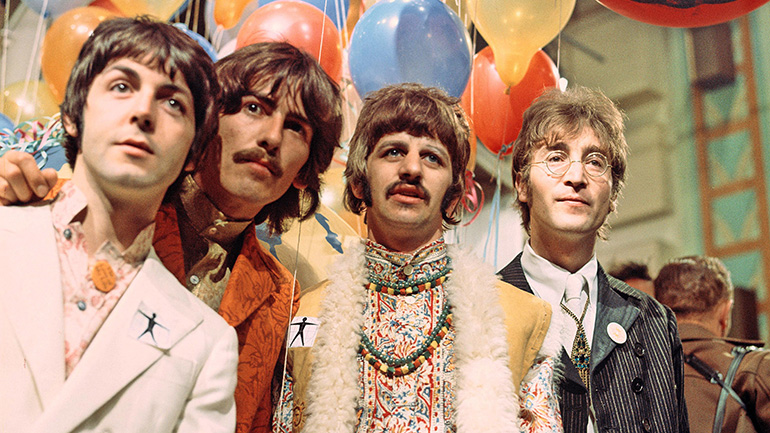
The Beatles are a four-piece rock band representing the 20th century that debuted in the United Kingdom in 1962. Their influence extended not only to their music, but also to their fashion, speech, and thought, creating a social phenomenon. One of the most notable aspects of their music is that their own musical development has directly influenced the musical development of the entire musical world and of their fans, who are their listeners.
Till There Was You
Originally written by American composer Meredith Wilson in 1957, this is an insert song from the Broadway musical The Music Man. Barbara Cook, playing the librarian, sings it to Robert Preston, playing the professor, at the end of the second act.
The lead vocalist is Paul. Paul liked the version sung by American female singer Peggy Lee, which became a hit in the U.K. in 1961, and used it as a reference.
Till There Was You/Peggy Lee
Recording Details
1963
July 18.
First through third takes are recorded.
July 30
Takes 4 to 8 were recorded.
August 21
Mono mixing based on take 8
October 29
Stereo mixing based on take 8
Please Mister Postman
The original was the debut single released on August 7, 1961 by The Marvelettes, an American female chorus group affiliated with Motown. It became a big hit, reaching number one in the U.S. It was also Motown Records' first number one song in the U.S.
The lead vocalist was John.
Paul: "Our recording was strongly influenced by the Mavelettes, who did the original version. A fan taught me how to do it. On the back of the envelope it said, 'Please Mister Postman. Please Mister Postman, please, please, please, please, don't be lazy, be crisp like the Beatles.
The original was sung by a female chorus group, and the lyrics are from a woman's perspective, so The Beatles changed "boyfriend" to "girlfriend" and sang it as a man's.
Please Mr. Postman/The Marvelettes
Recording Details
1963
July 30.
Takes 1-9 were recorded.
John's second vocal and hand claps were overdubbed onto take 8 to create take 9.
August 21
Mono mixing is performed based on take 9.
October 29
Stereo mixing is done based on take 9.
Roll Over Beethoven
The original single was released on May 14, 1956 by Chuck Berry, one of the American rock originators.
The lead vocalist was George. It was part of his live repertoire even before his debut, but John sang lead vocals from 1957 to 1961.
Roll Over Beethoven/Chuck Berry
Recording Details
1963
July 30.
Takes 1-8 were recorded.
George's second vocal and hand claps were overdubbed onto take 5 to create take 7. An ending guitar riff was overdubbed onto take 5 to make take 8.
August 21
Take 7 and 8 were edited, and mono mixing was performed based on them.
October 29
Take 7 and 8 were edited, and stereo mixing was done based on them.
Hold Me Tight
Paul took the lead in writing this song, with a little help from John.
Lead vocals are by Paul.
John: "We both wrote it, but mainly Paul. It's a pretty poor song. I have no interest in it." Paul: "I don't remember much about this song.
Paul: "I don't remember much about this song. Some of the songs were done on a "shotgun" basis, and I don't remember much about those songs. It's one of those songs. It's a little bit like Shirelles.
The original take is different in mono and stereo, so there are differences in the backing vocals, hand claps, etc.
Recording Details
1963
February 11.
Takes 1-13 are recorded. This day was the recording for the first album, but this song was not included in the album.
September 12
Takes 20 to 29 are recorded. Take numbers are rounded up from 20 for the remake.
John and Paul's chorus and handclaps are overdubbed into Take 24, and Takes 26 and 29 are created.
September 30
Edited take 24, 26, and 29, and mono-mixed based on them.
This mono mixing was not used.
October 23
Take 24 and 26 are edited and mono-mixed based on them.
October 29
Take 24 and Take 29 will be edited and stereo mixing will be done based on them.
● You Really Got A Hold On Me
The original single was released on November 19, 1962 by Smokey Robinson & The Miracles, an American male chorus group affiliated with Motown. The original title was "You've Really Got A Hold On Me.
John and George share lead vocals. This is the only lead vocal by this duo.
It was the first song featured on the "With The Beatles" recording session.
You've Really Got A Hold On Me/Smokey Robinson & The Miracles
Recording Details
1963
July 18.
Takes 1 to 11 were recorded.
Take 7 was used as the base, but Take 10 (correction of the "Baby" singing part from 2:22 to 2:24) and Take 11 (correction of the electric guitar part from 2:31 to 2:42) were made for editing.
August 21
Take 7, 10, and 11 were edited, and mono mixing was performed based on them.
October 17
The 12th take is recorded. A four-track recording deck is set up in the studio on this day, and "You Really Got A Hold On Me" is recorded along with "I Want To Hold Your Hand" and "This Boy," but it is not used.
October 29.
The seventh, tenth, and eleventh takes are edited, and stereo mixing is performed based on them.
● I Wanna Be Your Man
Paul took the lead on this song, with a little help from John.
Ringo sings lead vocals.
John: "We wrote it. But it was mainly Paul. I helped with the finishing touches.
Paul: "I got the title phrase from 'Fortune Teller.
Fortune Teller" is the coupling track to Benny Spellman's 1962 single "After the Lipstick". Incidentally, The Rolling Stones also covered "Fortune Teller.
John and Paul offered this song to The Rolling Stones on September 10, 1963, the day before the first day of recording this song.
They were asked by Andrew Oldham, the Rolling Stones' manager, to contribute the song. They met Mick Jagger and Keith Richards of The Rolling Stones at a club (or studio, some say) on that day, and completed the song they had been working on in front of them with a "cha-cha-cha! and offered it to them.
John: "'I Wanna Be Your Man' was a phrase Paul had been warming up to. It's a throwaway song. There's only the version that Ringo and the Rolling Stones sang. I mean, that's all I thought about it. I wasn't going to give them a great song.
American singer-songwriter Bob Dylan recorded an answer to this song, "I Wanna Be Your Lover," in 1965. It was unreleased at the time, but saw the light of day when it was included on the compilation album "Biograph," released on November 117, 1985.
I Wanna Be Your Man/The Rolling Stones
Recording Details
1963
September 11
First take is recorded.
September 12
Takes 2 to 7 are recorded.
September 30
George Martin's Hammond organ is overdubbed on take 7, and takes 8 to 13 are recorded. Take 13 is selected as the best.
October 3
Ringo's vocals and maracas are overdubbed onto Take 13, and Takes 14-15 are created.
October 23
Take 16 is recorded, but details are unknown. Mono mixing is done based on the 16th take.
October 29
Stereo mixing is done based on the 16th take.
Devil In Her Heart
The original song is a coupling track of the single "Bad Boy" released on August 6, 1962 by the Donnays, an American female chorus group. The original title was "Devil In His Heart.
The lead vocalist is George.
George: "Before we went to the show, the guys got together at the record store NEMS (owned by manager Brian Epstein) after it closed and scoured the shelves for songs that people might not know. We found 'Some Other guy,' 'Money (That's What I Want),' and 'Devln In Her Heart.
The original song was sung by a female chorus group and the lyrics were written from a woman's perspective, so The Beatles changed "his" to "her" and sang the song from a man's perspective.
Devil in His Heart/The Donays
Recording Details
1963
July 18.
Takes 1-6 are recorded.
George's second vocal, John and Paul's chorus, and Ringo's maracas are overdubbed onto the third take to create the sixth take.
August 21
Mono mixing is done based on take 6.
October 29
Stereo mixing is done based on take 6.
Not A Second Time
This is John's work, and the lead vocalist is also John.
William Mann, critic for the London Times, wrote: "...... But the harmonic flourishes are evident even in the faster tempos, and the listener is left with the impression that they are thinking of harmony and melody at the same time. The aeolian termination at the end of "Not A Second Time," with its major tonic sevens and nines and the semitone-down 6th degree modulation firmly embedded in the melody, is truly natural (identical to the chord ending Mahler's "Song of the Earth")."
John: "To this day, I have no idea what an 'aeolian ending' is. It sounds like an exotic bird." "Actually, it's just like any other chord, it's everywhere. That was the first time anyone had ever written anything like that about us.
Recording Details
1963
September 11
Takes 1-9 are recorded.
George Martin's piano and John's second vocal were overdubbed onto the fifth take to create the ninth take.
September 30
Mono mixing is done based on take 9.
October 29
Stereo mixing is done based on Take 9.
● Money (That's What I Want)
Originally released on December 10, 1959, this single by American soul singer Barrett Strong, a Motown artist, was one of the first hits for the label. Barrett Strong was one of the first artists signed to Motown, and "Money (That's What I Want)" was his first hit for the label.
Lead vocals were sung by John.
The original lyrics are "I Need Money," but The Beatles' version is "Now Give Me Money.
The mono and stereo mixes of the intro are different. This is partly due to the fact that two different 2-track mono mixes were used and remixed separately for the left and right sides.
The differences are as follows.
The first two bars of the mono mix have a piano and a drummer's stick counting sound.
In stereo, the piano comes from the right channel in the first two bars, the guitar from the left channel around the third and a half beat of the second bar, and the drums also from the left channel from the fourth beat.
The Beatles Complete Song Bible," published by Nikkei BP and edited by From Bee, provides an explanation of this difference, but the explanation leaves the source of the left channel drums sound heard on the fourth beat unclear. I (the author) may be deciphering it incorrectly, but the details remain unclear.
Recording Details
1963
July 18.
First through seventh takes are recorded.
July 30
Takes 8 to 14 were recorded.
August 21
Takes 6 and 7 were edited and mono-mixed based on them.
September 30
Two takes of piano by George Martin are recorded.
October 29
The sixth and seventh takes were edited, and stereo mixing was done based on them.
October 30
Stereo mixing was done based on take 7.
Two 2-track mono mixes are used for the remixing process, one for left and one for right.
A Hard Day's Night

Related Articles
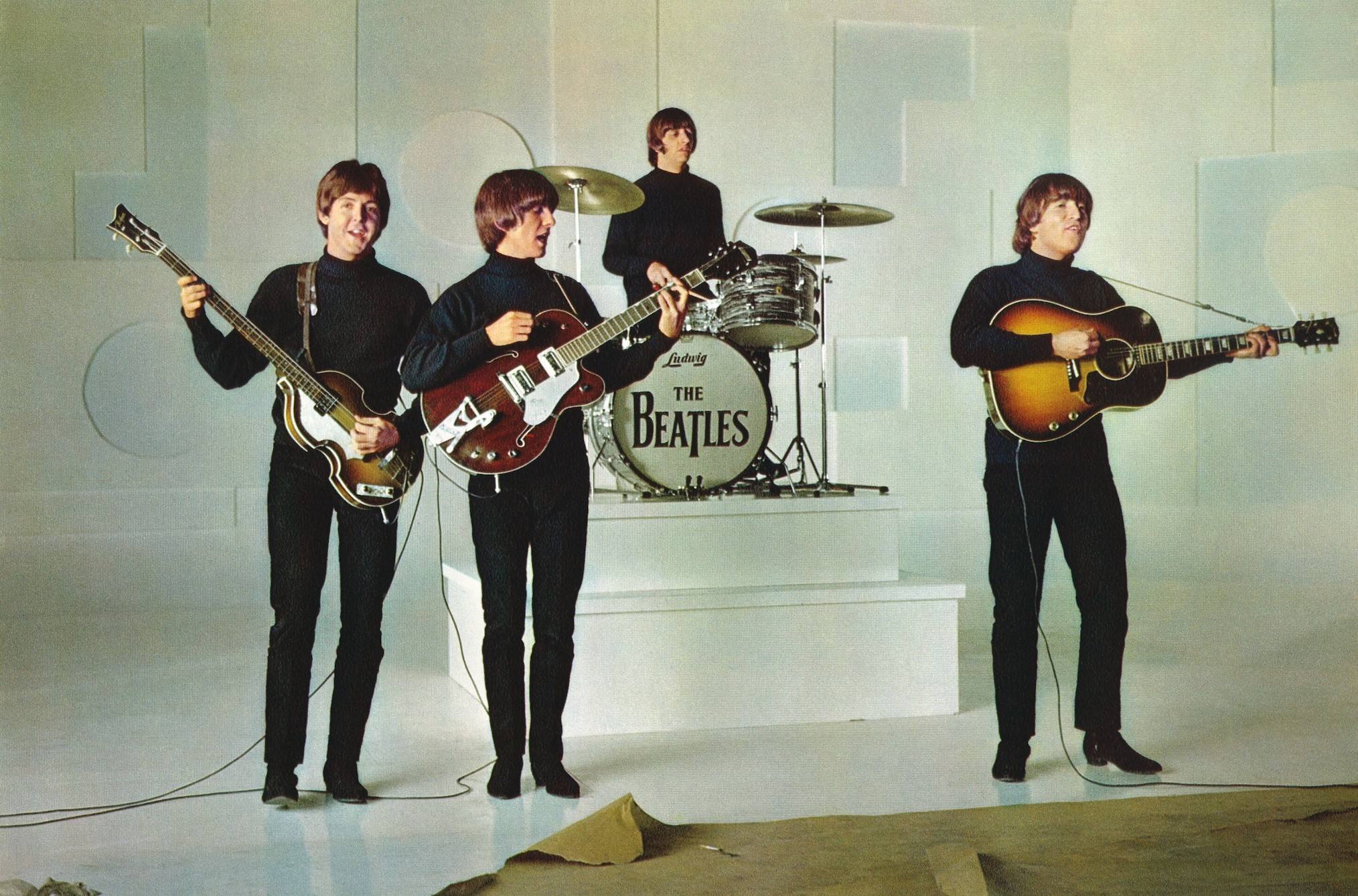
Summary of quotes and statements by The Beatles
The Beatles were one of the most popular rock bands of the 20th century, active from the 1960s to the 1970s, and made their record debut on October 5, 1962. The Beatles were ranked No. 1 on Rolling Stone's list of the 100 Greatest Artists of All Time, and are regarded around the world as one of the most influential rock bands of the 20th century. The band hails from Liverpool, England. Not only their music, but also their ideas and statements have attracted a great deal of attention and have had a great impact on the world.
Read Article

Yesterdays (film) spoiler alerts and discussion summary
Yesterday" is a stylish and heartfelt romantic comedy film produced in England. The main character, Jack, an unsuccessful singer-songwriter, is hit by a bus one day. He recovers from unconsciousness, but when he wakes up in the world, the legendary band "The Beatles" does not exist. For some reason, Jack is the only one who remembers the Beatles. The song "Yesterday," which he performed based on his memories, gradually changes Jack's ordinary life. This is a film that mixes fantastical elements with realism, and allows viewers to enjoy friendship, love, and anguish along with the Beatles' classic songs.
Read Article
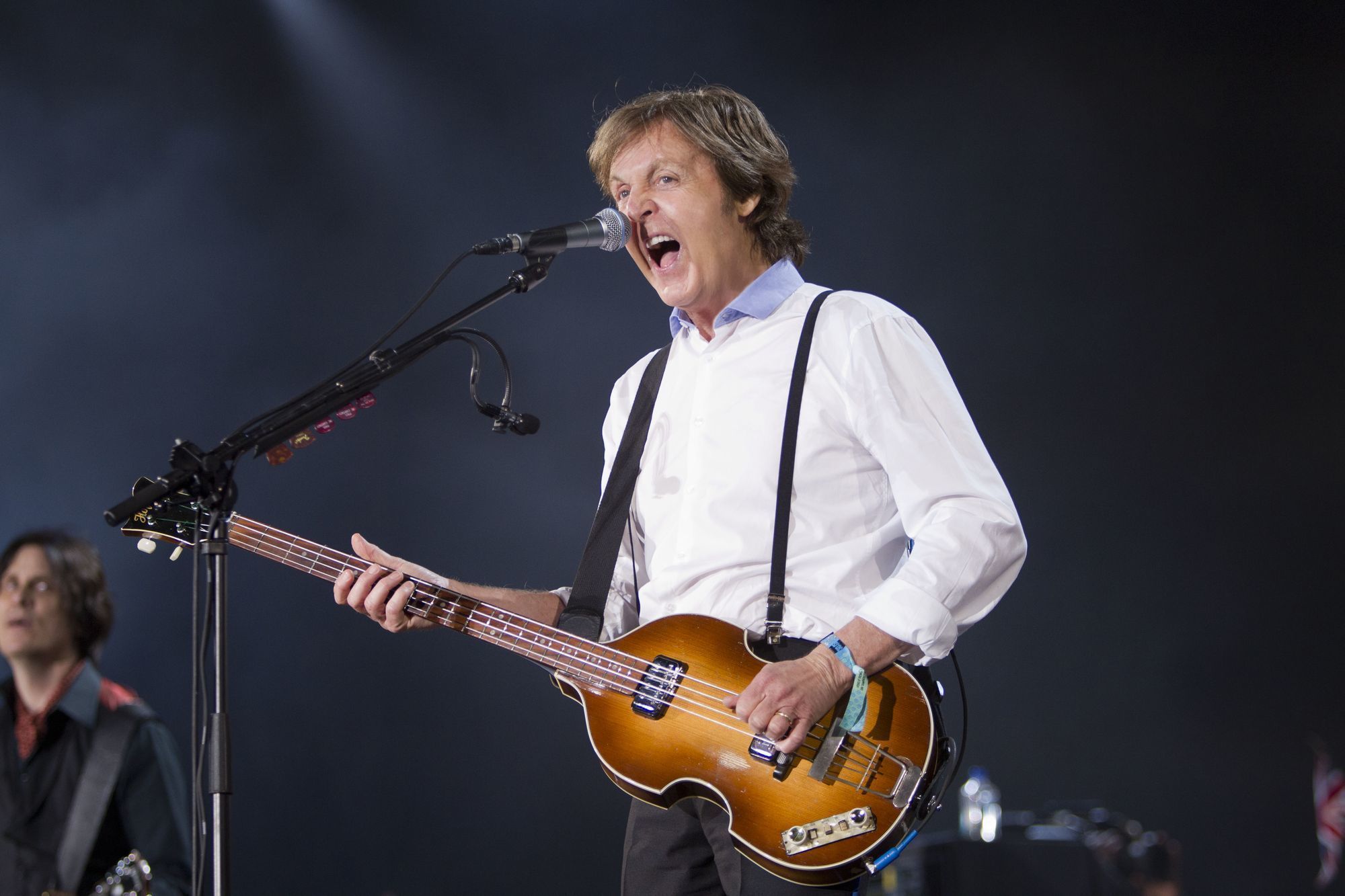
Paul McCartney was dead, former member Ringo Starr testifies! A new development in the urban legend?
Former Beatles drummer Ringo Starr stunned the world when he said in an interview with a publication that the "real" Paul McCartney died in a car accident on November 9, 1966. Here is Ringo's statement, urban legends about Paul, and his own reaction.
Read Article
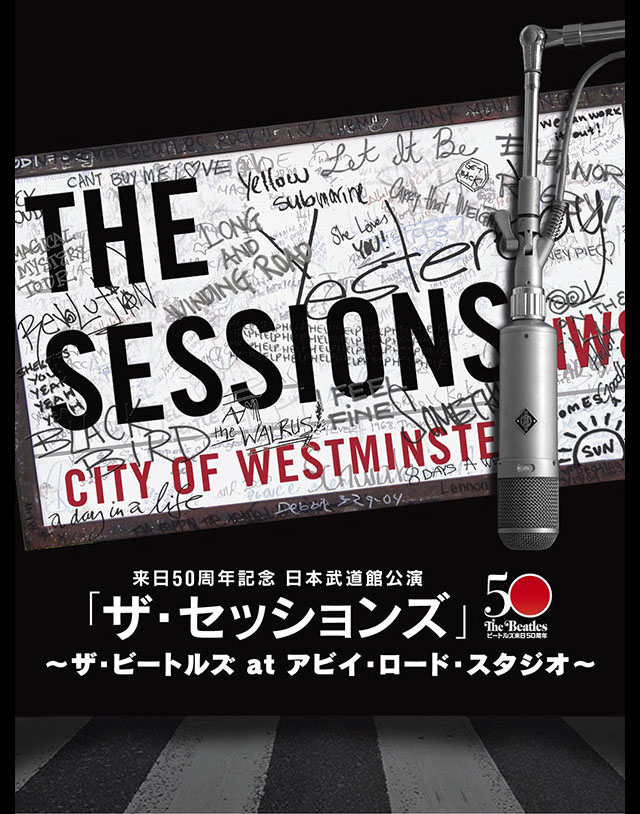
The Sessions, a recreation of the recording sessions of the legendary Beatles band, is coming!
It has been 50 years since the Beatles came to Japan. They were the first foreign artists to perform live at the Nippon Budokan on June 30 and July 1, 1966. On those very same days and at the same place, an event will be held to recreate the Beatles' recording sessions. The title of the event is "The Sessions. It is an attempt to perfectly recreate the Beatles' studio sessions at Abbey Road Studios using a variety of technologies.
Read Article
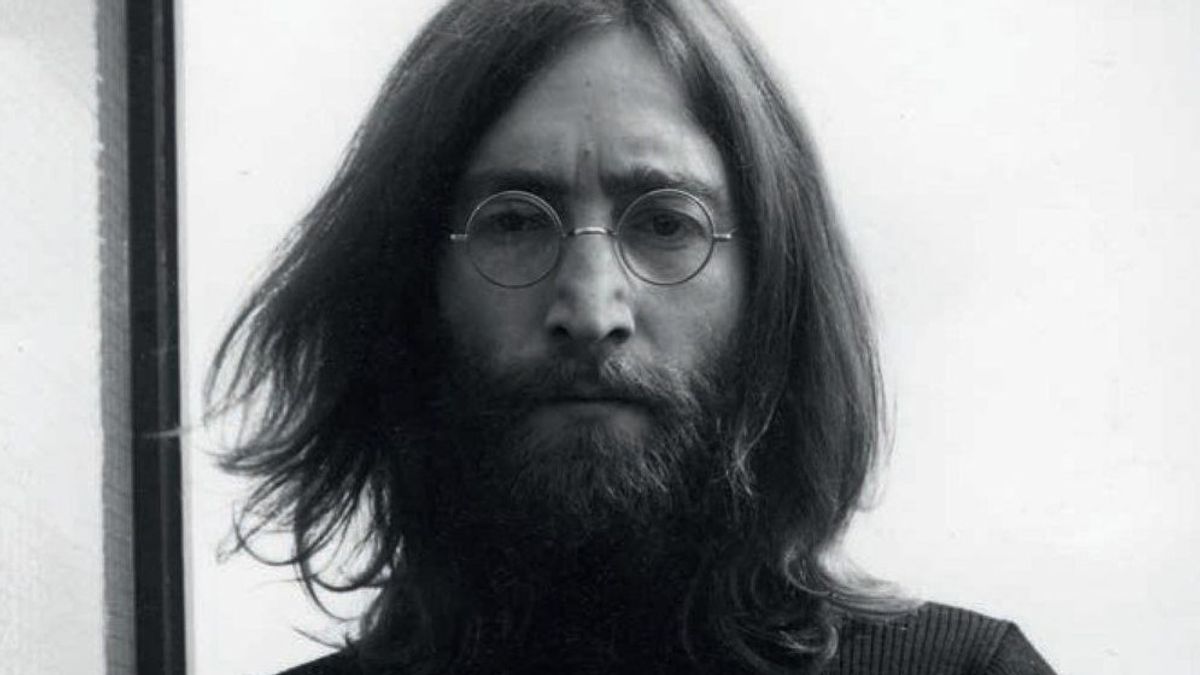
[John Lennon] Summary of celebrities and entertainers who died between the ages of 40 and 49 [Ken Maeda].
Entertainers and celebrities who have had a great impact on the world. Many of them have left this world at the young age of 40s. Diseases, accidents, suicides, assassinations.... In this article, we have compiled a list of such people. Although the causes vary, it is always painful to lose a person, no matter what time period or country.... We sincerely pray for the repose of their souls.
Read Article
![Paul McCartney] Summary of Hollywood stars and celebrities who are actually suspected of being anti-Japanese [Cameron Diaz](https://renote.net/files/blobs/proxy/eyJfcmFpbHMiOnsiZGF0YSI6NzA3OTE5MiwicHVyIjoiYmxvYl9pZCJ9fQ==--f54ed1968ea175d8f6be5ccbc0aac2b4b47ef326/5b111e621ae6624f008b472a.jpg)
Paul McCartney] Summary of Hollywood stars and celebrities who are actually suspected of being anti-Japanese [Cameron Diaz
The term "Hollywood star" is synonymous with world-famous performers. Of course, they are very well known in Japan, too! Some of them have openly stated that they "love Japan! but there are some who are suspected of being anti-Japanese. I don't know if it is true or not, but if these people are capable of world-class performances, they may be able to distinguish between their real intentions and their pretense in a matter of seconds.
Read Article
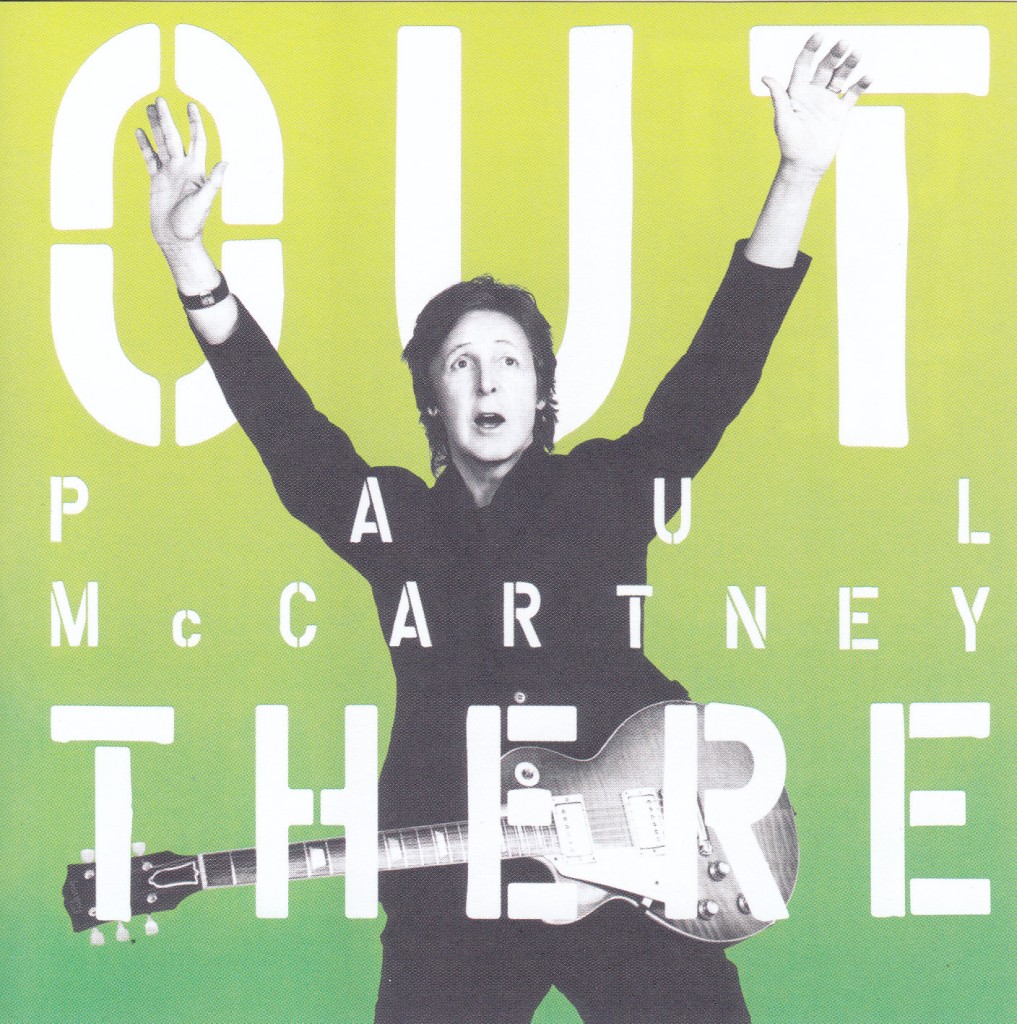
All Paul McCartney shows in Japan cancelled! Discussion of the possibility of a return visit to Japan!
Paul McCartney was scheduled to make his long-awaited return to Japan in May 2014, including his first Budokan concert in 48 years, but he became ill with a viral inflammation and canceled all shows shortly before the show. Many fans were disappointed and many wondered what would happen to him in the future. This article summarizes the situation at that time and the possibility of Paul's return to Japan for a replacement show, which he hopes to do.
Read Article
Paul McCartney suffered from "twisted intestines" and underwent emergency surgery in Japan!
Paul McCartney came to Japan for his first tour in six months, but canceled all shows due to poor health. The name of his illness was announced as viral inflammation, but it was later revealed that he had undergone surgery for intestinal sprain in Japan. The following is a summary of the illnesses that the great star suffered from in Japan.
Read Article
Paul McCartney cancels all shows! Explains the reason "viral inflammation"!
Paul McCartney, who was scheduled to return to Japan in May 2014, has become ill due to viral inflammation and has had to cancel all of his performances, including the Budokan concert. What is this "viral inflammation"? We will present a summary of Paul's sudden illness, which has several possibilities.
Read Article
Tags
Contents
- The Beatles Overview
- Members of The Beatles
- John Lennon
- Paul McCartney
- George Harrison
- Ringo Starr
- Former member of The Beatles
- Stuart Sutcliffe
- Pete Best
- People related to The Beatles
- Allan Williams
- Raymond Jones
- Brian Epstein
- George Martin
- A Brief History of The Beatles
- Birth and Death
- Major Events
- 1956-1961
- 1962-1966
- 1967-1970
- Analog release in the U.K.
- single
- 4-track EP
- album
- Analog release in the U.S.
- single
- 4-track EP
- album
- Analog release in Japan
- single
- 4-track EP
- album
- Solo Works
- Related Works
- The Beatles CDs
- The Beatles Discography
- original album
- Please Please Me
- With The Beatles
- A Hard Day's Night
- Beatles For Sale
- Help!
- Rubber Soul
- Revolver
- Sgt. Pepper's Lonely Hearts Club Band
- Magical Mystery Tour
- The Beatles
- Yellow Submarine
- Abbey Road
- Let It Be
- Editorial Albums & Other
- A Collection Of Beatles Oldies
- Hey Jude
- 1962-1966
- 1967-1970
- Rock 'N' Roll Music
- The Beatles At The Hollywood Bowl
- Love Songs
- Rarities (UK release)
- Rarities (U.S. version)
- The Beatles Ballads
- The Beatles Box
- Reel Music
- 20 Greatest Hits
- Past Masters Volume One
- Past Masters Volume Two
- Live At The BBC
- Baby It's You
- Anthology 1
- Free As A Bird
- Anthology 2
- Real Love
- Anthology 3
- Yellow Submarine Songtrack
- 1
- Let It Be... Naked
- love
- Mono Masters
- On Air - Live At The BBC Volume 2
- Live At The Hollywood Bowl
- Sgt. Pepper's Lonely Hearts Club Band (50th Anniversary Edition)
- The Beatles' most popular songs
- Love Me Do
- Please Please Me
- Twist And Shout
- From Me To You
- She Loves You
- All My Loving
- I Want To Hold Your Hand
- Can't Buy Me Love
- You Can't Do That
- A Hard Day's Night
- Long Tall Sally
- Baby's In Black
- Ticket To Ride
- Help!
- Yesterday
- Day Tripper
- We Can Work It Out
- Nowhere Man
- Paperback Writer
- Yellow Submarine
- Eleanor Rigby
- Strawberry Fields Forever
- Penny Lane
- A Day In The Life
- Hello Goodbye
- I Am The Walrus
- Lady Madonna
- Hey Jude
- Revolution
- Hey Bulldog
- Get Back
- Don't Let Me Down
- The Ballad Of John And Yoko
- Something
- Let It Be
- Free As A Bird
- Real Love
- The Beatles' backstory, trivia, small stories/episodes, anecdotes
- Dramatic departure of a member
- Paul's death theory
- The three major crises of 1966
- Mr. Toshitake Kotei
- Imelda Marcos
- Tommy Charles
- A Tribute to The Beatles