
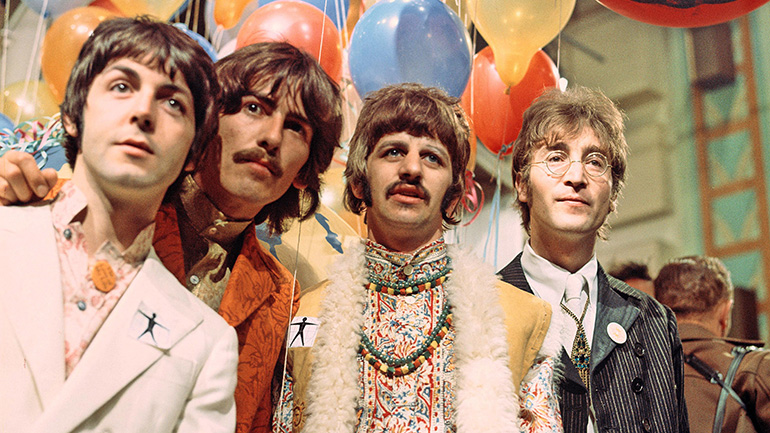
The Beatles are a four-piece rock band representing the 20th century that debuted in the United Kingdom in 1962. Their influence extended not only to their music, but also to their fashion, speech, and thought, creating a social phenomenon. One of the most notable aspects of their music is that their own musical development has directly influenced the musical development of the entire musical world and of their fans, who are their listeners.
Like the single A-side song "She Loves You," the master tape of this song was discarded before it was mixed in stereo, so no real stereo version exists. The stereo version on the U.S. Capitol release of "The Beatles' Second Album" is a "pseudo-stereo" version.
Recording Details
1963
July 1
Recording takes are made (number of takes unknown).
*The title was "Get You In The End" at this point.
July 4
Mono mixing is performed based on the unnumbered takes.
I Want To Hold Your Hand
This was the fifth single in the U.K. and fourth in the U.S., and the first single and album to be released by Capitol Records in the U.S. It was also the first song to reach No. 1 on the U.S. charts. It was also the first song to reach #1 on the U.S. charts. It was also the first song to reach No. 1 on the U.S. charts. The song was a huge hit and ignited the Beatles' popularity in the United States. Like "She Loves You," this song was not included on the original album, despite being a big hit.
It was co-written by John and Paul, who also shared lead vocals.
John: "We co-wrote a lot of the songs. John: "We co-wrote a lot of the songs, one-on-one, face-to-face. For example, "I Want To Hold Your Hand". I remember when we came up with the chord progression for that song. We were at Jane Asher's house, and we were both playing the piano in the basement at the same time. First there was "Oh, you-u-u got that something," and Paul hit that chord. I turned around and said, "That's it! Do it again! I turned around and said, "Do it again! We were really writing like this back then, nose to nose with each other.
Paul: "'Staring at each other,' that's exactly what we did. It was a very important No. 1 hit."
The song was The Beatles' first recording using four-track equipment.
Bob Dylan thought the song was about marijuana. He misheard the lyric "I can't hide" as "I can get high on drugs," although Bob did recommend marijuana to the four when Bob and the Beatles first met at the Delmonico Hotel in New York on August 28, 1964, shocked to be told by Brian Epstein that they had never smoked marijuana.
American poet Allen Ginsberg had a revelation of sorts when he first heard "I Want To Hold Your Hand" in a New York nightclub. He was so completely taken by The Beatles' music and their innovative style that he involuntarily got up and started dancing, even though he had never danced in public before.
The Japanese title "I want to hug you" was given by Hiroyuki Takashima, who was the director in charge of Toshiba Sound Engineering at the time.
This album contains the stereo version created for the album "A Collection Of Beatles Oldies" on November 7, 1966, but two other stereo versions of the song were officially released in analog form. One version was created on October 17, 1963, and was released as a single in Australia in 1974. The other version was created on January 29, 1964, and was included on an edited album released by Australia, West Germany, and the Netherlands that year. In Japan, an album called "The Beatles Beat" was released on April 5, 1978, and this is the West German compilation that contains the version from that date. It is said that this version contains several hi-hat sounds in the introduction, which cannot be heard in other stereo versions. Unfortunately, I (the author) have not heard it and could not confirm this.
Recording Details
1963
October 17.
Recording of takes 1 through 17.
October 21
Mono and stereo mixing based on take 17.
1964
January 29
Stereo mixing based on take 17.
*This is the process of creating the rhythm track that will be the backing track for "Komm, Gib Mir Deine Hand" (German version: "I Want To Hold Your Hand").
1965
June 8.
Stereo mixing based on the 17th take.
*This mix was included in the compilation album released by Australia, West Germany, and the Netherlands that year.
1966
November 7
Work done for the album "A Collection Of Beatles Oldies". The stereo version from this day is included on this album.
This Boy
B-side of the single "I Want To Hold Your Hand", not included on the original album.
It was written by John, and the lead vocalist is also John.
John said, "I wanted to write a Smokey Robinson style song with three part harmony. That's all. The lyrics don't mean anything. There was a time when I thought I couldn't write melodies. There was a time when I thought I couldn't write melodies, that Paul wrote them and I could only write straight-up rock 'n' roll. But of course, when I look back at some of the songs I wrote, like 'In My Life' and the early 'This Boy,' I was writing melodies, and the best ones.
Paul: "I learned three parts from 'To Know Him Is To Love Him'."
George: "If you listen to the chorus of 'This Boy,' you'll hear John trying to do Smokey Robinson.
Recording Details
1963
October 17.
Recording of takes 1 through 17.
October 21
Mono mixing is done based on the 15th take.
Komm, Gib Mir Deine Hand
I Want To Hold Your Hand" is sung in German. It is released as a single in Germany to answer the West German EMI's push that the song must be sung in German to be a hit in Germany. It is identical to the existing "I Want To Hold Your Hand" except for the German vocals and new hand claps.
*Recording details
1964
January 29.
Stereo mixing is done based on the 17th take.
*This is the process of creating the rhythm track that will be the backing track for "Komm, Gib Mir Deine Hand" (German version of "I Want To Hold Your Hand").
Takes 1-11 and vocals were recorded based on the above rhythm track.
March 10
Mono mixing is performed based on the edited versions of takes 5 and 7.
*Take 5 is the best take with vocals, and Take 7 is an overdubbed version of Take 5 with handclaps.
March 12
Stereo mixing was done based on the edited versions of the 5th and 7th takes.
Sie Liebt Dich
She Loves You" sung in German. It was released as a single in Germany to answer West German EMI's push that the song must be sung in German to be a hit in Germany. Since the master tape of "She Loves You" had been destroyed at this point, the entire performance was re-recorded along with the German song.
Recording Details
1964 Year
January 29.
Takes 1-14 were recorded.
*The master tape had already been destroyed at this point, so a new recording was made from the rhythm track.
March 10, 1964
Mono mixing is performed based on the 14th take.
March 12
Stereo mixing was done based on the 14th take.
Long Tall Sally
Only released as a 4-song EP and not included on the original album.
The original single was released on March 12, 1956 by Little Richard, one of the American rock originators.
The lead vocalist was Paul.
George Martin played the piano, and the song was completed in only one take and one recording.
The version on the U.S. Capitol release of "The Beatles' Second Album" was mixed on March 10, 1964 in both mono and stereo, and is slightly different from the mono (June 4, 1964) and stereo (June 22, 1964) versions that are currently available as the standard version. The mixes are slightly different from the mono (June 4, 1964) and stereo (June 22, 1964) versions that are currently available as regular versions.
Long Tall Sally/Little Richard
Recording Details
1964
March 1
The first take is recorded.
*The recording is completed in a "one-shot" recording.
March 10
Mono and stereo mixing is done based on the first take.
*Both mono and stereo mixes are included on the U.S. Capitol release of "The Beatles' Second Album.
June 4
Mono mixing is performed based on the first take.
June 22
Stereo mixing is performed based on the first take.
I Call Your Name
Released only as a 4-song EP and not on an original album.
It is John's work and the lead vocalist is also John.
John: "That was my song. When there were no Beatles and no other groups, I originally wrote it to be bluesy. Years later, when I decided to put it on the album, I added the middle-eighth part to make it fit. It was one of the first songs I wrote when I first tried my hand at composing."
The song was originally a gift to Billy J. Kramer & The Dakotas, and was released as the B-side to the single "Bad To Me" on July 26, 1963 in the UK and September 23 of the same year in the US (the A-side "Bad To Me" was also by John).
John later said that the quirky guitar solo on the bridge was a ska-influenced version of the song at a very early stage.
The song has a different intro in mono and stereo. There are also two mixes of both mono and stereo.
The mono version from March 4, 1964 (used on the U.S. Capitol release of "Beatles' Second Album" and the Canadian release of "Long Tall Sally").
Stereo of March 10, 1964 (used on the U.S. Capitol release of "Beatles' Second Album").
Mono, June 4, 1964 (used on all other releases except the above).
Stereo of June 22, 1964 (used on all other releases except the above).
The introduction of the cowbell is different between mono and stereo. In mono, the cowbell comes in from the beginning of the introduction. In stereo on the Capitol disc, it comes from the first line of "I call your name", but on the other discs, it comes from before the "but" following "I call your name". The intro lead guitar is also phrased differently in mono and stereo. Also, the stereo version of the Capitol version has a deeper echo.
The vocal of "I call your name" is also different between the mono and stereo versions. On the mono version, only the "I" of "I call your name" is a single track and the rest is a double track, but on the stereo version, "I call your name" is a single track and the rest is a double track. On the U.S. Capitol release "Beatles' Second Album", only "I" of "I call your name" is a single track in both mono and stereo, and the rest of the song is double-tracked.
Recording Details
1964
March 1
First through seventh takes are recorded.
March 3
Mono mixing is done based on take 7.
*The mix was sent to "United Artists" for use in the movie "A Hard Day's Night," but it was not used in the movie.
March 4
Mono mixing was done based on the 7th take.
*This mix is used for the U.S. Capitol release "The Beatles' Second Album" and the Canadian release "Long Tall Sally.
March 10
A stereo mix is made based on Take 7.
*This mix is included in the U.S. Capitol release of "The Beatles' Second Album".
June 4
Mono mixing is performed based on takes 5 and 7.
June 22
Stereo mixing was performed based on takes 5 and 7.
Slow Down
Only released as a 4-song EP and not included on the original album.
The original single was released by American R&B singer Larry Williams on February 24, 1958.
Incidentally, the coupling song for this single is "Dizzy Miss Lizzy," also covered by The Beatles.
The lead vocalist was John.
There is a difference in the ending between the mono and stereo versions.
The mono version has only one ending cry, "Ow!
Slow Down/Larry Williams
Recording Details
1964
June 1.
First through sixth takes are recorded.
June 4
George Martin's piano is overdubbed on take 6.
Mono mixing is done based on take 6.
June 22
Stereo mixing is done based on take 6.
Matchbox
Only released as a 4-song EP and not included on the original album.
The original song was a coupling to the single "Blue Suede Shoes" released on February 11, 1957 by one of the American rock originators, Carl Perkins.
The lead vocalist is Ringo.
There is a difference in the lead guitar in the interlude between mono and stereo.
This is because two guitars (in stereo) were recorded, one in the center and the other to the right. In mono, the right guitar disappears after a while and only the center guitar remains, while in stereo, the center disappears and only the right guitar remains. Thus, there is a difference in phrasing.
Matchbox/Carl Perkins
Recording Details
1964
June 1
Takes 1 through 5 are recorded.
*Carl Perkins, the original artist of the song, observes the recording on this day. Ringo also sings and plays the drums at the same time.
June 4
Mono mixing is done based on the fifth take.
June 22
Stereo mixing is performed based on the fifth take.
I Feel Fine
The 8th single and not included in the original album.
It is John's work and the lead vocalist is also John.
John: "I wrote this song during the recording sessions. I wrote this song during a recording session. It's mainly a guitar riff at the beginning. This is the first time I used feedback on a record. It's in the head."
Paul: "The drums are in the 'What'd I Say' style.
*"What'd I Say" was written by American soul singer Ray Charles. The Beatles recorded this song with Tony Sheldon before their debut.
What'd I Say/Ray Charles
According to George, the guitar riffs and rhythm patterns are taken from Bobby Parker's "Watch Your Step.
Bobby Parker/Watch Your Step
The version on the U.S. Capitol release "Beatles 65" was deeply echoed. The stereo version on the same album is pseudo-stereo.
The intro of the version on the UK single and compilation album "A Collection Of Beatles Oldies" "1962-1966" included the members' coughing, Ringo's hi-hats, and light noise. Also, the ending of the stereo version contains a faint hand clap, but the mono version does not.
*Recording Details
1964
October 18
Takes 1 through 9 are recorded.
October 21
Mono mixing is done based on the 9th take.
*A total of four mixes were made. Remix 3 is for the UK, Remix 4 is for the US, and the rest are unused.
October 22
Mono mixing is done based on the 9th take.
*This mix remains unused.
November 4
Stereo mixing was done based on take 9.
She's A Woman
B-side of the single "I Feel Fine", not included on the original album.
It is Paul's work and the lead vocalist is also Paul. John helped with the lyrics.
Paul said, "This song is aimed at the blues. John did a great job on the off-beat part.
John: "I helped with the lyrics and Paul drew this song. I put the phrase "turns me on" in the lyrics because I was so excited just to use that phrase. Just to describe things like marijuana and things like that."
Like the A-side song "I Feel Fine," the version on the U.S. Capitol release of "Beatles 65" was deeply echoed. The stereo version on the same album is pseudo-stereo.
She's A Woman", a bonus single on "The Beatles E.P. Collection" released on December 7, 1981, has Paul's count of "one two three four" at the beginning.
*Recording details
1964
October 8.
Takes 1 through 7 are recorded.
October 12
Mono and stereo mixing based on take 6.
*The mixes from this day are used for the domestic release in the UK.
October 21
Mono mixing based on take 6.
*The mix from this day is used for the U.S. release.
Bad Boy
Originally, Capitol of America requested two songs for the U.S. market, and "Bad Boy" and "Dizzy Miss Lizzy" were recorded and mixed in mono and stereo in one day on May 10, 1965. Dizzy Miss Lizzy" appeared on the "Help!" album, and "Bad Boy" appeared on the "Beatles VI" album released on June 14, 1965 in the U.S. In the U.K., "Bad Boy" appeared on the "A Collection Of Beatles Oldies" album released on December 10 the following year. Beatles Oldies" released the following year on December 10. It was not included on the original album.
The original single was released on January 19, 1959 by American R&B singer Larry Williams. Incidentally, "Dizzy Miss Lizzy," recorded on the same day, was also originally by Larry Williams.
Bad Boy/Lally Williams
Recording Details
1965
May 10.
Takes 1-4 are recorded.
Mono and stereo mixing was done based on the 4th take.

Related Articles
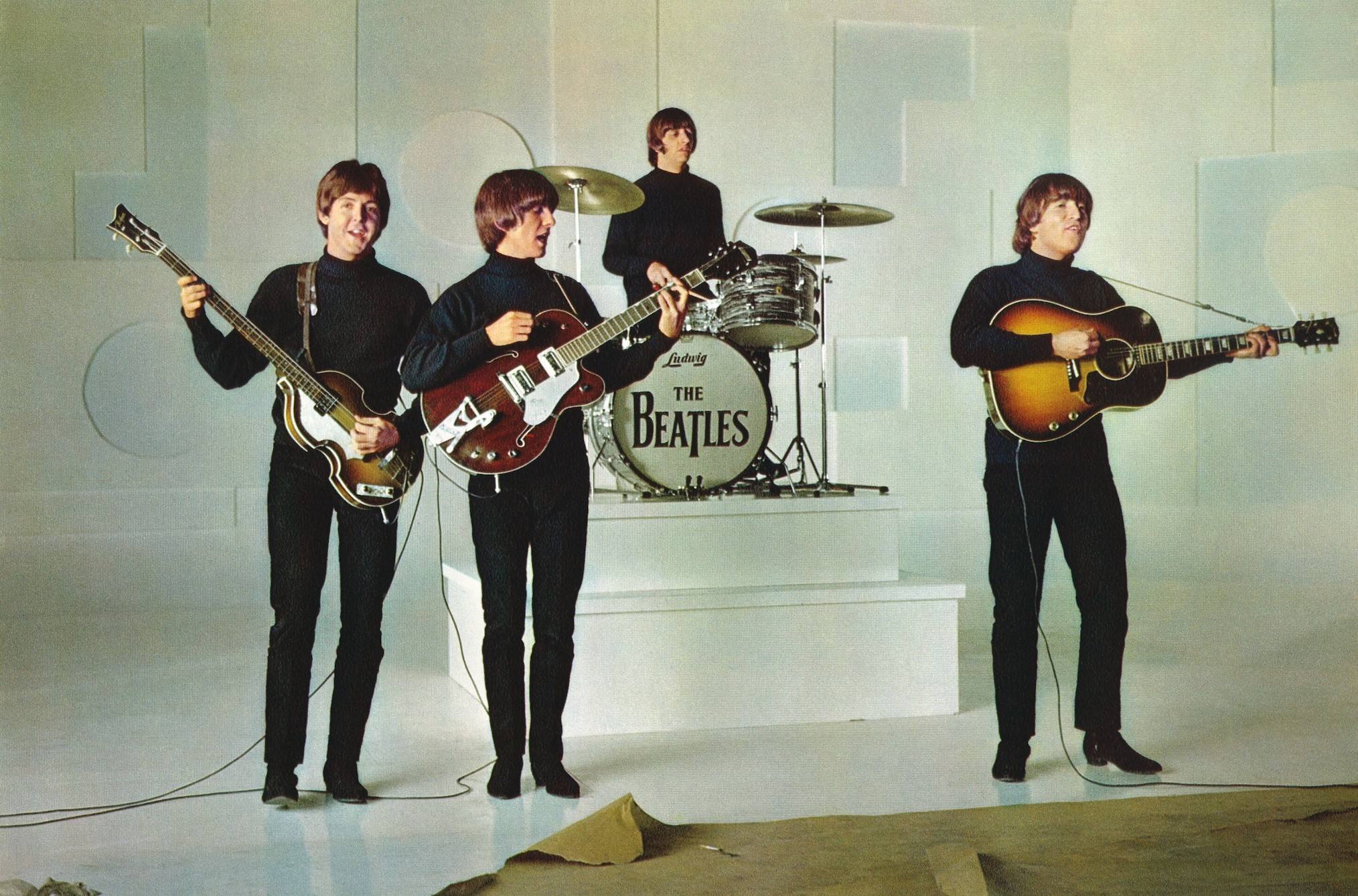
Summary of quotes and statements by The Beatles
The Beatles were one of the most popular rock bands of the 20th century, active from the 1960s to the 1970s, and made their record debut on October 5, 1962. The Beatles were ranked No. 1 on Rolling Stone's list of the 100 Greatest Artists of All Time, and are regarded around the world as one of the most influential rock bands of the 20th century. The band hails from Liverpool, England. Not only their music, but also their ideas and statements have attracted a great deal of attention and have had a great impact on the world.
Read Article

Yesterdays (film) spoiler alerts and discussion summary
Yesterday" is a stylish and heartfelt romantic comedy film produced in England. The main character, Jack, an unsuccessful singer-songwriter, is hit by a bus one day. He recovers from unconsciousness, but when he wakes up in the world, the legendary band "The Beatles" does not exist. For some reason, Jack is the only one who remembers the Beatles. The song "Yesterday," which he performed based on his memories, gradually changes Jack's ordinary life. This is a film that mixes fantastical elements with realism, and allows viewers to enjoy friendship, love, and anguish along with the Beatles' classic songs.
Read Article
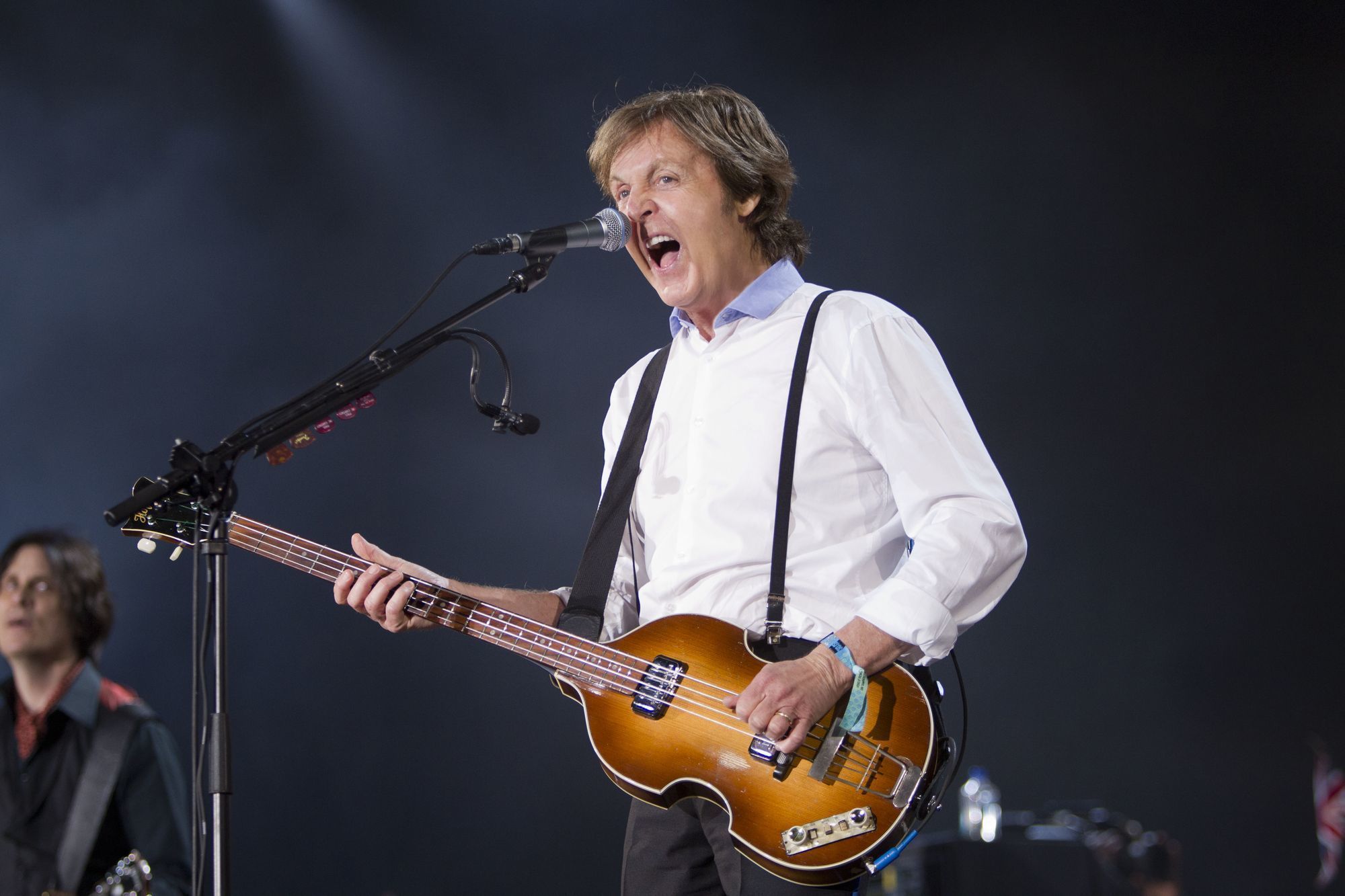
Paul McCartney was dead, former member Ringo Starr testifies! A new development in the urban legend?
Former Beatles drummer Ringo Starr stunned the world when he said in an interview with a publication that the "real" Paul McCartney died in a car accident on November 9, 1966. Here is Ringo's statement, urban legends about Paul, and his own reaction.
Read Article
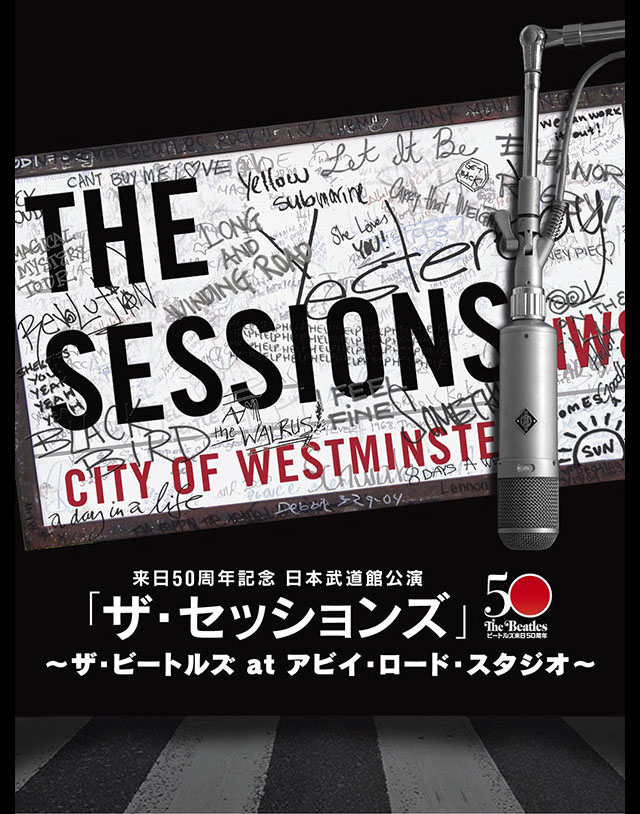
The Sessions, a recreation of the recording sessions of the legendary Beatles band, is coming!
It has been 50 years since the Beatles came to Japan. They were the first foreign artists to perform live at the Nippon Budokan on June 30 and July 1, 1966. On those very same days and at the same place, an event will be held to recreate the Beatles' recording sessions. The title of the event is "The Sessions. It is an attempt to perfectly recreate the Beatles' studio sessions at Abbey Road Studios using a variety of technologies.
Read Article
[John Lennon] Summary of celebrities and entertainers who died between the ages of 40 and 49 [Ken Maeda].
Entertainers and celebrities who have had a great impact on the world. Many of them have left this world at the young age of 40s. Diseases, accidents, suicides, assassinations.... In this article, we have compiled a list of such people. Although the causes vary, it is always painful to lose a person, no matter what time period or country.... We sincerely pray for the repose of their souls.
Read Article
![Paul McCartney] Summary of Hollywood stars and celebrities who are actually suspected of being anti-Japanese [Cameron Diaz](https://renote.net/files/blobs/proxy/eyJfcmFpbHMiOnsiZGF0YSI6NzA3OTE5MiwicHVyIjoiYmxvYl9pZCJ9fQ==--f54ed1968ea175d8f6be5ccbc0aac2b4b47ef326/5b111e621ae6624f008b472a.jpg)
Paul McCartney] Summary of Hollywood stars and celebrities who are actually suspected of being anti-Japanese [Cameron Diaz
The term "Hollywood star" is synonymous with world-famous performers. Of course, they are very well known in Japan, too! Some of them have openly stated that they "love Japan! but there are some who are suspected of being anti-Japanese. I don't know if it is true or not, but if these people are capable of world-class performances, they may be able to distinguish between their real intentions and their pretense in a matter of seconds.
Read Article
All Paul McCartney shows in Japan cancelled! Discussion of the possibility of a return visit to Japan!
Paul McCartney was scheduled to make his long-awaited return to Japan in May 2014, including his first Budokan concert in 48 years, but he became ill with a viral inflammation and canceled all shows shortly before the show. Many fans were disappointed and many wondered what would happen to him in the future. This article summarizes the situation at that time and the possibility of Paul's return to Japan for a replacement show, which he hopes to do.
Read Article
Paul McCartney suffered from "twisted intestines" and underwent emergency surgery in Japan!
Paul McCartney came to Japan for his first tour in six months, but canceled all shows due to poor health. The name of his illness was announced as viral inflammation, but it was later revealed that he had undergone surgery for intestinal sprain in Japan. The following is a summary of the illnesses that the great star suffered from in Japan.
Read Article
Paul McCartney cancels all shows! Explains the reason "viral inflammation"!
Paul McCartney, who was scheduled to return to Japan in May 2014, has become ill due to viral inflammation and has had to cancel all of his performances, including the Budokan concert. What is this "viral inflammation"? We will present a summary of Paul's sudden illness, which has several possibilities.
Read Article
Tags
Contents
- The Beatles Overview
- Members of The Beatles
- John Lennon
- Paul McCartney
- George Harrison
- Ringo Starr
- Former member of The Beatles
- Stuart Sutcliffe
- Pete Best
- People related to The Beatles
- Allan Williams
- Raymond Jones
- Brian Epstein
- George Martin
- A Brief History of The Beatles
- Birth and Death
- Major Events
- 1956-1961
- 1962-1966
- 1967-1970
- Analog release in the U.K.
- single
- 4-track EP
- album
- Analog release in the U.S.
- single
- 4-track EP
- album
- Analog release in Japan
- single
- 4-track EP
- album
- Solo Works
- Related Works
- The Beatles CDs
- The Beatles Discography
- original album
- Please Please Me
- With The Beatles
- A Hard Day's Night
- Beatles For Sale
- Help!
- Rubber Soul
- Revolver
- Sgt. Pepper's Lonely Hearts Club Band
- Magical Mystery Tour
- The Beatles
- Yellow Submarine
- Abbey Road
- Let It Be
- Editorial Albums & Other
- A Collection Of Beatles Oldies
- Hey Jude
- 1962-1966
- 1967-1970
- Rock 'N' Roll Music
- The Beatles At The Hollywood Bowl
- Love Songs
- Rarities (UK release)
- Rarities (U.S. version)
- The Beatles Ballads
- The Beatles Box
- Reel Music
- 20 Greatest Hits
- Past Masters Volume One
- Past Masters Volume Two
- Live At The BBC
- Baby It's You
- Anthology 1
- Free As A Bird
- Anthology 2
- Real Love
- Anthology 3
- Yellow Submarine Songtrack
- 1
- Let It Be... Naked
- love
- Mono Masters
- On Air - Live At The BBC Volume 2
- Live At The Hollywood Bowl
- Sgt. Pepper's Lonely Hearts Club Band (50th Anniversary Edition)
- The Beatles' most popular songs
- Love Me Do
- Please Please Me
- Twist And Shout
- From Me To You
- She Loves You
- All My Loving
- I Want To Hold Your Hand
- Can't Buy Me Love
- You Can't Do That
- A Hard Day's Night
- Long Tall Sally
- Baby's In Black
- Ticket To Ride
- Help!
- Yesterday
- Day Tripper
- We Can Work It Out
- Nowhere Man
- Paperback Writer
- Yellow Submarine
- Eleanor Rigby
- Strawberry Fields Forever
- Penny Lane
- A Day In The Life
- Hello Goodbye
- I Am The Walrus
- Lady Madonna
- Hey Jude
- Revolution
- Hey Bulldog
- Get Back
- Don't Let Me Down
- The Ballad Of John And Yoko
- Something
- Let It Be
- Free As A Bird
- Real Love
- The Beatles' backstory, trivia, small stories/episodes, anecdotes
- Dramatic departure of a member
- Paul's death theory
- The three major crises of 1966
- Mr. Toshitake Kotei
- Imelda Marcos
- Tommy Charles
- A Tribute to The Beatles