
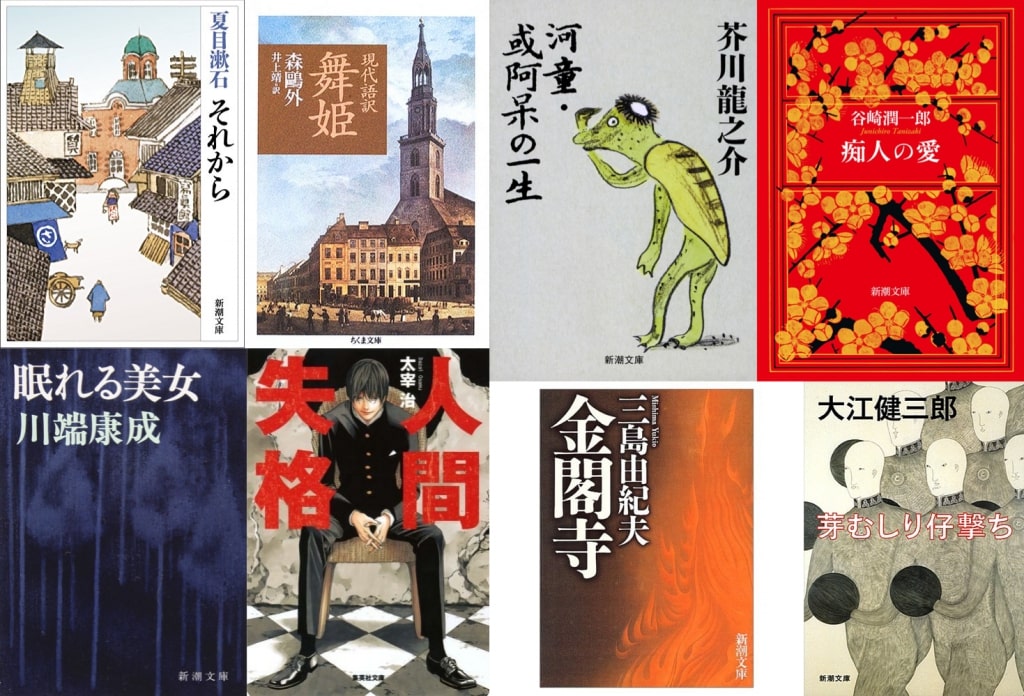
The works of novelists who have left their mark on the history of Japanese literature, such as Miyazawa Kenji and Dazai Osamu, have appeared in many Japanese language textbooks at school. However, unless you are a great lover of literature, it is probably difficult to find someone who has taken the time to read them outside of class. As a Japanese, all of them should be read at least once, so you should definitely give it a shot before you die! It is fun to become the main character of the works and live various lives.
Source: www.amazon.co.jp
Shinpen NIGHT ON THE GALACTIC RAILROAD (Shincho Bunko) written by Kenji Miyazawa
"NIGHT ON THE GALACTIC RAILROAD" is a children's story written by Miyazawa Kenji in which the lonely boy Giovanni travels to Gingatetsudo with his friend Campanella. It is said to be one of the representative children's stories written by Miyazawa Kenji.
Due to the fact that it was left as an unfinished manuscript due to the author's death and many coined words were used, various interpretations have been made even among researchers. Many derivative works derived from this work have been made into movies, animations and plays several times, and planetarium programs have been made.
NIGHT ON THE GALACTIC RAILROAD
まず銀河鉄道の夜だろ
— 雨宮しずれ@ベーコンポテトパイ復活 (@Amamiya_Shizure) 2016.10.13 20:21
泣きそう。銀河鉄道の夜大好き。
— リキ (@s13riki) October 23, 2016
Sand Woman
Source: www.amazon.co.jp
Suna no Onna (Woman in the Sand) (Shincho Bunko) written by Kobo ABE
"Suna no Onna" (The Woman of the Sand) is a full-length novel written by Kobo Abe. It is a representative work of Abe, and is not only regarded as one of the masterpieces representing modern Japanese literature, but is also highly regarded abroad. The story of a man who came to collect insects on a sand-dune near the beach, was confined in a sand-hole house where a woman lived alone, and attempted to escape by various means. While realistically expressing the mysterious setting of the situation, the man, who had repeatedly escaped from the sand world and failed, eventually adapted to the life of the sand and did not escape even if he had the opportunity to escape. It symbolically depicts the daily life of civil society and the essence and truth of the human life force that exists there.
なんで本読まない人類がいるんだ。本読め本。安部公房見ろ。砂の女もいいけど、赤い繭もいいぞ。安部公房見ろ。
— 渚坂人医師 (@SAKAnoHIT) 2020.02.15 15:04
やっぱりね。ドナルド・キーンも『砂の女』を日本文学史上の最高傑作に挙げる等三島より安部って評価 RT @tekusuke 全集を買いそろえればよかったなと今でも少し後悔している。 "安部公房は受賞寸前だった…ノーベル委員長語る http://t.co/tGCaZ4Wh"
— Spica (@Kelangdbn) March 23, 2012
安部公房の『砂の女』がめちゃくちゃ面白かった、絶対読んだほうがいいこれ
— しろー (@srkrhr) 2016.10.07 16:43
The Makioka Sisters
Source: www.amazon.co.jp
The Makioka Sisters (Shincho Bunko) Junichiro TANIZAKI
"The Makioka Sisters" is a full-length novel by Junichiro TANIZAKI. Set in an old house in Osaka from the fall of 1936 (1936) to the spring of 1941 (1941), it tells the story of the four sisters' daily lives. It is also known as a work depicting the lifestyle and culture of the Hanshin-Kan period during the Hanshin--KAn Modernism period, and the entire conversation is written in Senba Kotoba. While it depicts the life of the Osakan people of the upper stream, it also contains the beauty of the near-collapse of the pre-World War II period and also creates a melancholy of Banka. The setting is Hanshin-Kan, but it essentially describes the process of the collapse of the Osaka (Senba) culture.
谷崎潤一郎さんの文章の美しさは人の心をひきつけます。 話し言葉にすぐにつかえなくても 読んでいるだけで優雅な、そして背筋が伸びる思いがします。 「細雪」の4姉妹の会話の大阪弁は 本当に美しくて惚れ惚れ♪
— 驚いた!この話題 (@abbabi634) 2016.10.21 20:22
私は谷崎潤一郎の小説が大好きである。最高傑作は「細雪」だと思う。今、また読み返している。(5度目)蒔崗家の家族が京都へ花見に出かけるくだりは、本当に美しい。船場の豪商の一家が時代とともに、斜陽の色を濃くしていく所にも、「滅び」の美学が感じられる。
— 熊谷 徹 (@ToruKumagai) May 24, 2016
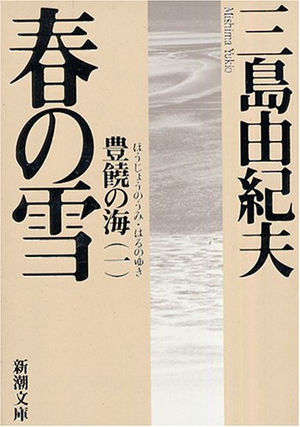
Spring Snow - The Sea of Fertility
Source: www.amazon.co.jp
Haru no Yuki - Hojo no Umi, Volume 1 (Shincho Bunko) Yukio Mishima
"Hojo no Umi" (The Sea of Fertility) is Yukio MISHIMA's last full-length novel, a story of dreams and reincarnation based on "Hamamatsu Chunagon Monogatari" (The Tale of Hamamatsu Chunagon). It consists of four volumes: "Haru no Yuki" (Spring Snow), "Ranma" (The Galloping Horse), "Gyo no Tera" (Temple of the Dawn), and "Tennin Gosui" (The Heavenly Five Lives). Finally, it is the "novel of world interpretation" and "the ultimate novel" that Mishima aimed for. On the day the submission of the final volume, Mishima committed suicide by disembowelment at Camp Ichigaya of the Ground Self
The story consists of a young man who dies at the age of 20 and is reborn as the main character of the next volume, and is based on Eastern traditions such as Yuishiki thought of Buddhism, Ichirei shikon setsu of Shinto,'' and' Waki' of Noh, and spring, summer, autumn and winter.
三島由紀夫著『春の雪』再読了。言わずと知れた三島文学の最高傑作。文章表現、展開ともに美しすぎるほど。しばらく、この美しい言葉の海に身を委ねていたい。
— いのうえ (@northfield2908) March 17, 2013
ついこないだ、春の雪みて、「俺たちはまた会うぜ、きっと会う。滝の下で」でちょうど涙ちょちょ切れしたとこ。
— ゆりか🍡💙 (@fleune898_rio) June 6, 2013
枯木灘
Source: www.amazon.co.jp
枯木灘 (Kawade Bunko) by Kenji Nakaue
HIJIKATA no 秋幸 was born as a child whose father was different from his elder brother and sister in a poor alley in Kishu and Yuya. Rumors of misdeeds never cease. The fierce feelings of hatred and yearning for his father, Ryuzo, boil in the curse of the blood of the closed land. A terrifying saga that brings an overwhelming impression with a violent mix of love and pain. The most important feature in the history of postwar literature.
大江健三郎の「万延元年のフットボール」と中上健次の「枯木灘」を読めば、戦後日本文学における2つの巨大なおっぱいの、左のおっぱいと右のおっぱいを鷲づかみしたことになる。そして、三島由紀夫と村上春樹はシリコンだったことがわかるのである。
— 小林昌平「その悩み、哲学者が答えを出しています」7刷とか8刷… (@shoheizg) June 18, 2011
最近ようやく現代日本文学最高峰と評される中上健次の「枯木灘」を読み終え、小説家の生み出すフィクションの力強さを前に深く落ち込み、歓喜し、その流れで同じく土着的、血縁的などろどろしさがありそうな積み本、古川日出男の「聖家族」に一気に向かおうとしていたけれど、根性なしなのでやめた。。
— frankyheaven (@frankyheaven) May 20, 2011
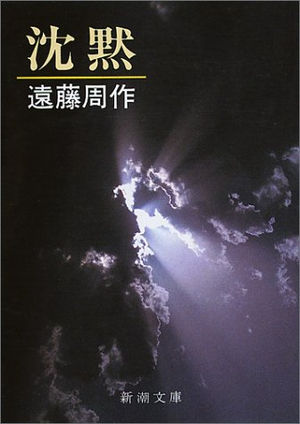
Silence
Source: www.amazon.co.jp
Silence (Shincho Bunko) written by Shusaku ENDO
"Silence" is a historical novel written by Shusaku Endo based on Japanese historical facts and documents from the 17th century. It was written in 1966 and published by Shinchosha. Through a Portuguese priest who was placed in the midst of the oppression of Christians in the early Edo era, he described the significance of God and faith in his propositions. This novel won the 2nd Tanizaki Junichiro Prize. The ideas of "the weak god" and "the companion Jesus" that Endō arrived at in this novel became the subject of repeated depictions in subsequent novels such as "By the Dead Sea," "The Samurai," and "The Deep River." The novel has been translated into 13 languages around the world, and has been highly regarded as a representative work of postwar Japanese literature, including one that led Graham Greene to state that "Endō was the most important writer in Christian literature in the 20th century."
遠藤周作の「沈黙」
— Vector (@j1jEr) October 22, 2016
これはまじで読んだ方がいい
すごい面白いしこれを読むと作者がほんとに日本人なのか疑うレベルでキリスト教や外国人の感覚を捉えてる

Contents
- NIGHT ON THE GALACTIC RAILROAD
- Sand Woman
- The Makioka Sisters
- Spring Snow - The Sea of Fertility
- 枯木灘
- Silence
- Human disqualification
- Hyperthermic tunnel
- Sanshiro
- Hugging family
- Beyond love and hate
- Kafka by the Sea
- Football in the first year of the Manen era
- Country teacher
- Depravity
- Oh, yeah.
- Ryosuke Nagaoka
- Freezing point
- Rakunichi Moyu
- Kitan Bokuto
- Open fire
- Children of the Earth
- Lemon
- Muddy river
- Freezing
- Kitchen
- Rural melancholy
- Maihime
- Sangetsuki
- Black rain
- The Death of Hakkodasan
- Takekurabe
- Hakai
- Snow country
- Dunhuang
- Droopy hair
- The Book of Tea
- Akahige Iryo Tan
- Japan's Longest Day
- Friendship
- Manners of men
- THE WIND RISES
- The Dark Night
- A Woman
- Duzichun
- Summer darkness
- 病牀 rokushaku
- Kanikosen
- Mahjong Horoki
- Distant sunset
- Sei Takano
- Kirakira Hikaru
- Japan Sinks
- Silver spoon
- Oh, my God
- Shinobu River (Shincho Bunko) written by Tetsuro MIURA
- Living with my father.
- Three Kingdoms
- Gadara pigs
- Human construction
- In the corner of night and fog
- Sand vessel
- Lonely Voice
- Rabbit's eye
- Twenty four Eyes
- Ao Qiong no Subaru
- Konjiki Yasha
- Clouds on the slope
- Dogra Magra
- At the end of the matinee
- Cannibals
- All hands down!
- Ichimuan Furyuki
- Lagos of Travel
- Mountain ridge of the gods
- Torch
- Living alone
- Throw curve, one more ball.
- How do you live?
- Canned peach
- Shoryo Nagashi
- Bokko.
- Tono Monogatari