
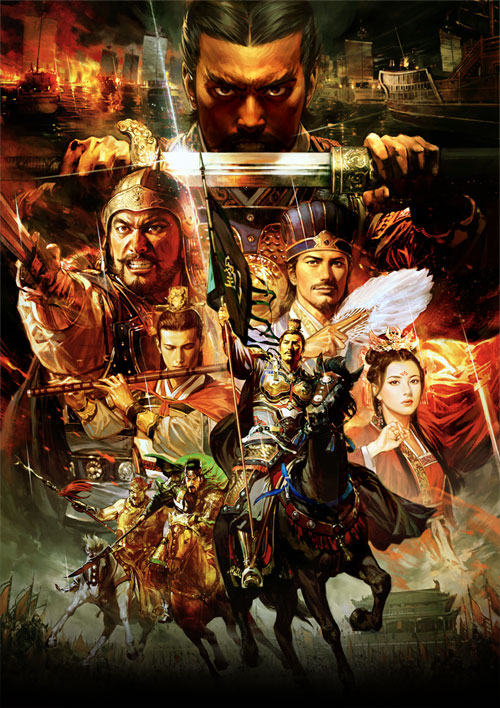
Sanguozhi is a historical simulation game based on the historical book "Sanguozhi" and the long historical novel "Sanguozhi Yanyi" and set in the period from the Later Han Dynasty to the Three Kingdoms in China. The game was released by Koei Tecmo Games and has been made into a series. The game's producer is Ko Shibusawa. Players take on the role of a monarch, increasing their national power through domestic and military affairs, and expanding their territory through battles with other monarchs. The goal of the game is to eventually unify China.
~192)
Toutaku, whose character is Zhong Ying, appears in the scenario from 184 to 190. He had high capacity values in leadership and military power, but low in politics. He excelled in horsemanship and had a high aptitude for cavalry and archery.
At first, he was successful in conquering foreign tribes, and served as a cadre of the Shangshu rebellion, etc.
Then, he took part in the rebellion in Liangzhou, where he used his ingenuity.
Later, he protected the then Han Emperor Shaodi and King Chenruo (later Emperor Chen) during a political upheaval in the capital, becoming "Sangguo" and a powerful figure in the Han Dynasty. He went to great lengths in his tyranny.
When fighting against Yuan Shao and his allied anti-tabletop forces, he had the capital Luoyang burnt down and moved to Chang'an. Even in Chang'an, he went to the limits of his tyranny and committed atrocities.
In the end, he was killed by his adopted son Lu Bu, who was under his command.
Lu Bu
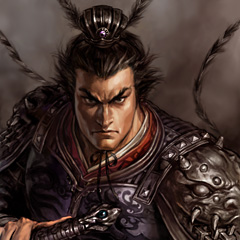
Lu Fu (呂布: ? ~198)
Lufu, whose name is Fengshen, appears in scenarios from 184 to 194. His leadership and military prowess were high, and his military strength was at the top level. He also excelled in horsemanship and archery, and had a high aptitude for cavalry and archery. However, his intelligence and politics are low.
He originally served under Dingyuan, a Shangshu assassin, but was invited by Dong Zhuo when he entered the capital.
He killed Dingyuan and became Dong Zhuo's adopted son, serving as a kind of bodyguard.
However, he killed Dong Zhuo in Chang'an, where he was transferred to the capital. It is said that he was afraid that his relationship with Dong Zhuo's lady-in-waiting would be discovered.
After that, he relied on many heroes in various parts of the country, and in the course of his service, he is said to have worked so hard that he was called "Lu Bu is among men, and the red rabbit is among horses. However, he was not blessed with a place to serve.
He eventually rebelled against Liu Bei in Xuzhou and took over his stronghold, but was defeated by Cao Cao's army. He was captured and executed.
In "Sanguozhi Yanyi," he is depicted as a fierce general who possessed a weapon called Fangtiangeki and had a red rabbit as his favorite horse. He also had Diao Chan as his consort.
how much (long, far)
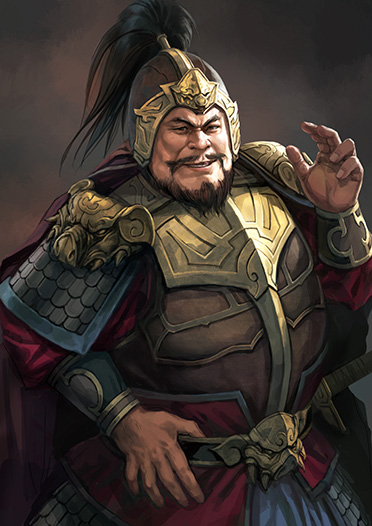
Kashin (何進: ? ~189)
Kashin (遂高), whose character is Suigao, appears in the 184th scenario. His leadership, military, strategic, and political abilities are all low.
He was originally a butcher, but when his younger sister was promoted to the court, he became a government official and was appointed as a governor.
Later, when his sister became empress, he became a relative of the Han Dynasty and rose in the ranks himself.
When the Yellow Turban Rebellion broke out, he took command of the military affairs as a general.
At the time, the influence of eunuchs was increasing in the court, and he wanted to eliminate their power.
However, the eunuchs attacked him and killed him in the palace.
Yuan dynasty (China)
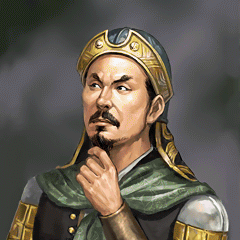
Yuan Ji (Yuan Ji: ? ~199)
Yuan Ji, whose character is Gong Lu, appears in the scenario from 184 to 194. He has high ability values in military power and wisdom, but low in leadership and politics.
Like Yuan Shao, he was born into a prestigious family that produced four generations of high-ranking officials. Yuan Shao is his elder brother or cousin.
At first, he was a central official, but became the governor of Nanyang, south of the capital Luoyang.
When Yuan Shao thought of having a new emperor, he opposed this idea. As a result, Yuan Shao and Yuan Jiang became enemies, and with that, they fell out with neighboring forces such as Liu Meng.
He was defeated by Cao Cao and Liu Omote, who had teamed up with Yuan Shao, and moved his headquarters from Nanyang to Yangzhou. He then presumed the title of "Zhong (or Cheng)" emperor of the country in that Yangzhou location.
However, he had no regard for politics, leading to popular opposition and the defection of his vassals. He then sought help from Yuan Shao, who had built up a vast power, but died of illness while on his way there.
penis-shaped device, traditionally made of horn, shell or papier mache
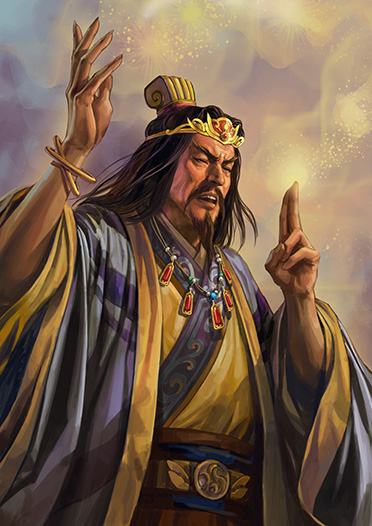
Zhang Jia (?-184) ~184)
He appears in the 184 scenario. His military strength is low, but his leadership, wisdom, and politics are high. In "Sanguozhi Yanyi," he is able to use magic, so he possesses military techniques and special skills related to magic.
He is the founder of the religion of Taiping Dao. As the "Great Sage and Good Master," he spread the faith and increased the number of followers.
At the time, the Han Dynasty was in a state of exhaustion due to political corruption, disasters, and rebellions. Zhang Jiao secretly wanted to overthrow the Han Dynasty and create a new world.
In 184, Zhang Jiao and other followers of the Taiping Dynasty rebelled against the Han Dynasty (Yellow Turban Rebellion). He called himself "General Tiangong" and had his followers wear yellow hoods on their heads (the reason why it is called the Yellow Turban Rebellion).
However, it was gradually suppressed by the Han Dynasty army led by Hejin, and he died of illness in the middle of the rebellion. The Yellow Turban Rebellion was suppressed in less than a year, but the remnants of the rebels continued to rebel.
In "Sanguozhi Yanyi" (The Legend of the Three Kingdoms), it is described that he was given a book titled "Taiping Yaojutsu" by a man named Nanhua Laoxian, which gave him the ability to control the weather, such as wind and rain.
Mencius' mother
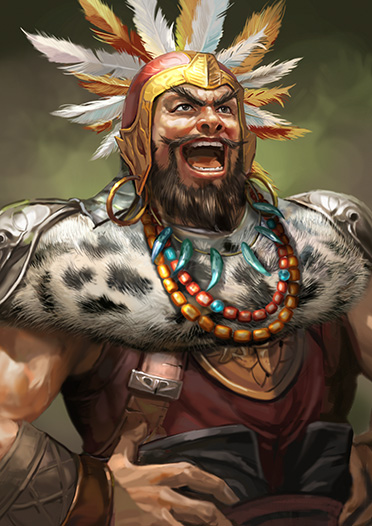
Meng Hui (Mokaku: date of birth and death unknown)
He appears in the 225 and 234 scenarios. He has high capacity values in leadership and military strength, but low in wisdom and politics.
He is a powerful clan in the southern part of Yizhou and participates in the rebellion against Shu.
He fought against Zhuge Liang's forces that came to defeat him, but was captured seven times and released seven times in battle.
He was captured seven times and released seven times in battle, but later became a loyal follower of Zhuge Liang and pledged his vassalage to Shu. This episode was the origin of the legendary phrase "seven captives, seven staircases".
He then rose through the ranks of Shu.
In "Sanguozhi Yanyi," he appears as the king of the Southern barbarians and fights against Zhuge Liang. He then became a vassal of Shu as in "Seven Captives, Seven Stretches".
female
glutton
Diao Zhen
Diao Zhen appears in the 194 scenario. His leadership and military strength are low, but his wits are high.
Diao Chan is a fictional woman who appears in "Sanguozhi Yanyi" (The History of the Three Kingdoms). Originally an orphan, Wang Yun later took her in and raised her as his own child.
At the age of 16, she joined her adoptive father Wang Yun's so-called "beauty ring" scheme. Wang Yun wanted to use Lu Bu to deal with Dong Zhuo's tyranny.
First, she met both Dong Zhuo and Lu Bu and made them both fall in love with her. The relationship between the two deteriorated over her. Eventually, Lu Bu, enraged by Dong Zhuo, kills him.
The "Beauty and the Ring" succeeded, and she became Lu Bu's concubine. However, she had no children. After Lu Bu's defeat by Cao Cao at Xuzhou, she does not appear in the story.
It is said that she is based on Dong Zhuo's lady-in-waiting in "The Annals of the Three Kingdoms.
Da Qiao and Xiao Qiao
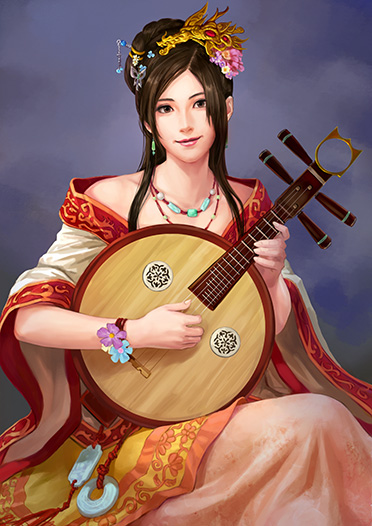
great tallness
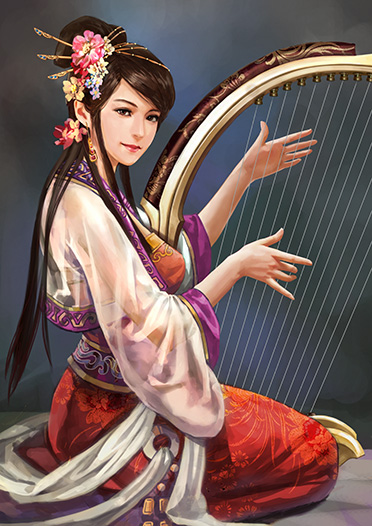
Xiao Qiao
Da Qiao and Xiao Qiao.
Both appear from 194 to the 207 scenario. In addition, both are low in leadership and military strength, but high in wisdom and politics.
They are also represented as "Ohashi and Xiaoqiao." Their father is the Duke of Qiao, Daqiao is his elder sister and Xiaoqiao is his younger sister.
Daqiao was the wife of Sun Zekun and Xiao Qiao was the wife of Zhou Yu. The sisters were taken captive when Sun Ce's army invaded the enemy territory, and later became wives of each other.
It is not well known if they had any children.
In "Sanguozhi Yanyi," she is said to be so beautiful that she is called "Er Qiao of Jiangdong.
The story of the Battle of Red Cliff says that Cao Cao tried to take Er Qiao into his own hands, which made Sun Quan's side very angry, and the battle began.

Contents
- Outline of "Three Kingdoms
- Game System of "Sangokushi
- strategic command
- domestic affairs
- military affairs
- talented person
- diplomacy
- stratagem
- battle
- departure for the front
- Main unit types
- war
- Types of battles
- personal combat
- stratagem
- deciding the outcome (e.g. game)
- postwar treatment
- military commander
- How to increase the number of generals
- attribute value
- (degree of) loyalty
- military commander related by blood
- monarch
- peerage
- territorial unit
- Scenario of "Three Kingdoms
- Items from "Three Kingdoms
- arms
- scimitar with a blue dragon scimitar (Porzana fusca)
- serpentine spear (snake)
- weapons of mass destruction
- a pair of swords for one man and a pair of swords for another
- Yi Guang's bow
- fine or famous horse
- red rabbit
- calabash (Lagenaria siceraria var. gourda)
- uninterrupted view
- extremely high-grade Japanese amberjack (species of yellowtail, Seriola quinqueradiata)
- automobile
- books
- The Art of War (military text by Sun Tzu, 512 BCE)
- Mentoku Shinsho
- the Analects of Confucius
- The Historical Records (ancient Chinese historical record)
- The Book of the Taiheiyo kyôjô
- treasure
- tree sparrow (Passer montanus)
- nine-tined kettle stand
- the wisdom of the ancients
- fan with feathers
- sovereign's seal
- Events in "Three Kingdoms
- Regular Events
- locust (of family Catantopidae)
- typhoon
- good crop and bad crop
- Historical Events
- Federation of Beautiful Women's Unions scheme (1948-1953)
- Battle of Kandu (ancient Japanese battlefield)
- showing special confidence and courtesy (to someone, often to convince them to take a post, etc.)
- Power-up kit for "Three Kingdoms
- Terms of "Mikokushi
- Annals of the Three Kingdoms
- set of three books of Buddhist stories, written in the late 8th and early 9th century, usually referred to as the Three Kingdoms period
- state
- vacant lot or land
- different peoples
- Later Han Emperor
- Representative generals from the "Sangokushi" series
- State of Wei (China)
- Cao Cao
- Cao Dai
- honest and homely
- Marco Polo Bridge (China)
- Kakujia
- Yu Yu.
- Shima Xi
- Shu Han
- Liu Bei
- Sekifu (lowest of the eight hereditary titles)
- Zhang Fei (Chinese deity said to be able to cure all ills)
- scarlet kadsura (Kadsura japonica)
- Zhao Yun
- loyalty to one's master
- Choenomeles lagenaria
- Wu (dynasty of China; 918-1392 CE)
- Sun Quan (dynasty of China; 386-534 CE)
- Sun Yat-sen
- Sun Yat-sen
- Shu Yu
- Luxemburg
- Lu or Meng (dynasty of China)
- Rikou era (1429.9.5-1441.2.17)
- Groups and Figures from the Late Later Han to the Three Kingdoms Period
- Yuan Shao
- T'ang table
- Lu Bu
- how much (long, far)
- Yuan dynasty (China)
- penis-shaped device, traditionally made of horn, shell or papier mache
- Mencius' mother
- female
- glutton
- Da Qiao and Xiao Qiao
- List of "Mikuni" series
- PC and home video game console versions
- The Three Kingdoms.
- Super Mikuni
- The Three Kingdoms Returns.
- The Three Kingdoms II
- Super Mikuni II
- Sangokushi Tshukuru" (The Legend of the Three Kingdoms)
- The Three Kingdoms III
- The Three Kingdoms IV
- Mikuni V" (The Three Kingdoms V)
- The Three Kingdoms VI
- The Three Kingdoms VII
- Three Kingdoms VIII
- Mikuni IX" (Japanese title: "Mikuni IX")
- Mikuni X" (Japanese only)
- Mikuni 11
- Mikuni 12
- Mikuni 13
- Game Boy version, Game Boy Color version, Game Boy Advance version
- Mikuni: Game Boy Version" (Japanese only)
- Mikuni: Game Boy Version 2
- The Three Kingdoms.
- Wonder Swan version
- Sangokushi for WonderSwan" (Japanese only)
- Sangokushi II for WonderSwan" (Japanese only)
- Nintendo DS version
- Mikokushi DS
- Mikuni DS2" (Japanese only)
- Mikuni DS3" (Japanese only)
- Nintendo 3DS version
- The Three Kingdoms.
- The Three Kingdoms 2
- iPhone/iPod touch and iPad versions
- Mikuni: TOUCH
- The main staff of "Mikuni
- Koh Shibusawa
- Yoko Kanno
- Jun Chousei
- Kazuki Kuriyama
- Masako Otsuka
- Noriyoshi Ikuse
- Tsuyoshi Nagano
- Kazumasa Nagai
- Xu Boqing
- Backstories, trivia, and small stories/episodes/anecdotes of "Sanguozhi" (The Three Kingdoms)
- The Birth of "Mikokushi
- Power Up Kit Edition and "The Mikuni III Incident"
- Ability value of the word
- A small story found in the one-horse race
- Title title of "Three Kingdoms
- Himiko appears in Sanguozhi