
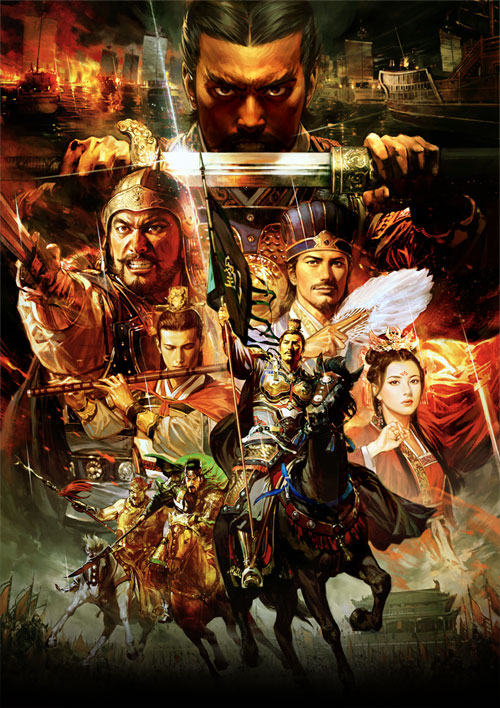
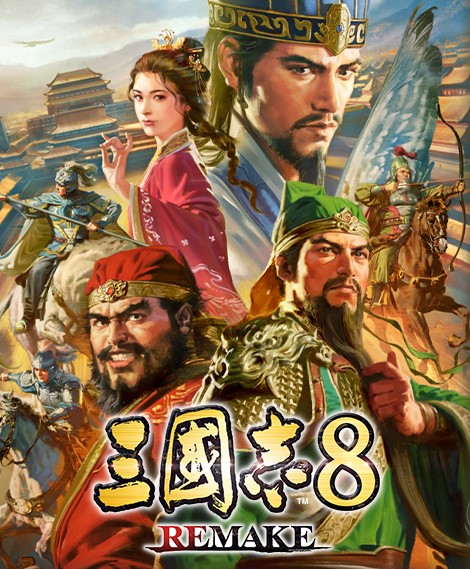
Sanguozhi is a historical simulation game based on the historical book "Sanguozhi" and the long historical novel "Sanguozhi Yanyi" and set in the period from the Later Han Dynasty to the Three Kingdoms in China. The game was released by Koei Tecmo Games and has been made into a series. The game's producer is Ko Shibusawa. Players take on the role of a monarch, increasing their national power through domestic and military affairs, and expanding their territory through battles with other monarchs. The goal of the game is to eventually unify China.
Sun Yat-sen
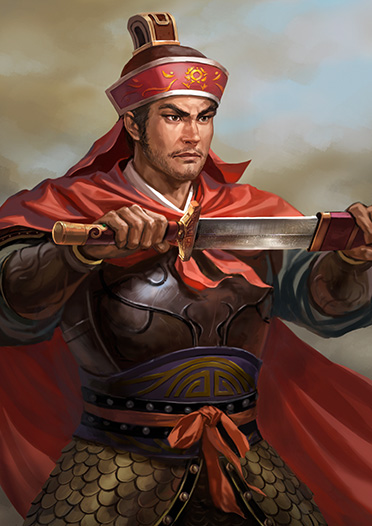
Sun Ken (Son Ken: 156~192)
Sun Jian (文台), whose character is Wentai, appears in the scenario from 184 to 190. He has high ability values in leadership, military power, wisdom, and politics, but his leadership and military power are particularly high.
His eldest son was Sun Schek, and his second son was Sun Quan, the first emperor of Wu. His posthumous name is Emperor Wu. In "Sanguozhi Yanyi", he is called "Tiger of Jiangdong".
As a young man, he was appointed as a government official for his efforts to drive away pirates.
During the Yellow Turban Rebellion, he joined the Han forces and participated in the suppression of the rebellion. He later put down a rebellion that broke out in southern Jingzhou and strengthened his ability.
When he joined the anti-dongtaku coalition, he was successful in defeating the generals under Dongtaku's command with the support of Yuan Ji.
After the collapse of the coalition, he followed Yuan Ji and attacked Liu Meng in Jingzhou. However, he was killed in battle.
In "Sanguozhi Yanyi," he is described as having found the Jade Seal in the devastated capital of Luoyang.
Sun Yat-sen
Sun Scheu (孫策: 175~200)
Sun Strategy, whose name is Hakufu, appears in the scenario from 190 to 200. He has high ability values in leadership, military power, and politics, but especially in leadership and military power.
He is the eldest son of Sun Jian and Sun Quan is his younger brother (Sun Jian's second son). His posthumous name is King Jangsahwan. Daegyo (Ohashi) is his concubine.
After his father Sun Jian was killed in battle, he followed his lord Yuan Ji and gained an old vassal in Sun Jian's army.
As a subordinate of Yuan Ji, he captured Yangzhou, increased his military strength, and later became independent from Yuan Ji and brought Yangzhou under his control.
Around the time of the Battle of Guandu, he attempted to target Zhongyuan, where Cao Cao was based. Before going into battle, however, he was attacked by assassins and died from his wounds.
Sun Quan, the younger brother of Sun Cao, became his successor.
Shu Yu
Zhou Yu (175~210)
Zhou Yu (周瑜: 175~210), also known as Gong Jin (公瑾), appears in scenarios from 190 to 207. He has high ability values in leadership, military power, wisdom, and politics, but his leadership, wisdom, and politics are especially high.
His nickname is "Zhouro," and Xiao Qiao (Xiaoqiao) is his wife. He is the same age as Sun Tsui and became friends with Sun Tsui when his father, Sun Jian, was a member of the anti-taku alliance.
He was a member of the army of Sun Quan when Sun Quan invaded Yangzhou as a subordinate of Yuan Ji. After that, he was entrusted with the defense of the areas invaded by Sun Tsu.
After the death of Sun Ce, he assisted Sun Quan, who succeeded him, and played an active role in the defeat of Shan Yue, etc. In the Battle of Red Cliff, he advised Sun Quan to fight against Cao Cao and defeated the ships of Cao Cao's army with his fire plan in the battle.
Zhou Yu suggested to Sun Quan that he fight Cao Cao Cao with his armies in southern China (Jingzhou, Yizhou, Yangzhou, etc.) and Liangzhou (ruled by Ma Chao at that time), and devised the so-called "plan of two halves under heaven".
Sun Quan agreed, and Zhou Yu prepared for the attack. However, Zhou Yu dies of illness without carrying out his plan.
Luxemburg
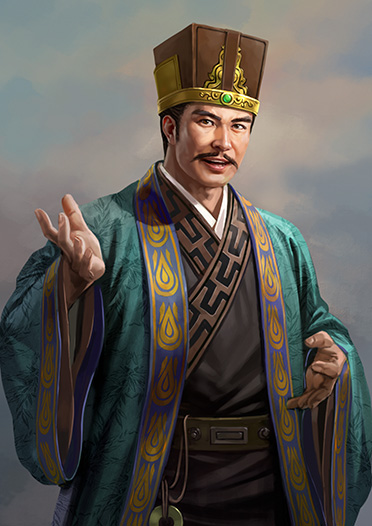
Lu Su (魯しゅく: 172~217)
Lu Su (子敬), whose character is Shikei, appears in the scenario from 190 to 207. He has high ability values in leadership, wisdom, and politics.
He was born into a wealthy and powerful family and sent a whole storehouse of goods to Zhou Yu (one of the two storehouses). This led to a friendship with Zhou Yu.
He had been in the service of Yuan Ji, but was introduced by Zhou Yu to Sun Quan.
Sun Quan initially wanted to revive the Han dynasty, but Lu Su advised him that it was impossible to revive the Han dynasty and that you should become emperor.
In the Battle of Red Cliffs, he persuaded Sun Quan to fight against Cao Cao together with Zhou Yu. After Zhou Yu died, he took over his troops.
When Liu Bei and Sun Quan were at odds over Jingzhou, he served as a negotiator. He died a few years later.
Lu or Meng (dynasty of China)
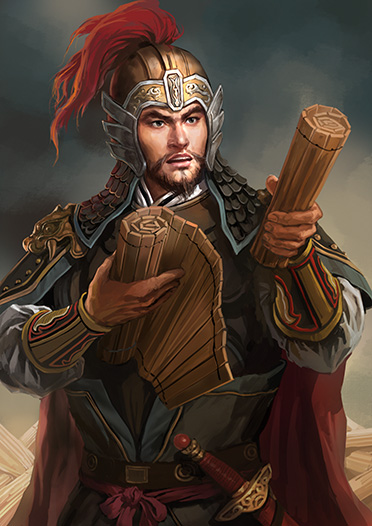
Lu Meng (呂蒙: 178~219)
The character Shimei (子明) appears in scenarios from 194 to 207. He has high ability values in leadership and military power, and low in wisdom and politics, but both are often high due to events.
He served Sun Quan as a close aide in his youth and took over his late brother-in-law's army.
He was a military commander with outstanding military prowess at first, having served in Sun Quan's army in battles such as the Battle of Red Cliff.
Sun Quan taught him the necessity of learning, and Lü Meng began to study. As a result, Lu Meng gained enough knowledge to rival Confucian scholars, leading Lu Su to say, "I am no Among under Wu.
Later, he played an active role in the battle of Nureskou, where Sun Quan and Cao Cao fought, by devising a plan.
When Sun Quan and Liu Bei confronted each other in Jingzhou, he defeated Guan Yu by catching him off guard with a strategy, and seized Jingzhou. Shortly thereafter, he died of illness.
Rikou era (1429.9.5-1441.2.17)
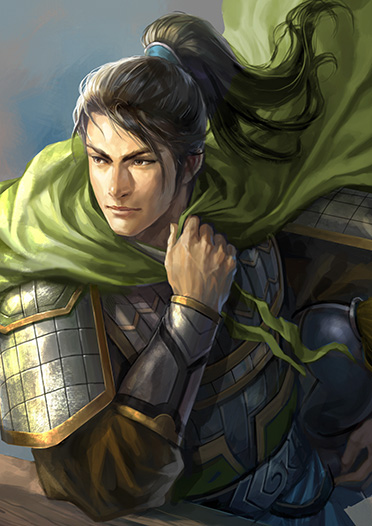
Rikuson (183~245).
He appeared from 200 to 234. He has high ability values in leadership, wisdom, and politics.
He first served Sun Quan as a civil official, and later defeated the foreigner Shan Yue. Around this time, he married Sun Quan's niece, the daughter of his elder brother Sun Tsui.
During Sun Quan's invasion of Jingzhou, he conspired with Lu Meng to catch Guan Yu off guard and seize Jingzhou.
When Liu Bei attacked to recapture Jingzhou, he defeated Liu Bei's army by fire and other means.
When Sun Quan ascended to the throne, he became the center of politics and military affairs, and became a prime minister in his later years.
In his later years, he became embroiled in a dispute over Sun Quan's successor, and died in the midst of the dispute.
Groups and Figures from the Late Later Han to the Three Kingdoms Period
Yuan Shao
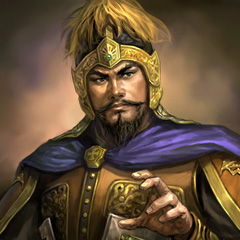
Yuan Shao (Yuan Shao: ? ~202)
Yuan Shao, whose name is Honsho, appears in scenarios from 184 to 200. He has high ability values in leadership, wisdom, and politics, especially in leadership.
He was born into a prestigious family that produced four generations of high-ranking officials. His younger brother or cousin is Yuan Ji.
He was a relative of the empress, and was responsible for the purge of eunuchs that General Hejin, a relative of the Han dynasty, had in mind.
He became the allied leader when the lords raised their armies against Dong Tak's tyranny. However, after Dong Tak retreated to Chang'an, the coalition collapsed, and he came into conflict with Yuan Ji and other powers.
He sent reinforcements to Cao Cao, but by the time he took control of Zhongyuan and Yuan Shao took control of northern China, they had become enemies.
At Guandu, he clashed with Cao Cao's army, but was defeated when his supply lines were cut off. He died two years after the battle of Guandu.
T'ang table

Contents
- Outline of "Three Kingdoms
- Game System of "Sangokushi
- strategic command
- domestic affairs
- military affairs
- talented person
- diplomacy
- stratagem
- battle
- departure for the front
- Main unit types
- war
- Types of battles
- personal combat
- stratagem
- deciding the outcome (e.g. game)
- postwar treatment
- military commander
- How to increase the number of generals
- attribute value
- (degree of) loyalty
- military commander related by blood
- monarch
- peerage
- territorial unit
- Scenario of "Three Kingdoms
- Items from "Three Kingdoms
- arms
- scimitar with a blue dragon scimitar (Porzana fusca)
- serpentine spear (snake)
- weapons of mass destruction
- a pair of swords for one man and a pair of swords for another
- Yi Guang's bow
- fine or famous horse
- red rabbit
- calabash (Lagenaria siceraria var. gourda)
- uninterrupted view
- extremely high-grade Japanese amberjack (species of yellowtail, Seriola quinqueradiata)
- automobile
- books
- The Art of War (military text by Sun Tzu, 512 BCE)
- Mentoku Shinsho
- the Analects of Confucius
- The Historical Records (ancient Chinese historical record)
- The Book of the Taiheiyo kyôjô
- treasure
- tree sparrow (Passer montanus)
- nine-tined kettle stand
- the wisdom of the ancients
- fan with feathers
- sovereign's seal
- Events in "Three Kingdoms
- Regular Events
- locust (of family Catantopidae)
- typhoon
- good crop and bad crop
- Historical Events
- Federation of Beautiful Women's Unions scheme (1948-1953)
- Battle of Kandu (ancient Japanese battlefield)
- showing special confidence and courtesy (to someone, often to convince them to take a post, etc.)
- Power-up kit for "Three Kingdoms
- Terms of "Mikokushi
- Annals of the Three Kingdoms
- set of three books of Buddhist stories, written in the late 8th and early 9th century, usually referred to as the Three Kingdoms period
- state
- vacant lot or land
- different peoples
- Later Han Emperor
- Representative generals from the "Sangokushi" series
- State of Wei (China)
- Cao Cao
- Cao Dai
- honest and homely
- Marco Polo Bridge (China)
- Kakujia
- Yu Yu.
- Shima Xi
- Shu Han
- Liu Bei
- Sekifu (lowest of the eight hereditary titles)
- Zhang Fei (Chinese deity said to be able to cure all ills)
- scarlet kadsura (Kadsura japonica)
- Zhao Yun
- loyalty to one's master
- Choenomeles lagenaria
- Wu (dynasty of China; 918-1392 CE)
- Sun Quan (dynasty of China; 386-534 CE)
- Sun Yat-sen
- Sun Yat-sen
- Shu Yu
- Luxemburg
- Lu or Meng (dynasty of China)
- Rikou era (1429.9.5-1441.2.17)
- Groups and Figures from the Late Later Han to the Three Kingdoms Period
- Yuan Shao
- T'ang table
- Lu Bu
- how much (long, far)
- Yuan dynasty (China)
- penis-shaped device, traditionally made of horn, shell or papier mache
- Mencius' mother
- female
- glutton
- Da Qiao and Xiao Qiao
- List of "Mikuni" series
- PC and home video game console versions
- The Three Kingdoms.
- Super Mikuni
- The Three Kingdoms Returns.
- The Three Kingdoms II
- Super Mikuni II
- Sangokushi Tshukuru" (The Legend of the Three Kingdoms)
- The Three Kingdoms III
- The Three Kingdoms IV
- Mikuni V" (The Three Kingdoms V)
- The Three Kingdoms VI
- The Three Kingdoms VII
- Three Kingdoms VIII
- Mikuni IX" (Japanese title: "Mikuni IX")
- Mikuni X" (Japanese only)
- Mikuni 11
- Mikuni 12
- Mikuni 13
- Game Boy version, Game Boy Color version, Game Boy Advance version
- Mikuni: Game Boy Version" (Japanese only)
- Mikuni: Game Boy Version 2
- The Three Kingdoms.
- Wonder Swan version
- Sangokushi for WonderSwan" (Japanese only)
- Sangokushi II for WonderSwan" (Japanese only)
- Nintendo DS version
- Mikokushi DS
- Mikuni DS2" (Japanese only)
- Mikuni DS3" (Japanese only)
- Nintendo 3DS version
- The Three Kingdoms.
- The Three Kingdoms 2
- iPhone/iPod touch and iPad versions
- Mikuni: TOUCH
- The main staff of "Mikuni
- Koh Shibusawa
- Yoko Kanno
- Jun Chousei
- Kazuki Kuriyama
- Masako Otsuka
- Noriyoshi Ikuse
- Tsuyoshi Nagano
- Kazumasa Nagai
- Xu Boqing
- Backstories, trivia, and small stories/episodes/anecdotes of "Sanguozhi" (The Three Kingdoms)
- The Birth of "Mikokushi
- Power Up Kit Edition and "The Mikuni III Incident"
- Ability value of the word
- A small story found in the one-horse race
- Title title of "Three Kingdoms
- Himiko appears in Sanguozhi