
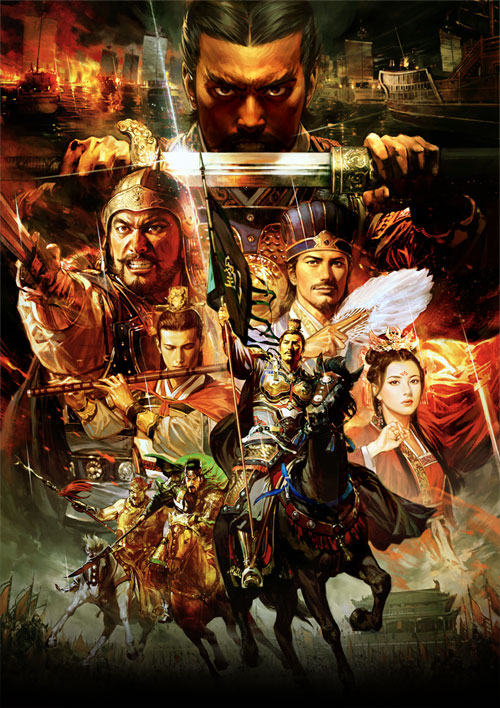
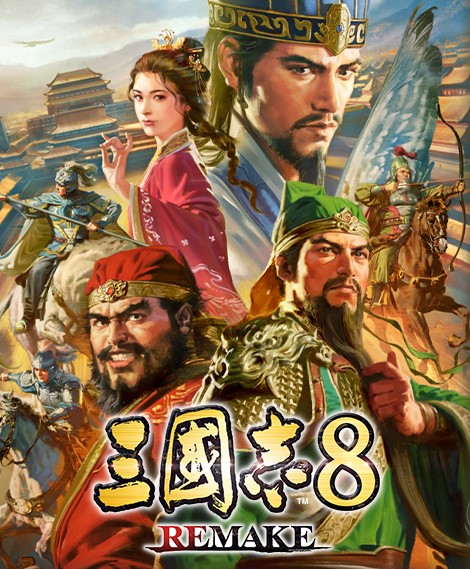
Sanguozhi is a historical simulation game based on the historical book "Sanguozhi" and the long historical novel "Sanguozhi Yanyi" and set in the period from the Later Han Dynasty to the Three Kingdoms in China. The game was released by Koei Tecmo Games and has been made into a series. The game's producer is Ko Shibusawa. Players take on the role of a monarch, increasing their national power through domestic and military affairs, and expanding their territory through battles with other monarchs. The goal of the game is to eventually unify China.
the wisdom of the ancients
Reading: Kashino-heki, Kashinotama
Available in search and other places.
A famous jade from the Spring and Autumn and Warring States Periods of China. It appears in the Shiji and other works.
During the Spring and Autumn period, a man named Bian He found a rough jade stone in a mountain in the state of Chuxu, and presented it to the Chuxu kings (King Ling and King Wu), but it was considered a fake and his leg was amputated.
However, during the reign of the next King Wen, it was recognized as a famous jade, and it was processed into the shape of a bi and named "He's Bi" in honor of Bian He, the discoverer.
Later, King Huiwen of Zhao acquired it, but King Shouyang of Qin offered to exchange the famous jade for 15 castles in his domain, hence the name "Renjo no bi.
The word "perfect" refers to having absolutely no flaws, and this is the "He's Peak".
fan with feathers
Read: U Sen
Often initially owned by Zhuge Liang. After the death of Zhuge Liang, it can be obtained through search.
It is a fan made of bird feathers, and in games such as "Sanguozhi Yanyi" it is the feather fan owned by Zhuge Liang. It also appears in paintings of Zhu-ge Liang.
Legend has it that the feather fan was made by Zhuge Liang from the hair of the tail of a crane living in the heavenly realm.
There is a Chinese term for a schemer or a mastermind, "shaky-feathered fan", which means a schemer like Zhuge Liang.
This is due to the fact that a man like Zhu-ge Liang, who was a master of trickery, used a feather fan to stir the air in fiction and other works.
sovereign's seal
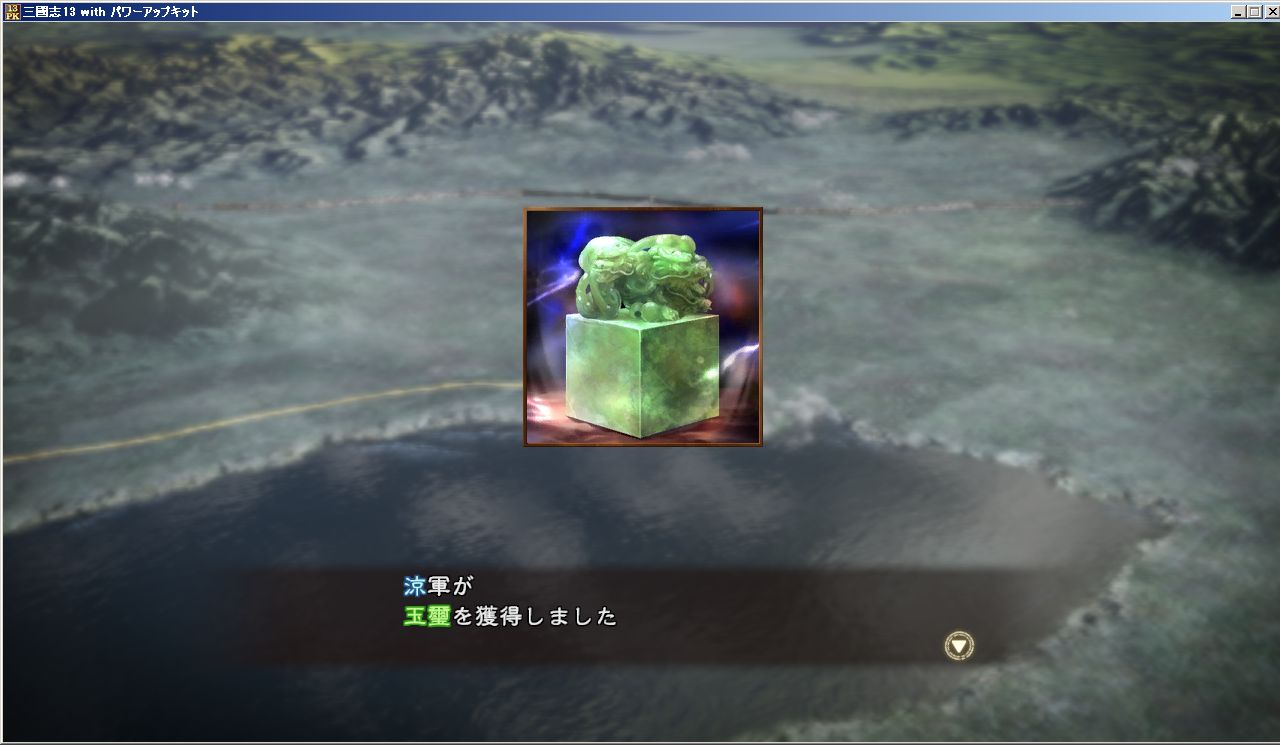
Message at the time of jade seal entry in "Sangokushi 13.
Reading: Gyokuji
It can be obtained through exploration, but in some scenarios, it may also be possessed by a Yuan Dynasty.
Possession increases the monarch's ability value, credibility (a numerical value indicating how much the monarch is trusted by the people and well-liked by the people), and so on.
In some works, it is required for the accession to the throne of the emperor.
In general, it refers to the seal used by the emperor, but in this case it refers to the seal that has been passed down through successive Chinese emperors.
It is said to have originated when the first emperor of the Qin Dynasty ordered his subordinates to make a seal out of jade. Since then, the jade seal has represented the symbol of the emperor.
In the late Late Han period, the story of a warlord named Yuan Ji, who obtained the jade seal, calling himself emperor, is recorded in the "Yanyi of the Three Kingdoms".
However, he disappeared due to warfare during the period of the Five Dynasties and Ten Kingdoms in the 10th century. In the later Song, Ming, and Qing dynasties, imitation seals made to imitate the jade seal from the Han Dynasty were used.
Events in "Three Kingdoms
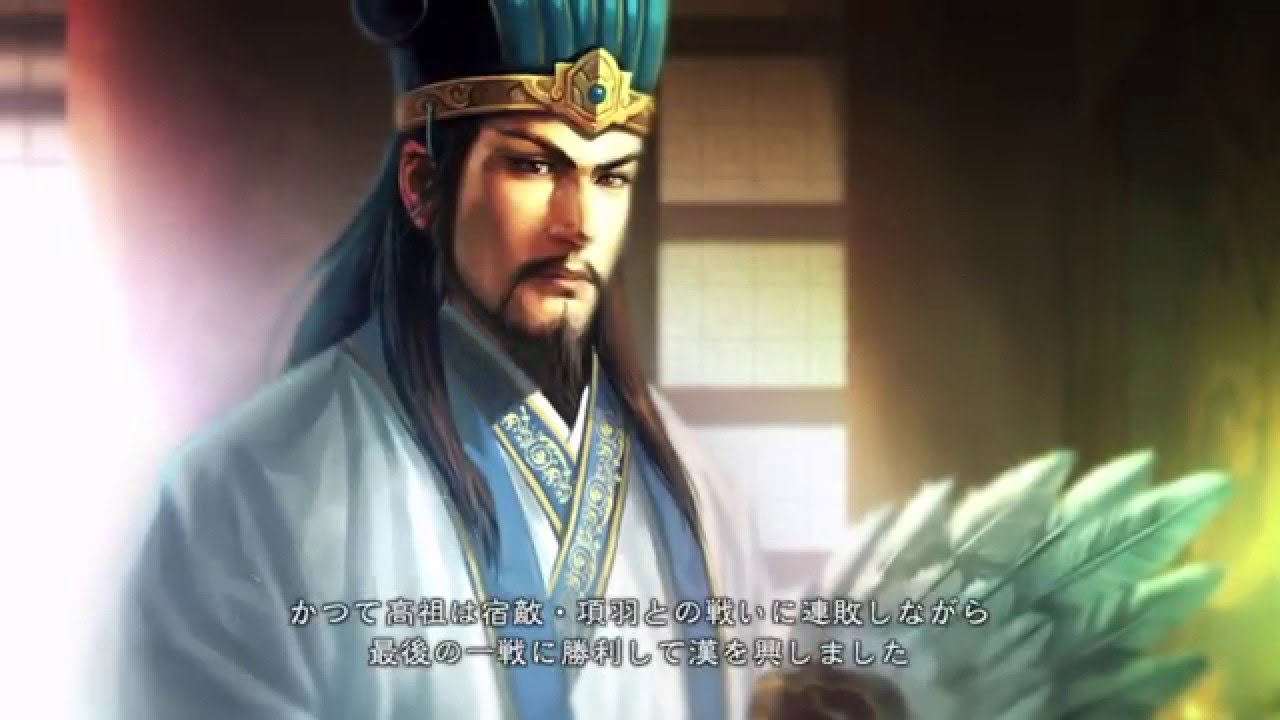
Event movies may be inserted depending on the work.
In the "Sangokushi" series, events sometimes occur during the course of the game. They can be roughly divided into normal events and historical events.
Normal events occur suddenly at a certain probability without any conditions, and many of them affect income and internal administration values.
Historical events may occur when conditions are met and may affect the game's development. Many of the events are based on the contents of "Sanguozhi" and "Sanguozhi Yanyi".
The following is an introduction to the main events.
Regular Events
locust (of family Catantopidae)
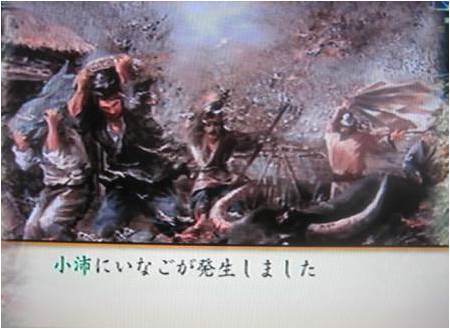
Locust Occurrence Event Messages for "Mikuni X".
An event that occurs from spring to fall. Crops are damaged due to the outbreak of locusts (grasshoppers).
The development value and the loyalty of the people in the cities affected by locusts decrease, and the number of troops also decreases.
typhoon
Event occurs in summer. A typhoon strikes and causes damage.
The internal administrative values of the city hit by the typhoon, such as development and commercial values, decrease, and the number of soldiers decreases.
good crop and bad crop
An event that occurs in the fall, which increases or decreases military income.
A good harvest: income increases.
Bad harvest: Income from food decreases.
Historical Events
This event is based on the contents of "Sangokushi" and "Sangokushi Yanyi".
The conditions for occurrence vary from work to work, so only the flow of events will be described.
Federation of Beautiful Women's Unions scheme (1948-1953)
Wang Yun, who was troubled by Dong Zhuo's arrogance, used his adopted daughter Diao Chan to have Lu Bu, who was also under Dong Zhuo's command, kill Dong Zhuo.
The "linkage" refers to a scheme in which multiple schemes are executed in succession, and Wang Yun set up the "linkage scheme".
Specifically, Dong Zhuo and Lu Bu took on the beauty scheme (color trick) by Diao Chan and the separation (falling out).
The so-called "Beauty Contrivance" is an episode that appears in "Sanguozhi Yanyi" (The History of the Three Kingdoms).
Let me explain the sequence of events.
The event must have occurred after the year 192, when Dong Tak was the monarch, the Emperor of the Later Han Dynasty (Han Dynasty), and had Wang Yun and Lu Bu under his command.
When the event occurs, Lu Bu kills Dong Zhuo.
After that, there are the following patterns, which vary depending on the work.
Lu Bu succeeds Dong Zhuo and becomes the monarch of Dong Zhuo's power.
Lu Bu becomes a new monarch independent from Dong Zhuo and Dong Zhuo's power is succeeded by another general under Dong Zhuo.
In some works, Dong Zhuo does not die, in which case there is no particular change.
Battle of Kandu (ancient Japanese battlefield)
The event was based on the Battle of Guandu, where Cao Cao and Yuan Shao clashed in Guandu.
This event occurs when Cao Cao and Yuan Shao are both monarchs and both are powerful and on bad terms with each other, and when Cao Cao's forces appoint a specific subordinate general of Yuan Shao's forces.
When this event occurs, the number of soldiers in Yuan Shao's controlled cities around Guandu will decrease, and Yuan Shao's army supplies will decrease.
In addition, if Yuan Shao's forces are deployed in or around Guandu, they will retreat.

Contents
- Outline of "Three Kingdoms
- Game System of "Sangokushi
- strategic command
- domestic affairs
- military affairs
- talented person
- diplomacy
- stratagem
- battle
- departure for the front
- Main unit types
- war
- Types of battles
- personal combat
- stratagem
- deciding the outcome (e.g. game)
- postwar treatment
- military commander
- How to increase the number of generals
- attribute value
- (degree of) loyalty
- military commander related by blood
- monarch
- peerage
- territorial unit
- Scenario of "Three Kingdoms
- Items from "Three Kingdoms
- arms
- scimitar with a blue dragon scimitar (Porzana fusca)
- serpentine spear (snake)
- weapons of mass destruction
- a pair of swords for one man and a pair of swords for another
- Yi Guang's bow
- fine or famous horse
- red rabbit
- calabash (Lagenaria siceraria var. gourda)
- uninterrupted view
- extremely high-grade Japanese amberjack (species of yellowtail, Seriola quinqueradiata)
- automobile
- books
- The Art of War (military text by Sun Tzu, 512 BCE)
- Mentoku Shinsho
- the Analects of Confucius
- The Historical Records (ancient Chinese historical record)
- The Book of the Taiheiyo kyôjô
- treasure
- tree sparrow (Passer montanus)
- nine-tined kettle stand
- the wisdom of the ancients
- fan with feathers
- sovereign's seal
- Events in "Three Kingdoms
- Regular Events
- locust (of family Catantopidae)
- typhoon
- good crop and bad crop
- Historical Events
- Federation of Beautiful Women's Unions scheme (1948-1953)
- Battle of Kandu (ancient Japanese battlefield)
- showing special confidence and courtesy (to someone, often to convince them to take a post, etc.)
- Power-up kit for "Three Kingdoms
- Terms of "Mikokushi
- Annals of the Three Kingdoms
- set of three books of Buddhist stories, written in the late 8th and early 9th century, usually referred to as the Three Kingdoms period
- state
- vacant lot or land
- different peoples
- Later Han Emperor
- Representative generals from the "Sangokushi" series
- State of Wei (China)
- Cao Cao
- Cao Dai
- honest and homely
- Marco Polo Bridge (China)
- Kakujia
- Yu Yu.
- Shima Xi
- Shu Han
- Liu Bei
- Sekifu (lowest of the eight hereditary titles)
- Zhang Fei (Chinese deity said to be able to cure all ills)
- scarlet kadsura (Kadsura japonica)
- Zhao Yun
- loyalty to one's master
- Choenomeles lagenaria
- Wu (dynasty of China; 918-1392 CE)
- Sun Quan (dynasty of China; 386-534 CE)
- Sun Yat-sen
- Sun Yat-sen
- Shu Yu
- Luxemburg
- Lu or Meng (dynasty of China)
- Rikou era (1429.9.5-1441.2.17)
- Groups and Figures from the Late Later Han to the Three Kingdoms Period
- Yuan Shao
- T'ang table
- Lu Bu
- how much (long, far)
- Yuan dynasty (China)
- penis-shaped device, traditionally made of horn, shell or papier mache
- Mencius' mother
- female
- glutton
- Da Qiao and Xiao Qiao
- List of "Mikuni" series
- PC and home video game console versions
- The Three Kingdoms.
- Super Mikuni
- The Three Kingdoms Returns.
- The Three Kingdoms II
- Super Mikuni II
- Sangokushi Tshukuru" (The Legend of the Three Kingdoms)
- The Three Kingdoms III
- The Three Kingdoms IV
- Mikuni V" (The Three Kingdoms V)
- The Three Kingdoms VI
- The Three Kingdoms VII
- Three Kingdoms VIII
- Mikuni IX" (Japanese title: "Mikuni IX")
- Mikuni X" (Japanese only)
- Mikuni 11
- Mikuni 12
- Mikuni 13
- Game Boy version, Game Boy Color version, Game Boy Advance version
- Mikuni: Game Boy Version" (Japanese only)
- Mikuni: Game Boy Version 2
- The Three Kingdoms.
- Wonder Swan version
- Sangokushi for WonderSwan" (Japanese only)
- Sangokushi II for WonderSwan" (Japanese only)
- Nintendo DS version
- Mikokushi DS
- Mikuni DS2" (Japanese only)
- Mikuni DS3" (Japanese only)
- Nintendo 3DS version
- The Three Kingdoms.
- The Three Kingdoms 2
- iPhone/iPod touch and iPad versions
- Mikuni: TOUCH
- The main staff of "Mikuni
- Koh Shibusawa
- Yoko Kanno
- Jun Chousei
- Kazuki Kuriyama
- Masako Otsuka
- Noriyoshi Ikuse
- Tsuyoshi Nagano
- Kazumasa Nagai
- Xu Boqing
- Backstories, trivia, and small stories/episodes/anecdotes of "Sanguozhi" (The Three Kingdoms)
- The Birth of "Mikokushi
- Power Up Kit Edition and "The Mikuni III Incident"
- Ability value of the word
- A small story found in the one-horse race
- Title title of "Three Kingdoms
- Himiko appears in Sanguozhi