
Urban legends and mysteries scattered all over Japan are collected.
Source: www.h2.dion.ne.jp
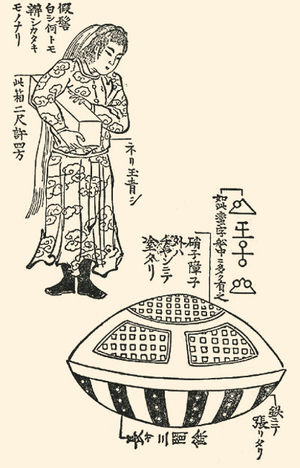
At that time, in 1803, a strange boat drifted ashore in the chigyosho (place of the lord's fief) of hatamoto (direct retainers of the bakufu, which is a form of Japanese feudal government headed by a shogun) Ecchu no kami OGASAWARA, the territory of Hitachi Province, and off the coast of Harajuku.
The boat is 5 to 4 meters in diameter and the upper part is made of glass and iron plates. There was a woman with a strange appearance inside. Her hair was red and she could not communicate. She was holding a 60 cm square box with great care.
This story was introduced as' Kifune no 蛮女' in "Toen Shosetsu" (The Novel of Toen) compiled by Takizawa Bakin in 1825.
Source: upload.wikimedia.org
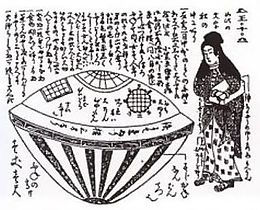
The place of the incident is thought to be somewhere along the coast of Kashimanada, Ibaragi Prefecture, but there is no place name of' Haraya Dori oki' and it has been said that the incident itself was fictitious, but there are many records about the incident.
The records feature the Kifune's window as a speaker, but none of them reveal what happened to the woman and the boat.
Edo Period Ukiyoe and Sky Tree

Source: abetoshiro.ti-da.net
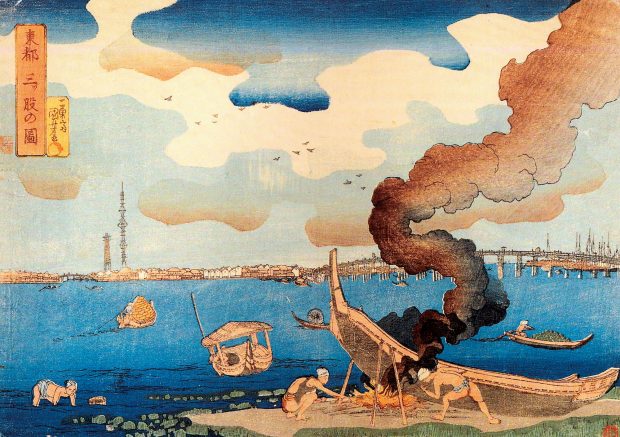
Utagawa Kuniyoshi, an ukiyo-e artist at the end of the Edo period, painted a huge tower-like structure reminiscent of Tokyo Skytree.
The picture is called' Tokyo Mitsumata no Zu' (Three Legs of Tokyo). It is said to have been painted around 1831. A boat for catching shijimi (freshwater clams) floats on the Sumida-gawa River, and in front of it, two craftsmen are drawn to cover the bottom of the boat. On the left side of the picture, two long and narrow structures are drawn around Edo and Fukagawa on the opposite shore of the Sumida-gawa River.
The lower one on the left is said to be a fire watchtower that existed at the site at that time, but the huge tower on the right is said to be not a real building.
If you stand at the same location as depicted in this "Tokyo Mitsugata no Zu," you will see the Sky Tree standing in exactly the same position.
The author, Utagawa Kuniyoshi, is said to have predicted the anniversary of his death, and it is thought that Kuniyoshi drew this picture anticipating the future.
Yonaguni Island Undersea Remains
Source: find-travel.jp
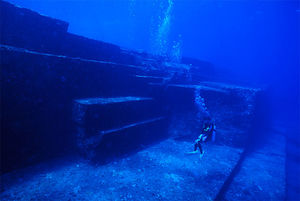
The Yonaguni Island Seafloor Site is a seafloor topography discovered off the coast of Shinkawahana in the southern part of Yonaguni Island in the Yaeyama Islands, Okinawa Prefecture, and contains a group of huge stones that appear to have been artificially processed.
In 1986, divers discovered a huge monolith on the southern seafloor of the island. The monolith, which is hundreds of meters in circumference, was reported as a relic because it had a shape that could not be made without human processing, such as a man-made cut out trace or a gap in the shape of a passage where a person could just walk.
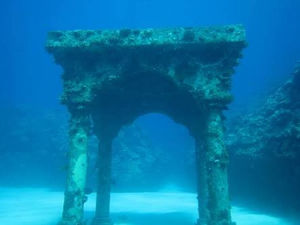
Various investigations have been carried out, and many things that seem to be artificial, such as castle gates, waterways, stairs, monuments of turtles, etc., have been found.
There is a theory that ancient civilization once existed in this place and used it for something, and there is a theory that it was when the sea level rose after the last ice age from the distribution of animals and plants and stalactites that it was submerged. If this is true, it will be the world's oldest ancient years ago.
Although there are various theories such as the remains theory, the quarry theory, the medieval remains theory, and the erosion theory, it has not been proven that it was formed naturally or artificially.
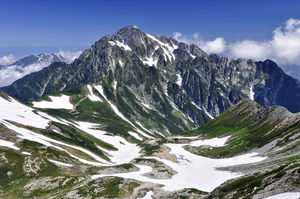
Mt. Tsurugidake

Contents
- Table of Contents
- Location of Tokugawa Hidden Treasure
- Identity of Hanzo Hattori
- Tokugawa Ieyasu encounters unknown people
- Muramasa THE UNCANNY SWORD AVENGING THE TOKUGAWA FAMILY
- Ii Naomasa and Honda Tadakatsu's Wounds
- Japan's first mentalist
- Predictions of Prince Shōtoku
- Horyuji no Nazo
- TAIRA no Masakado's curse
- Vengeful ghost of SUGAWARA no Michizane
- Minamoto Yoshitsune = Genghis Khan
- Uesugi Kenshin was a woman.
- Uesugi Kenshin and Bishamonten
- Did Nobunaga Oda have black retainers?
- Toyotomi Hideyoshi had six fingers?
- Hihiirokane
- Legend of Daidarabotchi
- 800 Bikuni
- Kifune
- Edo Period Ukiyoe and Sky Tree
- Yonaguni Island Undersea Remains
- Mt. Tsurugidake
- Solomon's Hidden Treasure Hidden in Kenzan
- Christ's Grave
- Sugisawa
- M Fund
- Truth of the death of Rentaro Taki
- Japanese psychic
- Iron Barrier in the Capital Tokyo
- Reasons why Kyoto was not bombed during the Second World War
- Three Bridges Spanning Shikoku
- Otorii at Haneda Airport
- Curse of Roppongi Hills
- It wasn't Showa.
- Real Antarctica