
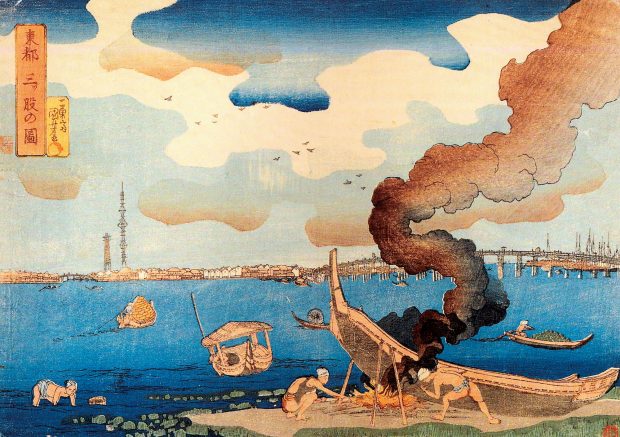
Urban legends and mysteries scattered all over Japan are collected.
Mt. Tsurugidake, 3000 meters above sea level, is said to be the most difficult mountain to climb in the Hida Mountain Range stretching from the northern part of Nagano to Toyama Prefectures. The area is designated as a special protection zone and is counted as one of the top 100 mountains in Japan. Even if you look at it from the sky on an airplane, you will be overwhelmed by its power. It is truly the realm of the gods.
It is the most difficult place in the history of Japanese mountain climbing, because even Kobo Daishi, who used 3000 pairs of straw sandals, was not able to conquer the mountain.
On July 13, 1907, the Army Surveyor's Unit succeeded in climbing Mt. Tsurugidake for the first time. It was the first time that the Japanese had ever been able to reach a place that even Tadataka Ino could not reach. This was the very first time that the Japanese had ever been able to reach the summit of Mt. Tsurugidake. However, the Surveyor's Unit saw something incredible in the joy of reaching the summit.
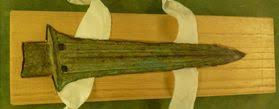
At 3000 meters from the top of the mountain, there was a bronze sword believed to be from the old generation. According to the appraisal, this bronze sword was assumed to be from the Nara period. It became clear that the Japanese had been treading through Mt. Tsurugidake long before.
However, this was not the only surprise: at least on multiple occasions, traces of someone stepping on the mountaintop have been found.
Before the Nara period, there might have been many people who were stronger than Kobo Daishi.
Solomon's Hidden Treasure Hidden in Kenzan
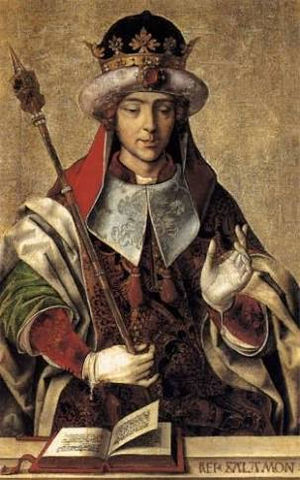
King Solomon, whose father was David, is the legendary king of Christianity and Islam, and the third king of ancient Israel.
He is a truly real man, a great man who lived from about 1035 BC to about 925 BC, known for his great wisdom and profound knowledge.
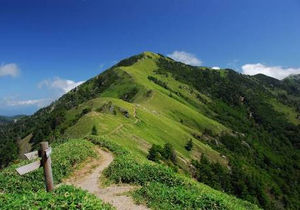
It is said that his hidden treasure is located on Mount Tsurugi in Tokushima Prefecture. This theory is based on the Bible scholar and great scholar Tadashi Takane's theory of going to Japan. It is said that the throne in the Book of Revelation was Mount Tsurugi and Shikoku matched the explanation of the Book of Revelation.
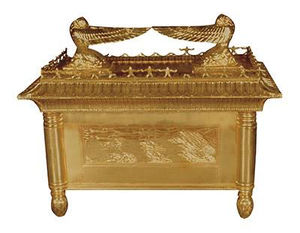
The stone tablet of the Ten Commandments that Moses contracted with God and the box containing the Hebrew treasures are called the "Ark of the Covenant." This is called the "King Solomon's Treasure." A bird sculpture is placed on the top of the box, and it is said that the priests carried it to the temple.
This treasure was apparently not discovered when the Hebrew kingdom was destroyed by Assyria. The only legend left was that it was secretly carried to the east by the "Ten Lost Tribes of Israel."
The treasure was later called the "Lost Ark."
It is said that some of the lost ten branch families who wandered eastward landed on the Japanese islands from Kyushu and Shikoku, and the branch families who reached the Shikoku buried the treasure at the top of Mt. Tsurugi.
On July 17, the same day as the Gion Festival at Yasaka-jinja Shrine in Kyoto, there is a festival at Mount Tsurugi in Tokushima Prefecture in which practitioners yamabushi (mountain priests) carry a mikoshi (portable shrine) to the top of the mountain, and it is said that this mikoshi is decorated with a phoenix on the roof.
It is said that the excavation of Mount Tsurugi was carried out by those who found a common feature between this festival and the fact that Shinto priests carried the ark and buried it on the top of the mountain. It seems that the Tsurugi Mountain Festival follows the tradition of burying the ark.
Christ's Grave
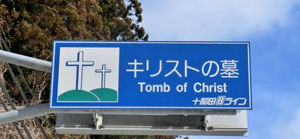
Herai, Shingo-mura, is located to the east of Lake Towada in Aomori Prefecture. It is said that Jesus visited, lived and died on the Shingo-mura, and it is known for the Christ's Grave.
Christ first traveled to Japan during the reign of the 11th Emperor Suinin. After training in Japan for several years, Jesus returned to Judea. He was persecuted by Rome and was crucified on the hill of Golgotha.

Contents
- Table of Contents
- Location of Tokugawa Hidden Treasure
- Identity of Hanzo Hattori
- Tokugawa Ieyasu encounters unknown people
- Muramasa THE UNCANNY SWORD AVENGING THE TOKUGAWA FAMILY
- Ii Naomasa and Honda Tadakatsu's Wounds
- Japan's first mentalist
- Predictions of Prince Shōtoku
- Horyuji no Nazo
- TAIRA no Masakado's curse
- Vengeful ghost of SUGAWARA no Michizane
- Minamoto Yoshitsune = Genghis Khan
- Uesugi Kenshin was a woman.
- Uesugi Kenshin and Bishamonten
- Did Nobunaga Oda have black retainers?
- Toyotomi Hideyoshi had six fingers?
- Hihiirokane
- Legend of Daidarabotchi
- 800 Bikuni
- Kifune
- Edo Period Ukiyoe and Sky Tree
- Yonaguni Island Undersea Remains
- Mt. Tsurugidake
- Solomon's Hidden Treasure Hidden in Kenzan
- Christ's Grave
- Sugisawa
- M Fund
- Truth of the death of Rentaro Taki
- Japanese psychic
- Iron Barrier in the Capital Tokyo
- Reasons why Kyoto was not bombed during the Second World War
- Three Bridges Spanning Shikoku
- Otorii at Haneda Airport
- Curse of Roppongi Hills
- It wasn't Showa.
- Real Antarctica