
Urban legends and mysteries scattered all over Japan are collected.
Source: ja.wikipedia.org
March 4: A square moon appears in the sky of the Kinki region.
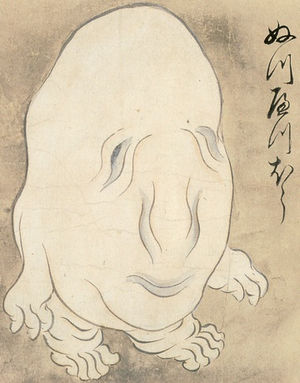
On April 4, a strange' flesh-and-blood' appeared in Sunpu-jo Castle.
This description remains in the official history of the bakufu called Tokugawa Jikki ki (Tokugawa Records).
When Ieyasu TOKUGAWA was in Sunpu-jo Castle, one morning there was a strange man standing in the garden of the castle. He was as small as a child and pointed upward with a fingerless hand. He was called "Jinjin" (literally, "flesh man"). The people in the castle who saw him were all surprised by his strange appearance. They did not know what to do and just shouted, "It is a change."
Kinju (attendant) told Ieyasu about this trouble in the garden and asked him what to do. Ieyasu answered,' You can drive him to a place out of sight,' and in the end, he drove him away to the mountain.
It is said that when pharmacist heard this story, he lamented,' What a shame you have done! Because of the misguided behavior of those who made a fuss, you were not able to offer the Imperial medicine to your Duke Kang of Qin. That flesh-and-blood character is called' ho' according to' Shirasawa zu' (Painting of Ise). It is said that if you eat this, you will gain strength and have great military prowess.'
Muramasa THE UNCANNY SWORD AVENGING THE TOKUGAWA FAMILY
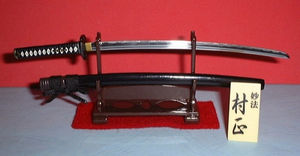
"Muramasa" is the name of a sword craftsman that originated in Kuwana, Ise-no-kuni during the Muromachi period. It is said that the first Muramasa became a pupil of the master craftsman, Masamune.
During the period of training under Masamune, Masamune worried about Muramasa who was too particular about sharpness. One time, they thrust their swords into the river. The blade is facing the upper stream. The Masamune's swords only divide the water stream and the fallen leaves that have flowed away to the lower stream to avoid the swords. On the other hand, Muramasa's swords drew the fallen leaves and cut them in two.
Upon seeing this, Masamune exhorted Muramasa, saying,' Just being able to cut cannot be said to be a truly great sword. If you are too particular about the taste of cutting, your mind will become evil and stick to your sword, and you will cut even things you don't have to cut.' However, Masamune left Masamune, saying,' Being able to cut is the essence of a sword.'
It is said that once you pull it out of the sheath, you can't help but see the blood.
It is said that Muramasa came to be called Yoto because he brought various disasters to the Tokugawa family that won the Battle of Sekigahara and gained power.
Kiyoyasu, the grandfather of Ieyasu TOKUGAWA, and Hirotada, his father, were both killed by a rebellion of vassals, and Muramasa was used as the weapon in both cases.
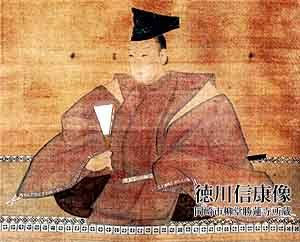
Nobuyasu TOKUGAWA
When Ieyasu's legitimate son Nobuyasu was executed on suspicion of treason, the sword used to assist him was also made by Muramasa, and at the time of the Battle of Sekigahara, when Ieyasu was looking at the spear that Nagataka ODA, a busho (Japanese military commander) of the Eastern Camp killed Toda Katsushige, a vassal dropped the spear and Ieyasu cut his finger. Ieyasu got angry and left, and it is said that Nagataka smashed and broke the spear. This spear was also Muramasa.
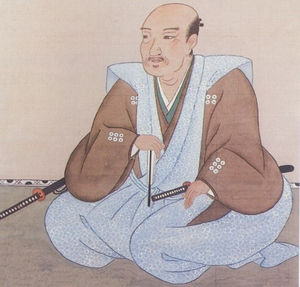
Sanada Yukimura
In the "Meisho Gengyoroku" (Record of Sayings and Deeds of Meisho), written from the end of the Edo period to the Meiji Restoration, it is written that "Sanada Yukimura longed to destroy Ieyasu and always had a Muramasa to avenge the Tokugawa family."
There is also a tradition that Yukimura suddenly attacked the headquarters of Ieyasu TOKUGAWA in Osaka Natsu no Jin (Summer Siege of Osaka) and threw Muramasa at Ieyasu.
Because of these incidents, the Tokugawa family began to dislike Muramasa, and the Tokugawa family's Muramasa was disposed of, and Muramasa, who remained in the public domain, was hidden and sometimes destroyed by grinding the inscription.
Ii Naomasa and Honda Tadakatsu's Wounds
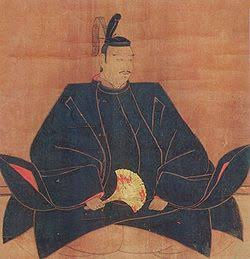
Ii Naomasa
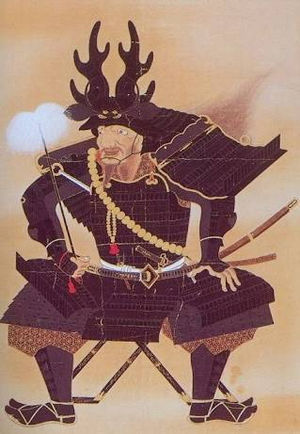
Honda Tadakatsu
Ii Naomasa and Honda Tadakatsu were famous busho (Japanese military commanders) under Ieyasu TOKUGAWA. Both of them were valiant people, but Ii Naomasa, who was a tozama (outsider), seemed to have a little bad memory of Ieyasu TOKUGAWA.

Contents
- Table of Contents
- Location of Tokugawa Hidden Treasure
- Identity of Hanzo Hattori
- Tokugawa Ieyasu encounters unknown people
- Muramasa THE UNCANNY SWORD AVENGING THE TOKUGAWA FAMILY
- Ii Naomasa and Honda Tadakatsu's Wounds
- Japan's first mentalist
- Predictions of Prince Shōtoku
- Horyuji no Nazo
- TAIRA no Masakado's curse
- Vengeful ghost of SUGAWARA no Michizane
- Minamoto Yoshitsune = Genghis Khan
- Uesugi Kenshin was a woman.
- Uesugi Kenshin and Bishamonten
- Did Nobunaga Oda have black retainers?
- Toyotomi Hideyoshi had six fingers?
- Hihiirokane
- Legend of Daidarabotchi
- 800 Bikuni
- Kifune
- Edo Period Ukiyoe and Sky Tree
- Yonaguni Island Undersea Remains
- Mt. Tsurugidake
- Solomon's Hidden Treasure Hidden in Kenzan
- Christ's Grave
- Sugisawa
- M Fund
- Truth of the death of Rentaro Taki
- Japanese psychic
- Iron Barrier in the Capital Tokyo
- Reasons why Kyoto was not bombed during the Second World War
- Three Bridges Spanning Shikoku
- Otorii at Haneda Airport
- Curse of Roppongi Hills
- It wasn't Showa.
- Real Antarctica