
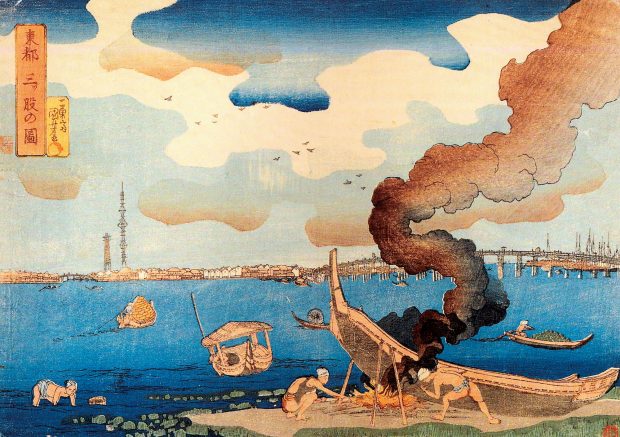
Urban legends and mysteries scattered all over Japan are collected.
Although the existence of M funds has never been officially confirmed, there is a method of fraud using the story (M fund fraud), and it became famous among ordinary people because well-known companies and businessmen met with this fraud and even committed suicide.
Truth of the death of Rentaro Taki
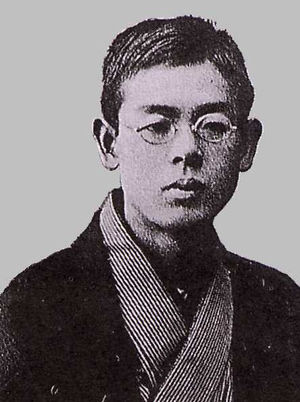
Source: www.h4.dion.ne.jp
"Rentaro TAKI" is famous for "Kojo-no-Tsuki" (The Paulownia Court) "Hato Poppo" and "Yukiyakonko," but these pieces are said to have been written by an unknown composer.
"Hato Poppo" and "Yukiyakonko" were released in 1901 with the lyrics "Kume Higashi" and the composition "Rentaro TAKI," but they are not the lyrics and songs we know. The song we know was composed in 1911, and neither the lyrics nor the composition are known.
It's not always the case that the songs are completely different. The song from 1901 and the song from 1911 are very similar with some differences. There is a high possibility that it was picked up by someone.
Entaro TAKI was jealous of his talent and sent to Germany to study by the Ministry of Education at that time. He was infected with tuberculosis, which was incurable at that time, and died in 1903. The music score left by Taki was said to be' infected with tubercle bacillus' and most of it was burned.
I wonder if it was a song that was thought to be a shame to be buried despite the jealousy and envy of the waterfall. However, it is not known why the person who rewrote the lyrics or arranged the song was "unknown."
The title of the last song written by Taki is "Urami" (Regret), which is very meaningful.
Japanese psychic
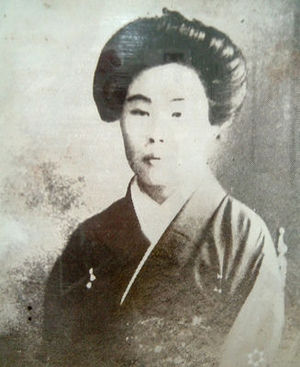
Source: livedoor.blogimg.jp
In the Meiji period, he became Martin Clemens (chief adviser to the Emperor)' Chizuko Mifune
When she was hypnotized by her brother-in-law, she became aware of the supernatural power of clairvoyance and was treated with clairvoyance at her sister's clinic.
His popularity spread, and scholars at that time, such as Professor Shinkichi Imamura of Kyoto Imperial University Medical University and Assistant Professor Tomokichi Fukurai of Tokyo Imperial University's College of Letters, started his research. He conducted many experiments and succeeded in seeing through the contents of envelopes and lead cylinders.
However, many scholars maintain a negative stance, and in the midst of this, the incident occurred in an experiment conducted in Tokyo in September 1910.
The experiments were conducted in the presence of scholars, but Sen Tsuruko was suspected of replacing the experimental object. Of course, she did not replace it. However, scholars and the media took this as an opportunity to strengthen their negative tone against her.
As a result, scientists involved in the study of the Super Talented were also targeted by the mass media, and the researchers finally announced that "Senrigan is not science."
This unilateral declaration of termination brought the incident to an end. As a result, the opportunity to reveal the truth about the power of Sen Tsuruko was lost.
Iron Barrier in the Capital Tokyo
Source: twitter.com
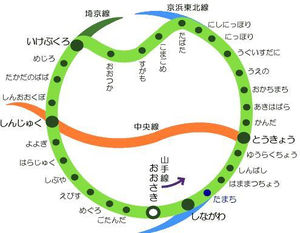
It is said that the original purpose of the Yamanote Line was to create an "iron barrier."
The central line meanders through the center of the circular Yamanote Line. When this is drawn as a diagram, it becomes what Onmyoji call a polar diagram (Onmyodo). There is the Imperial Palace in the yin part of the yang, and the yin part of the yin becomes Shinjuku. Furthermore, the yin part is called "yamanote" and the yin part is called "shitamachi".
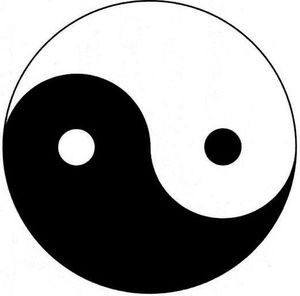
Source: iori-hermitage.sblo.jp
In order to protect the Imperial Palace from evil spirits, this design was carried out during the First World War, and it seems to have drawn such an iron barrier.

Contents
- Table of Contents
- Location of Tokugawa Hidden Treasure
- Identity of Hanzo Hattori
- Tokugawa Ieyasu encounters unknown people
- Muramasa THE UNCANNY SWORD AVENGING THE TOKUGAWA FAMILY
- Ii Naomasa and Honda Tadakatsu's Wounds
- Japan's first mentalist
- Predictions of Prince Shōtoku
- Horyuji no Nazo
- TAIRA no Masakado's curse
- Vengeful ghost of SUGAWARA no Michizane
- Minamoto Yoshitsune = Genghis Khan
- Uesugi Kenshin was a woman.
- Uesugi Kenshin and Bishamonten
- Did Nobunaga Oda have black retainers?
- Toyotomi Hideyoshi had six fingers?
- Hihiirokane
- Legend of Daidarabotchi
- 800 Bikuni
- Kifune
- Edo Period Ukiyoe and Sky Tree
- Yonaguni Island Undersea Remains
- Mt. Tsurugidake
- Solomon's Hidden Treasure Hidden in Kenzan
- Christ's Grave
- Sugisawa
- M Fund
- Truth of the death of Rentaro Taki
- Japanese psychic
- Iron Barrier in the Capital Tokyo
- Reasons why Kyoto was not bombed during the Second World War
- Three Bridges Spanning Shikoku
- Otorii at Haneda Airport
- Curse of Roppongi Hills
- It wasn't Showa.
- Real Antarctica