
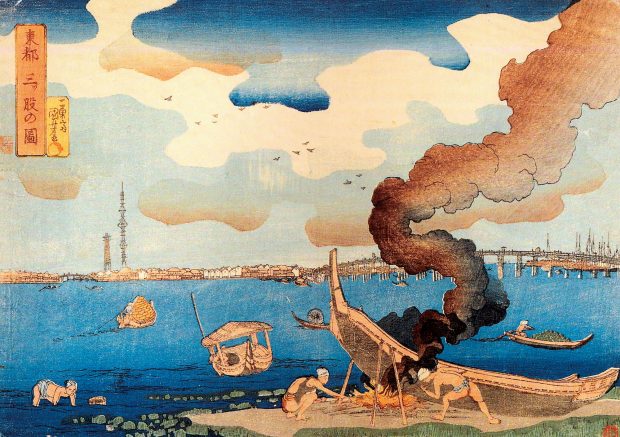
Urban legends and mysteries scattered all over Japan are collected.
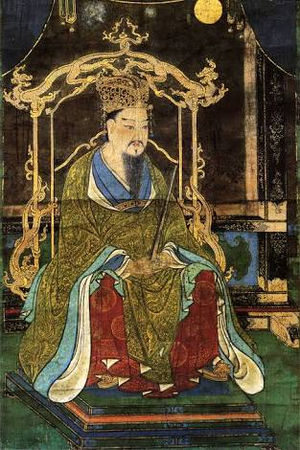
Emperor Kanmu
Heian-kyo, established by Emperor Kanmu in 794, was the capital of Japan for approximately 1,000 years, but the arrival of the Black Ships led to the Meiji Restoration and the capital was moved to Tokyo.
"" "Then, about 200 years later, for the coming of クハンダ, its eastern capital will be divided like a parent and seven children." ""
Kuhanda" is a Buddhist term for "demons that appear in the last days of life. There are many possible identities for Kuhanda, including meteorite strikes, nuclear attacks, and radioactive materials coming out of the Fukushima nuclear power plant. However, the most likely culprit is the eruption of Mt.
If Mount Fuji actually erupts, a large amount of volcanic ash will fall on Tokyo. Of course, since Tokyo will be destroyed, there is a possibility that the functions of the capital will be divided into eight parts. In any case, it is said that there will be a big impact on the capital, Tokyo.
In any case, it is said that something big impact on the capital city of Tokyo will happen.
That is 2500 years after the death of Buddha. There are various theories about the date of Buddha entering Nirvana, but according to calculations by Western scholars, it is 483, 484, 487, and 500 BC. The earliest times of destiny are 2000 and 2013, but this has already passed.
The next will be 2016, and the time of destruction will come in 2017 at the latest.
Horyuji no Nazo
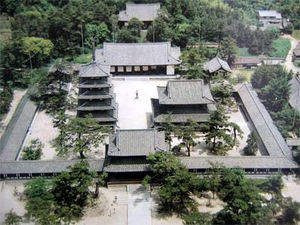
The head temple of the Shotoku Sect, also known as Ikarugadera, is located in Ikaruga-cho, Ikoma County, Nara Pref. It is a Buddhist temple that retains its Asuka-period appearance and is associated with Prince Shotoku. Founded in 607, it is divided into the Saiin Garan, which is centered around the Kon-do Hall and the five story Pagoda, and the Toin Garan, which is centered around the Yumedono Hall. The Saiin Garan is the world's oldest existing wooden buildings, and it is also famous for the haiku "Kaki taeba kane ga runari" (Eat a Persimmon, and the Bell Rings) by Shiki Masaoka.
It is generally believed that the temple was founded by Prince Shotoku, but there is a theory that Prince Shotoku was a mysterious person and did not exist.
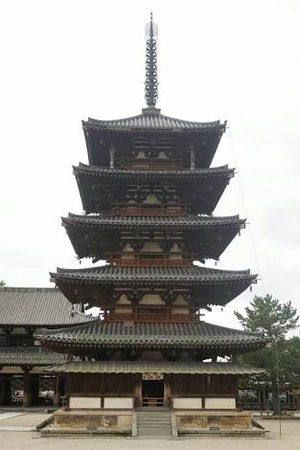
The five story pagoda at Horyu-ji is 32m high, with a thick pillar (shinbashira) at the top of the five story roof. It is the world's oldest wooden pagoda and a national treasure.
The wood used in Horyu-ji Temple is Japanese cypress, which is considered to be the highest quality building material in Japan, and it is said that a properly used Japanese cypress can last more than 1,000 years. However, as the architect at that time is thought to have never built such a tower, it is said to be a mystery as well as knowledge of Japanese cypress.
The five story pagoda has never fallen down due to earthquakes or typhoons, and the central pillar is not directly related to the structure of the pagoda, but only supports the uppermost Sorin. Since each floor is an independent space, even if an external force is applied, it is transmitted in a distributed manner, and it is assumed that the forces are balanced in each floor because it is a flexible structure, but it is not completely understood yet.
It is said to have been built by Shotoku Taishi in 607, and there is a tradition that it was still built by Shotoku Taishi. However, it is said in' Nihonshoki' (Chronicles of Japan) that it was completely burned down by lightning in 670, and there is no record in any ancient documents about when it was rebuilt.
Although there were arguments for reconstruction and non-reconstruction, reconstruction is the prevailing view. However, it is still a mystery why there is no mention of reconstruction, which is a major architectural project.
TAIRA no Masakado's curse
Source: ja.wikipedia.org
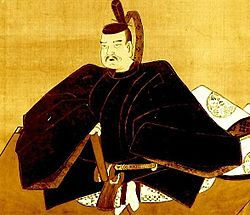
TAIRA no Masakado ruled the Kanto region at that time. However, at that time it was not the center of politics and economy as it is now, but an area called the frontier. TAIRA no Masakado was always dissatisfied with this, and at one point he called himself the' new emperor' (shinno) and conflicted with the capital.
Panicking, the Imperial Court dispatched a punitive force to the Kanto region, and TAIRA no Masakado was killed after a month-long battle.
After the battle, Masakado's head was carried to Kyoto and was displayed at Shichijo Kawara as a warning, but strangely enough, his head did not rot even after several days. On the contrary, it is said that night after night he gave a strange light and kept shouting,' Return your body! Tie your body to the body and fight again.'
On the third day, the exposed head lit up in the night sky, flew to the Kanto region in search of the severed body, and then split into several pieces and fell, the most famous of which is said to be Kubi-zuka in Otemachi.

Contents
- Table of Contents
- Location of Tokugawa Hidden Treasure
- Identity of Hanzo Hattori
- Tokugawa Ieyasu encounters unknown people
- Muramasa THE UNCANNY SWORD AVENGING THE TOKUGAWA FAMILY
- Ii Naomasa and Honda Tadakatsu's Wounds
- Japan's first mentalist
- Predictions of Prince Shōtoku
- Horyuji no Nazo
- TAIRA no Masakado's curse
- Vengeful ghost of SUGAWARA no Michizane
- Minamoto Yoshitsune = Genghis Khan
- Uesugi Kenshin was a woman.
- Uesugi Kenshin and Bishamonten
- Did Nobunaga Oda have black retainers?
- Toyotomi Hideyoshi had six fingers?
- Hihiirokane
- Legend of Daidarabotchi
- 800 Bikuni
- Kifune
- Edo Period Ukiyoe and Sky Tree
- Yonaguni Island Undersea Remains
- Mt. Tsurugidake
- Solomon's Hidden Treasure Hidden in Kenzan
- Christ's Grave
- Sugisawa
- M Fund
- Truth of the death of Rentaro Taki
- Japanese psychic
- Iron Barrier in the Capital Tokyo
- Reasons why Kyoto was not bombed during the Second World War
- Three Bridges Spanning Shikoku
- Otorii at Haneda Airport
- Curse of Roppongi Hills
- It wasn't Showa.
- Real Antarctica