
Urban legends and mysteries scattered all over Japan are collected.
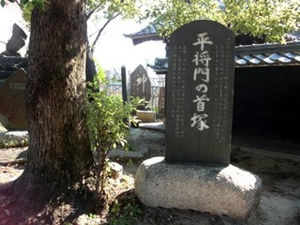
Source: blog.goo.ne.jp
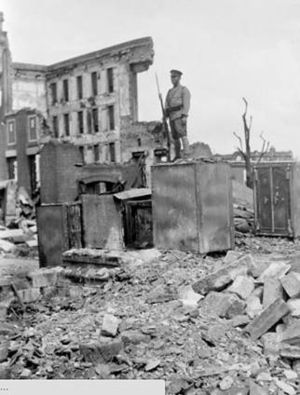
In 1923, the Great Kanto Earthquake burned down the Finance Ministry building in Otemachi.
Therefore, the whole area including Shomonzuka was leveled, and the temporary office building of the Ministry of Finance was built by breaking the mound. Since then, many government officials have been injured or become ill.
For some reason, many of them had injured their legs, and there was a rumor that they broke the Shomonzuka and built a government building on it to curse Masakado.
In only two years after that, 14 people including Seiji Hayami who was the Minister of Finance at that time, the Director of the 繕局 Engineering Department and the Doctor of Engineering Yabase died, and it is said that there were so many injured people that it was troublesome to count them up.
Fearing the curse of Masakado, the temporary office building was demolished. The death of the Minister of Finance and the Memorial Service took two years, during which a total of 14 people died. This means that more than one Finance Ministry official dies every two months for unknown reasons.
Source: tamutamu2011.kuronowish.com
On May 6, 1940, the 1,000th anniversary of Shomon's death, lightning struck the Ministry of Finance, setting major buildings ablaze.
Since the location of the lightning strike was also near the head mound, this was also regarded as "Shomon's haunting" and a requiem service was held. The cenotaph at the head mound was erected at this time.
In 1945, the year the war ended, the US military's General Headquarters (GHQ) set its sights on the area around Kubi-zuka, which had been burned by air raids, and tried to build a huge parking lot there.
As the construction proceeded, the accident was repeated. When the soil was dug up for maintenance, a gravestone appeared. As soon as the bulldozer was about to dig it out, the car body lost its balance and overturned. Two people died. The construction could not proceed to Kubi-zuka and had to be stopped.
He appeared at the MacArthur headquarters and repeated his petition, and received the understanding that it was the grave of the great chief of long ago, and the mound was left.
There are office buildings around the Kubi-zuka, but the desks are arranged so that they do not turn their backs to the Shomonzuka for fear of tatari.
Vengeful ghost of SUGAWARA no Michizane
Source: www2.ntj.jac.go.jp
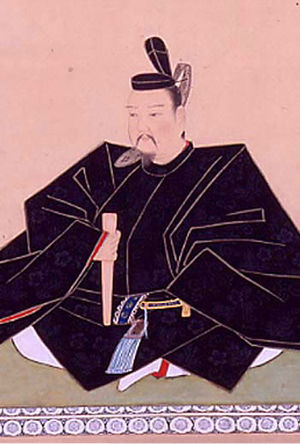
Michizane Sugawara was called a child prodigy for his talent in literature from an early age, and was popularly known as the god of learning, but his later years were not blessed.
SUGAWARA no Michizane, who was full of talent, rose to the position of Udaijin (Minister of the Right) even though he was in the prime of the Fujiwara clan. This caused a lot of antipathy from the Fujiwara clan and academic clique, and he was overthrown by the Fujiwara clan's plot.
SUGAWARA no Michizane was demoted to Dazai-fu (local government office in Kyushu region) after being demoted to Dazai gon no sochi (Provisional Governor-General of Dazai-fu), and died in Dazai-fu with regret.
After his death, there was a series of lightning strikes in Kyoto, mainly affecting the Fujiwara clan. Fearing the vengeful ghost of Michizane, the Imperial Court ruled over Michizane's anger by giving him the title of Sadaijin (Minister of the Left) and Daijo-daijin (Grand Minister), and by calling his descendants back to Kyoto.

Source: photo53.com
Forty years after the death of Michizane Sugawara, Kitano Tenjin Shrine was built in Kyoto. It is now called Kitano Tenmangu Shrine and is visited by many worshippers.
Minamoto Yoshitsune = Genghis Khan
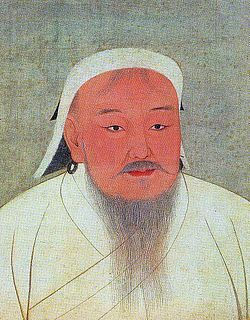
Source: ja.wikipedia.org
Genghis Khan (Genghis Khan)
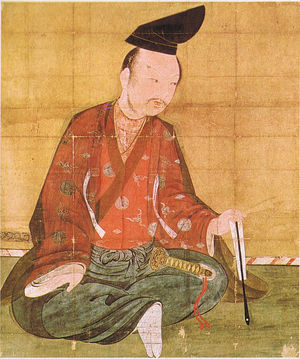
Source: ja.wikipedia.org
Yoshitsune Minamoto
Genghis Khan, the founder of the Mongolian Empire, is said to be the same person as MINAMOTO no Yoshitsune, who is said to have committed suicide in the Battle of Koromogawa. It is said that MINAMOTO no Yoshitsune, who is said to have died in Oshu-Fujiwara, actually escaped from Ezochi to the continent and became Genghis Khan (Genghis Khan).
It is not known exactly when Genghis Khan was born, but he is believed to have been around 1155 to 1167, the same age as MINAMOTO no Yoshitsune, who was born in 1159.
It is said that Yoshitsune died in Oshu in 1189, but Genghis Khan raised an army in Mongolia around 1188, so the dates roughly match.
When Yoshitsune is read in Chinese, it is pronounced yuan-yi-jing, which is quite similar to the childhood name of Genghis Khan,' Temjin.'
As for Genghis Khan, it is true that his birth year and the first half of his life are often unknown, and the supporting parts such as oral transmission of history are often unknown, so there is little material to definitively deny this theory.

Contents
- Table of Contents
- Location of Tokugawa Hidden Treasure
- Identity of Hanzo Hattori
- Tokugawa Ieyasu encounters unknown people
- Muramasa THE UNCANNY SWORD AVENGING THE TOKUGAWA FAMILY
- Ii Naomasa and Honda Tadakatsu's Wounds
- Japan's first mentalist
- Predictions of Prince Shōtoku
- Horyuji no Nazo
- TAIRA no Masakado's curse
- Vengeful ghost of SUGAWARA no Michizane
- Minamoto Yoshitsune = Genghis Khan
- Uesugi Kenshin was a woman.
- Uesugi Kenshin and Bishamonten
- Did Nobunaga Oda have black retainers?
- Toyotomi Hideyoshi had six fingers?
- Hihiirokane
- Legend of Daidarabotchi
- 800 Bikuni
- Kifune
- Edo Period Ukiyoe and Sky Tree
- Yonaguni Island Undersea Remains
- Mt. Tsurugidake
- Solomon's Hidden Treasure Hidden in Kenzan
- Christ's Grave
- Sugisawa
- M Fund
- Truth of the death of Rentaro Taki
- Japanese psychic
- Iron Barrier in the Capital Tokyo
- Reasons why Kyoto was not bombed during the Second World War
- Three Bridges Spanning Shikoku
- Otorii at Haneda Airport
- Curse of Roppongi Hills
- It wasn't Showa.
- Real Antarctica