
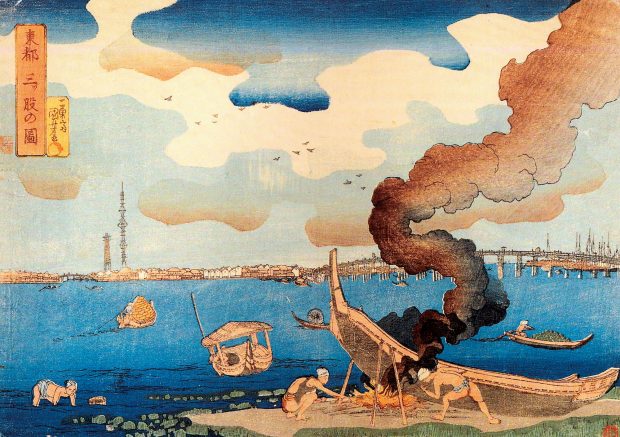
Urban legends and mysteries scattered all over Japan are collected.
For this reason, he went to the front line of every battle and performed many deeds of arms, but since there was a danger in the front line, he had numerous war wounds carved on his body.
Since Honda Tadakatsu was also a great commander, he played an active role in every battle. His weapon was a spear called Tonbokiri. Unlike Ii Naomasa, he rarely got injured because he used a weapon with a long reach.
In 1602, when Ii Naomasa died, the war wounds on his body had disappeared. Eight years later, in 1610, Honda Tadakatsu also passed away, but this time there were countless war wounds on the body of Honda Tadakatsu, who would not have been wounded in the war.
Actually, Ii Naomasa and Honda Tadakatsu were on bad terms with each other, and Ii Naomasa was never in a position to look back on Honda Tadakatsu while he was still alive.
Therefore, it is said that at the very end, at least the scar was left in Honda Tadakatsu.
However, Honda Tadakatsu, in his later years, lost his strength and shortened his famous Tonbokiri, which is said to have caused his injuries in his later years.
However, in either case, no one could explain the reason why Ii Naomasa's wounds disappeared when he passed away.
Japan's first mentalist
Mentalism performed by a mentalist. Mentalism is a method of reproducing supernatural phenomena using human illusions and suggestions. Originally, it was a performance performed by the founder of a religious organization in the name of the power of God to gather believers. In fact, this mentalism was involved in historical events.
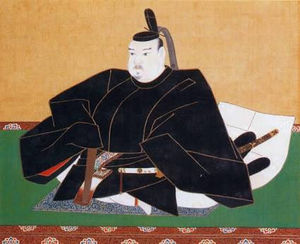
Tokugawa Iemitsu
The leader of the Amakusa-Shimabara Rebellion during the reign of Tokugawa Iemitsu was Amakusa Shiro, a charismatic figure of the time who was only 16 years old.
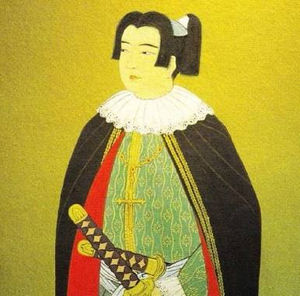
Amakusa Shiro
In fact, this Amakusa Shiro had a mastermind, which was Yoshitsugu Jinbee MASUDA, the biological father of Amakusa Shiro and a Christian.
Jinbee staged his own son, Amakusa Shiro, as an angel of prophecy. Amakusa Shiro was dressed in a gaudy costume, with white powder on his face and ohaguro on his teeth. He appeared with a cross in his hand in an eccentric style never seen by a Japanese at the time.
Jinbee has also created an episode of a miracle in which a Amakusa Shiro walks on the sea.
In this way, Jinbee made full use of mentalism to portray Amakusa Shiro as a miraculous magician. He drove a stake into the sea when the tide was low, and if a board was laid on it, he could produce a miracle as if he were walking on the sea when the tide was high or it was dark around him.
And the miracle of Amakusa Shiro was that rumors spread and his followers swelled to 38000. The charismatic Amakusa Shiro, who is still talked about today, was controlled by the mentality of his biological father, Jinbee.
Predictions of Prince Shōtoku
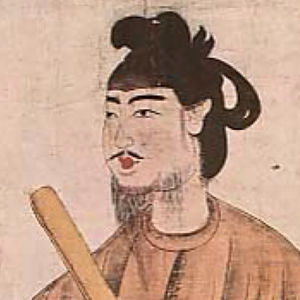
Source: twitter.com
Shotoku Taishi, who is famous for his "Twelve Cap Ranks" and "Seventeen Article Constitution," is said to have another face, that of a prophet who can see the future.
In the twenty second volume of "Nihonshoki" (Chronicles of Japan), it is written that the Crown Prince was "Kenchi Izen," which is synonymous with the future. In other words, an official Japanese history book proves that Shotoku Taishi had the ability to predict the future.
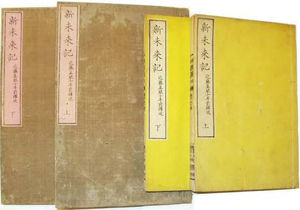
There is a document called' Miraiki' (Record of the Future) in the mythical prophecies left by Taishi, but it does not remain in a clear form as a document. There is a document called' Zenpo Honki' (Pre-existing Record) that is based on' Miraiki' (Record of the Future) and seems to have been written under the great influence of' Miraiki.' However, what has been called' Miraiki' (Record of the Future) by Shotoku Taishi and' Taishi no Yogen' (Prediction by Shotoku Taishi) only appears in legends of historical characters and ancient documents.
At the age of 25, Shotoku Taishi left a grave prediction that could be called the end of mankind: "Within 200 years of my death, a Holy Emperor will build a capital here. It will become a more magnificent capital than ever before. It will flourish even after 10 wars. It will flourish as a capital for a thousand years. However, when a thousand years have passed, the capital will be moved to the east because the Kokuryu (black ships) will come."

Contents
- Table of Contents
- Location of Tokugawa Hidden Treasure
- Identity of Hanzo Hattori
- Tokugawa Ieyasu encounters unknown people
- Muramasa THE UNCANNY SWORD AVENGING THE TOKUGAWA FAMILY
- Ii Naomasa and Honda Tadakatsu's Wounds
- Japan's first mentalist
- Predictions of Prince Shōtoku
- Horyuji no Nazo
- TAIRA no Masakado's curse
- Vengeful ghost of SUGAWARA no Michizane
- Minamoto Yoshitsune = Genghis Khan
- Uesugi Kenshin was a woman.
- Uesugi Kenshin and Bishamonten
- Did Nobunaga Oda have black retainers?
- Toyotomi Hideyoshi had six fingers?
- Hihiirokane
- Legend of Daidarabotchi
- 800 Bikuni
- Kifune
- Edo Period Ukiyoe and Sky Tree
- Yonaguni Island Undersea Remains
- Mt. Tsurugidake
- Solomon's Hidden Treasure Hidden in Kenzan
- Christ's Grave
- Sugisawa
- M Fund
- Truth of the death of Rentaro Taki
- Japanese psychic
- Iron Barrier in the Capital Tokyo
- Reasons why Kyoto was not bombed during the Second World War
- Three Bridges Spanning Shikoku
- Otorii at Haneda Airport
- Curse of Roppongi Hills
- It wasn't Showa.
- Real Antarctica