
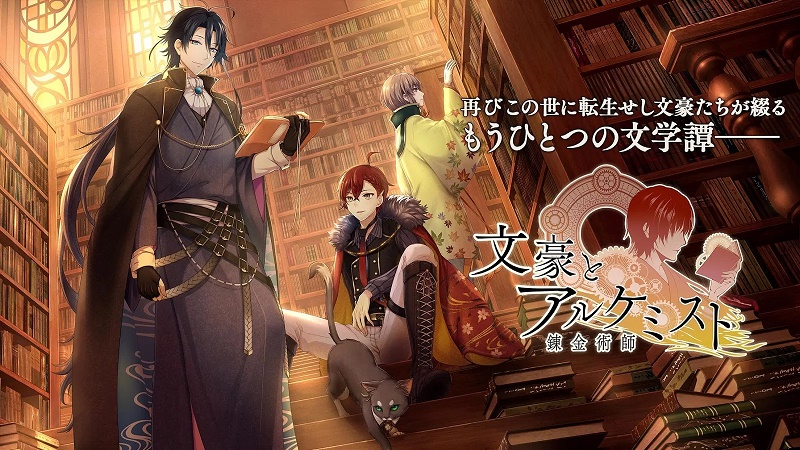
Bungo to Alchemist" (abbreviated as "Bungo and Alchemist") is a training simulation game based on the theme of "Bungo". Developed and operated by the gaming platform DMM Games, the browser version was released in November 2016, and the smartphone version was released the following year in June 2017. The story is set in Japan, which has a different history from reality, based on Taisho Romanticism and Steampunk. In order to protect literature from enemies known as "invaders," players reincarnate literary giants and fight alongside them against these invaders.
CV: Atsushi Abe
The character is modeled on the haiku poet Taneda Yamatoka, who was active from the Taisho to Showa periods. His representative works include a collection of haiku entitled "Kusakitou. He is said to have written more than 12,000 haiku while traveling on foot to various places. In addition to haiku, he also wrote miscellaneous notes and essays. His weapon of choice when writing undercover is a gun. In his normal costume, his attribute is earth. His mental state is somewhat unstable.
He is a cheerful young man with few worries. According to the official description, he is "cheerful at all times and does not worry deeply about things. He is also a free spirit who often comes up with original ideas. This is apparently based on the fact that his model, Taneda Yamatoka, was famous as a haiku poet who composed "free-rhyme haiku" without using the standard rhyme scheme and 5-7-5 tone used in waka poetry. Perhaps based on this character, his motto in "Bun'alu" is a proverb: "Tomorrow will be another day's wind.
In "Bun'alu", they spend time together at regular events, perhaps because their teacher, the haiku poet Ogiharai Sensui, was awakened to the art of haiku by the haiku poet Masaoka Shiki. He also seems to be on the same page with Masaoka Shiki's disciple, the essayist and haiku poet Kawahigashi Hekigoto, whom he meets for the first time since his reincarnation. Hekigoto Kawahigashi also traveled throughout Japan and wrote haiku, so the two traveling haiku poets have established a friendly relationship with each other. She and Ozaki Hosai, a haiku poet who belongs to the same Soun school, seem to be on good terms in their haiku writing even after their reincarnation. Ozaki Hosai, who prefers to stay indoors, often invites Taneda Yamatohka, who likes to go outside, to compose haiku indoors through letters.
Hosai Ozaki
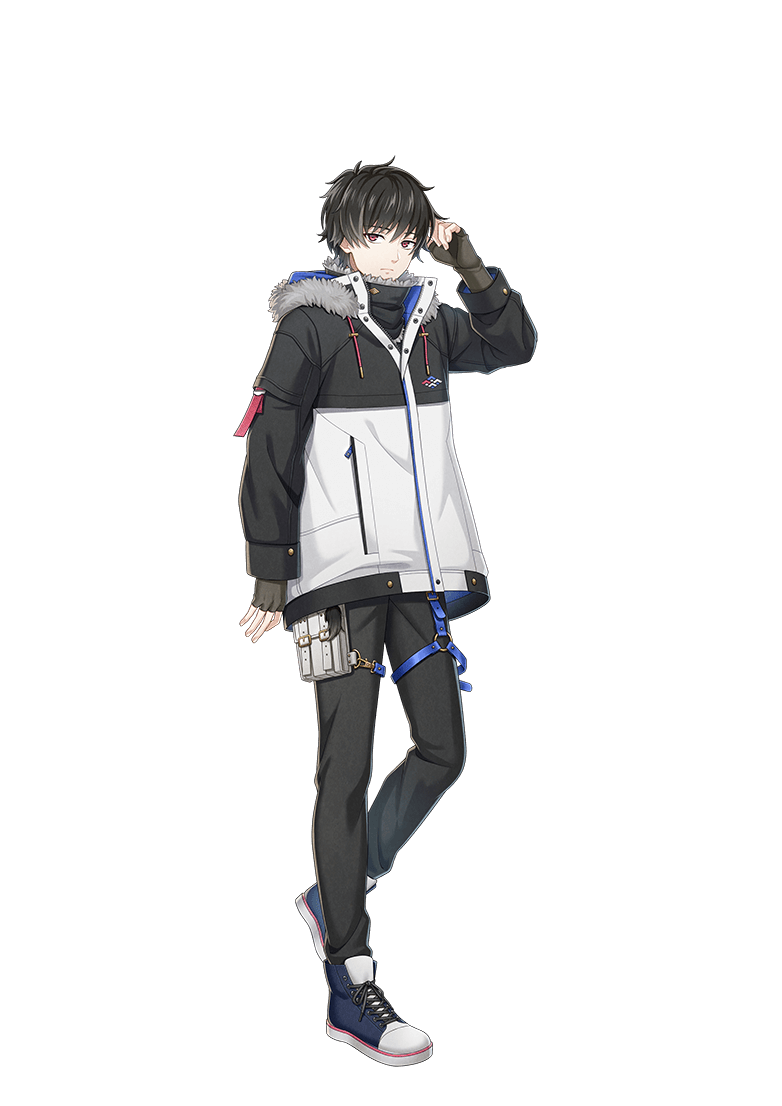
CV: Izuta Suzuki
Character based on the haiku poet Ozaki Houya, active during the Meiji and Taisho periods. His representative works include "Coughing but alone" and "Receiving with both hands without a container". Coughing but Alone" is also famous as a representative free verse haiku. The weapon of choice for the undercover is a gun. In her normal costume, her attribute is water. Her mental state is unstable.
He is a blunt young man who hates people. His misanthropy seems to be based on the fact that his model, Ozaki Houya, lived a solitary life, not fitting in with the world. However, he seems to have opened his heart to the haiku poet Taneda Yamatohka, who also belongs to the Soun school, and his attitude is a bit soft. He often sends her letters. Many of his haiku are self-deprecating about his solitary life. However, his haiku are well received by the literary giants around him, who say that his haiku are closely related to their daily lives and that his loneliness resonates comfortably with them. As mentioned above, he is a misanthrope and rarely appears in front of other great writers except for Taneda Yamatohka. He is generally confined to his room, and if he encounters someone when he goes outside, he immediately runs away back to his room.
Factionless writers
A literary figure who does not belong to any faction.
Nakahara Chuya
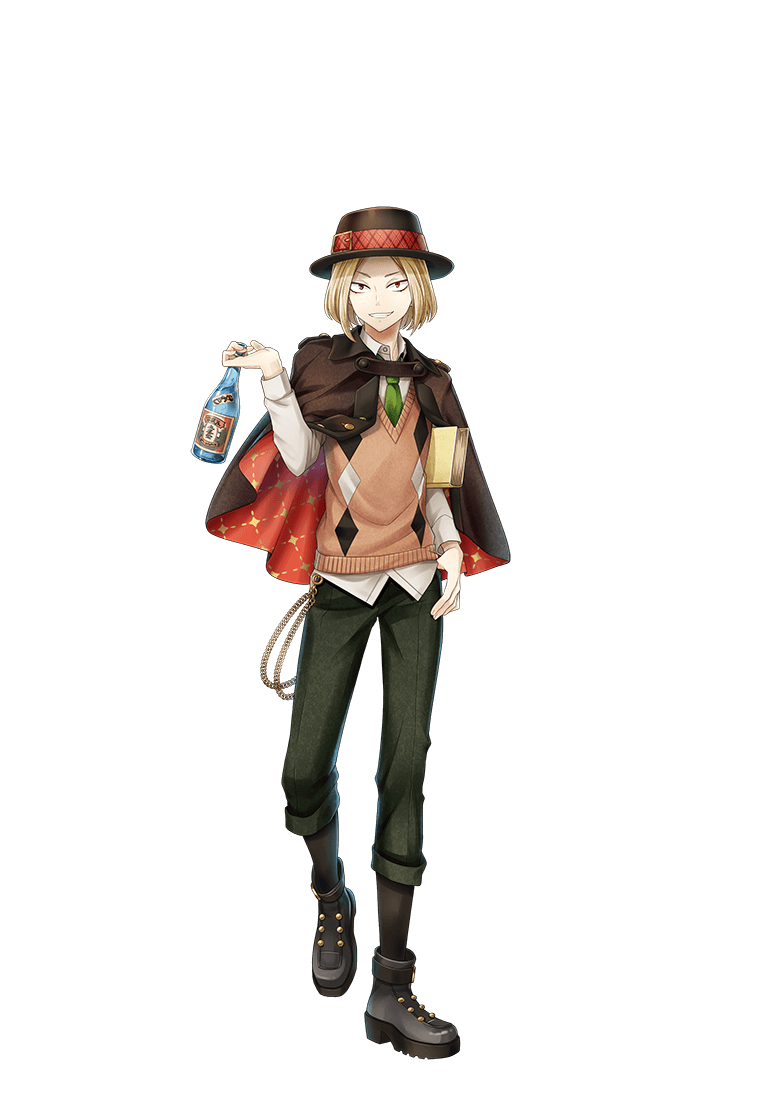
CV: Tetsuya Kakihara
The character is modeled on Nakaya Nakahara, a poet active in the Showa era. His representative works include "To the Sadness of the Stained Earth," "Song of the Goat," and "Song of Days of Our Lives. His weapon of choice when undercover is a gun. In her normal costume, her attribute is wind. Her mental state is somewhat unstable.
He is a drunkard and a young delinquent with a big attitude. He is always in a state of drunkenness and has a bad habit of getting involved with others, cursing them with expressions as if he were humming a poem. In fact, his model, Nakaya Nakahara, was the type of person who became a bad influence when he drank. Although he sometimes puts out his hands, he is not a strong fighter and loses easily. However, according to the official story, "He actually has a desire to get along with others, but he doesn't know how to get along with them. The only place where he can honestly express his feelings is through poetry, and perhaps for this reason, he sings his own poems when the occasion calls for it. It is assumed that one of the reasons for his humming is his extraordinary love for poetry.
He also seems to be as particular about his trademark hat as he is about his poetry. Even when he is damaged in battle, he is more concerned about the condition of his hat than his own injuries.
Although he often swears, he gets along well with other poets and poets. In particular, he often hangs out with the poet Kotaro Takamura, whom he has known since his days as a poet, and the poet Makisui Wakayama, with whom he drinks. In addition, he often hangs out with other writers who are not poets, but who are great writers of the Muramoto school. Among them, he often teases Dazai Osamu, perhaps because he likes Dazai Osamu's reaction, and is chased away by Dan Kazuo, a literary genius of the unreliable school who acts as Dazai Osamu's guardian. He is also very fond of Kenji Miyazawa, a writer of children's stories and a poet. She says it is because she fell in love with the world view of his works when he was a poet. In front of him, her usual bad attitude and behavior are hidden, and she calls him "Kenji-sensei" with an innocent look.
Kenji Miyazawa
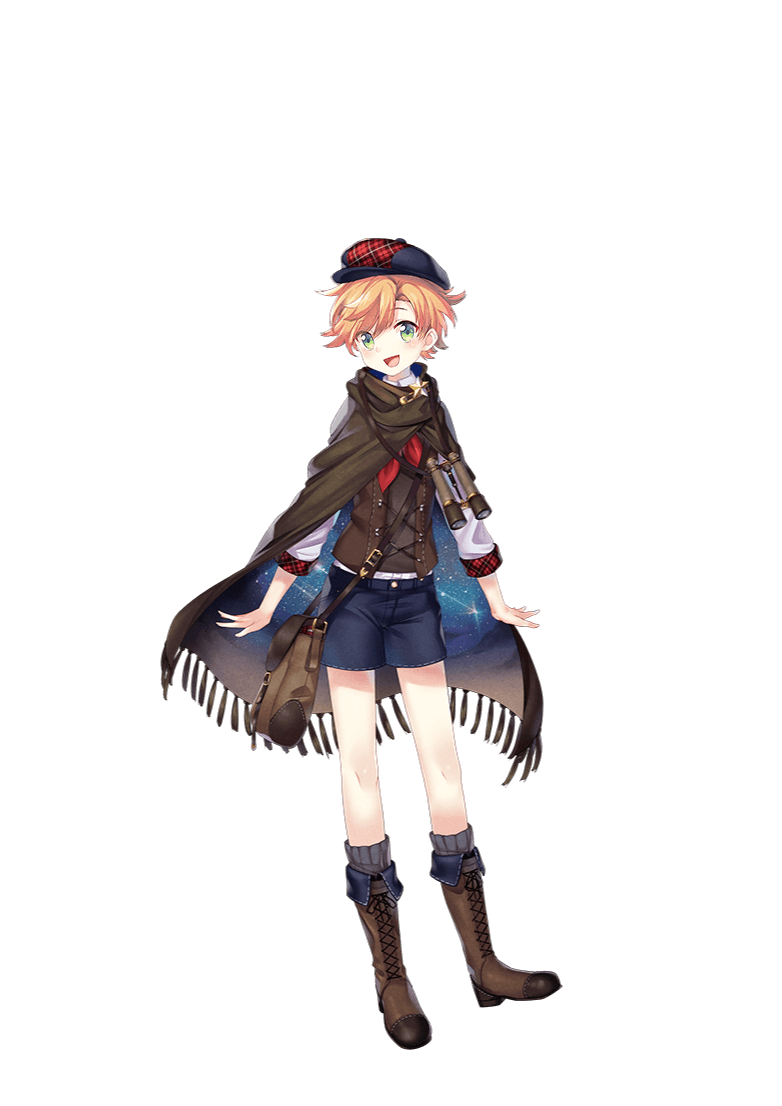
CV: Tsubasa Dainaga
The character is based on Kenji Miyazawa, a poet and writer of children's stories who was active from the Taisho to Showa periods. His representative works include "Night on the Galactic Railroad," "Kaze no Matasaburo," and "Ame Ni Mo Makezu. His weapon of choice when undercover is a gun. In his normal costume, his attribute is earth. Her mental state is somewhat stable.
He is a good-natured boy who only wishes happiness for others. He is not only naive and innocent, but also wise to the point of being able to compete with older people. He also has some aspects that do not match his appearance, such as his vegetarianism and his hobby of collecting Shunga (Japanese spring paintings). It is assumed that this is based on the fact that his model, Kenji Miyazawa, was a devout Buddhist who ate vegetables and collected Shunga (spring paintings). He has no intention of hiding the latter hobby, and proudly carries around a Shunga (spring picture) in the library. However, despite her free-spirited personality, she also has a strict side that, according to the official version, "rebels against educational and domineering adults. This is apparently based on the fact that her model, Kenji Miyazawa, was an educator at an agricultural school.
He carries around shunga (spring paintings), which is regarded as complicated by some serious writers, but he does not seem to be disliked by them. She also gets along well with other writers of children's literature, like herself. She does not show any signs of being put off by them, even though she did not know them when they were active as literary giants, and they play together. He seems to be actively interacting with writers from overseas and is often depicted interacting with them in recollections of events and the like. She seems to have continued her friendship with the great writer Kotaro Takamura and the poet Shimpei Kusano, whom she has known for a long time, even after her reincarnation.
Toson Shimazaki
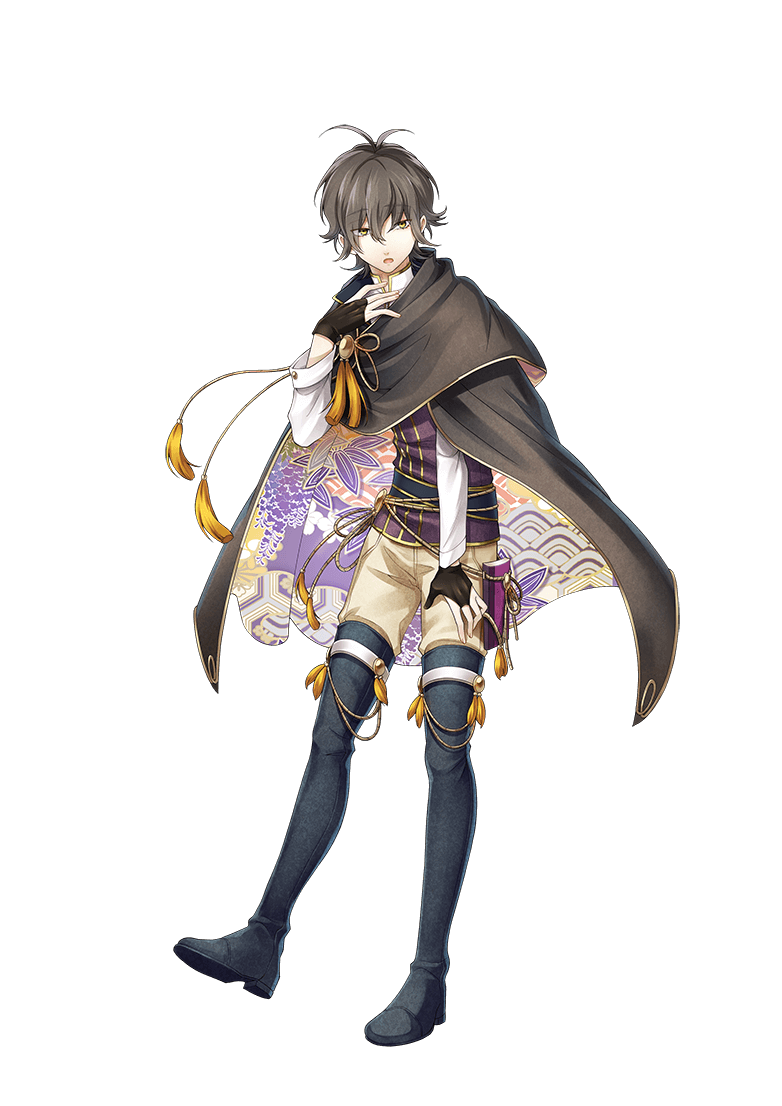
CV: Shinnosuke Tachibana
The character is modeled on Shimazaki Toson, a poet and novelist active from the Meiji era to the Showa era. As a novelist, he worked on pure literature leaning toward naturalism, and his representative works include "Before Dawn," "Destruction," and "Spring. His weapon of choice when writing undercover is the bow. In his normal costume, his attribute is earth. Her mental state is normal.
He is a young man with eyes that remind one of a dead fish. As his character indicates, he is somewhat languid and has a gloomy atmosphere. In fact, his personality is also dark. According to the official story, he understands his own gloominess. On the other hand, however, he has a great enthusiasm for his hobby of interviewing people, and even in the face of his enemies, the invaders, he tries to interview them in order to learn more about them.
He also tends to be devoted to those who have been good to him. In fact, there is an episode in which, when he was active as a writer, he formed a group to support his friend Akio Tokuda, who was in the doldrums as a writer.
Other than Tokuda Akiye, he is on good terms with the great writers Tayama Hanabukuro and Kitamura Torutani, and they are close friends. He also seems to get along well with the great writer Kunikida Doppo as a comrade who can inspire each other about "reporting," although their personalities are the complete opposite of each other. Although they do not have a great relationship, he is respected as a poet by the great writer Kitahara Hakushu, who is also a poet. He is generally at peace with the other great writers, but there are a few who do not like his persistent attempts to interview them. In particular, he has a particularly bad relationship with Ryunosuke Akutagawa, who is regarded as the worst writer in "Bunnaru.
Tayama Hanabukuro
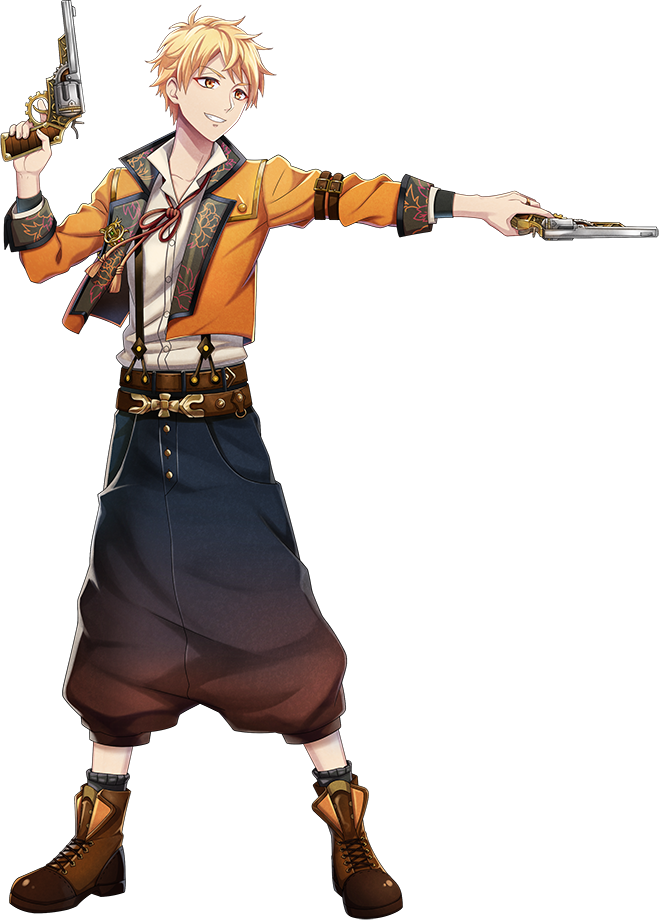
CV: Hiroki Kaji
The character is modeled on Tayama Hanabukuro, a great writer active from the Meiji to Taisho periods. He was a writer of pure literature that leaned toward naturalism, and is famous as a literary giant who cannot be overlooked when discussing the principles of the book. His representative works include "Kabadan," "Shigeemon's Last Days," and "The Country Teacher. His weapon of choice when writing undercover is the bow. In his normal costume, his attribute is fire. Her mental state is somewhat stable.
He is a cheerful young man who loves beautiful girls and hot springs. He is a type of person who has clear likes and dislikes and does not flatter others, which makes it easy for him to make enemies. In fact, he is always quarreling with Iwano Houmei, a great writer with whom he has a difference of opinion. The reason for her quarrels with him can be attributed to Hanabukuro Tayama's high pride and the strong pride she takes in her own works. On the other hand, Hanabukuro is often seen as a trustworthy person because of his attitude of sticking to his own opinions without being swayed by others. One of the reasons for this seems to be his high communication skills.
He still keeps in touch with the great writers who have been his friends since he was active as a writer. He is especially close with the novelist Kunikida Doppo and the poet Shimazaki Toson, who is also a novelist. In recollections of events, they are often seen doing things together. In addition, the pure literature writer Masamune Hakuucho has been officially introduced as a "literary hero who has a close relationship with Tayama Hanabukuro. However, rather than a friendly relationship, it seems that Masamune Hucho was implemented as "a person who accurately criticized Tayama Hanabukuro as a great writer in the past. Although they do not interact much in the work, he is known among players as a person who accurately sees through Hanabukuro Tayama's mind.
Although he is a factionless writer, he is actually a great writer who studied under the great writer Momiji Ozaki as well as the great writers of the "Ozaki clan.
Kazuo Hirotsu
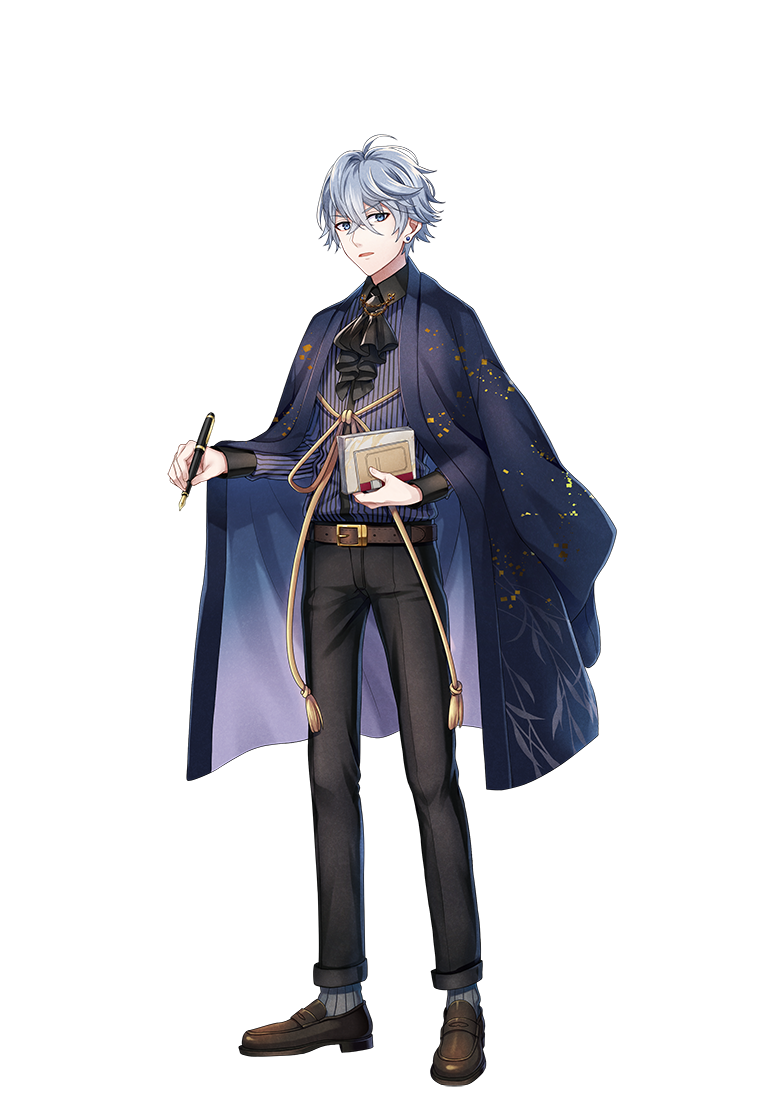
CV: Jun Fukuyama
The character is modeled on Kazuro Hirotsu, a literary giant active from the Taisho to Showa periods. At the time of his debut as a writer, he was active as a literary critic, but later began writing novels as a pure literature writer. His representative works include "Nervous Disease Era," "Wind and Rain Must Be Strong," and "On the Spirit of Prose. His weapon of choice when writing undercover is a blade. In his normal costume, his attribute is wind. His mental state is somewhat stable.
He is a young man with bad eyesight but a very kind heart. According to the official description, he has a "strong sense of justice" and cannot abandon anyone in need, no matter who they are. On the other hand, he is often modest about his reputation, perhaps because his father, Ryurô Hirotsu, was a great writer like himself. In addition, since his model, Hirotsu Kazuro, often forgets or loses things, in "Bun'alu" he also has the aspect of a "careless person who often loses things".
He is often associated with the great writers of the Ozaki clan, especially with Momiji Ozaki and Kyoka Izumi. It is assumed that this is based on the fact that Kazuro Hirotsu, the model for this character, lived in the neighborhood of the homes of both Momiji Ozaki and Kyoka Izumi. Although Kazuro Hirotsu seems to be loved by Kyoka Izumi to the extent that he is called "the youngest child of Ozaki's students," there is no evidence that Kazuro Hirotsu studied under Ozaki in history. However, there is no historical fact that Hirotsu Kazuro studied under Ozaki. As for Tokuda Akio, another Ozaki's literary great, I was in a position to criticize him as a literary critic in the past. In that review, he described his style as "plain" and "ordinary. In "Bunnaru," if you set Kazuro Hirotsu as his assistant, you can read a letter in which Akio Tokuda complains about these evaluations.
Rampo Edogawa
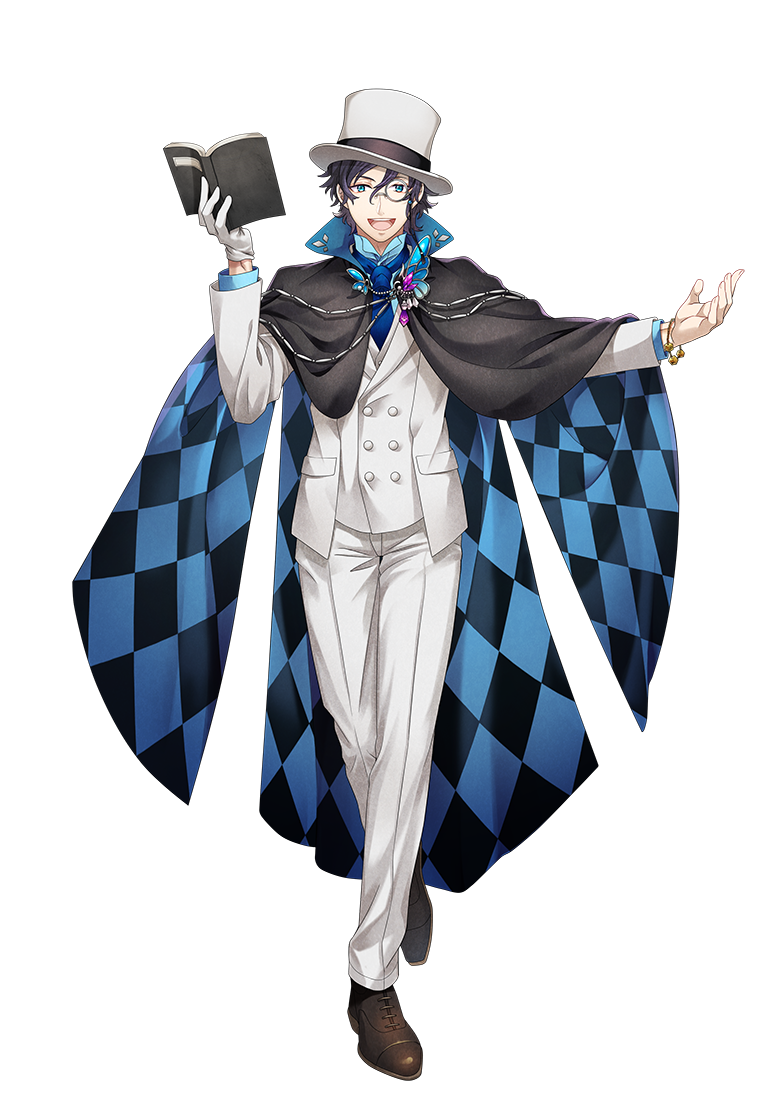
CV: Souma Saito
The character is modeled on Edogawa Rampo, a literary giant active from the Meiji era to the Showa era. He is a popular novelist famous as a pioneer of detective novels in Japan. His representative works include "Kaijin Nijumenso (The Phantom with Twenty Faces)," "Shonen Tanteidan (Detective Boys)," and "D-zaka no Murder Case. His undercover weapon is a whip. In his normal costume, his attribute is water. His mental state is stable.
He is an eccentric young man with an aloof attitude. According to the official description, he has a "minority mindset. As an entertainer, he is always looking for what people want, and this is presumably the reason for his theatrical and exaggerated behavior and clothing. This personality seems to be based on the postwar personality of the real Edogawa Rampo. Before the war, Edogawa Rampo was a "bashful person" who was far from imposing in his behavior. After the war, however, he became more cheerful and sociable.
He likes to think up new tricks, and by extension, he likes to play pranks. In "Bun'alu," he often plays pranks with Nankichi Niimi, a writer of children's stories. He also gets along well with fellow mystery novelist Kyusaku Yumeno. Perhaps because they are not reserved with each other, they often get into a lively discussion about some wild trick. He also gets along well with Sakutaro Hagiwara, a poet who likes detective novels and magic tricks, as fellow lovers of the same things.
He has had more than a few encounters with great writers from overseas, and when he encountered Conan Doyle, a famous mystery writer from overseas, he was so excited that he did not care what people thought of him. Poe, another great overseas writer, was an admired writer of Edogawa Rampo and the person from whom he derived his pen name. He took his formal name, "Edgar Allan Poe," and called himself "Edogawa Rampo. He is also envious of the great writer Tanizaki Junichiro, who was regarded as the "Japanese Poe.

Contents
- Overview of "Bungo to Alchemist
- Synopsis and story of "The Bungo and the Alchemist"
- Old Prologue
- Literary Oddities Chapter 1
- Episode 1 Welcome to the Insulated Book
- Episode 2 Fight Against the Invaders
- Episode 3 Purge the Insulators
- Episode 4 The Curator's Command
- Episode 5 Find the Infiltrator
- Episode 6 The Ecology of the Invaders
- Episode 7 Causes of Erosion Phenomena
- Episode 8 The World of Literature / Victory
- Episode 9 Alchemy and Alchemists
- Episode 10 The Power of the Alchemist
- Episode 11 The Concept of the Infringer
- Episode 12 Chasing the Invaders/Rescue
- Literary Oddities, Chapter 2
- Episode 13 The World of Literature
- Episode 14 Naturalism
- Episode 15 Aestheticism
- Episode 16 Art Made of Words / Out of Order
- Episode 17 Private Novels
- Episode 18 Differences of Opinion
- Episode 19 The Beginning of Literature
- Episode 20 Literature on How to Live / Disturbing Footsteps
- new prologue
- Game System of "Bungo to Alchemist
- Library/Librarian's Office
- latent writing
- letter of invitation
- Sealed book
- Yuso Sho (book with a cover letter)
- The Book of the Soul (Yu-kon-sho)
- strolling
- credibility
- literary master
- formation
- blooming (esp. of cherry blossoms)
- spirit
- Calling
- picture book
- character sketch
- book of reminiscences
- research report
- interior
- Characters in "Bungo to Alchemist
- New Thought School (Shinshichouha)
- Ryunosuke Akutagawa
- Junichiro Tanizaki
- Yuzuru Matsuoka
- Yuzo Yamamoto
- Masao Kume
- Kan Kikuchi
- Burai-ha
- Osamu Dazai
- Ango Sakaguchi
- Sakunosuke Oda
- Kazuo Dan
- Kitahara Ichimon
- Kitahara Hakushu
- Sakutaro Hagiwara
- Saisei Murou
- Ichimon Ozaki
- Momiji Ozaki
- Kyoka Izumi
- Tokuda, Shusei
- Yoyuha (a group that can afford to lose money)
- Natsume Soseki
- Mori Ogai
- Shiki Masaoka
- Mita School (Mita-ha)
- Kafu Nagai
- Haruo Sato
- Rofu Miki
- Shirakaba-ha
- Naoya Shiga
- Mushanokouji Saneatsu
- Takeo Arishima
- Satomi Tonon
- proletarian
- Takiji Kobayashi
- Sunao Tokunaga
- Shigeharu Nakano
- New Sensory School
- Yasunari Kawabata
- Toshikazu Yokomitsu
- Emerging Artists (Shin Kougeijutsu-ha)
- Kajii Motojiro
- Ibuse Masuji
- Tatsuo Hori
- Myojo (bright star)
- Kotaro Takamura
- Ishikawa Takuboku
- Isamu Yoshii
- Araragi Faction (of the LDP)
- Sachio Ito
- Mokichi Saito
- Natsume Kadokoro
- Miekichi Suzuki
- Uchida Hyakken
- Masaoka Ichimon
- Kyoshi Takahama
- Hekigoto Kawahigashi
- Soun
- Taneda Santoka
- Hosai Ozaki
- Factionless writers
- Nakahara Chuya
- Kenji Miyazawa
- Toson Shimazaki
- Tayama Hanabukuro
- Kazuo Hirotsu
- Rampo Edogawa
- TSUBOUCHI Shoyo
- Futabatei Shimei
- Atsushi Nakajima
- Koizumi Yakumo
- Wakayama Makisui
- Kunikida Doppo
- Rohan Koda
- Eiji Yoshikawa
- Iwano Houmei
- Masamune Swan
- Roka Tokutomi
- Sanjuugo Naoki
- Hisasaku Yumeno
- Nakazato Kaizan
- Tatsuji Miyoshi
- Nankichi Niimi
- Mimei Ogawa
- Bi Myo Yamada
- Shinpei Kusano
- Nobuo ORIGUCHI, Shinobu
- Kunio Yanagita
- Seijiro Shimada
- Kitamura Torutani
- Russia
- Lev Tolstoy.
- Fyodor Dostoevsky.
- Germany
- Johann Wolfgang von Goethe
- France
- Charles Baudelaire
- Artur Rambo.
- America
- Ernest Hemingway.
- Francisco Scott Fitzgerald
- Edgar Allan Poe.
- Howard Phillips Lovecraft
- United Kingdom
- Conan Doyle.
- Lewis Carroll.
- Imperial Library staff
- director
- cat
- (in hanafuda) the collection of the three red poetry ribbon cards
- blue
- Faust
- enemy character
- corruptor
- Mephistopheles (book of the Bible)
- Items from "Bungo to Alchemist
- Costume
- statue
- gaily coloured statue
- Summation stone
- Western ink
- letter
- Flowering Materials
- Fumitama
- Omodama
- The soul of a word (kataridama)
- Tamashii no Haguruma (Soul Gears)
- Fuminohana
- Omoi-no-hana
- Katanohana
- Yuso Sho (book with a cover letter)
- The Book of the Soul (Yu-kon-sho)
- Kakusei no Yubi (Ring of Awakening)
- Speed regulator
- gold coin
- Interior permits
- Reishi (spiritual medicine)
- cat's paw
- Terms of "Bungo to Alchemist
- Alchemist / Special Librarian
- National Library of Japan
- Imperial Library
- literary master
- man of letters
- assistant
- government
- association
- arms
- attribute
- literary level
- Costume Level
- erosion
- spirit
- The Art of the Brush Slayer
- advent
- The Essence of the Double Brush (Souhitsu Shinsei)
- early great writers
- great writer
- Yaiba Bungo
- Yumi Bungo
- Guns, Literature, and the Arts
- whip (whip) writer
- Famous quotes, lines/scenes, and scenes from "Bungo to Alchemist
- Ryunosuke Akutagawa: "Don't forget that life is a fight to the death."
- Osamu Dazai: "Oh, Akutagawa-sensei said he wanted to read my work! No way, this is called ...... pulse!"
- Masuji Ibushi: "The main character of a novel should be half-hearted. It's more realistic and interesting that way.
- Backstories, trivia, and small stories/episodes and anecdotes from "Bungo to Alchemist".
- The manuscript depicted in the background of the work contains a passage from a real novel.
- Recollection of a once defunct cafeteria
- Wife of musician Hideki Sakamoto is a fan of DMM Games' works
- Theme and insert songs for "Bungo to Alchemist
- Theme song: "Bungo to Alchemist" by Hideki Sakamoto