
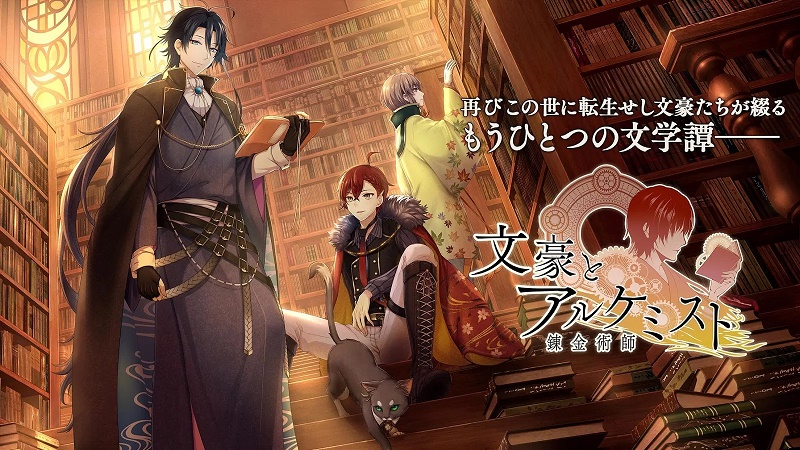
Bungo to Alchemist" (abbreviated as "Bungo and Alchemist") is a training simulation game based on the theme of "Bungo". Developed and operated by the gaming platform DMM Games, the browser version was released in November 2016, and the smartphone version was released the following year in June 2017. The story is set in Japan, which has a different history from reality, based on Taisho Romanticism and Steampunk. In order to protect literature from enemies known as "invaders," players reincarnate literary giants and fight alongside them against these invaders.
Satomi Tonon
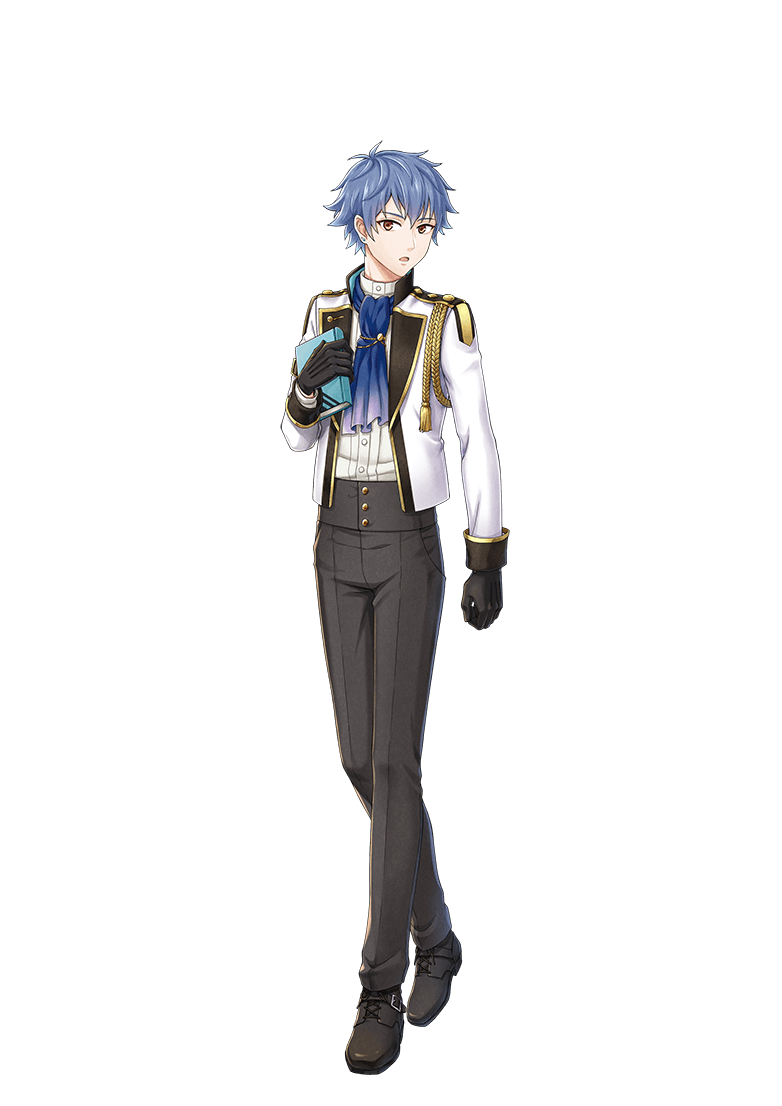
CV: Akira Ishida
The character is modeled on Satomi Bong, a literary giant active from the Meiji era to the Showa era. A writer of pure literature, his representative works include "Tajo Butsushin," "Zenshin Kakushin," and "Gokuraku Tonbo. He was highly regarded as a master of classical rakugo (comic storytelling) and was called "Shosetsu no Kosan" (the Little Man of Novels). Another great writer of the Shirakaba school, Takeo Arishima, is his elder brother. His weapon of choice when undercover writing is a blade. In his normal costume, his attribute is earth. Her mental state is stable.
Contrary to his introverted older brother, he is a young man with a friendly and approachable personality. He has many acquaintances and friends from his days as a literary master, and even after his reincarnation, he seems to have established friendly relationships not only with the Shirakaba faction but also with literary masters from other factions. He is especially close with Isamu Yoshii, a poet and screenwriter. Even before Satomi Isamu was implemented, Isamu Yoshii is depicted in "Bun'ar" as eagerly awaiting his arrival.
He has great respect for his teacher, the great writer Izumi Kyoka, and for the great writer Shiga Naoya, who is also a great writer of the Shirakaba school and a friend of his brother's. He also has deep feelings for his brother as a family member. She also has deep feelings for her brother as a family member, and seems to be very concerned about him after his reincarnation, perhaps because of his suicide before his reincarnation.
She is interested in anything with the word "art" in its name, even if it is not literature. Satomi Saton of "Bun'alu" also excels at playing the mandolin, as his model, the great writer Satomi Saton, was able to play the instrument.
proletarian
A general term for literature that became popular around the early Taisho period. It is characterized by a style that depicts the harsh realities faced by workers. The literature was written by the "aborigines" (people of low social status and without property) who were active in socialist thought, social movements, and labor activism. There were also writers from among the intelligentsia (the highly knowledgeable class) who attempted to describe the condition of the workers.
Takiji Kobayashi
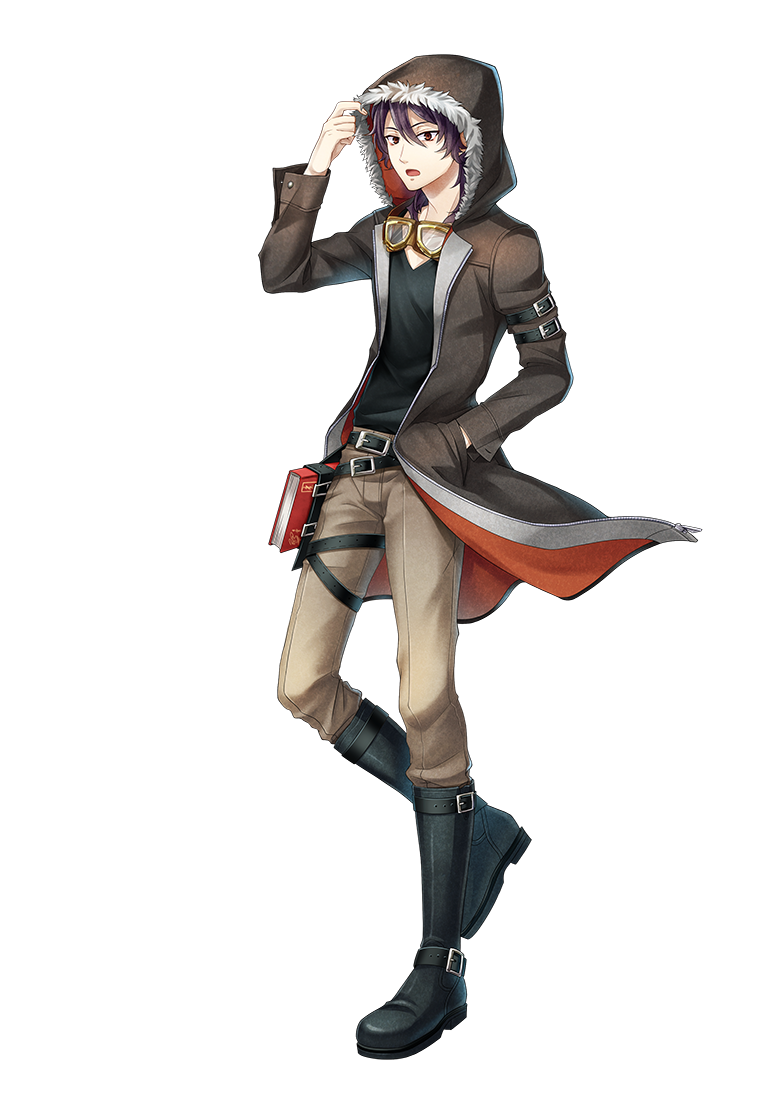
CV: Katsuyuki Konishi
The character is modeled on Kobayashi Takiji, a great writer active from the Meiji to Showa periods. A writer of pure literature, his representative works include "The Crab Ship," "Party Sei-katsu-sha," and "The Absentee Landowner. He is famous as a representative proletarian writer. His weapon of choice when undercover is a blade. In his normal costume, his attribute is wind. His mental state is unstable.
He is a young man who dislikes authority and has many twisted words and actions. However, he has a cheerful temperament by nature, which can be felt in every word he says in "Bun'al". In fact, he is depicted in the work as acting kindly toward those whom he has forgiven. The proletarian writers Tokunaga Sunao and Nakano Shigeharu, who also belong to the proletarian group, are representative of this attitude. He is also more gentle toward Naoya Shiga, his mentor, than he is toward other great writers, out of respect for him. After his reincarnation, he seems to be on good terms with the members of the Shirakabaha school, which is the same as his teacher. In addition, he is also friendly with Takuboku Ishikawa, a poet, and he is known to have a sense of empathy with him. Before his reincarnation, Takiji Kobayashi and Takuboku Ishikawa did not know each other, but Takiji Kobayashi liked and read Takuboku Ishikawa's poems.
Kobayashi Takuboku's bright temperament and twisted personality were largely due to the life of his model, the great writer Kobayashi Takuji himself. As a proletarian literary figure, he continued to produce works depicting the dark side of Japanese society, and as a result, he became a traitor and was hunted down. It is said that he was arrested and tortured to death in his final days. The reason for his dislike of those in power is largely a reflection of Kobayashi's life. Although he sometimes shows a complicated face to special librarians working for the government, which is a mass of power, he agrees with the idea of protecting literature, and he is cooperative with the undercover writing itself.
Officially, he is a "glutton. He is aware of this fact and declares in his works that he "eats a lot. According to Sakunosuke Oda, a great writer, he eats so much that he feels "the universe is connected to his stomach.
Sunao Tokunaga
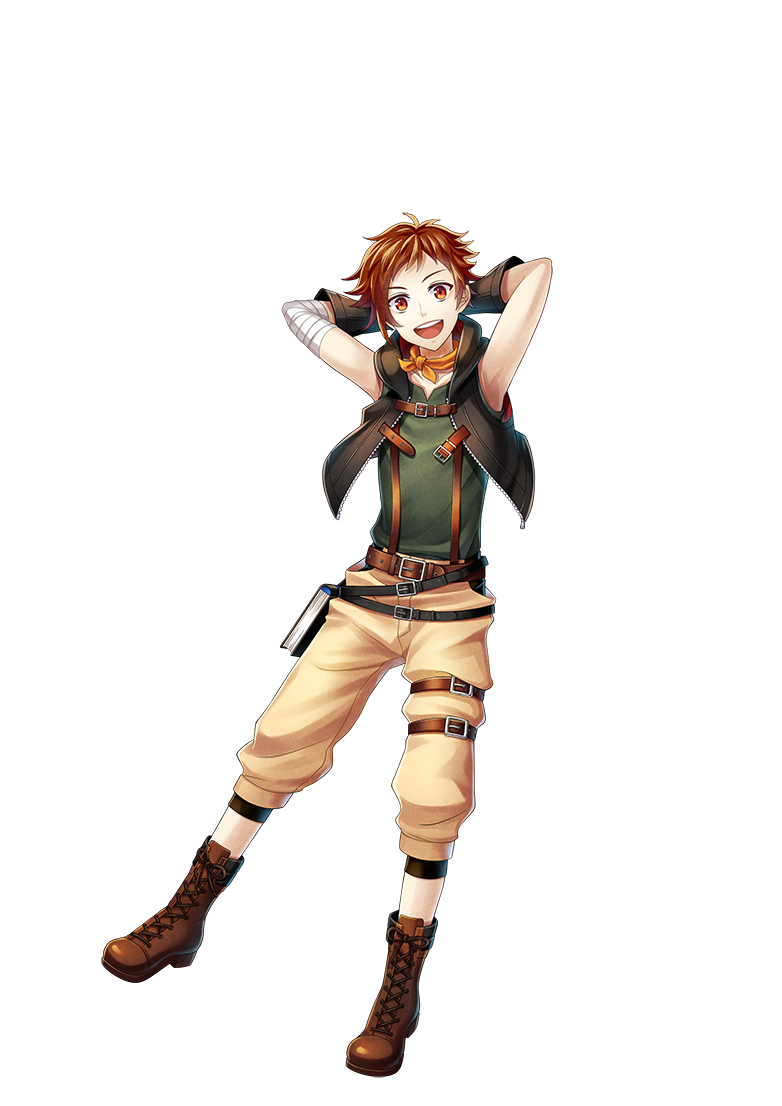
CV: Daiki Yamashita
The character is modeled after Sunao Tokunaga, a great writer active from the Meiji to Showa periods. A writer of pure literature, his representative works include "Taiyo no Nai Machi", "Tsuma yo Nemure", and "Hataraku Ichika". His weapon of choice in his undercover costume is a blade. In his normal costume, his attribute is fire. Her mental state is stable.
According to the official description, he is an "indefatigable and energetic" boy. Since he is from Kumamoto Prefecture, he speaks in Kumamoto dialect. However, he is a hard worker, which is hard to imagine from his cheerful personality, and before his reincarnation, he studied on his own while working from an early age. Perhaps because of this life, he never gets depressed no matter what happens. He is also very patient. However, it seems to be true that he is happy when his efforts themselves are recognized, and when he is praised, he rejoices with an honesty that is commensurate with his appearance. His honesty is well expressed when he is praised by Kawabata Yasunari, a great writer who recognized his work when he was active in the literary world.
His fellow writers of the proletarian school are his allies and friends who should support him. He continues to encourage the great writers of the proletarian faction, whose mental states are sometimes unstable, with his indefatigable and unyielding spirit. He also seems to be actively involved with the great writers of other factions.
Although he is a member of the proletarian faction, he does not show any dislike toward the special librarians, who are the government employees directly under the authority of the proletarian faction. In fact, he actively helps the librarians with their work and cleaning of the library.
Shigeharu Nakano
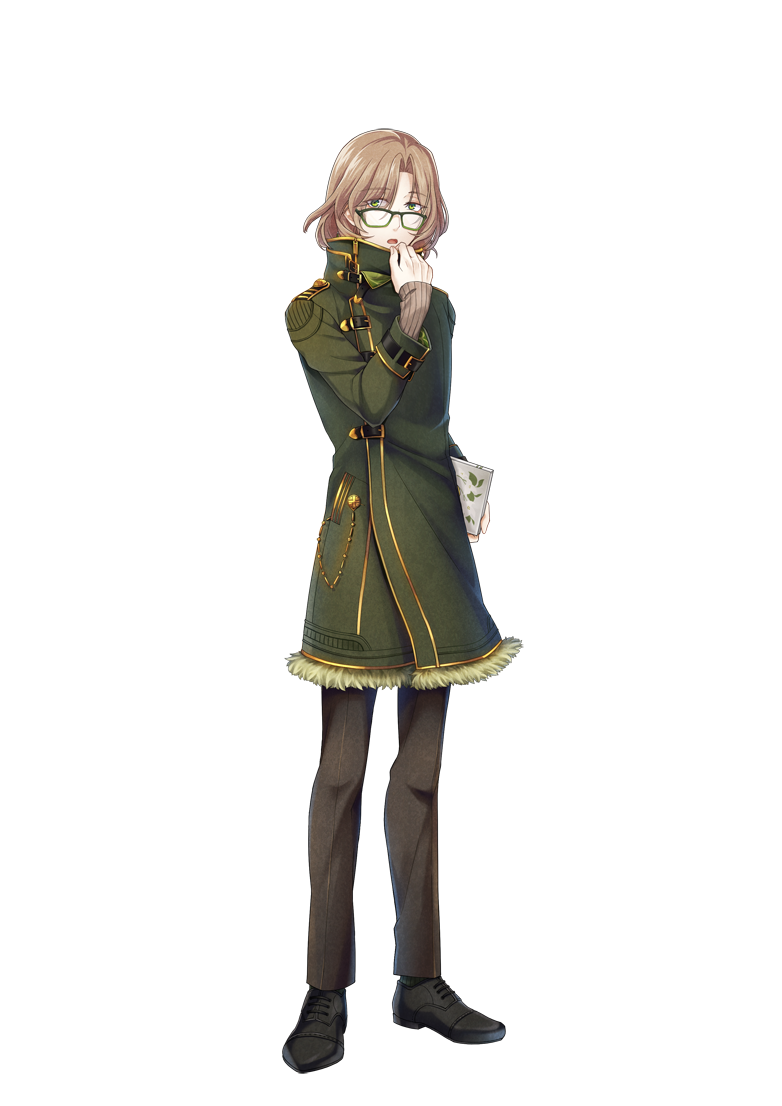
CV: Kenji Akabane
The character is modeled after Shigeharu Nakano, a literary giant active in the Showa era. A writer of pure literature, his representative works include "Uta no wakare", "Nashi no hana", and "Muragimo". In addition to novels, he also wrote poetry and criticism. His weapon of choice when writing undercover is a blade. In her normal costume, her attribute is earth. Her mental state is unstable. In "Bun'alu", he is one of the initial literary heroes that can be selected right after the game starts.
He is a calm and collected young man. He is said to be good at argument. According to the official introduction, he "tends to criticize in a roundabout way. On the other hand, however, he is also a rough and ready person who is not bothered by small things. He was once tortured by the police for being a proletarian writer when he was active as a writer. Shigeharu Nakano, who served as a model for the character, renounced his proletarian ideology after this torture, which allowed him to be released from prison. In "Bunnaru," Nakano regrets this incident, which caused him to bend his beliefs, and he feels guilty toward the other proletarian writers. However, he is usually a good friend and ally, and seems to be on good terms with them. He seems to be good friends and allies with the other factions, such as Tatsuo Hori and Naoya Shiga, who have been his friends since he was active as a writer.
The model of the great writer Shigeharu Nakano had a habitual handwriting, and in "Bun'alu" he is also set up as having the "dirtiest handwriting of all the great writers". He is apparently concerned about it and says in the book, "I want to be able to write well.
New Sensory School
A literary faction that existed from the end of the Taisho era (1912-1926) to the beginning of the Showa era (1926-1989). It refers to the up-and-coming writers who emerged from the literary magazine "Bungei Jidai" (Literary Age), which was first published in 1924. It was a group of writers who were influenced by the avant-garde art that emerged in Europe after World War I. They advocated the pursuit of the sensual and subjective mind. The group's ideas were different from those of any other literary faction in the country up to that time, and they had a major impact on the literature of the time.
Yasunari Kawabata
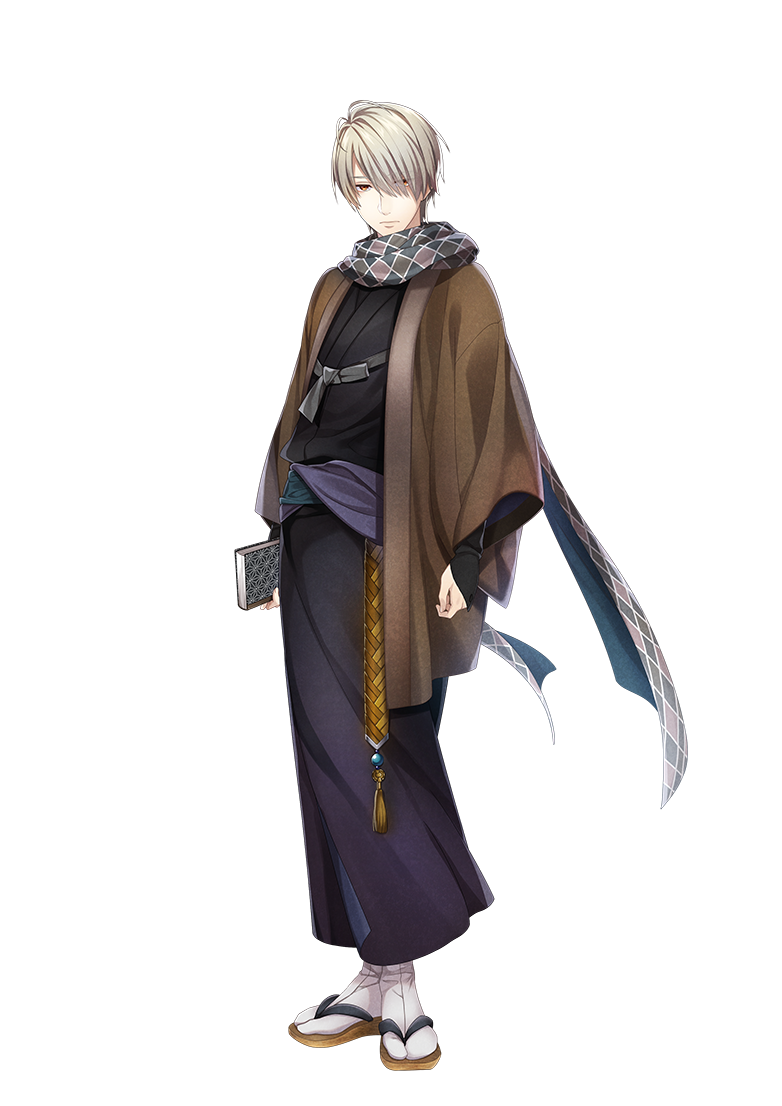
CV: Tomokazu Seki
The character is modeled on Kawabata Yasunari, a great writer active from the Taisho to Showa periods. A writer of pure literature, his representative works include "Yukiguni", "Izu no Odoriko", and "Lyric Poem". He is also known as a "magician" because of the breadth of his style and his constant experimentation with new techniques of expression. He was also active not only as a novelist but also as a literary critic. He was also a member of the selection committee for the Akutagawa Prize, one of the most prestigious literary awards. His weapon of choice when writing undercover is a blade. In her normal costume, her attribute is water. His mental state is somewhat unstable.
He is a taciturn young man who tends to frighten others because of his habit of staring. He even has an episode in which he and the great writer Kawabata Yasunari, who is his model, had a habit of staring at a thief, and when they came across a thief together with the great writer Kajii Motojiro, they stared at the thief and fought him off with just their eyesight. He is also a man of the world, and it is extremely difficult to communicate with him. Only Riichi Yokomitsu, a great writer and ally of the New Sense School, and his teacher Kan Kikuchi could understand his true intentions. He is not good at fighting with others, so he never argues with his mouth, but sometimes complains with his eyes instead.
He is fond of works of art, and when he finds something he likes, he immediately buys it. Thanks to this, he is famous for being one of the most expensive debtors in the library. Kawabata Yasunari is worse than Ishikawa Takuboku, who is also famous for being a debt king, because he has no intention of paying back his debts.
He is a big fan of Akio Tokuda, and even after his reincarnation, he seems to have sent him fan letters often. However, it seems that he can never say so face-to-face, and his habit of staring at Tokuda Akiyoshi when they are face to face confuses Tokuda Akiyoshi.
Toshikazu Yokomitsu
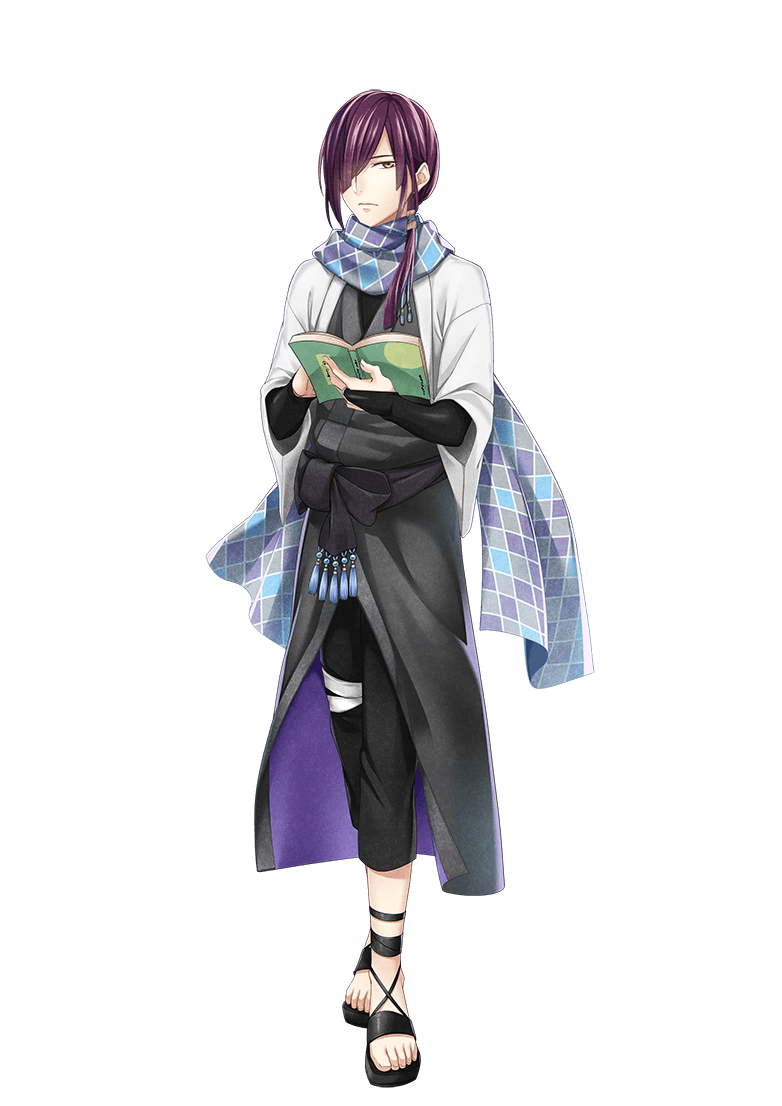
CV: Wataru Hatano
The character is modeled after Riichi Yokomitsu, a great writer active from the Taisho to Showa periods. A writer of pure literature, his representative works include "The Fly," "The Machine," and "Traveling Melancholy. He was overwhelmingly popular at the time and was called the "god of literature. He was also active not only as a novelist but also as a haiku poet and critic. His weapon of choice when writing undercover is a blade. In his normal costume, his attribute is fire. His mental state is normal.
He is a serious and stoic young man. As befits a member of the New Sense School, he is constantly pursuing a new sense of literature. He also has the energy to willingly experience various things in order to connect them to literature. Whenever he encounters something that moves him, he always mentions that it is a "new sensation. Perhaps because of this habit, he is considered an eccentric by writers who do not know him well. He also has a habit of treating inorganic objects as if they were people, which may be one of the reasons why they think he is an eccentric.
After his reincarnation, he seems to have established a good relationship with his teachers, the great writer Kikuchi Kan and Kawabata Yasunari, who, like himself, is a member of the New Sense School and a close friend of his. In particular, she has a strong bond with Kawabata Yasunari, and in the event when he was implemented, she found his whereabouts while he was wandering among the books in his hiding place, using only her intuition, which she calls "kizuna. In addition, it is possible to grasp the will of Kawabata Yasunari, who is taciturn and does not often speak his mind, just by looking into his eyes.
He also seems to have a certain amount of interaction with other literary giants, and is acquainted with Kawabata Yasunari's acquaintance, the great writer Kajii Motojiro. He admires the poet Kusano Shinpei for his personality and talent, and even wants to learn poetry from him.
Emerging Artists (Shin Kougeijutsu-ha)
A faction created in 1930. It was born out of a literary group called the Shinko Geijutsu Club (New Art Club). It became a group of anti-proletarian literature writers who were opposed to proletarian literature that wrote about the reality of workers.
Characterized by a style that valued art with an emphasis on beauty, many of their works are more artistic than political in nature. Although the group enjoyed a great deal of popularity for a time, it died out after about two years because it lacked depth as a literary theory.

Contents
- Overview of "Bungo to Alchemist
- Synopsis and story of "The Bungo and the Alchemist"
- Old Prologue
- Literary Oddities Chapter 1
- Episode 1 Welcome to the Insulated Book
- Episode 2 Fight Against the Invaders
- Episode 3 Purge the Insulators
- Episode 4 The Curator's Command
- Episode 5 Find the Infiltrator
- Episode 6 The Ecology of the Invaders
- Episode 7 Causes of Erosion Phenomena
- Episode 8 The World of Literature / Victory
- Episode 9 Alchemy and Alchemists
- Episode 10 The Power of the Alchemist
- Episode 11 The Concept of the Infringer
- Episode 12 Chasing the Invaders/Rescue
- Literary Oddities, Chapter 2
- Episode 13 The World of Literature
- Episode 14 Naturalism
- Episode 15 Aestheticism
- Episode 16 Art Made of Words / Out of Order
- Episode 17 Private Novels
- Episode 18 Differences of Opinion
- Episode 19 The Beginning of Literature
- Episode 20 Literature on How to Live / Disturbing Footsteps
- new prologue
- Game System of "Bungo to Alchemist
- Library/Librarian's Office
- latent writing
- letter of invitation
- Sealed book
- Yuso Sho (book with a cover letter)
- The Book of the Soul (Yu-kon-sho)
- strolling
- credibility
- literary master
- formation
- blooming (esp. of cherry blossoms)
- spirit
- Calling
- picture book
- character sketch
- book of reminiscences
- research report
- interior
- Characters in "Bungo to Alchemist
- New Thought School (Shinshichouha)
- Ryunosuke Akutagawa
- Junichiro Tanizaki
- Yuzuru Matsuoka
- Yuzo Yamamoto
- Masao Kume
- Kan Kikuchi
- Burai-ha
- Osamu Dazai
- Ango Sakaguchi
- Sakunosuke Oda
- Kazuo Dan
- Kitahara Ichimon
- Kitahara Hakushu
- Sakutaro Hagiwara
- Saisei Murou
- Ichimon Ozaki
- Momiji Ozaki
- Kyoka Izumi
- Tokuda, Shusei
- Yoyuha (a group that can afford to lose money)
- Natsume Soseki
- Mori Ogai
- Shiki Masaoka
- Mita School (Mita-ha)
- Kafu Nagai
- Haruo Sato
- Rofu Miki
- Shirakaba-ha
- Naoya Shiga
- Mushanokouji Saneatsu
- Takeo Arishima
- Satomi Tonon
- proletarian
- Takiji Kobayashi
- Sunao Tokunaga
- Shigeharu Nakano
- New Sensory School
- Yasunari Kawabata
- Toshikazu Yokomitsu
- Emerging Artists (Shin Kougeijutsu-ha)
- Kajii Motojiro
- Ibuse Masuji
- Tatsuo Hori
- Myojo (bright star)
- Kotaro Takamura
- Ishikawa Takuboku
- Isamu Yoshii
- Araragi Faction (of the LDP)
- Sachio Ito
- Mokichi Saito
- Natsume Kadokoro
- Miekichi Suzuki
- Uchida Hyakken
- Masaoka Ichimon
- Kyoshi Takahama
- Hekigoto Kawahigashi
- Soun
- Taneda Santoka
- Hosai Ozaki
- Factionless writers
- Nakahara Chuya
- Kenji Miyazawa
- Toson Shimazaki
- Tayama Hanabukuro
- Kazuo Hirotsu
- Rampo Edogawa
- TSUBOUCHI Shoyo
- Futabatei Shimei
- Atsushi Nakajima
- Koizumi Yakumo
- Wakayama Makisui
- Kunikida Doppo
- Rohan Koda
- Eiji Yoshikawa
- Iwano Houmei
- Masamune Swan
- Roka Tokutomi
- Sanjuugo Naoki
- Hisasaku Yumeno
- Nakazato Kaizan
- Tatsuji Miyoshi
- Nankichi Niimi
- Mimei Ogawa
- Bi Myo Yamada
- Shinpei Kusano
- Nobuo ORIGUCHI, Shinobu
- Kunio Yanagita
- Seijiro Shimada
- Kitamura Torutani
- Russia
- Lev Tolstoy.
- Fyodor Dostoevsky.
- Germany
- Johann Wolfgang von Goethe
- France
- Charles Baudelaire
- Artur Rambo.
- America
- Ernest Hemingway.
- Francisco Scott Fitzgerald
- Edgar Allan Poe.
- Howard Phillips Lovecraft
- United Kingdom
- Conan Doyle.
- Lewis Carroll.
- Imperial Library staff
- director
- cat
- (in hanafuda) the collection of the three red poetry ribbon cards
- blue
- Faust
- enemy character
- corruptor
- Mephistopheles (book of the Bible)
- Items from "Bungo to Alchemist
- Costume
- statue
- gaily coloured statue
- Summation stone
- Western ink
- letter
- Flowering Materials
- Fumitama
- Omodama
- The soul of a word (kataridama)
- Tamashii no Haguruma (Soul Gears)
- Fuminohana
- Omoi-no-hana
- Katanohana
- Yuso Sho (book with a cover letter)
- The Book of the Soul (Yu-kon-sho)
- Kakusei no Yubi (Ring of Awakening)
- Speed regulator
- gold coin
- Interior permits
- Reishi (spiritual medicine)
- cat's paw
- Terms of "Bungo to Alchemist
- Alchemist / Special Librarian
- National Library of Japan
- Imperial Library
- literary master
- man of letters
- assistant
- government
- association
- arms
- attribute
- literary level
- Costume Level
- erosion
- spirit
- The Art of the Brush Slayer
- advent
- The Essence of the Double Brush (Souhitsu Shinsei)
- early great writers
- great writer
- Yaiba Bungo
- Yumi Bungo
- Guns, Literature, and the Arts
- whip (whip) writer
- Famous quotes, lines/scenes, and scenes from "Bungo to Alchemist
- Ryunosuke Akutagawa: "Don't forget that life is a fight to the death."
- Osamu Dazai: "Oh, Akutagawa-sensei said he wanted to read my work! No way, this is called ...... pulse!"
- Masuji Ibushi: "The main character of a novel should be half-hearted. It's more realistic and interesting that way.
- Backstories, trivia, and small stories/episodes and anecdotes from "Bungo to Alchemist".
- The manuscript depicted in the background of the work contains a passage from a real novel.
- Recollection of a once defunct cafeteria
- Wife of musician Hideki Sakamoto is a fan of DMM Games' works
- Theme and insert songs for "Bungo to Alchemist
- Theme song: "Bungo to Alchemist" by Hideki Sakamoto