
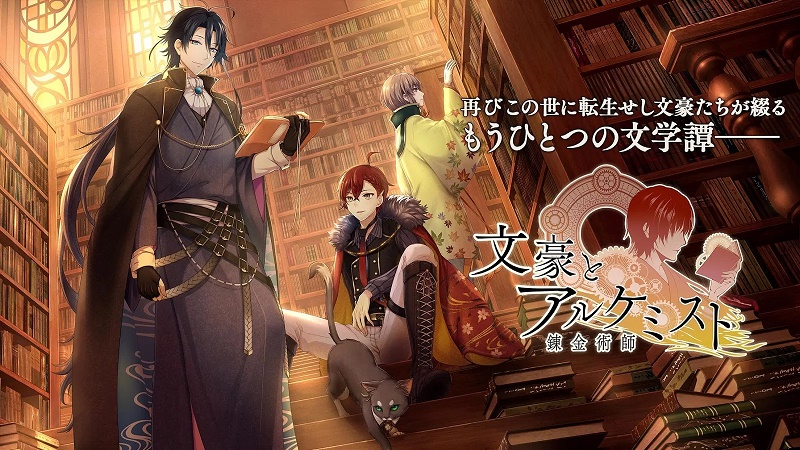
Bungo to Alchemist" (abbreviated as "Bungo and Alchemist") is a training simulation game based on the theme of "Bungo". Developed and operated by the gaming platform DMM Games, the browser version was released in November 2016, and the smartphone version was released the following year in June 2017. The story is set in Japan, which has a different history from reality, based on Taisho Romanticism and Steampunk. In order to protect literature from enemies known as "invaders," players reincarnate literary giants and fight alongside them against these invaders.
Kajii Motojiro
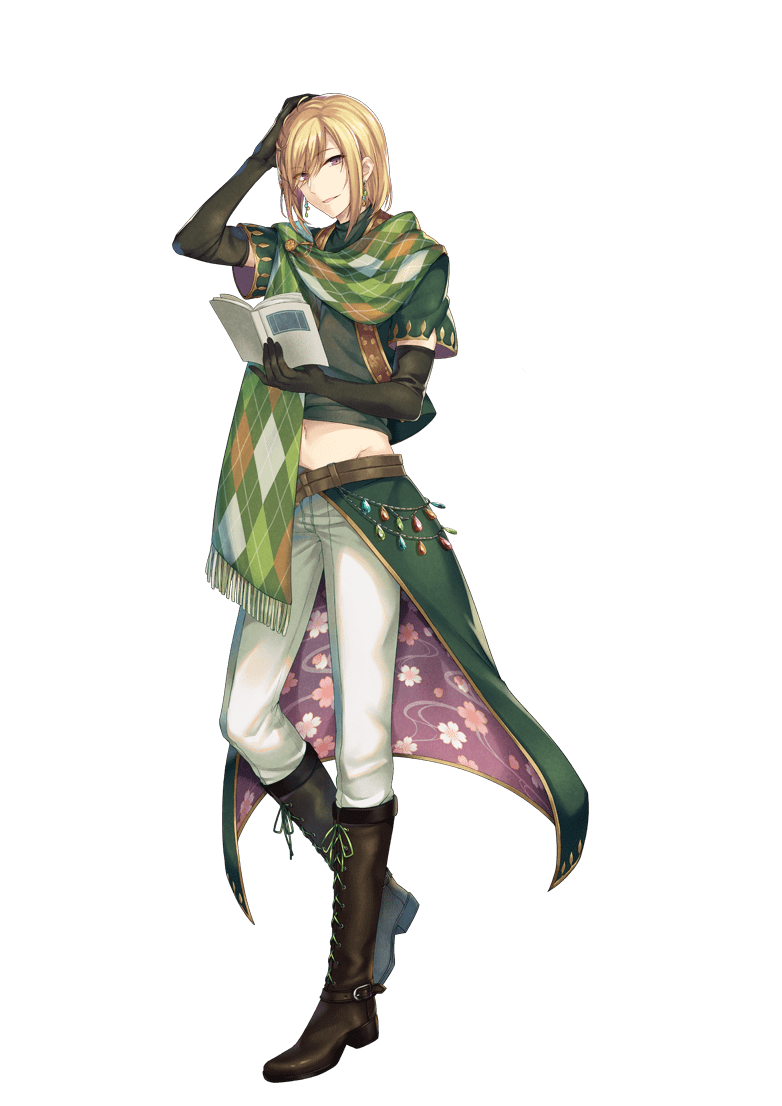
CV: Noriaki Sugiyama
The character is modeled on Kajii Motojiro, a great writer active from the Taisho to Showa periods. A writer of pure literature, he is best known for his novel "Under the Cherry Blossom Tree," which became the basis for the urban legend "There is a dead body buried under the cherry tree. Other representative works include "The Graduates," "In a Town with a Castle," and "The Fly in Winter. Her weapon of choice when writing undercover is a blade. In her normal costume, her attribute is wind. Her mental state is somewhat unstable.
He is a beautiful young man with narcissistic behavior. According to the official description, he is a self-proclaimed "literary genius with a romantic spirit. His narcissistic behavior, coupled with his overly distinctive fashion sense that leans toward the visual kei style, often makes him seem different from the people around him. He also wears an accessory with a lemon motif as a fashion item. This is apparently based on the novel "Lemon" by Kajii Motojiro, a famous novelist and model. She often mentions lemon in her home screen voice and in her recollections of events.
He is a man of many strange and bizarre behaviors, but he is also a man who sometimes makes sharp remarks that strike at the essence of the person he is speaking to, and he is not always straightforward. He also has a hard-to-please personality. It is revealed that he becomes a different person when he drinks deeply.
He remains good friends with the poet Tatsuji Miyoshi, whom he has known since his days as a great writer, even after his reincarnation. They often exchange comic dialogue, with Tatsujiji Miyoshi taking the heat for Kajii's bizarre words and actions.
Ibuse Masuji
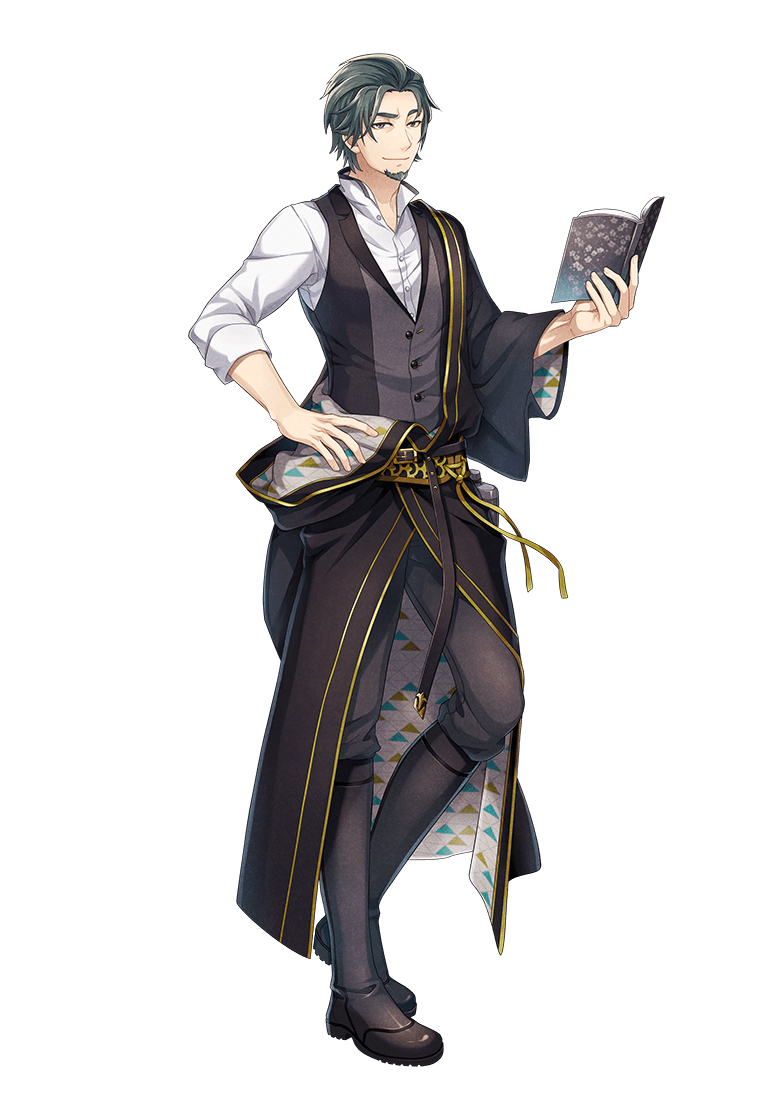
CV: Shunsuke Takeuchi
The character is modeled after Masuji Ibushi, a great writer active in the Showa era. Although he first appeared in the literary world in the Showa period, he had been writing works even before that, and made his debut as a writer after a long apprenticeship with a coterie of writers. His representative works include "Sanshojo", "Roo no Ue no Sawan", and "John Manjiro's Drift". His weapon of choice when writing undercover is a blade. In his normal costume, his attribute is water. Her mental state is somewhat stable.
He is a strange character who loves fishing. As he calls himself an "old man," he has the appearance of an older man, which is rare in "Bunnaru," where most of the characters look like young men. He is usually aloof, but when the time comes, he is as calm and collected as his age. On the other hand, he is not without his own free-spirited side, and once he gets out of line, it is difficult to stop him from going wild. He loves to drink, and he is good friends with those literary giants with whom he can drink. When he is not drinking, he likes fish and curry udon.
He has continued his relationship with his mentor, Haruo Sato, even after his reincarnation. He also continues his relationship with Osamu Dazai, his own disciple and a great writer who adores Haruo Sato, and while he regards him as an "ungrateful disciple," he seems to pay attention to what he says and does. He and Haruo Sato are often pushed around by Dazai Osamu.
He is also a man of large-heartedness by nature, and often follows up on great writers who do not fit in well with their surroundings or who have made a mistake. Perhaps because of this, he seems to be able to build good relationships with many of the great writers. He is good friends with Hori Tatsuo, another great writer of the emerging art school, and they are often together in his works. He is also said to have admired poet Shinpei Kusano's cooking and naming sense since he was active as a literary master. After his reincarnation, they seem to hang out as drinking buddies.
However, even Ibushi Masuji is not well-liked by Mori Ogai, a great writer. The reason for this lies in a letter he once sent me. When Mori Ogai was still active as a great writer, he received a letter from Ibushi Masuji under a false name, which pointed out mistakes in his novels. It was later revealed by Ibushi Masuji himself that this letter was intended to obtain a letter from Mori Ogai, a great writer (and famous person), but Mori Ogai had already passed away by then and he did not know the identity of the letter's owner. However, it seems that there is something he instinctively feels, and it is assumed that it manifests itself as a sense of bitterness.
Tatsuo Hori
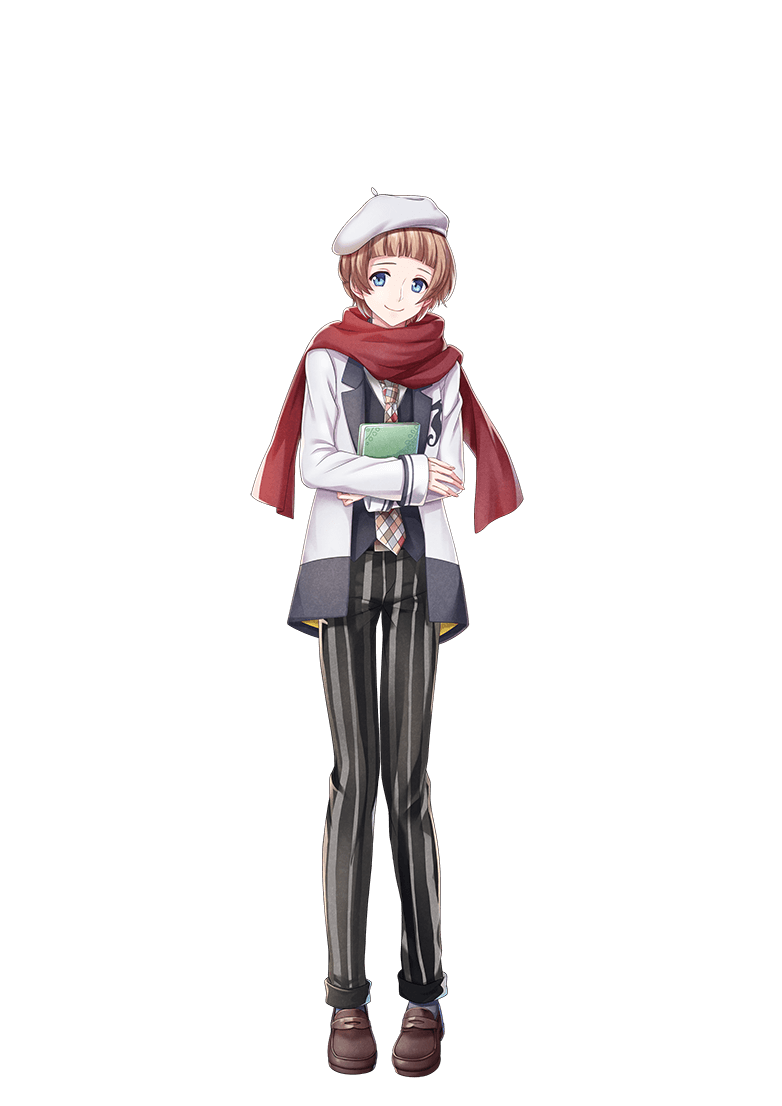
CV: Koji Takahashi
The character is modeled after Tatsuo Hori, a literary giant active in the Showa period (1926-1989). His representative works include "The Wind Rises," "The Holy Family," and "Burning Cheeks. His weapon of choice when undercover is a blade. When wearing his normal costume, his attribute is water. Her mental state is normal. In "Bun'alu", she is one of the initial bungo (master writers) that can be selected right after the start of the game.
He is a shy but caring boy. According to the official description, he is "an idol who is adored by everyone he meets. It is assumed that this is due to the fact that his model, Tatsuo Hori, never had any complicated relationships with anyone, and no one disliked him. In "Bun'alu," he is so caring that it sometimes backfires, but again, no one dislikes him. He is also shy but has a strong core, and has the guts to stop the great writers from quarreling with each other. It is assumed that this is based on the fact that his model, Tatsuo Hori, spent his entire life as a writer battling an illness. He has been friends with Ryunosuke Akutagawa, a master writer, and Toshikazu Yokomitsu, a great writer who has known him since he was active as a writer, even after his reincarnation. In particular, Ryunosuke Akutagawa calls him "Tacchanko" and loves him. This nickname was given to the model Hori Tatsuo by Akutagawa Ryunosuke, and in "Bun'al" Hori Tatsuo himself may have been aware of it, asking the player to call him "Tacchan" in the story. He also has a good relationship with Shigeharu Nakano, another old acquaintance and fellow early writer, even after his reincarnation.
His pet peeve is snakes. Whenever he is mentioned or teased about snakes, he immediately becomes grumpy.
Myojo (bright star)
A faction of writers who contributed to Meisei, a poetry-centered literary magazine founded in 1897. It is a group of romantic poets and poets with a tendency toward romantic supremacy. It is also called the Seikin faction.
Kotaro Takamura
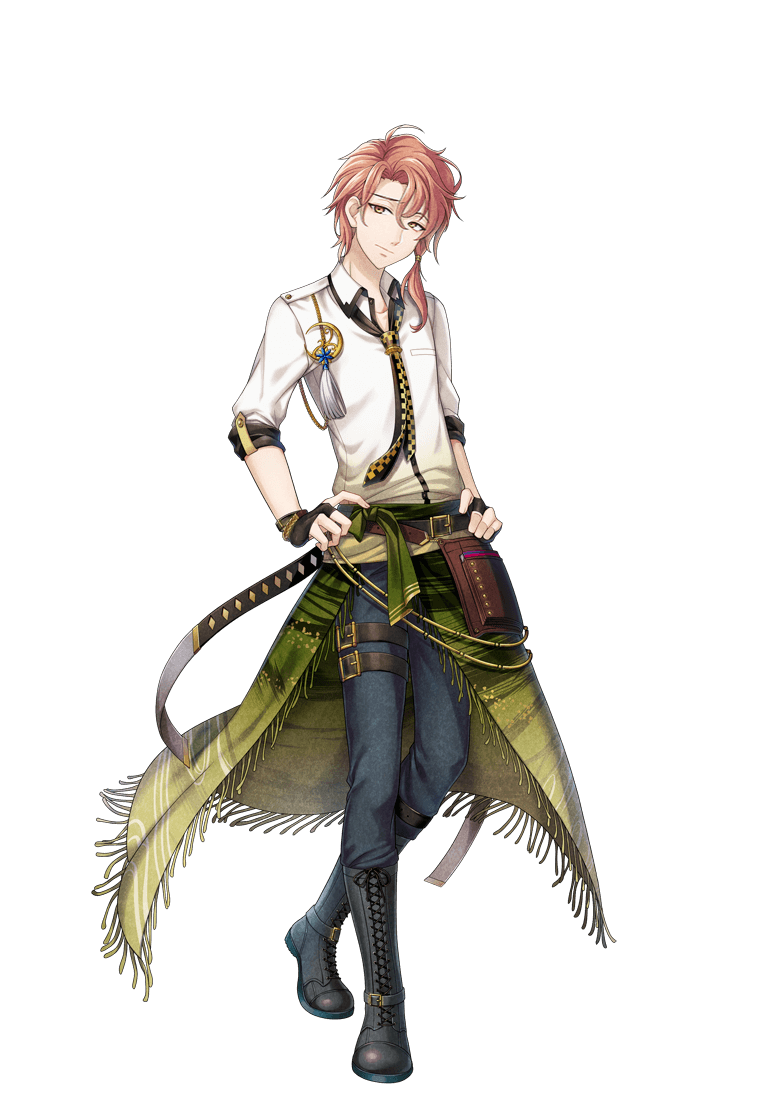
CV: Seiichi Morita
The character is modeled on Kotaro Takamura, a poet active from the Taisho to Showa periods. His representative works include "Chieko Sho", "Michibyo", and "Burning Cheeks". He is also active as a sculptor, and his representative works include "Hand" and "Maiden Statue. His weapon of choice when he is in his undercover costume is a gun. In his normal costume, his attribute is earth. His mental state is stable.
He is a calm and soft-spoken young man. According to the official description, he "always keeps a gentle smile on his face. However, contrary to his calm demeanor, he actually works out and is proficient in martial arts. In fact, Kotaro Takamura, who modeled for him, used judo to defeat those who behaved outrageously in his works. However, his martial arts training is not the same as his love of fighting, and he has mixed feelings about fighting encroachers, saying that fighting causes sadness. He also has a side that makes him blind to the world around him as soon as he sees wood that could be used for carving, as if his blood as a sculptor is rushing.
After his reincarnation, he has continued to associate with the great writers of the Meisei School, including the poet Ishikawa. Among them, Takuboku Ishikawa, a poet, often asks her to lend him money. He also has a friendly relationship with Kenji Miyazawa, a writer of children's stories and poet, whom he has known since his days as a great writer. The poet, Shimpei Kusano, seems to admire him as a fellow poet. He also began interacting with Saneatsu Mushanokouji, a great writer and painter, after his reincarnation, but they interacted as artists, a sculptor and a painter, rather than as literary figures. As a judoist, Eiji Yoshikawa, a great writer, once offered him a match for his skills. Basically, he has a good relationship with all of the great writers.
Ishikawa Takuboku
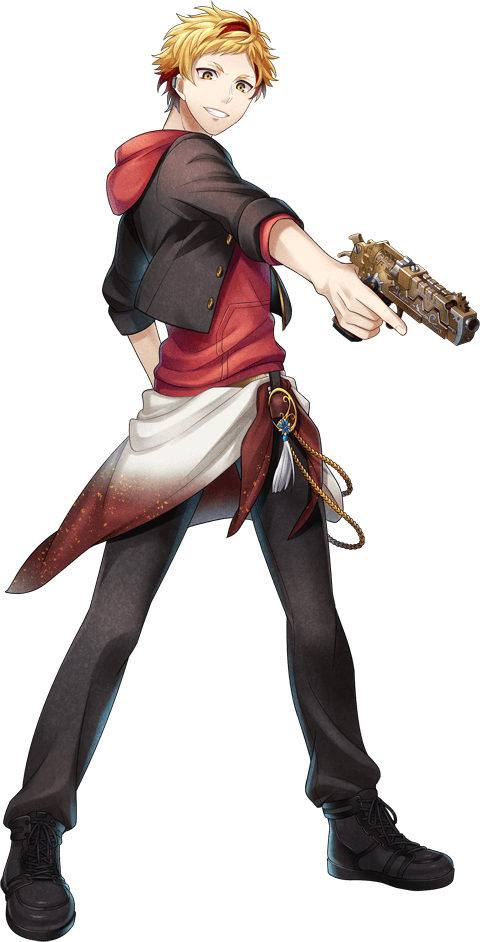
CV: Sadajo Matsuoka
The character is modeled after Takuboku Ishikawa, a poet and poetess of the Meiji era. His representative works include a collection of poems, "Akogare (Longing)" and a collection of poems, "Isshiguri-no-Suna (A Handful of Sand)". His weapon of choice when undercover is a gun. In his normal costume, his attribute is fire. Her mental state is somewhat stable.
He is a young man with an arrogant attitude whose first name is "I-sama. He is a young man with arrogant behavior, but the official says that he is actually aware of his own vices and that he is self-mocking. Since his days as a great writer, he has spent a lot of money on drinking, women, and fun, and has steadily accumulated a large amount of debt after his reincarnation. He seems to be in debt to many great writers, and when a great writer whom he has borrowed money from appears, he runs away from the scene. This also seems to be one of his "vices," which he ridicules himself for.
However, the songs and poems he writes while leading such an arrogant and sloppy life are often about "love" and "loneliness," a style that is typical of the Meisei school. The reason why no one dislikes him despite his large debts is most likely due to his nature as a great writer.
He has been associated after his reincarnation not only with poets and poets of the Meisei school, but also with the poet Wakayama Makisui, with whom he had a friendship before his death. He seems to be friendly with Makisui Wakayama, to the extent that he calls him by the nickname "Bokusan. He also seems to feel a sense of affinity with the great writer Kobayashi Takiji, whom he met after his reincarnation, because they were both "pursued" by the same person, although their circumstances were different. He also seems to sympathize with Dostoevsky, another great writer from abroad whom he met after his reincarnation, because they share the common point that they are both great writers who have no money due to playing around.
Isamu Yoshii
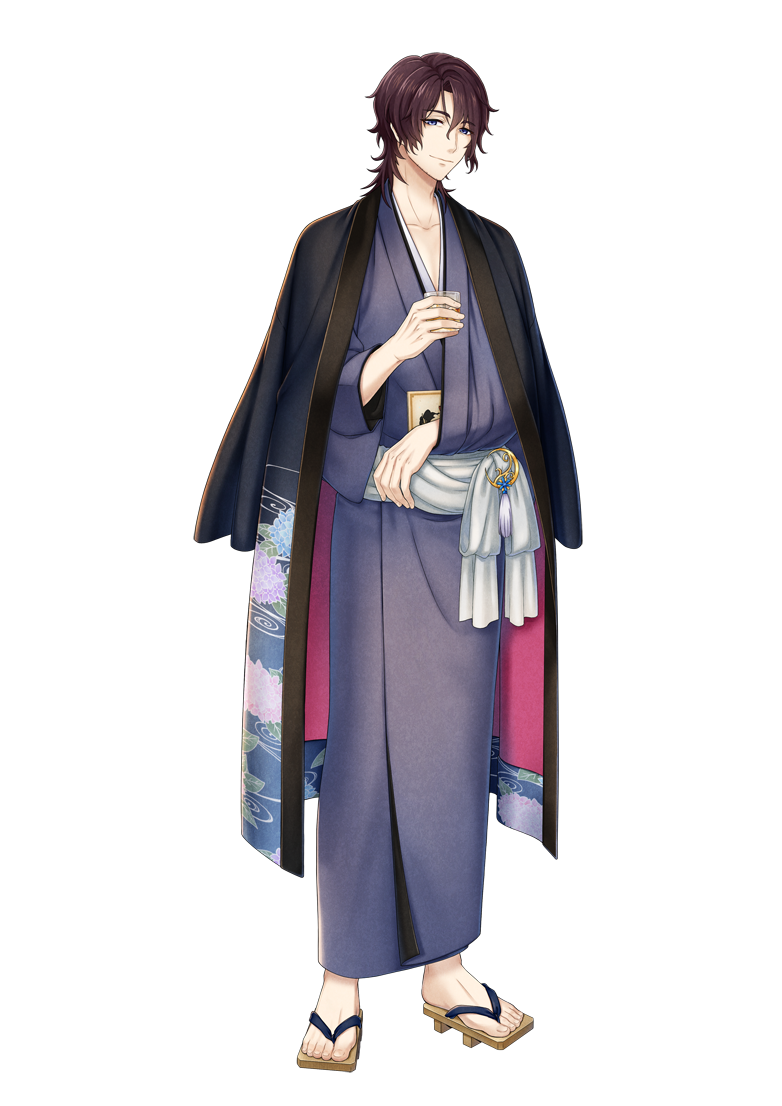
CV: Takuya Sato
The character is modeled on Isamu Yoshii, a poet active from the Meiji to Showa periods. His representative works include "Sake Hogahi" and "Tokyo Koho Shu" (Tokyo Red Lantern Anthology). He is also active as a screenwriter and lyricist, and created the lyrics to "Gondola no Uta" (Song of the Gondola), famous for the phrase "Life is short, love me, Otome. Her weapon of choice when she is undercover is a gun. In her normal costume, her attribute is wind. Her mental state is somewhat stable.
According to the official description, she is "a romantic and lazy person who loves to drink and love women. He usually drinks a lot, and when he runs out of alcohol, he instantly loses his energy. He is lonely because he remembers the time when he was a great writer and led a nomadic life in search of solitude. He seems to be looking for someone to fill this loneliness and turns to alcohol as a substitute. Once he has had a few drinks, he changes his attitude to one of aloofness.
He is said to have a good relationship with the great writers of the Meisei School. He has a good relationship with the poet Takuboku Ishikawa, with whom he once edited the magazine Subaru. He has also been friends with many of the literary giants of other factions, and he and the poet Wakayama Makisui, who loves to drink, have been going out for drinks together. He often complains to Yuzo Yamamoto and Masao Kume, both great writers. He and Masao Kume, in particular, share a similar negative nature, and they complain about various things to each other over drinks.
Araragi Faction (of the LDP)
A faction of tanka poets involved in the tanka magazine Araragi, which was first published in 1908. Araragi was a magazine edited by the poet Sakio Ito. Many of the works were produced in a style similar to Manyoshu, a style based on the characteristics of tanka poems in Manyoshu, Japan's oldest anthology of waka poetry. It is said to have greatly influenced tanka poetry from the Taisho period to the Heisei period.
Sachio Ito
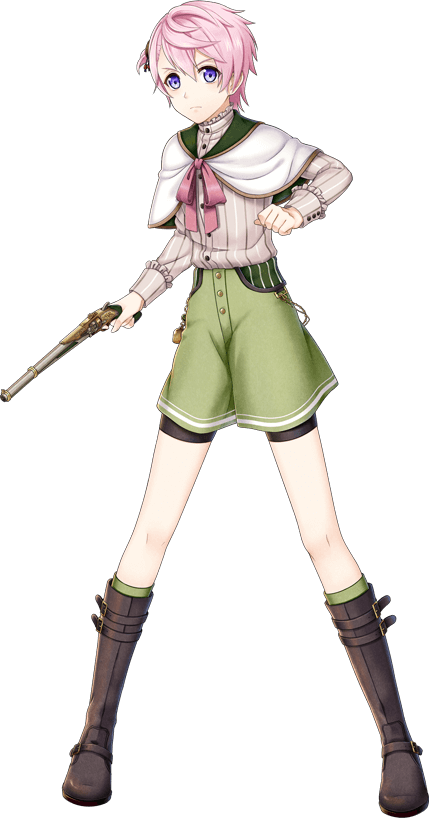

Contents
- Overview of "Bungo to Alchemist
- Synopsis and story of "The Bungo and the Alchemist"
- Old Prologue
- Literary Oddities Chapter 1
- Episode 1 Welcome to the Insulated Book
- Episode 2 Fight Against the Invaders
- Episode 3 Purge the Insulators
- Episode 4 The Curator's Command
- Episode 5 Find the Infiltrator
- Episode 6 The Ecology of the Invaders
- Episode 7 Causes of Erosion Phenomena
- Episode 8 The World of Literature / Victory
- Episode 9 Alchemy and Alchemists
- Episode 10 The Power of the Alchemist
- Episode 11 The Concept of the Infringer
- Episode 12 Chasing the Invaders/Rescue
- Literary Oddities, Chapter 2
- Episode 13 The World of Literature
- Episode 14 Naturalism
- Episode 15 Aestheticism
- Episode 16 Art Made of Words / Out of Order
- Episode 17 Private Novels
- Episode 18 Differences of Opinion
- Episode 19 The Beginning of Literature
- Episode 20 Literature on How to Live / Disturbing Footsteps
- new prologue
- Game System of "Bungo to Alchemist
- Library/Librarian's Office
- latent writing
- letter of invitation
- Sealed book
- Yuso Sho (book with a cover letter)
- The Book of the Soul (Yu-kon-sho)
- strolling
- credibility
- literary master
- formation
- blooming (esp. of cherry blossoms)
- spirit
- Calling
- picture book
- character sketch
- book of reminiscences
- research report
- interior
- Characters in "Bungo to Alchemist
- New Thought School (Shinshichouha)
- Ryunosuke Akutagawa
- Junichiro Tanizaki
- Yuzuru Matsuoka
- Yuzo Yamamoto
- Masao Kume
- Kan Kikuchi
- Burai-ha
- Osamu Dazai
- Ango Sakaguchi
- Sakunosuke Oda
- Kazuo Dan
- Kitahara Ichimon
- Kitahara Hakushu
- Sakutaro Hagiwara
- Saisei Murou
- Ichimon Ozaki
- Momiji Ozaki
- Kyoka Izumi
- Tokuda, Shusei
- Yoyuha (a group that can afford to lose money)
- Natsume Soseki
- Mori Ogai
- Shiki Masaoka
- Mita School (Mita-ha)
- Kafu Nagai
- Haruo Sato
- Rofu Miki
- Shirakaba-ha
- Naoya Shiga
- Mushanokouji Saneatsu
- Takeo Arishima
- Satomi Tonon
- proletarian
- Takiji Kobayashi
- Sunao Tokunaga
- Shigeharu Nakano
- New Sensory School
- Yasunari Kawabata
- Toshikazu Yokomitsu
- Emerging Artists (Shin Kougeijutsu-ha)
- Kajii Motojiro
- Ibuse Masuji
- Tatsuo Hori
- Myojo (bright star)
- Kotaro Takamura
- Ishikawa Takuboku
- Isamu Yoshii
- Araragi Faction (of the LDP)
- Sachio Ito
- Mokichi Saito
- Natsume Kadokoro
- Miekichi Suzuki
- Uchida Hyakken
- Masaoka Ichimon
- Kyoshi Takahama
- Hekigoto Kawahigashi
- Soun
- Taneda Santoka
- Hosai Ozaki
- Factionless writers
- Nakahara Chuya
- Kenji Miyazawa
- Toson Shimazaki
- Tayama Hanabukuro
- Kazuo Hirotsu
- Rampo Edogawa
- TSUBOUCHI Shoyo
- Futabatei Shimei
- Atsushi Nakajima
- Koizumi Yakumo
- Wakayama Makisui
- Kunikida Doppo
- Rohan Koda
- Eiji Yoshikawa
- Iwano Houmei
- Masamune Swan
- Roka Tokutomi
- Sanjuugo Naoki
- Hisasaku Yumeno
- Nakazato Kaizan
- Tatsuji Miyoshi
- Nankichi Niimi
- Mimei Ogawa
- Bi Myo Yamada
- Shinpei Kusano
- Nobuo ORIGUCHI, Shinobu
- Kunio Yanagita
- Seijiro Shimada
- Kitamura Torutani
- Russia
- Lev Tolstoy.
- Fyodor Dostoevsky.
- Germany
- Johann Wolfgang von Goethe
- France
- Charles Baudelaire
- Artur Rambo.
- America
- Ernest Hemingway.
- Francisco Scott Fitzgerald
- Edgar Allan Poe.
- Howard Phillips Lovecraft
- United Kingdom
- Conan Doyle.
- Lewis Carroll.
- Imperial Library staff
- director
- cat
- (in hanafuda) the collection of the three red poetry ribbon cards
- blue
- Faust
- enemy character
- corruptor
- Mephistopheles (book of the Bible)
- Items from "Bungo to Alchemist
- Costume
- statue
- gaily coloured statue
- Summation stone
- Western ink
- letter
- Flowering Materials
- Fumitama
- Omodama
- The soul of a word (kataridama)
- Tamashii no Haguruma (Soul Gears)
- Fuminohana
- Omoi-no-hana
- Katanohana
- Yuso Sho (book with a cover letter)
- The Book of the Soul (Yu-kon-sho)
- Kakusei no Yubi (Ring of Awakening)
- Speed regulator
- gold coin
- Interior permits
- Reishi (spiritual medicine)
- cat's paw
- Terms of "Bungo to Alchemist
- Alchemist / Special Librarian
- National Library of Japan
- Imperial Library
- literary master
- man of letters
- assistant
- government
- association
- arms
- attribute
- literary level
- Costume Level
- erosion
- spirit
- The Art of the Brush Slayer
- advent
- The Essence of the Double Brush (Souhitsu Shinsei)
- early great writers
- great writer
- Yaiba Bungo
- Yumi Bungo
- Guns, Literature, and the Arts
- whip (whip) writer
- Famous quotes, lines/scenes, and scenes from "Bungo to Alchemist
- Ryunosuke Akutagawa: "Don't forget that life is a fight to the death."
- Osamu Dazai: "Oh, Akutagawa-sensei said he wanted to read my work! No way, this is called ...... pulse!"
- Masuji Ibushi: "The main character of a novel should be half-hearted. It's more realistic and interesting that way.
- Backstories, trivia, and small stories/episodes and anecdotes from "Bungo to Alchemist".
- The manuscript depicted in the background of the work contains a passage from a real novel.
- Recollection of a once defunct cafeteria
- Wife of musician Hideki Sakamoto is a fan of DMM Games' works
- Theme and insert songs for "Bungo to Alchemist
- Theme song: "Bungo to Alchemist" by Hideki Sakamoto