
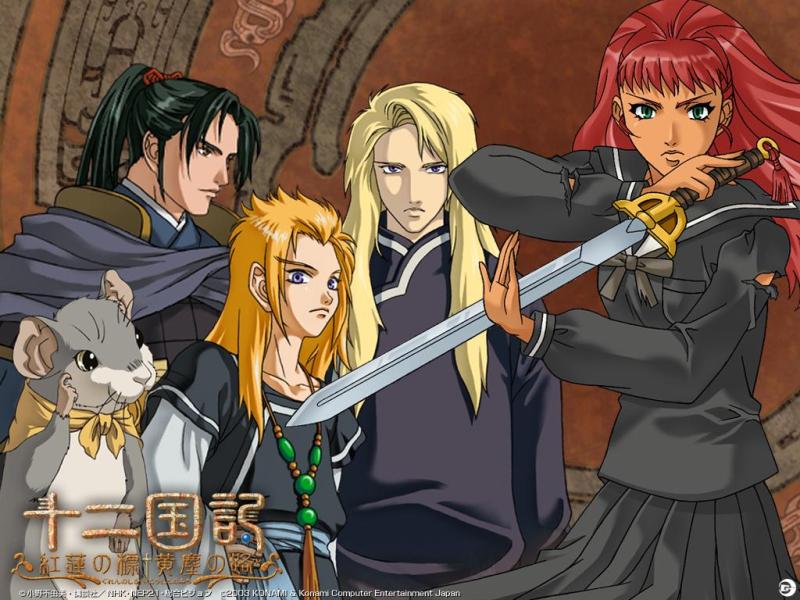
The Twelve Kingdoms" is a novel by Ono Fuyumi and an anime and other media mix works based on the novel. Yoko Nakajima, a high school girl, has lived her whole life with a concern for the color of others' faces. Then, a young man who calls himself Jingqi, the Qilin, appears in front of Yoko and calls her king. Yoko travels to her original home in the world of the Twelve Kingdoms, where she goes through various battles and decides to become king. Some of them face power and the responsibilities that come with it, while others grow up facing their complexes. This is an otherworldly fantasy set in an ancient Chinese-style world, but with a strange sense of reality.
Source: 12kingdoms.fandom.com
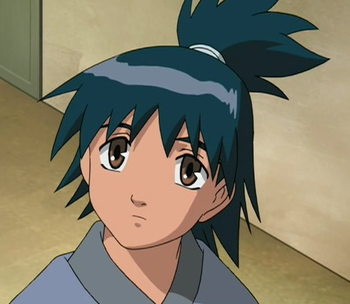
Voice: Chiba Chiemi
He is like a younger brother to Rangyu. He had temporarily moved to another country when his country fell into disrepair, but returned to Japan with his sister Lan Yu when the king (Yoko) was established in the state of Kei. After that, he lived in the village family and received teachings from Yuan Fu together with Yangzi. Since he was still a child, he took the name Keikei, which is a small surname (a surname only used during childhood). When he grows up, he will take the name Lankei. When Yuan Fu was abducted, he was shot by a deranged Ikuya, but he was rescued by Keikiru and others and survived.
Shoqiong
Source: yaplog.jp
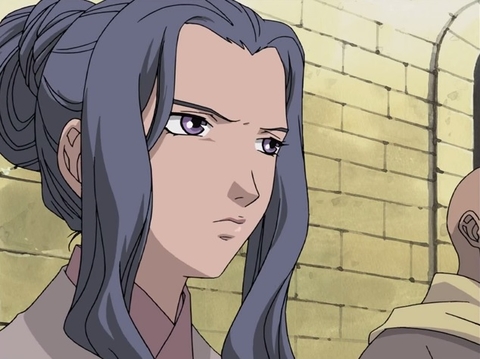
Voice: Kuwashima Noriko
Appears in "Kaze no Banri, Reimei no Sora. His family name is Sun and his first name is Shou. He was formerly a lord of Fang Province. His father, the king, had laid down strict laws for the sake of the people, but they were so tightened that executions were carried out every day, and the king was resented.
He was unaware of this because he was living a glamorous life in the palace, and his parents were killed when he was told that many of his people had been executed for even minor offenses during the rebellion. He was removed from the Seonreki and given the alias "Jade Leaf" to live with his family in the village. He never lost his nature as a lord, and he would often call Wolgye a usurper of the throne behind his back or to his face, even though Wolgye had dared to do wrong for the country. When it was discovered that he was a lord in the village family, he was about to be executed by cattle-splitting, but Wolgye's messenger stopped him, and Xiangqiong was entrusted to Gongguo.
The king, who was younger than Xiangqiong, advised Wolgye in a dignified manner to do his duty as a provisional king. He also said to Xiangqiong himself, "I hate you. Xiangqiong was unwilling to live in the village house, and worked as a servant under the供王. The reason why she was made a servant was to make Xiangqiong remember her responsibility and her current status, but Xiangqiong did not see the true meaning of it. When she was sorting through King Gong's trinkets, her old life came back to her, and she finally stole the trinkets and the cavalry and ran away. Having heard that Gyeongguk Jingwang was a girl not much older than herself, she went to Gyeongguk with the intention of usurping the throne like Wolgye.
Selling ornamental hairpins and other goods, she stayed at inns, from where she was nearly arrested when she was traced. He quickly lied that he had received the money from Rakjun, with whom he shared a room at an inn, and from then on he traveled with Rakjun (he was released for bribing him; Rakjun was a good friend of Yeonwang's.) (He was released for bribing the king, and Lejun was released through the good offices of King Yan).
During this journey, he was temporarily upset when Raku Shun told him why the king and his sons could live a luxurious life, the activities of kings, lords, and dukes in other countries for their people, and that King Jing had not become king by taking it easy, but he eventually admitted that he knew nothing about it and got along well with Raku Shun. Wanting to see the country that Rakujun's friend was building, he went as an individual to Hazhuzhoujingsuigou in Gyeongguk.
Upon reaching Hwaju, he threw a stone at an official to stop the crucifixion, and while fleeing, he was saved by Gak魋, who was in the rebel army and helped him in the civil war. He was trying to tell King Jingwang about the corruption of the officials and to prevent him from making the same mistake as his father. As the situation moves toward civil war, he meets and cooperates with Suzu and Yoko (he does not know that Yoko is King Jing). He was knowledgeable about bribes, officials, and officials, and revealed his identity to the rebels, declaring that the officials they had expected would not work. After the rebellion was quelled, he discussed his past circumstances with Yoko and Suzu. She was told by King Jing and Yoko that they wanted a trustworthy companion, and he was to serve her.
After the rebellion, he asked for an apology from the供王 of Gongguo, but was unable to do so because he was forbidden to enter Gongguo. This means that the供王 had no need to pursue Xiangqiong any longer because he knew that she was sorry, and he exiled her and banned her from entering the country as a punishment for stealing his ornaments.
When he was at court, he often sang a song called "Sesibanggwa. Even after the death of King Mineo and King Nakatame, he often sang nostalgically about the capital, and when a girl from his village asked him to teach her a song, he replied, "You are not allowed to sing that song. When a girl from a village family asked him to teach her a song, he replied, "It is not a song for you to sing." The song was a symbol of his naive days as a lord, and after Rakutoshi made him aware of his role as a lord, he began to dislike the "pretty doll" in the lyrics, comparing it to himself.
Oki Suzu/Mokurin
Source: baike.baidu.com
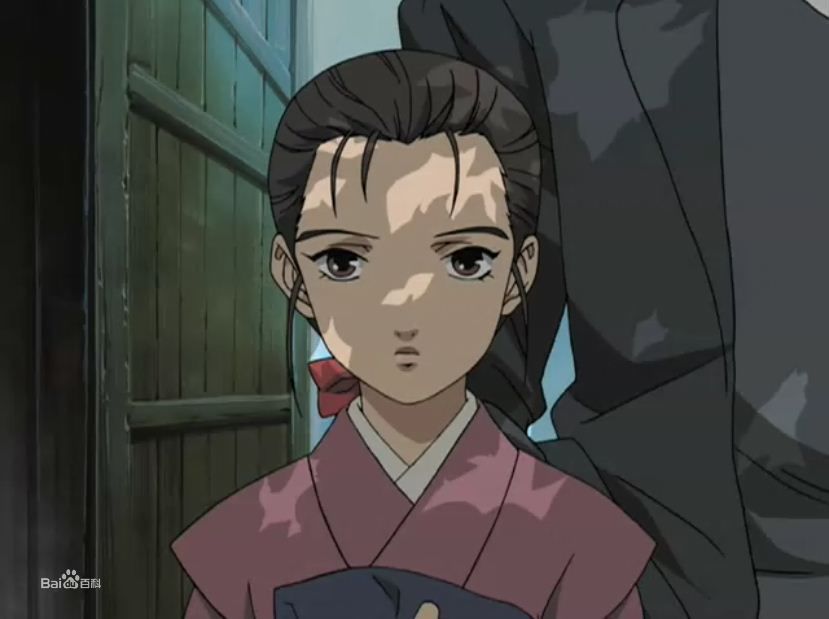
Voice: Naomi Wakabayashi
Appears in "Kaze no Banri, Reimei no Sora" (The Sky of Dawn). Her physical age is about 16 years old. She was 12 years old when she was sold to a trader, but her physical growth stopped after spending several years with a troupe of traveling entertainers and meeting Tobisen.
She is a girl from Hourai in the Meiji Era (1868-1912). She was sold to a trader and on her way to Tokyo, she was attacked by an eclipse, and was swept away to the Twelve Kingdoms. She first drifted to Keikoku. Unable to understand the language, she lived among traveling entertainers. The language barrier and the ridicule that came from it were more unbearable than anything else. He begged Cuimikun Liyao (a flying hermit from Saigoku) to take him with her because he could communicate with her. He was accepted and became Liyao's servant. At this time, he was given the name Mokurin.
She entered the Sacred Land of the Sacred Heart and never lost her language skills or died, but she came to understand evil words. She is called 笨媽 (笨媽), meaning "dumb woman," and works as a scullery maid for 100 years. Liyao is harsh with Suzu and the other servants, and some of them run away, but Suzu herself cannot escape because she believes she will be removed from the Immortal Registry.
In the animated film, while Liyao was away, she went to Taiki, the embryo who had not yet chosen a king, and told him that she was also from Horai and that she wanted to return to Horai, but she was turned away by the female hermit who was the caretaker of the Qilin.
When he hears that there is a queen in Gyeongguk who is not much older than he is, and that she is from Horai, he even dreams of one day meeting King Gyeongguk and having him punish Liyao. In reality, she is tired from the hard work and breaks a vase that was given to her by the previous king, which angers Liyao even more. He is ordered by Liyao to fetch foodstuffs from a dangerous place and is put on guard by a ferocious cavalryman, a red tiger (Sekko). Finally, he runs out of patience, rides the red tiger, and asks for help from the Cheko King, and is temporarily sheltered under the Cheko King's care.
Liyao's servants went to work for him, but Suzu was not taken in. However, she herself believed that only Jing Wang, who was also from Penglai, could understand her pain. However, Suzu herself believed that only King Jing, who was also from Penglai, could understand her pain. Still, she was grateful to King Jing, who promised not to remove her from the Seonregistry (the king has the authority to do so) and even gave her travel expenses and a travel ticket with a note to Gyeongguk, and set out on her journey.
During her journey, she meets Qing Shu, a refugee boy who has drifted away from his home in Takumi Province. When Qing Shu hears of Suzu's origins, he assumes that Suzu is simply drunk with her own misfortune. They travel together, though hurt by Seishu's words. During this journey, Suzu meets Ikuya. When Kiyohide was resting from a painful head wound he sustained from a demon while fleeing his own country, he was run over and killed by a carriage driven by the Duke of Wazhou, Shoko.
When Suzu hears that Nobuhiro is a big shot and that "Nobuhiro bribes and is protected by the one who is high in the capital (the king)," she hates King Jing because he is not a weak man but a bribe-giver and a friend of officials who kill children with impunity, and she plans to assassinate him.
Using the passport and transportation expenses given by King Chae-wang, she buys a winter weapon that can kill the king, a hermit, as a weapon (she told the shopkeeper it was for self-defense) and goes to the royal palace as an errand for King Chae-wang, but the king (Yoko) is not home and the assassination attempt is unsuccessful. He accepts an invitation to join the civil war and joins the civil war.
He meets and befriends Yoko without knowing she is the king, and they eventually reconcile. When the forbidden army moved without the permission of the king, Yoko, he told the rebels that he was a traveler with a passport from King Oui (telling everyone that his status was certain) and that he would wait and trust the king. After the Hwaju Rebellion, he went to work for King Jing Wang Yang-ji.
Seishu
Source: aaaeg0715.pixnet.net
Voice: Akiko Hiramatsu
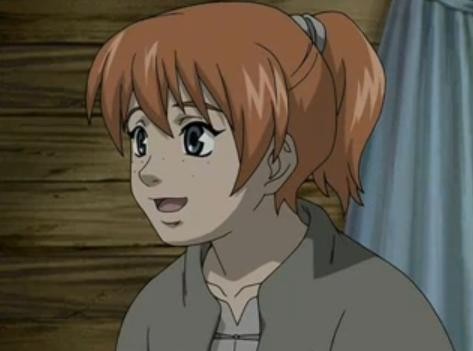
Appears in "Kaze no Banri, Reimei no Sora. A boy whom Suzu meets on a ship crossing over to Keikoku. At first glance, he seems aloof, but his mentality is higher than Suzu's. He accurately points out Suzu's situation, saying that she is "immersed in her own misfortune" and "is only daydreaming and not taking any action," and then says, "Is it good if I just put up with it? If I were you, I would try not to be bitter. Just by listening to Suzu's story, he even figured out the reason why Riyo is so hard on the servants (she is too afraid to speak her mind) and pitied her as a "poor person.
She "hates" Suzu, who she considers unhappy only for herself, but she cannot leave her alone, and continues her journey as if she were a protector rather than Suzu's chaperone.
She was originally born in Gyeonggi Province, but fled to Takumi Province when she was a child following the fall of King Yeo. She was supposed to return to Gyeonggi Province with her parents, but she lost them one after another and had to return alone. His father was killed by a demon in front of him, and he himself suffered a wound on his head. The wound still hurts from time to time, and during the journey with Suzu, the symptoms worsened, leading to blindness and weakness.
While resting on the road, he was run over and killed by a horse-drawn carriage of Seung-Hiro, an official of Gyeongguk and head of Shisui Township, who was passing by. The person who took care of Seishu's final moments was Yoko, who was pretending to be a civilian. She said that she did not want to die because "Suzu would cry," which was conveyed to Suzu through Yoko's mouth.
There were many witnesses to the scene where Kiyohide was run over, but none of them came forward as witnesses because the residents of Jianshui Township could not go against Shoko, who was a government official but wielded power like a king, and Kiyohide's body was buried in the community cemetery because he had no relatives. Suzu's desire to see King Jing was further aroused by this incident, but when she heard that "Nobuhiro is being protected by the one (king) who is much higher in Yo-tian (the capital of Gyeongguk), and that the king is being bribed by officials," she began to hate King Jing (she meant that there were officials who were bribed in King Yeo's reign, but she did not mean this), (Suzu assumed that the current King Jing was also taking bribes and overlooking the wrongdoings of officials).
Gaho (呀)
Source: 12kingdoms.fandom.com
Voice: Kazuhiro Nakata
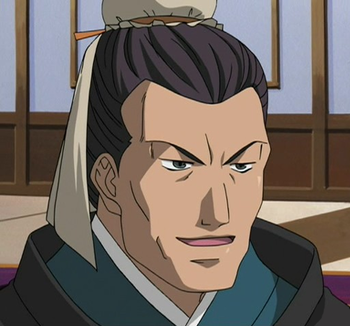
Marquis of Wazhou. He and Shoko are known as notorious officials. Despite his notoriety, he has never let evidence get out of hand. He fattened his own pockets by imposing heavy taxes on luggage leaving Hwazhou, and he took in refugees from Dai Province and used them harshly as slaves. The funds that were supposed to come from the national treasury were being squeezed out of the people. He was eventually arrested by order of Yoko.
Shoko
Source: 12kingdoms.fandom.com
Voice: Toru Okawa
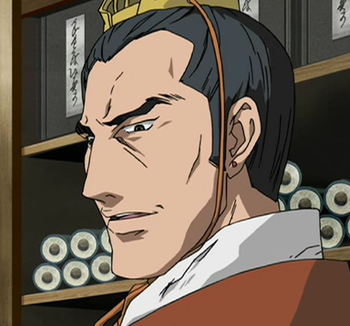
Appears in "Kaze no Banri, Reimei no Sora". He is the chief of the township of Wazhou Jianshui Township. He had Seishu, who was resting on the road, hit and killed by a horse-drawn carriage because he was in the way. He denied the will of the heavens (the will of the heavens, and thus the existence of the heavens) because he would not be punished by the heavens no matter what he did. When there was a shortage of tax revenue, he had villages attacked under the guise of a manhunt. Most of the cemetery where Seishu was buried is occupied by the graves of Shoko's victims. According to Yuan Fu, he was "a beast without a tail. He has been bribing the Hwazhou Marquis since the time of Yeowang, and has never been blamed by the center of state.
During the Hwazhou Rebellion, his misdeeds were exposed by Yoko and others. When confronted by Yoko, who had joined the rebel forces, he admitted that he had the will of heaven and did not beg for his life.
Small horse
Voice: Yasutsugu Ishii
Appears in "Kaze no Banri, Reimei no Sora". A subordinate of Shohiro, he is a military officer of Washu Shisui Gou. He has his own men attack Matsujuku and capture Enbo. In the original story, he is only mentioned by name, but in the anime, he is Shoko's one arm. He killed Ikuya for refusing to surrender to him. Immediately after that, he was captured by Kakitsu and others. Shiba is a government position.
(Yasukuni Shrine)
Source: 12kingdoms.fandom.com
Voice: Seiji Sasaki
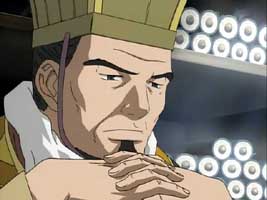
Seiji Sasaki was the Minister of State of Gyeongguk before Mr. Hankyu. Although he was an excellent official, he was not an honest person, and he had been lining his own pockets through backroom ties with 呀峰.
bulky
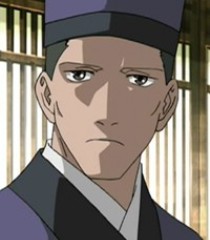
Source: 12kingdoms.fandom.com

Related Articles
Spoiler commentary and discussion of Shikon (novel, manga, and anime).
Shikishi Oni" is a horror novel, manga, and anime work based on the novel by Mayumi Ono. The comic version by Ryu Fujisaki was serialized in "JUMP SQUARE". The anime aired for 22 episodes from July to December 2010. A small village with a population of 1,300, "Sotoba Village" is isolated from its surroundings, and the custom of burial still remains. One day, three bodies were found in the Yamairi area, but the villagers decided that there was nothing unusual about the deaths, and they were treated as ordinary deaths. However, villagers continue to die one after another, and the anomalies accelerate.
Read Article
鬼談百景(小説・映画)のネタバレ解説・考察まとめ
『鬼談百景』とは、2012年に発表された小野不由美による短編怪談集。読者からの投稿をもとに作り上げた99の実話怪談を収録している。 日常の違和感が静かに恐怖へと変わる“静怖”が特徴となっており、後に『残穢』と世界観が繋がる。 2016年には、短編オムニバス形式で怪談集の中の99話のうち10のエピソードが映画化された。
Read Article
![You'll have a lot of fun! NHK Anime] 7 recommendations](https://renote.net/files/blobs/proxy/eyJfcmFpbHMiOnsiZGF0YSI6MjA5OCwicHVyIjoiYmxvYl9pZCJ9fQ==--6894577131203bf259e7ae517196d07bfd140267/51R1yxTfoLL.jpg)
You'll have a lot of fun! NHK Anime] 7 recommendations
Do you have an image that "NHK is a broadcaster, so it must be stiff" or "it looks childish"? No, no, there are many highly finished animations that are satisfying for adults as well. This is why we have compiled a list of recommended NHK animations.
Read Article
Tags
Contents
- Overview of The Twelve Kingdoms
- The Twelve Kingdoms" synopsis and story
- Moon Shadow Shadow Sea
- The Moon Sea The shore of the labyrinth
- Ten Thousand Miles of Wind, Reimei no Sora
- the first lunar month
- The Sea of God in the East The Canghai in the West
- Characters from "The Twelve Kingdoms
- Gyeongdong Province
- Yoko Nakajima/Keio/Naka Yoko (中嶋陽子/景王/中陽子)
- Keiki
- white mustard (Sinapis alba)
- redundant help
- Houki (驃騎)
- group culvert
- heavy ceremony held in June
- Jakko
- green monkey (Chlorocebus sabaeus, sometimes considered to be a subspecies of Chlorocebus auratus)
- Jade leaf
- Yoo / Seowang
- Seo Ei (Seo Ei is a Japanese word meaning "to save" or "to save")
- Chairperson
- Candy-selling leaves (Ame-uri Gyokuyo)
- Bishin.
- Iron pyrites
- far-fetched (argument, opinion)
- Su Lan Yu
- Su Lan Gui
- Shoqiong
- Oki Suzu/Mokurin
- Seishu
- Gaho (呀)
- Shoko
- Small horse
- (Yasukuni Shrine)
- bulky
- Shibamochi
- Kantai (垣魋)
- Chief of the fall officialdom
- Chief summer official
- thunderclap
- Labor and Foreign Employment
- tiger's howling
- rays of the setting sun
- Tatsuo
- 丕緒(丕しょ)
- Soken
- Xiaolan
- Aoe
- Riou.
- The King of Thin
- Hi-oh
- lotus flower
- Kakei
- Wild Goose Country
- King Yan, Shoryu
- Enkirokuta/ idiot
- White fertile fly
- good (bright) angle
- Rakushun
- the chance of seeing a fish in the wild
- Yang Zhu Heng
- Seisho
- Meiken
- spider pillow (chuchin)
- Master Yutaka
- Kenro Shinkun/Baku Koya
- Ribi
- Mediation
- Yizhin (a kind of "Yizhin" in Japanese)
- In Shirasawa
- hair whirl
- GENKAI
- Shiken-nai
- Waht is the name of the Chinese character for "rough" and "rough" is the name of the Japanese character for "rough
- Kokei
- Koshu Country
- King Hanawa / King Sakuou
- Hanawa In/Hanawa Wa
- Hakuyun Kaiswa
- mother of Rakushun
- Miss Tatsuki
- Seizo Matsuyama
- Kyongju Province
- King of offerings, pearl crystals
- Qi (Qin)
- Sangyeongsang, preface (in Chinese, approx. 3.5 cm)
- Kiwa Muro
- gong carrier
- Lianqiangdai (Lianqiang table)
- Houkyoku Koku
- Mine King, Middle Poach / King Rokuo
- Kahana
- Hourin
- Moon Stream
- Gobo.
- Daijiyoku Koku (The Land of the Rising Sun)
- King Tai, leader of the Taoist movement
- Tai-Ki Kouri/Kaname Takasato
- White Shanty
- arrogance
- the true grandson (or grandchild)
- Li Saisai
- Lu Haku
- Kaiei (flower shadow)
- Langsan
- Joua Sen
- Ganzhao
- English name
- Seirai
- Frozen Gen (Sougen)
- Gashin
- Rennpokukoku
- Ren Wang Oh Seitaku
- Renrin
- Saizhou Province
- King of the Order, Huangguo (Chinese: 采王; pinyin: 采王; pinyin: 采王)
- Cradle of the Cheilin
- Suibi-kun / Riyou
- Shishou / Gowang
- Buuang (dynasty of China)
- Celebration of prosperity
- Shu Xia
- Seiki
- Zun Emperor
- Sounangukoku (South Korea)
- Sung King O-ro Seng-shin
- Sung In, Sho Sho
- Meiqi.
- Ritatsu
- Rikou
- Bunki (Princess Bunki)
- Ryuhoku Country (Ryukoku Province)
- Liu Wang Sukeroho
- Liu Qi
- Stubborn hill
- Ei Kung
- Gamagetsu
- Yuhu
- Enga
- otter (Lutra lutra)
- Sunryo
- Eshi (blessing)
- HANSEI KOKOKU
- Wu Lanjiao, King of the Flood
- Flooding, Risetsu
- Nyusen (female immortal)
- Gyokuha/Hekikagenkun
- Teiei
- Ryoke
- Shoshun
- Kaikaku / Hourai
- Ikuya Asano
- Yuka Sugimoto
- Heki Rakunin (Wall Rakunin)
- Tak Takasato, Taku
- Grandmother of the keystone
- Masashi Nakajima
- Ritsuko Nakajima (Ritsuko Nakajima)
- Terms in The Twelve Kingdoms
- Worldview and Geography of the Twelve Kingdoms World
- Sea of clouds
- The false sea
- Mt. Lingun
- Gozan (Five Mountains)
- Hourogu (Palace of the Peng Lu)
- Yellow Sea
- Mt. Ascending (Mt. Shozan)
- Shiryoumon (four-order gate)
- (food) erosion
- Egg Fruit
- Heaven, King, and Kirin in the Twelve Kingdoms World
- Heavenly King
- Seiohbo
- King.
- Kao/Kiou (False King)
- Kirin
- lost road
- woman-kai (i.e. a monster, monster-like creature, etc.)
- Status and creatures other than kings of the Twelve Kingdoms World
- Immortals
- Nyusen (female immortal)
- Womb Fruit
- Sea guest / Mountain guest
- demon
- commander
- half-human and half-beast
- Cavalry
- Hakuchi (Hakuchi)
- luan (mythical Chinese bird)
- Phoenix
- Other
- Winter Ware (Touki)
- Water Punishing Sword
- Kaitatsu
- Rike
- Famous quotes, lines, scenes, and scenes from "The Twelve Kingdoms
- 'I don't care about the world or strangers. I am kind because I want to be kind. I believe because I want to believe.
- I was so far away from Le Shun's heart. He didn't discriminate against me when I was a fetus, but now he discriminates against me when I am a king? There are only two steps between us. No, it is three steps for me.
- It's the tears of a child to say he feels sorry for himself.
- The important thing is to make an effort to understand the intentions of the other party.
- The world is made up of half happy things and half painful things, and a person is happy not because he or she is blessed but because he or she strives to be happy.
- If they give you things without effort, it means they demand that you work that much harder."
- Backstories, trivia, subplots/episodes, and anecdotes from "The Twelve Kingdoms
- The Twelve Kingdoms" is a sequel to the same author's novel "The Devil's Child" and the main story
- Differences between the original novel and the anime
- Hanawa In's cause of death changed from death from illness to murder by Hanawa King.
- Yuka Sugimoto is another form of Yoko
- Why Rakutoshi went to Yanagikuni
- Theme and insert songs for "The Twelve Kingdoms
- OP (Opening): "Twelve Phantom Songs
- ED (Ending): Mika Arisaka "Moon Lost in the Wind Shadow