
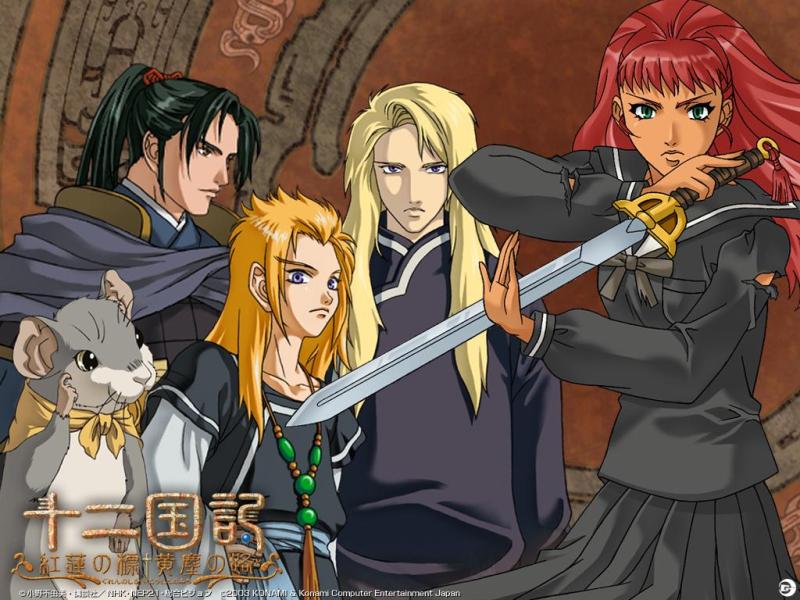
The Twelve Kingdoms" is a novel by Ono Fuyumi and an anime and other media mix works based on the novel. Yoko Nakajima, a high school girl, has lived her whole life with a concern for the color of others' faces. Then, a young man who calls himself Jingqi, the Qilin, appears in front of Yoko and calls her king. Yoko travels to her original home in the world of the Twelve Kingdoms, where she goes through various battles and decides to become king. Some of them face power and the responsibilities that come with it, while others grow up facing their complexes. This is an otherworldly fantasy set in an ancient Chinese-style world, but with a strange sense of reality.
lost road
Source: www.happyon.jp
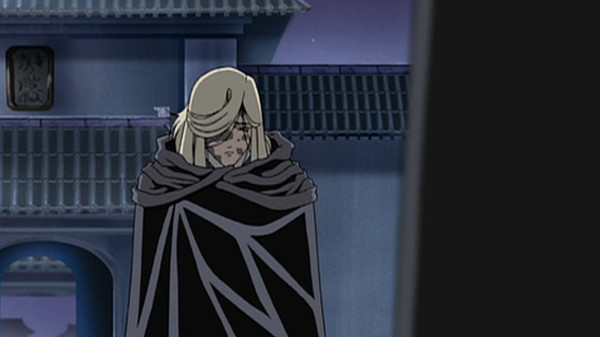
Hanawa Rin, who suffered from the disease of lost road.
A disease that a qilin suffers from. The disease of lost road is contracted when the king engages in out-of-the-way politics. Black spots like eczema appear all over the body, and the patient gradually becomes weak. The disease can be cured if the king changes his politics, but this is almost never the case. The people who suffered from the disease of lost road in the work are Jingqi, Hanawa Lin, and Fenglin. The latter two died. Hanawa In died of illness caused by the disease of lost road (in the anime, he defended Yoko and was killed by Hanawa Wang), and Bong In was killed in a rebellion. Jingqi was supposedly cured when Yeowang returned the throne himself.
woman-kai (i.e. a monster, monster-like creature, etc.)
Source: blog.sina.com.cn
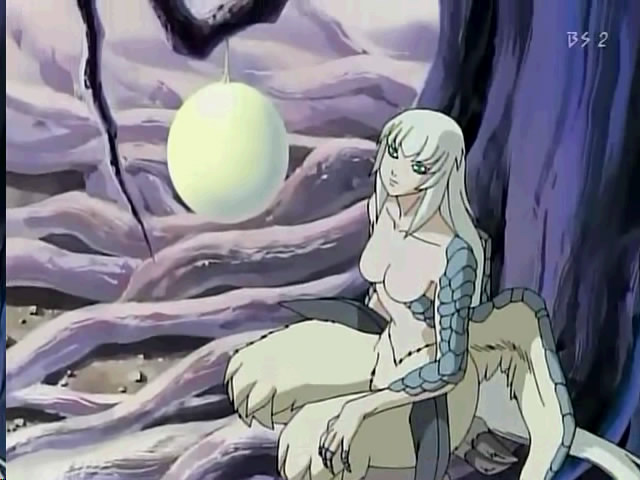
A female monster watches over the kirin egg fruit of the new Takumi Province.
A being that acts as a parental substitute for the kylin of each country while they are at Mount Yomogi. They are positioned between humans and young beasts. They look like chimeras, a mixture of human females and various birds and beasts, and the more of them that are mixed in, the better the female monster. The more mixed the number of female monsters in the tree, the better the female monster. The female monster also knows the gender of the qilin before it is born, and there is a description of the female monster Shiro Shanzi of Dai Province calling out "Taiki" to the qilin eggs.
The female monster can only think of protecting the qilin. When a qilin is born, she gives it milk to nurture it and protect it from all kinds of calamities. She plays the role of mother and protector, including some educational activities. They wait patiently under the egg until the qilin is born. In fact, there are descriptions of kings from other countries visiting Mt. They act as nannies for the kirin until the kirin selects a king, and after the kirin selects a king, they act as messengers to protect the king and kirin.
All female monsters have the surname "Hak" (white). The female goddess says that it is a sign of the important mission to protect and nurture the qilin, and that it is a prerogative of the female goddess. In the work, there are Jingqi, Yanqi, Taqi, Hanawa Lin, and a new female monster from Takumi Province. In Horai, they rarely act outwardly, but they follow the kirin they are supposed to protect like shadows. The female ghosts of Kaname (Taiki) and Rokutai (Enkichi), who have returned to Horai, protect the kylin from the shadows and are even described as calling out to them (Kaname, now a high school student, does not seem to hear the female ghosts' voices, perhaps because his power as a kylin has weakened). (In the case of Kaname, who has become a high school student, his strength as a qilin has weakened, and he does not seem to hear the female monster's voice.
Status and creatures other than kings of the Twelve Kingdoms World
Immortals
In the world of the Twelve Kingdoms, a person who has entered the Immortal Realm. Once a person becomes an Immortal, he or she becomes immortal. Although they do not die of hunger, they may experience hunger and starvation. Immortality is not complete; death occurs when the head is cut off or the body is severed by a special weapon called a "winter weapon. The status of a Seonin can be given back by the Seon, or taken away by others. Once removed from the hermitage, a person becomes an ordinary human being and begins to grow old. In the film, Xiangqiong, a lord of Fangguo, was removed from the hermitage as a result of his rebellion.
Those who are available to the king also belong to the hermitage. When a person becomes king, he is automatically placed in the xianjian. Immortals appointed by the king and serving the king are called chisen. The hermits who serve the king in succession, such as provincial governors and central bureaucrats, also belong to the jisen. In such cases, some of them take pride in the fact that they have run the government by themselves during the absence of the king, and they often act in a manner that disrespects the new king. Yoko's embryonic status also made her susceptible to being taken advantage of by the bureaucrats. The provincial governors were also hermits.
Those who do not serve the king are called hisen. Even those who once served a king are hisen if they do not have a king to serve (or do not serve the current king). The main feisen in the work are Cui Bijun Liyao, Yuan Fu, and Meisian. Some Feixian get tired of living, and often give up their hermit status themselves. Although it is customary for the king and the flying hermits not to interfere with each other, the king has the authority to punish flying hermits if he so chooses, although no one exercises it.
Nyusen (female immortal)
Her role is to take care of the Qilin at Mt. She is called up by the female Immortal from among the mere mortals. She serves the qilin as their master (Lord of Mount Bongsan) until the qilin chooses a king. In addition to being a mere caretaker, she also provides a certain amount of protection, for example, by controlling those who speak to the qilin. He hopes that the Qilin will grow up healthy in mind and body, and that he will choose a good king.
Normally, he is not allowed to dine with the Qilin, but when he was the Duke of Pengshan, those who could see the Qilin before the meal were given the honor of accompanying the Qilin. This was a special exception because Taiki was an embryo and felt lonely eating alone, even though he was not alone.
Womb Fruit
Source: ameblo.jp
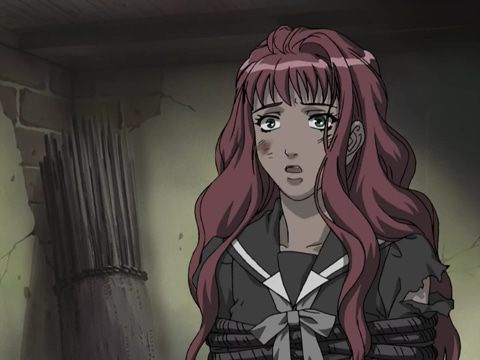
Yoko, the embryonic Yoko, became her true form once she returned to the Twelve Kingdoms world, and was considered a different person by her classmates Yuka and Ikuya.
A person born from the ovum of an inhabitant of the Twelve Kingdoms who was swept away to Horai or Kunlun due to an erosion. The ovum enters the belly of a suitable married woman and is born through the stages of pregnancy and childbirth. She wears a "shell" so that she looks like her relatives in Horai and Kunlun. Yoko was said to resemble her grandmother because she wore a shell. This shell disappears when Tainan returns to the Twelve Kingdoms, so their atmosphere and appearance change after returning to the Twelve Kingdoms. In the work, Yuka and Ikuya, whom Yoko crossed over with, said "Who are you?" and recognized Yoko by her voice and clothes. Enkir (Rokuta) has changed the color of his hair, and Taiki (Kaname) has changed the length of his hair. Some people spend their entire lives in Horai or Kunlun without knowing their true origins as they are, but important embryos such as kings and qilin are brought back.
Sea guest / Mountain guest
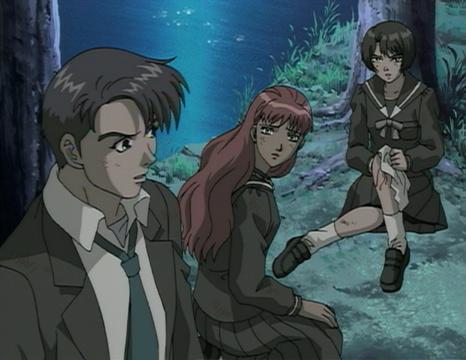
Source: abema.tv
Ikuya (left) and Yuka (right) are sea guests. Yoko (center) is the embryonic fruit.
Kaikaku are people who were carried away from Horai (Japan) by an eclipse. In the "Twelve Kingdoms" anime, Ikuya Asano, Yuka Sugimoto, Suzu Ohki, Seizo Matsuyama, and Rakuto Kabe are considered "sea guests. Basically, it is impossible to return to the original world due to the fact that the eclipse itself could happen at any time or place, but Yuka was able to return to Japan through the power of Keikyu.
Shankaku refers to those who were swept away from Kunlun (China) by the eclipse. While the Umikyaku are said to drift to the end of the Kukai Sea, the Sankyaku are said to arrive at the foot of Mount Kongo. In the work, the mountain guest does not appear.
The difference from the oviparity is that they are not people from the Twelve Kingdoms world, but castaways caught in the eclipse. Unlike the inhabitants of the Twelve Kingdoms World, who are born from the ovipositor, they are essentially different from the inhabitants of the Twelve Kingdoms World, as they are born from their mothers' bellies. Like the half-breeds, they are discriminated against, and some even call them "half-breeds.
The language of the Twelve Kingdoms is a form of Chinese writing similar to ancient Chinese, which sounds unfamiliar to the hailing people and makes communication difficult. They can communicate with those who are in the hermitage, and once they are in the hermitage, they no longer have language difficulties. Seizo Matsuyama describes a neighbor complaining to him, "Don't yell at me in a language I don't understand.
Sea passengers often end up in the eastern-leaning countries of Keikoku, Gankoku, and Takumi. Therefore, they are recognized by the inhabitants of the Twelve Kingdoms as those who arrive from the east of the Sea of Enchantment. Buddhism was brought to Fangguo by the Yamakaku, and there are remnants of temples in its buildings.
While some haikaku and yamakaku arrive alive, others are said to be "drowned" (drowning does not mean being swept away by the water). The name "sea guests" seems to have come from the fact that they wash up on the empty sea. Like Tainan-kai, they are regarded as creepy because of the way they are born and their origin from another world.
In the story, the mountain guests do not appear, and only the treatment of the sea guests is described. The Wild Goose Country protects not only refugees and half-breeds, but also sea guests, and has a receptionist who speaks Japanese and asks for their phone number, zip code, and name. Since Yuka's zip code was seven digits, he suspected that she was trying to get protection by pretending to be a sea visitor. Yanqi, who happened to be there, intercepted her, saying, "The current ZIP code of Penglai is seven digits.
In Takumi Country, when a guest washes ashore, whether dead or alive, it is reported to the authorities, and if the guest is alive, the authorities can determine whether the guest is a good or bad guest. If the guest is judged to be a good guest, he or she is placed under the guardianship of an appropriate person and can live in an appropriate place, but if the guest is judged to be a bad guest, he or she is imprisoned at best, or executed at worst. Yoko heard about this when she was brought to the prefectural office.
demon
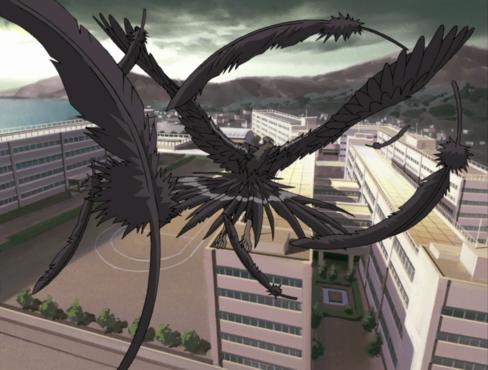
Source: www.netflix.com
An existence that is not in accordance with the reason of heaven. They are monstrous beings of various races. They appear in the Yellow Sea and kingless lands and attack humans and other creatures, sometimes even kylins. Many of them lure people with a voice that sounds like a human baby's cry. They sometimes appear in the vicinity of Mount Yongsan and attack those ascending the mountain, which is one of the reasons why ascending the mountain is said to be dangerous.
Kirin subdue and ensnare demons and use them as their masters. If a demon recognizes that a qilin is suitable for its master, it makes a contract with the demon to become its messenger (a subordinate of the qilin). The contract is to feed on the dead flesh of the kylin.
The strength of demons varies widely, and high-ranking demons can speak human languages. Some demons change their appearance, which means that they are as powerful as qilin. In the film, the Tao Tei appeared as the highest ranking demon and changed its appearance many times to threaten and attack Tai Qi.
Jing Qi told Tai Qi that the power of strong will binds demons, which Jing Qi told Tai Qi. With his strong will, Taiki sent down the strongest demon, Tao Tei, as his messenger. In some cases, even a qilin loses his life without being recognized by demons as their lord (according to Jingqi. In fact, when the female Immortals heard that Taiki had sent a Tao Tei as an emissary, they said, "This is the first time a Qilin has entangled a Tao Tei.)
commander
A demon contracted by the Kirin to be its servant. They are called by the Kirin, who reads their names and sends them on an errand. Once sent down, the demons swear absolute loyalty to the kirin and the king, and work for them as guards, secret agents, and carriers. The demons would also attack the qilin and gauge whether or not they were worthy of being sent on an errand, so Jingqi taught Taeki that in some cases it was better to flee. Many demons can speak, but the less powerful ones can only speak one language.
There is a contract between a qilin and a demon that says, "If a qilin dies, its dead flesh will be fed to the messenger. According to Enkirin, "The meat of a kirin is said to be delicious. At the time of the death of the Hanawa Injin, there is a description of the Hanawa Injin's messenger going to the corpse.
half-human and half-beast
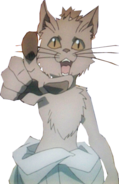
Source: 12kingdoms.fandom.com
Yoko is a half-cat, half-animal that Yoko boarded on a boat.

Related Articles
Spoiler commentary and discussion of Shikon (novel, manga, and anime).
Shikishi Oni" is a horror novel, manga, and anime work based on the novel by Mayumi Ono. The comic version by Ryu Fujisaki was serialized in "JUMP SQUARE". The anime aired for 22 episodes from July to December 2010. A small village with a population of 1,300, "Sotoba Village" is isolated from its surroundings, and the custom of burial still remains. One day, three bodies were found in the Yamairi area, but the villagers decided that there was nothing unusual about the deaths, and they were treated as ordinary deaths. However, villagers continue to die one after another, and the anomalies accelerate.
Read Article
鬼談百景(小説・映画)のネタバレ解説・考察まとめ
『鬼談百景』とは、2012年に発表された小野不由美による短編怪談集。読者からの投稿をもとに作り上げた99の実話怪談を収録している。 日常の違和感が静かに恐怖へと変わる“静怖”が特徴となっており、後に『残穢』と世界観が繋がる。 2016年には、短編オムニバス形式で怪談集の中の99話のうち10のエピソードが映画化された。
Read Article
![You'll have a lot of fun! NHK Anime] 7 recommendations](https://renote.net/files/blobs/proxy/eyJfcmFpbHMiOnsiZGF0YSI6MjA5OCwicHVyIjoiYmxvYl9pZCJ9fQ==--6894577131203bf259e7ae517196d07bfd140267/51R1yxTfoLL.jpg)
You'll have a lot of fun! NHK Anime] 7 recommendations
Do you have an image that "NHK is a broadcaster, so it must be stiff" or "it looks childish"? No, no, there are many highly finished animations that are satisfying for adults as well. This is why we have compiled a list of recommended NHK animations.
Read Article
Tags
Contents
- Overview of The Twelve Kingdoms
- The Twelve Kingdoms" synopsis and story
- Moon Shadow Shadow Sea
- The Moon Sea The shore of the labyrinth
- Ten Thousand Miles of Wind, Reimei no Sora
- the first lunar month
- The Sea of God in the East The Canghai in the West
- Characters from "The Twelve Kingdoms
- Gyeongdong Province
- Yoko Nakajima/Keio/Naka Yoko (中嶋陽子/景王/中陽子)
- Keiki
- white mustard (Sinapis alba)
- redundant help
- Houki (驃騎)
- group culvert
- heavy ceremony held in June
- Jakko
- green monkey (Chlorocebus sabaeus, sometimes considered to be a subspecies of Chlorocebus auratus)
- Jade leaf
- Yoo / Seowang
- Seo Ei (Seo Ei is a Japanese word meaning "to save" or "to save")
- Chairperson
- Candy-selling leaves (Ame-uri Gyokuyo)
- Bishin.
- Iron pyrites
- far-fetched (argument, opinion)
- Su Lan Yu
- Su Lan Gui
- Shoqiong
- Oki Suzu/Mokurin
- Seishu
- Gaho (呀)
- Shoko
- Small horse
- (Yasukuni Shrine)
- bulky
- Shibamochi
- Kantai (垣魋)
- Chief of the fall officialdom
- Chief summer official
- thunderclap
- Labor and Foreign Employment
- tiger's howling
- rays of the setting sun
- Tatsuo
- 丕緒(丕しょ)
- Soken
- Xiaolan
- Aoe
- Riou.
- The King of Thin
- Hi-oh
- lotus flower
- Kakei
- Wild Goose Country
- King Yan, Shoryu
- Enkirokuta/ idiot
- White fertile fly
- good (bright) angle
- Rakushun
- the chance of seeing a fish in the wild
- Yang Zhu Heng
- Seisho
- Meiken
- spider pillow (chuchin)
- Master Yutaka
- Kenro Shinkun/Baku Koya
- Ribi
- Mediation
- Yizhin (a kind of "Yizhin" in Japanese)
- In Shirasawa
- hair whirl
- GENKAI
- Shiken-nai
- Waht is the name of the Chinese character for "rough" and "rough" is the name of the Japanese character for "rough
- Kokei
- Koshu Country
- King Hanawa / King Sakuou
- Hanawa In/Hanawa Wa
- Hakuyun Kaiswa
- mother of Rakushun
- Miss Tatsuki
- Seizo Matsuyama
- Kyongju Province
- King of offerings, pearl crystals
- Qi (Qin)
- Sangyeongsang, preface (in Chinese, approx. 3.5 cm)
- Kiwa Muro
- gong carrier
- Lianqiangdai (Lianqiang table)
- Houkyoku Koku
- Mine King, Middle Poach / King Rokuo
- Kahana
- Hourin
- Moon Stream
- Gobo.
- Daijiyoku Koku (The Land of the Rising Sun)
- King Tai, leader of the Taoist movement
- Tai-Ki Kouri/Kaname Takasato
- White Shanty
- arrogance
- the true grandson (or grandchild)
- Li Saisai
- Lu Haku
- Kaiei (flower shadow)
- Langsan
- Joua Sen
- Ganzhao
- English name
- Seirai
- Frozen Gen (Sougen)
- Gashin
- Rennpokukoku
- Ren Wang Oh Seitaku
- Renrin
- Saizhou Province
- King of the Order, Huangguo (Chinese: 采王; pinyin: 采王; pinyin: 采王)
- Cradle of the Cheilin
- Suibi-kun / Riyou
- Shishou / Gowang
- Buuang (dynasty of China)
- Celebration of prosperity
- Shu Xia
- Seiki
- Zun Emperor
- Sounangukoku (South Korea)
- Sung King O-ro Seng-shin
- Sung In, Sho Sho
- Meiqi.
- Ritatsu
- Rikou
- Bunki (Princess Bunki)
- Ryuhoku Country (Ryukoku Province)
- Liu Wang Sukeroho
- Liu Qi
- Stubborn hill
- Ei Kung
- Gamagetsu
- Yuhu
- Enga
- otter (Lutra lutra)
- Sunryo
- Eshi (blessing)
- HANSEI KOKOKU
- Wu Lanjiao, King of the Flood
- Flooding, Risetsu
- Nyusen (female immortal)
- Gyokuha/Hekikagenkun
- Teiei
- Ryoke
- Shoshun
- Kaikaku / Hourai
- Ikuya Asano
- Yuka Sugimoto
- Heki Rakunin (Wall Rakunin)
- Tak Takasato, Taku
- Grandmother of the keystone
- Masashi Nakajima
- Ritsuko Nakajima (Ritsuko Nakajima)
- Terms in The Twelve Kingdoms
- Worldview and Geography of the Twelve Kingdoms World
- Sea of clouds
- The false sea
- Mt. Lingun
- Gozan (Five Mountains)
- Hourogu (Palace of the Peng Lu)
- Yellow Sea
- Mt. Ascending (Mt. Shozan)
- Shiryoumon (four-order gate)
- (food) erosion
- Egg Fruit
- Heaven, King, and Kirin in the Twelve Kingdoms World
- Heavenly King
- Seiohbo
- King.
- Kao/Kiou (False King)
- Kirin
- lost road
- woman-kai (i.e. a monster, monster-like creature, etc.)
- Status and creatures other than kings of the Twelve Kingdoms World
- Immortals
- Nyusen (female immortal)
- Womb Fruit
- Sea guest / Mountain guest
- demon
- commander
- half-human and half-beast
- Cavalry
- Hakuchi (Hakuchi)
- luan (mythical Chinese bird)
- Phoenix
- Other
- Winter Ware (Touki)
- Water Punishing Sword
- Kaitatsu
- Rike
- Famous quotes, lines, scenes, and scenes from "The Twelve Kingdoms
- 'I don't care about the world or strangers. I am kind because I want to be kind. I believe because I want to believe.
- I was so far away from Le Shun's heart. He didn't discriminate against me when I was a fetus, but now he discriminates against me when I am a king? There are only two steps between us. No, it is three steps for me.
- It's the tears of a child to say he feels sorry for himself.
- The important thing is to make an effort to understand the intentions of the other party.
- The world is made up of half happy things and half painful things, and a person is happy not because he or she is blessed but because he or she strives to be happy.
- If they give you things without effort, it means they demand that you work that much harder."
- Backstories, trivia, subplots/episodes, and anecdotes from "The Twelve Kingdoms
- The Twelve Kingdoms" is a sequel to the same author's novel "The Devil's Child" and the main story
- Differences between the original novel and the anime
- Hanawa In's cause of death changed from death from illness to murder by Hanawa King.
- Yuka Sugimoto is another form of Yoko
- Why Rakutoshi went to Yanagikuni
- Theme and insert songs for "The Twelve Kingdoms
- OP (Opening): "Twelve Phantom Songs
- ED (Ending): Mika Arisaka "Moon Lost in the Wind Shadow