
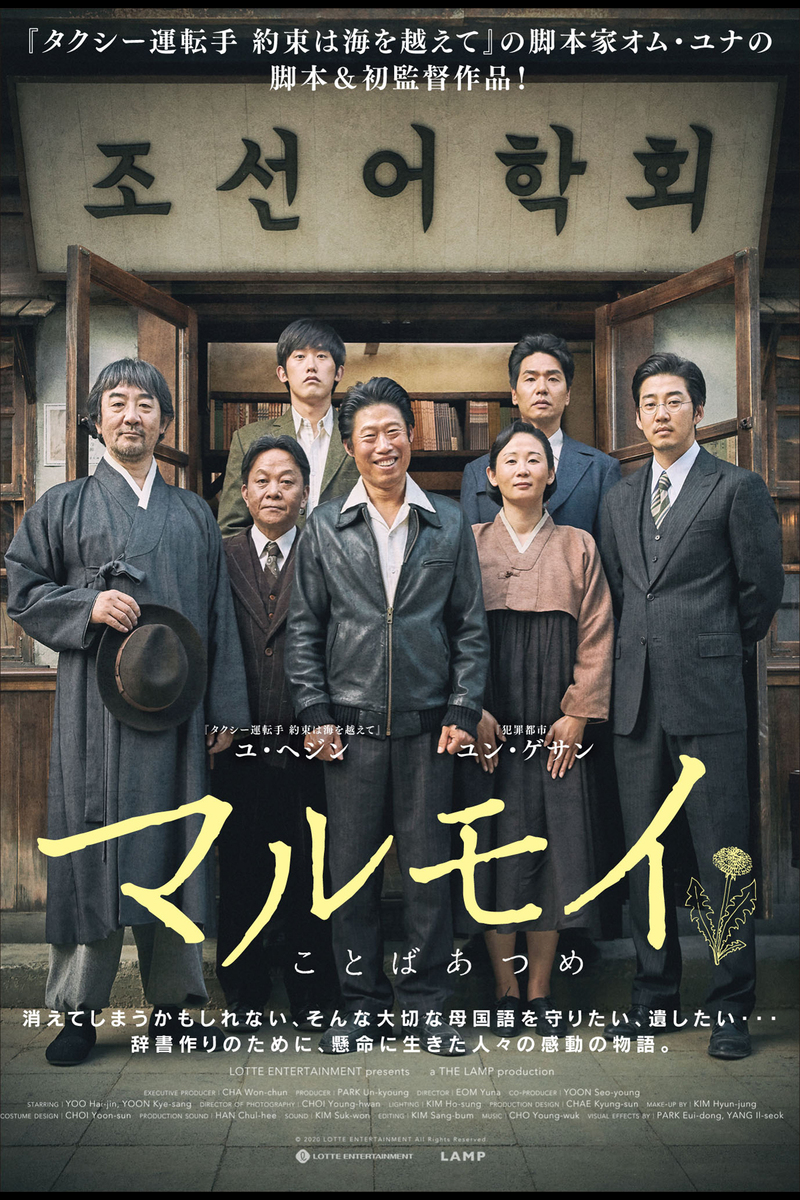
Marmoi Kotoba Atsume" is a Korean film released in Japan in 2020. Directed and written by Om Yoon-ah, the film is based on the "Korean Language Society Incident" that actually occurred in Korea during World War II. Kim Pang-soo, a poor man living in Gyeongseong on the Korean Peninsula under Japanese rule, happens to meet Ryu Jung-hwan, a representative of the Korean Language Society, which compiles a dictionary of the Korean language. The two are at odds with each other, but as they collect various Korean words, they form a strong bond as comrades. This film is a story about people who live wisely with national pride.
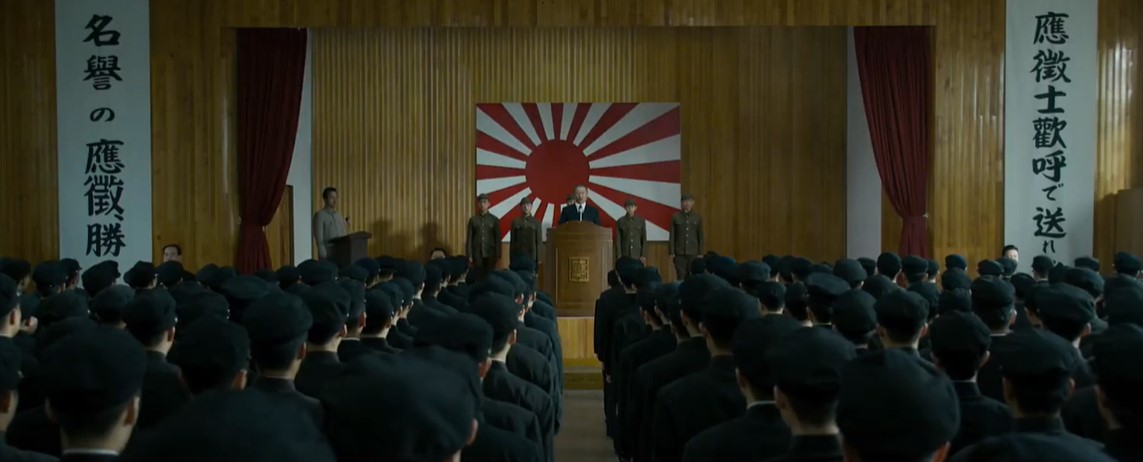
Assembly at Gyeongseong First Middle School
Gyeongseong First Middle School is the middle school in Gyeongseong under Japanese rule in this film. It is the school attended by Pang-su's son, Duk-jin, and chaired by Jung-hwan's father, Wang-taek. The real school that corresponds to Gyeongseong First Middle School is believed to be "Gyeongseong Junior High School. Gyeongseong Junior High School was formerly known as "Korea Presidential Middle School." After World War II, when the southern part of the Korean Peninsula became the Republic of Korea, the school was transferred directly to South Korea and renamed "Seoul High School.
illiterate person
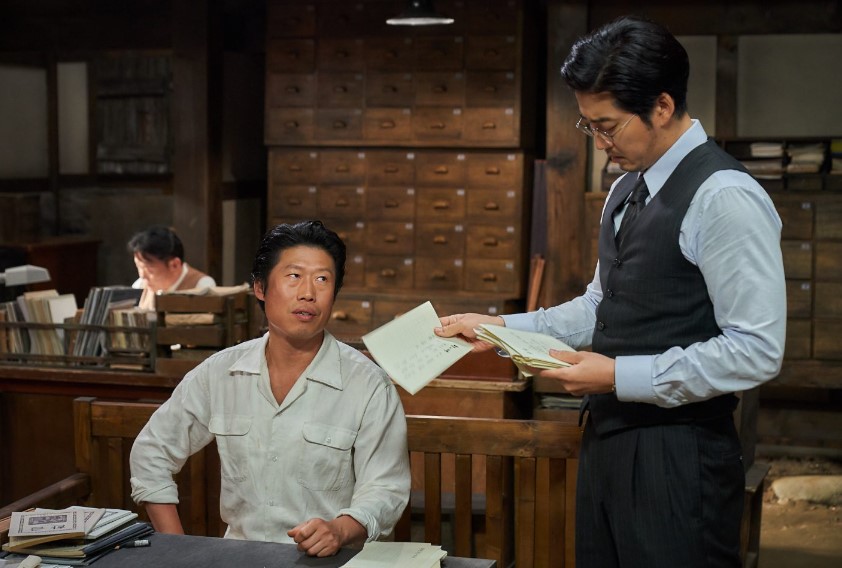
Jung Hwan (right) decides to give a literacy test to Pangsu (left), who cannot read.
An illiterate person is a person who is unable to read or write even the simplest of words in daily life. They may be illiterate because they have learning or intellectual disabilities, or they may be illiterate because they have not been given the opportunity to learn for some reason. In the latter case, as in the case of Panth in this film, there are no problems in speaking, and these problems can often be overcome by learning.
public hearing
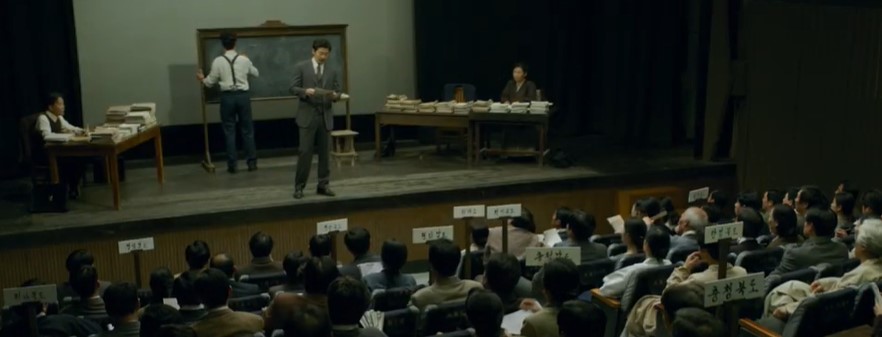
Public hearing held in the theater
A public hearing is a meeting to hear the opinions of academics and interested parties when important decisions are made, mainly by the national or local government. It may also refer to a meeting where academics present their research and other topics, with advance notice given to the general public so that anyone can attend. In this film, the Korean Language Society holds a public hearing to determine the standard language of the Korean peninsula as it compiles a dictionary.
Famous quotes, lines, scenes and scenes from "Marmoi Kotoba Atsume
Koo, Ja-young: "Language is a vessel that contains the spirit of a people.
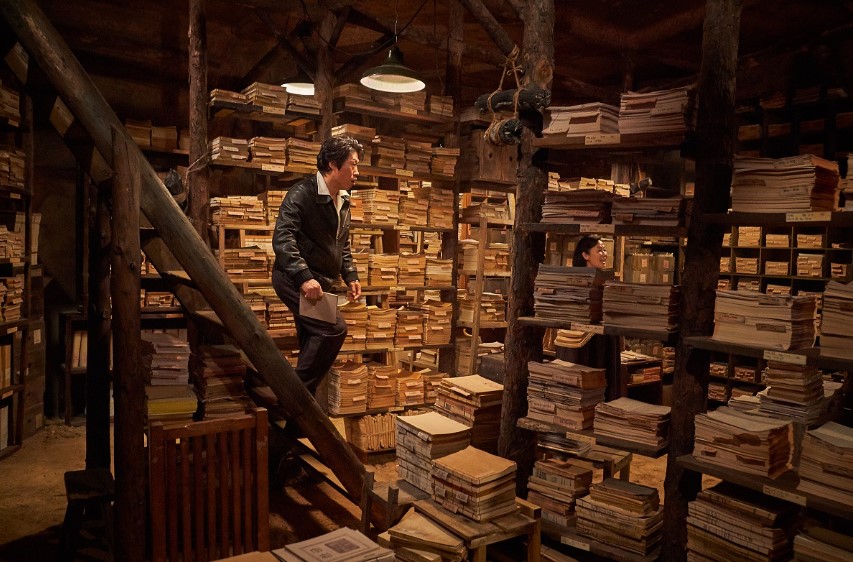
Korean language materials collected by the Korean Language Society over the past 10 years.
A line from Koo Ja-young, a member of the Korean Language Society, to Pang-su, who said he did not understand the meaning of compiling a dictionary of the Korean language. Since Pang-su was illiterate and did not have much attachment to Korea or Korea, he did not understand why the Korean Language Society was in such a hurry to compile a dictionary. Jayeon tells Pang-su that "language is a vessel that contains the spirit of a nation. This is because a country's language naturally expresses the history and thoughts of its community. Under Japanese rule, Korea was losing its will, spirit, and even its history, which should have been expressed in the Korean language. The Korean Language Society was concerned about this and worked to preserve its identity for future generations. Hearing this story, Pangsu naturally realized that he was proud to be a Korean, which had taken root in him.
Ryu Jung-hwan: "I'm an important comrade... please forgive me."
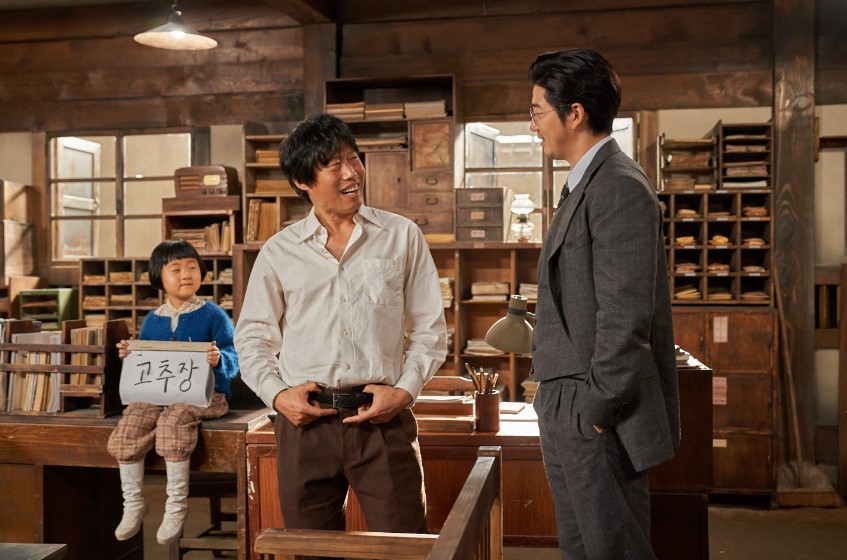
Pangsu (left) and Jung Hwan (right) deepen their bond as comrades.
This is a line that Jung-hwan says to Pang-su to ask for forgiveness after he mistakenly thought that Pang-su had absconded with the money from the Korean Language Institute. When Jung-hwan learns that Pang-su had helped Im after the misunderstanding, he goes to Pang-su to apologize. At first, Pang-su does not take it up, but then he says, "Where people gather, there are words, and where words gather, there are aspirations...Where aspirations gather, the road to independence will eventually open. I was foolish. Please forgive me...even though you are my precious comrade." His words gradually moved him. Pang-su felt that Jung-hwan was much better brought up than he was and looked down on him. However, when Jung-hwan is sincere and courteous to her, Pang-su begins to feel that she wants to help him. Pang-su often helps Jung-hwan, and Jung-hwan also relies on Pang-su, and the two gradually become a great duo.
Letter from Pance.
Pang-su, who lost his life during the hearing, actually left a letter to Deok-jin and Seung-hee shortly before his death. The letter was hidden in the post office warehouse along with the manuscript of the dictionary, and was finally delivered to them after many years. In the letter, he wrote, "I feel like I can be a proud father to you guys when the dictionary is completed. Pangsu, who had been a poor father before working for the Korean Language Society, was ashamed of the poor life he had given his two children. However, he thought that if he could create a Korean dictionary, he could create something that would be handed down to future generations, even if he remained poor, and he continued his work despite Duk-jin's opposition. Pang-su lost his life over Deok-jin, who said, "You promised not to leave us again," but without Pang-su, the dictionary would not have been completed. Moreover, they would not have been able to recover their own language after Korea's independence. Although Pang-su was an unreliable father before his death, with his pickpocketing and laxity, this achievement is irreplaceable. Thanks to this letter, Duk-jin and Seung-hee were also able to put their feelings of loss for Pang-su behind them.
Behind the Scenes, Trivia, Episodes, and Anecdotes of "Marmoi Kotoba Atsume" (Marmoi Kotoba Atsume)
Director Yuna Ohm sublimates somber & dark themes into entertainment
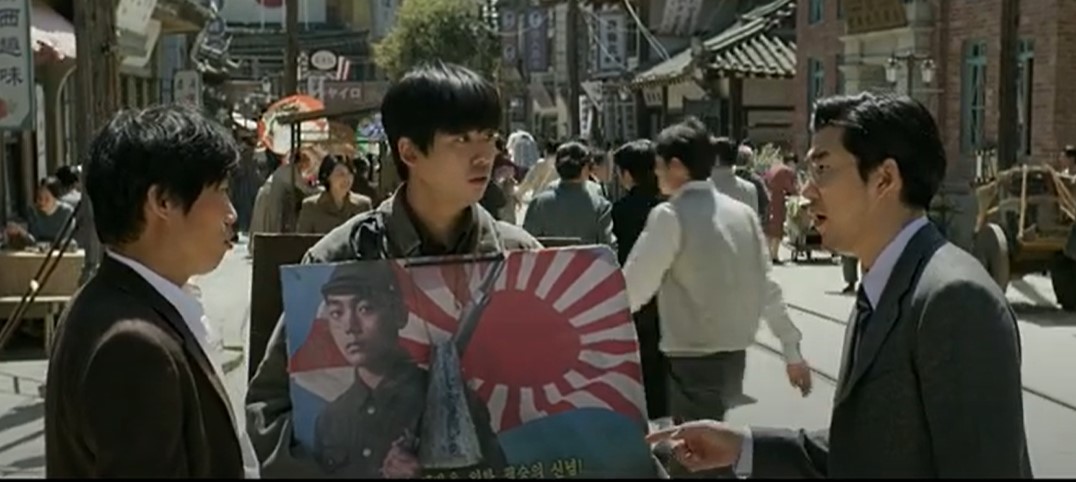
Director Yuna Ohm depicts the Korean Peninsula under Japanese colonial rule in meticulous detail.
This is the first film directed by Om Yoon-ah, who wrote the screenplay for the 2017 South Korean film "Taxi Driver: Promise Across the Sea". Cab Driver: Promise Across the Sea was originally a film with a somber and dark theme about ordinary South Koreans defying oppression under the military regime. However, the screenplay by Om Yoon-ah for "Taxi Driver: A Promise Across the Sea" was well-received, being nominated for several film awards, without becoming stilted or preachy. This is thanks to the characters who have just the right amount of humor, and this film also shows off her sense of humor to the fullest. In a word, "Marmoi Kotoba Atsume" has a very simple theme of "compiling a dictionary". However, the first half of the book tells a story directly related to the daily lives of Pangsu and other ordinary people, while the second half skillfully interweaves historical events into the dramatic development of the story. In particular, the first half of the film carefully depicts how important the Korean language was to the Koreans of the time, making the second half of the film a spectacular development. Directed by Om Yoon-ah, this film is truly a work that can be enjoyed and learned as entertainment without getting bored until the very end.
Korean People's Thoughts on "Urimaru
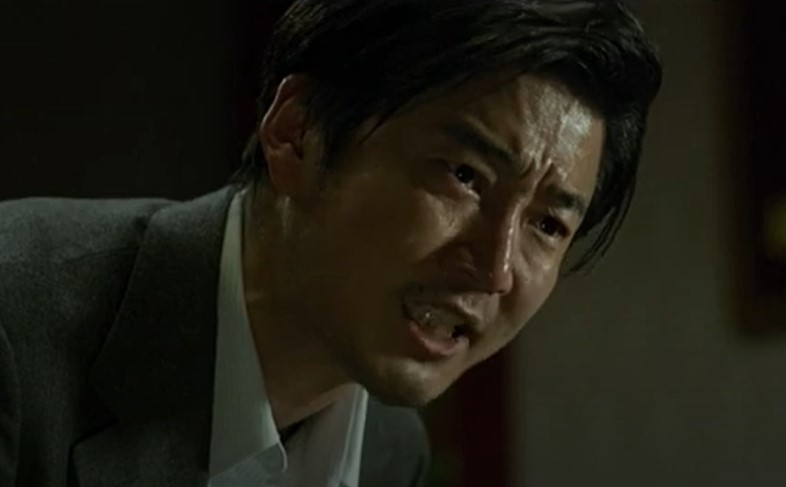
John Hwang desperately pleads for the continuation of the Korean language
In this film, it is depicted throughout how important "urimaru," or the Korean language, was to Koreans under Japanese rule. When modern Koreans generally speak of "urimaru," they are referring to Hangul characters such as "한국 (Korea). Originally, Korea primarily used Chinese characters introduced from China, not Hangul. However, that was only for the privileged classes before 1446. Hangeul was created by the fourth king of the Joseon Dynasty, King Sejong the Great, as the "language of the common people," and for Koreans, Hangeul is the only Korean language. In Japan, "Japanese" is made up of kanji characters imported from China and hiragana and katakana characters derived from them. However, for Koreans, Kanji originally came from China, and the fact that they were forced to use Kanji under Japanese rule may have added to the bad image of Kanji. In other words, the feelings Koreans have for "urimaru" are proof that their identity and attachment to their own country were built up over a long period of time.

Tags
Contents
- Outline of "Marmoi Kotoba Atsume
- The story of "Marmoi Kotoba Atsume
- encounter
- comrade
- public hearing
- 1945
- Characters in "Marmoi Kotoba Atsume
- key people
- Kim Pang-soo (played by Yoo Hye-jin)
- Ryu Jung-hwan (played by Yoon Gesang)
- Figures from the Korean Language Society
- Cho Gap-in (played by Kim Hong-pa)
- Im Dong-ik (played by Woo Hyun)
- Park Hoon (played by Kim Tae-hoon)
- Koo Ja-young (played by Kim So-young)
- Min Woo-chul (played by Min Jin-woong)
- Persons hostile to the Korean Language Society
- Ryu Wan-taek (played by Song Young-chang)
- Ueda (played by Ho Seong-dae)
- People around Pance
- Kim Duk-jin (played by Cho Hyun-do)
- Adult Duk-jin (played by Kim Dong-young)
- Kim Sun-hee (played by Park Ye-na)
- Seung Hee (played by Yoo Eun Mi) in junior high school
- Jang Choon-sam (played by Lee Sung-wook)
- PARK Pondoo (played by CHO Hyun-cheol)
- Optician's president (played by Yoon Kyung-ho)
- Collaborators of the Korean Language Society
- Jeju Teacher (played by Lee Jung-eun)
- Postman (Actor: Choi Gui Hwa)
- Cho Gap-Yoon (played by Ye Su-Jeong)
- Kim Doo-bong (played by Yoo Jae-myung)
- Terms for "Marmoi Kotoba Atsume
- era of Japanese colonial rule
- Korean Language Institute
- Urimaru/Urinara
- Gyeongseong (Prefecture)
- Governor-General of Korea
- the order forced on Koreans to change their names to Japanese ones
- General Federation of Korean Industries
- Gyeongseong First Middle School
- illiterate person
- public hearing
- Famous quotes, lines, scenes and scenes from "Marmoi Kotoba Atsume
- Koo, Ja-young: "Language is a vessel that contains the spirit of a people.
- Ryu Jung-hwan: "I'm an important comrade... please forgive me."
- Letter from Pance.
- Behind the Scenes, Trivia, Episodes, and Anecdotes of "Marmoi Kotoba Atsume" (Marmoi Kotoba Atsume)
- Director Yuna Ohm sublimates somber & dark themes into entertainment
- Korean People's Thoughts on "Urimaru
- The reality of the script that brings tears to the audience's eyes.
- Theme and insert songs for "Marmoi Kotoba Atsume
- Insert song: "반달 (Half Moon)" written by Yoon Kuk-young