こちら葛飾区亀有公園前派出所 / こち亀 / KochiKame: Tokyo Beat Cops

こちら葛飾区亀有公園前派出所 / こち亀 / KochiKame: Tokyo Beat Cops

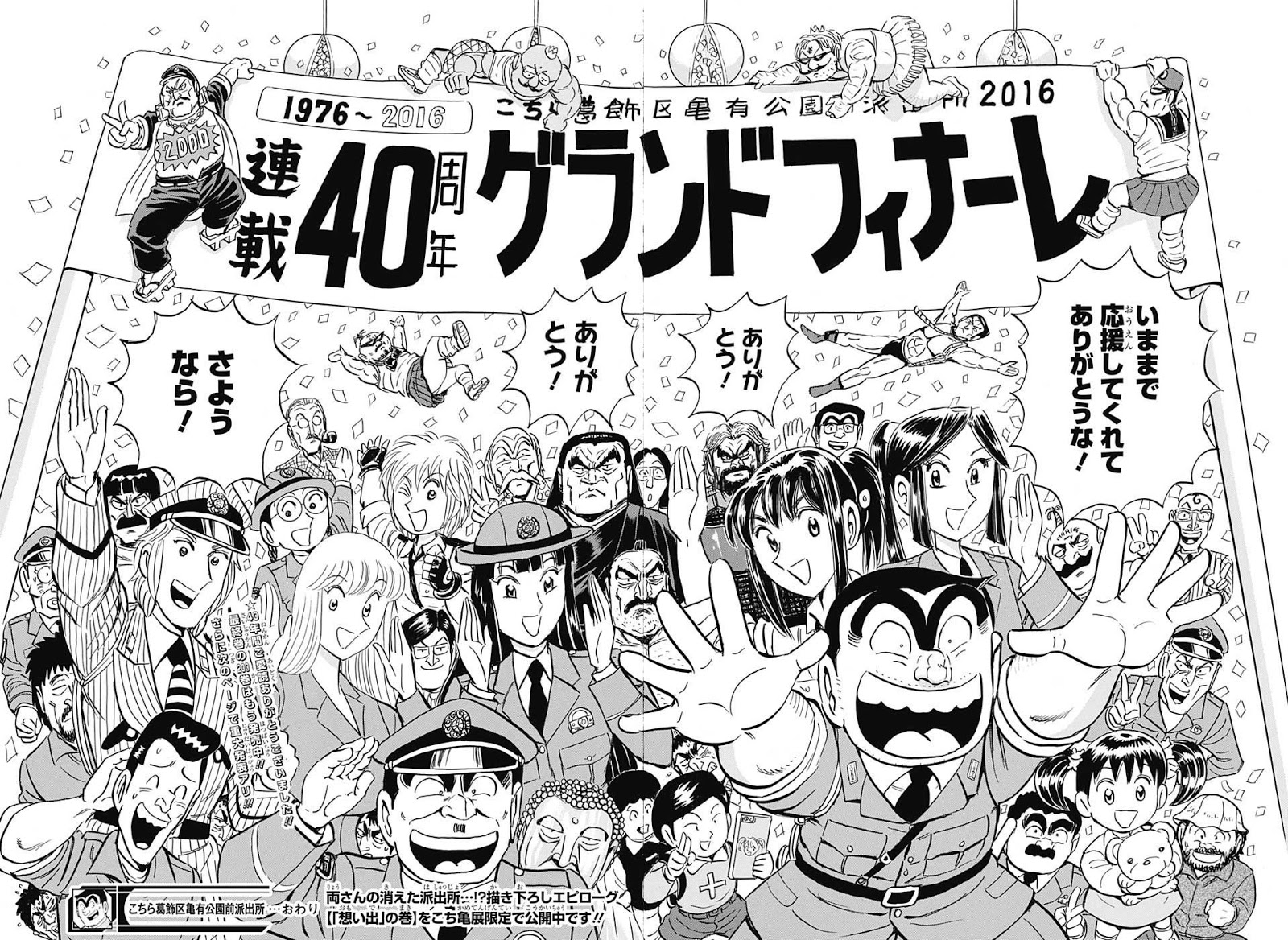
Kochira Katsushika-ku Kameari Koen Mae Hashutsujo" is a Japanese manga work. It is also known as "Kochikame. The author is Osamu Akimoto, and it was published in Shukan Shonen Jump from 1976 to 2016. It was serialized without a single break, making it the longest serialized work in "Weekly Shonen Jump" of all time. It was published in a total of 201 volumes, and until it was surpassed by "Golgo 13" in 2021, it held the Guinness record as the "single manga series with the most number of volumes published.
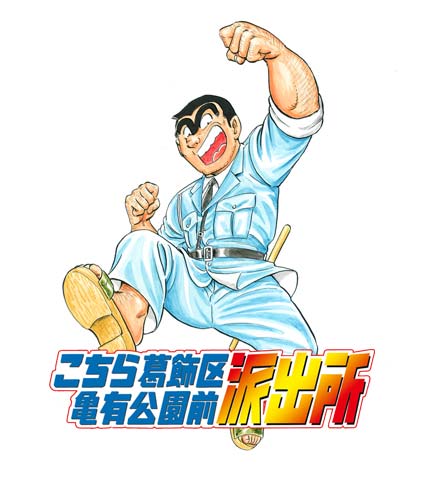
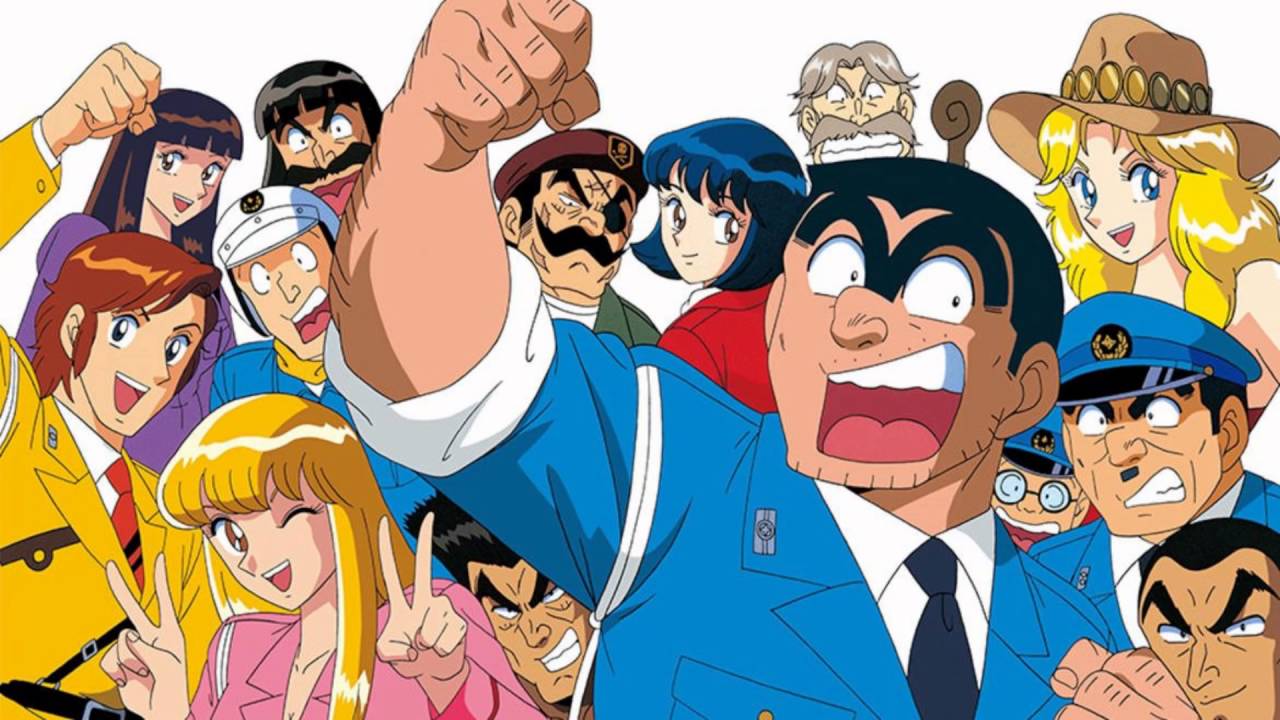
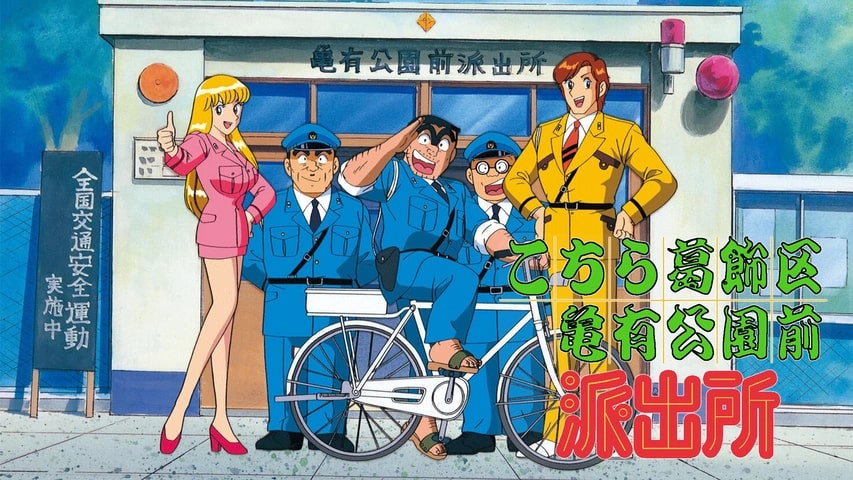
The main character is Ryotsu Kankichi, who works at the Kameari Koen-mae Police Station in Katsushika Ward, Tokyo. Ryotsu's interactions with his co-workers and other characters make for a fascinating gag manga. In 1996, the manga was adapted into an anime that aired every Sunday night until 2004.

Related Articles on こちら葛飾区亀有公園前派出所 / こち亀 / KochiKame: Tokyo Beat Cops

Spoiler commentary and discussion of Kochira Katsushika-ku Kameari Koen-mae Hashutsujo (Kochikame)

Spoiler commentary and discussion of Kochira Katsushika-ku Kameari Koen-mae Hashutsujo (Kochikame)

Kochira Katsushika-ku Kameari Koen Mae Hashutsujo (Kochikame) is a Japanese manga series by Osamu Akimoto. It was serialized in Weekly Shonen Jump from 1976 to 2016, and has since been adapted into live-action, anime, and video games. It has been recognized by Guinness World Records as "the single manga series with the most number of volumes published. It is a gag manga featuring Kankichi Ryotsu, a police officer working at the Kameari Koen-mae Police Station in Tokyo's Katsushika Ward, and the characters around him. It has been serialized for 40 years without a single break, and as of June 2016, a total of 156.5 million copies have been sold.

Read Article
Summary of Jump's past heroines

Summary of Jump's past heroines

Weekly Shonen Jump, the most widely circulated manga magazine in Japan, is at the pinnacle of manga culture in terms of popularity and name recognition, and has produced many masterpieces. As a shōnen manga magazine, most of the main characters are male, but the heroines who support them are also fascinating characters. Some are adults, some are children, some are just protectors, some are sidekicks who fight alongside the hero, some are heroines who have kicked out the regular heroines and are united with the hero, and some are heroines and female protagonists that go beyond the norm of "shōnen manga. Here we introduce some of the heroines who have graced the pages of JUMP.

Read Article

Kochikame: Kankichi Ryotsu vs. Ono Komachi! The fierce battle that unfolded in the anime and the items that belonged to Ono Onomachi!

Kochikame: Kankichi Ryotsu vs. Ono Komachi! The fierce battle that unfolded in the anime and the items that belonged to Ono Onomachi!

Kochikame" a.k.a. "Kochira Katsushika-ku Kameari Koen Mae Hashutsujo"! In addition to the 200-volume book series, the anime series featuring the voice of Mr. LaSalle Ishii is also very popular, and still remains very entertaining. In the midst of all this, this time we will be looking at the eternal rivals! I have compiled scenes of fierce battles and battles between Ryosan and Komachi, the eternal rivals! Since his goods and items were also introduced in the program, please also see the comparison.

Read Article

Popular Manga] Summary of Weekly Shonen Jump censored and terminated manga from 2007 to 2018!

Popular Manga] Summary of Weekly Shonen Jump censored and terminated manga from 2007 to 2018!

This is a list of manga that were censored or ended in Weekly Shonen Jump between 2007 and 2018. The works are those that ended after the first issue of 2007. We will introduce not only representative manga of Jump such as "Gintama", "Bleach", "Naruto", and "Kochira Katsushika-ku Kameari Koen Mae Hashutsujo", but also works that were unfortunately censored and hidden good works that did not resonate with readers even though the content was not bad.

Read Article

Summary of changes in the cover of Weekly Shonen Jump from the past to the present

Summary of changes in the cover of Weekly Shonen Jump from the past to the present

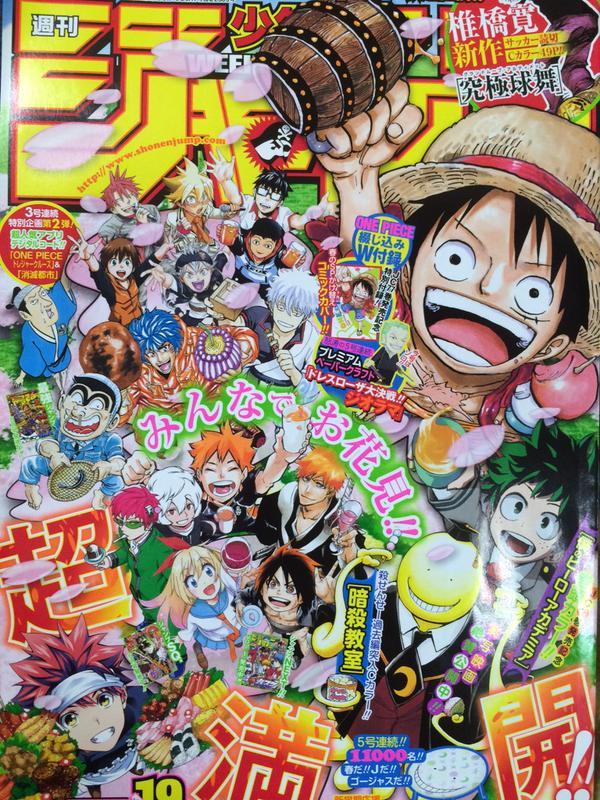
Weekly Shonen Jump" has a long history. Jump" started serialization in 1968 as "Shonen Jump" and was very famous as a representative of hot-blooded or white-hot manga that gave dreams to boys and girls. However, now that about 50 years have passed, the manga, its contents, and its treatment of the genre have changed drastically with the times. In this article, we focus on "JUMP covers" and summarize their transition and changes.

Read Article

Kochikame] Urban legend and trivia related to Kochira Katsushika-ku Kameari Koen-mae Hashutsujo

Kochikame] Urban legend and trivia related to Kochira Katsushika-ku Kameari Koen-mae Hashutsujo

Kochikame" is popular for its unique characters such as Kankichi Ryotsu, a very unique and unprecedented police officer, and Reiko and Nakagawa, his junior colleagues who have a lot of money, and the head of the department whom even Ryotsu cannot get his head around. It is a major work with as many as 200 comic books sold. Here is a collection of urban legends and trivia about Kochikame.

Read Article

Now you're out! Summary of problematic depictions of national cartoons [such as "Doraemon"].

Now you're out! Summary of problematic depictions of national cartoons [such as "Doraemon"].

Doraemon," "Kochikame," and other classic manga have been loved for a long time and transcended time. We have compiled a list of expressions that are out of place in today's world. We will explain what kind of expressions are problematic, including Nazi-inspired poses in "Kinnikuman" and discriminatory expressions and depictions of corporal punishment in "Kochikame," with images of the relevant sections.

Read Article

Final Kochikame finale with cover and opening colors! A feat second only to "Slam Dunk"!

Final Kochikame finale with cover and opening colors! A feat second only to "Slam Dunk"!

Kochira Katsushika-ku Kameari Koen Mae Hashutsujo," or "Kochikame," a.k.a. "Kochikame," which had been serialized in Weekly Shonen Jump for about 40 years, reached its finale. In the issue of JUMP in which the final episode was published, Kochikame was on the cover and in the front cover color. Until then, only "Ring ni Kakero," "Dragon Ball," and "Slam Dunk" had had their final episodes in the front cover color, making this the second greatest accomplishment after "Slam Dunk.

Read Article

Reviews, Ratings and Comments on こちら葛飾区亀有公園前派出所 / こち亀 / KochiKame: Tokyo Beat Cops

こちら葛飾区亀有公園前派出所 / こち亀 / KochiKame: Tokyo Beat Cops
7

The inevitability of the long-term serialization of "Kochira Katsushika-ku Kameari Koen Mae Hashutsujo

Kochira Katsushika-ku Kameari Koen Mae Hashutsujo" is a long-running manga series in Weekly Shonen Jump featuring Kankichi Ryotsu, a one-episode type of manga content that always has an Ochi in each episode. One of the most easily used for the punchline is Director Ohara. In order to punish Ryotsu, he rages at Ryotsu, sometimes armed with a knight, sometimes with a rocket launcher.

Kankichi Ryotsu is a self-indulgent middle-aged man, dirty with money and stubble. To make money, he sometimes bootlegged liquor, sometimes kept cockroaches, and sometimes cajoled members of the faction in unprecedented ways. However, every once in a while, there is a heart-warming story, making the character somewhat unlikable and loved by all.
The members surrounding the main character, Kankichi Ryotsu, are also unique. From Director Ohara, who is like a representative of the Showa era, to Nakagawa and Reiko, who are both lookists and very rich, to Yoichi Terai, who is the most ordinary of the ordinary, to Hayato Honda, who is a representative of the herbivorous youth and turns evil when he rides his motorcycle, there are many different people involved with Kankichi Ryotsu.
And the great thing about this manga is that it is ahead of its time. The 100th volume, which marks the milestone of the manga, is a milestone in the manga's history, with descriptions of the possibilities of electric cars and computers that seem to predict what will happen next, keeping readers interested.

こちら葛飾区亀有公園前派出所 / こち亀 / KochiKame: Tokyo Beat Cops
7

Gag, Comedy, Action Shonen manga impression

It was serialized in Weekly Shonen Jump for 40 years from 1976 to 2016 and is a manga work written by Osamu Akimoto. The story centers on Kankichi Ryotsu, aka Ryosan, a delinquent police officer working at Kameari Koen-mae Police Station, and the people around him.
The series has been serialized for 40 years, and the total of 200 volumes of comics is a monumental work that breaks the record for the longest run in a manga magazine in Japan, not to mention in JUMP, which shows the influence of this work.
Even though each story is complete, there is a wide variety of stories, ranging from gags, to ironic stories about current events and trends, to human-interest stories with no gags at all (another feature of this work is its style, which directly reflects Osamu Akimoto's opinions and interests), and the unprecedented lifestyle of Ryosan sometimes makes you laugh, and sometimes makes you think. ) The range of the story, which is sometimes funny and sometimes thought-provoking, is felt to have attracted readers of various generations.
Since the series had been serialized for such a long period of time, there was a playful gesture of including Ryousan in all the serialized works on the occasion of the 30th anniversary. However, the power of the original work, which lasted even longer than these works, is overwhelming.
Therefore, when the series came to an end three years ago, I felt as if an era had ended (although the final episode ended with a slapstick drama typical of Kochikame that did not make me feel sad, which is typical of this work).

こちら葛飾区亀有公園前派出所 / こち亀 / KochiKame: Tokyo Beat Cops
8

Ryosan, detective who met at sea

I first read this work about 20 years ago when my father bought it and finished reading it, and I was hooked. The main character, Kankichi Ryotsu, is a police officer in front of Kameari Koen, Katsushika-ku, Tokyo. He is always pranking, skipping work, and doing things that are out of the norm, and he is constantly being woken up by Director Ohara. He becomes a debt king.
Even he is well-connected and has a wide circle of friends, including Nakagawa and Reiko, who work at the same police station.
In addition to the main characters, there were some really interesting parts of the story, with new characters appearing every year.
In the roll of the Guardian God of the Sea, a character called "Detective Dolphin" appeared. He is a former dolphin trainer, then a glass artisan and manga artist before becoming a detective, which is an amazing background.
His uniform uses a loincloth motif with the image of a sailor man. When a crime was committed in Tokyo Port by the Water Police Force, he caught the criminal in a way that broke the code, even more so than Kankichi Ryotsu.
Incidentally, Detective Dolphin does not go to work unless the temperature is above 35 degrees Celsius, and when he and Kankichi Ryotsu guard Tokyo Bay when the temperature is below 35 degrees Celsius, they put on a dolphin show in the ocean, and Kankichi Ryotsu sets up a stall to sell grilled corn, popsicles, and other items.
I thought Detective Dolphin was a really strong character when he appeared.

こちら葛飾区亀有公園前派出所 / こち亀 / KochiKame: Tokyo Beat Cops
8

The Best of Maniacs! The sheer amount of material that has shifted with the times is mind-blowing!

A legendary comedy serialized in Weekly Shonen Jump for many years.
It has been published up to 200 volumes in book form and has a wide age range of fans.

The plot is simple: it is an everyday gag manga revolving around the main character, Kankichi Ryotsu (hereafter Ryosan), who works at Kameari Koen-mae Police Station.
The protagonist's character is very unprecedented, rough, and angry. In the early years of the series, he would even shoot at ordinary citizens and stray cats. In addition, he is a gambling maniac who spends his working hours watching live horse races and skips out on patrol at a pachinko parlor.
You may wonder why he has not been fired, but there is a reason for that. What keeps Ryosan in the police force is his overwhelming arrest rate. The arrest rate refers to the number of cases solved in response to accidents and crimes that occur. In other words, his work attitude is a mess, but he does his job well.

As mentioned above, Ryosan is a violent man, but he was born in Asakusa, Tokyo, and he is often portrayed as a humane person. Perhaps because of this, in the early years of the series, there is a scene in which a homeless man from the neighborhood comes to the police station to ask for money, and Ryosan, unable to ignore him, invites him in. Ryosan's mischievous, warm-hearted, and emotional character may have been one of the reasons for his long serialization.

Ryosan is a strong character, but his subordinates, colleagues, and even his bosses all have their own quirks. I would run out of space if I had to write about all of them, so I will skip this part, but I think the reason for this is the extremely universal setting of the modern police officer.

During the period of serialization, the police organization and Japan underwent a major transformation, and the touch and atmosphere of the pictures changed dramatically from the beginning to the end of the series. This is another reason why the series has continued for so long without boring the readers. If you have not read any of these books, please give them a try.
By the way, you can read from any of the 200 volumes. On the other hand, if you try to read from the first volume, there is a high probability that you will not be able to read all of them. However, since there are so many characters, it may take some time to get the correlation chart and other information into your head. Also, the early works are quite radical, so it would be better to read the recent books first, and if you feel the style suits you, you can try the early works.

こちら葛飾区亀有公園前派出所 / こち亀 / KochiKame: Tokyo Beat Cops
10

No Title

Kochira Katsushika-ku Kameari Koen Mae Hashutsujo" is a gag anime featuring Sergeant Ryotsu Kankichi. The story revolves around Kankichi Ryotsu, who has a wild personality, and the big commotion that ensues around him.
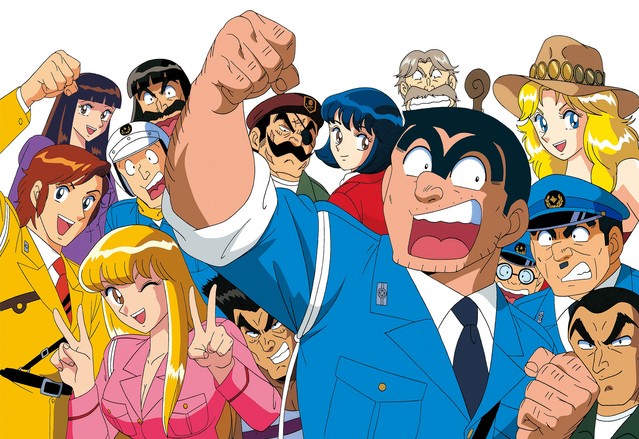
The main characters include the main character Kankichi Ryotsu, his colleagues Keiichi Nakagawa, Reiko Akimoto, Yoichi Terai, and his boss Daijiro Ohara.
Nakagawa is the president of the Nakagawa Zaibatsu, but for some reason works as a police officer. He is good-looking and a superb marksman. He is often asked by Kankichi Ryotsu to lend him money, but he does not lend easily. However, he will easily lend him tanks and fighter planes. His favorite car is a red Ferrari F40.
Like Nakagawa, Akimoto Reiko is the daughter of a giant company called Akimoto Group, but for some reason she is a police officer. She and Ryotsu often quarrel, but they get along well. Her favorite car is a pink Porsche 911.
Yoichi Terai is also a police officer working at the Koen-mae Police Station. He is sometimes called a "life-sender" by Ryotsu because he leads a picture-perfect life. He owns his own home, but commutes to work from a place that takes three hours each way.
Daijiro Ohara often quarrels with Ryotsu, but in his heart, he is a subordinate boss who adores Ryotsu.

Parent Tags