
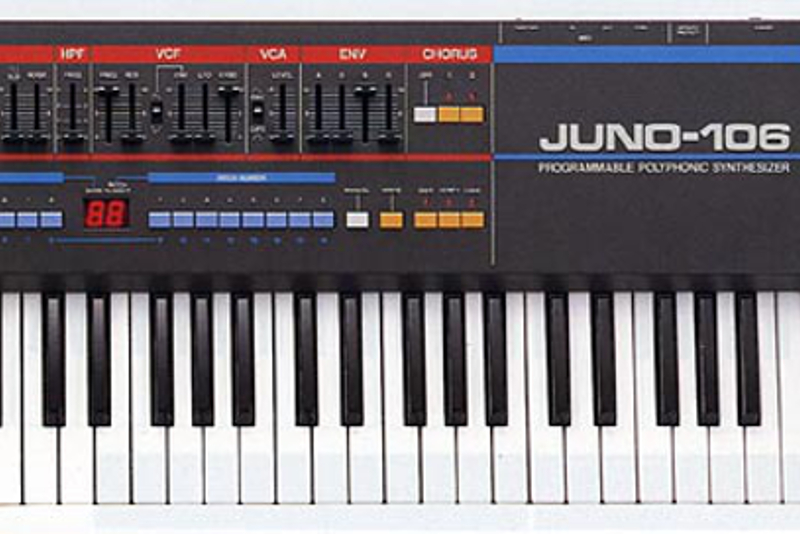
The price of polyphonic synthesizers, which had once been the height of luxury, gradually dropped to the level affordable by amateurs. It was not foreign products that brought about this wave of price destruction, but Japanese products such as Polysix and JUNO-106.
Polysix" brought a wave of price destruction
In the past, polyphonic synthesizers were expensive: Sequential Circuits' Prophet-5 cost 1.7 million yen, and Roland's much cheaper Jupiter-8 cost 980,000 yen, making them unaffordable for amateurs. At that time, amateurs could only watch with their fingers crossed, hoping to someday play one of these instruments. However, technological advances brought such products at lower prices. Polyphonic synthesizers are no exception to this rule, and a wave of price destruction is coming. The first to bring this wave was the "Polysix," released in 1981 by our own Korg in Japan.
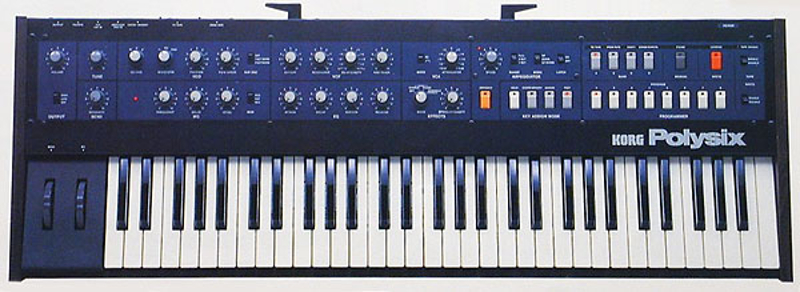
What was surprising at the time was its price. Polyphonic synthesizers, as mentioned above, were all expensive, but the price was 248,000 yen. Amateurs jumped at the chance to own a six-note polyphonic synthesizer with a built-in tone memory. With only one main oscillator, one sub oscillator, and one envelope that doubled as a filter and amplifier, the range of sound creation was rather limited, but the price was right, so there was no reason for it not to be popular.
JUNO-106", the decisive factor in price destruction
Of course, Korg's rival Roland could not sit idly by and watch Polysix's popularity, and the "JUNO-6," released in 1984, was priced below it at 169,000 yen. However, it did not become as big a movement as Polysix, in part because it did not come with tone memory. Later, the "JUNO-60," which added tone memory, was released, but it was priced at 238,000 yen, almost the same as the Polysix. the decisive factor in Roland's price destruction was the successor to these machines, the JUNO-106.
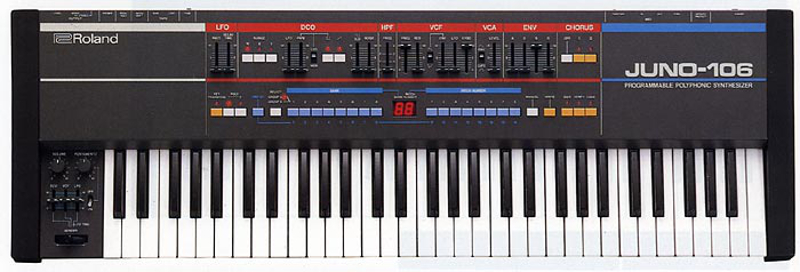
It was priced at 139,000 yen, and like the JUNO-60, it not only had a tone memory, but also a high-pass filter to expand the range of sound creation. There was no reason for this model not to be popular, and the fact that many units of this model still exist today attests to its popularity. It was used not only by amateurs, but also by professional musicians such as Denki Groove.
The "vintage" of the band boys
Both machines became popular because of their price, but they were also ideal instruments for studying synth sound creation because of their limited functions. Because of their popularity, many music boys used them, and they are often "vintage" as a reminder of their youth. For this reason, both have been reissued in software.
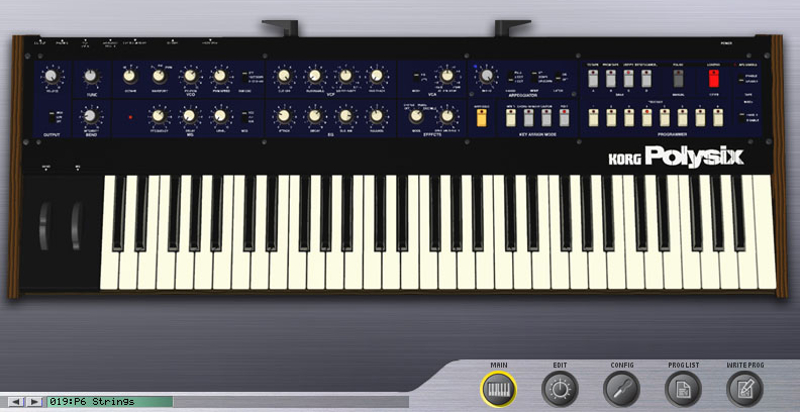
As for Polysix, it is available as "KORG Legacy Collection Polysix" from the original KORG for 4,980 yen.
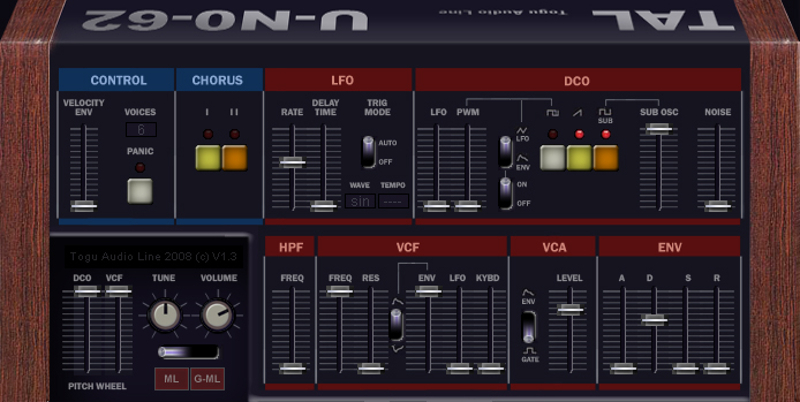
On the other hand, the JUNO-106 has been reissued by the original Roland as the sound source module "JU-06," but its price is in the 40,000 yen range, which is a disappointing loss to Polysix. There are soft synths developed by other vendors, but the most notable is TAL's "TAL-U-No-62," which is free software. This would be a worthy "definitive price destroyer.
Related Articles
Useless Poop on Vintage Keyboards - Overseas Monophonic Edition - RENOTE
renote.net
There are instruments called "vintage," and there are keyboards that are also so called. For those who know them, it may seem nostalgic, "Oh, that instrument. For those who don't know it, it may seem like "what's that? for those who don't know it. I would like to introduce such vintage keyboards. We will start with two monophonic models released in the early days of synthesizers.
Useless Poop on Vintage Keyboards - Foreign Polyphonic - RENOTE
renote.net
At first, most synthesizers were monophonic, producing only single notes, but polyphonic ones, capable of producing chords, gradually decreased in size. Then came two vintage keyboards that became world-famous: the Prophet-5 and the OB-Xa. Even if you don't know the names of the instruments themselves, you may feel nostalgic when you hear the music they are used for.
Useless Poop on Vintage Keyboards - Domestic Polyphonic - RENOTE
renote.net
The vintage keyboards introduced so far have all been made overseas, but Japanese-made keyboards are no slouches either. Roland's Jupiter-8, introduced here, is said to be the best Japanese-made polyphonic synthesizer, and YAMAHA's CS-80 has been used by many famous musicians, both of which are worthy of the name "vintage keyboards. These are all worthy of the name "vintage keyboards." Here we introduce some of the best machines that symbolize "Monozukuri (manufacturing) Japan.
Useless Poop on Vintage Keyboards - Elepis - RENOTE
renote.net
Vintage keyboards are not only synthesizers, but some electric pianos are also called so. Two famous examples are the American-made Rhodes and the Yamaha CP-80. The Rhodes, which is unique and bears no resemblance to a piano, and the CP-80, which is an electronic version of a grand piano, have completely different sound characters, but they are no different in the sense that they were loved by many musicians.
