
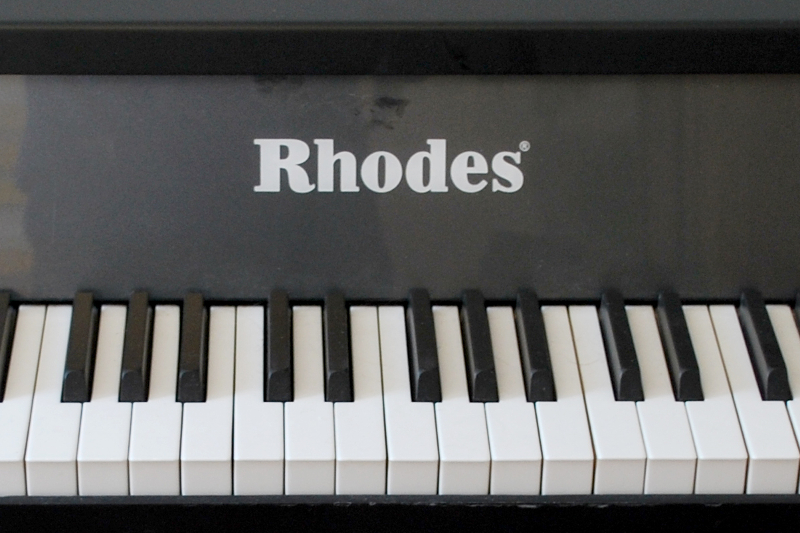
Vintage keyboards are not only synthesizers, but some electric pianos are also called so. Two famous examples are the American-made Rhodes and the Yamaha CP-80. The Rhodes, which is unique and bears no resemblance to a piano, and the CP-80, which is an electronic version of a grand piano, have completely different sound characters, but they are no different in the sense that they were loved by many musicians.
Rhodes, a substitute developed from aircraft parts
Stevie Wonder's "You are my sunshine of my life" and Billy Joel's "Bare Faces". If you compare the beginning of both songs, you will hear a distinctive electric piano sound from the introduction. Even if you are not familiar with the name Rhodes, the sound itself is probably familiar to you.
The Rhodes was created in the 1940s as a substitute for the piano, using aircraft parts to provide music therapy for soldiers on the front lines. They were not actually sold until 1959. Instead of strings like a piano, the sound is produced by striking a metal plate with a hammer, making it sound more like an iron fiddle than a piano.
There are two main types of Rhodes: suitcase pianos, which come with an amplifier, and stage pianos, which require a separate amplifier. The image below shows a Mark 1 stage piano.
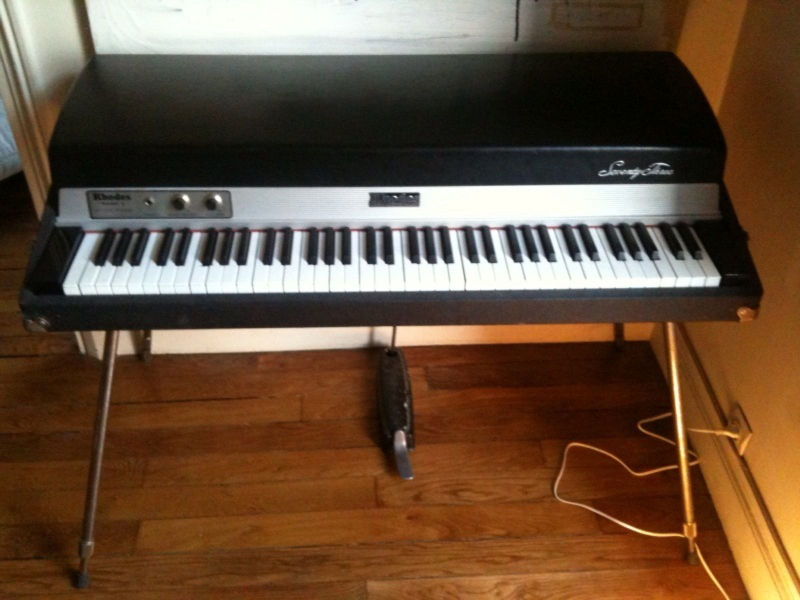
Since it sounds nothing like a piano, it was not very popular when it was first released, but musicians who liked its unique sound began to use it in the 1970s, and it has remained in use to this day.
However, since the 1970s, musicians who liked its unique sound have been using it, and it has been used by many musicians to this day. In the video below, Herbie Hancock plays Miles Davis on a suitcase piano.
CP-80", a grand piano converted into an electronic musical instrument
The YAMAHA CP-80, released in 1978, is not a "piano substitute" like the Rhodes, but rather a direct result of the bold idea of converting a real grand piano into an electronic musical instrument. Grand pianos are heavy, weighing over 200 kg, and are difficult to transport. The CP-80 weighed only half as much (though still quite heavy at 100 kg), and because the body and keys could be separated, it was convenient for transporting on concert tours.
Because of its ease of use, the CP-80 was used by many musicians in Japan and abroad, and is known to have been used by Howard Jones, Don Grusin, Kazumasa Oda, Tetsuya Komuro, and others.
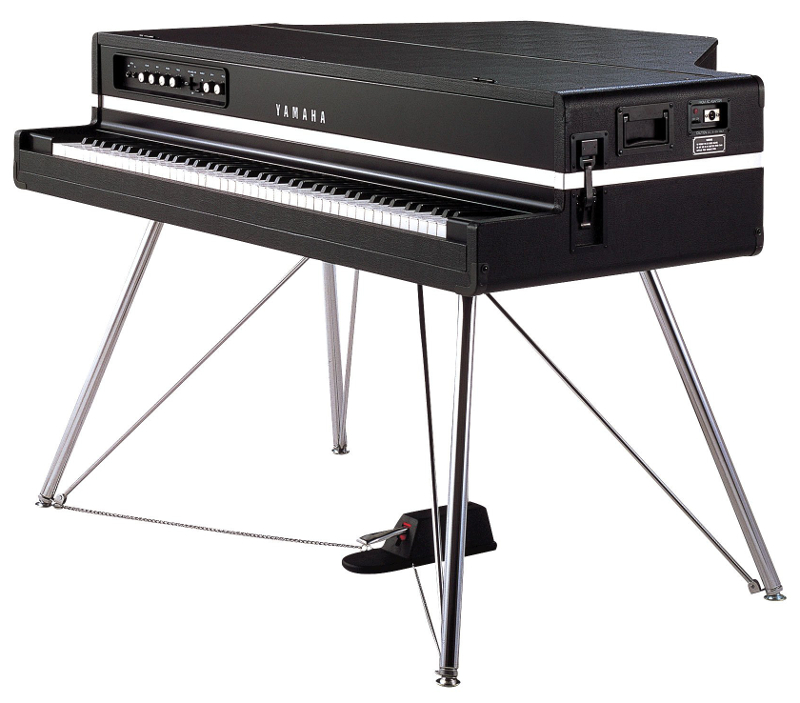
The sound was produced by striking the strings with a hammer, exactly the same method used for a grand piano. However, in order to reduce weight, the number of strings was reduced compared to that of a grand piano, resulting in a slightly lighter sound. Please see the video below to see what exactly it sounds like.
Rhodes is still going strong...
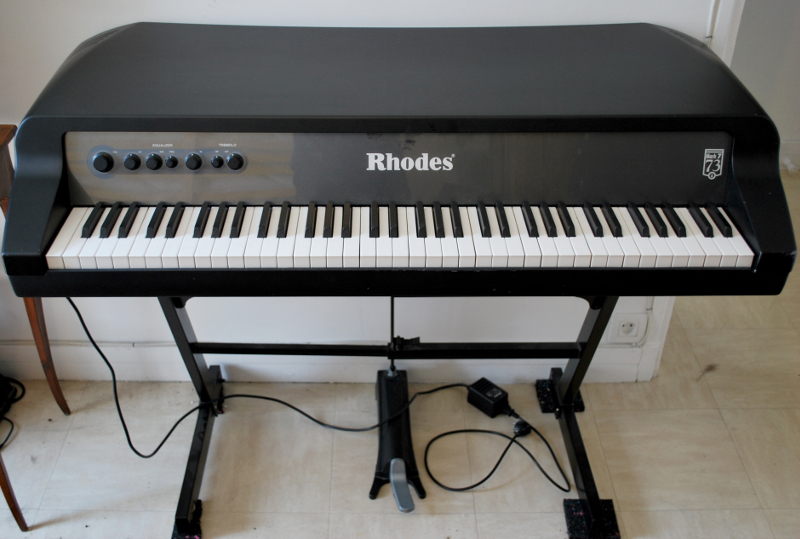
Rhodes has undergone a series of model changes since then, and the latest model is the Mark 7, released in 2006. Incidentally, Tatsuro Yamashita was the first to purchase one in Japan.
Unfortunately, no successor to the CP-80 has been released, but the soft synthesizer "The Grand" released by Steinberg, a subsidiary of YAMAHA, contains sounds of the CP-80 sampled by YAMAHA itself. Is it selfish of me to wish that the original manufacturer would reissue the original?
By the way, there are so many sampling instruments available for both Rhodes and CP-80 that I can't introduce them here. There are many samplers available, from inexpensive ones to expensive ones (though not as expensive as the real ones), so if you own a sampler, you might want to check them out.
Related Articles
Useless Poop on Vintage Keyboards - Overseas Monophonic Edition - RENOTE
renote.net
There are instruments called "vintage," and there are keyboards that are also so called. For those who know them, it may seem nostalgic, "Oh, that instrument. For those who don't know it, it may seem like "what's that? for those who don't know it. I would like to introduce such vintage keyboards. We will start with two monophonic models released in the early days of synthesizers.
Useless Poop on Vintage Keyboards - Foreign Polyphonic - RENOTE
renote.net
At first, most synthesizers were monophonic, producing only single notes, but polyphonic ones, capable of producing chords, gradually decreased in size. Then came two vintage keyboards that became world-famous: the Prophet-5 and the OB-Xa. Even if you don't know the names of the instruments themselves, you may feel nostalgic when you hear the music they are used for.
Useless Poop on Vintage Keyboards - Domestic Polyphonic - RENOTE
renote.net
The vintage keyboards introduced so far have all been made overseas, but Japanese-made keyboards are no slouches either. Roland's Jupiter-8, introduced here, is said to be the best Japanese-made polyphonic synthesizer, and YAMAHA's CS-80 has been used by many famous musicians, both of which are worthy of the name "vintage keyboards. These are all worthy of the name "vintage keyboards." Here we introduce some of the best machines that symbolize "Monozukuri (manufacturing) Japan.
Useless Poop on Vintage Keyboards - Price Destruction - RENOTE
renote.net
The price of polyphonic synthesizers, which had once been the height of luxury, gradually dropped to the level affordable by amateurs. It was not foreign products that brought about this wave of price destruction, but the domestically produced "Polysix" and "JUNO-106.
