
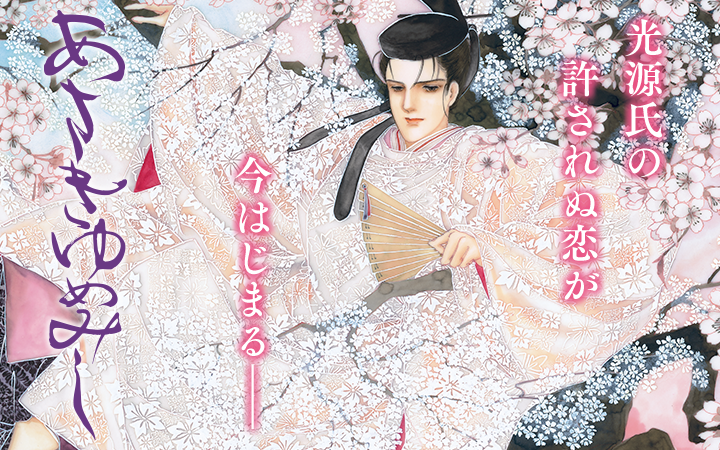
Asaki Yumemishi" is a manga series by Kazuki Yamato that was serialized in the monthly magazine "mimi" from 1979. It was later moved to "mimi Excellent" and completed in 1993. It is a manga adaptation of Murasaki Shikibu's "The Tale of Genji" and depicts the love affairs, power struggles, glory and downfall of aristocratic society in the Heian period through the main character Hikaru Genji, the son of the emperor. As a girls' manga, it faithfully depicts all 54 chapters of "The Tale of Genji" while incorporating modern interpretations and original episodes of the time. It has been translated into many languages for the international market, and has also been adapted into novels, stage plays, and many other forms.
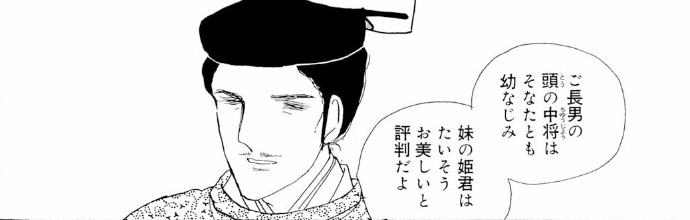
Father of the Vermilion Bird Emperor, Hikaru Genji, Prince Hotaru Hyobun no Miya, the Eighth Palace, and others.
He favored the wife of the late Prince Kiritsubo, who gave birth to Hikarugenji.
After her death, he favored Fujitsubo, who looked exactly like her.
The Kiritsubo no Koui (The Tale of the Kiritsubo)
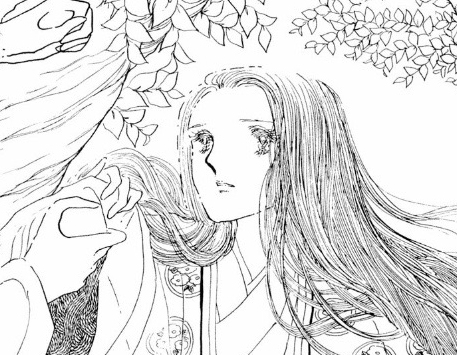
Mother of Hikaru Genji.
Her father was a dainagon, but he was already dead, and she entered the court without a powerful guardian.
She was favored by the emperor Kiritsubo and gave birth to Hikaru Genji, who became the emperor's second prince, but because of this, she was shunned by other court ladies and court ladies, and suffered numerous harassments.
This mental strain caused her to fall ill, and she died when Minamotoji was three years old.
Suzaku Tei / Suzakuin
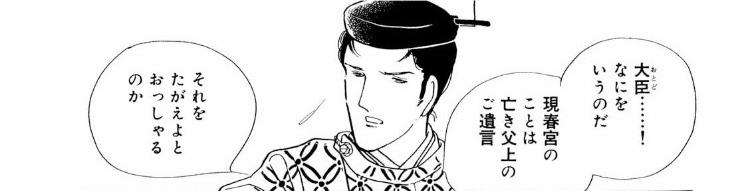
First prince of the Kiritsubo Emperor. His mother was a lady-in-waiting of Koukouden. Half-brother of Hikaru Genji.
He ascends to the throne after being succeeded by the Kiritsubo emperor. He has a mild temperament and treats Genji kindly even though he feels inferior to him.
She favored Oborozukiyo, who was from the family of the Minister of the Right, but she continued her relationship with Minamotoji. When Kiritsuboin died, pressure from the forces of the Minister of the Right led Minamotoji to retreat to Suma.
When the Minister of the Right died and suffered from an eye disease himself, he restored the Minamoto clan to power over the objections of the Lady Koukiden. He himself abdicated and the Emperor Reizei ascended the throne.
After the abdication, he became obsessed with Saigu, the daughter of the Rokujo no Mistress, who later became the Princess Akiyoshinakamiya, the Princess of Umezubo, but her adoptive father, Genji, allowed her to join the Reizei no Tei.
She eventually began to consider ordaining herself, but her mother died early and she had no powerful guardian, and she was worried about the fate of the third princess, the Princess Misanomiya, so she surrendered to Genji.
Emperor Reizei / Reizeiin
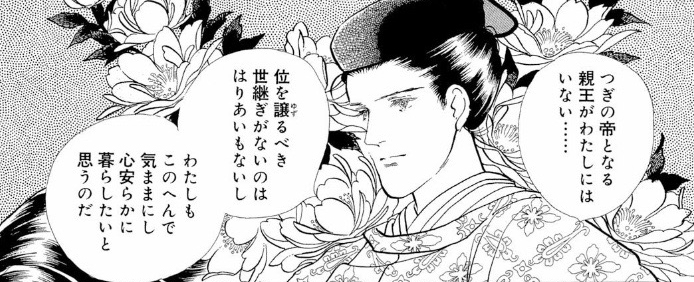
Although ostensibly the tenth prince of the Kiritsubo Emperor, he was actually the son of infidelity between Hikaru Genji and Fujitsubo.
He became the crown prince of his elder brother, the Suzaku Emperor, who abdicated and acceded to the throne as the Reizei Emperor.
He favored the daughter of the Rokujo no Mistress and the adopted daughter of the Minamoto clan, the Lady Umezubo, and made her Akiko-no-chugu (the middle consort of Akiko).
After the death of Fujitsubo, he learned the secret of his own birth, and after much anguish, he tried to abdicate to his real father, Minamoto, but he was rebuffed.
When Minamoto became 40 years old, he presented her with the title of "Associate Emperor Taisho".
Yugiri (evening mist)
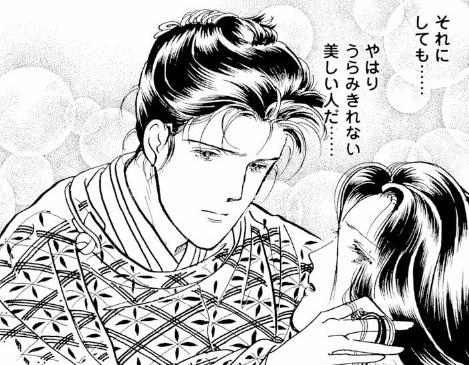
Ostensibly the eldest son of Hikaru Genji. His mother was Aoi no Ue. The head lieutenant general is his uncle, and his children, Kumoi no Goose, Kashiwagi, and Benibai, are his cousins.
In fact, Emperor Reizei is the eldest son of the Minamoto clan, and Yugiri is the second son, but he is unaware of this fact.
She has the same good looks as the Minamoto family, but she is not very good at love.
Her mother, Aoi no Aoi, died soon after her birth, and she was raised by her grandmother. Here, she grew up together with Kumoino-gane and secretly nurtured her love for him. However, they were separated by the head lieutenant, the Minister of the Interior, who became angry when he learned of her relationship with Kumoinogan.
Several years later, he finally obtained the permission of the Minister of the Interior and married Kumoino-gane. They had many children.
He was a serious man, and for a long time had only two wives: his regular wife, Kumoi-no-gan, and a concubine, Fujinori-samurai.
However, when his best friend Kashiwagi died, he became obsessed with his widow Ochiba-no-miya, and they married somewhat forcibly. Thereafter, he began to visit Kumoinogan and Ochiba no Miya equally on 15 days of each month.
Later, he was promoted to Minister of the Right and Minister of the Left.
Akashi no Himekun (Princess of Akashi)/ Akashi no Nyogo (Lady of Akashi)/ Akashi no Chugu (Prince of Akashi)
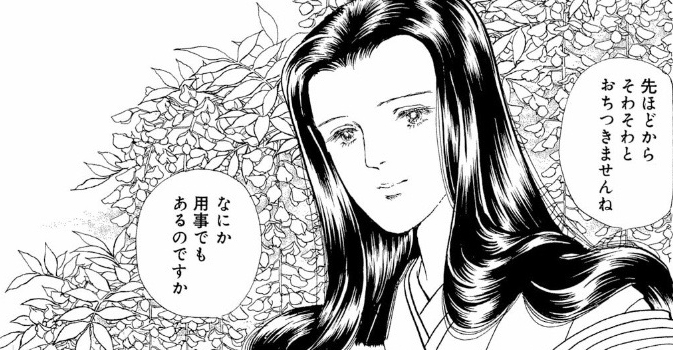
Daughter of Hikaru Genji and Akashi no Ue. She was raised as the adopted daughter of Murasaki no Ue.
She entered the court as a princess of the Crown Prince and gave birth to a son.
She was by the side of Murasaki no Ue when she died, and took care of her in her final moments.
Kaoru
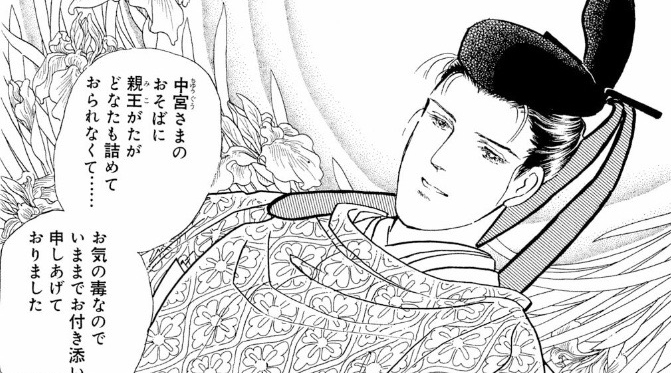
The protagonist of the last stage.
Ostensibly the second son of Hikarugenji, but his real father is Kashiwagi. His mother is Onnazanomiya.
He was born with a peculiar physical constitution that gave him an aromatic scent, and along with Nioi no Miya, he is considered one of the most aristocratic noblemen of his time, known to the public as "the smelly Lord Hyobu and the fragrant Lieutenant General.
From an early age, he had doubts about his origins and sought salvation in Buddhism.
When he learns that Hachinomiya, a younger brother of the Minamoto clan living in Uji, is practicing Buddhism without being ordained, he begins to visit Hachinomiya's residence. There, he meets Daimun, the princess of Hachinomiya, and falls in love with her, but Daimun dies of illness without accepting his love.
He eventually falls in love with Ukifune, who is the sister of the lord's widow, and who looks exactly like the lord's sister.
Nio-no-Miya
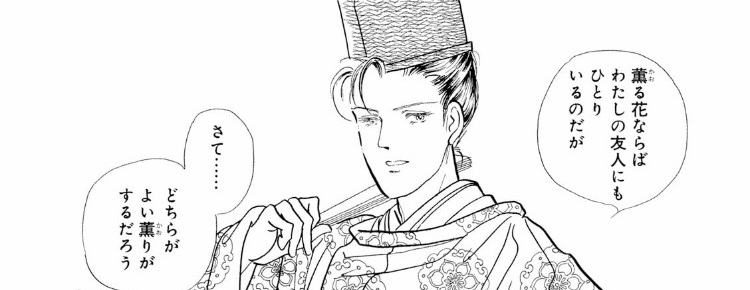
He was the third prince of the emperor and his mother was Nakamiya of Akashi. He is the grandson of Hikaru Genji.
She has a rivalry with Kaoru, and is called "Sagimiya" (smelling palace) because she burns and dyes her clothes with fragrant substances to counter the aroma of his body.
She is a great admirer of Genji and prefers a free love life, and does not try to have a regular wife.
One day, she hears a rumor from Kaoru about the princess of the eight palaces in Uji, and visits Uji with interest. He eventually falls in love with the middle princess and takes her as his wife, despite the opposition of the middle palace of Akashi.
However, when he takes Roku no Kimi, Yugiri's daughter, as his regular wife, he shifts his interest to her.
Knowing that Ukifune, the younger sister of Nakano-kun, was Kaoru's lover, he forcibly entered into a contract with her, and was the cause of Ukifune's attempted suicide.
palace of the firefly tribe

![Asaki Yumemishi] "The Tale of Genji" drawn by various people is so chaotic and awesome! The Tale of Genji](https://renote.net/files/blobs/proxy/eyJfcmFpbHMiOnsiZGF0YSI6NzUyODUxMSwicHVyIjoiYmxvYl9pZCJ9fQ==--48f4311ace627b68e59ff9872f0804bc2f05ae54/512fc433cf668d5008f02562bfd2c37d596cf834_xlarge.jpg)
Tags
Contents
- Overview of "Asaki Yumemishi
- Synopsis and story of "Asaki Yumemishi
- The Birth of Hikaru Genji
- Retreat to Suma
- Glory in the capital
- the vicissitudes of life
- separation of wife and husband
- death of the Genji
- Uji Jucho (the oldest anthology of poems in existence)
- Characters in "Asaki Yumemishi
- protagonist
- Hikaru Genji
- Blood relatives of Hikaru Genji
- Emperor Kiritsubotei / Kiritsubo-in (Kiritsubo-in Temple)
- The Kiritsubo no Koui (The Tale of the Kiritsubo)
- Suzaku Tei / Suzakuin
- Emperor Reizei / Reizeiin
- Yugiri (evening mist)
- Akashi no Himekun (Princess of Akashi)/ Akashi no Nyogo (Lady of Akashi)/ Akashi no Chugu (Prince of Akashi)
- Kaoru
- Nio-no-Miya
- palace of the firefly tribe
- Hachinomiya (Shrine of the Eight)
- Wife and lover of Hikaru Genji
- The Palace of Fujitsubo / The Lady of Fujitsubo
- Aoi no Ue
- Murasaki no Ue / Wakamurasaki
- The Three Women's Palaces (Onna-san no Miya)
- Akashi no Ue / Akashi no Kimi / Akashi no Okata
- Six-jawed Sukusho (Six-jawed Sukusho)
- moonflower (Ipomoea alba)
- Hanachirusato
- Suezumuhana
- Gen no Nai-nosuke
- Oborozukiyo (Oboro Moonlit Night)
- The King of the Morning Glory
- Utsusemi
- House of Left-Handed Vassals
- Minister of the Left / Minister of the Left
- Head Commander (the middle general of the head)
- oak-tree
- red Japanese apricot
- Buddhist decoration engraved with various motifs, often made from gilt copper (e.g. for adorning the inner shrine of a temple)
- The Lord of Omi
- family of the Right Honorable Minister
- Minister of the Right / Minister of the Right
- Lady of Kobikiden
- Yugiri's relations
- clouded leopard (Neofelis nebulosa)
- Fujinosuke Fujinosuke
- Ochiba-no-Miya / Onna-ni-no-Miya
- Akashi no kun no kankei
- Akashi no Irimichi (The Way of the Akashi)
- Akashi no Ama-kun
- Related to Rokujo-no-Osumesho
- The Lady of the Plum Tubes / Akiko Muchu
- Sorasemi's relations
- Iyo-no-suke / Hitachi-no-suke
- People related to Tamakazes
- Daimu no Gen (Superintendent of the Supreme Court)
- black beard
- Makibashira
- Related to Hachinomiya
- Grand Minister
- The middle child
- floating boat
- Hikaru Genji's retainer
- Tadamitsu Fujiwara
- The Life Mother of Daisuke (Tayu Nayobu)
- Terms of "Asaki Yumemishi
- Status and official position
- The Middle Palace (Chugu)
- court lady
- changing clothes
- Sabbath
- Shozamurai
- Nasenosuke.
- title bestowed upon a woman by her employer
- Emperor Jundajo
- Chancellor of the Realm
- name
- Senior Chief
- Crown Prince
- Koudachi
- Wakamiya
- nursing mother
- Sai-gu Shrine
- nobleman's true wife
- Other
- imperial bridal party's entry into the court
- Imperial palace (in Kyoto)
- Famous quotes, lines, scenes, and scenes from "Asaki Yumemishi
- Aoi Aoi: "Love needs no words... when you love... just smile gently..."
- The head general "...here it comes, at last."
- Tamakazura: "I don't want to be swept away by anything any more... I want to stand here on my own feet...!
- On the purple: "Ah... from this world where this woman is not free I wish to leave as soon as possible..."
- Hikaru Genji: "And now goodbye... all the wonderful women I have loved..."
- Backstories, trivia, and small stories/episodes/anecdotes about "Asaki Yumemishi".
- What is "The Tale of Genji"?
- Asakayumemishi" as a gateway to the classics
- Phantom Animation
- The Marriage System in the Heian Period
- Differences from the original "The Tale of Genji