

Psycho Romanchika" is a Japanese gag manga by Motoki Koide that crosses psychology and the daily lives of high school students. It was serialized in Monthly Shōnen Rival from 2014.
The main character, Ito, is a high school girl who has a crush on her childhood friend Abe. Fascinated by psychology, she decides to start a "psychology research club. In order for the club to be recognized as a club, it must have five members. There, Ito uses psychology to meet and recruit a variety of students, from dropouts to delinquents. This is a story filled with the slapstick daily lives of high school students and psychology that can be used from tomorrow.
The systematized nomenclature of pathology effect refers to the tendency of people to differentiate themselves from the public in order to show their individuality.
For example, chocolate bananas and yakisoba (fried noodles) are the most common stalls at a festival, but the act of selling parfaits to make a profit.
Veblen effect
The Veblen effect is a psychological phenomenon in which people think "expensive things are good things."
For example, if a T-shirt that costs about 1,000 yen is sold for 10,000 yen under the name of "Premium T-Shirt," it is possible to encourage people to buy the T-Shirt because they think it must be made of good materials.
Zinc pyrithione effect
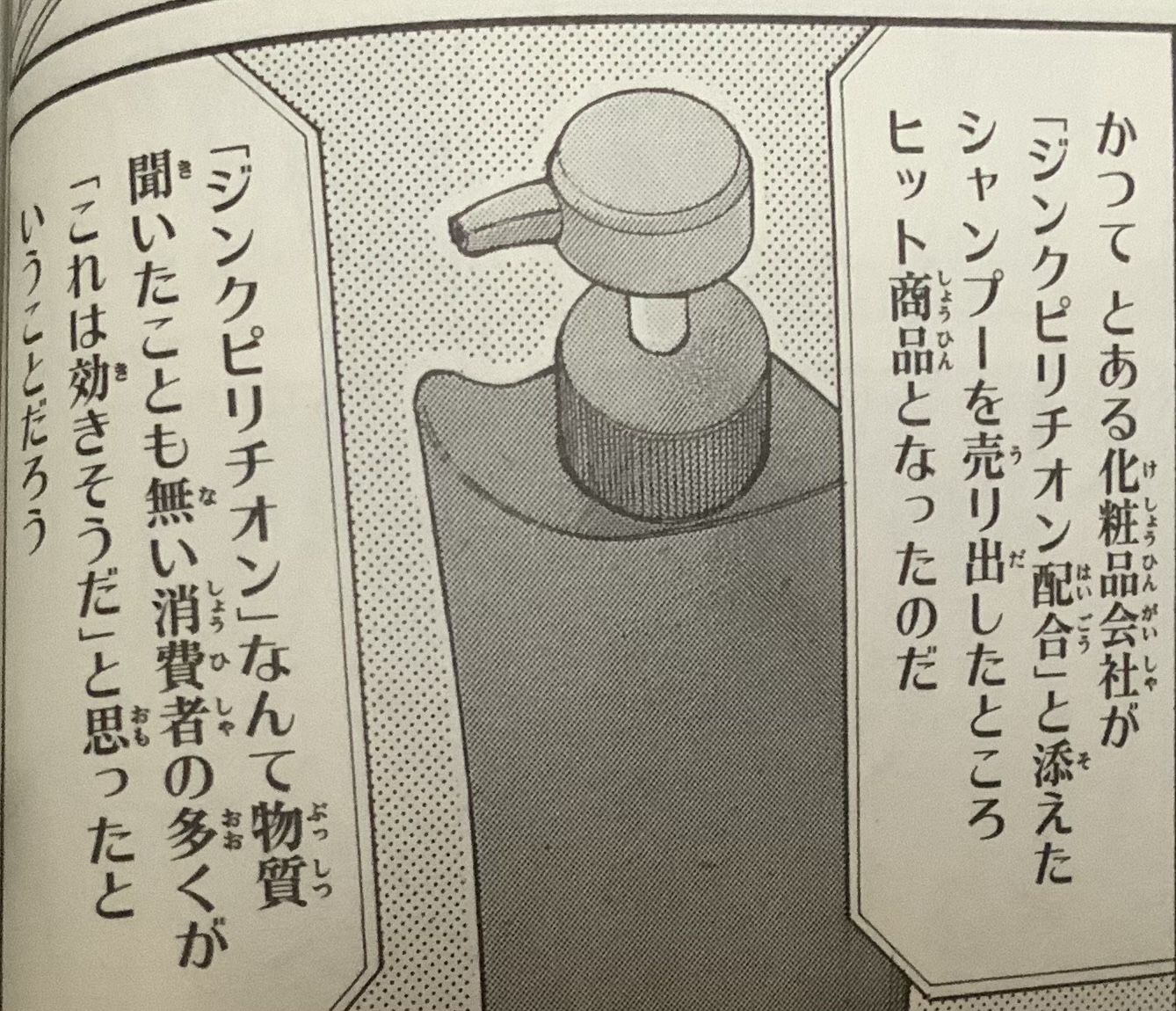
Zinc pyrithione comes from an episode at a cosmetics company.
Zinc pyrithione The effect is that when people use a term they don't understand, they tend to be surrounded by smoke because they judge whether it is good or bad in the context.
For example, the following is a description of carbon monoxide.
It is a kind of hydroxide and is liquid at ordinary temperature.
・ Since it is tasteless and odorless, it is widely used for solvents and coolants.
・ May occasionally cause severe burns.
If consumed in large amounts, it can cause serious damage to health and, in the worst case, death.
Tap water also contains a large amount of this substance, but the Japanese water quality standards currently do not regulate this substance and it is not listed as an ingredient.
After reading the above, we conducted a questionnaire to find out whether the content of carbon monoxide should be regulated or not. Many of the respondents answered that it should be regulated.
However, when you read the explanation, it seems to be a dangerous substance, but carbon monoxide means water. If you dare to describe water as carbon monoxide and explain it with an unfamiliar name, it becomes difficult to judge whether it is good or bad. This is the zinc pyrithione effect.
Status Quo Bias
Status quo bias refers to the psychological tendency of people to choose the right path when they think that something bad may be waiting for them.
Learned helplessness
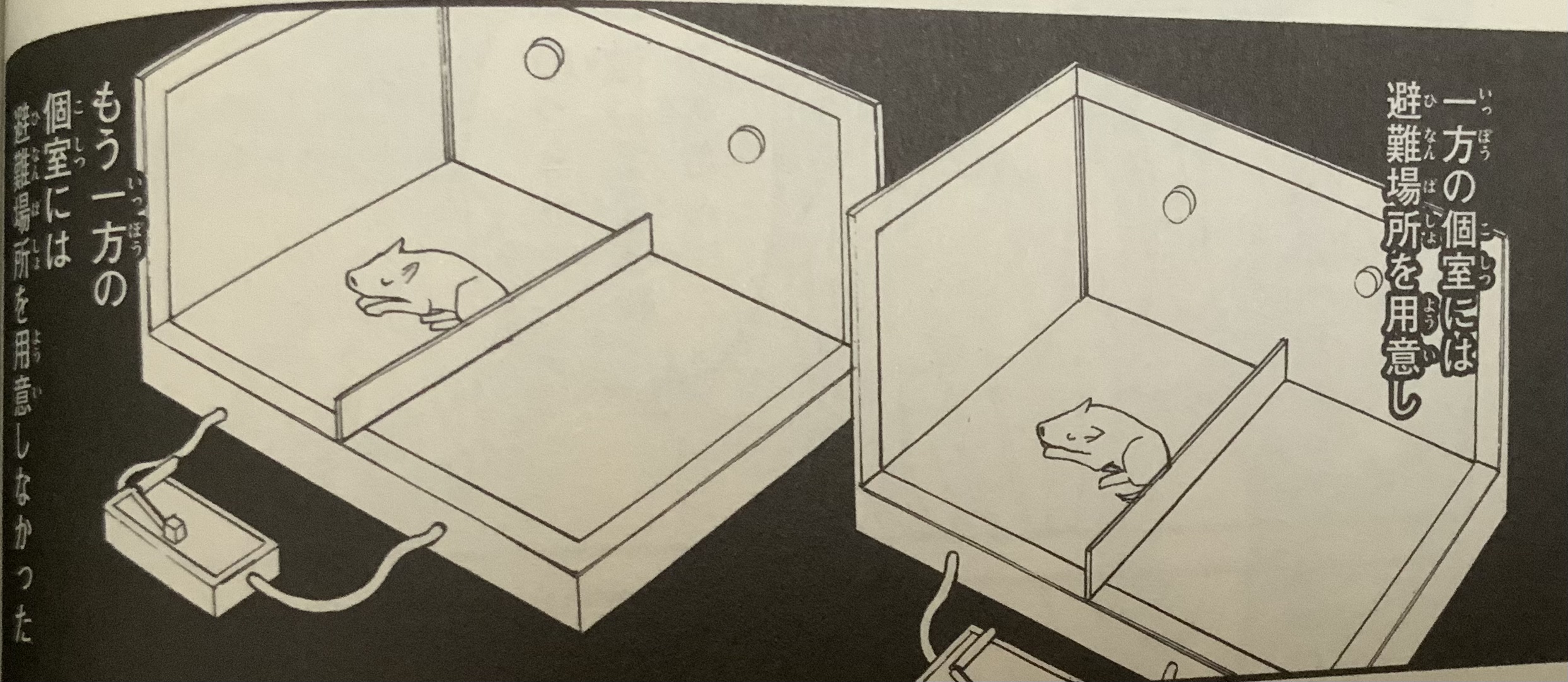
Experiments with dogs
Learned helplessness means that people learn to be "helpless" when they find that they cannot escape from the current difficult environment despite their efforts.
In one experiment, two dogs were confined to separate rooms and supplied with an electric current. One room had an evacuation area and the other room did not. The dogs that had the evacuation area learned how to escape to the evacuation area after trial and error.
However, the dog that did not have a place of refuge had no place to escape after trial and error. After a while, the dog realized that he could not escape from this situation no matter what he did, and just continued to endure the electric current. Even after preparing a place of refuge, he did not think that he could escape and continued to stay in the room where the electric current was flowing.
Learned helplessness refers to the situation in which a person continues to endure harsh conditions and is unable to escape because he or she has learned that he or she is powerless, even though he or she knows that he or she can escape.
Underdog effect
The underdog effect is the feeling that when people see people who are too miserable or in a difficult situation, they want to support them.
To put it simply, it's a strategy to gain sympathy.
Self-handy capping
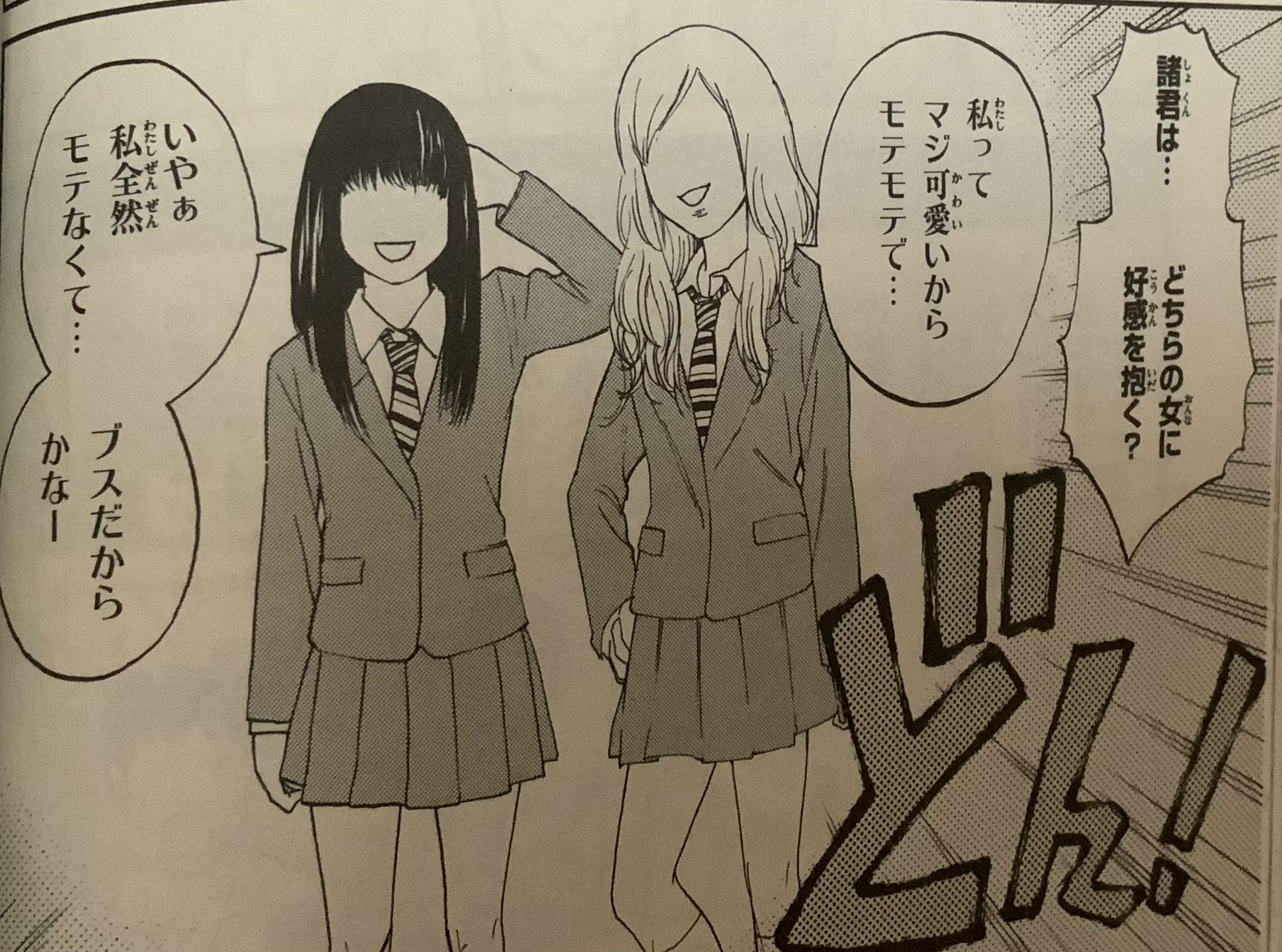
Psychology that people prefer humility
Self-Handy Capping refers to the psychology of asserting one's ability low in a place where one's ability is tested.
For example, if you get a good score by saying "I'm not studying at all" before the test, people will think you are great even though you said you weren't studying. Even if you get a bad score, people around you will say you weren't studying at all and you won't lose.
By lowering the hurdle by oneself from the beginning, there is an effect that the probability of losing the evaluation from the circumference lowers.
Pavlov dog (Pavlov dog)
Pavlov's dog is a kind of conditioning.
If you ring a bell and feed your dog, it will remember the food and start drooling.
Similarly, there is operant conditioning, in which a mouse placed in a chamber equipped with a mechanism that allows it to pull the lever to release food, and when it realizes the mechanism, it pulls the lever itself.
Sunk cost effect
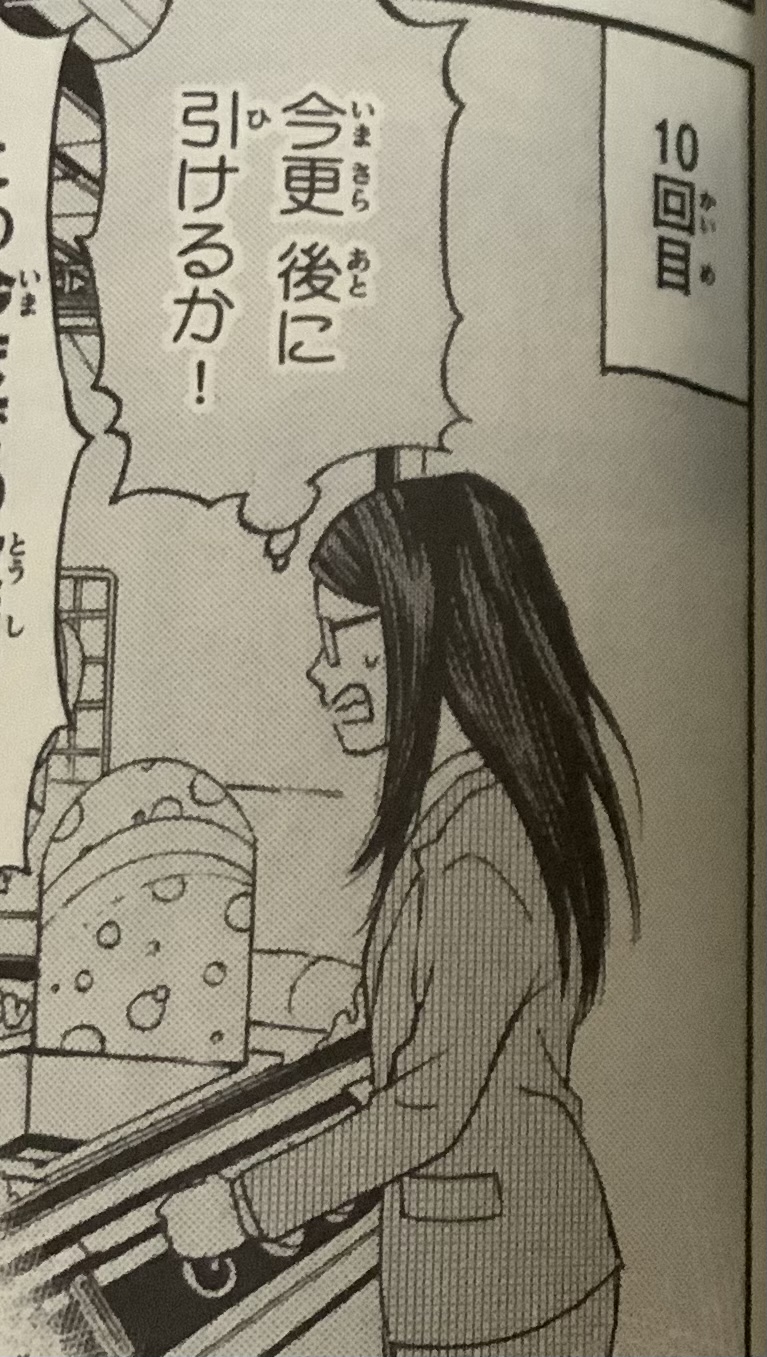
People invest more to make up for what they have invested.
The sunk cost effect is the feeling of being a waste.
For example, if you find a prize that you think you can get in a crane game, you try the crane game saying, "Let's do it once." If you can't get it in one try, you try it again saying, "Just once."
If you are still unable to get a ticket and continue to do so many times, you will feel that the price you have paid "because you have done so many times" is a waste and you will not be able to back off.
This is also applied to love, and there is a tendency to feel that the investment and time you have spent with someone you have been dating for a long time is not worth it, and even if you want to break up with them, you tend to postpone it.
Error of basic attribution
An error of basic attribution is the psychology of thinking that the cause of the action lies in the person who performed it.
For example, when a person is treated kindly by a store employee, he or she thinks, "I guess this person is always kind." Employees are only treating customers kindly because they are working, but they are not always kind themselves.
Holding effect

Tags
Contents
- Outline of "Psycho Romanchika"
- Outline and story of "Psycho Romanchika"
- Ito Launches "Psychology Research Department"
- Appearance of the fifth member, Senjo
- Love between Ito and Abe
- Characters in "Psycho Romanchika"
- Department of Psychology
- Ito
- Abe
- Ezaki
- Kyoichi 宇堂
- Senjo Naruko
- Friend
- Koi
- Mishima
- Tago
- Other students
- Kano
- Yagami (eight gods)
- 日々野
- Fuwa
- Yui HEYA
- Ikushima (Many Islands)
- Kuho
- Sachiko KAIYAMA
- 於田
- Medaki Fall
- Natsuki
- Faculty
- Soga
- Sakurako SERA
- Other
- Old buyer
- Term for "psycho-manchika"
- Psychology in the story
- Subjective contour
- Hello Effect
- Magical Number 7
- Priming effect
- Labeling Self-Fulfillment Prophecies
- Ash tuning experiment
- Psychodrama
- Space-filling effect
- Meravian's law
- Functional fixation
- Confirmation bias
- Positive transition
- Self-inconsistency
- Zeigarnik effect
- Sensory deprivation experiments
- Bystander effect
- Anchoring effect
- Foot in the Door
- Door in the Face
- Burnham effect
- Color bath effect
- Top-down effect
- Stanford Prison Experiment
- Motivation (dokezuke)
- Principle of small steps
- Cognitive dissonance
- Haider's theory of balance
- Eiko Yoku (Glorious Bath)
- Modeling
- Ringelmann effect
- Self-Disclosure and Refunding
- Psychological reactance
- Facial feedback hypothesis
- Bandwagon effect
- Snob effect
- Veblen effect
- Zinc pyrithione effect
- Status Quo Bias
- Learned helplessness
- Underdog effect
- Self-handy capping
- Pavlov dog (Pavlov dog)
- Sunk cost effect
- Error of basic attribution
- Holding effect
- Simple contact effect
- Reframing effect
- Broken window theory
- School-related
- Research School of Psychology
- Occult Research Club
- Drama Club
- Other
- Golden Bind
- Kichu Trading Card Game
- Words, lines, scenes, and scenes from "Psycho Romanchika"
- Ezaki: "I'll eat lunch with Koi."
- Ito: "Don't despair because you weren't born a lion! If you were born a hyena, fight as a hyena!"
- 宇堂: "I was miserable and frustrated, so I couldn't make a pass honestly. I'm sorry."
- Ito: "If only one person who can think' This person!' can tell me' Cute!' quietly, I can't talk about it in this world without the power to live to a foolish afterlife!"
- Ito: "If only I had once thought that something might have changed at this time. I could have gotten out of the deadlock at that time!"
- ABE: ". I. don't want to disband the psychology research department."
- Secret Stories, Trivia, and Small Stories / Episodes and Anecdotes of "Psycho Romanchika"
- Final episode that was not titled LAST
- Long-Term suspension and sudden termination
- The author's other work, "Airi Um," became a drama with "The Strangest Story."