
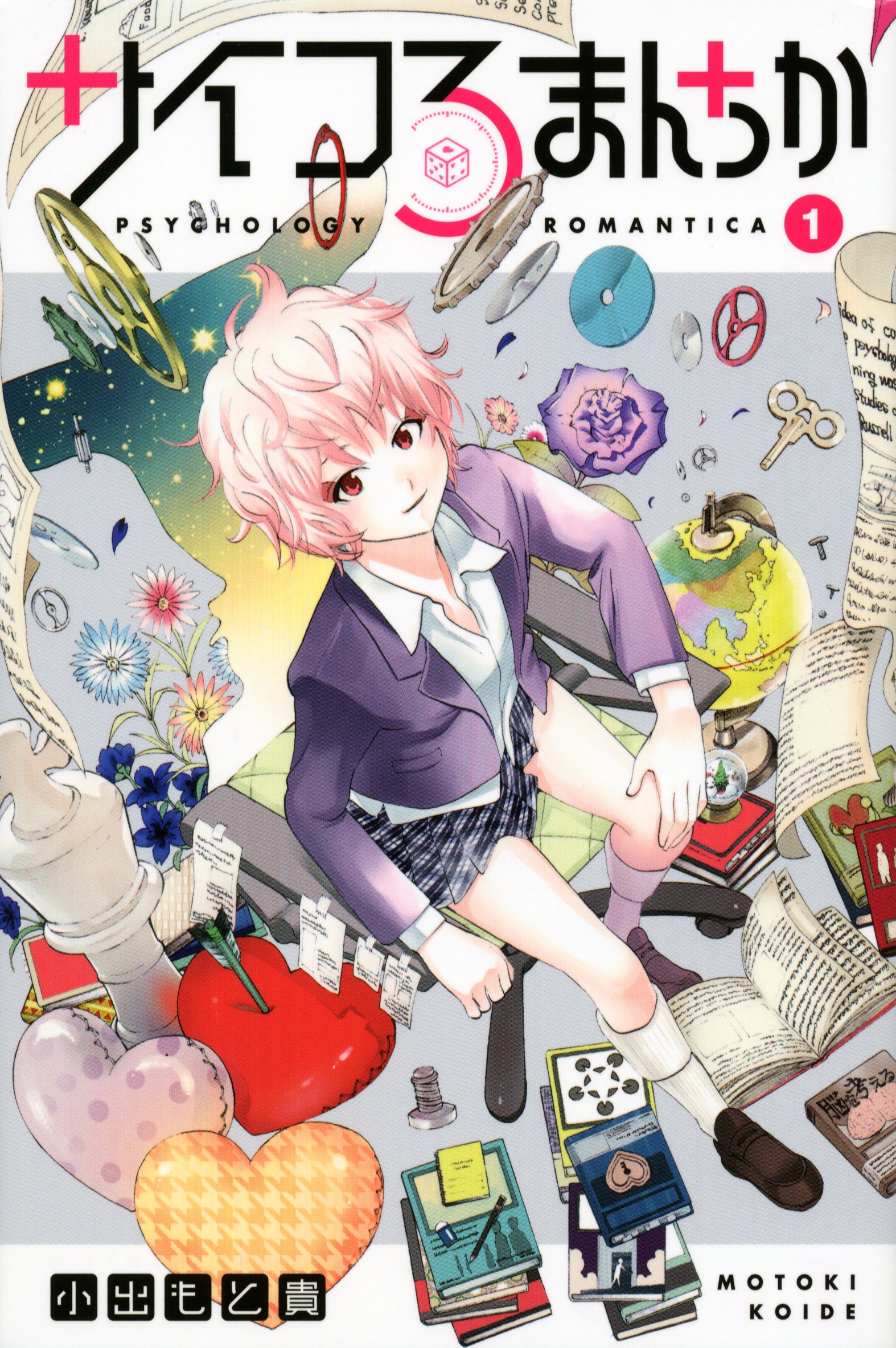
Psycho Romanchika" is a Japanese gag manga by Motoki Koide that crosses psychology and the daily lives of high school students. It was serialized in Monthly Shōnen Rival from 2014.
The main character, Ito, is a high school girl who has a crush on her childhood friend Abe. Fascinated by psychology, she decides to start a "psychology research club. In order for the club to be recognized as a club, it must have five members. There, Ito uses psychology to meet and recruit a variety of students, from dropouts to delinquents. This is a story filled with the slapstick daily lives of high school students and psychology that can be used from tomorrow.
Sensory deprivation experiments
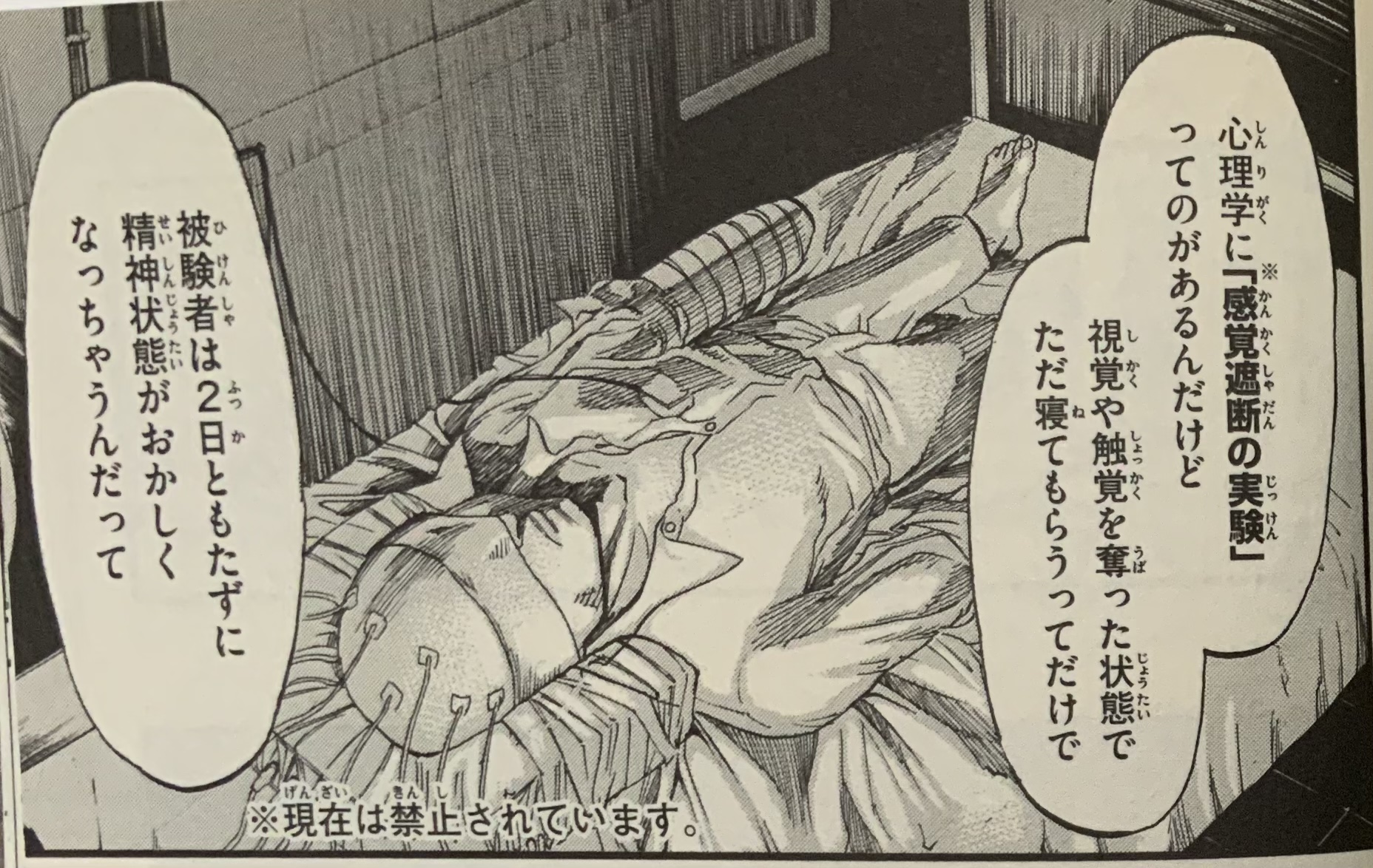
Dangerous experiments that are now prohibited
Sensory deprivation, which was banned in the 1990s because of its dangers, is an experiment in which a bedridden person who had lost sight or touch became insane in less than two days.
If a person remains unstimulated for good or ill, the mind itself collapses.
Bystander effect
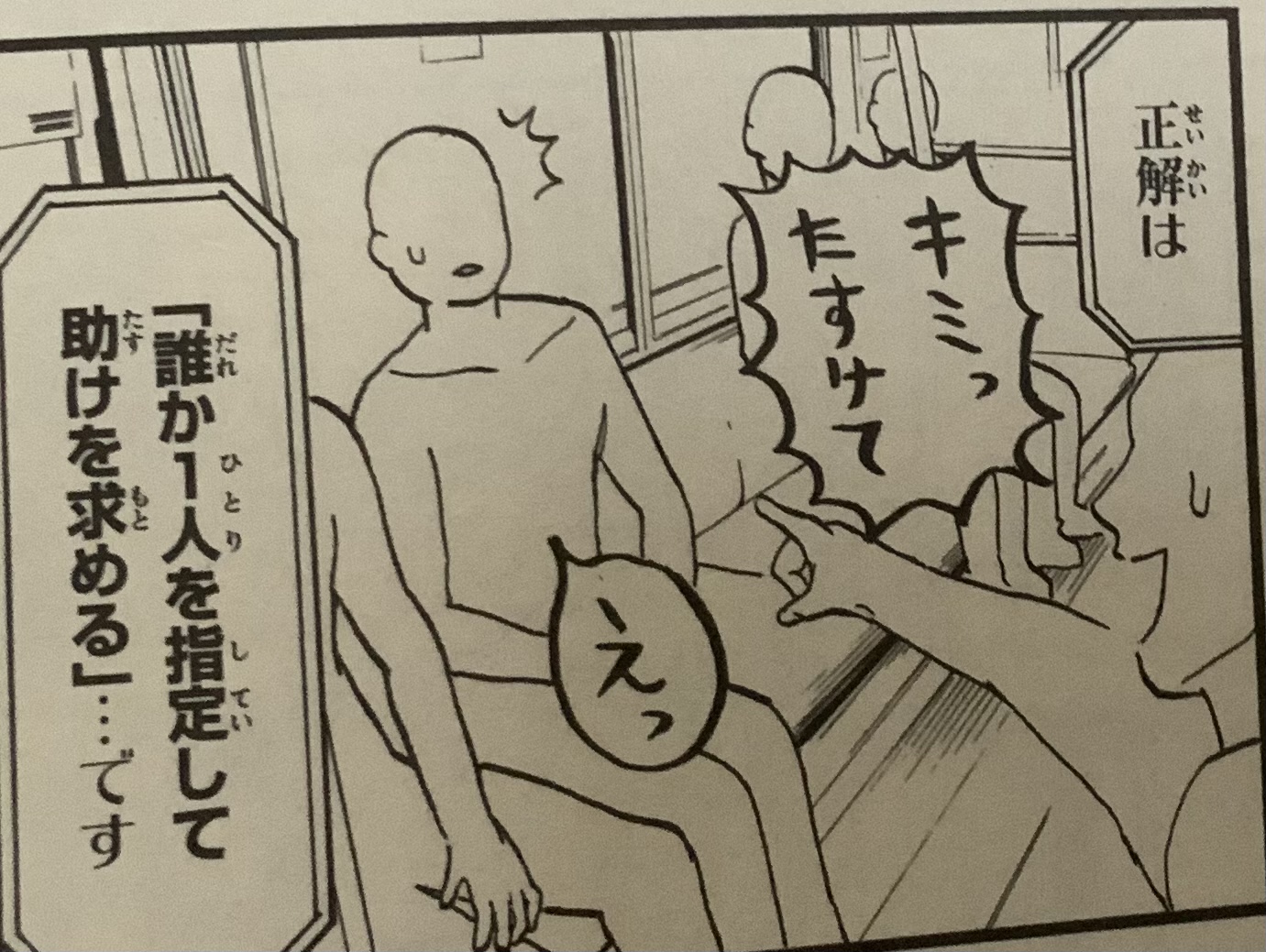
Asking for help by name increases the chance of survival
The bystander effect is an effect in which people become less responsible when they are distracted by a social crowd.
For example, if you fall down at a station, everyone thinks someone will help you, and it takes more than an hour without anyone helping you. If you are conscious and you want someone to help you, pointing your finger at someone else and saying, "Please help that person!" is said to dilute this bystander effect.
Anchoring effect
The anchoring effect is the psychology in which people think about things based on the numbers and conditions given at the beginning.
For example, if a 10,000 yen dress is sold at a department store, people will think, "This dress is worth 10,000 yen." If there is a further discount and the dress becomes 5000 yen, they will think, "It's a good deal!" There are also pizzas that say, "We'll deliver it in 30 minutes," but if they are delivered in 35 minutes, they will think, "It's late."
Foot in the Door
Foot in the Door is a psychology in which once a person accepts a small request, it becomes easier to respond to subsequent requests.
For example, if you begin with a small request to a passerby, "Could you tell me what time it is?" You gradually enlarge your wish, and at the end you ask, "Could you lend me some money?" This increases your chance of success.
Door in the Face
Door-in-the-Face is a system in which if you make a big request and get turned down at first, and then ask for your favorite favor, the other person feels guilty because he or she turned it down at first, and it becomes easier to accept your favorite favor.
For example, if you make a big request, such as, "Would you like me to take a day off tomorrow?" If the other person refuses, you ask him or her to raise your salary by 10%, and the other person is more likely to think about it because he or she feels guilty because he or she has already refused.
Burnham effect
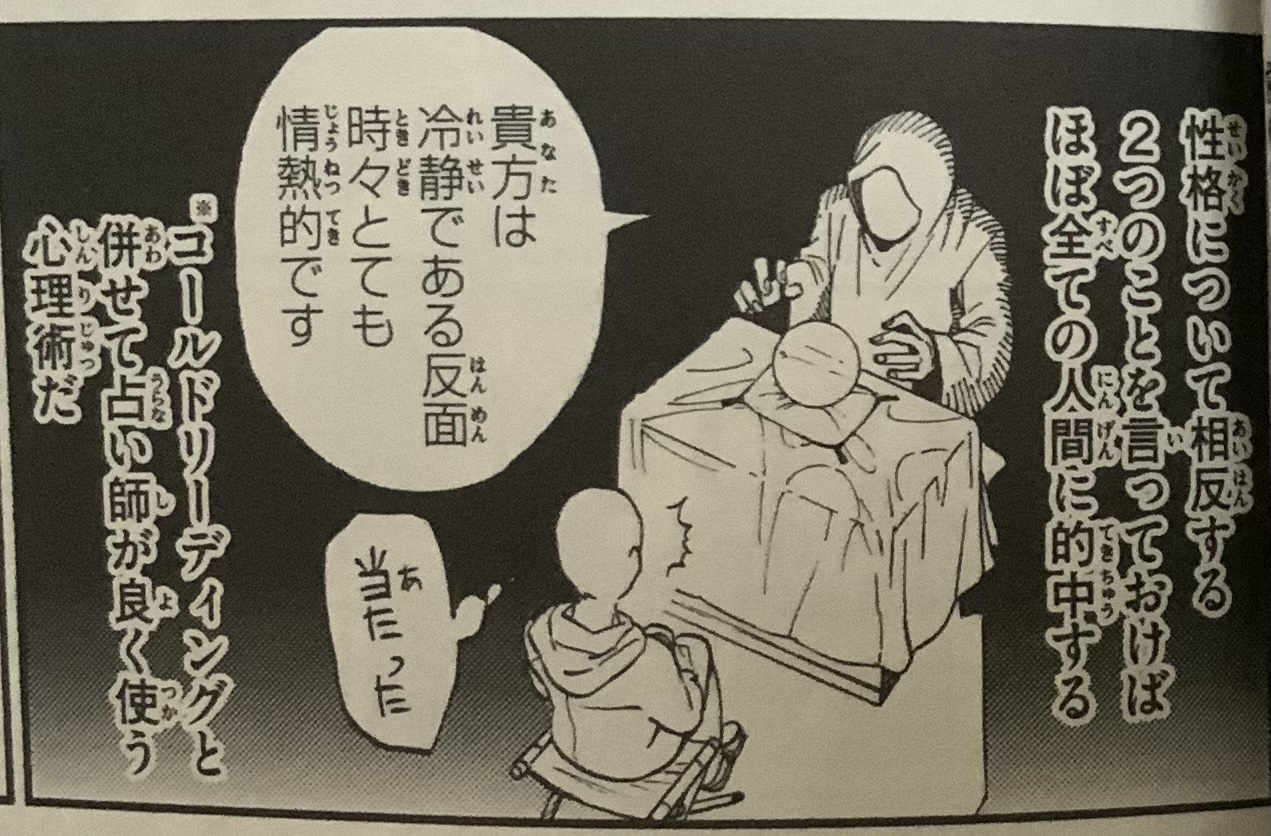
Fortune-teller's routine
The Burnham effect is an effect in which you say things that apply to everyone, and the other person feels that you are right.
For example, even if a fortune-teller says, "You are the type of person who is hot and pulls everyone. On the other hand, you are a person who can make a calm and calm choice," something that is tempting to everyone, it is easy to feel that it is "hitting" if a part of it is hitting.
Color bath effect
The color bath effect is an effect that leaves a strong impression only on the color you are conscious of.
For example, if you see a pattern that contains red, green, and white after being told that "today's lucky color is red," you focus only on red, saying, "It's the lucky color of red!" Because you were told earlier that "lucky color is red," only the impression of red remains strong.
Top-down effect
Top-down effects are effects of prior information, such as knowledge and memory, on cognition.
For example, when I saw a white shadow on the road, I thought, "It's a cat!" and approached the white bag of a supermarket. This is also because memories and experiences that say, "The white shadow on the road must be a cat" affect recognition.
A famous example of the top-down effect is the Ratcliffe Wharf Experiment.
This was an experiment in which ghost rumors were spread in an old warehouse. The experimenter told a false story that "In the past, this warehouse was an inn. And the priest who was the master of the inn killed many people. He is still wandering as a ghost." As a result, information that "I saw a ghost of a priest" started to appear in the area.
In this book, the occult research department spread a rumor that "there is a ghost" on the rooftop where the psychology research department is located.
Ito countered with the above-mentioned top-down effect and the story of Ratcliffe, and finally avenged himself by spreading the rumor of the occult research club.
Stanford Prison Experiment
The Stanford Prison Experiment is an experiment in which about 20 civilians are divided into prisoners and guards who spend two weeks in prison.
At the beginning of the experiment, the atmosphere was calm, but gradually the guards began to crack down on and even abuse the prisoners like real guards. Finally, the experiment was stopped less than two weeks later due to violence.
It is also an experiment that shows that people change when people with power and those without power are confined in a narrow space.
Motivation (dokezuke)
Motivation is the will that appears when a person does something. There are two types of motivation: intrinsic motivation and extrinsic motivation.
"Intrinsic motivation" is something you do just because you like it. For example, you want to study because you want to enter a good university, or you want to go on a diet because you want to master physical beauty.
On the other hand, "external motivation" is something you do because you receive money or punishment. For example, "If you enter that university, your parents will give you 1 million yen," or "If you don't get a good score on the test, you will be punished."
Intrinsic motivation is said to be overwhelmingly sustainable.
Another famous experiment in exogenous motivation is the puzzle solving experiment.
Group A received a reward each time they solved the puzzle, and group B did not receive a reward for solving the puzzle. Group B took a break and started working on the puzzle again.
This is thought to be due to the fact that "people originally enjoyed puzzles, but the reward of money was added", and this is called an undermining effect.
Principle of small steps

Tags
Contents
- Outline of "Psycho Romanchika"
- Outline and story of "Psycho Romanchika"
- Ito Launches "Psychology Research Department"
- Appearance of the fifth member, Senjo
- Love between Ito and Abe
- Characters in "Psycho Romanchika"
- Department of Psychology
- Ito
- Abe
- Ezaki
- Kyoichi 宇堂
- Senjo Naruko
- Friend
- Koi
- Mishima
- Tago
- Other students
- Kano
- Yagami (eight gods)
- 日々野
- Fuwa
- Yui HEYA
- Ikushima (Many Islands)
- Kuho
- Sachiko KAIYAMA
- 於田
- Medaki Fall
- Natsuki
- Faculty
- Soga
- Sakurako SERA
- Other
- Old buyer
- Term for "psycho-manchika"
- Psychology in the story
- Subjective contour
- Hello Effect
- Magical Number 7
- Priming effect
- Labeling Self-Fulfillment Prophecies
- Ash tuning experiment
- Psychodrama
- Space-filling effect
- Meravian's law
- Functional fixation
- Confirmation bias
- Positive transition
- Self-inconsistency
- Zeigarnik effect
- Sensory deprivation experiments
- Bystander effect
- Anchoring effect
- Foot in the Door
- Door in the Face
- Burnham effect
- Color bath effect
- Top-down effect
- Stanford Prison Experiment
- Motivation (dokezuke)
- Principle of small steps
- Cognitive dissonance
- Haider's theory of balance
- Eiko Yoku (Glorious Bath)
- Modeling
- Ringelmann effect
- Self-Disclosure and Refunding
- Psychological reactance
- Facial feedback hypothesis
- Bandwagon effect
- Snob effect
- Veblen effect
- Zinc pyrithione effect
- Status Quo Bias
- Learned helplessness
- Underdog effect
- Self-handy capping
- Pavlov dog (Pavlov dog)
- Sunk cost effect
- Error of basic attribution
- Holding effect
- Simple contact effect
- Reframing effect
- Broken window theory
- School-related
- Research School of Psychology
- Occult Research Club
- Drama Club
- Other
- Golden Bind
- Kichu Trading Card Game
- Words, lines, scenes, and scenes from "Psycho Romanchika"
- Ezaki: "I'll eat lunch with Koi."
- Ito: "Don't despair because you weren't born a lion! If you were born a hyena, fight as a hyena!"
- 宇堂: "I was miserable and frustrated, so I couldn't make a pass honestly. I'm sorry."
- Ito: "If only one person who can think' This person!' can tell me' Cute!' quietly, I can't talk about it in this world without the power to live to a foolish afterlife!"
- Ito: "If only I had once thought that something might have changed at this time. I could have gotten out of the deadlock at that time!"
- ABE: ". I. don't want to disband the psychology research department."
- Secret Stories, Trivia, and Small Stories / Episodes and Anecdotes of "Psycho Romanchika"
- Final episode that was not titled LAST
- Long-Term suspension and sudden termination
- The author's other work, "Airi Um," became a drama with "The Strangest Story."