
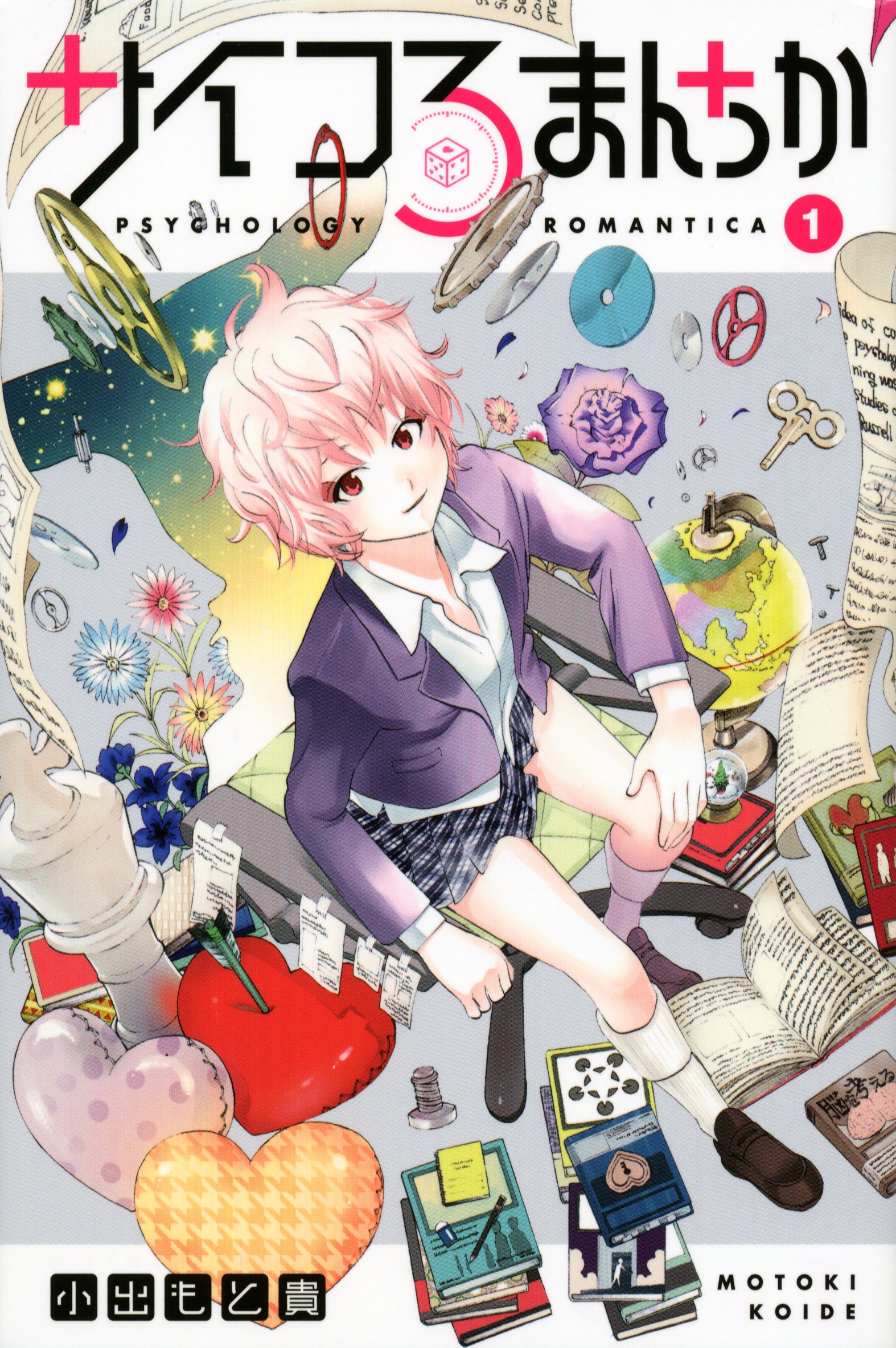
Psycho Romanchika" is a Japanese gag manga by Motoki Koide that crosses psychology and the daily lives of high school students. It was serialized in Monthly Shōnen Rival from 2014.
The main character, Ito, is a high school girl who has a crush on her childhood friend Abe. Fascinated by psychology, she decides to start a "psychology research club. In order for the club to be recognized as a club, it must have five members. There, Ito uses psychology to meet and recruit a variety of students, from dropouts to delinquents. This is a story filled with the slapstick daily lives of high school students and psychology that can be used from tomorrow.
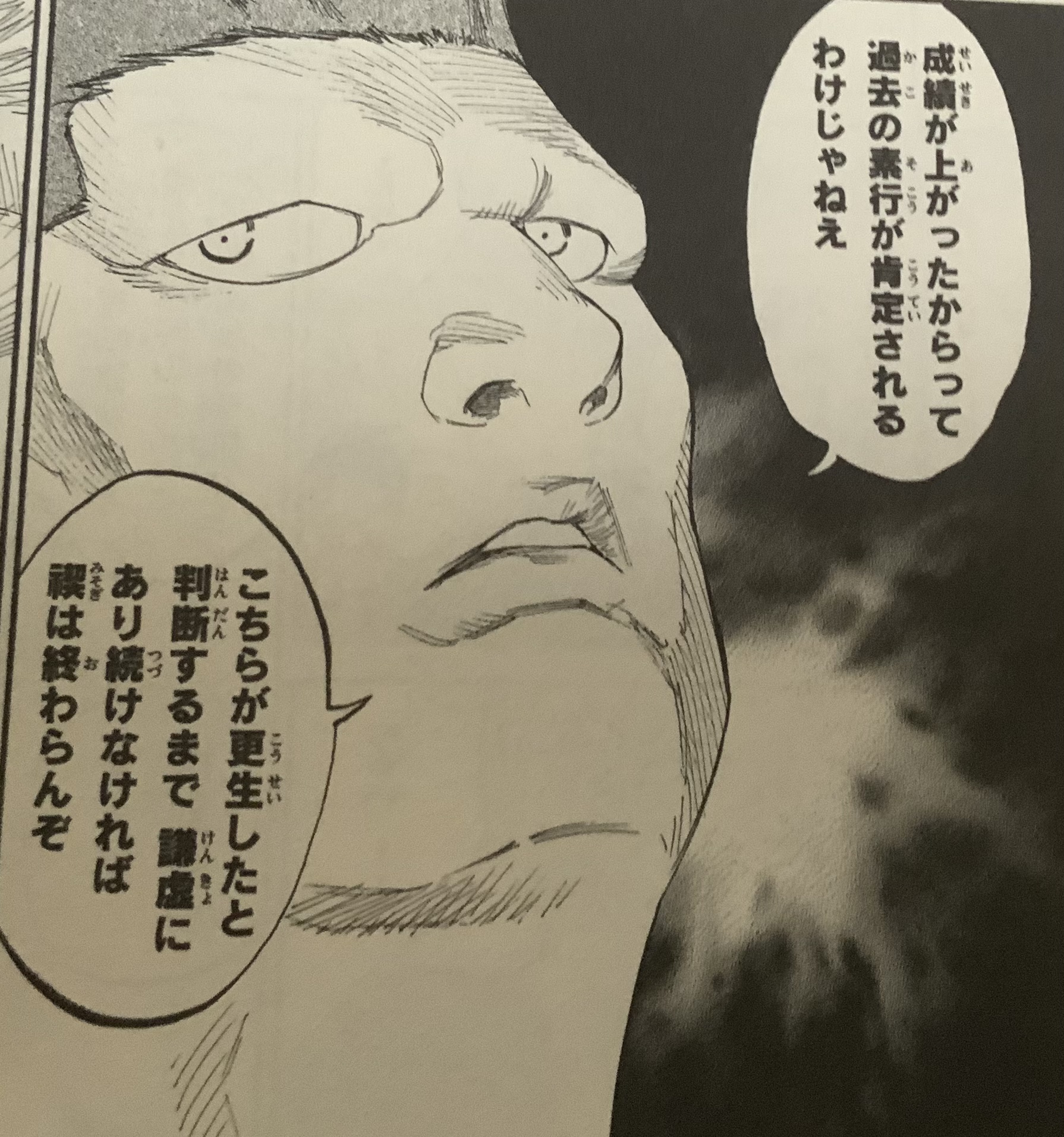
Even if he gets good grades, he's cold to 宇堂. Soga
A male teacher with a body like a gorilla.
Ezaki, who had poor grades, and 宇堂, who had bad behavior, were seen with a harsh eye, and he also thought of the psychology research club as' just a silly club activity on the roof.'
However, since Chijo, who is highly trusted by teachers, became a member of the Psychology Research Department, the club has come to be recognized as a club activity to some extent.
Sakurako SERA
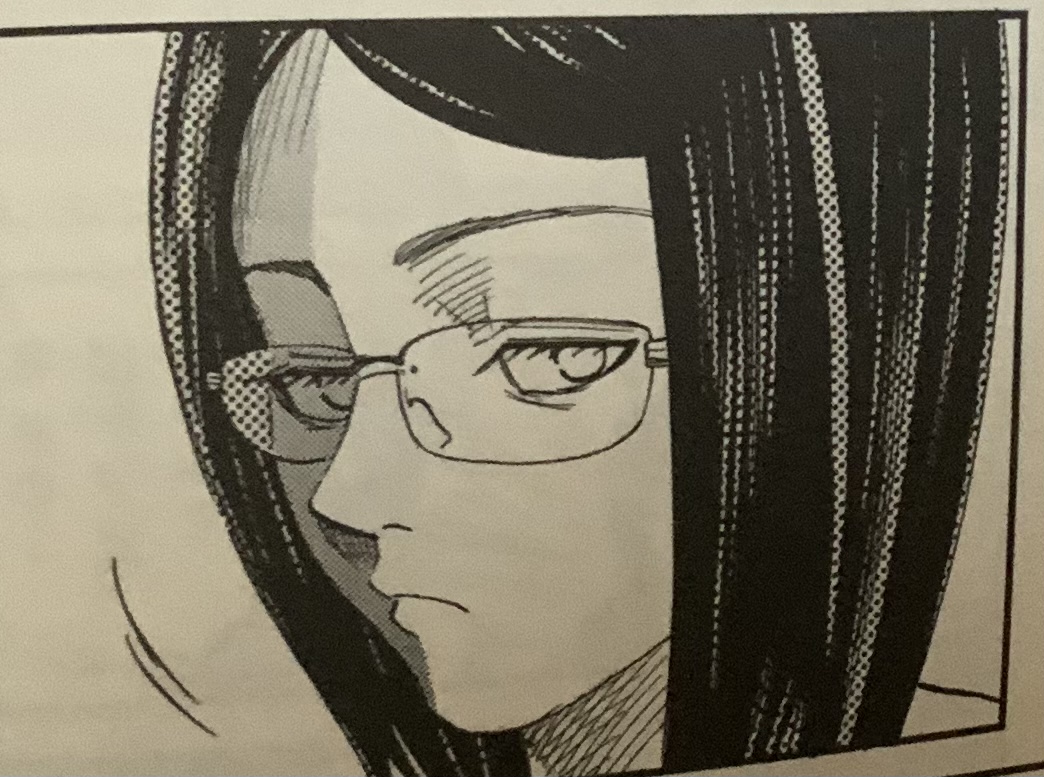
Cool and quiet Mera
Beautiful and cool female teacher in charge of contemporary society. Quiet. Has a boyfriend.
When an adviser was needed for the Psychology Research Department, Ito attached a billi-billi-hand to Sera, saying, "When the heart rate increases, an electric current flows." If he can't stand the current, he surrenders and promises to become an adviser for the Psychology Research Department.
Ito told Sera, "Since I became a teacher, I have thought about forbidden love with a male high school student," and "Please don't think about things for the next 10 seconds." Using the psychological reactance of "people think about things that are prohibited," Ito made Sera increase his heart rate and send an electric current from the billi-billi-hand. Humans are creatures that think about things that are prohibited, so Sera, who was so engrossed in Ito's strategy, surrendered and became an adviser to the psychology research department.
Other
Old buyer
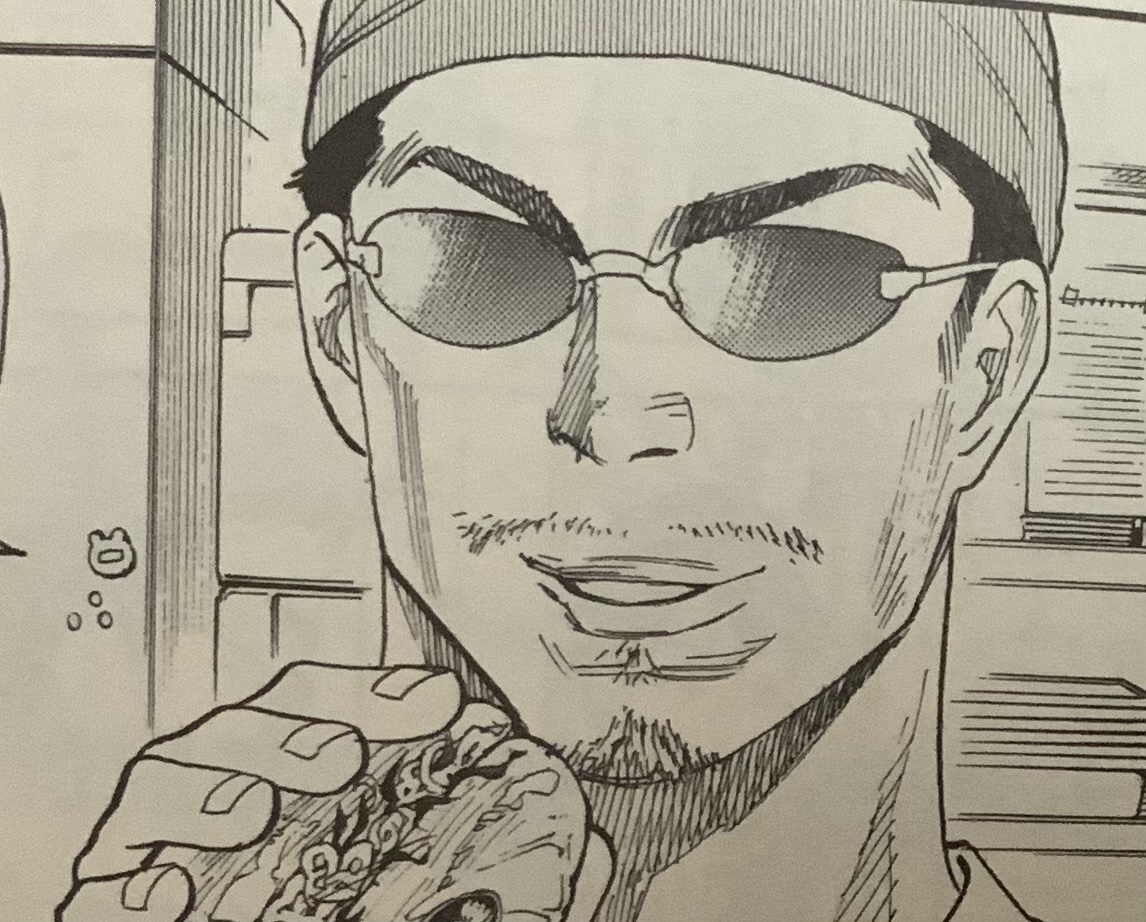
AN OLD MAN IN THE PURCHASING DEPARTMENT WHO'S ON GOOD TERMS WITH ABE.
A middle-aged man who makes and sells original bread bought at school. He is on good terms with Abe. Even though he doesn't have gout, for some reason he only comes up with menus that are good for gout.
At the school festival, she decided to help out at a restaurant with the Psychology Research Department. At that time, she asked Abe, "Is there any way to increase sales with psychology?"
The reason for this was that he was asked to change his job by one of the top trading companies in the industry, but he was afraid of changing his job because he "didn't have a good suit or a good watch," and he was about to give up. Abe uses psychology to sell at the cultural festival to support his father's dream.
Abe hands over the proceeds to the old man, but he says he can't accept them. "I just wanted to be a chance to change the old man's life, so I did it," Abe says, pushing the old man on his back. The old man says, "I'll compete with you in a cheap suit," taking only Abe's feelings into consideration and changing his job to a trading company.
Term for "psycho-manchika"
Psychology in the story
Subjective contour

An inverted triangle appears in the middle, but no solid line is drawn
A subjective contour is a form of perceptual psychology in which a figure appears in the air without a solid line.
A classic example is the well-known' Kanizza triangle' of the above figure, published by the Italian psychologist Gaetano Kanizsa in 1955.
Hello Effect
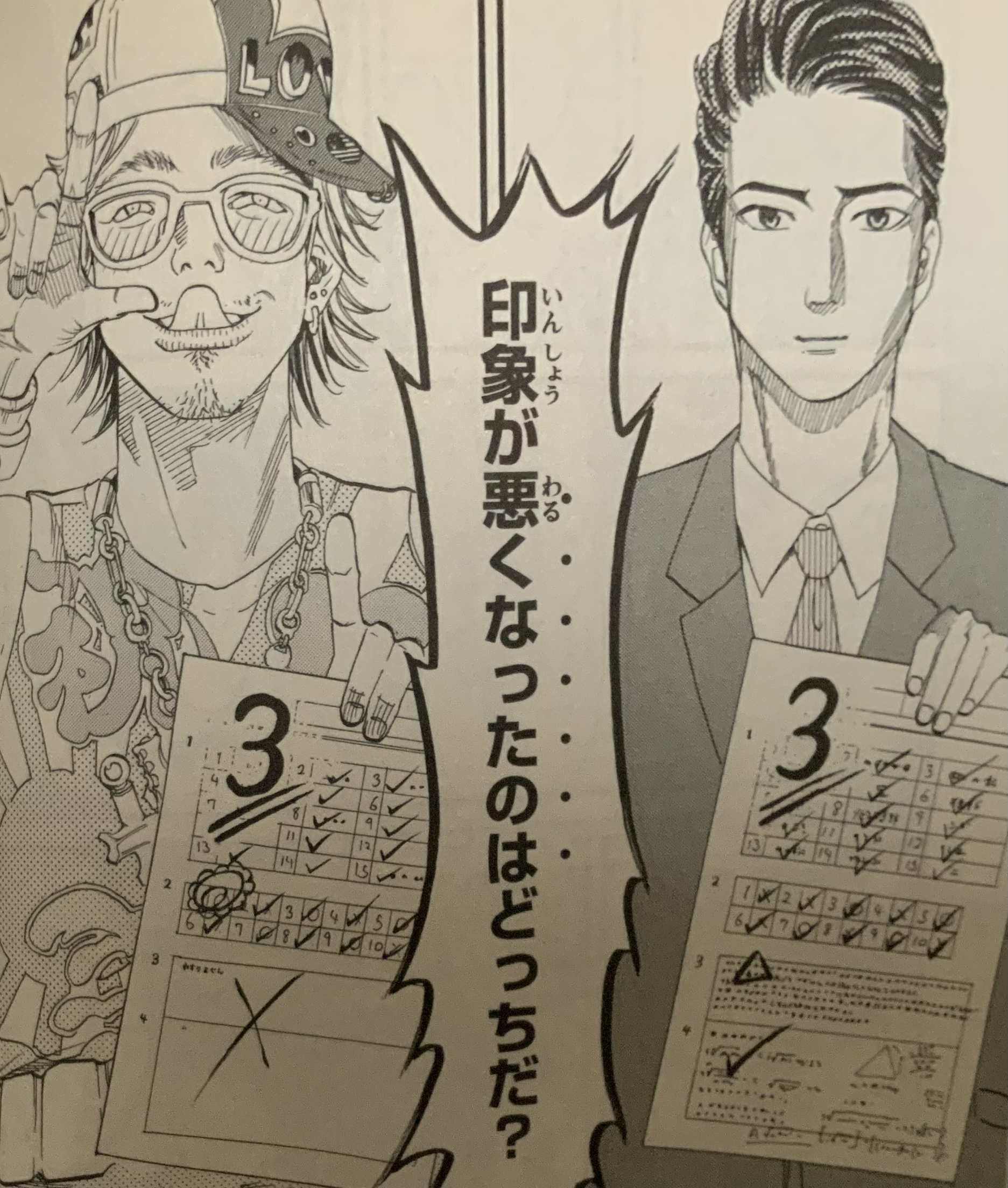
The better it looks, the bigger the shock of disappointment.
The halo effect is a tendency for people to decide who they are based on their appearance and social status.
For example, if you see a cute high school girl or a strong looking man and are asked which looks like a former criminal, many people will choose the strong looking man because of his visual image.
On the other hand, there is also the aspect of "being disappointed when the appearance and the content do not match". Therefore, when they find out that "a very cool male high school student got a red mark in a test," they become disappointed and say, "He is so cool." This is also called the "Ross effect."
Magical Number 7
George Armitage Miller, an American psychologist, has proposed that a person's short-term memory can memorize at most seven plus or two.
In this volume, he used this to help Ezaki with supplementary lessons, which led to Ezaki's joining the psychology research club.
Priming effect
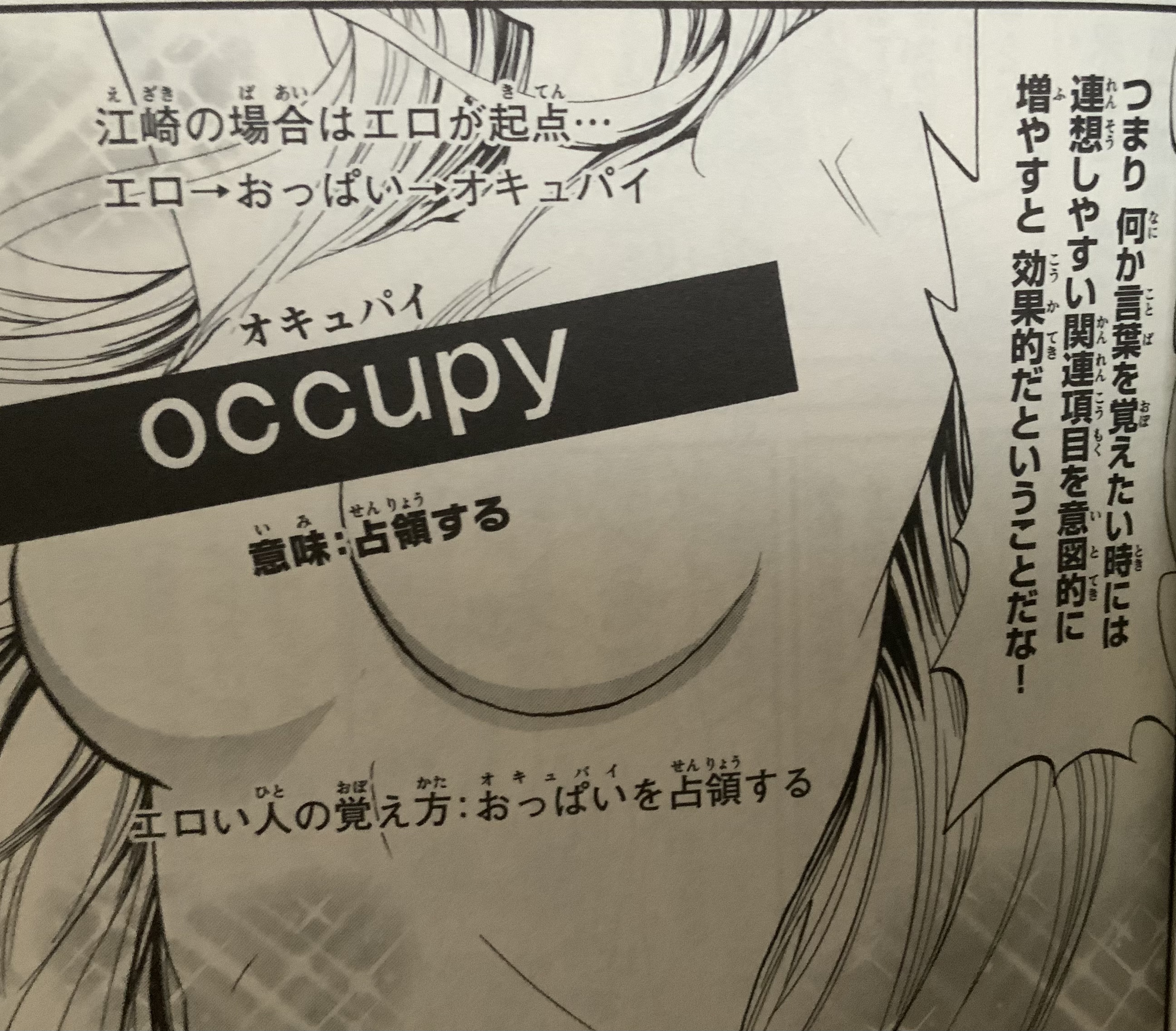
English words are more likely to be remembered by remembering them as related.
Priming effects are associations and associations that stimulate and enhance memory and recall.
For example, if you look at red things such as apples and strawberries before changing clothes, you tend to choose red clothes.
Labeling Self-Fulfillment Prophecies
The self-fulfilling prophecy of labeling is that people tend to do what others tell them to do.
For example, if people around you keep saying, "You're a sloppy guy," the person who keeps being told may actually become sloppy.

Tags
Contents
- Outline of "Psycho Romanchika"
- Outline and story of "Psycho Romanchika"
- Ito Launches "Psychology Research Department"
- Appearance of the fifth member, Senjo
- Love between Ito and Abe
- Characters in "Psycho Romanchika"
- Department of Psychology
- Ito
- Abe
- Ezaki
- Kyoichi 宇堂
- Senjo Naruko
- Friend
- Koi
- Mishima
- Tago
- Other students
- Kano
- Yagami (eight gods)
- 日々野
- Fuwa
- Yui HEYA
- Ikushima (Many Islands)
- Kuho
- Sachiko KAIYAMA
- 於田
- Medaki Fall
- Natsuki
- Faculty
- Soga
- Sakurako SERA
- Other
- Old buyer
- Term for "psycho-manchika"
- Psychology in the story
- Subjective contour
- Hello Effect
- Magical Number 7
- Priming effect
- Labeling Self-Fulfillment Prophecies
- Ash tuning experiment
- Psychodrama
- Space-filling effect
- Meravian's law
- Functional fixation
- Confirmation bias
- Positive transition
- Self-inconsistency
- Zeigarnik effect
- Sensory deprivation experiments
- Bystander effect
- Anchoring effect
- Foot in the Door
- Door in the Face
- Burnham effect
- Color bath effect
- Top-down effect
- Stanford Prison Experiment
- Motivation (dokezuke)
- Principle of small steps
- Cognitive dissonance
- Haider's theory of balance
- Eiko Yoku (Glorious Bath)
- Modeling
- Ringelmann effect
- Self-Disclosure and Refunding
- Psychological reactance
- Facial feedback hypothesis
- Bandwagon effect
- Snob effect
- Veblen effect
- Zinc pyrithione effect
- Status Quo Bias
- Learned helplessness
- Underdog effect
- Self-handy capping
- Pavlov dog (Pavlov dog)
- Sunk cost effect
- Error of basic attribution
- Holding effect
- Simple contact effect
- Reframing effect
- Broken window theory
- School-related
- Research School of Psychology
- Occult Research Club
- Drama Club
- Other
- Golden Bind
- Kichu Trading Card Game
- Words, lines, scenes, and scenes from "Psycho Romanchika"
- Ezaki: "I'll eat lunch with Koi."
- Ito: "Don't despair because you weren't born a lion! If you were born a hyena, fight as a hyena!"
- 宇堂: "I was miserable and frustrated, so I couldn't make a pass honestly. I'm sorry."
- Ito: "If only one person who can think' This person!' can tell me' Cute!' quietly, I can't talk about it in this world without the power to live to a foolish afterlife!"
- Ito: "If only I had once thought that something might have changed at this time. I could have gotten out of the deadlock at that time!"
- ABE: ". I. don't want to disband the psychology research department."
- Secret Stories, Trivia, and Small Stories / Episodes and Anecdotes of "Psycho Romanchika"
- Final episode that was not titled LAST
- Long-Term suspension and sudden termination
- The author's other work, "Airi Um," became a drama with "The Strangest Story."