

We have compiled a list of masterpieces of philosophy, ethics, and psychology that have been read around the world for many years. We have compiled basic information and reader feedback on each work, including "The State" by the ancient Greek philosopher Plato and "The Genealogy of Morals" by the German thinker Nietzsche. We have also compiled a list of books that are perfect for an introduction to philosophy.
I envy the ease with which these kinds of books are available to young readers today.
Source: www.amazon.co.jp

Source: www.amazon.co.jp
"Illustrated Guide to Philosophical Terms" by Masato Tanaka
What can you talk about the state, justice, disparity, terrorism, freedom of speech, artificial intelligence?
As a supplementary reader for students, as a culture for business persons, as a chance to relearn.
A guide for adults to acquire knowledge while having fun
From Pythagoras to Sandel, 70 leading philosophers were picked up
■ Introducing more than 200 key words in a visual form that can be understood intuitively
■ You can see the etymology, source, specific examples, and antonym of the term at a glance.
■ End-of-book index covering more than 400 words
I think an introductory book like this is important. People who read this book and find it interesting can challenge the original book. They get frustrated because they start with the difficult original book from the beginning.
Source: www.amazon.co.jp

Source: www.amazon.co.jp
New Edition of the Dictionary of Philosophy and Logical Terms
The best book for introduction to philosophy and logic.
The long-awaited republication of the new edition is an established dictionary that clearly shows the source of knowledge and the circuit of thinking for those who fundamentally think about life and the world.
Those who study ethics and philosophy should have it.
People who are studying philosophy for the first time don't have a philosophy dictionary, so I don't think they will understand even if they suddenly read Kanto.
Source: www.amazon.co.jp

Source: www.amazon.co.jp
"Introduction to Philosophy" by Russell
"Is there such a certain knowledge that no reasonable person can doubt it?"
This book, which begins with this opening sentence, is the clearest possible discussion of the problems which modern philosophy has repeatedly tackled.
Here, the analytical attitude is thoroughly carried out, and the means to amplify the knowledge from the knowledge that can be recognized directly by human beings are examined, and furthermore, the limitations of philosophy and its value are discussed.
It can be said that it was the starting point of the analytical philosophy which was the mainstream of the 20th century philosophy and also foresaw its future.
This is the best introduction to philosophy that can be read today. A long-awaited new translation.
"Better than a bad primer." But this book is useful to anyone interested in philosophy. Please read it!
Source: www.amazon.co.jp
Source: www.amazon.co.jp
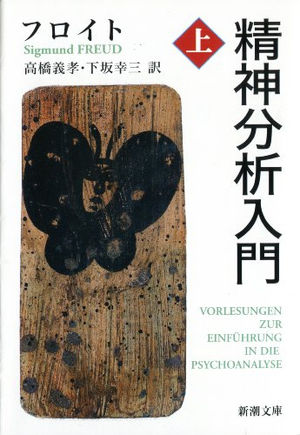
"Introduction to Psychoanalysis" by Freud
Freud, who had a great influence on twentieth century literature, was the founder of psychoanalysis, which sought the hidden meaning of symptoms by the revolutionary method of adopting free association, as opposed to traditional psychiatry, which had been devoted to the naming and classification of mental illness.
This book is a record of lectures given to the general public at the University of Vienna from 1915 to 2017. It is the best introduction, written in an interactive manner, for the purpose of clear reasoning and enlightenment.
The detailed doctrinal development is also imbued with Freud's own view of life, his general belief in scholarly research, and his deep insight into the nature of humanity, and can be read as "An Introduction to Human Freud" rather than "An Introduction to Psychoanalysis."
Source: www.amazon.co.jp

Source: www.amazon.co.jp
"Introduction to Aristotle" by Yoshihisa YAMAGUCHI
Like Plato, Aristotle was a giant in ancient Greek philosophy.
He not only influenced later European philosophy.
He laid the foundation of formal logic centered on the so-called syllogism, created the concepts of concrete and abstract, universal and individual, and possible and real, and created a comprehensive framework of knowledge that supported the development of modern natural science.
How did he pursue the question of the very way we think when we think about various things?
This book is an attempt to rediscover Aristotle by tracing the trajectory of his steady search for knowledge.
The basic ideas of Aristotle's learning were explained in an easy-to-understand manner, and I was able to understand the characteristics of his learning, especially the difference from his mentor Plato, and I was grateful for the illustrations that helped me understand it.
This book is a good introduction for those who want to read Aristotle's works.
Source: www.amazon.co.jp

Source: www.amazon.co.jp
"Introduction to Descartes" by Michio Kobayashi
"I think, therefore I am" - Descartes, the father of modern philosophy, who declared the establishment of the modern spirit and constructed the basic principles and methods of philosophy that form the framework of modern knowledge.
But there is nothing worse for him than the image of a "mind-centered" philosopher who indulges in speculation in his study.
As an adolescent, a behavioral thinker who ventured and wandered through the 17th century European countries of the Thirty Years' War - this is Descartes.
This book is a serious introduction to Descartes, trying to find out the true form of Descartes under the grand system of knowledge, from epistemology and metaphysics to natural science and cosmology, by unleashing the fetters of German idealism, which sees the convergence of systems in the establishment of Cogito.
If you read this, you don't need another primer. You should work on Descartes' book right away. In that sense, it's an example of a primer.
Source: www.amazon.co.jp
Source: www.amazon.co.jp
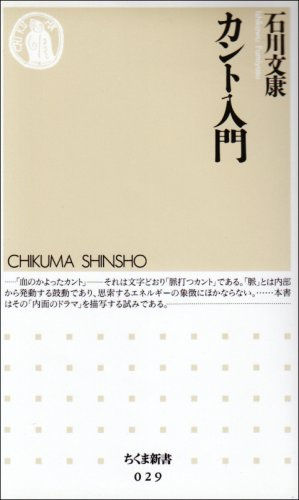
"Introduction to Kant" by Fumiyasu Ishikawa
Wouldn't it be a big problem if reason, which is supposed to be the supreme decision-making body of truth, has a duplicity to deceive human beings?
The discovery of this shocking fact of the deceitfulness of reason was the starting point of Kantian philosophy.
The shadow of Kant's solitude, with his regular afternoon walks, was the valiant figure of a solitary philosopher, who would not tolerate any semblance or deception, but bravely challenged the deceptive nature of such reason.
He sheds light on the "inner drama" that pervades his entire life, and, centering on "Critique of Pure Reason," which is an enduring legacy in the history of philosophy, he clearly interprets the core of the philosophy and depicts a vivid new Kantian image that can be revived today.
I can see how Kant was aware of the problem of pure reason and how he dealt with it.
I am not familiar with philosophy or logic, but even as an amateur myself, I was able to read without putting my shoulders up, and I was able to feel the after-effects of reading a good quality mystery novel.
Source: www.amazon.co.jp

Source: www.amazon.co.jp
"An Introduction to Nietzsche" by Seiji Takeda
Do they flee to "God" and "Transcendental Truth" in the mire of Lusanchiman, or do they bet on the "sacred lie" of "eternal return" and greatly affirm their own lives?
It is a dangerously exciting introduction that boldly grasps the core of Nietzsche, the biggest epicenter of 20th century thought, and boldly presents its potential for the next century.
I don't think there is such a clear explanation anywhere else.
All of Professor Takeda's books are characterized by this kind of clear explanation, but I think it is really a wonderful book that gives such a clear explanation of Nietzsche, a philosopher who is often talked about as a mysterious thinker.
Source: www.amazon.co.jp
Source: www.amazon.co.jp
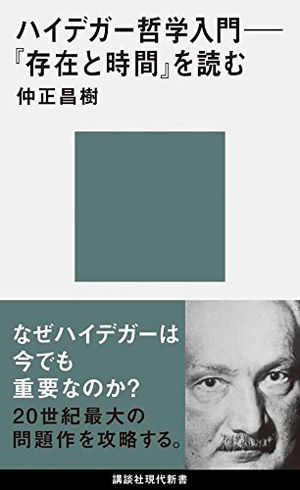
"An Introduction to Heidegger Philosophy -- Reading Existence and Time" by Masaki Nakamasa
"Being and Time" created a great sensation in the 20th century and is still widely read today.
The importance of the world concept.
The word "Genzai," which means "present existence," refers to taking on "anxiety" and "carrying out existence."
This book, which asks the meaning of philosophy, such as the relationship between "existence" and "time," from the beginning, is an introductory book and the definitive edition.
It also explores the importance of Heidegger in the world of philosophy.
"Being and Time" is really difficult to understand for an amateur like I, and even in this book, the original text was often quoted and explained, but I couldn't understand what the original text was saying, so I read the author's explanation and thought that it was a great relief and thank you very much for explaining about things that are close to me.
Source: www.amazon.co.jp
