
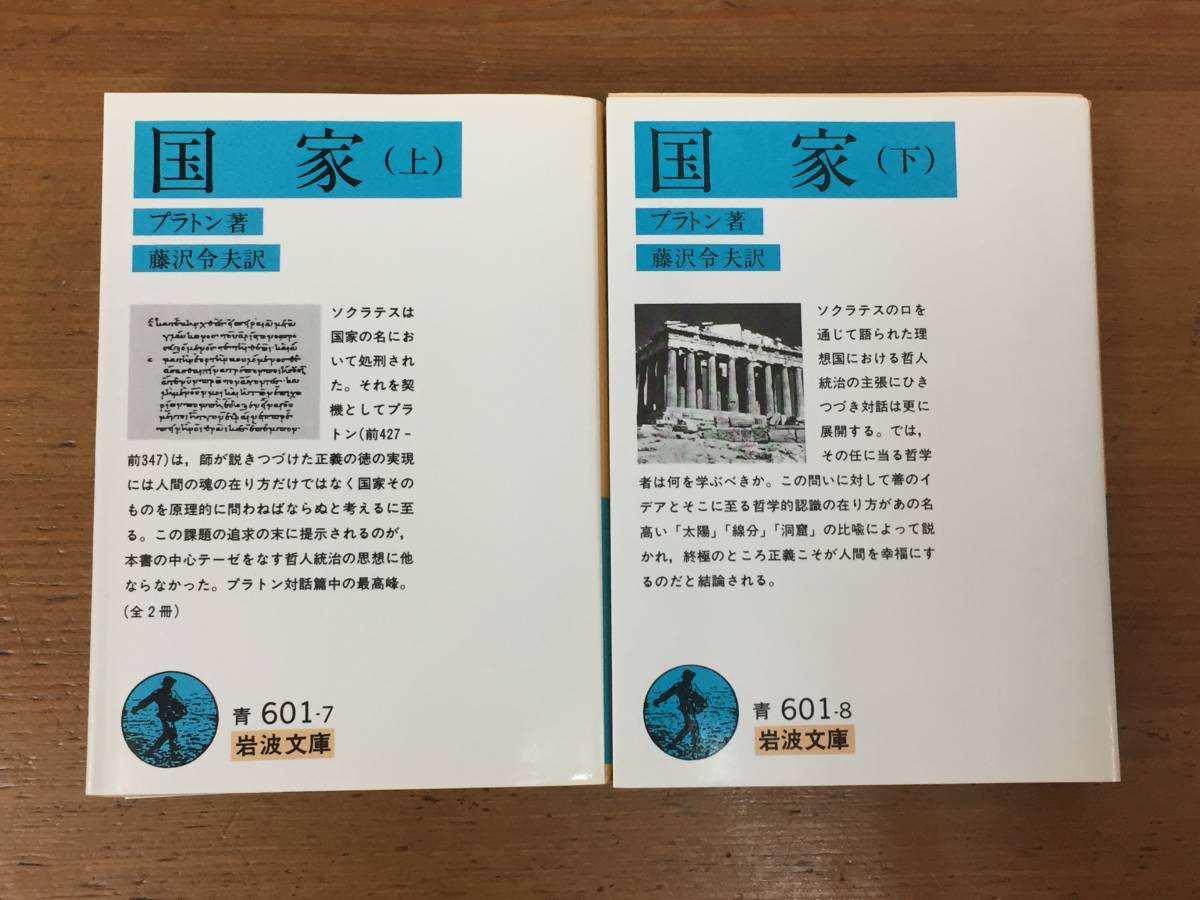
We have compiled a list of masterpieces of philosophy, ethics, and psychology that have been read around the world for many years. We have compiled basic information and reader feedback on each work, including "The State" by the ancient Greek philosopher Plato and "The Genealogy of Morals" by the German thinker Nietzsche. We have also compiled a list of books that are perfect for an introduction to philosophy.

Source: www.amazon.co.jp
"Homo sacher" in アガンベン
It has been rumored for a long time that Europe's interest in modern thought has declined.
The author is one of the exceptional thinkers whose work has always been the focus of international attention, despite the fact that this phenomenon is closely related to the trend of globalization, in which many cultural and social discourse has been centralized in the American style.
Homo Saker (a being that is free to kill, but not sacrificed)
It's not about the past, it's not about Auschwitz, it's not about Ancient Rome!
Isn't this a problem of the present, and indeed of Japan?
Source: www.amazon.co.jp
A group of homeless people who have been thrown on the streets, and whose death stories are being broadcast almost every day, no one cares. On the contrary, some people even say that the streets are clean. Not only are they not subject to any welfare, they are not subject to any legal protection. They do not know whether they are sleeping or dead, but they look away and pass by.
Source: www.amazon.co.jp
An IT millionaire targets the funds of the weak and the postal savings, and a fat man calls it "reform," while a silver-haired lowly Hitler flatters the U.S. Empire.
In the middle of the city stands a grove of box-shaped objects that are known as laborers, and on the side of them, an old man who has no relatives now shivers with cold.
Under the guise of temporary staffing, Japanese-Americans are mobilized for both hourly and 3-K work, and the funds for improving the workplace are cut, and the funds are used to secure research funds and scholars from companies.
Source: www.amazon.co.jp
アガンベンのホモ・サケルを学部生の時以来、3年ぶりに読み返している。フーコーやシュミットの議論を引き継いでいるので、彼らの著作について多少知識を仕入れて読む今、前回読んだ時は全然理解できてなかったんだな、ということと、借りた本の書き込みは消しとけよ3年前の私…ということを痛感する
— 単なる知性の限界内のミジンコ (@coo_ney_you_zoo) September 1, 2017
今アガンベンのホモ・サケルを読むと一年前とは比べものにならないくらい彼の文が強烈な色彩を持っていることに気づいた。ようやく色々なことがつながってきた
— 長戸光 (@sabakinoryu1) June 29, 2017

Source: www.amazon.co.jp
"History of Western Philosophy" by Russell
This book was born in 1943 with lectures in the United States as the mother tongue. It was published in 1946 and immediately attracted worldwide attention.
What makes it unique?
First, the historical ideas of mankind are beautifully fused and synthesized in Russell's unique interpretation.
Secondly, the clarity and plainness of the narrative -- a flowing and witty text that is considered a model of 20th-century prose.
Thirdly, as indicated in the subtitle, he tried to grasp philosophy in relation to the background of the period.
It is a monument to modern thought as the greatest history of philosophy by a first rate, original thinker.
A unique history of philosophy viewed in relation to social history.
That history can't have a unified view of history
The author's argument is also very reasonable.
Source: www.amazon.co.jp
However, the criticism of Plato is somewhat misplaced.
History of Occidental Philosophy (Vol. 1) (Iwanami Bunko [Iwanami Bunko] (33-636-1))
Lecture on Philosophy of History (Part 1) (Iwanami Bunko)
It should be read together with Lecture on the History of Philosophy (Vol. 1).
Source: www.amazon.co.jp
The history of philosophy, written on the premise of questionable "objectivity," is difficult to read, both in text and content. I think it guarantees the lowest reading, but this book and Hegel's history of philosophy are masterpieces of masterpieces in which the author himself confronts various theories of philosophy head-on and throws his own thoughts into the air.
Source: www.amazon.co.jp
B.ラッセルは、戦時期、日本の政治体制に呆れて、次のように言う。「ミカドは神であり、彼に対するあらゆる抵抗は冒涜であるという理論は、1868年に創案されたのだが、現在の日本においては、世界が創造されて以来、伝承によって連綿と伝えられてきたのだと称されている」と。(『西洋哲学史』) pic.twitter.com/IDByzfabGv
— 望月慎太郎 (@mionao21) June 20, 2017
> It is said to have been handed down continuously by tradition.' ("History of Western Philosophy")
西洋哲学史(ラッセル・1100・英)古代ギリシャから現代までつながる哲学者を歴史的背景を交えながら説明する。単に各哲学者並びにその思想を紹介するだけでなく、その哲学に時には批判もし、哲学を更に哲学する。歴史の流れも取り込み、非常に明晰で教養を深めるのに絶好の一冊。
— 古典bot ~140字で読む文学・哲学〜 (@classicalL_P) September 17, 2017

Source: www.amazon.co.jp
Spinoza "Echika"
Spinoza brought together all of his philosophical ideas in "Echika."
Standing on the typical pantheism and determinism, he looked at the whole world under the eternal aspect, and tried to understand human actions and feelings without crying, laughing, or ridiculing.
It played an important role in establishing the system of German idealism and was an excellent pioneering idea of the materialistic world view.
Spinoza's "The Ethics of Echika" is a good book. I have already read his "The Theory of Intelligence Improvement", which is much better than this.
Source: www.amazon.co.jp
It's the best part. Negri says, "The Modern Bible."
I think it's a good book to read dozens of times in detail.
If you really want to be happy, "Echika".
Source: www.amazon.co.jp
In a nutshell, it is "the method of increasing pleasure proved by the geometrical theorem".
Source: www.amazon.co.jp
『ねたみと結合した、愛するものに対するこの憎しみは、嫉妬と呼ばれる。したがって嫉妬とは、同時的な愛と憎しみから生じかつそれにねたまれる第三者の観念を伴った心情の動揺にほかならない。』(スピノザ『エチカ』)
— 綾瀬夕映 (@PHILOSOPHA_STRA) October 24, 2017
恋愛をバカにしてはダメです
デカルトが、十全な知を獲得するために必要となる生活規則と考えた一時的な道徳=思考態度に、スピノザは、もう少し明るい光を当てる。『エチカ』がその大半を費やして追求したテーマである。
— 鷲田小彌太bot (@washida_bot) October 22, 2017
Other Required Reading
"Process and Reality" by Whitehead
"Naming and Necessity" by Kripke
"Conjecture and Refutation" by Popper
Koon, "The Structure of the Scientific Revolution."
"The Defense of Method" by Lakatos
"Truth and Interpretation" by Davison
"The Collapse of the Fact / Value Dichotomy" by Putnam
Bateson, "Ecology of the Mind."
"Time and Story" by Recourt
"The Identity of the Brain and Mind" by Penfield
Weizsäcker "Gestalt Clisse"
"Aspects of Grammatical Theory" by Chomsky
"Thinking and Language" by Vygotsky
"The Study of Iconology" by Panofsky
"Counter-Interpretation" by Sontag
"The Diversity of Life" by Wilson
Dawkins: The Selfish Gene
Gibson, Ecological Vision.
"Ghost in the Machine" by Koestler
Ramachandran: The Ghost in the Brain
"Reading as an Act" by Isa
"What is Literature?" by Egleton
"Gödel, Escher and Bach" by Hofstadter
"The Rhetoric of Romanticism" by De Mans
"Literature Space" by Blanche
"Truth and Method" by Gadamer
"Philosophy and the Mirror of Nature" by Loti
"Empiricism and the Philosophy of the Mind" by Sellars
"Cognitive Semantics" by Lekov
Damasio: The Living Brain
"Words and Objects" by Quine
Auerbach's "Mimesis"
"History of Western Modern Ideas" by Meade
"The Revolution in Poetic Language" by Kristeva
"Commentary on Life and Awakening" by Krishnamurthy
"Zero Degrees of Ecliture" by Barth
"The End of the Gutenberg Galaxy" by Boltz
Kittler's Gramophone Film Typewriter
Bonus (introductory book)

Source: www.amazon.co.jp
Dim Sum "Introduction to the Strongest Philosophy in History"
Socrates, the strongest debater who sacrificed himself to the truth, Descartes, the great father of modern philosophy, and Nietzsche, the mad superman who killed God.
Yes, the history of philosophy is a real battle! It introduces the history of the battles between the brains of great philosophers in an easy-to-understand way with an amazing way of chewing.
The strongest introduction to philosophy, Korin!
