
We have compiled a list of masterpieces of philosophy, ethics, and psychology that have been read around the world for many years. We have compiled basic information and reader feedback on each work, including "The State" by the ancient Greek philosopher Plato and "The Genealogy of Morals" by the German thinker Nietzsche. We have also compiled a list of books that are perfect for an introduction to philosophy.

Source: www.amazon.co.jp
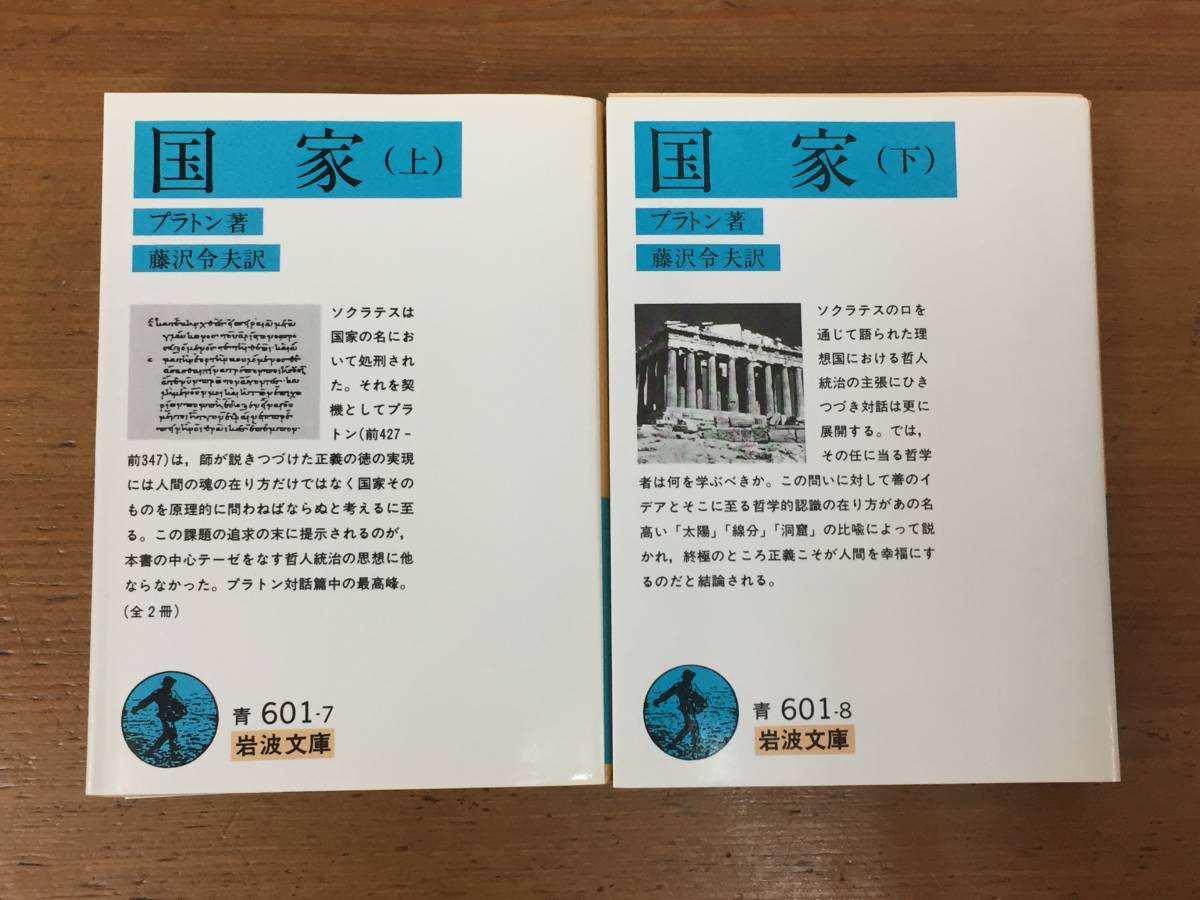
Plato: The State
Socrates was executed in the name of the state.
This led Plato (former 427 - former 347) to think that in order to realize the virtue of justice that his master had continued to preach, it was necessary to question not only the nature of the human soul but also the state itself in principle.
What was presented as a result of the pursuit of this subject was nothing but the philosophy of the philosopher's rule, which was the central thesis of this book.
The highest peak in the Plato Dialogue.
The theory of justice at the beginning is really interesting. Polemarcos, who argues that "justice is to the benefit of friends and to the detriment of enemies." Thrasymachus, who argues that "justice is to the benefit of the strong (ruling class)."
Source: www.amazon.co.jp
And Socrates proposes that, just as small letters are visible when enlarged, so justice in the larger is larger and easier to learn, so let us first explore justice in the state.
Source: www.amazon.co.jp
This is not to say that there are no parts of the text that I do not agree with. There are also many parts that can only be thought of as sophistry. However, it is not so difficult as to be untouchable as a philosophy book, and it is an attractive text that prompts various considerations.
Source: www.amazon.co.jp
プラトンの「国家」の第1巻を読んでの感想であるが、これは教材として読むべきではなく、ソクラテスという貧乏人がトラシュマコスという地位のあるものを議論で打ち負かす痛快小説として読めば愉快なのではなかろうか。少なくとも私はそう読んだ。
— 白樺派(工業地帯産) (@paipaodecami) December 29, 2016
プラトンの『国家』を読み始めているのだが、語り口や進行トーンがめっちゃポップでライトなことに驚いた。
— 物販カエサル@新品中古物販スマホコンシェルジェ (@Caesar_of_DRM) July 29, 2016
タイトルはいかついのに、めっちゃ読みやすい。
2000年以上前に書かれた超レベル高いバージョンな「もしドラ」じゃないか、これ。
「下手な推理小説より面白い古典小説」で広めるべき。

Source: www.amazon.co.jp
"Nicomachus Ethics" by Aristotle
It is only the virtue acquired by one's honest effort that determines both the true worth and the true happiness of a man.
Aristotle thought that people would not be happy without the sustained activity of virtue.
Volume One defines what happiness is, and examines the virtues of character, such as courage, temperance, justice, generosity, and ambition.
It is said that Teiyu Amano, an authority on Kant studies, recommended this book to his students along with Uchimura Kanzo's "The Greatest Relics for Later Generations" and Hilti's "The Theory of Happiness." If we were to recommend five classic works by great philosophers to readers with no special philosophical background, this book would certainly be one of them.
Source: www.amazon.co.jp
Until you understand the meaning, you may not think that it is written about happiness. However, it is an unmistakable theory of happiness! To be honest, it is difficult to read the translation book.
Curiously, both Confucius, Buddha, and Aristotle, the author of this book, are roughly of the same generation and uniformly preach the importance of the Middle Way, but this book not only speaks of the merits of the Middle Way, but also makes a deep reference to the Middle Way itself.
With the scientific elucidation since the modern era, there are now some non-scientific theses, but it can be said that it is a truly great book!
By the way, I read this book when I am worried or depressed personally.
Source: www.amazon.co.jp
機知に富んで洒脱で気の利いたことが言えるということと徳の関係については『ニコマコス倫理学』でも触れられていて、アリストテレスは本当に抜け目ないなと思う。
— 長門 (@nag_ato) 2017.09.28 04:09
スピノザ【エチカ】、アリストテレス【ニコマコス倫理学】読書開始。目を通した段階で意味は全く掴めないが、面白い。いま自分が抱える問題を、解きほぐすための何かが確実に書かれている確信。哲学書を読めるかどうかって、一読して意味が掴めないことを、楽しめるかどうか、挑み続ける気概があるか
— るーしぃ。 (@lucy_zzz_) July 31, 2012

Source: www.amazon.co.jp
"The World as Will and Representation" by Schopenhauer
The charm of Schopenhauer lies in the contradictions and duplicity that brought together the two opposing elements of German mysticism and eighteenth century Enlightenment.
Now is the time to re-evaluate that philosophy.
What is the world? What is life? What is suffering? What is emancipation?
Reading this book makes it foolish to read other philosophy books. Schopenhauer is an honest fool who has made the pointlessness of philosophy itself clear by philosophy.
This is the last shock that makes you want to say, "Do we have no choice but to remain silent?" In that sense, this book is not convenient for thinkers, and that is probably why it is not often talked about in modern thought. This is a book that changes your life.
Source: www.amazon.co.jp
"Will and the World as a Representation (正篇)" is Schopenhauer's main book, and there are two Japanese translations, the complete edition by Hakusuisha and the edition by Ideal-sha, but the book translated by Kanji Nishio is by far the easiest to obtain and understand. It would be too much to be forgotten as it is, and it is a classic masterpiece and excellent translation that I want young readers to read.
Source: www.amazon.co.jp
今日の美学史の授業で芸術としての哲学で、ショッペンハウアーの『意志と表象としての世界』🖋のなかで、「音楽が一番心に揺さぶる芸術」人間は音楽を聴いてるとき、一瞬して人生の悩みから解放され、忘れらるとした。
— Rio (@alonecat_art) October 19, 2017
音楽を聴いてるとき人は他者の痛みを理解しその倫理的な気持ちなれるとした。 pic.twitter.com/G9dsjgpYbf
When listening to music, people can understand the pain of others and feel their ethical feelings.
少女終末旅行の38話に、ショーペンハウアーの『意志と表象としての世界』が登場してた。
— かかずがすたん (@QQs_013) October 14, 2017
本当に名著だよね。あれだけが世界が滅んでも最後に残るだろう、聖書なんかではなく。

Source: www.amazon.co.jp
"Psychophenomenology" by Hegel
"The Study of the Experience of Consciousness," which describes the process by which the mind reaches 絶対知 through experience from the lowest stage of consciousness known as the senses. The chief work of Hegel I, who attempts to extend the limits of the scope of human knowledge. Revised version of the original version published in' 66.
Volume One contains Introduction, Introduction, A-Consciousness, B-Self-Consciousness, and C-Reason.
As consciousness passes through the "path of despair," in the face of denial
It describes in detail how it develops into true knowledge.
Source: www.amazon.co.jp
I think the translation is good. But Hegel's own words and phrases
Those who touch it for the first time may be confused.
It is difficult to read so easily and smoothly.
I think it requires a certain level of determination and patience.
Source: www.amazon.co.jp
This book, which I read over and over again with great effort when I was young, is my true "philosophy = the beginning of life". It is an important book that teaches me intellectually, intellectually, intellectually, intellectually, intellectually, intellectually, intellectually, intellectually, intellectually, intellectually, intellectually, intellectually, intellectually, intellectually, intellectually, intellectually, intellectually, intellectually, intellectually, intellectually, intellectually, intellectually, intellectually, intellectually, intellectually, intellectually, intellectually, intellectually, intellectually, intellectually, intellectually, intellectually, intellectually, intellectually, intellectually, intellectually, intellectually, intellectually
Source: www.amazon.co.jp
なんか今日は部屋に戻ってきて疲れを感じるなあと思い、理由を考えてみたら、意味不明なヘーゲル『精神現象学』を5時間も読んでウンウン唸ってたからか。おかげで他のちょっと難しめのものを読んでもヘーゲルよりはマシと思えるようになった。
— めんたね(やさしい) (@mentane) October 4, 2017
大学時代、ヘーゲルの精神現象学に物凄い強い影響受けてから単位をボロボロ落としまくった
— ㅤ (@ponkts) 2017.09.28 02:20

Source: www.amazon.co.jp
Descartes "Reflections"
Descartes, who was the father of modern philosophy as well as a great mathematician and physicist, developed all of his metaphysical speculations more precisely in this book after the publication of "Introduction to Methods."
Here, it takes the form of six days of reflection in the first person, and through the accumulation of thorough skepticism, it seeks to prove the existence of God and the distinction between mind and body by searching for certain knowledge.
This work became the starting point of a stream of philosophy and science that has continued to this day.
A new translation of a classic that is always mentioned as the best philosophy book to read for the first time.
Complete with commentaries and a comprehensive index of all Cartesian texts, this is the definitive edition with the clearest and most detailed explanations.
