
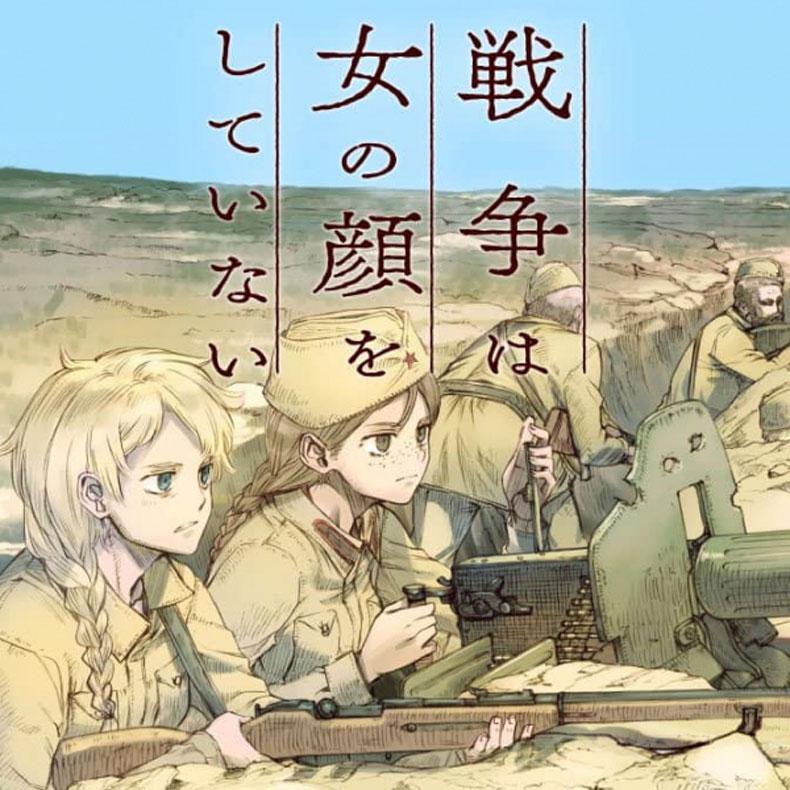
War Has No Woman's Face" is a non-fiction novel by Svetlana Alexievich and a comic book based on it. It is a compilation of interviews with women who served in the German-Soviet War of World War II. The original work was published in 1985 and won the Nobel Prize in Literature in 2015. The manga, based on the original work and drawn by Keito Koume, began serialization on the ComicWalker e-comics distribution site in 2019.
Partizan
Antonina Alekseeevna Condon Rasho
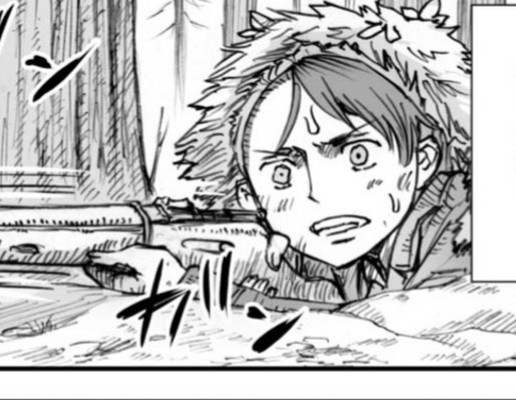
A woman who was in charge of patrol in the Partisans. As a result of carrying out certain duties for her own country, she became unable to live in her own village, so she joined the Partisans. Her younger brother and mother were living in the village. However, as she joined the Partisans, the German army came and took her away, tortured her, and finally shot her to death by the German army. When she heard the news of her mother's death, she rushed to the place where she died. Her body had been buried in an anti-tank dugout, so she dug up the body and cleaned it with water. Her mother's death still left a deep scar on her heart, as she still kept the bottle of water she had used at that time. She joined the Partisans because she hated the German army that had destroyed her country and treated the people of the village cruelly. The sight of a German soldier who was stationed in her own village grabbing her child's legs and dropping him in the well, and the child's voice, remain as major traumas even after the war ended. Now that she is old, she loves to read books about the afterlife, and hopes to see her mother in the afterlife.
Maria ワシーリエヴナ パーヴロヴェツ
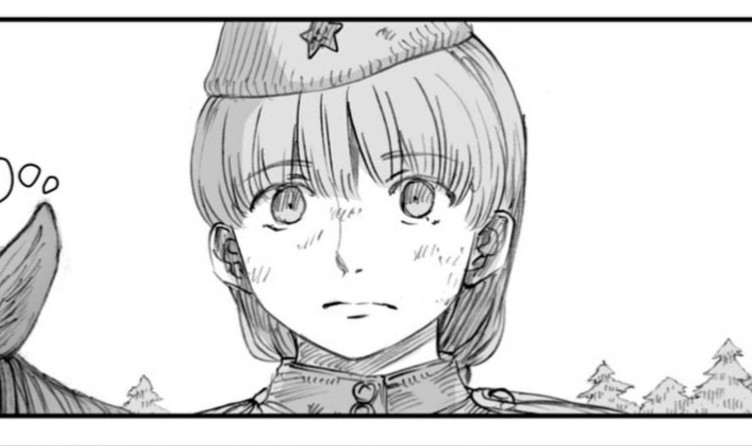
A woman who worked as a doctor in a Partisanship. In 1945, she returned to her village to meet the end of the war. She went to pick up her daughter who was supposed to be waiting in the village, but she was worried that she was frightened by the sight of Mary wearing a soldier's uniform. When she saw her mother running from the field after learning that she had come back to the village, she was surprised that she was older than she remembered, but she kissed her and was happy to see her again.
Term "war does not have the face of a woman"
Soviet Union
The official name is the Union of Soviet Socialist Republics. The abbreviated names are the Soviet Union, the Soviet Union, and CCCP (pronounced S-S-S-L in Russian). It was a federal state formed by the merger of several republics in 1922, but internal affairs were centralized and it was a state of dictatorship by the Communist Party until 1990. In 1991, a coup d'etat occurred while preparations were being made for the conclusion of a new federal treaty. As a result, the authority of the Communist Party fell. As a result, the Communist Party was forced into a de facto state of dissolution. Furthermore, when the Soviet republics under the control of the Communist Party disappeared, the heads of the republics began to have authority and started to become independent. The Soviet Union began to collapse when Ukraine became independent following the three Balds. The Soviet Union collapsed on December 26, 1991 when Russia, Ukraine, and Belarus became independent of the Soviet Union and established the Commonwealth of Independent States (CIS) under the Berovesi Agreement.
German-Soviet war
The Russo-German War, also known as the Eastern Front, is an axial war between the Soviet Union and Nazi Germany. It was fought during the four years from 1941 to 1945 during World War II. When the war began, both the Soviet Union and Germany were occupying Poland, but it broke out when Germany invaded the Soviet Union. At that time, the Soviet Union called the war the Great Patriotic War. For a time, the Soviet Union allowed Germany to go as far as Moscow, but it defeated Germany by joining forces with the Western Allies. It was a war fought by the women in this film.
Communist Youth League
The Communist Youth League (Komsomol) is a youth organization of the Marxist-Leninist Party or the Communist Party. It is a volunteer organization that cooperates with the Communist Party. It consists of people between the ages of 15 and 35. Its main activity was to train whistleblowers or informants of corruption. It also studied the Party's line, advertised the Party's line in schools and the Youth Division of the Labor Union, and taught the Communist Youth Group. It accused many people and sent them to concentration camps. For the young people of that time, the work of the Communist Youth League was a wonderful job to help their country, giving priority to their loyalty to the Communist Revolution, and treating their family and other interests as secondary. After the dissolution of the Soviet Union, it came under the leadership of the Communist Party of the Russian Federation and continues its activities under a different name.
Partizan
It refers to resistance movements in times of war. The partisans who were active in the Soviet Union during the Second World War were called Red Army partisans or Soviet partisans. The Red Army partisans, under the direction of the Soviet government, worked with the primary objective of providing logistical support to the German army and destroying transportation. They were members of the Communist Party, the Communist Youth League, and Soviet activists.
Communist Party
The Communist Party of the Soviet Union was a political party that ruled the Soviet Union. It had strong influence, led the international communist movement, and was deeply involved in political activities. In the German-Soviet war, it disbanded the Communist International and rejected the world revolution in order to win the hearts and minds of the Allies. In addition, the Communist Party has its own army and participated in the German-Soviet war. The main duty of the Communist Party members is to fight for the creation of material and technical foundations. To become a member of the Communist Party, you must be recommended by three members of the Youth League of the Communist Party and must pay party dues. Once a member of the Communist Party, they gained special status and were given preferential treatment in all aspects of life and education.
Words, lines, scenes, and scenes from "War Doesn't Have A Woman's Face"
Effusciniya "I don't bury my husband, I bury my love."
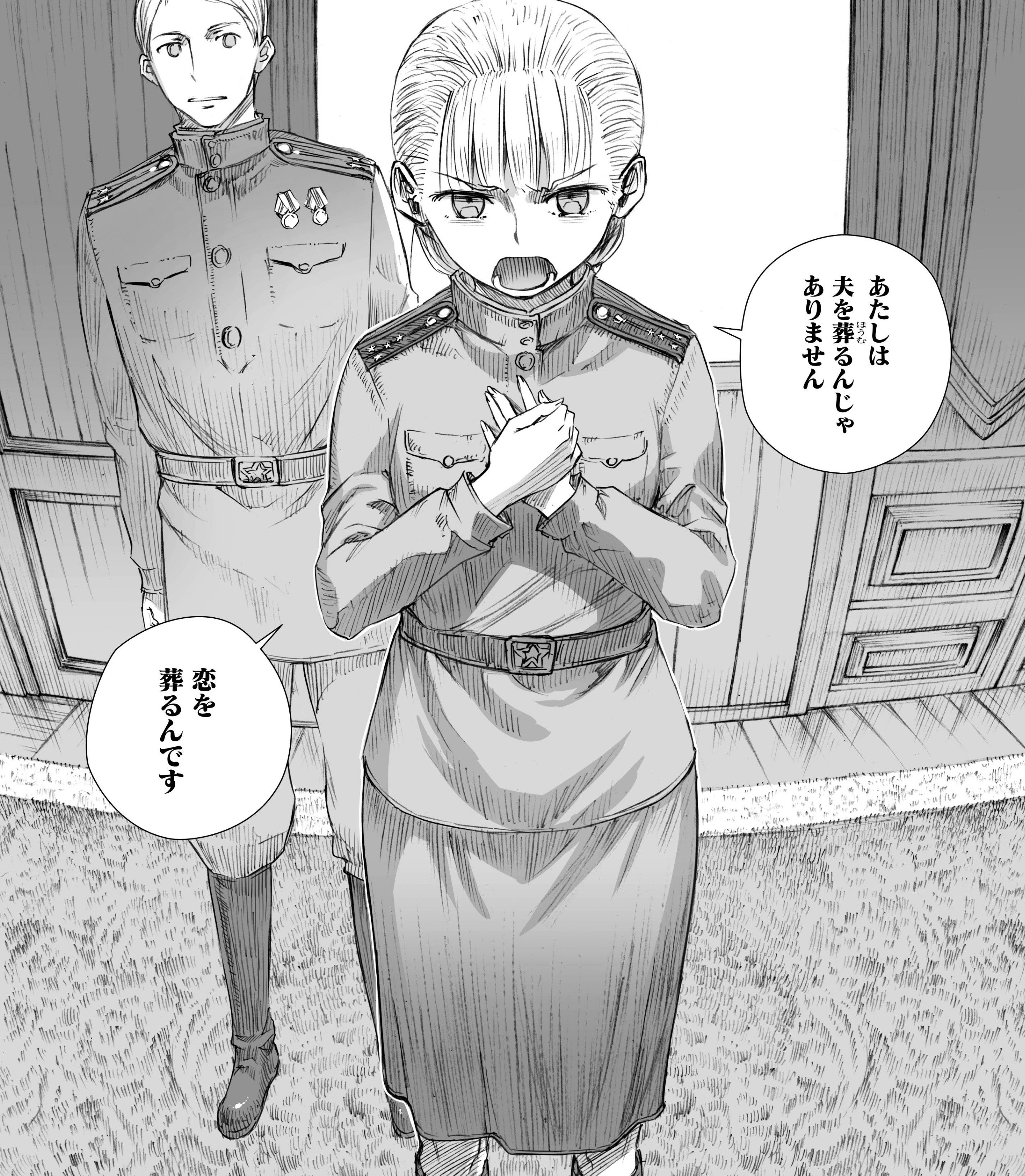
When her husband in エフローシニヤ, with whom she had participated in the war, was killed by the shrapnel of a shot, and when she was trying to persuade her superiors to bury her body in her homeland, she said, "I will not bury my husband, I will bury my love." Originally, there was a rule that if a woman died in an enemy country during the war, her body would be buried together on the spot. As was the case with エフローシニヤ's husband, it was planned to be buried together, but since エフローシニヤ strongly wanted to return to his homeland, Belarus, he worked hard to persuade his superiors. Although エフローシニヤ was thought to be a crazy woman who had lost her husband, she finally had a chance to talk to the commander of the front line. She was able to bring her husband's body back to her homeland safely, telling the commander that she had no children, that she had no home or photo, and that if she buried her husband in her homeland, it would be her place to return when the war ended.
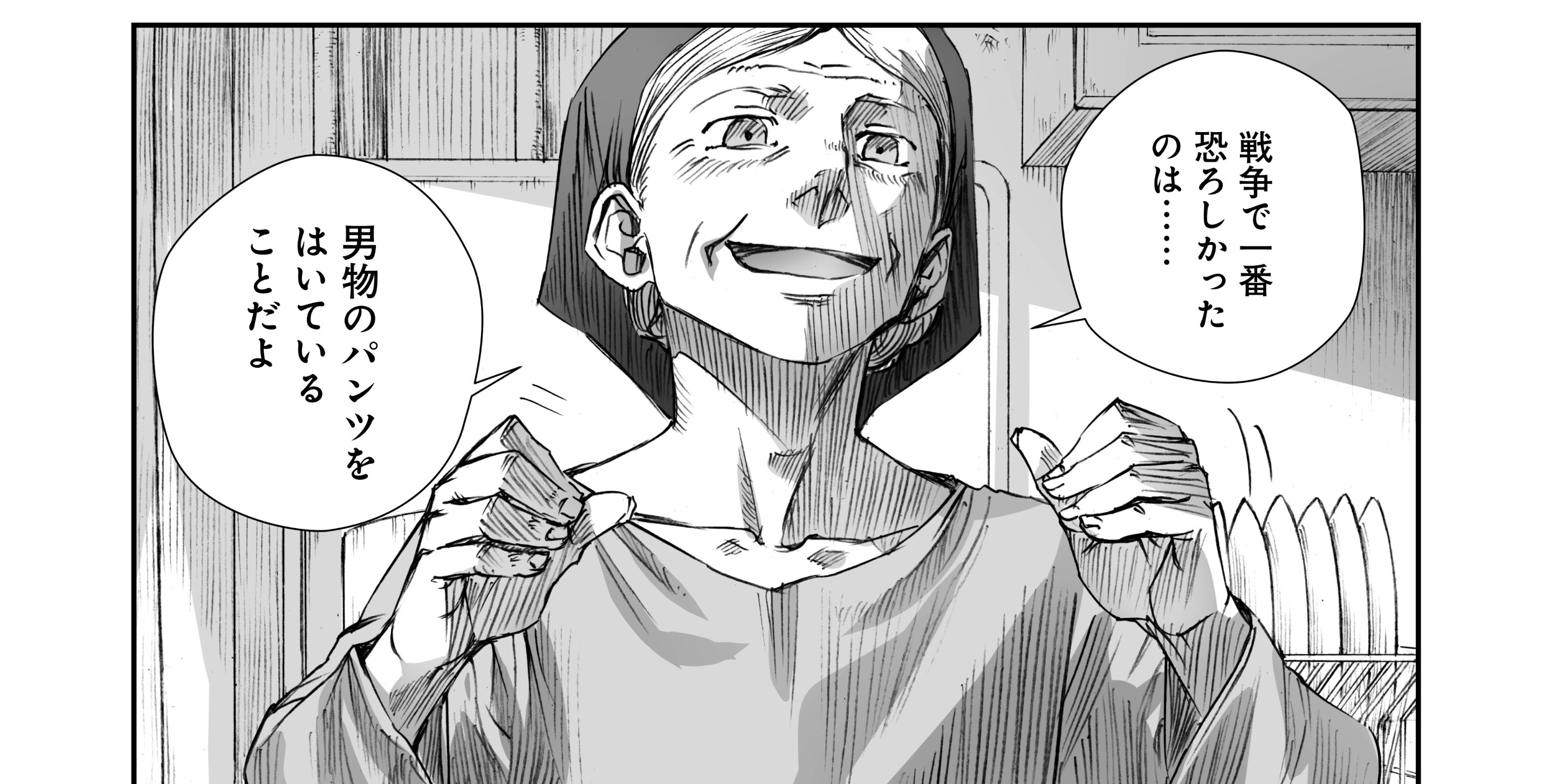
Lola: "The scariest thing about the war. was that I was wearing men's pants."

Related Articles
Spoiler commentary and discussion of Wolf and Spice (novella, manga, and anime)
Wolf and Spice" is a light novel by Frozen Sand Shikura, as well as an anime, manga, and video game based on the novel. It is the author's debut work and the winner of the Silver Prize of the 12th Dengeki Novel Award. Set in a medieval fantasy-like world, the story follows a peddler and an incarnation of a wolf as they travel and overcome various problems related to their business. 17 volumes were published in 2011, and a sequel began in 2016. Lawrence, a peddler, meets the old god Horo, who calls himself the Wise Wolf. Aided by her wisdom, Lawrence sets out for the northern lands, the home of Horo.
Read Article

April 2024 Spring Anime (First Semester Anime) Summary
This is an alphabetical list of spring anime that will start airing in April 2024.The April 2024 spring anime lineup includes many hot new anime and sequels to popular series. Information such as anime titles, broadcast information, cast voice actors and staffs are compiled in an easy-to-understand format.
Read Article
Tags
Contents
- Outline of "War doesn't have a woman's face"
- Outline and story of "War does not have a woman's face"
- Interviews with two snipers
- Man is much bigger than the war
- Interview with a Partizan Woman
- Characters from "War Doesn't Have A Woman's Face"
- Protagonist
- Svetlana Aleksievich
- War woman
- Warren, Chi-na, クジミニチナ, Bratchikova, Borshi, Chevskaya.
- ワーリャ
- エフローシニヤ グリゴリエヴナ Breus
- クラヴヂヤ グリゴリエヴナ Krohina
- Mariya イワーノヴナ Morozova (イワーヌシュキナ)
- Mashinka Alhimova
- Maria ペトローヴナ Smirnova
- Anna イワーノヴナ ベリャイ
- Clara セミョーノヴナ チーホノヴィチ
- Maria セミョーノヴナ Cali Werder/Spree
- Lubofi イワーノヴナ オスモロフスカヤ
- Antonina グリゴリエヴナ Bondawale
- クラヴジヤ イワーノヴナ Telefoix
- Elena ヴィレンスカヤ
- Maria Alexandrovna Altentova
- Lola アフメートワ
- Nina ヤーコヴレヴナ ヴィシネフスカヤ
- Anna Nikolaevna フロロヴィチ
- Tamara ステパノヴナ ウムニャギナ
- Partizan
- Antonina Alekseeevna Condon Rasho
- Maria ワシーリエヴナ パーヴロヴェツ
- Term "war does not have the face of a woman"
- Soviet Union
- German-Soviet war
- Communist Youth League
- Partizan
- Communist Party
- Words, lines, scenes, and scenes from "War Doesn't Have A Woman's Face"
- Effusciniya "I don't bury my husband, I bury my love."
- Lola: "The scariest thing about the war. was that I was wearing men's pants."
- Antonina: "Kill them. Kill them all. Kill them as much as you can. In the most cruel way."
- Tamara: "How do I talk? What language do I use? What face do I have?"
- Behind the Scenes, Trivia, and Small Stories / Episodes and Anecdotes of "Senso wa Onna ga Suru" (War Does Not Have a Woman's Face)
- Many of the Partisans' equipment was taken from the Germans.
- Status of the "managed society" of the Stalin administration
- The girls have different military uniform designs because they were changed during the war.