
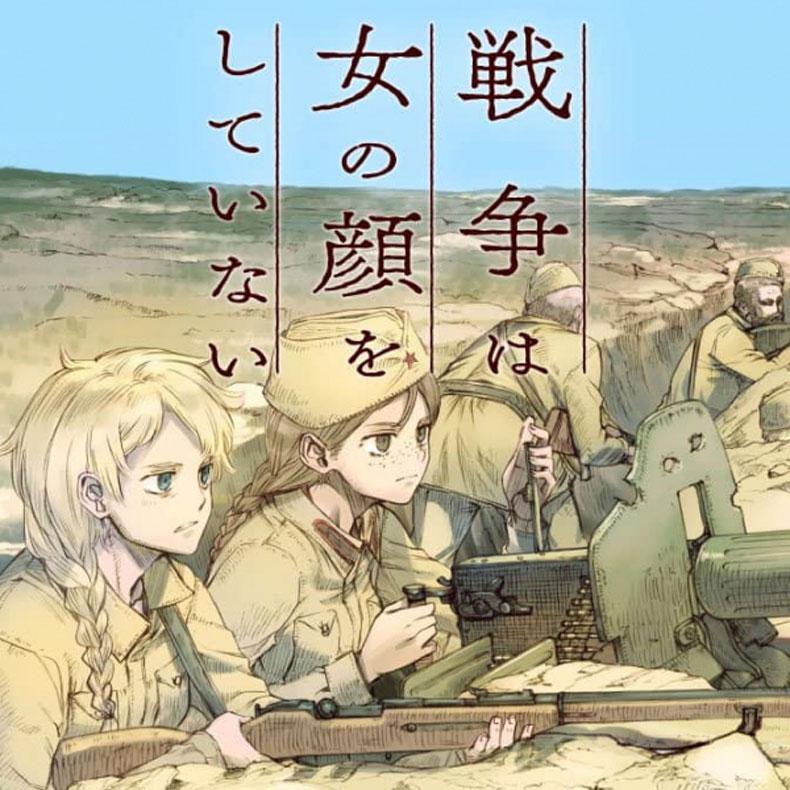
War Has No Woman's Face" is a non-fiction novel by Svetlana Alexievich and a comic book based on it. It is a compilation of interviews with women who served in the German-Soviet War of World War II. The original work was published in 1985 and won the Nobel Prize in Literature in 2015. The manga, based on the original work and drawn by Keito Koume, began serialization on the ComicWalker e-comics distribution site in 2019.
Outline of "War doesn't have a woman's face"
"The War Does Not Have the Face of a Woman" is a nonfiction novel by Svetlana Alekseevich. Alekseevich's debut work, which was published in 1985 and received the Nobel Prize for Literature in 2015, is based on an interview by Alekseevich, a magazine reporter, with more than 500 women who had served in the military since 1978 about the German-Soviet war in the Second World War. However, although the book was completed, it was not allowed to be published for two years due to political issues such as the content being vivid and tragic and the lack of leadership by the Communist Party. It was finally published after Perestroika, a multi-faceted reform carried out during the Gorbachev regime. However, the original novel was banned in Belarus for a long time due to the criticism that it was published in a foreign country by the then President of Belarus who wrote about slandering his country. However, despite the pressure of the ban, it was read by many people and sold 2 million copies by the end of the 1980s.
The comic version was created by Keito Koume and supervised by Rasenjin Hayami, and was first serialized on the e-comic distribution site ComicWalker in April 2019. It is also partially published on official Twitter. The first volume of the comic was released in January 2020. Yoshiyuki Tomino, who is famous for the "Mobile Suit Gundam" series, contributed a letter of recommendation to Obi. To commemorate the release of the comic, a promotional video using scenes from the two and seven comic episodes has been created and released on YouTube.
The book's author, Aleksievich, appears in the story as a journalist. The story takes the form of an interview and describes what experienced female soldiers, including snipers, health guidance workers and partisans, felt during the war. There may be more than one person's story in one story, or more than one story of one person's story.
Outline and story of "War does not have a woman's face"
Interviews with two snipers
Journalist Svetlana Alexievich visited a three-story building on the outskirts of Minsk to interview two women who had once served in the Soviet army as snipers: Senior Sergeant Kravziya Grigorievna Krokhina and Captain Mariya Ivanovna Morozova (Ivanushkina). I visited them in a three-story building built immediately after the war on the outskirts of the city of Minsk. After a brief greeting, Alexievich begins his interview with Kravdzija and Marija. Kravdzija says that when he first shot and killed a German soldier as a sniper, he was so shocked that he cried, but after seeing the bodies of his country's prisoners of war and wounded soldiers burned to death by the Germans, he no longer felt any pity for the German soldiers. Alexievich could see that Marija felt a chill at the sight of Kravdzija. No matter how much time has passed, the mere thought of the war brings her mind back to the state it was in during the war.
The unit to which Marya and the others belonged marched so quickly that they were unable to resupply in time and were unable to eat a satisfying meal. As Marya and her team were about to head for the front line, a colt appeared in front of them. A male soldier standing nearby saw the colt as food and yelled at Maria to kill it. Maria does as she is told and shoots the colt, but is shocked to realize that her love for the creature before the war has completely changed. That night, a colt soup was brought by the cook, but Marija's fellow girls did not touch it because they knew that the meat in it was a colt that had been killed by ruthless means. Realizing how the girls felt, Marija ran out of the dirt barn with tears in her eyes. Her fellow girls verbally poured words of comfort over Marija, and she eventually ate the colt soup with her fellow girls. Marija says she will never forget that. For Marija, who had dressed like a male soldier during her service, having to return to feminine dress and lifestyle after the war was painful; the horrific experience of the war, which lasted four years, had taken such a toll on her that she told Marija, "The only thing I can remember is the color of my blood.
Next, it was Kravdzija who began to tell her story. At night, Kravdzija and her fellow girls would talk about what they wanted to do after the war, and about marriage. However, when a male captain heard this, he laughed at her saying that no one would marry a woman who had served in the military. These words, which denied the girls the happiness they took for granted as women, hurt them terribly. After the war, Kravdzija returned to her hometown. There was a coal mine near her house, and the sound of blasting from the mine would cause Kravdzija to panic, remembering the war. In those days when there were no psychiatrists, it was her mother who supported Kravdzija, who was suffering from PTSD (post-traumatic stress disorder). During the war, whenever Kravdzija heard the sound of artillery shelling, she was terrified, saying, "I don't want to die. She had seen so many deaths that her fear of death was deeply ingrained in her. When he finished his story, Kravdzija clenched his fists and said shakily, "Even if I come back alive, my heart will always be sick," "It's better if my body hurts," and "The pain in my heart is very painful. When Alexievich finished the interview and said goodbye to them, Mariya hugged Alexievich, shed tears, and said, "I'm sorry.
Man is much bigger than the war
Because the country of birth was a victorious country, war was a popular read and play for children who had never experienced war. As a child, Alexievich hated war, but as he touched the stories about war, he began to want to understand what war was like. As a child, アレクシエーヴィッチ, who loved books, also began to read books about war. For Alexievich, who had never experienced war, he was attracted to war even though he was scared by the reality of war written in books. Alexievich thinks that if he had not only read books but also experienced real war, he would have thrown himself into the bottomless swamp of war. The village where Alexievich was born was a village of only women and no men. All the women who talked about war were crying. What is deeply etched in Alexievich's memory during the war is that there was a mountain of corpses of Soviet and German soldiers built up in the field after two days of fighting. When it rained, it was as if the corpses were crying. He couldn't forget the story he heard from his grandmother that it took a month to clean up the corpses. Alexievich spent a long time trying to figure out how to convey what he heard with his own ears to others, so that the story of the tragic war he hears all over does not end in that person. However, one time he found the answer by reading a piece called "I came from a village of flames." Alexievich never gives up on his manuscripts, even though many publishers refuse to publish them. He struggles to tell people what war is and how people live and die.
Interview with a Partizan Woman
Alere クシエーヴィッチ visited and began an interview with Antonina Alekseevna Condon, Rasho, a former partisan woman who was resisting the German invasion. The village where Antonina lived was occupied by the German soldiers who had captured the women and forced them to walk in the front row as "mine repellants", threw children into the well, and sawed young people to pieces. Antonina tells Aleksievich that the children's voices as they fall into the well are cries that don't seem human. And seeing these acts, Antonina's heart was filled with the desire to kill the enemy in a cruel way, so she joined the Partisans and fought against the hated Germans. However, the story reaches Antonina that her mother, who was captured by the German soldiers in 1943, was shot to death. She rushes to the place where her mother was killed, but the body was buried in an anti-tank structure. Antonina digs the ground with the village women, finds her body, and cleans her with a bottle of water. Even after the war is over, Antonina keeps the bottle she used at the time. Over time, Antonina's emotional wounds don't heal, and just listening to the young people outside the window reminds her of the voices of the children dropped into the well. Antonina asks Aleksievich, who is listening in front of her, "You don't know the smell of human body burning, do you?" She continues to say to Aleksievich, who can't answer, that Antonina is "somewhat unsettling, sweet smell." Years after the end of the war, Antonina becomes more painful as she ages. Old Antonina tells Aleksievich that she is reading a post-mortem book, hoping to see her mother in the post-mortem world.
Characters from "War Doesn't Have A Woman's Face"
Protagonist
Svetlana Aleksievich
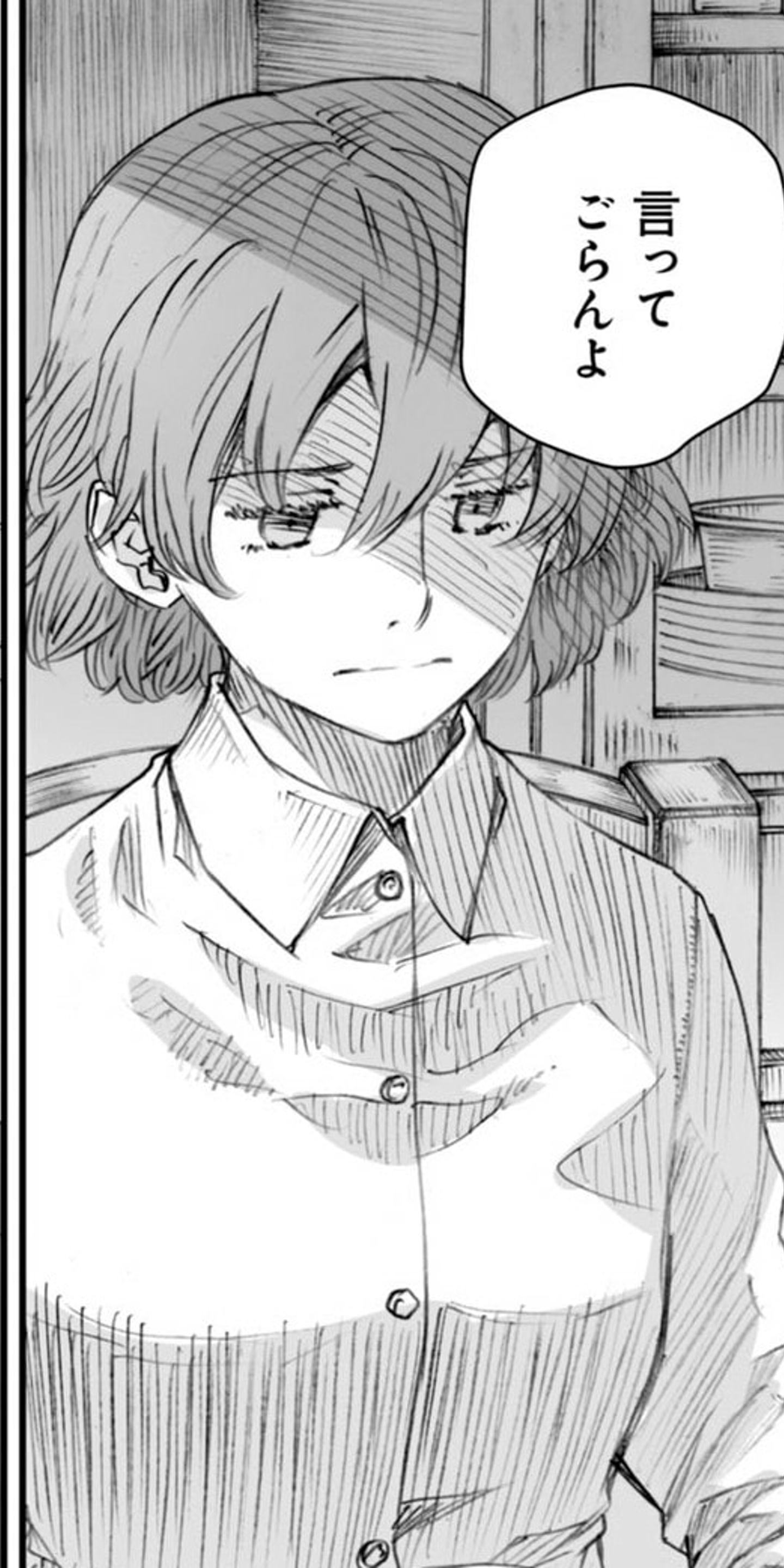
A Belarusian writer. A woman who works as a journalist. The main character and author of this film. She grew up in a village where there were only women due to the effects of the war, and she only heard stories about the war from the women. She could not forget the devastation of the village's fields during the war that she had heard from her grandmother, so she decided to make a book out of the voices of those who had experienced the war in order to tell others about the devastation. She interviewed more than 500 women who had served in the Second World War and published it as a book. She is a woman who can understand people's feelings by listening to the stories of the women and shedding tears at their misery.
War woman
Warren, Chi-na, クジミニチナ, Bratchikova, Borshi, Chevskaya.
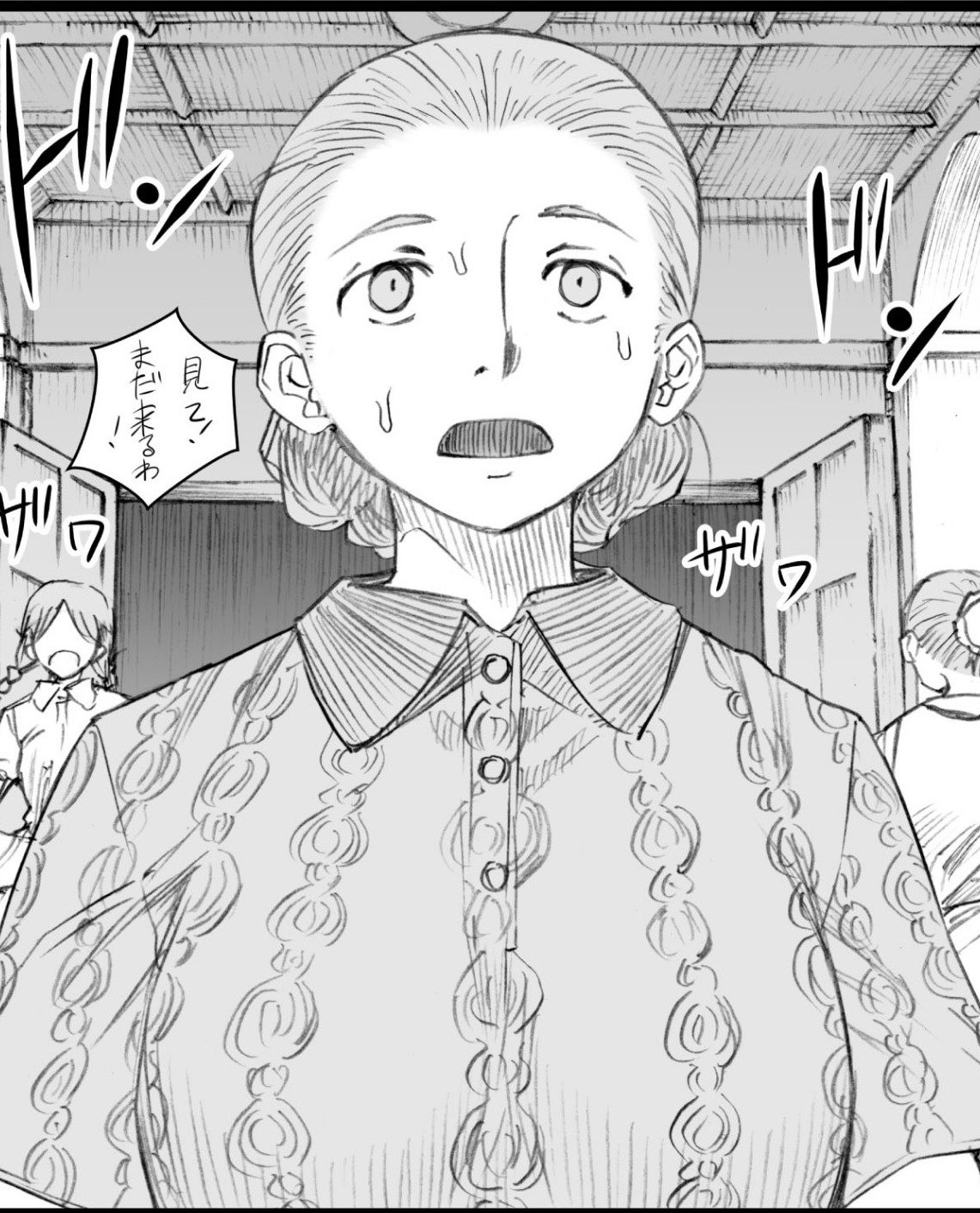
A woman who served as the acting political director of the Army Washing Unit. At the beginning of the war, she worked at an orphanage, but later volunteered to join the front line. She was transferred to a field hospital near Stalingrad. Later, she was appointed by the field hospital to be the acting political director of the Battlefield Washing Unit in Koolsk, where she was in charge of supervising the many girls who volunteered to be employed.
She has a serious personality that values discipline. She takes good care of the girls in her own unit, and she takes care of them like a mother or an older sister. Although the girls in her own unit captured two German soldiers during the war, she was angry and appealed to the upper class for not being evaluated during the war. However, she was told that she would not award up to two representatives. Even so, she has a strong side as she petitioned the upper class so that many girls would be honored and receive medals. When she sent the girls home, she gave them sewing machines she had obtained at the German camp.
ワーリャ
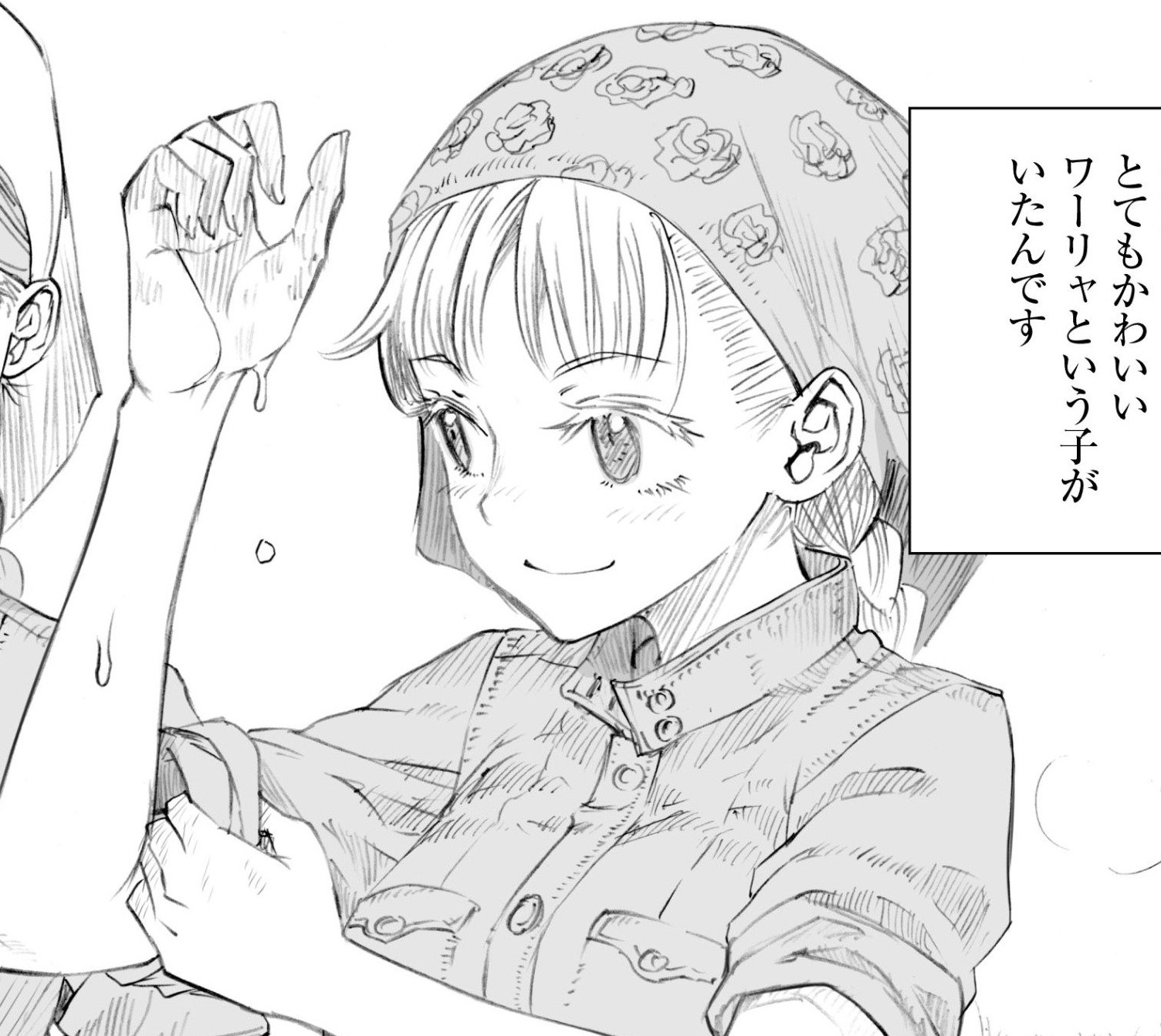
A cute-looking girl who belonged to a washing unit led by Warren Chi-na. While she was away from the unit to go to headquarters, Warren Chi-na had an affair with a captain of another unit and became pregnant. She was later discharged from the washing unit.
エフローシニヤ グリゴリエヴナ Breus
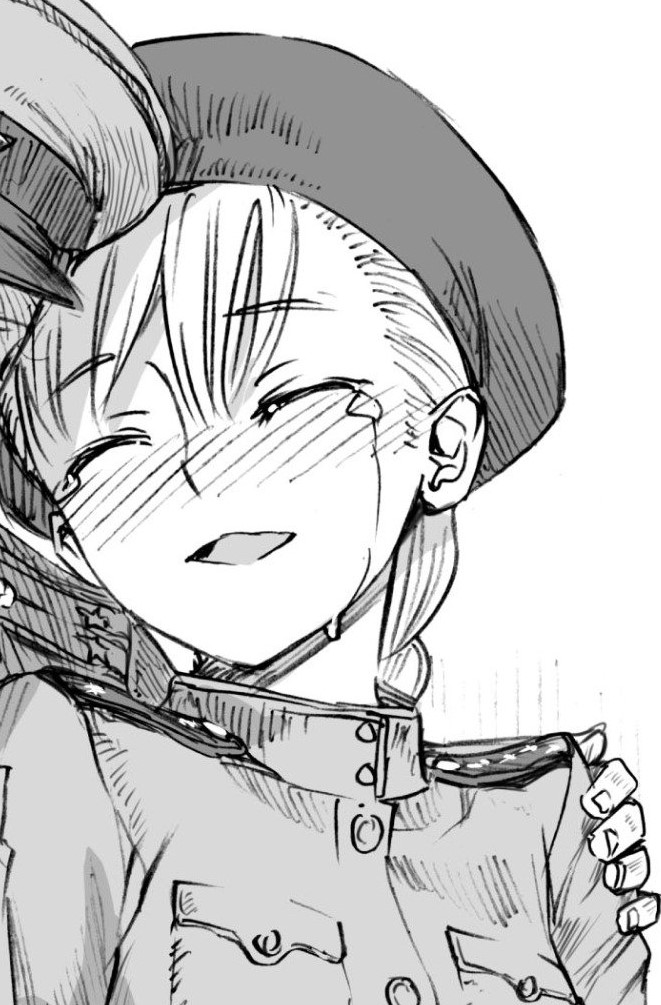
A woman who was a military doctor. When she came to German territory to pursue the German army, she was angry at the fact that a German woman was drinking coffee as if there was no war. She had a gentle side, such as sharing meals with German soldiers who were prisoners of war. She also saw other soldiers sharing meals with German soldiers, and felt love for the feelings of her soldiers who were considerate of others. She went to the front with her husband, but she lost her husband when she was attacked while marching in East Prussia. During the war, her body was buried together on the spot where it died, but she decided to bring her husband's body back to her own country, Belarus. It was unusual for her to bring her body back, and she managed to succeed in bringing her husband back to her own country by asking her superior officer. She was a person who never forgot love for her husband even during the war.

Related Articles
Spoiler commentary and discussion of Wolf and Spice (novella, manga, and anime)
Wolf and Spice" is a light novel by Frozen Sand Shikura, as well as an anime, manga, and video game based on the novel. It is the author's debut work and the winner of the Silver Prize of the 12th Dengeki Novel Award. Set in a medieval fantasy-like world, the story follows a peddler and an incarnation of a wolf as they travel and overcome various problems related to their business. 17 volumes were published in 2011, and a sequel began in 2016. Lawrence, a peddler, meets the old god Horo, who calls himself the Wise Wolf. Aided by her wisdom, Lawrence sets out for the northern lands, the home of Horo.
Read Article

April 2024 Spring Anime (First Semester Anime) Summary
This is an alphabetical list of spring anime that will start airing in April 2024.The April 2024 spring anime lineup includes many hot new anime and sequels to popular series. Information such as anime titles, broadcast information, cast voice actors and staffs are compiled in an easy-to-understand format.
Read Article
Tags
Contents
- Outline of "War doesn't have a woman's face"
- Outline and story of "War does not have a woman's face"
- Interviews with two snipers
- Man is much bigger than the war
- Interview with a Partizan Woman
- Characters from "War Doesn't Have A Woman's Face"
- Protagonist
- Svetlana Aleksievich
- War woman
- Warren, Chi-na, クジミニチナ, Bratchikova, Borshi, Chevskaya.
- ワーリャ
- エフローシニヤ グリゴリエヴナ Breus
- クラヴヂヤ グリゴリエヴナ Krohina
- Mariya イワーノヴナ Morozova (イワーヌシュキナ)
- Mashinka Alhimova
- Maria ペトローヴナ Smirnova
- Anna イワーノヴナ ベリャイ
- Clara セミョーノヴナ チーホノヴィチ
- Maria セミョーノヴナ Cali Werder/Spree
- Lubofi イワーノヴナ オスモロフスカヤ
- Antonina グリゴリエヴナ Bondawale
- クラヴジヤ イワーノヴナ Telefoix
- Elena ヴィレンスカヤ
- Maria Alexandrovna Altentova
- Lola アフメートワ
- Nina ヤーコヴレヴナ ヴィシネフスカヤ
- Anna Nikolaevna フロロヴィチ
- Tamara ステパノヴナ ウムニャギナ
- Partizan
- Antonina Alekseeevna Condon Rasho
- Maria ワシーリエヴナ パーヴロヴェツ
- Term "war does not have the face of a woman"
- Soviet Union
- German-Soviet war
- Communist Youth League
- Partizan
- Communist Party
- Words, lines, scenes, and scenes from "War Doesn't Have A Woman's Face"
- Effusciniya "I don't bury my husband, I bury my love."
- Lola: "The scariest thing about the war. was that I was wearing men's pants."
- Antonina: "Kill them. Kill them all. Kill them as much as you can. In the most cruel way."
- Tamara: "How do I talk? What language do I use? What face do I have?"
- Behind the Scenes, Trivia, and Small Stories / Episodes and Anecdotes of "Senso wa Onna ga Suru" (War Does Not Have a Woman's Face)
- Many of the Partisans' equipment was taken from the Germans.
- Status of the "managed society" of the Stalin administration
- The girls have different military uniform designs because they were changed during the war.