
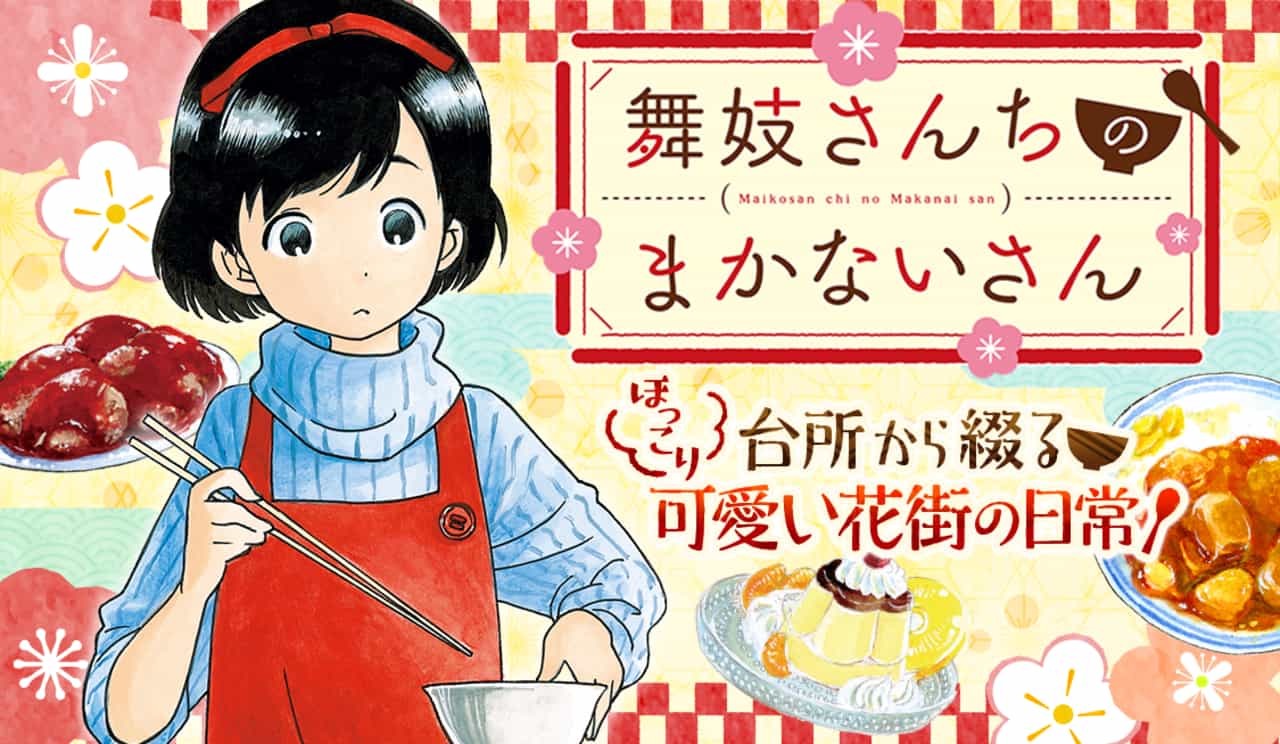
Maiko-san-chi no Makanai-san" is a Japanese-style cooking manga serialized in Weekly Shōnen Sunday by Aiko Koyama since 2017. It won the 65th Shogakukan Manga Award as a work for boys. The story features "Kiyo," a young girl who is in charge of daily meals as a "makanai-san" at a "yagata" where maiko (apprentice geisha) live in Kyoto. Many dishes appear in the story, including ordinary home cooking, traditional Kyoto cuisine, and local cuisine from Aomori, Kiyo's hometown. The work offers a glimpse of a maiko's daily diet, training, and daily life.
CV: Rikiya Koyama
He was one of the otoko-shi (a group of men) who frequented the yakata.
As a male servant, he did the dressing of maiko (apprentice geisha), but in terms of work, he passed the position to his son and retired, but he took care of things such as taking a book from the back of the refrigerator, changing the light bulb, and handing out fans.
In the busy season of the New Year and after Obon, they sometimes dress up as Otoko-shu.
During the period of Kiyo's preparation, he was troubled by Kiyo's poor skills and poor memory, but he was sometimes surprised to see how well he worked as a master.
People of Aomori
Kiyo's Grandmother
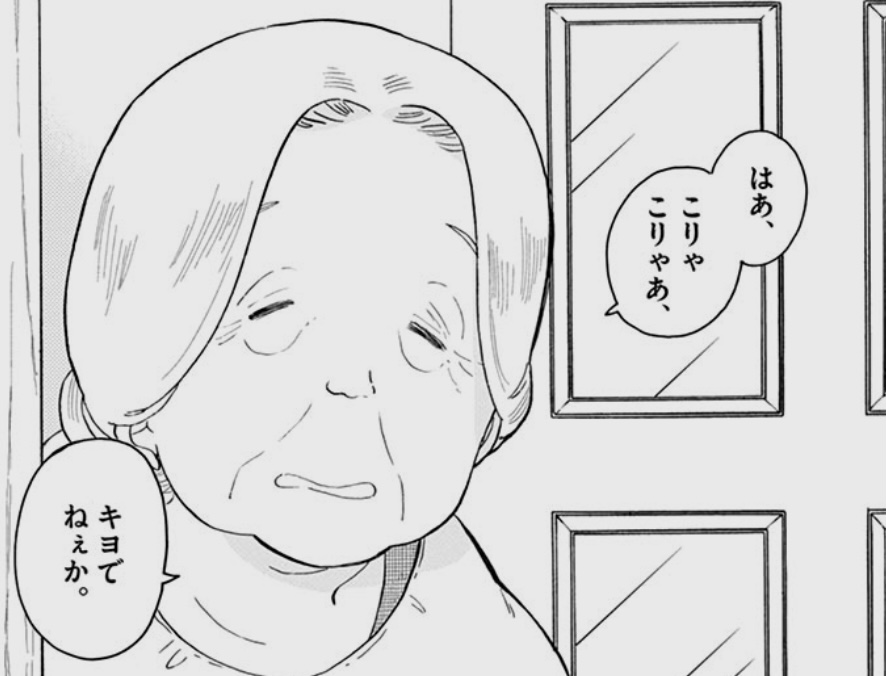
Instead of her dead mother and busy father, Kiyo's grandmother takes care of her.
He is a kind person who often tells Kiyo about cooking and house work.
She loves Sumire and Kenta as if they were her own grandchildren, and even after Kiyo and Sumire go to Kyoto, she makes bread crust rusks for Kenta who comes to see her.
They send Aomori's special products and Kiyo's favorite food to the Yakata.
The term of "Maiko no Makanaisan"
Five Hanamachi or Kagai of Kyoto terminology
Maiko (apprentice geisha)
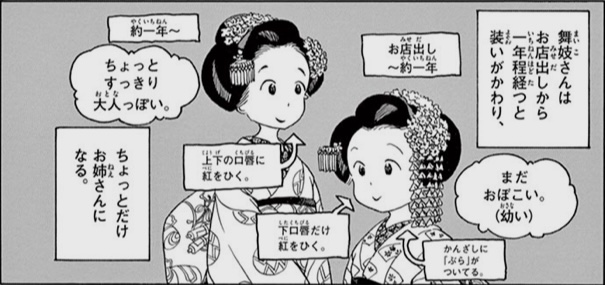
A girl whose job is to entertain guests with Five Hanamachi or Kagai of Kyoto (traditional performing arts) such as buyo (dance) and ohayashi (musical accompaniment) at hanamachi (traditional Japanese puppet theater). During the' preparation' period of six to two years, she studies Kyoto Pronunciation and geiko (Japanese dance), and as an' apprentice,' she trains with her elder sister's geiko and maiko (apprentice geisha) at ozashiki (traditional Japanese banquet room) for about a month. If she can obtain permission from the mother of the yakata or the master of the training, she can perform' misedashi' (start a shop) and become a maiko.
Geiko (geisha)
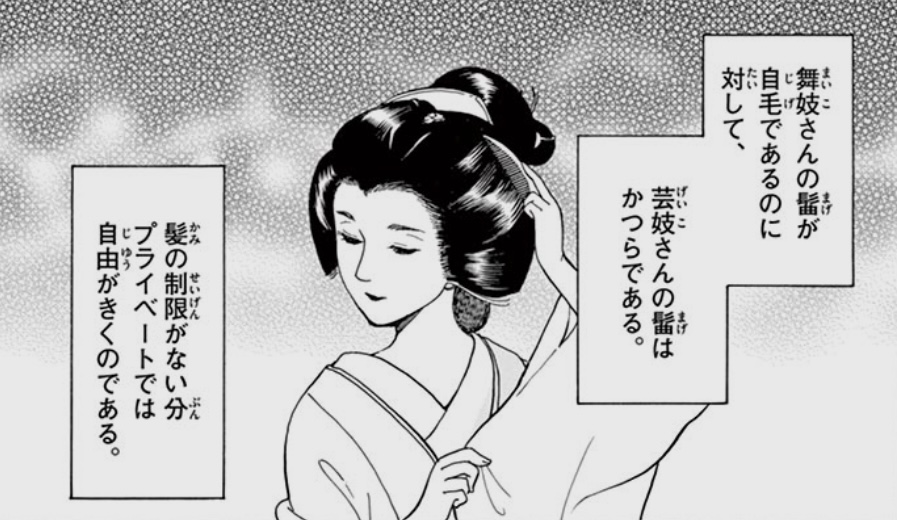
When a maiko becomes full-fledged and becomes independent, she can become a geisha.
Unlike Maiko (apprentice geisha), they can live at home instead of living with other Maiko (apprentice geisha) in a Yakata (house), and they wear a wig instead of a topknot with their natural hair.
When you become a geigi, you no longer need to use hako-makura, and you can go wherever you want.
Yakata
It is a so-called Maiko okiya (geisha dwelling) where Maiko (apprentice geisha) and Shikisan (apprentice geisha) live together.
A yakata has an okaasan (a proprietress of the yakata) who takes care of the girls, takes care of the life of maiko (apprentice geisha) and shikisan (apprentice geisha), and also takes a role of sending them to ozashiki (tatami room) in hanamachi (geisha district).
Mother and father
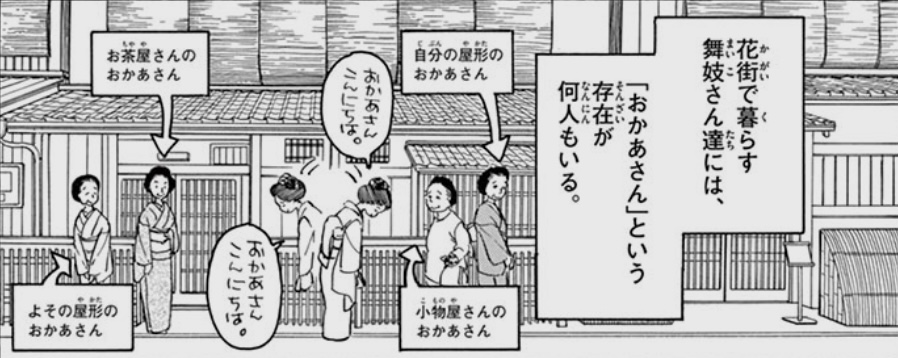
It refers to the owner or landlady who has a shop in Hanamachi.
The proprietress of the teahouse also calls her' 0 0 (shop name or business name) no okaasan' (such as' Ichi no okaasan').
Elder sister / younger sister
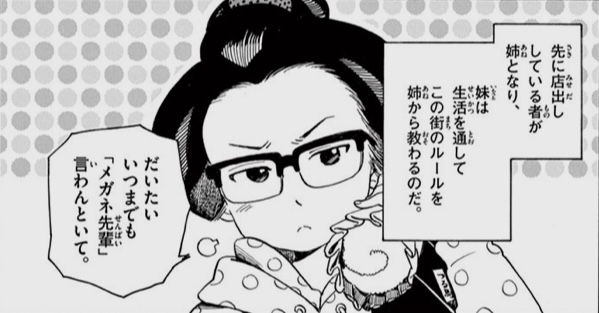
The senior maiko is called' Ane' and the junior maiko is called' Imoto.'
Not only the senpai of the yakata to which she belongs but also senpai of other yakata become an older sister.
Throughout the hanamachi, younger sisters adore older sisters and older sisters take care of younger sisters.
When referring to an individual, call her' 0 0 san (Genjina) - san' (sister) (for example,' Tsurukoma-san').
Shikomi-san
A candidate for Maiko. In order to become Maiko, they learn how to perform, how to dress themselves, and how to act.
They are also in charge of taking care of senior maiko (apprentice geisha), cleaning and washing the house.
Kyoto Pronunciation

Contents
- Outline of "Maiko no Makanaisan"
- The plot and story of "Maiko no Makanaisan"
- Shikomi-san period
- Maiko period
- Become an older maiko
- Meeting with Kenta
- Kenta's employment
- Return of the three
- Return to your everyday life.
- Characters from "Maiko-san no Makanaisan"
- Key person
- Kiyo Nozuki
- Herai Sumire / Momo Hana
- Nakawatari Kenta
- Yakata' Ichi'
- Ichi no okaasan (Ichi no okaasan)
- Tsurukoma
- Riko
- People of Kyoto
- Momoko (Momoko)
- Makanai no Obachan
- Otokoshino Oniisan
- People of Aomori
- Kiyo's Grandmother
- The term of "Maiko no Makanaisan"
- Five Hanamachi or Kagai of Kyoto terminology
- Maiko (apprentice geisha)
- Geiko (geisha)
- Yakata
- Mother and father
- Elder sister / younger sister
- Shikomi-san
- Kyoto Pronunciation
- Half-way
- Performance Sisters / Adoption Sisters
- Otoko-shi
- Stop
- Accessories for Maiko
- Hana Meishi
- Okobo
- Tissue paper
- Uchiwa
- Words, Lines, Scenes and Scenes of "Maiko no Makanaisan"
- Kiyo is mistaken for a runaway girl
- Kiyono Yukikaki Sakupe
- Okaasan (mother) said,' I want to be your mother again this year, so I will eat with my daughters.'
- Kiyo no Teru teru Bozu
- Sumire: "Kenta, Kenta did it. That's what makes me happy."
- Sumire said, "Oh, I'm sorry. Half a papiko is special, so I can't give her anything."
- Behind-the-scenes stories, trivia, and small stories / episodes and anecdotes of "Maiko no Makanai-san"
- Maiko debuts at a shop
- Hako-makura: The First Trial as a Maiko
- One bite size for maiko
- Things Maiko can't eat
- Do not eat curry at home.