
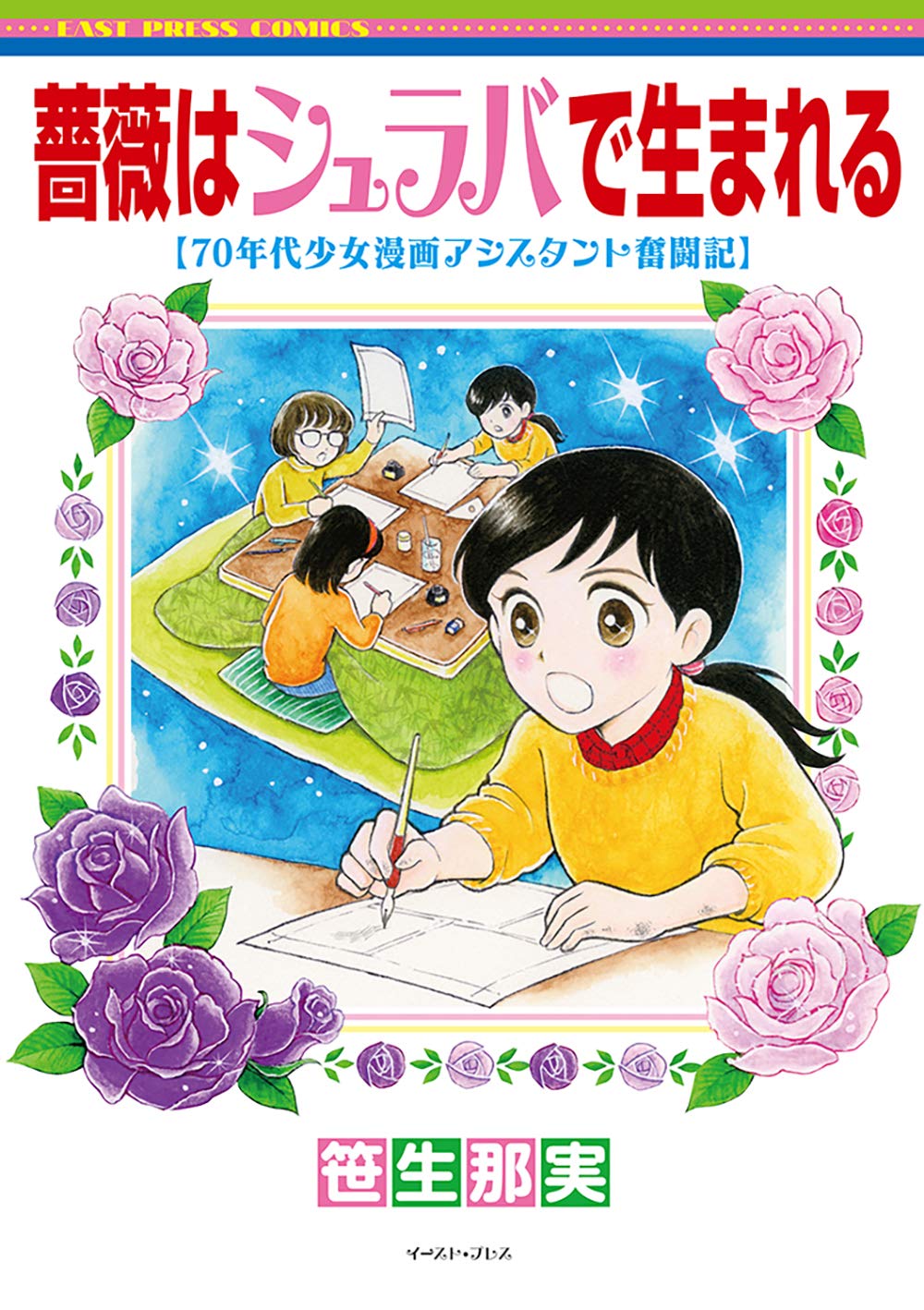
The year 1970 was known as the golden age of shoujo manga, and the author, who worked as an assistant to a manga artist at the time, was associated with many masterpieces. She sent the overall composition to each of the teachers for their approval, and when the names were ready, she checked them again, reread the works of the time, and created manga based on what she remembered. The author continued to see how masterpieces were created in the grueling workplace he called the manga artist's shul. This book is a record of that process.
He is the same person as cartoonist Mayumi 淡川. He assisted Nami Sasou in creating "Roses are born in Shulava."
Term for "the rose is born in Shulava"
Infrastructure and Environment
Shulava
It refers to the situation where cartoonists and assistants before the deadline are busy with drawing work night and day.
Kanzume Ryokan
The actual name of the inn was Kagetsu Inn. Kinyu-kan, which was later dismantled and stood next to it, was called Kanzume Inn. The place where a manga artist and an assistant created their works.
Reed
An assistant to a cartoonist. Works with dots, solids, tones, erasers, etc.
Manga School Selection
"Bessatsu Margaret Girls' Manga School" started in 1966.
He established a training system for manga artists by evaluating introductory books and submitted works and awarding prizes, and many manga artists were born.
Mikazuki-e
This is the predecessor of the "Bessatsu Margaret Girls' Comic School," a school for girls' comic books. It started in 1966 and is held once a month by Mitsuaki Suzuki. It established a system to train manga artists by evaluating introductory books and submitted works and awarding prizes, and many manga artists were born.
Mitsuaki Suzuki's comic book class for girls
Since the establishment of this school, it has become an age in which those who have made their debut do not become assistants, but those who want to make their debut become assistants. It has continued for 16 years since it was established in 1976.
"Shoujo Manga: From Basics to Becoming a Professional" published by Mitsuaki Suzuki
Shiroizumi Publishing Co., Ltd., 1979, 438 pages. A textbook for girls' manga. A textbook for girls' manga in the Showa period (Suzue Miuchi, Keiko Takemiya, Toshie Kihara, Mineko Yamada, Shinji Wada, etc.) carefully teaches how to draw manga at that time. Today, there are various textbooks that teach how to draw manga, but none of them were available at that time. This is the first textbook on how to draw manga.
Hana no 24 Nen
We refer to the manga artists who were born around 1949 and were responsible for girls' manga in the 1970s.
Yasuko Aoike sensei, Moto Hagio sensei, Keiko Takemiya sensei, Yumiko Oshima sensei, Toshie Kihara sensei, Ryoko Yamagishi sensei, Minoru 樹村 sensei, Nanae Sasaya sensei, Mineko Yamada sensei, Yasuko Sakata sensei, Shio Sato sensei, Yuko Kishi sensei, and so on.
Dear Doji
A nickname for Toshie-sensei KIHARA.
Technical section
Name
It is also called a storyboard, and is drawn up with a design drawing of a manga.
It is a rough drawing of frame, angle, dialogue, and expression.

Tags
Contents
- Outline of "Roses are born in Shulava"
- The plot and story of "Roses are born in Shulava"
- Looking Shulava
- Junior high school
- High school days
- After Debut
- I work in Shulava.
- Scary story
- "Tennin Karakusa"
- Experience of a new cartoonist
- The Truth of Shulava
- Farewell Schlaba
- Dr. Suzue Miuchi.
- Epilogue
- Fictional character from The Rose Is Born in Shulava
- Key person
- Dr. Nami Sasou.
- Dr. Suzue Miuchi.
- Editor in Chief Konagai Betsuma
- Cartoonist teachers
- Jun Chiaki
- Dr. Mitsuaki Suzuki.
- Dr. Jun Ichikawa.
- Dr. Shinji Wada.
- Dr. Chieko Hara.
- Dr. Mineko Yamada.
- Toshie-sensei Kihara
- Kunisensei Hazama
- Dr. Takao Yaguchi.
- Dr. Jun Hayase.
- Dr. Masahiro Shibata.
- Dr. Yoshiko Nagaoka.
- ASAKAWA Mayumi SENSEI
- Dr. Kazuko Yumeno.
- Dr. Satoru Makimura.
- Dr. Yu Asagiri.
- Ms. Tomoko Kuramochi
- Dr. Chie Shinohara.
- Dr. Moto Hagio.
- Dr. Fusako Kuramochi.
- Dr. Jun Mihara.
- Dr. Hiromu Ono.
- Dr. Minori Kimura.
- Ms. Ryoko Yamagishi
- Performing at the House of Books
- Yuuri KONISHI
- East Press representative
- First Editor: Mr. Machida
- Mr. Kobayashi, the second editor
- Assistants who assisted the author
- Dr. Kazuko Yumeno.
- Dr. Mayumi 淡川
- Term for "the rose is born in Shulava"
- Infrastructure and Environment
- Shulava
- Kanzume Ryokan
- Reed
- Manga School Selection
- Mikazuki-e
- Mitsuaki Suzuki's comic book class for girls
- "Shoujo Manga: From Basics to Becoming a Professional" published by Mitsuaki Suzuki
- Hana no 24 Nen
- Dear Doji
- Technical section
- Name
- Background material
- Blonde line
- White
- Eraser
- 3 cloves strong
- Mob
- Fukidashi
- Phototypesetting
- Fall
- Painting
- Cartoon
- Tone
- Carex japonicus
- Stippling
- Beta
- Words, lines, scenes and scenes of "Roses are born in Shulava"
- Dr. Suzue Miuchi. "Do you see that beetle over there?"
- Mr. Suzue Miuchi: "Manga artists have to be prepared to stay up all night for three days, sit down for a month, and fast for a day and a half."
- Dr. Suzue Miuchi, "Wake me up in 15 minutes."
- THE AUTHOR, Nami Sasou SENSEI: "WELL, THEN, WHY DO N'T YOU JOIN THE Ranmaru SQUAD?"
- Dr. Jun Mihara, "Let's try."
- Dr. Minori Kimura: "I won't lose anything like that."
- Minori Kimura: "It's better not to be perfectionist. New people who have just debuted can learn by drawing immature works and having readers read them."
- MS. RYōKO YAMAGISHI: "I DO N'T WANT TO PAINT"
- Psychic: "You draw works as a memorial for the people of the past."
- Author Nami Sasou: "I want to apologize for my death"
- Behind the Scenes, Trivia, Small Stories / Episodes / Anecdotes of "Roses are born in Shulava"
- This is the sequel to Nami Sasou's "Roses are born in Shulava."
- Beshima Manga School held
- Suzue Miuchi Sensei! Tantan-tanuki
- Miss Fusako Kuramochi, happy Christmas.
- Moto Hagio Etranze