
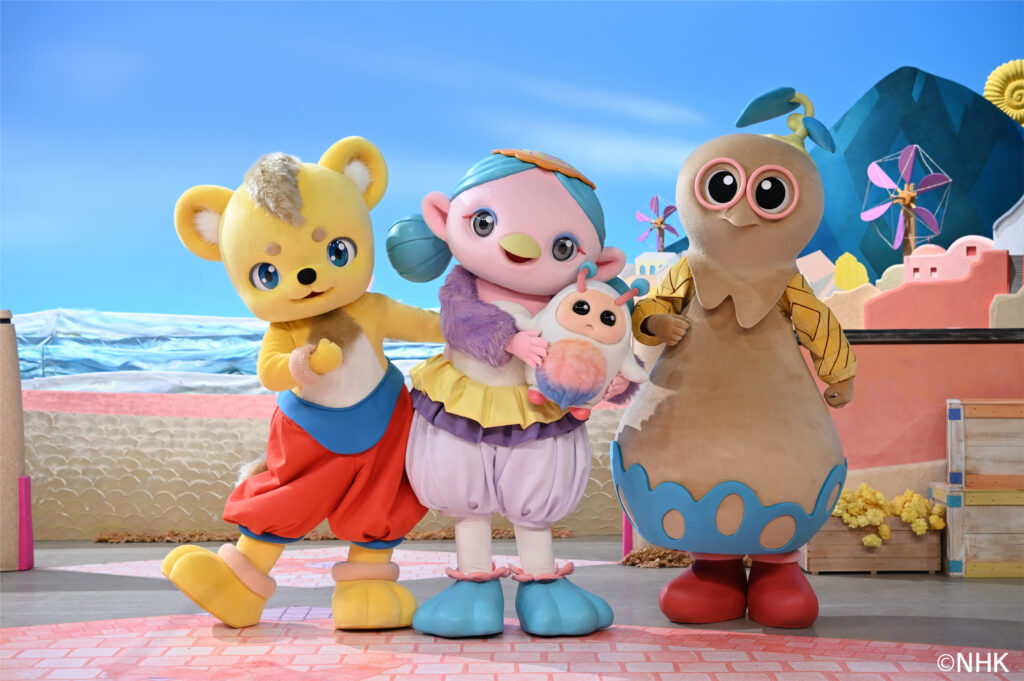
Have you ever heard of the NHK program "Okaasan to tosho"? It is produced for children, and one of its popular sections is a puppet show. In this article, we have compiled a list of puppet plays that have been aired over the years. You can tell which generation you are from by which characters you know! Which one are you familiar with?
Tondeke Butchie (1971 - 1974)
Source: boncopain.exblog.jp
Tondeke Bucchi
April, 1971 - March, 1974
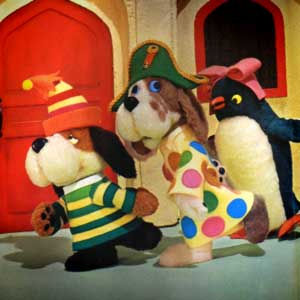
After a 15-minute, adventurous, costumed play, they re-enter the hot-air balloon, return to their nursery, and again become stuffed animals. In addition to the costumed and small dolls, pepsarts were also used.
The trio of stuffed animals, "Bucchi," "Penchi," and "フトッチー,"
I got on a hot-air balloon, and I went into one of the four pictures on the wall.
It is a story that they take turns to jump in every week and travel around the world in the picture.
Source: okaasan-to-issyo.com
Source: blogs.yahoo.co.jp
Character that appears
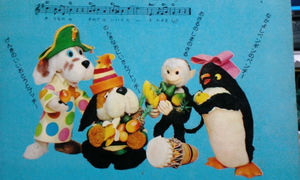
BUTCH: Energetic dog boy. The most polite and cool dog in the trio.
PENCH: Penguin girl. She wears a ribbon on her head. She's talkative and often quarrels with フトッチー.
フトッチー:'s older brother is a dog, but he complains a lot and is a bit cynical. He controls the balloon.
Tonchinko Bozu (1969 - 1971)
Source: blog.livedoor.jp
Tonchinko Bozu
October, 1969 - March, 1971
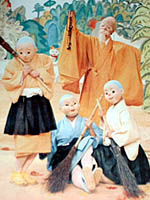
The broadcasting period of one and a half years is the shortest among the successive puppet shows of "Okaasan to Issho" (With Mother), and the main character is human only in this play (as of 2014).
The story is reminiscent of "Ikkyu-san" (Miss Ikkyu-san): a battle between a mountain temple priest and a group of three mischievous little priests called "Tonnen, Chinnen, Kannen" (Tonnen, Chinnen, Kannen); and three people working together to solve a disturbance that occurs inside and outside the temple.
Source: ja.wikipedia.org
According to an NHK statement, there is no official NHK video.
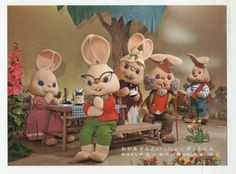
Dat-kun (1967 - 1969)
Source: www.pinterest.com
Mr. Dat.
April, 1967 - September, 1969
The story begins with the facilitator's sister in a studio set that imitates a children's room talking to the children in the room. Then, when the stuffed dolls of "Dat-kun," a white rabbit boy whose glasses are his trademark, and his sister, "Pyonko-chan," are driven on a train of a toy locomotive, the rails on the floor are connected to a mysterious tunnel on the wall. After passing through the tunnel, it becomes the world of "Hanashi no Mori" (The Forest of Stories). The stuffed toy takes the place of a "costume," and a drama with a costume character unfolds.
They leave the nursery on Monday, visit the homes of their grandparents in the woods, interact with nature and the strange fairies that live there, and then return by locomotive to the nursery. They return to their stuffed animals.
Source: ja.wikipedia.org
The TV in the room showed the forest, and while Dat's brother and sister were in the forest, the children watched the scene on the TV in the room with their sister and sang the magic song of the play together.
Boo hoo hoo (1960 - 1967)
Source: marrrsan.exblog.jp
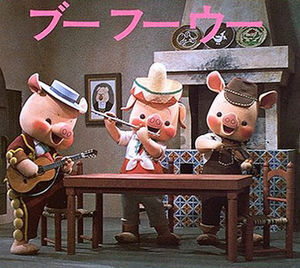
ブーフーウー
September 1960 - March 1967
It is set as the sequel to the Western old story "Three Little Pigs," and is a comedic story with a Mexican setting and three little pigs, the eldest brother Boo, the second oldest brother Fu, and the youngest brother Wu, and a wolf trying to eat them.
The show begins with the sister taking a small ブーフーウー doll out of her bag and setting it in front of the little house of little pigs on the stage. She turns a large handle attached to the wall and winds a screw around it, and the three on the stage begin to move.
Source: ja.wikipedia.org
From here, the scene changes to a costume, but this change made the children wonder.
Source: www.geocities.jp
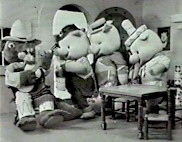
Cast
Boo: He is the first son of three brothers. He complains a lot and complains a lot. He likes Pero-chan. He is good at beating drums. He built a straw house before.
Fu: The second son of three brothers. He is a wimp who gets tired easily. He used to build a wooden house.
Woo: He's the third son of three brothers. He works hard on everything. He works hard with woo woo. He wears overalls. He built a brick house.
Wolf: An old enemy of the three, but he becomes friends with them halfway through. His favorite food is biscuits.
PERO-CHAN: A parakeet girl. Unlike little pigs, she can move without a wall screw.
During the broadcast, the wolf and the little pigs became friends.
It was produced in monochrome, and it is said that among the existing broadcast tapes on NHK, only the last one and the previous one (which was released on the NHK Program Public Library) have images.
Source: ja.wikipedia.org
However, it has been confirmed that there is a color film video of her when she was a Ikuko Ogi (it is unknown whether it was produced on a trial basis, whether it was actually used in the broadcasting at that time, or whether it remains as a complete broadcast).
[There are images from that time] Summary of the successive Uta sisters [E tele with mother] From the first generation to the present
milestone-of-life.online
Below is a chronological list of Uta no Oneesan who appear on NHK's children's program "Okaasan to Issho" (Together with Mother). Wasn't it a program that everyone watched when they were children? When a child is born and becomes a parent, they watch the program that they watched when they were children again with the child. At that time
Shaquín! Past child roles are summarized and introduced. Even now with graduates such as Meychan Momoe!
milestone-of-life.online
E-Tele "Shaquing!" is broadcast every morning from Monday to Friday at 7:00. It is an intellectual entertainment program that wakes up children with the sound of "Shaquing!" and helps them start a fun day. They can enjoy "different ways of looking at things" and "flexible creativity."
Successive inai Inai Baa! Sisters (Girls) Summary - RENOTE [リノート]
renote.net
"Peek-a-boo!" is a cultural program for infants and toddlers that is broadcast on NHK E TELE. This article summarizes the story of "Peek-a-boo!" in which "Peek-a-boo!" appears. Since "Peek-a-boo!" is for infants and toddlers, "Peek-a-boo!" refers to girls around 10 years old.

Related Articles
Here is a summary of "Rekishi Puppet Show" by Okaasan to Tosho.
Here is a summary of the beloved "puppet plays" of each era, Okaasan to tosho "Puppet Plays.
Read Article
![With Mom] Surprisingly unknown? A special feature on the "song sisters" and what happened to them afterwards! Takumi Mitani](https://renote.net/files/blobs/proxy/eyJfcmFpbHMiOnsiZGF0YSI6NzY3NjEzNSwicHVyIjoiYmxvYl9pZCJ9fQ==--4151e031a698acd6d7f3902ddf0cf9c4bad5360f/145.jpg)
With Mom] Surprisingly unknown? A special feature on the "song sisters" and what happened to them afterwards! Takumi Mitani
NHK's children's program "OKAASAN ITSYO" is famous for its "Uta no Onee-san" corner where the "Uta no Onee-san" sings with the children. 2016, Takumi Mitani, aka "Takumi Onee-san," regrettably retired as "Uta no Onee-san. In 2016, Takumi Mitani, a.k.a. "Takumi Onee-san," regrettably retired as "Uta no Onee-san. Here we introduce what has happened to the "song ladies" of the past.
Read Article
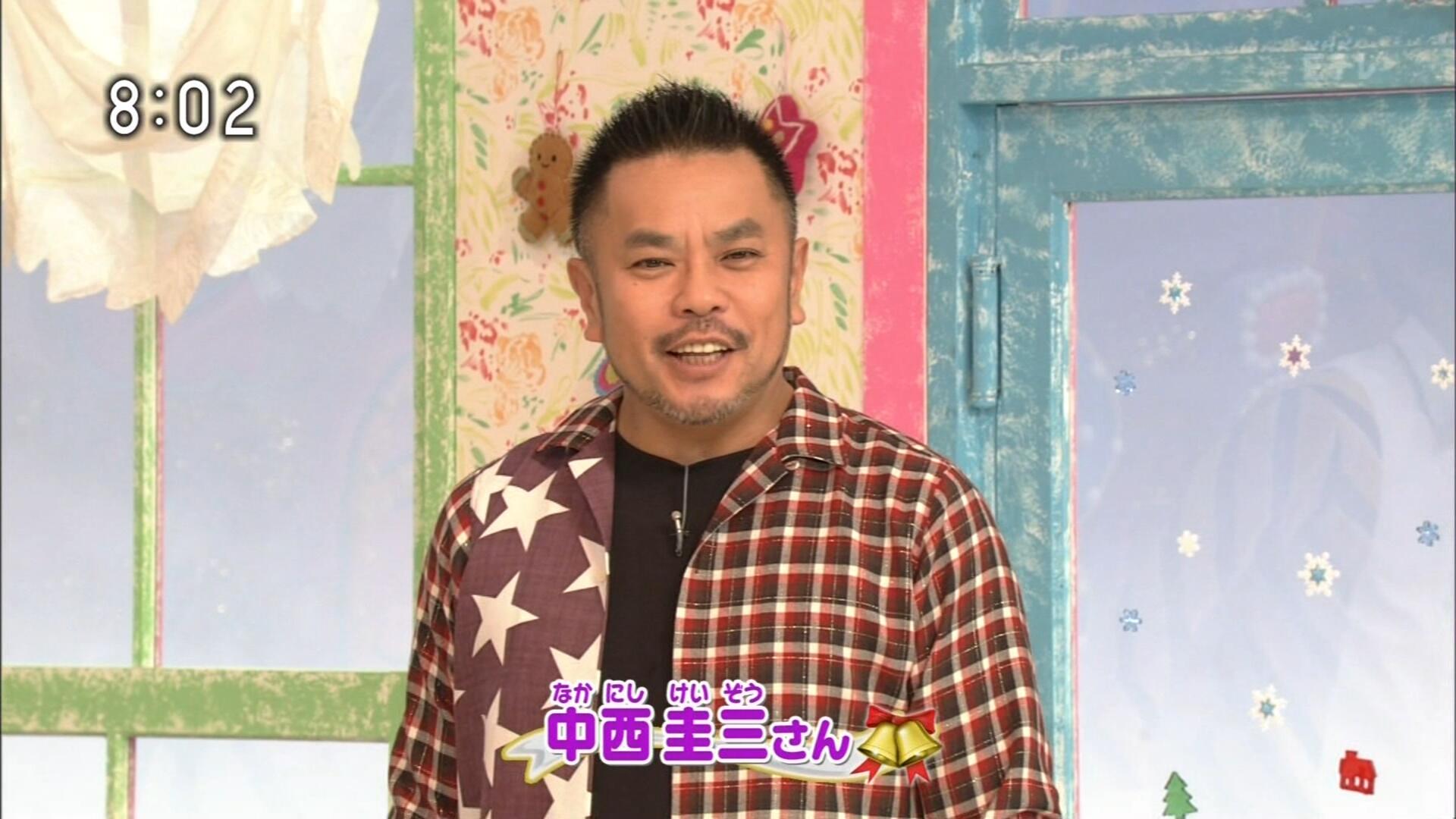
Keizo Nakanishi on "With Mom" Christmas Special! He sang live!
Singer-songwriter Keizo Nakanishi appeared on the Christmas special of "With Mom" broadcast in December 2013. Keizo Nakanishi performed "Pawapu Taiso," a song used in the show's exercises. The children reacted coldly, "Who is this person? while many families said their parents were excited to see him.
Read Article

A summary of the past "Okaasan to tosho" singing brothers! Daisuke Yokoyama finally graduates!
We have compiled a list of the singing brothers who have appeared on NHK's popular program "Okaasan to tosho" since then. Introduced here are a total of seven members, including Seiji Tanaka, the first generation, Osamu Sakata, who has written many famous songs as a lyricist and composer, and Daisuke Yokoyama, who has brought songs and smiles to children for nine years. Their activities in the program are also described.
Read Article
Tags
Contents
- Outline of "With Mommy
- About Puppet Theater
- Puppet Show "With Mommy
- Garapicopu (2016 - 2022)
- Pocopotato (2011 - 2016)
- Monolan Monolan (2009 - 2011)
- Spoo and Gutterat → Gu - Choco Lantern (2000 - 2009)
- Doremifa Doonutsu! (1992 - 2000)
- Nikoniko Pun (1982 - 1992)
- Boom Boom Taimu (1979 - 1982)
- Mew meow meow meow (1979 - 1983)
- Golonta Theater (1976 - 1979)
- Ugoke Bokounoe (1974 - 1976)
- Tondeke Butchie (1971 - 1974)
- Tonchinko Bozu (1969 - 1971)
- Dat-kun (1967 - 1969)
- Boo hoo hoo (1960 - 1967)