
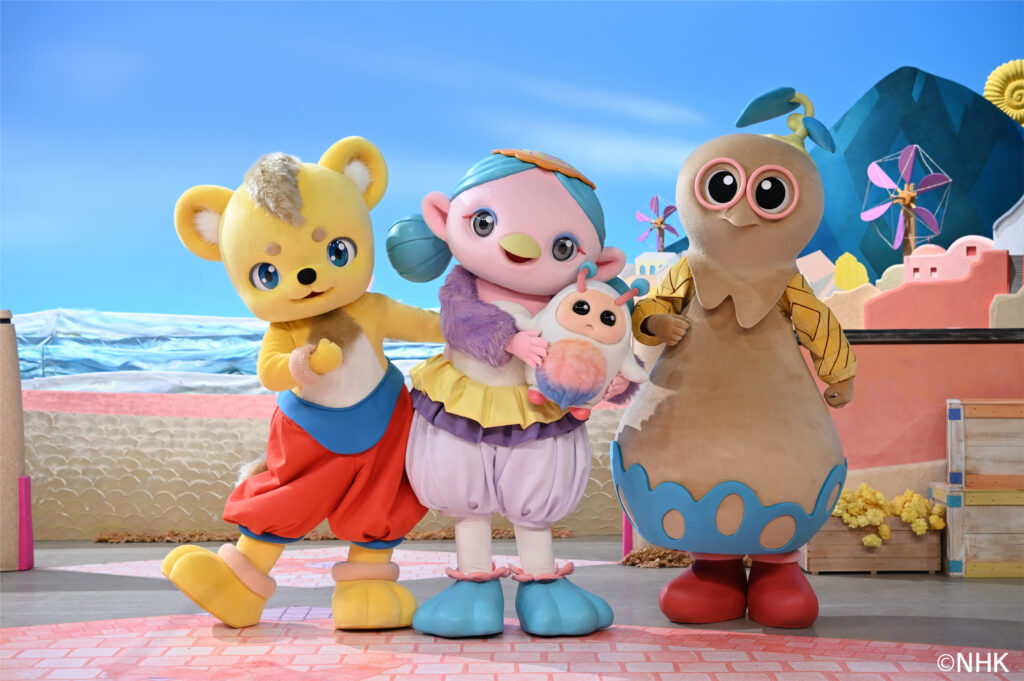
Have you ever heard of the NHK program "Okaasan to tosho"? It is produced for children, and one of its popular sections is a puppet show. In this article, we have compiled a list of puppet plays that have been aired over the years. You can tell which generation you are from by which characters you know! Which one are you familiar with?
Outline of "With Mommy
The name of the program is a long-running television program for toddlers on NHK Educational Television (NHK E-Television) and NHK World Premium, an international broadcasting service, which began on October 5, 1959.
About Puppet Theater
Source: seiga.nicovideo.jp
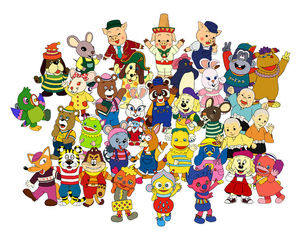
There are some people who don't get excited about being called a puppet show.
The point is the three mascots that will come out with your mother.
Source: netou.mion.main.jp
Puppet Show "With Mommy
Garapicopu (2016 - 2022)
Source: media.image.infoseek.co.jp
GARA PICO POO
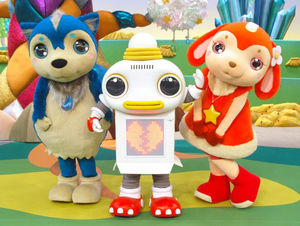
Choromy the rabbit, Muumuu the wolf, and Galapico the robot.
The catch copy is "Waku waku kyun!"
Set in a water-rich and green planet Shizuku with a large "ホシノキ," the film portrays the friendship between Cholomey, an active rabbit girl living in ムスービ village, Muumu, a shy wolf boy, and Galapico, a planetary exploration robot that has made a forced landing.
Source: headlines.yahoo.co.jp
The new character will be designed by Hitomatsumi, graduated from the graphic design department at Tamami University of Technology, and written by Ryujiro Yamanaka, who writes the scripts for the puppet theater and produces works for the theater company EXILE.
Source: headlines.yahoo.co.jp
Hitomi Yoshida is the voice actor for Choloromi, Yasuyo Tomita for Muumuu, and Tokuyoshi Kawashima for Galapico.
It is the 13th puppet play.
The original author, Ryujiro Yamanaka, said that he wants to develop the program into a program that can convey a message like, "Even if it's not a lively boy, even if it's not a graceful girl, even if it's a bit of a problem for adults, it's OK."
Source: ja.wikipedia.org
Since the era name was changed to Reiwa on May 1, 2019, this was the last puppet play of the Heisei period and the first puppet play of the Reiwa period.
Source: ja.wikipedia.org
I've seen all of them! The Depth of Successive Petite Petite Anime [NHK5 Minute Anime]
milestone-of-life.online
"Puchi Puchi Anime" is a five minute program that has been broadcast on NHK and E-Tele since 1994. Despite being only five minutes long, many of the programs have incorporated stop motion, clay animation, CG and other experimental elements that are rarely seen elsewhere.
Pocopotato (2011 - 2016)
ポコポッテイト
As of March 28, 2011
The catch copy is:
"Don't be discouraged, don't get depressed, don't give up."
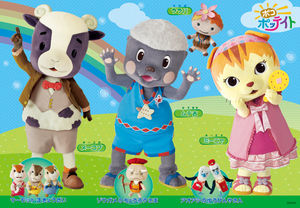
"Pocoijima" is full of nature like a paradise.
Lived on a potato-like island floating in the open sea
Honey badger's son,' Kichi ムテ.'
"Minya," a munchkin girl from the city
The friendship and strength of the Jacob sheep boy
A story to tell.
Source: okaasan-to-issyo.com
It conveys to today's children a way to live in a positive, positive and strong way without ever being discouraged or depressed or giving up at any time.

Kichi ムテ
The main character of this story is a honey badger boy. He was born in October. He is 3 years old. The image color is light blue.
He called himself' Muteki no ムテ Kichi.'
She is a bright, naughty leader with a strong sense of justice. She never forgets her courage and is always forward-looking. She is dynamic and naughty in everything she does. No matter what she is told, she never gives in. No matter what she is told, she never gives in.
The first person is "oracchi," and they often add "nandanzo" or "daii" to the end of the word.
Source: ja.wikipedia.org
I don't care about small things at all, and I hate crooked things. I act as soon as I think about it. I move my body before I think about it, but I always go around a bit.
Source: ja.wikipedia.org
He also has the aspect of a crybaby who sometimes cries hard.
He has carried his favorite red deck brush since he was a baby and often plays it as if it were a guitar.
Source: ja.wikipedia.org

Related Articles
Here is a summary of "Rekishi Puppet Show" by Okaasan to Tosho.
Here is a summary of the beloved "puppet plays" of each era, Okaasan to tosho "Puppet Plays.
Read Article
![With Mom] Surprisingly unknown? A special feature on the "song sisters" and what happened to them afterwards! Takumi Mitani](https://renote.net/files/blobs/proxy/eyJfcmFpbHMiOnsiZGF0YSI6NzY3NjEzNSwicHVyIjoiYmxvYl9pZCJ9fQ==--4151e031a698acd6d7f3902ddf0cf9c4bad5360f/145.jpg)
With Mom] Surprisingly unknown? A special feature on the "song sisters" and what happened to them afterwards! Takumi Mitani
NHK's children's program "OKAASAN ITSYO" is famous for its "Uta no Onee-san" corner where the "Uta no Onee-san" sings with the children. 2016, Takumi Mitani, aka "Takumi Onee-san," regrettably retired as "Uta no Onee-san. In 2016, Takumi Mitani, a.k.a. "Takumi Onee-san," regrettably retired as "Uta no Onee-san. Here we introduce what has happened to the "song ladies" of the past.
Read Article
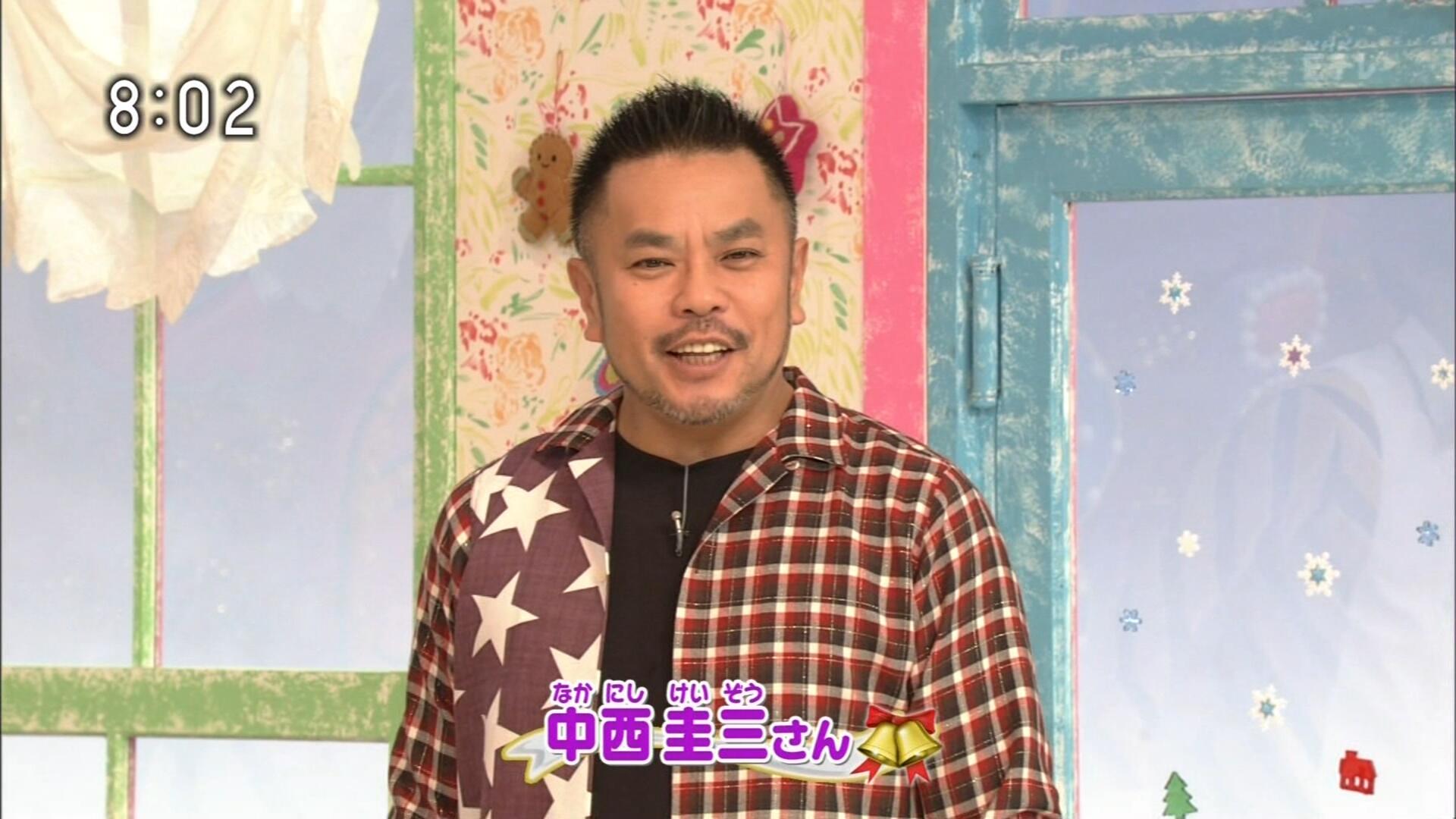
Keizo Nakanishi on "With Mom" Christmas Special! He sang live!
Singer-songwriter Keizo Nakanishi appeared on the Christmas special of "With Mom" broadcast in December 2013. Keizo Nakanishi performed "Pawapu Taiso," a song used in the show's exercises. The children reacted coldly, "Who is this person? while many families said their parents were excited to see him.
Read Article

A summary of the past "Okaasan to tosho" singing brothers! Daisuke Yokoyama finally graduates!
We have compiled a list of the singing brothers who have appeared on NHK's popular program "Okaasan to tosho" since then. Introduced here are a total of seven members, including Seiji Tanaka, the first generation, Osamu Sakata, who has written many famous songs as a lyricist and composer, and Daisuke Yokoyama, who has brought songs and smiles to children for nine years. Their activities in the program are also described.
Read Article
Tags
Contents
- Outline of "With Mommy
- About Puppet Theater
- Puppet Show "With Mommy
- Garapicopu (2016 - 2022)
- Pocopotato (2011 - 2016)
- Monolan Monolan (2009 - 2011)
- Spoo and Gutterat → Gu - Choco Lantern (2000 - 2009)
- Doremifa Doonutsu! (1992 - 2000)
- Nikoniko Pun (1982 - 1992)
- Boom Boom Taimu (1979 - 1982)
- Mew meow meow meow (1979 - 1983)
- Golonta Theater (1976 - 1979)
- Ugoke Bokounoe (1974 - 1976)
- Tondeke Butchie (1971 - 1974)
- Tonchinko Bozu (1969 - 1971)
- Dat-kun (1967 - 1969)
- Boo hoo hoo (1960 - 1967)