
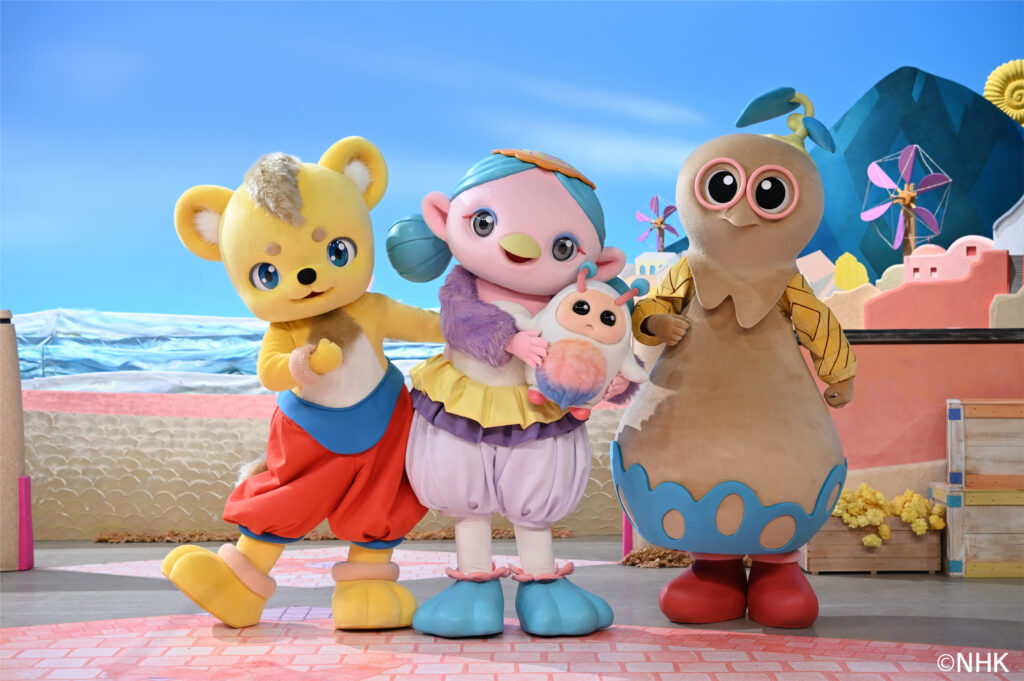
Have you ever heard of the NHK program "Okaasan to tosho"? It is produced for children, and one of its popular sections is a puppet show. In this article, we have compiled a list of puppet plays that have been aired over the years. You can tell which generation you are from by which characters you know! Which one are you familiar with?
The food he dislikes is green peppers, so much so that just looking at them or hearing their names causes him to feel cold and faint.
Source: ja.wikipedia.org
Source: ameblo.jp
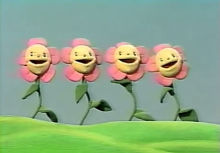
Hanabana Girls
Singing flowers that look like a rare species of Papaveraceae. They sing everything from the explanation of the situation to the passage of time. Their dream is to participate in the "Red and White Singing Contest."
She appears in eyecatcher and end-catch, and sings "Oh, oh, oh, and then what?" while swaying from side to side during eyecatcher, and at the end of the story, she sings "Yay, yay, niko nikobun."
All the successive Sui-chan of E Tele Mikitatta! are energetic and cute! List from the first Sui-chan to the present
milestone-of-life.online
Sui-chan, who appears on E TV's morning children's show "Mikitatta!" every morning, is so cute! Not only children, but also parents can see her playing with Cossie, Sabo and Sui-chan. Educational entertainment show for children aged 4 to 6
Boom Boom Taimu (1979 - 1982)
Source: okaasan-to-issyo.com
BUZZ BUZZ BUZZ
April, 1979 - March, 1982
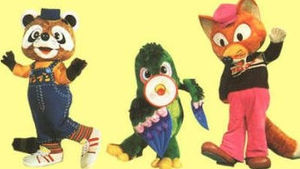
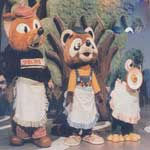
This is a fun story about three dogs, Bunbun, Tsunekichi and Gojaemon (Oshirase-dori at the beginning of the broadcast).
Each time, Tsunekichi tries to show his own good eye by skillfully putting Bunbun and Gogyemon into his mouth, but he always gets hurt in the end.
At first, the play was performed by three actors in front of the children following the previous play, "ゴロンタ Gekijo" (Kyoto Theatre), but in 1981 the content was drastically changed and it was changed to a separate shooting method.
Source: ja.wikipedia.org
Source: www.youtube.com
Bun Bun イザトナルトブン
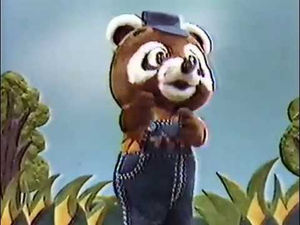
The main character is the boy of the red panda. He is 4 years old. His first person is "boku" and he stands in the center. He is gentle, calm and extremely at his own pace. As the name suggests, he is called "bun" when it comes to it.
Source: mitekita01.blog26.fc2.com
Inariyama and Tsunekichi (left)
A fox boy. He's five years old. He says "wai wai" at the end of the word. He has a habit of saying "da-ta-ta-ta-ta-ta-ta-ta-ta-ta-ta-ta-ta-ta-ta-ta-ta-ta-ta-ta-ta-ta-ta-ta-ta-ta-ta-ta-ta-ta-ta-ta-ta-ta-ta-ta
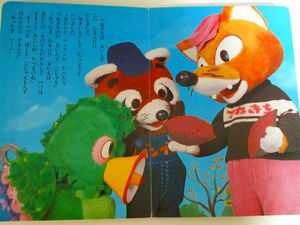
Source: ameblo.jp
Gojaemon (left)
The boy of Oshirasedori. He's three years old. He talks with the words' Gojalu' and' Gojaemon' at the end of the word.
When an incident occurs, they make a fuss, saying' Taihen Gozaimasu, Taihen Gozaimasu.' When the zenmai is rolled upside down, they backtrack, saying' Tekesuta. Tekesuta' (Tekesuta is the reverse reading for help).
At first, it was called Oshirase-dori Dance, but it came to be called Gojaemon Dance by public invitation.
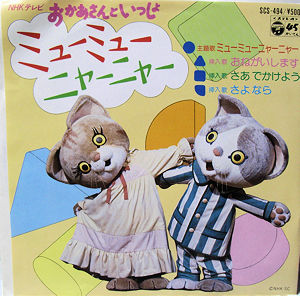
Mew meow meow meow (1979 - 1983)
Source: yumichan3.blog.so-net.ne.jp
Mu Mu Nya Nya
April, 1978 - March, 1983
"ゴロンタ Gekijo gekijo," "Bunbun Taimu" and "Niko Nikobun," it is not included in the "No.. Daidai." It is the last film to feature a cast from the original "ブーフーウー."
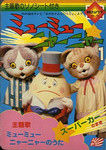
My older sister, Mu Mu, a stray cat, and my younger brother, Nha Nha, a spotted cat
A kitten's sister and brother are too close to each other to keep fighting.
Dr. Bourbon the Inventor, the Meddlesome Egg, the Merry Bulldog.
It's a story that involves people and causes incidents one after another.
Source: okaasan-to-issyo.com
Source: root-nyanchi.jugem.jp
Egg (center)
A character similar to Humpty Dumpty in a top hat and tuxedo.
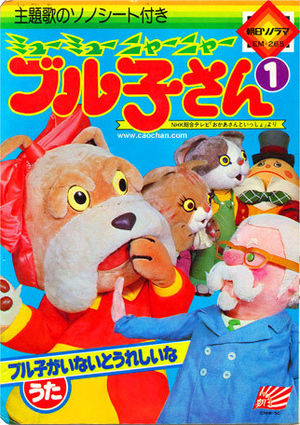
Source: www.caochan.com
Buruko (left)
Bulldog girl.
Golonta Theater (1976 - 1979)
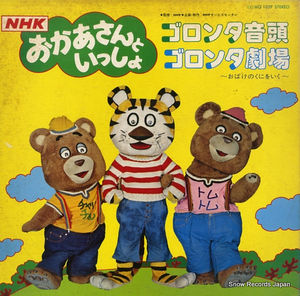
Source: www.snowrecords.jp
ゴロンタ Theatre
April, 1976 - March, 1979
The tiger "ゴロンタ" is rough but actually lonely.
The story is about the bears "Cham Cham" and "Tom Tom".
You can interact with children with life-size character costumes.
"Play with ゴロンタ Thom Thom Cham Cham."
In 1977, it developed into the puppet theater "ゴロンタ Gekijo".
Source: okaasan-to-issyo.com
At that time, the set-up was set up in the studio and the story was developed in front of the children who came to the studio, instead of the set-up being included in the broadcast.
Source: ja.wikipedia.org
This system continued for five years until the second year of the bun-bun-tammu.
Source: japaneseclass.jp
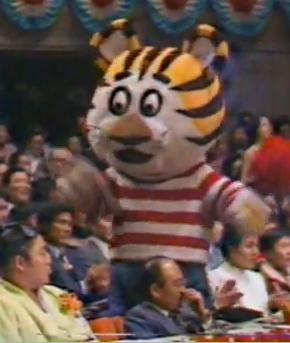
ゴロンタ
He has a rough personality, but on the other hand he is always lonely. His first person is "Ore sama."
Source: blog.livedoor.jp
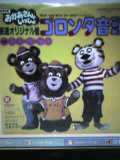
Tom Tom & Cham Cham (left & center)
Cham Cham (yellow shirt) and Tom Tom (pink shirt) are characters in bear costumes, both of whom have the first person name "Boku".
Ugoke Bokounoe (1974 - 1976)
Source: shouwashi.com
Ugokke Boku no E
April, 1974 - March, 1976
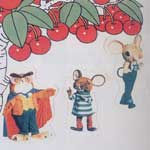
The stage of the puppet show is a picture sent to us by children watching TV. The three mice get into the picture. The story is about fighting against the owl villain. Making the most of chromakey technology. Broadcast on Monday for 15 minutes.
The stage is set with pictures sent from children watching TV.
"Kori" of the shrewd, "Poly" of the strong, "Kari" of the careless
It's a story against Dr. Owl, the villain owl.
Source: okaasan-to-issyo.com

Related Articles
Here is a summary of "Rekishi Puppet Show" by Okaasan to Tosho.
Here is a summary of the beloved "puppet plays" of each era, Okaasan to tosho "Puppet Plays.
Read Article
![With Mom] Surprisingly unknown? A special feature on the "song sisters" and what happened to them afterwards! Takumi Mitani](https://renote.net/files/blobs/proxy/eyJfcmFpbHMiOnsiZGF0YSI6NzY3NjEzNSwicHVyIjoiYmxvYl9pZCJ9fQ==--4151e031a698acd6d7f3902ddf0cf9c4bad5360f/145.jpg)
With Mom] Surprisingly unknown? A special feature on the "song sisters" and what happened to them afterwards! Takumi Mitani
NHK's children's program "OKAASAN ITSYO" is famous for its "Uta no Onee-san" corner where the "Uta no Onee-san" sings with the children. 2016, Takumi Mitani, aka "Takumi Onee-san," regrettably retired as "Uta no Onee-san. In 2016, Takumi Mitani, a.k.a. "Takumi Onee-san," regrettably retired as "Uta no Onee-san. Here we introduce what has happened to the "song ladies" of the past.
Read Article
Keizo Nakanishi on "With Mom" Christmas Special! He sang live!
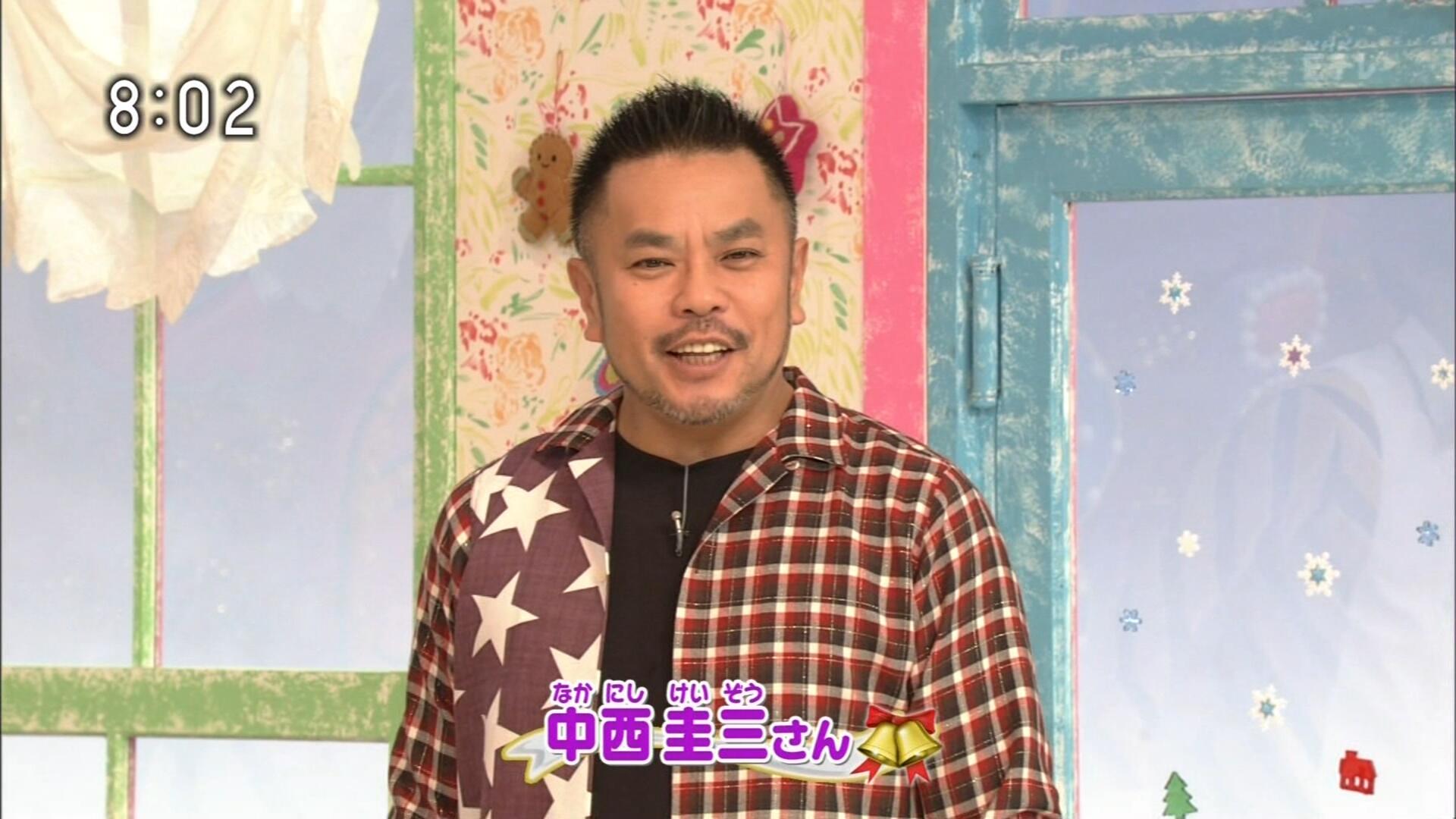
Singer-songwriter Keizo Nakanishi appeared on the Christmas special of "With Mom" broadcast in December 2013. Keizo Nakanishi performed "Pawapu Taiso," a song used in the show's exercises. The children reacted coldly, "Who is this person? while many families said their parents were excited to see him.
Read Article

A summary of the past "Okaasan to tosho" singing brothers! Daisuke Yokoyama finally graduates!
We have compiled a list of the singing brothers who have appeared on NHK's popular program "Okaasan to tosho" since then. Introduced here are a total of seven members, including Seiji Tanaka, the first generation, Osamu Sakata, who has written many famous songs as a lyricist and composer, and Daisuke Yokoyama, who has brought songs and smiles to children for nine years. Their activities in the program are also described.
Read Article
Tags
Contents
- Outline of "With Mommy
- About Puppet Theater
- Puppet Show "With Mommy
- Garapicopu (2016 - 2022)
- Pocopotato (2011 - 2016)
- Monolan Monolan (2009 - 2011)
- Spoo and Gutterat → Gu - Choco Lantern (2000 - 2009)
- Doremifa Doonutsu! (1992 - 2000)
- Nikoniko Pun (1982 - 1992)
- Boom Boom Taimu (1979 - 1982)
- Mew meow meow meow (1979 - 1983)
- Golonta Theater (1976 - 1979)
- Ugoke Bokounoe (1974 - 1976)
- Tondeke Butchie (1971 - 1974)
- Tonchinko Bozu (1969 - 1971)
- Dat-kun (1967 - 1969)
- Boo hoo hoo (1960 - 1967)