
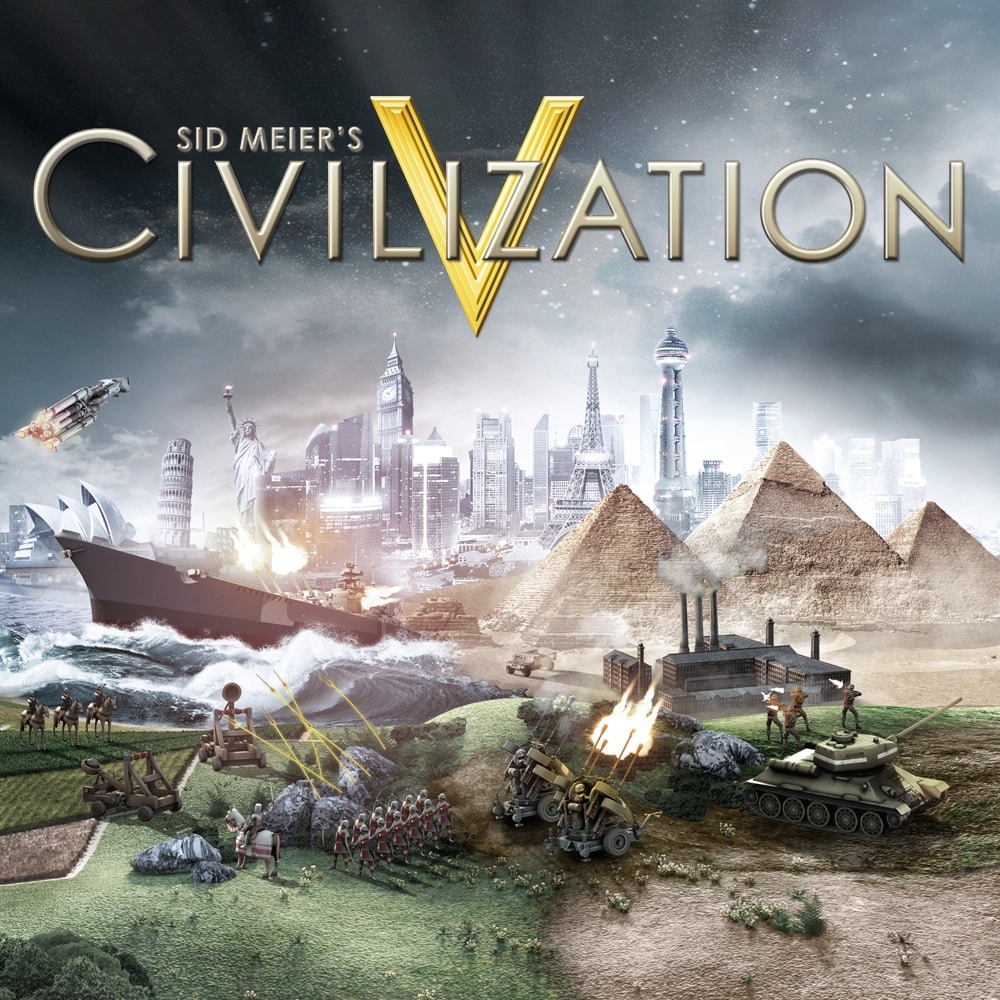
Sid Meier's Civilization V (Civ5) is the fifth title in the Civilization series, a turn-based simulation game inspired by civilization.
Players take on the role of the leader of a civilization and conduct internal affairs, diplomacy, and sometimes war in order to make their own civilization prosper.
The previous games in the series were difficult to play for beginners due to the difficulty of the system, but the system has been simplified in this title, making it relatively easy for beginners to play.
It appears as a cultural pressure on civilizations.
It is accumulated through world heritage sites and masterpieces, which will be discussed later, as well as by opening borders to other civilizations through diplomacy, which increases tourism power.
Since this DLC, the condition for cultural victory has been changed to surpass the cumulative cultural power of all civilizations except your own by the cumulative tourist power of your own civilization, so it is an important element that directly affects the victory condition.
Additional elements and masterpieces
A masterpiece is a work of art created by a great man.
It is obtained by consuming one of the great man units "Great Artist", "Great Writer" or "Great Musician".
They are placed in cultural facilities such as "museums," "libraries," and "opera houses," which are buildings that can be built in cities, and generate cultural and tourist power.
Masterpieces can be traded with other civilizations.
archeology
The unit "archaeologist" can be produced by researching "archaeological" techniques.
The archaeologist investigates "historic sites" scattered throughout the country and unearths artifacts, which can be displayed in museums as masterpieces.
The exhibited artifacts, like the masterpieces mentioned above, have the effect of generating cultural and tourism power.
Archaeological research can be conducted not only in the territory of one's own civilization, but also in the territory of city-states and civilizations that have opened their borders.
Additional elements/ideas
They can be employed when a turn is taken with three "factories" built in a civilization, or when the civilization enters the modern era.
There are three types of ideas
freedom
Ideology suited to a play style with a non-war policy, such as diplomatic victories and cultural victories.
It adds cultural and religious power. The bonus for great men is high, and the rate at which great men are born increases.
It is easier to play cultural victories and scientific victories that use many great men.
order
The productive and research power of a civilization increases in proportion to the number of cities.
An ideology suited to conquest victory or scientific victory.
dictatorship
It is an ideology that specializes in offensive activities such as military power and tourism.
Although there are some domestic policy effects, the main focus is still war, and it is oriented toward conquest and victory.
It is easier to mass produce military units and win wars.
Additional Elements, World Congress
The World Parliament is inaugurated prior to the creation of the United Nations.
The first civilization to come into contact with all civilizations acquires the "letterpress" technology, and that civilization becomes the presidency.
At the World Parliament, a "resolution" is made by a majority vote based on various proposals. This meeting takes place every 30 turns.
Starting with this DLC, the condition for diplomatic victory is to be elected "world leader" by a leadership vote by the World Parliament.
The basic principle is the same as the voting by the United Nations in the Unmarked version, but the presidency can obtain additional voting rights, and voting rights can be increased through alliances with city-states.
Additional civilizations and leaders
Ashur Banipal (Assyria)

Assyrian leader.
Relatively warlike tendencies.
Need to be careful when in the vicinity.
Gadjah Mada, Indonesia

Leader of Indonesia.
It has inherent high-end resources and will be huge by ensuring a lot of well-being.
Especially if the city is located on the coast, it will have many high-end resources.
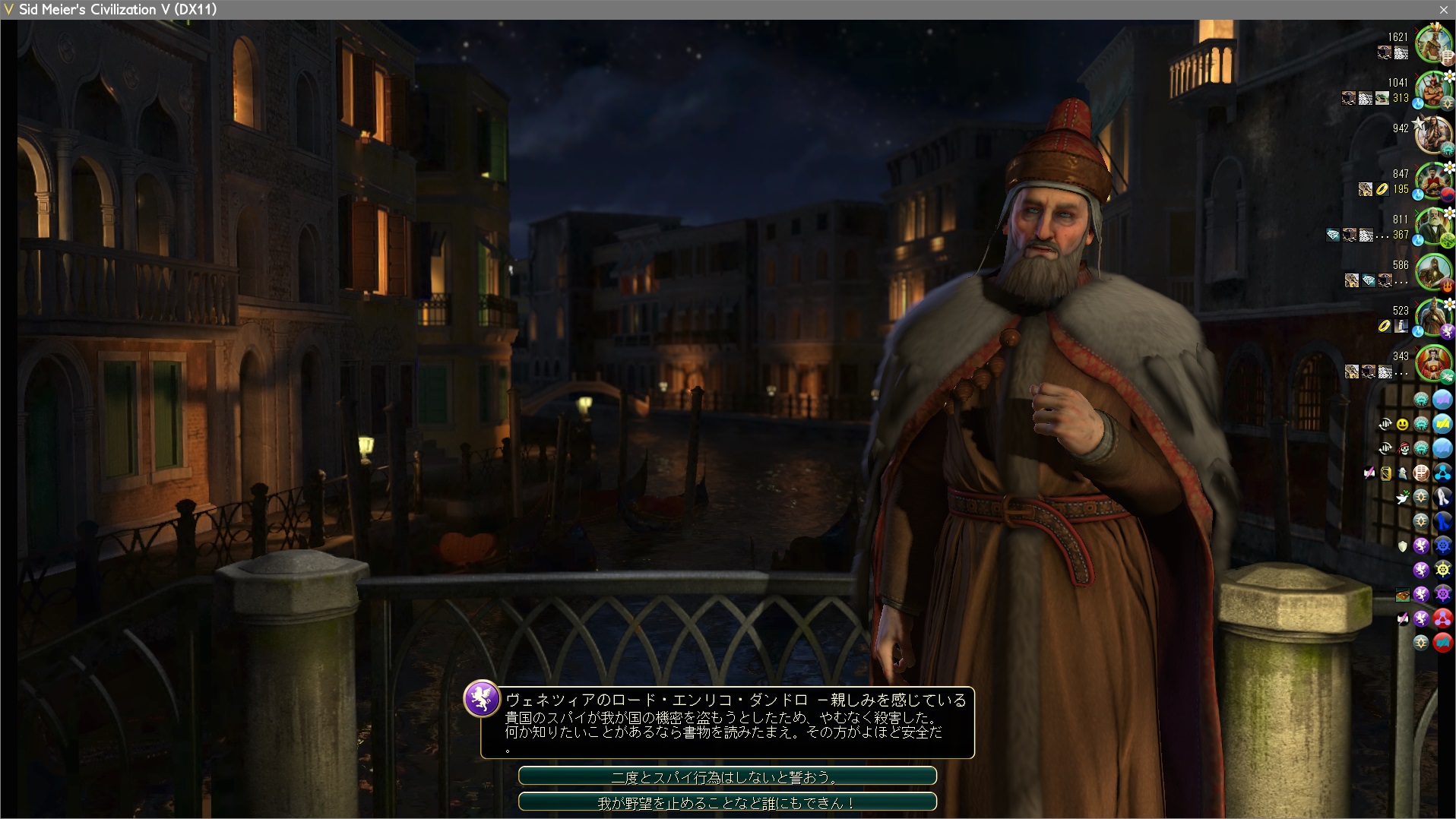
Enrico Dandolo (Venice)

Contents
- Overview of Sid Meier's Civilization V
- Synopsis and story of Sid Meier's Civilization V
- The fateful year of the Vikings
- Rise of Mongolia
- Invasion of the New World
- Samurai Invasion of Korea
- Ancient Heritage
- Uncivilized Paradise
- Game System of "Sid Meier's Civilization V
- initial setup
- Civilization & Leadership
- map type
- Map Size
- Difficulty Level
- Game Speed
- terrain
- grasslands
- plain
- desert
- tundra
- poor volcanic soil
- hill
- mountains
- lake
- coastal waters
- open sea
- oasis
- jungle
- rivers
- atoll
- atomic dust
- wetlands
- forest
- flood plain
- glacier
- natural heritage
- Resource Utilization Facilities
- resources
- strategic resources
- Bonus Resources
- high level resources
- unit
- close combat unit
- Remote Attack Unit
- Aviation Unit
- Civic Unit
- Leveling up units
- city
- Urban Growth
- Urban Production
- Urban Territory
- World Heritage (cultural, natural, etc.)
- structure
- Technical Research
- ancient times
- classic
- Middle Ages
- Renaissance period
- Industrial Age
- modern times
- atomic age
- information age
- social system
- Tradition
- Liberty
- Honor
- Piety
- Cultural Patronage
- Aesthetics
- Commerce
- Exploration
- Rationalism
- Diplomacy with other civilizations
- transactions
- Declaration of Friendship
- statement of condemnation
- declaration of war
- research agreement
- city-state
- City States of Culture
- military city-state
- maritime city-state
- savage tribe
- condition of victory
- diplomatic victory
- scientific triumph
- conquest
- cultural victory
- time warp
- Characters and characters in Sid Meier's Civilization V
- Montezuma (Aztec)
- Washington, U.S.A.
- Haroon Allasheed (Arabia)
- Elizabeth, United Kingdom
- Hiawatha (Iroquois)
- Gandhi, India
- Ramses II (Egypt)
- Suleiman (Ottoman Turkey)
- Alexandros, Greece
- Ramkhamhaeng (Siam)
- Askia (Songai)
- Wu Li Tian (China)
- Bismarck, Germany
- Nobunaga Oda (Japan)
- Napoleon (France)
- Darius I (Persia)
- Augustus (Rome)
- Ekaterina, Russia
- Terms for Sid Meier's Civilization V
- OCC
- OX
- UA
- UB
- UI
- UU
- DLC for Sid Meier's Civilization V
- Civilizations to be added by DLC
- Pachacuti (Inca)
- Isabella, Spain
- King Sejong (Korea)
- Harar, Denmark
- Nebuchadnezzar II (Babylonia)
- Kamehameha (Polynesia)
- Genghis Khan (Mongolia)
- Maps to be added by DLC
- Gods and Kings, the first expansion pack for Sid Meier's Civilization V
- additional scenario
- To the Renaissance Era
- The Fall of Rome
- Empire under cloudy skies
- Additional elements/religion
- religious power
- pantheonism
- creation of religion
- Testimony of Faith
- religious pressure
- Additional elements and spies
- Establishment of Embassy
- New City-States
- religious city-state
- commercial city-state
- New Civilizations and Leaders
- Haile Selassie (Ethiopia)
- Maria Theresa (Austria)
- William, The Netherlands
- Dido (Carthage)
- Boudica (Celtic)
- Gustaf Adolf, Sweden
- Theodora (Byzantine)
- Attila (Hun)
- Pakal (Mayan Empire)
- Brave New World, the second expansion pack for Sid Meier's Civilization V
- additional scenario
- African Struggle for Africa
- (US) Civil War
- Additional elements and sightseeing
- Additional elements and masterpieces
- archeology
- Additional elements/ideas
- freedom
- order
- dictatorship
- Additional Elements, World Congress
- Additional civilizations and leaders
- Ashur Banipal (Assyria)
- Gadjah Mada, Indonesia
- Enrico Dandolo (Venice)
- Pocatello (Shoshone people)
- Shaka (Zulu)
- Pedro II (Brazil)
- Kazimierz III (Poland)
- Maria I (Portugal)
- Ahmad Al-Mansour (Morocco)
- Backstories, trivia, and small stories/episodes and anecdotes about "Sid Meier's Civilization V".
- Can abduct city-state workers.