

One of the "Super Robot Wars" series, a crossover simulation RPG based on Super Robot anime works.
It is called this way because it is produced for portable game consoles sold by Nintendo.
Aiming to be a "Super Robot Taisen" series for young people, many new and unusual works have been entered in the series.
The series started with "Super Robot Taisen A" released in 2001, and as of January 2018, nine titles have been released.
Godmothers

The lead robot in "Rokushin Goryotai God Mars". Six robots, Geyer, Sphinx, Uranus, Titan, Shin, and Ra, have combined to form this figure. When they combine, they call out "Rokushin Goryotai!
Geyer, a robot developed by Idea, a scientist on the planet Gysin, was equipped with an anti-proton bomb by order of Emperor Zur. Zulu further gave Idea's son Mars the mission to blow up the earth, so Idea secretly developed five robots and sent them to the earth. Geyer and the five robots combined to form the phenomenally powerful God Mars, which destroyed the enemy robots sent by Emperor Zulu without a second thought. In the latter half of the story, more and more robots were cornered by the more powerful enemy robots.
The robot was impressive in the way it took the enemy's attacks without moving an inch and buried them with its special "Final God Mars" attack. Especially in the early stages of the program, he hardly moved, only turning around to surprise the viewers. This was due to the fact that God Mars, which was designed by the toy initiative, had so many lines and complex shapes that it was not easy to move it in the animation. This led to the reversal of the idea: "If it is not easy to move them, why not make them powerful enough to quickly defeat their enemies without being moved by their attacks? As a result, the battle scenes of the Godmothers themselves were short, and since they could make extensive use of banked footage, the human drama and the activities of Geyer before he merged into the Godmothers became more prominent.
In the climax of the battle, there was a scene in which the Godmothers were struggling. In this scene, the Godmothers' struggle and success are depicted over a long period of time to show how powerful the enemy is, and to emphasize Takeru's strength in overcoming the enemy's difficulties. In addition, the Godmothers are not easy to move but not impossible to move, so they move well in the later opening scene and in the struggling scene mentioned above.
Appeared in D. At the time, Nintendo's handheld series had few moving images and instead used cut-ins and other insertions to produce battle scenes, and this policy was very suitable for reproducing God Mars battles with little movement. In particular, the battle scenes in "Final God Mars" were almost the same as those in the original bank, and they were well received. In contrast, perhaps because of the strong seal of the motionless robot in the original work, the battle scene that reproduced the movements of the late opening was sometimes derided as a fabrication.
The robot is a memorable example of how the characteristics of the original work are linked to the game in which it appears.
Masato Akitsu

CV: Toshihiko Seki (no voice in the game)
The protagonist of "Underworld Plan Zeorimer. He was a shy junior high school student, but on his 15th birthday, he was kidnapped by the Last Guardian, a secret organization of the Japanese government, and discovered that he was a test-tube baby based on the genes of Masaki Kihara, a mad genius scientist who belonged to the Iron Dragon, a secret society that was plotting world domination, and that his parents were hired by the Japanese government to play his parents. Masatoha is imprisoned after it is revealed that he is registered as the pilot of the Heavenly Zeorimer, one of the Bagua Robots, a giant robot developed by Masaki Kihara.
Masato is involved in the battle between the Last Guardian and the Iron Dragon against his will, and pilots the Heavenly Zeorimer. Masato's consciousness is taken over by his ruthless personality and memories in the Zeolimer. These were Masaki's, which had been databased and left in the Zeolimer. Despite the fear of having his consciousness rewritten, he continues to ride the Heavenly Zeolimer to thwart the ambitions of the Iron Armored Dragon, and defeats the Bagua Robot by suppressing Masaki's personality. Realizing that his own personality was now inseparable from Masato's, Masato raised the Heavenly Zeolimer to its maximum power and annihilated the headquarters of the Iron Dragon, while at the same time annihilating himself and the Heavenly Zeolimer to deny his own survival as Masaki, thereby completely destroying Masaki's ambitions.
The story was enlivened by the fact that the robot's pilot was imperfect and inadequate compared to the robot's absolute power. The brutality of Masaki's character, which comes to the fore during battle, is also vivid, and complements the extraordinary strength of the Heavenly Zeoraimer. Although "Underworld Plan Zeorimer" was a short four-volume OVA, the sharp acting of Toshihiko Seki, who made the viewer distinguish between Masato and Masaki, who are the same person but different, made him a memorable character.
In the Nintendo handheld series, he appeared in J. In the original story, he was the biggest threat to mankind.
In the original story, he took his life in order to completely stop the ambitions of the Iron Dragon and Masaki, who were the greatest threat to mankind, but in this film, he chose to continue fighting as Masato, having established his identity as a protector of the world where other threats remain. He is memorable when Lau Le Creuset, with whom he shares a similar secret plan as Masaki, urges him to lead the world to ruin as Masaki Kihara, but he rejects the offer. He also became friends with Shikumo Toyo, who was also involved in the battle. In the story, Masaki Kihara is also a mastermind in the dark, and the mastermind and superiors of the antagonists were also depicted as being wary of his presence.
great zeorimer

This is an enhanced version of the Heavenly Zeorimer, the main character in "Underworld Plan Zeorimer. Although only an illustration and a simple setting were available for fun by the original production staff, the official setting was created when the "Underworld Plan Zeorimer" entered the J series, and it was selected as a hidden unit.
Many users were astonished at its unexpected selection, but what made an even stronger impact was its overwhelming performance. The original Heavenly Zeorimer and Bagua Robo themselves were depicted as "mighty beings that overwhelm others" like the monsters and heroes of special effects heroes, and they reigned as high-spec units in the game as well, but Great Zeorimer's performance was even more shocking, It is renowned as a balance breaker.
Its strength is supported by the "dimensional linkage system.
The "Dimensional Linking System" allows him to strengthen and use the special moves of all Bagua Robots, which are his strongest enemies, and to use the "Application of the Dimensional Linking System" to perform cooperative attacks by two in one. The Dimensional Linkage System allows it to move through the terrain.
His special move is the "Row Meiow," an enhanced version of the Meiow attack used by the Heavenly Zeolaimer, which was originally equipped with the Dimensional Linkage System. This is a blow that releases energy from the "Dimensional Linkage System" to disintegrate objects at the atomic level, and always includes a cut-in that reproduces the final scene of the original story (whether overseas or in space): the "enormous energy enveloping the Asian region". The power of the blow is unmatched, as it transcends national borders.
This may sound like a joke, but since it is explained in the game, it is definitely a benefit of the "dimensional linkage system.
The weakest weapon has an attack power greater than the strongest weapon in the other entries, and the "Row Maeow" comes in two versions, a stand-alone version and a MAP weapon (a MAP weapon is a weapon that can attack multiple targets within its range), both of which boast extraordinary firepower. Both versions boast extraordinary firepower. Thanks to the "dimensional linkage system," they rarely run out of fuel and become inoperable, making it easy for them to deliver extraordinary firepower in rapid succession.
Although this makes it very difficult to acquire, they still boast a strength that makes them worth acquiring. Combined with the fact that it was created specifically for this work, it is an impressive machine that has left many users' tongues wagging.
Fei Yan HD

CV: Saki Fujita
This robot originally appeared in an illustration created for a promotional project for the Xbox360 port of the game "Dennou Senki Virtualon Force. The character is the result of a collaboration between Sega, which produces the "Dennou Senki Virtualon" series, and Crypton Future Media, which sells the "Hatsune Miku Project DIVA" series, a music game starring the music creation software "Hatsune Miku" series. The character was developed commercially independently from the "Dennou Senki Virtualon" series.
The virtualoid "VR-014 Phi Uv," which has a personality from the "Dennou Senki Virtual-On" series, was born when it met the "voice" of Hatsune Miku in the cyber world. Since it has its own personality, it can be considered a character.
Its silhouette is similar to the original Phi Yuev and its mass-produced version, Fei Yen, but its exterior and coloring have been changed to that of Hatsune Miku. She also carries a leek, which is inseparable from Hatsune Miku, as "".
At first, she is unable to remember her origins or purpose, and is confused, speaking only in Katakana, but she gradually regains her self-will and stands on the battlefield with Hatsune Miku's will inside her.
The "emotional mode" of the Fay Yan Virtualoid's enhanced state changes the coloring of its body from green to pink and gold.
Its size is variable, and although it is described as a life-size robot in the game, it is often portrayed as a giant robot in some scenarios. In the game, the size is M, which is the size of a robot ranging from 10 to 30 meters.
It is the sole entry in UX under the name "Dennou Senki Virtual-On" series Fei Yen HD. This was the first time that a project unrelated to the original work was treated as an entry in the Super Robot Wars series, and it was also the first time that a collaboration project between copyrighted works was entered.
The surprise announcement that Faye Yen, a joker in the "Dennou Senki Virtualon" series, would be participating in a collaboration project alone came as a bit of a shock to users, and when Hatsune Miku herself appeared in a promotional video as the collaborator, the entire contents The entire content industry was shocked when Hatsune Miku herself appeared in a promotional video, taking advantage of the collaboration.
Although Hatsune Miku was actively involved in collaborations, Crypton Future Media at the time refused to accept collaborations that would lower the value of the character, and explicitly prohibited them. One of those prohibitions was the use of violent expressions by Vocaloid characters.
For this reason, creators of RPGs, SRPGs, competitive action games, and other violent content took great care when collaborating with Hatsune Miku, and avoided restrictions by not having Hatsune Miku appear in the game itself, or by placing her in a location unrelated to the battle, making it out of the question to have her attack enemies.
Even in the games, direct mention of the name was avoided, and Hatsune Miku only appeared as a cut-in in battle animations, and in the official radio show of the Super Robot Wars series, "Super Robot OG Net Radio Umasugi WAVE," the personality Tomokazu Sugita In the official radio program of the Super Robot Taisen series, "Umasugi WAVE," the host Tomokazu Sugita speculated on the circumstances that led to the appearance of Hatsune Miku, asking, "If Miku is bad, is Fay Yan good?
It is unclear whether Sugita's guess was correct, but the fact that this statement was broadcast on the official radio without being cut suggests that it is safe to assume that the character in the work is Hatsune Miku, and that Hatsune Miku has been depicted in battle scenes.
There seems to be no doubt that UX was unusual, as the depiction of combat by Hatsune Miku continued to be thoroughly avoided until her participation as a hero in the smartphone application "#Compass" released in 2017.
Due to the above circumstances, the character also played a major role in the scenario as a semi-original character, connecting the works and providing a metafictional perspective, and thus left a lasting impression on the users. He is a character that embodies the unique crossover of UX, both in name and in reality. He is a character and robot that cannot be ignored when talking about UX.
Saotome Alto

CV: Yuichi Nakamura (no voice in "L")
The main character in "Macross F", "Macross Frontier the Movie: The False Songstress", and "Macross Frontier the Movie: The False Songstress".
She was born as the heir to the Saotome clan, a famous kabuki family. She underwent rigorous training by her father and was known as a prodigy onnagata, but she could not give up her dream of flying freely in the sky, so she was disowned by her father and set out on the path to become a pilot. She is so beautiful that she is mistaken for a woman, or rather the most beautiful of all the characters in "Macross F." Because of her aforementioned origins, her classmates call her by the nickname "Princess Alto.
She was a sophomore in the navigation department of the high school, but when the Vajra attack occurred, she was hired by S.M.S., a private military company, for her skill in flying the VF-25F Messiah, of which no pilot was available.
He has a strong sense of justice and is a righteous person, but because of this, he is prone to recklessness.
When Sheryl Nome performs in an aerial show at the opening of a live concert, Alto, Sheryl, and Ranka Lee meet, and the love triangle that has become a characteristic of the Macross series begins.
In "Macross Frontier the Movie: Sayonara no Tsubasa," she also flies the YF-29 Durandal as her new favorite aircraft.
He appears in L, UX, and BX, starting in the first episode of L and making a full-fledged entry in the middle of the series. In the Nintendo handheld series, it was the only entry under the name "Macross F," and its portrayal often focused on the fact that it was an actor. In Super Robot Wars UX, it was the first entry in the Nintendo handheld series to appear under the "Macross F the Movie" setting. The crossover with Setsuna F. Seiei, based on the development of the theater version, is impressive. In Super Robot Taisen BX, he appears in the setting of "Macross Frontier the Movie" and after the end of the original work, so he has a strong elder side to him.
YF-29 Durandal

The main character in "Macross Frontier the Movie: Sayonara no Tsubasa". It is the new machine for Alto Saotome.
It was unfinished, but was completed by diverting parts from the VF-25 Messiah. Therefore, it is said that its appearance in the movie is not the original one.
It was deployed in the decisive battle on the main planet of Vajra, where a fierce dock fight with Brela Stern ensued. She delivered Cheryl and Ranka's song to the Bajra Queen. Alto disembarked from the aircraft in mid-air to indicate that he had no intention of fighting, and the aircraft crash-landed on the main planet of Bajra.
This aircraft was built not for combat, but to communicate with the alien bajra by conveying its thoughts to it. This characteristic is similar to that of the Double Oak Anta, a mobile suit built to communicate with the mysterious creature ELS, which appeared in "Mobile Suit Gundam 00: A Wakening of the Trailblazer".
It appears in UX and BX. In UX, it appears in the middle of the series when Alto switches from VF-25 Messiah to it; in BX, it appears in the early stages of the series, but its performance has deteriorated due to a series of unexpected battles, and some of its armament has become unusable. Both of them are enhanced as they progress, and in the final stage, they can use "Tsubasa no Mai," which disables the enemy's actions. Sheryl Nome and Ranka Lee also appear with voices in the "Wings Dance" battle animation. The "Tsubasa no Mai" performance is in the lineage of Nintendo's handheld series, which has traditionally featured non-combat characters in battle scenes.
Famous scenes from Super Robot Wars (Nintendo handheld series)
That's my war.
From A.
A female protagonist appears after a battle with an unidentified otherworldly being. It turns out that the mother ship Nehru Argama was emitting suspicious communication signals, and a Giganos Empire mobile fortress appears in front of the player unit Rondo Bell, which suspects infiltration by spies.
The protagonist, who has succeeded in getting ahead on his own by inciting Cane Wakaba, whose mother is missing, reveals himself to be an artificial, otherworldly spy for the Shadow Mirror, and notifies Londo Bell to disarm using a self-destruct mechanism as a shield.
Then, Shadow Mirror's army appears. The radio signal was exchanged between the hero and the Shadow Mirror.
The hero, joined by Shadow Mirror leader Vindel, stands in front of Londo Bell and, seeing an opportunity, tells Londo Bell the whereabouts of Kane's mother, and activates a self-destruct mechanism adjacent to Vindel's aircraft, Zweiser Gain.
The protagonist infiltrated Londo Bell as a spy, but as he came into contact with various people, he awakened to human emotions and realized that the invasion by the Shadow Mirror was unforgivable.
Severely injured by a suicide bombing, the protagonist was transported to Shadow Mirror's base of operations.
Upon awakening, the protagonist was approached by her boss and creator, Lemon Browning.
Lemon confirms that the protagonist has the intention to turn against them, and he tells her that she is confused by her human-like emotions and helps her escape.
When Lemon sighs at the fact that her synthetic creation has developed feelings and says that betrayal is a normal part of war, the protagonist tells her, "That's my war," and leaves Shadow Mirror's stronghold.
The protagonist of "A" has a hidden origin, and in the middle of the film, his true identity is revealed to be a spy for the enemy. This is an unusual development, but this sequence of events, in which the protagonist's change and resolve are revealed, captured the hearts and minds of the players.
In the case of the male protagonist, he regains the memories he lost in the first episode and remembers his connection with the Shadow Mirror, but he realizes that the Shadow Mirror's ways are not right because of the battles he has fought up to that point, so he leaves his girlfriend who belongs to the Shadow Mirror and returns to Rondo Bell. This story is also impressive, but the story of the female protagonist, which involves the budding of the ego and change, is more highly acclaimed.
Twin Buster Rifle vs. Twin Satellite Cannon
From R.
Special Forces led by Marie Maia, the protagonist unit, lured into space, skids through the Round Knights and takes control of the Earth's presidential palace.
The Earth Unification Government is preparing to disarm under the leadership of Lilina Dorian, and is easily overpowered.
The Round Knights return to Earth and engage in battle with the Marie Maia forces. In order to save Lilina, Hiiro Yui boards the Wing Gundam Zero Custom and launches into battle, and in order to stop the satellite launchers used by Shagia and Orba, who have joined the Mariemaia army, he boards the Gundam Double-X, equipped with twin satellite cannons that were the basis for the satellite launchers. Garoad Lan and Tifa Adyar boarding and launching a sortie.
Marie Maia still holds Lilina hostage even though the special forces have been wiped out, and Heero asks if the shelter they are holed up in has a perfect defense.
Naturally, Marie-Maire is adamant that any attack would be pointless, so Heero fires the Twin Buster Rifle, the high-powered beam weapon of the Wing Gundam Zero Custom.
With each shot, Mary Maier loses her composure. With the shelter's defenses approaching the danger zone, Heero attempts to continue firing in order to force Marie-Maire to surrender.
At that moment, Tifa, who is a Newtype, senses that the mary-maires in the shelter have already lost their will to fight. Hearing this from her, Garoad enters the firing line of the Twin Buster Rifle and says to Heero, "You don't want to compare the power of the Twin Buster Rifle and the Twin Satellite Cannon! and begins charging the Twin Satellite Cannon, desperately trying to persuade him.
Pushed by his spirit, Heero lowered the Twin Buster Rifle. Soon after, the Marymayers split up and surrendered, bringing the occupation of the presidential palace to a temporary end.
The protagonist machines of New Mobile Succession Gundam W and Mobile New Century Gundam X, both of which were broadcast in the 1990s, were equipped with huge beam weapons, and their successors had similar characteristics, with the number of guns increased to two.
This scene, which conjures up images of a battle between these two weapons that everyone imagined at the time of their airing, is often described as a scene that could only be seen in Super Robo.
Miguel Aiman, Heine Westenfurth sorties.

Related Articles

Summary of the successive packages of the Super Robot Taisen series [Super Robot Taisen series].
The "Super Robot Taisen" series is a crossover work featuring robots and characters from "Mazinger Z", "Mobile Suit Gundam", and various other robot animation works. The success of this series has led to a reevaluation of past robot works.
Read Article

Super Robot Wars (OG Series) Spoilers and Discussion Summary
A series derived from Super Robot Wars, a crossover simulation RPG based on Super Robot anime works. The game features original characters and robots from the Super Robot Taisen series. The spin-off works derived from this series are also called Super Robot Taisen OG Saga (OG stands for Original Generation), and form part of this series.
Read Article

Super Robot Wars (DC War Series) Spoilers and Discussion Summary
One of the series of "Super Robot Wars," a crossover of old and new robot animation works. Developed by Winky Soft and released by Banpresto. The genre is simulation RPG (SRPG). This series completed the foundation of the "Super Robot Taisen" series and led the series to become one of Japan's leading crossover series.
Read Article

Super Robot Wars (Alpha Series) Spoilers and Discussion Summary
A series of crossover simulation RPG "Super Robot Taisen" by Super Robot Anime works. Released by Banpresto and developed by Banpresoft. It began with "Super Robot Taisen Alpha" released in 2000, and was completed with "The 3rd Super Robot Taisen Alpha" in 2005. It is a full-length storyline consisting of four games, including one Gaiden game.
Read Article

Super Robot Wars 30 (Super Robot 30) Spoiler Commentary and Discussion Summary
Super Robot Wars 30" is a simulation RPG for Nintendo Switch, PlayStation 4, and Steam, released in 2021 by Namco Bandai Entertainment Inc. The title was created to commemorate the 30th anniversary of the "Super Robot Wars" series, a crossover work that brings together various robot anime from the past and present, and its appeal lies in its battle presentation that recreates the original story.
Read Article
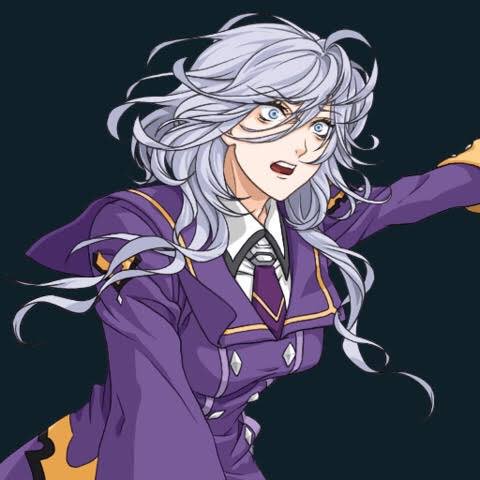
シオニー・レジス(スーパーロボット大戦)の徹底解説・考察まとめ
『スーパーロボット大戦』のオリジナルキャラクター。初登場は『第2次スーパーロボット大戦Z 破界篇』。本項目では彼女の乗艦である「グレート・アクシオン」についても説明する。
Read Article

Lurking in the Game: Lost Data! Unused Data
In games, there is always some data that has been lost. There may be various reasons for this, but this time I would like to dig back and summarize such known lost data.
Read Article

Will it be realized? Illustration in the style of a Super Robot package
Super Robot Wars is a dreamlike game in which various robot anime co-star in a single game. However, heaven only knows if the robots you want to participate in the game will appear or not. This time, we would like to introduce a Super Robot Taisen package-style fan art that expresses this desire.
Read Article

Summary of the "Super Robot Wars" series from the beginning to the present
Many people know about Super Robot Wars (Super Robot Wars) nowadays, but there are only a few who know about the early days of Super Robot Wars. In fact, there are various quaint things about it, such as unexpected things and old-fashioned images. Here is a brief summary of such twists and turns of Super Robot based on the time period and history.
Read Article
A collection of strategies, wikis, and backstage information for "Super Robot Wars 64"! NINTENDO64
This article introduces a selection of sites that compile strategy, wiki, and behind-the-scenes information on "Super Robot Wars 64" for the Nintendo 64. This title is one of the "Super Robot Wars" series and the only software released for the Nintendo 64. The article includes sites that compile information useful for strategy, such as flowcharts of scenario strategies, key points, backstage techniques, and play diaries.
Read Article
![Super Robot] Nostalgic! Summary of Top 20 Cumulative Sales Ranking of Software for Sega Saturn [Tokimemo].](https://renote.net/files/blobs/proxy/eyJfcmFpbHMiOnsiZGF0YSI6NzQwNDk0MiwicHVyIjoiYmxvYl9pZCJ9fQ==--6d155c100ed364d8a9db80a6a56df3ae863db99f/9468.jpg)
Super Robot] Nostalgic! Summary of Top 20 Cumulative Sales Ranking of Software for Sega Saturn [Tokimemo].
The Sega Saturn is a stationary video game console released by Sega Enterprises in 1994. It also attracted a great deal of attention when actor Hiroshi Fujioka played the commercial character "Segata Sanshiro. The software genre is characterized by a wide variety of fighting games. This article introduces the cumulative sales ranking of the top 20 software titles for the Sega Saturn.
Read Article

Entry in Super Robot Wars! The World of Steel Warriors IF
Robot works that every man has longed to see. The Super Robot Taisen series is a cross-world work that connects such works. Among the many entries in the series, there are many who can be said to be regulars. In this article, we will introduce the three families of regular entries in the series.
Read Article
![A Masterpiece] I want to play it again before I die! Super NES Game 【Recommended】.](https://renote.net/files/blobs/proxy/eyJfcmFpbHMiOnsiZGF0YSI6MTgwNzkyLCJwdXIiOiJibG9iX2lkIn19--89a512c082c743fd6aa77efd98b378b2f9c670a1/z_5fb7b0d7ec722.jpg)
A Masterpiece] I want to play it again before I die! Super NES Game 【Recommended】.
I want to play it again before I die! This is a compilation of Super Nintendo Entertainment System (SNES) game titles. There are more than 1,000 Super Nintendo Entertainment System (SNES) game titles, so we took the time to compile this list. Generally, the further back you go, the older the release.
Read Article

Super Robot Wars Alpha strategy site and wiki summary! You can also get a good idea of the conditions for obtaining hidden units!
Here we have compiled a list of strategy sites and wikis for "Super Robot Wars Alpha". The sites include scenario float charts, pilot special skills, unit special abilities, information on reinforcement parts, and conditions for obtaining hidden units in an easy-to-understand format.
Read Article
Contents
- Outline of "Super Robot Wars (Nintendo handheld series)
- Introduction to the "Super Robot Wars (Nintendo handheld series)" series
- Super Robot Wars A
- Super Robot Taisen A Portable
- Entries in Super Robot Wars A and Super Robot Wars A Portable
- Super Robot Wars R
- Super Robot Wars R entries
- Super Robot Wars D
- Super Robot Taisen D entries
- Super Robot Wars J
- Super Robot Taisen J entries
- Super Robot Wars W
- Entries in Super Robot Taisen W
- Super Robot Wars K
- Super Robot Taisen K entries
- Super Robot Wars L
- Super Robot Taisen L entries
- Super Robot Wars UX
- Super Robot Wars UX
- Super Robot Wars BX
- Entries in Super Robot Wars BX
- Game system for "Super Robot Wars (Nintendo handheld series)
- Sortie Selection and Partner System
- remodeling
- Unit Pilot
- Transfer of Pilots
- special ability
- Major characters/units in Super Robot Wars (Nintendo handheld series)
- Amuro Rey.
- gundam
- Duminous.
- Myojin Takel (Japanese brand of rice)
- Godmothers
- Masato Akitsu
- great zeorimer
- Fei Yan HD
- Saotome Alto
- YF-29 Durandal
- Famous scenes from Super Robot Wars (Nintendo handheld series)
- That's my war.
- Twin Buster Rifle vs. Twin Satellite Cannon
- Miguel Aiman, Heine Westenfurth sorties.
- Wings of Destiny
- Backstories, trivia, and small stories/episodes/anecdotes about "Super Robot Wars (Nintendo handheld series)".
- Super Robot Wars 64," the origin of the Nintendo handheld series
- Sparobo for young people! One of the three pillars of the series
- The Phantom Masterpiece "A Billion Thousand Light Years Away"
- On the issue of plagiarism of BGM in Super Robot Wars K