舟を編む

舟を編む

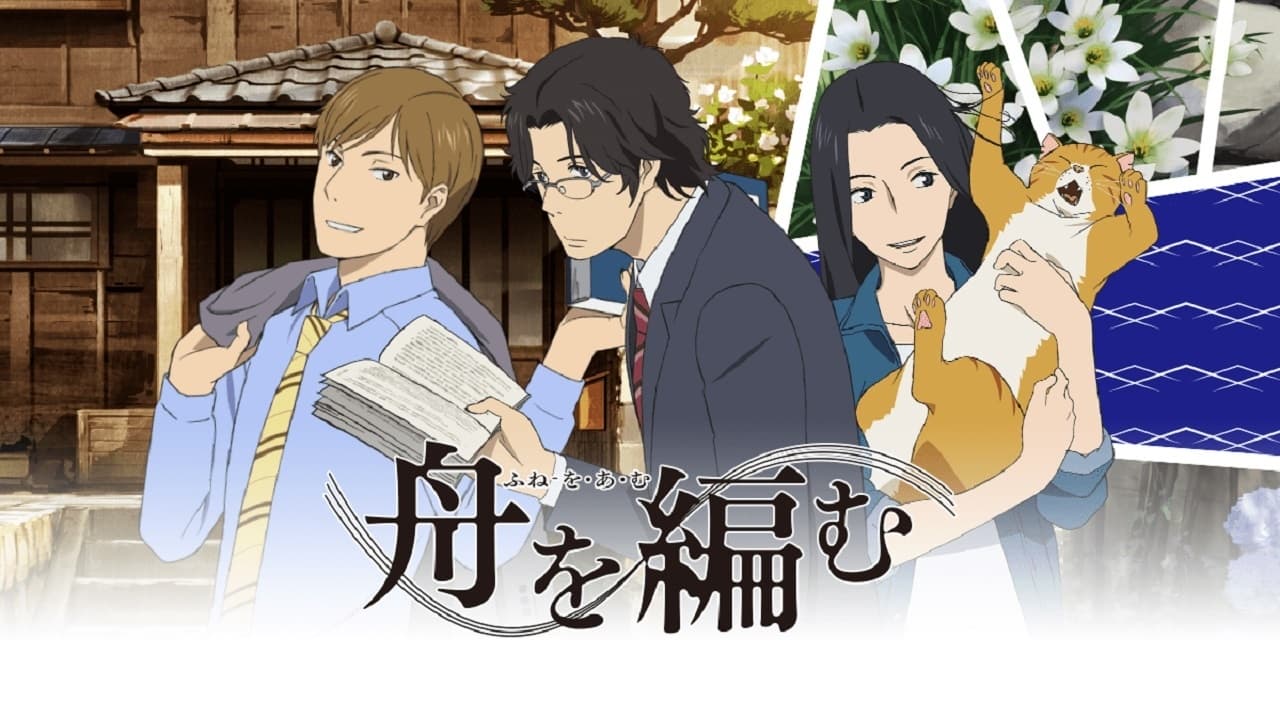
Funa o Knit" is a humanistic novel by Shion Miura, set in the dictionary editing department of a publishing company. It was serialized in the women's fashion magazine CLASSY. and published in book form by Kobunsha in 2011, won the 2012 Honya Taisho Award, and was made into a film starring Ryuhei Matsuda in 2013 and a TV anime in 2016. Mitsuya Mashime, who works at Genbushobo, is transferred to the dictionary editing department as a member of the editorial team for the newly published dictionary "Daidokai. This is the story of a group of highly individualistic compilers who have gathered to produce a dictionary, who become immersed in the profound world of dictionaries and face the language.

Reviews, Ratings and Comments on 舟を編む

舟を編む
10

It is my favorite Japanese film.

When describing this film, I always ask the other person, "Can you explain right?" I ask the same question, "Can you explain the right?
Mashime, the protagonist of this film, provides the answer to this question.

Umashime, an employee of a publishing company with a meager sales job, encounters the job of "dictionary editor" and grows as a person. He meets various people along the way, and we are very moved by the way he explores his work and his way of life.
In this film, not only the main character, Umashime, but also each of the characters are fascinating, and the more you watch the film, the more you are drawn into the story.
The scene where Umashime meets Kaguya, the grandson of Grandma Take, a lodger, is also mysterious, and you can understand why Umashime falls in love at first sight.

My favorite scene is when Umashime falls in love with Kaguya and is asked to translate the word "love" in the dictionary he is making. The translation of the word "love" is very cute, and it is my favorite scene that I hope you will watch because it is full of Umashime's love in a simple dictionary-like sentence.
I am truly envious of Umashime, who has found a job that he is passionate about and has met wonderful colleagues. It is a wonderful movie that you will want to watch again and again at each turning point. If someone asks me, "What Japanese film would you recommend?" I would definitely recommend this film.

舟を編む
9

Good animation that makes you think about language.

The main character (Mitsuya Mazime) is assigned to the dictionary editing department at Shobo, where he works hand in hand with his colleagues in the same department to focus on compiling a dictionary for the new era, "Daidokai. Although he is not good at communication and negotiation, he struggles to create the dictionary with the support of Nishioka, his senior in the department. The company calls him a "money-grubber," and the story depicts the people who work hard to produce a dictionary, despite the company's unreasonable demands on them in terms of both personnel and work.

This animation shows how dictionaries are made and what kind of thoughts and beliefs are put into their creation, and makes you feel the importance and depth of words, making you want to open a Japanese dictionary without thinking. You can glimpse the struggles and efforts of the various people who put their hearts and souls into creating a single dictionary, and it is a wonder that you find yourself rooting for all of the characters before you know it. The story unfolds at a gentle pace from beginning to end, without any scenes that are flashy, noisy, or sparkling, but it is so emotionally charged that it makes you want to see the next episode more and more, and I watched all the episodes at once.

The drawings are also wonderfully done, giving the viewer a feeling of a town and home with an old-fashioned atmosphere, and I think it allows the viewer to naturally fall into the world of the anime.

The theme song is "Shiokaze" by Tetsu Okamoto, and the lighthearted way the words are phrased fits the work well.

舟を編む
5

Film adaptation of the book that won the Honya Taisho Award

I have always been a fan of Shion Miura and learned about the original story of this movie.
In the novel, the story is woven through the narratives of the characters, including the main character Mitsuya Mazime (Mitsuya Mazime). I wondered how this style would be adapted into a movie.
The eccentric (?) Umashime is assigned to the dictionary editing department. The eccentric Umashime is assigned to create a dictionary for "Daitokai," a major work for the editorial department. He is played by Ryuhei Matsuda. Umashime is highly passionate about creating words, but he lacks communication skills. Mr. Ryuhei Matsuda did a good job playing Umashime, who works hard to deal with words while maintaining his own world.
His colleague, Mr. Nishioka, plays a flirtatious role and is the opposite of Umashime. He was played by Odagiri Joe. The awkward interactions between Mr. Odagiri and Mr. Matsuda are realistic, and eventually the bond between them deepens as comrades, but the process up to that point is interesting.
And Aoi Miyazaki played Kaguya-san, with whom Umashime falls in love. She fit the image in the novel perfectly. She was pure, beautiful, and their clumsy love was interesting to watch.
There is a scene where Umashime and Kaguya are talking on the Ferris wheel, and they talk about their jobs. Kaguya was also struggling as a chef, and I loved how Umashime encouraged him with his poor words.
We don't have much connection with dictionary making, but this film is an interesting glimpse into the work and the lives of the people involved in it.

舟を編む
6

It's not very exciting, but...

It is interesting to understand the process of making a dictionary. I don't think there is much excitement in the film, but I think that is a good thing as it allows the viewer to relax and enjoy the film.
This was my first Ryuhei Matsuda movie, but I would like to see his other works. Aoi Miyazaki's role did not bring out the best in her. I thought it would have been better with another actress, or if they were going to use her, it would have been a waste if she didn't have a bit more presence in the role. I thought Odagiri Joe had a good taste. He seemed a bit flirtatious at first, but as the story progressed, I got the sense that he was more than just a flirt. I thought Chizuru Ikewaki was a wonderful actress who could play both leading and supporting roles and had a strong presence. Kaoru Yachigusa is really wonderful. Her elegance and mannerisms are so refined that one can't help but sigh. The performances of the other veteran actors were also excellent and added depth to the film.

I thought that a dictionary is supposed to help us look up difficult or unfamiliar words, but it should also include words that we use as a matter of course. If you were asked to explain the word "right," you wouldn't be able to answer the question, would you? I was strangely impressed by the dictionary's ability to explain it. Personally, my favorite place is Sounso. I loved the atmosphere of the old boarding house.