
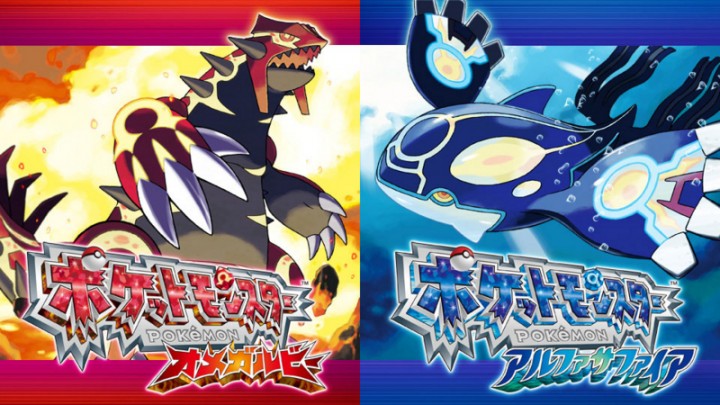
Pokémon Ruby, Sapphire, Emerald, Omega Ruby, Alpha Sapphire (Pokémon RSE and ORAS)" is part of the "Pokémon" role-playing game series. Omega Ruby Alpha Sapphire" is a remake of "Ruby, Sapphire, and Emerald". In this adventure through the Houen region, players aim to complete the Pokémon Pictorial Book and win the Pokémon League. During the storyline, players will fight against the "Magma and Aqua Clan" organizations in various locations.

When you stroke a Pokémon, the Pokémon will be happy and a heart mark will appear, which is an indicator of "friendship. The more hearts that appear (total number), the higher the "friendship" level.
To pet a Pokémon, slide the Pokémon with the stylus on the lower screen of the DS. When you stroke a Pokémon and it is pleased, a heart appears from the Pokémon. When you stroke a Pokémon, hearts ("Nakayoshi") increase and musical note marks ("Play") decrease.
When a Pokémon is stroked in a favorite part, the hearts will increase and the number of note marks will decrease. On the other hand, if you stroke a spot you don't like, the Pokémon may become angry, and the hearts will not increase and the musical note marks will not decrease as much.
Also, if there are few note marks, hearts will not increase and note marks will not decrease even if the Pokémon is stroked in a favorite spot or any other spot.
Some Pokémon have dangerous places to stroke, and if you stroke there, the game will be interrupted. For this reason, some Pokémon can only be stroked in certain areas, and others cannot be stroked at all.
When you start POKEPALLE, the Pokémon may be sleeping or turned its back to you. Touch the screen to make it look back at you.
A Pokémon with a large body is displayed on two separate screens: its head on the upper screen and its body on the lower screen. To stroke the head, touch the upper part of the lower screen, and the Pokémon will come to the lower screen.
give a poffee
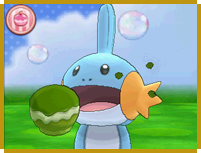
When giving a Poffret, bring the Poffret to the Pokémon's mouth and the Pokémon will eat the Poffret. If the Poffret is not brought to the mouth properly and dropped, it will be wasted.
To feed a Poffret, touch the icon in the upper left corner of the Poképallet, select the Poffret you want to feed, bring it to the Pokémon, and feed it to the Pokémon.
When a Pokémon is fed a Poffret, the Pokémon is pleased and a heart appears. In addition, the Pokémon's "belly" will increase. The number of hearts that increase depends on the type of Poffret. Poffre can be obtained by playing mini-games with Pokémon in Poképallets.
Some Pokémon do not eat Poffre.
Playing Mini-Games
Mini-games can be played when there are at least three Pokémon in hand that are not in an abnormal state, and are played with Poképallet-eligible Pokémon and other Pokémon (at random).
There are three mini-games: "Mogiri to Nuts," "Aim and Head," and "Patton Puzzle." After selecting a game to play, choose the difficulty level of the mini-game from "Easy," "Normal," "Muzukashi" and "Mugen.
After playing a mini-game, a star "★" is awarded according to the score of the game, and if three or more stars are awarded, the player can challenge the next difficulty level (at first, only "Easy" can be challenged).
Poffre will then be awarded according to the difficulty of the mini-game and the number of stars. Also, when you can challenge a new difficulty level, you can get a wallpaper or interior to redecorate your Poképallet room after the Poképallet is over.
Mini-games
Moggitate Nuts: A game in which you deliver nuts that a Pokémon wants with a stylus to the Pokémon. The more nuts you deliver, the more stars you get.
In "Easy," "Normal," and "Difficult" difficulty levels, you have to deliver the nuts accurately to Pokémon that appear one after another from among the prepared nuts within the time limit (1 minute). If you give a Pokémon a different Berry from the one it wants, or if a little time passes, it will fail (it will not be counted).
When the difficulty level increases, there are more types of Berries, the time until Pokémon disappear increases, and more Pokémon appear at the same time.
In the "Mugen" difficulty level, there is no time limit, and the game ends when the player fails three times to deliver the five types of Berries correctly.
Aim and Head: In this game, you touch a Pokémon with the stylus and bounce it back by heading it against a ball of yarn falling from above.
Points are awarded according to how good or bad the heading is (a well-timed press will get you a high score, but a mis-timed press will get you a low score) and the maximum number of consecutive headings (the maximum).
The higher the score, the more stars are awarded. The difficulty levels of "Easy," "Normal," and "Difficult" require well-timed and consecutive headings within the time limit (1 minute). If a ball of yarn passes through, it fails and is not counted as a score.
The game starts with a single Pokémon, but as time passes, the number of Pokémon increases to a maximum of three, and a ball of yarn falls on top of each Pokémon. As the difficulty level increases, the speed at which the yarn balls fall increases.
Depending on the type of yarn balls that fall, the timing of some of them may change. Also, after "! is displayed, a huge ball of yarn will fall, and if you bounce it off, you will get a high score.
After heading 5 times ("Easy") or 15 times ("Normal," "Difficult," and "Mugen"), the yarn balls are more likely to fall in succession.
In the "Mugen" difficulty level, there is no time limit, the speed of the balls of yarn is normal, and the game ends after three unsuccessful attempts.
Puzzle: This is a puzzle game in which you have to put back together a picture of Pokémon and other Pokémon that has been torn apart. The game is played by touching the pieces with the stylus and swapping them to complete the picture. The faster you complete the picture, the more stars you get.
When a piece is placed in the correct place, a star appears and the piece can no longer be moved.
The number of pieces is determined by the difficulty level: 20 pieces for "Easy," 30 pieces for "Normal," and 48 pieces for "Hard.
In the "Mugen" mode, the puzzle consists of an infinite number of pieces in the order of "Easy," "Normal," and "Difficult," which must be completed within the time limit. The time limit is added as the puzzle is completed, but the amount of time added gradually decreases.
The number of stars is determined by the number of pieces completed within the time limit.
mimic someone's looks
Facial imitation is a game that uses the camera function of the 3DS. During Poképallet, by having the 3DS in-camera recognize a face (bottom left of the lower screen), the Pokémon may imitate the player's face.
After a while, an expression mark appears on the side of the Pokémon, and the game begins in which the Pokémon imitates the facial expression according to the mark that appears. The player has 15 seconds to imitate the Pokémon's facial expression according to the theme given by the Pokémon.
If you succeed in imitating the Pokémon's face, a heart mark may appear, and if you succeed five times in a row, the number of hearts and musical note marks will increase, and your "belly" will decrease. If you leave the Pokémon without imitating the face or touch the Pokémon, the imitation will end.
Room redecoration/interaction with other players' Pokémon
In POKEPALLE, you can freely redecorate your room. You can freely change the appearance of your room by selecting the wallpaper and placing interior decorations and POPFrets in the room.
You can obtain wall coverings and interior decorations by raising your Pokémon's "Nakayoshi" (good friends), by playing mini-games with a new difficulty level, or by earning five stars in mini-games.
When communicating with other players (StreetPass or Internet communication), Pokémon from other players may appear and visit your Poképallet room.
They may also bring a Kabegamiya interior or Poffre as a gift, which you can obtain after interacting with your Pokémon. Placing a Poffret (the more "Nakayoshi" it has, the more effective it is) in the middle of the room will make it easier for it to come visit.
weight training
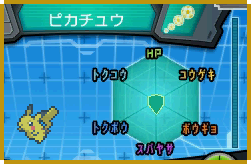
The basic screen of SpaTrain. On the left is the Pokémon currently in Spat training, and the hexagonal graph (gambarometer) on the right shows the innate strength (yellow) and current basic points (green) of the Pokémon being trained.
When the meter on the right fills up, it means that the maximum total basic points earned has been reached and no more basic points can be earned.
This system, which appears only in "Omega Ruby Alpha Sapphire," is a mini-game-style training program that allows you to increase your Pokémon's base points.
There are two types of Spat Training: Super Training and Base Training, each of which can increase a Pokémon's base points.
Super Training is a soccer-style game against a "balloon robot" shaped like a Pokémon, while Base Training trains Pokémon using a sandbag, and is controlled by touch on the lower screen, the slide pad, and the cross keys.
The base screen displays the Pokémon in your possession, and you can select the Pokémon you want to train. However, you cannot train Pokémon that are in the "Hinky" state.
A graph called the "Gambarometer" is displayed next to the Pokémon you are training on the basic screen, showing the basic points earned and the total value of each ability of the Pokémon you are training, as well as the Pokémon's innate strength.
The hexagonal graph displays the acquired basic points in yellow and the innate strength in green, and the meter on the right side displays the total value of the acquired basic points.
When the meter fills up, it means that the total of acquired basic points has reached the maximum value, and it is certified as a "Perfect Pokémon" and a symbol is displayed to indicate this.
Once the maximum is reached, no more basic points can be earned, but the player can try Super Training behind Super Training.
A target time is set for Super Training, and if you complete it in less time than this, a medal is awarded to your Pokémon.
If a Pokémon completes both regular and back Super Training, it becomes a "Super Perfect Pokémon" and is given a business ribbon.
super training
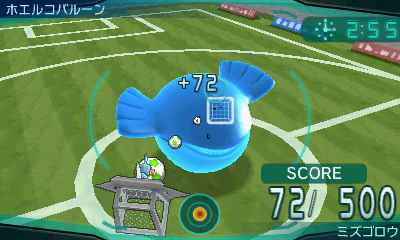
Super Training is against a balloon robot in the shape of a Pokémon and shoots the ball into the balloon robot's goal. The opponent is a Hoelco Balloon.
This is one of the training sessions of SpaTrain, a soccer-style mini-game with a "Balloon Robot" in the shape of a Pokémon. You control your Pokémon and shoot the ball into the Balloon Robot's goal.
There are two types of Super Training: regular training and backstage training, which can be challenged by Pokémon that have become Perfect Pokémon.
Each training has a target number of points, and if the player reaches that number within the time limit, the player is cleared and receives basic points, a sandbag for base training, and an item.
There are trainings for each ability, such as "HP," "Strike," "Defense," "Strength," "Defeat," "Quickness," and so on, from level 1 to level 3. The first challenge is to start at level 1, and once you have completed training for all abilities, you will be able to challenge the next level. When you complete a level, you will receive basic points and a sandbag. The higher the level of training, the more basic points you get, but the stronger the balloon robot becomes.
Back training is from level 4 to level 8, and the target points are higher than normal training, and the balloon robot becomes stronger. Upon successful completion, you will receive items such as a sandbag, a stone of inspiration, a spring, and so on.
Controls are made with the Slide Pad, Cross Keys, and the DS bottom screen. Points are awarded when the Pokémon shoots the ball into the Balloon Robot's goal, and the game is cleared when the target score is reached within the time limit, but the game fails when the target score is not reached.
The balloon robot may attack with a ball, and points will be deducted if the ball hits the target. When a red aura appears, it is a sign of attack. Balloon robots attack in various trajectories, and balls may fly in succession.
Balloon Robot attacks can be dodged by moving, or by pressing the L button to guard against them. However, guarding is only available for a certain period of time and cannot be used continuously.
The higher the level, the more often the balloon robot attacks, and the more points are deducted when the ball is hit.
The ball can be shot by touching the lower screen, but the shooting target varies depending on the touch position.
A long press of the touch screen allows the player to shoot a charge shot or a gut shot. The longer you press and hold the charge shot, the more powerful it becomes, and you can score three times as many points as usual, but if you press it too long, the charge is released and you cannot act for a short while.
The Guts Shot is a powerful shot when the "Guts Meter," a circular meter at the bottom of the upper screen, is full.
The "Guts Meter" accumulates over time and decreases after each shot. The more the meter accumulates, the more points you score when you shoot.
The ball used is determined by the type of Pokémon, and the number of points scored when a shot is taken, the speed of the shot, the size of the ball used, how much Guts decreases, and the interval between consecutive shots (keep touching the lower screen) differ depending on the ball. When shooting when guts are low, the ball is commonly smaller and faster. The balls used by Pokémon can be found on the basic screen of the Spatulaire.
The ball shoots at the goals that appear one after another on the balloon robot, but if it is placed in a regular (white) goal, the goal disappears. Also, the normal white goal changes to a yellow goal after a certain period of time and then disappears.
When you shoot at a goal, a red goal may appear for a while, and you can score points continuously.
The more basic points you earn and the higher your current ability value, the more benefits you will get in training.
Types of balls used by Pokémon
Black ball: The points scored when a shot is taken, the speed of the shot, the size of the ball used, the normal decrease in Guts, and the interval between consecutive shots is short.
Yellow ball: The score when a shot is taken is low, and the ball is small, but the guts do not decrease easily, and the interval between consecutive shots is short.
Orange ball: The ball is bigger, but the score is slightly lower when a shot is taken.
The green ball: The score is higher when a shot is taken, and the ball is a little bigger, but the guts decrease easily and the shooting speed is slow.
Blue ball: The ball is smaller, but the shooting speed is faster. The blue ball: The ball is smaller, but the shooting speed is faster, but the guts tend to decrease.
Advantages in training related to each basic point and each ability value
HP: The ball becomes larger, and it is less likely to be hit by the Balloon Robot.
Attack and Special Attack: The player receives more points for successful shots.
Fend Off and Defense: The Guts Meter fills up faster, and the time it takes to block becomes longer.
Quickness: The Pokémon's movement speed and shooting speed increase.
base training
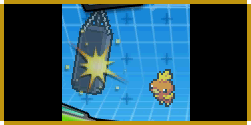
When you set up a sandbag, the Pokémon will spontaneously hit the sandbag. You can also help by touching it.
This is one of the training sessions of SpaTrain, in which Pokémon are trained using a sandbag, a training item.
When the sandbag is hit a specific number of times, basic points are earned according to the type of sandbag. In addition, some types of sandbags are effective in Super Training.
When you select a Pokémon to train, it automatically taps the sandbag at regular intervals to train itself. You can also help a Pokémon train by touching the sandbag.
In addition to the black sandbag, there are other types of sandbags, such as those that earn basic points when tapped, those that are effective in Super Training, those that increase the Pokémon's affinity level, and those that reset the earned basic points.
The bags that can earn basic points are called "(Ability) Bag" and are classified as "S," "M," and "L," respectively. The "S," "M," and "L" bags are the ones that earn more basic points in that order, but you need to hit them more often.
Sandbags other than those that earn basic points are also effective when hit a specific number of times. Sandbags are consumable items and run out after they have been hit a specific number of times and their effects have been demonstrated.
Sandbags can be obtained by hitting sandbags or completing Super Training.
When a Pokémon is motivated or unmotivated, it is easier to obtain a sandbag, and the number of times it needs to hit the sandbag to exert its effect is reduced by half. Touching it when it is unmotivated will motivate it.
Types of sandbags
HP bag: Gains basic "HP" points.
Strike bag: Gains basic "strike" points.
Defensive bag: Gains basic points for defense.
Special bag: Basic points for "Special Power" can be acquired.
The bag is used to acquire the basic points of "Defeat".
Quickness bag: Gain basic points for Quickness.
Power UP Bag: Increases the number of points you get when you shoot in the next Super Training session.
Guard UP Bag: Less points will be deducted from your score when you are hit by Balloon Robot in the next Super Training session.
Move UP Bag: Pokémon's movement speed will increase in the next Super Training session.
Size UP Bag: Pokémon's ball size will increase in the next Super Training.
Double UP Bag: Double the number of base points earned in the next Super Training.
Clean Bag: Resets the number of basic points you have earned.
Relax Bag: Increases the Pokémon's level of friendliness.
Flare Bag: Motivates the Pokémon.
Communication Functions
Cable/wireless communication
Cable communication is a communication method in "Ruby, Sapphire and Emerald". When a communication cable is connected to a Game Boy Advance series (Game Boy Advance, Game Boy Advance SP), players can exchange communications or play against other players nearby.
Communication exchanges and battles are conducted at the "Communication Cable Club" on the second floor of the Pokémon Center.
Only "Emerald" can be exchanged with and played against players at a distance using the Game Boy Advance Wireless Adapter.
record (e.g. LP)

Related Articles
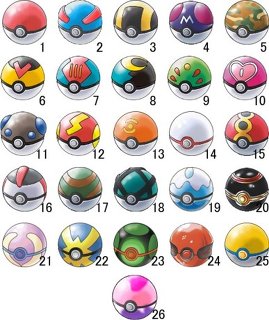
Pokemon (Pokemon) Monster Ball Summary
Pokémon" is a video game series published by Pokémon Inc. In this game, players explore the world with imaginary creatures called "Pokemon" as their partners, competing with wild Pokemon and Pokemon of their trainers. The tool used to catch Pokémon is the Monster Ball. When the first "Red, Green, and Blue" were first released, there was a rumor that if you hit the button repeatedly after throwing the ball, the capture rate would increase.
Read Article
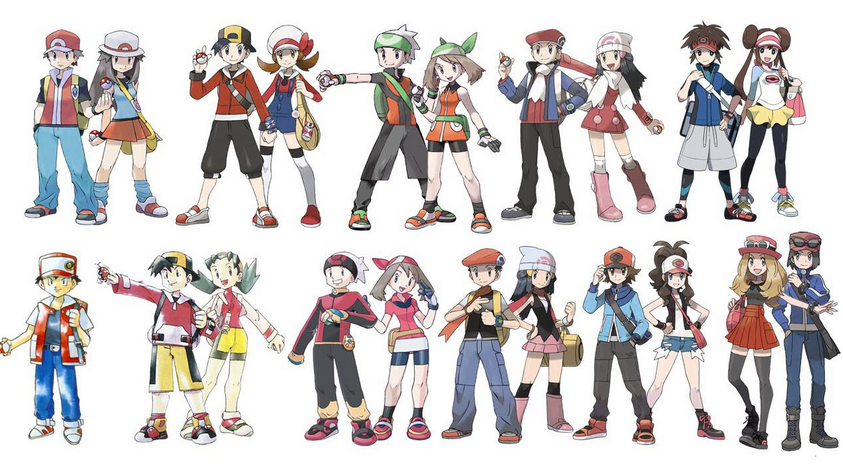
Summary of successive protagonists of Pokémon (Pokémon)
The main character in the "Pokémon" series can be named freely by the player. In the original "Red, Green, Blue, and Pikachu," there was only a male protagonist, but as the generations progressed, the gender, appearance, clothing, and hairstyle of the protagonist could be selected and changed to the player's liking, allowing for more freedom. The improved graphics made it possible to clearly see the main character's appearance in the game, and when a new game appeared, people began to pay attention not only to the Pokémon but also to the design of the main character.
Read Article
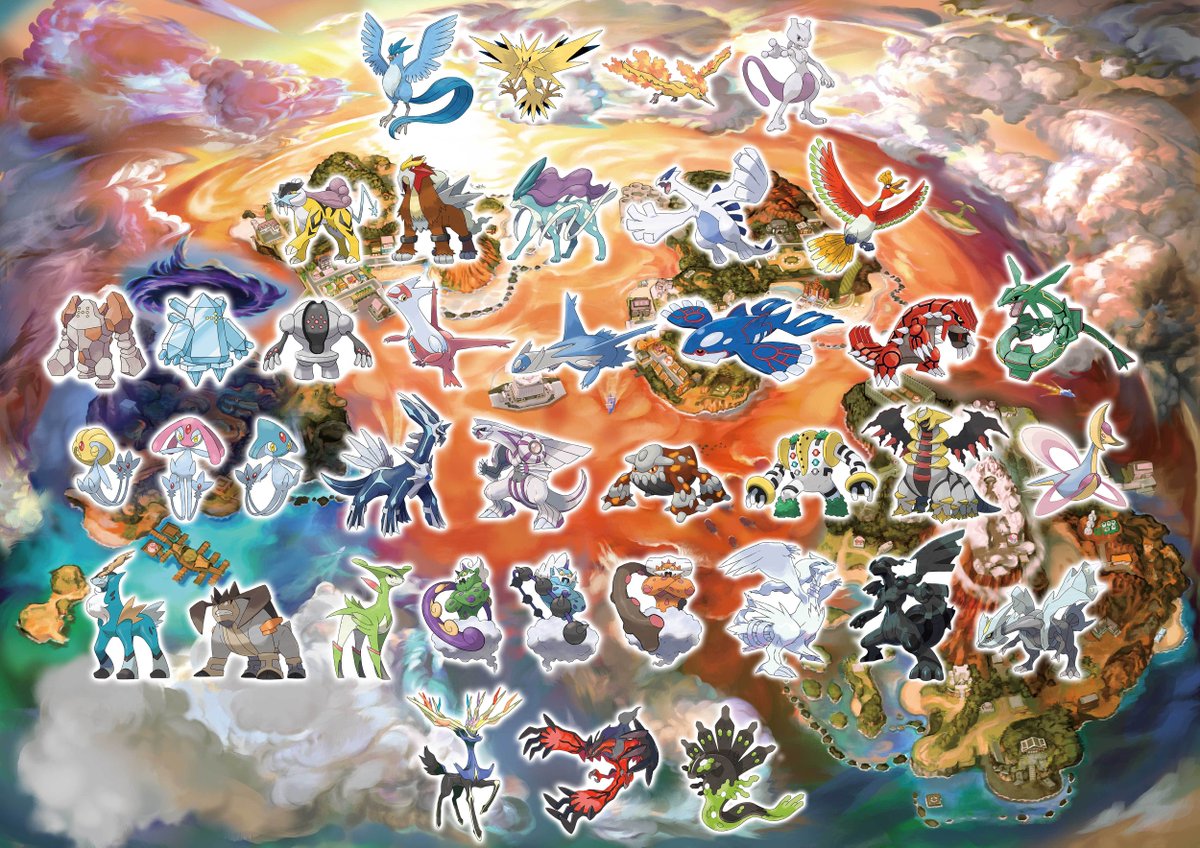
Pokémon Legendary Pokémon Summary
Pokémon" is the name of a video game series released by Pokémon (originally Nintendo). The abbreviated name is "Pokemon. The player becomes a trainer and travels with a creature called a "Pokémon" as a partner. Legendary Pokémon, according to the official description, are "precious Pokémon that can rarely be seen in each region," and are basically a generic term for Pokémon that appear only once in the game. Multiple legendary Pokémon have appeared in each generation.
Read Article
![Pokémon] List of the three generations of the Pokémon family.](https://renote.net/files/blobs/proxy/eyJfcmFpbHMiOnsiZGF0YSI6NzIwNDIyLCJwdXIiOiJibG9iX2lkIn19--ef0ac0b72cc8b04b30392dfdbc087a2d25c294a0/687d5798.jpg)
Pokémon] List of the three generations of the Pokémon family.
The following is a list of the three families of the Pokémon series. It covers the first generation of Red, Green and Blue, the second generation of Gold and Silver, the third generation of Ruby and Sapphire, the fourth generation of Diamond and Pearl, the fifth generation of Black and White, and the sixth generation of X and Y.
Read Article
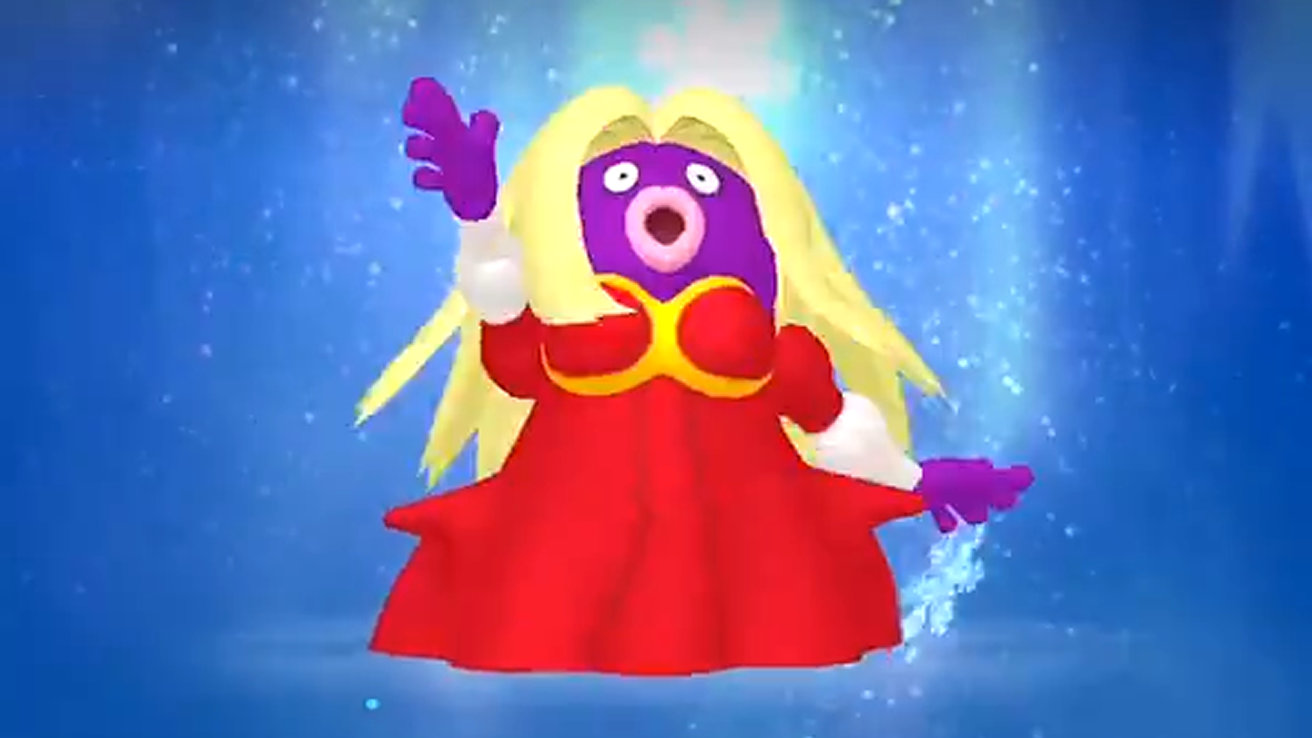
A little creepy! Pokémon with disappointing visuals [Pokémon].
Cute and cool monsters tend to attract attention in Pokemon, but there are some Pokemon that are considered "creepy"... Here is a list of Pokémon whose visual appearance is a little disappointing. In a way, it may be said that the creepy parts are attractive.
Read Article
![Pokémon] Introduction of Characters in Pokémon [Gym Leader, Four Heavenly Kings, Champion].](https://renote.net/files/blobs/proxy/eyJfcmFpbHMiOnsiZGF0YSI6MTAzODI1NywicHVyIjoiYmxvYl9pZCJ9fQ==--28d9070ad3714207b2bd90936e624bcfa5c561d1/5de054b8.jpg)
Pokémon] Introduction of Characters in Pokémon [Gym Leader, Four Heavenly Kings, Champion].
This is a list of Gym Leaders, Four Heavenly Kings, Champions, and other characters that appear in the Pokémon series of games. They are introduced by region from the first generation to Black and White. Memorable and unique characters are another major attraction of the Pokemon series.
Read Article
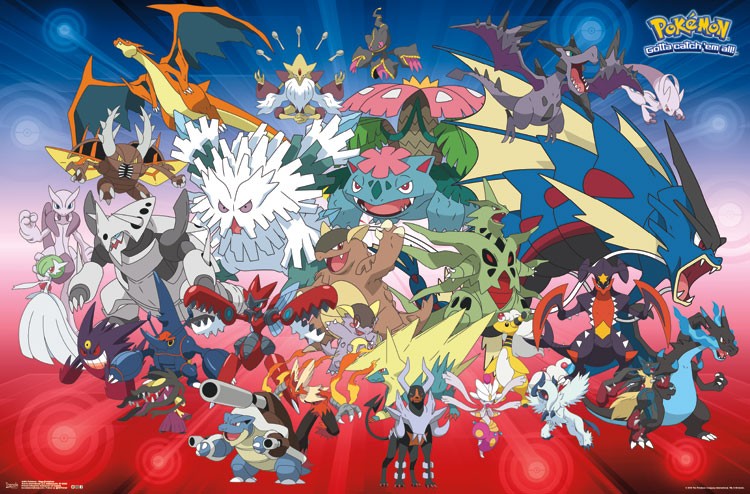
Pokémon (Pokémon) Mega-Shinker and Genshi-Kaiki Summary
Pokemon" is a series of role-playing games published by Pokemon Co. The aim is to capture and train creatures called pocket monsters (Pokémon) to become the champion of an institution called the Pokémon League. Mega Shinka is a new element added in "Pokémon X and Y". This system was added under the concept of "picking up Pokémon from the old series again. Similar to Mega Shinka, there is also Genshikaiki, in which legendary Pokémon Gladon and Chiogre return to their ancient forms.
Read Article
Summary of Pokemon (Pokémon) Types
Pokemon" is an RPG series developed by Game Freak and published by Pokemon Co. In this game, players travel around the world with imaginary creatures called "Pokemon," aiming to complete the Pokemon Pictorial Book and become the champion of the Pokemon League. In this title, each Pokémon and technique has a "type," which is a kind of attribute. These types determine the compatibility between Pokémon. At first, there were 15 types, but two types were added in "Gold and Silver" and one type was added in "X and Y".
Read Article
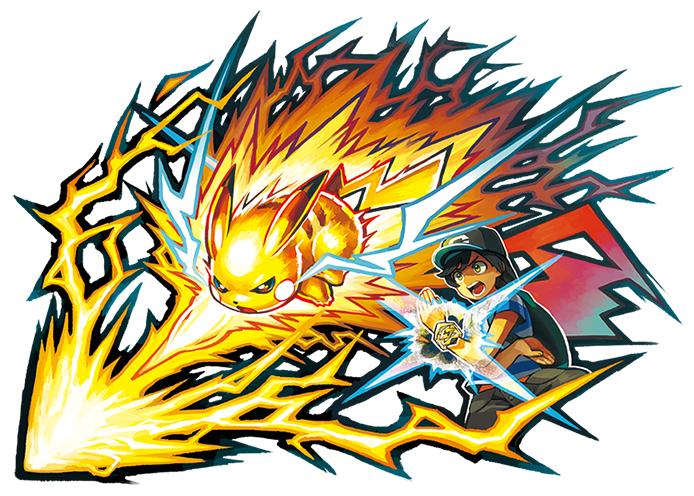
Summary of Z-Waza and Z-Techniques for Pokemon (Pokémon)
Z-Waza (Z-technique)" is an element introduced in Pokemon Sun Moon, a special move that can be used only once during a battle. It was introduced as a remedy for Pokémon other than some that can adapt to the inflated battle environment. Although there are some problems and lack of adjustment, the introduction of Z-Waza has given all Pokémon the opportunity to play an active role.
Read Article
![Pokémon] Evil organizations and their members in Pokémon.](https://renote.net/files/blobs/proxy/eyJfcmFpbHMiOnsiZGF0YSI6NzQwNzQ2LCJwdXIiOiJibG9iX2lkIn19--c6164432744a5cc22c14bb99b56dc39981f03fd3/maxresdefault.jpg)
Pokémon] Evil organizations and their members in Pokémon.
Pokemon] We have compiled a list of bosses and members of evil organizations in the Pokemon series of games. There are many fascinating villains such as the Rockettes, Aqua-dan, Magma-dan, Ginga-dan, Platinum-dan, and Flare-dan. Which is your favorite evil organization?
Read Article
Summary of Pokémon (Pokémon) characteristics
Pocket Monsters is the name of a video game series developed by Game Freak. The abbreviated name is Pokemon. Although it is a long-lived series that celebrated its 20th anniversary, the basics of its battle system have not changed since the first generation, "Pokemon Red and Green. In this article, we will discuss "special characteristics," a new element added in the third generation (Ruby and Sapphire).
Read Article
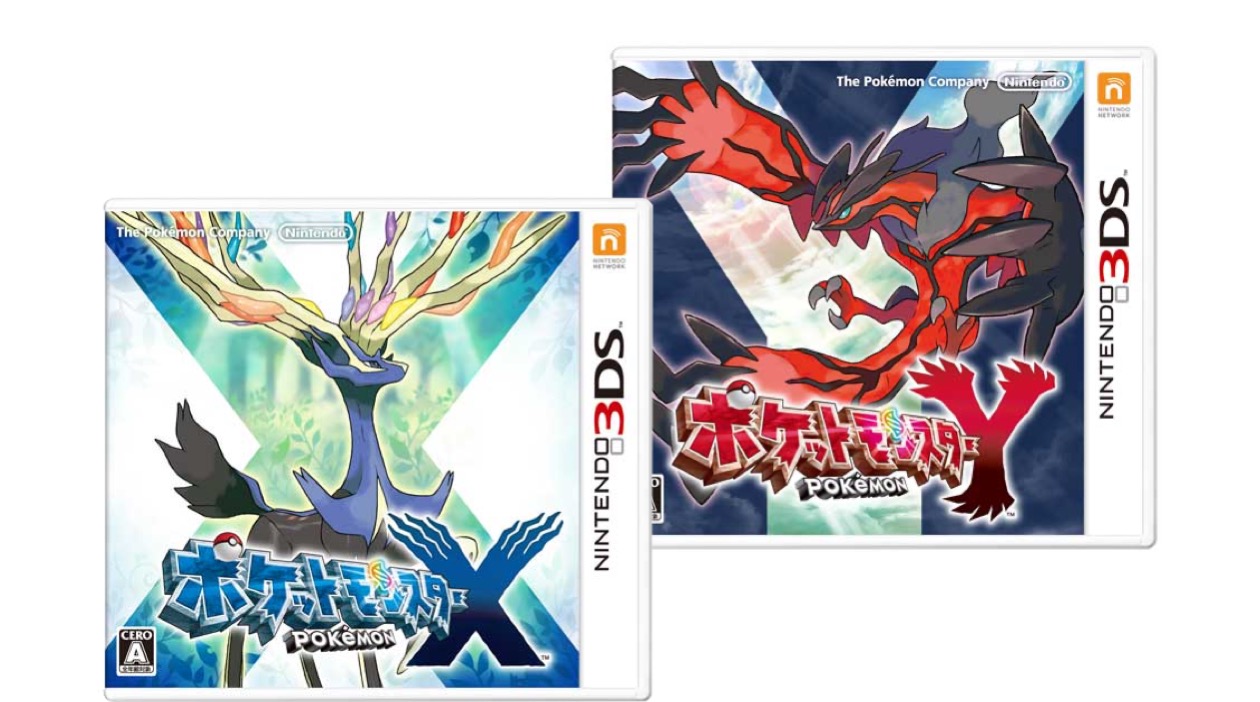
Images of previous generations of packages in the Pokémon series [Pokémon].
The popular game [Pokemon] series has released a variety of derivative works. Attractive packaging is an important element that successfully stimulates excitement for adventure and desire to purchase. Here we introduce a collection of images of the numerous past packages of the Pokémon series.
Read Article
Summary of Pokemon (Pokemon) tricks and bugs
Pokemon" is an RPG series released by Pokemon Co. It depicts the adventures of a Pokémon trainer who partners with a mysterious creature called "Pocket Monster" (Pokémon) and battles Pokémon against each other. The "Pokémon" series has a number of tricks and bugs. The first generation is particularly famous for having many bugs, probably due to the complexity of the program that was added to the first generation. In the first generation, the phantom Pokémon Mew was hidden in the internal data, and a situation developed in which Mew was distributed because it was exposed to the public through a bug.
Read Article
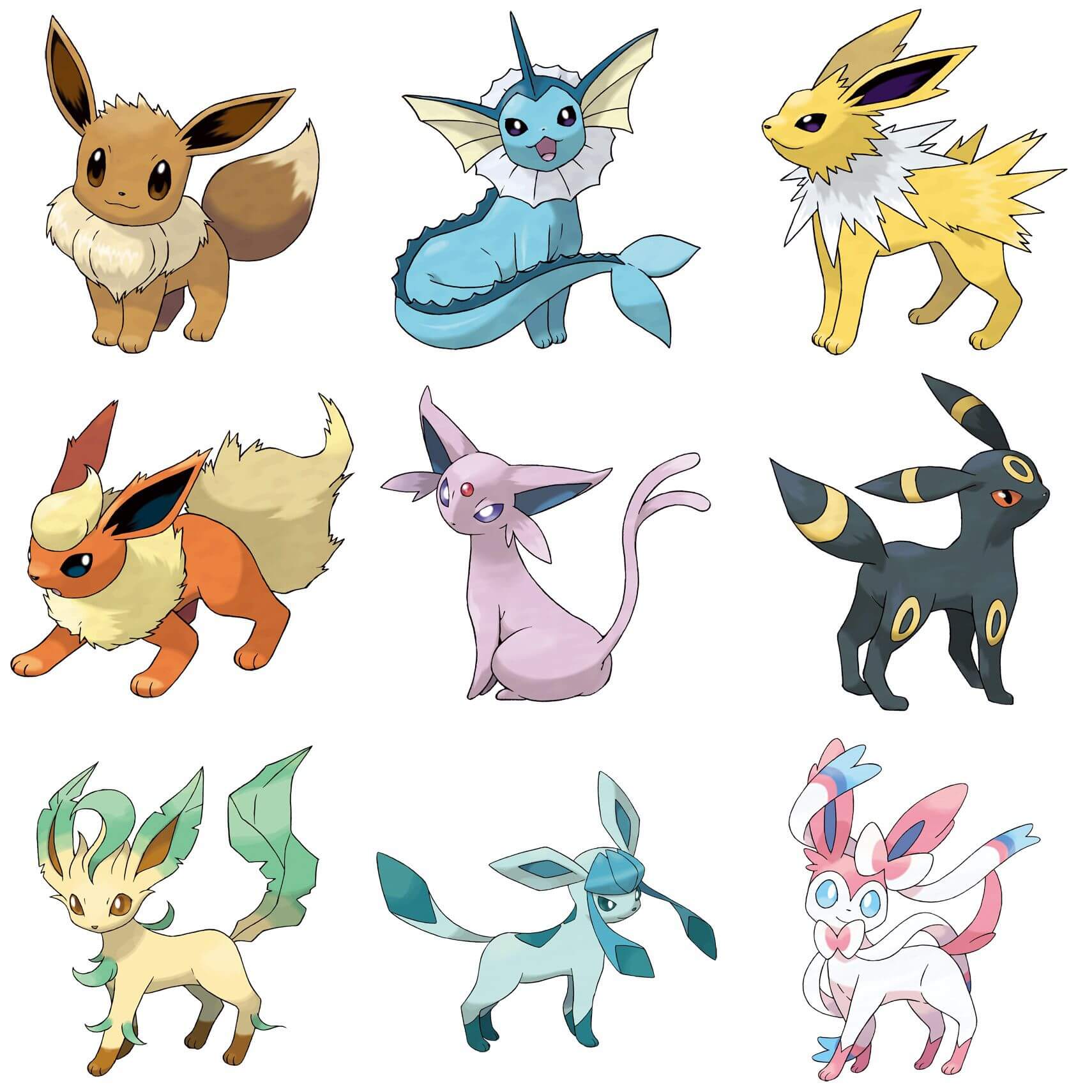
Summary of Branching Evolution of Pokemon (Pokémon)
Pokemon" is an RPG series released by Pokemon Co. Set in a world of mysterious creatures called "pocket monsters" (Pokémon), players set out on an adventure to become Pokémon League champions. Many Pokémon can evolve and change their appearance when certain conditions are met. Some Pokémon evolve to different destinations depending on the conditions. Eevee, which is classified as a "Shinka Pokémon," can evolve into as many as eight different types of Pokémon.
Read Article
Summary of Satoshi's handheld Pokémon
Pokemon" is an RPG series released by Pokemon Co. In addition to video games, the series has been developed in a variety of media, including anime and manga. Satoshi, the main character of the anime from 1997 to 2023, basically travels to a new region with only his partner, Pikachu, and his Pokémon handheld is renewed each time the series changes. Another highlight of the anime is what kind of Pokémon Satoshi gets.
Read Article
ポケットモンスター(ポケモン)のバグポケまとめ
『ポケットモンスター(ポケモン)』とは、任天堂が発売しているゲームである。1996年2月27日に携帯ゲーム機「ゲームボーイ」用ソフトとして発売開始され、その後次々に続編が制作されている。オーソドックスなRPG(ロールプレイングゲーム)であり、「ポケモン」と呼ばれるゲーム内の架空の生物の収集や交換、育成などを進めていく。その中でも、通常プレイでは入手できず、ストーリーの進行にも影響はないが、裏技によって入手できるのが、「バグポケ」である。
Read Article
Summary of Stone Evolution, Item Evolution, and Communication Evolution for Pokemon (Pokémon)
Pokemon" is a video game series released by Pokemon Co. It is an RPG in which players adventure with mysterious creatures called "Pokemon" as their partners. Pokémon evolve when they reach a certain level. However, some Pokémon evolve by using evolution stones or similar items, and some Pokémon evolve through communication exchanges.
Read Article
Summary of Pokemon (Pokemon) Rivals
Pokémon" is an RPG series published by Pokémon Inc. It depicts the adventures of a Pokémon trainer who has a mysterious creature called a "pocket monster" (Pokémon) as a partner. Rivals are mainly trainers who, like the main character, acquire Pokémon in the early stages of the game and fight with them in various locations. They sometimes antagonize the main character and sometimes cooperate with him as he grows up. In the beginning of the series, it was common to choose a Pokémon from the three families of Pokémon as a partner that is compatible with the Pokémon that the main character obtains.
Read Article
Summary of accidents and incidents related to Pocket Monsters (Pokemon)
Pokémon" is a video game series released by Pokémon Inc. It has also been developed into various media, including animation. While "Pokemon" has become a popular content, various accidents and incidents have occurred. 1997 saw the "Pokemon Shock," which became a major topic of conversation in Japan. The worldwide popularity of "Pokemon GO" has also led to accidents around the world that are thought to have been caused by people walking around with their phones on.
Read Article
Summary of Conditional Level-Up Evolution of Pokemon (Pokémon)
Pokémon" is a video game series published by Pokémon Inc. It is an RPG in which players adventure with mysterious creatures called "Pokemon" (Pokemon) as their partners. Pokémon evolve when they reach a certain level, but some Pokémon are accompanied by other conditions, such as a degree of familiarity, friendliness, or location. Even if these Pokémon have reached a level at which they can evolve, they cannot evolve unless they meet other conditions.
Read Article
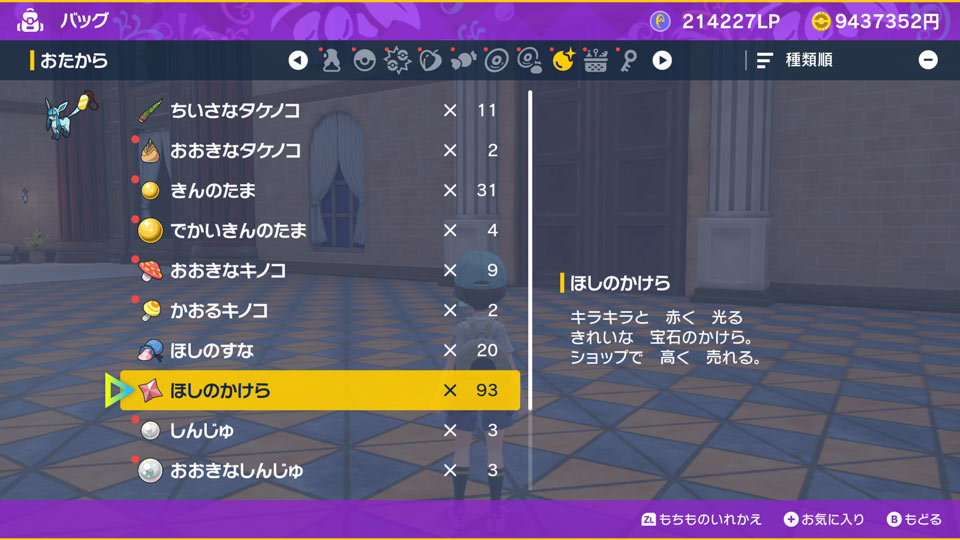
Summary of Pocket Monsters (Pokémon) otakara and cash items
Pokémon" is an RPG series released by Pokémon Co. It depicts the adventures of "Pokémon Trainers" who battle Pokémon with mysterious creatures called "Pocket Monsters" (Pokémon) as their partners. In "Pokémon," there is a category of tools called "otakara. This category mainly includes cash items that have no other use than to be sold, but some works also include items such as "Gin no Oukan" that are effective when given to a specific person.
Read Article

Summary of Pokemon (Pokémon) Ph.
Pokemon" is an RPG series released by Pokemon Co. Players go on adventures with mysterious creatures called "pocket monsters" (Pokémon) as their partners and aim to become champions of the Pokémon League. In "Pokémon," a doctor is a person who researches the ecology of Pokémon and is also called Dr. Pokémon. Until "Sun and Moon," it was standard practice to receive the first Pokémon and an illustrated book to register Pokémon from Dr. Pokémon.
Read Article
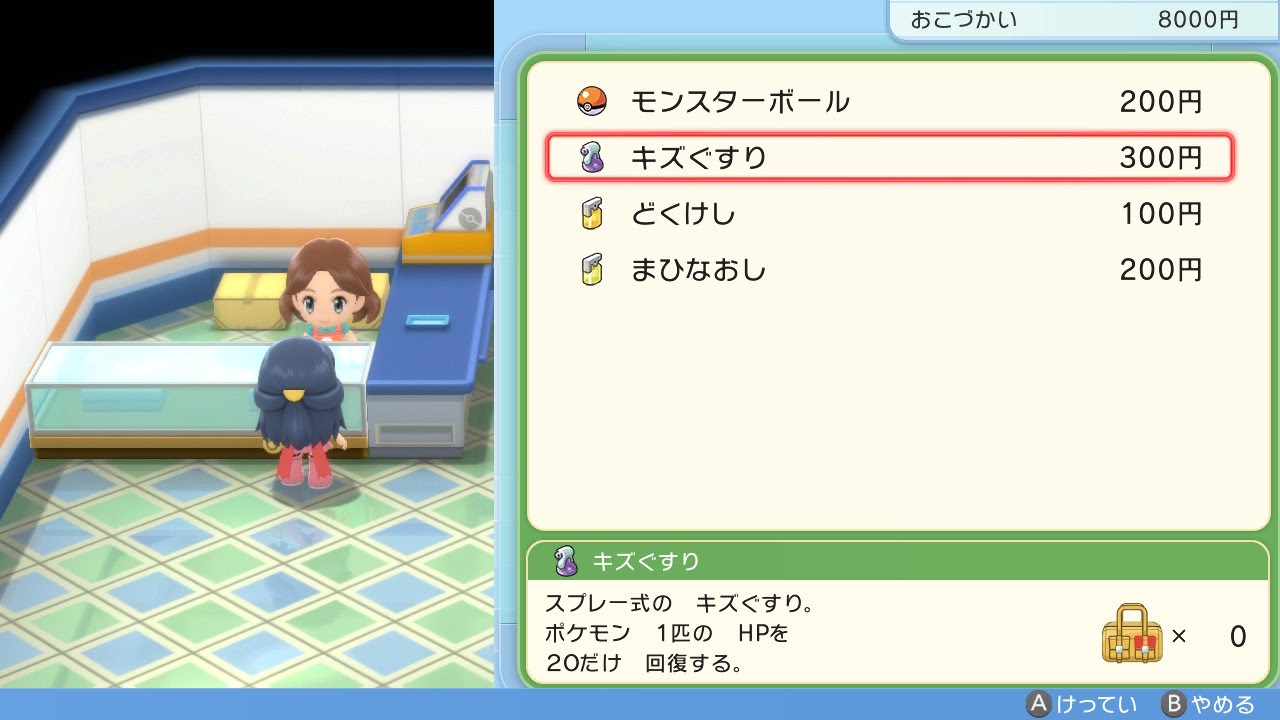
Summary of recovery items for Pokemon (Pokémon)
Pokemon" is an RPG series released by Pokemon Co. It depicts the adventures of "Pokémon Trainers," who battle Pokémon against each other, using mysterious creatures called "Pocket Monsters" (Pokémon) as partners. In battle, Pokémon's HP may decrease or they may suffer from abnormal conditions. You can recover your Pokémon by stopping by a Pokémon Center, but if there is no Pokémon Center nearby, you will have to rely on recovery items.
Read Article
Urban legends, trivia, and backstories of Pokemon (Pokemon)
Pokemon" is the name of a video game series developed by Game Freak. It is abbreviated as "Pokemon. It is an RPG in which players collect, raise, and battle creatures called Pokémon, following the concept of "collect, raise, and fight. Pokémon" rarely fails to send chills down the spine, and the longevity of the series, which celebrated its 20th anniversary in 2016, has given rise to all sorts of backstories and urban legends.
Read Article
Summary of Pokémon (Pokémon) Strength Transitions
Pokémon (Pokémon) is a long-lived series that has been around for over 20 years. The history of the series is long, and with each new release, various elements have been introduced into the battles. As a result, the battle environment for players who enjoy Pokémon battles has also changed. This section describes these changes.
Read Article
Summary of different colors of Pokemon (Pokemon)
Pokemon" is an RPG series developed by Game Freak in 1996, starting with "Red and Green. Players travel with a mysterious creature called a "pocket monster" (Pokémon) as their partner, aiming to become the champion of the Pokémon League. Color-matched Pokémon were introduced in the second generation "Gold and Silver," and are Pokémon with different body colors from the norm. When a different-colored Pokémon is seen on the status screen or when it is sent into battle, a glowing effect appears, so it is also called a "glowing Pokémon.
Read Article
Pokémon Gold, Silver, Crystal, Heart Gold, and Soul Silver (Pokémon GSC and HGSS) Spoilers and Discussion Summary
Pokémon: Gold, Silver, Crystal, HeartGold, SoulSilver" is part of the "Pokémon" role-playing game series, with "Gold, Silver, Crystal" being the second game and "HeartGold, SoulSilver" being a remake of "Gold, Silver, Crystal. The "Heart Gold" and "Soul Silver" are remakes of "Gold, Silver and Crystal". The game takes players on adventures in the Johto and Kantou regions, where they aim to complete the Pokémon Pictorial Book and conquer the Pokémon League. They will fight against the Rockettes, an evil organization that appeared in the previous "Pokémon: Red, Green, Blue, Pikachu".
Read Article
Pokémon Sun, Moon, Ultra Sun, and Ultra Moon (Pokémon SM and USUM) Spoilers and Discussion Summary
Pokémon Sun Moon and Ultra Sun Ultra Moon are part of the "Pokémon" role-playing game series, with "Sun Moon" being the seventh game and "Ultra Sun Ultra Moon" being a version of "Sun Moon" with some additional stories and systems. Ultra Sun Ultra Moon" is a version of "Sun Moon" with some story and systems added. Players explore the Alola region, which consists of four islands and one man-made island, and go on an "island tour" to complete the Pokémon Pictorial Book and win the Pokémon League. During the story, they will battle organizations such as the Skull Clan and the Aether Foundation.
Read Article
Summary of Pokémon Ultra Sun Ultra Moon's appeal
Ultra Sun Ultra Moon is an upgraded version of the previous title, Pokemon Sun Moon, with new elements. As in the previous title, the story follows the main character as he embarks on a journey called "island-hopping" to overcome a number of challenges and become a champion, but there are also many new elements added from the previous title, so you won't get bored just because you have played the previous title. In this issue, we take a closer look at the charms of Pokémon Ultra Sun Ultra Moon.
Read Article
Pokémon Black 2 and White 2 (Pokémon BW2) Spoilers and Discussion Summary
Pokémon Black 2 and Pokémon White 2" is a sequel to "Pokémon Black and White" and takes place two years after the first game in the Ish region. The main goal of the game is to complete the Pokémon Pictorial Book and win the Pokémon League (Hall of Fame). The Plasma Clan, which appeared in the previous game, is back in this game and fights in various locations during the story. The growth of the trainers is also depicted, and we can see the growth of N (N), who was a rival in the previous work, and Belle and Cheren, who went on a journey together.
Read Article
Pokémon Black and White (Pokémon BW) Spoilers and Discussion Summary
Pokémon Black and White" is the fifth title in the Pokémon role-playing game series released by Pokémon (Nintendo Co., Ltd.). The main goal of the game is to complete the Pokémon Pictorial Book and win the Pokémon League (induction into the Pokémon Hall of Fame) in the Ish region. In this title, an organization called the Plasma Squad appears, which "appeals for the liberation of Pokémon in order to free them," and fights in various locations during the story. The theme of this work is "diversity," which is reflected in the characters, Pokémon, and storyline in the game.
Read Article
Pokémon X and Y (Pokémon XY) Spoiler Commentary and Discussion Summary
Pokémon X and Y" is the sixth title in the "Pokémon" role-playing game series. The platform has been moved to the 3DS, and the scenario, game system, fields, and battle scenes are now displayed in full 3D, greatly increasing the volume of the game. The main character is involved in a case involving a legendary Pokémon that governs "life and destruction" and the fate of the Kalos region, but he overcomes this by strengthening his bonds with his friends and Pokémon. Mega-Synchka, a Pokémon power-up element that differs from normal evolution, was introduced for the first time.
Read Article
Pokémon Diamond, Pearl, and Platinum (Pokémon DPt) Spoilers and Discussion Summary
Pokémon Diamond, Pearl, and Platinum" is the fourth title in the "Pokémon" role-playing game series released by Pokémon (Nintendo) Co. Pokémon Diamond Pearl" was released, and later "Pokémon Platinum" was released with new elements added. The adventures take place in the Shin-Ou region, and the main goals of the game are to complete the Pokémon Pictorial Book and to win the Pokémon League.
Read Article
Pokémon Red, Green, Blue, Pikachu, Fire Red, and Leaf Green (Pokémon RGBP and FRLG) Spoilers and Discussion Summary
Pokémon: Red, Green, Blue, Pikachu, Fire Red, Leaf Green" is one of the "Pokémon" role-playing game series. "Red, Green, Blue, Pikachu" is a remake of the first game, and "Fire Red, Leaf Green" is a remake of "Red and Green" with various elements added. Fire Red and Leaf Green" are remakes of "Red and Green" with various elements added. Players will adventure through the Kantou region, aiming to complete the Pokémon Pictorial Book and conquer the Pokémon League. During the storyline, players will fight against the Rockettes, an evil organization that plans to take over the world.
Read Article
Spoiler commentary and discussion of Pokémon SPECIAL (PokéSP and PokéSP)
Pokémon SPECIAL" is a manga based on the game "Pokémon" published by Shogakukan, written by Hidenori Kusaka and drawn by Satoshi Yamamoto. The series was first serialized in Shogakukan's Shogakugakusei Shogakunen, Shogakugakusei Gosei, and Shogakugakusei Rokunen in 1997, and then in Coro Coro Coro Ichiban! and "Club Sunday," and in 2021 the series celebrated its 25th year.
Read Article
Pokémon Sword Shield (Pokémon Sword Shield) Spoilers and Discussion Summary
Pokémon Sword and Shield is a role-playing game for Nintendo Switch released by Pokémon Inc. on November 15, 2019, with two simultaneous releases of Pokémon Sword and Pokémon Shield in the Pokémon series. It will be the eighth title in the series. The official abbreviation is "Pokémon Sword and Shield". In the Garal region, the setting of this work, the main character challenges the Pokémon League, the highest level of Pokémon battles, and aims to become the champion. He also tries to solve the mystery of the Dymax phenomenon, in which Pokémon become huge.
Read Article
Tags
Contents
- Overview of "Pokémon Ruby, Sapphire, Emerald, Omega Ruby, Alpha Sapphire
- Synopsis and story of "Pokémon: Ruby, Sapphire, Emerald, Omega Ruby, Alpha Sapphire
- Mishiro Town - Kaina City
- Kinsetsu City - Hiwamaxity
- Okuribiyama - Pokemon League Challenge
- Episode Delta ("Omega Ruby Alpha Sapphire"): Meeting Higana - Toxane Space Center
- Episode Delta ("Omega Ruby Alpha Sapphire"): Ryusei no Taki - Toxane Space Center
- Episode Delta ("Omega Ruby Alpha Sapphire"): Magma Clan (Aqua Clan) hideout - Mishiro Town
- Game system of "Pokémon Ruby, Sapphire, Emerald, Omega Ruby, Alpha Sapphire
- Initial settings for "Ruby, Sapphire, Emerald
- Initial Settings for "Omega Ruby Alpha Sapphire
- In-game time
- allowance
- ID
- type
- ability
- home page
- denunciation
- defense
- special efficacy
- moral influence
- speed
- special characteristic
- state anomaly
- poison/toxin
- palsy
- burn
- sleep
- district (of 2-20 50-home neighbourhoods or townships, in the ritsuryo period)
- (on the) verge of death
- state change
- chaos
- madly in love
- siesta
- tighten
- gastric juice
- mistletoe (esp. European mistletoe, Viscum album)
- mega-shinka
- Genshi Kaikki (name of a Buddhist priest)
- Completed Pokémon Pictorial Book
- Catching Wild Pokémon
- evolve
- lay eggs
- Restore the kaseki
- Received from a person in the game
- Exchange communication with other players
- Use Pokémover/Pokémon Bank
- To be inducted into the Hall of Fame
- Raising Pokemon
- Pokemon Breeder
- Compete with Pokémon trainers
- gymkhana
- Four Heavenly Kings / Fighting Champions
- battle tower
- battle frontier
- battle tower
- Battle Factory
- battledome
- battle arena
- battle tube
- battle pyramid
- battle palace
- battle house
- Single Battle/Super Single Battle
- Double Battle/Super Double Battle
- Triple Battle / Super Triple Battle
- Rotation Battle / Super Rotation Battle
- Multi Battle / Super Multi Battle
- Trainer Hill
- Kinsetsu Kitchen
- trial house
- back-to-back battles
- enchanted house
- Safari Zone
- Pokemon Contest
- Condition / Pollock
- 1st screening
- 2nd screening
- Pokemon Contest Live!
- Condition / Pollock
- debut
- Appeal Screening
- secret base
- super secret base
- PocketPallet
- status
- stroke a Pokemon
- give a poffee
- Playing Mini-Games
- mimic someone's looks
- Room redecoration/interaction with other players' Pokémon
- weight training
- super training
- base training
- Communication Functions
- Cable/wireless communication
- record (e.g. LP)
- old-timers
- PSS (Player Search System)
- correspondence exchange
- Miracle Exchange
- GTS (Global Trade Station)
- correspondence competition
- battle spot
- O Power
- holocaster
- game synch
- Pokémon Global Link (PGL)
- timeline
- medal
- Pokémile Club / Pokémile Store
- attraction
- Rating Battles (Trainer Ranking/Pokemon Ranking)
- Characters from "Pokémon: Ruby, Sapphire, Emerald, Omega Ruby, Alpha Sapphire
- Main characters and their relations
- Main character (Haruka/Yuki)
- Dr. Odamaki.
- three-of-a-kind made with a tile called from another player
- gym leader
- azalea
- dong quai (aromatic herb used to treat various gynecological symptoms, Angelica sinensis)
- Thessen
- Asuna.
- Japanese bilboquet (cup-and-ball game)
- nagi (species of conifer, Nageia nagi)
- fennel (Foeniculum vulgare)
- simplestem bur-reed
- pandanus fruit
- Four Heavenly Kings/Champions
- losers (those who have 'failed' socially, economically, etc.)
- Confederate rose
- prim (programming, programing)
- Japanese dock (plant) (Rumex japonicus)
- Japanese butterfly bush (species of buddleia, Buddleja japonica)
- magma group
- homura
- culling
- Pinalis japonica (species of tree fern)
- Aqua Dan (i.e. "Aqua Dan", "Aqua Dan")
- Ushio.
- Toringo crabapple (Malus sieboldii)
- Chinese parasol-tree (Firmiana simplex)
- Frontier Brain
- lira (former currency)
- heath
- turmeric (Curcuma domestica)
- Laminaria ochotensis (species of kogomi)
- Datsula.
- thistle (Cirsium spp.)
- crimson sea bream (Evynnis japonica)
- battle chatelaine
- lantern (for mountaineering)
- luswar
- luncheon
- lumitan
- Other Persons
- old man Hagi
- President Tsuwabuki
- master of acrobatics
- camphor tree (Cinnamomum camphora)
- southern Japanese hemlock (species of conifer native to Japan, Tsuga sieboldii)
- Magenot (star in the constellation Aquila)
- Michiru
- Kenko grandmother
- Dr. Soraishi.
- Solaisi Raizo.
- Japanese spindle tree (Euonymus sieboldianus)
- old man and old woman
- An old couple from Departure Mountain
- mon amie
- treasure hunter
- bottom
- disciple
- ghillie
- Lucia
- cobra lily (plant of genus Arisaema)
- English broom
- hinona (Japanese variety of long-rooted pickling turnip, Brassica rapa var. akana)
- handsome
- Items from "Pokémon Ruby, Sapphire, Emerald, Omega Ruby, Alpha Sapphire
- Pokemon Navi (Pokemon Navigator)
- map
- condition
- ribbon
- Trainer Eye/Entry Call
- Pokemon Multi Navi
- Map Navi
- illustrated (bibliographic) navigation system
- TV-Navi
- PlayNavi
- Player Search System (PSS)
- PocketPallet
- weight training
- ball
- Balls appearing in Ruby, Sapphire, Emerald, Omega Ruby, Alpha Sapphire
- Balls that appear only in "Ruby, Sapphire, Emerald
- Balls that appear only in "Omega Ruby Alpha Sapphire
- HP recovery item
- Abnormality recovery items
- item to recover from a poor state of health
- PP (power point) recovery items
- Battle Support Items
- glass
- point-up items
- counter for long, thin Japanese sweets (e.g. youkan)
- nut
- Berries appearing in "Ruby, Sapphire, Emerald
- Berries appearing in "Omega Ruby Alpha Sapphire
- Items that increase the power of abilities and techniques (items to be carried by Pokémon)
- Items appearing in "Ruby, Sapphire, Emerald, Omega Ruby, Alpha Sapphire
- Items appearing only in "Omega Ruby Alpha Sapphire
- Battle aid items (items to be carried by Pokémon)
- Items appearing in "Ruby, Sapphire, Emerald, Omega Ruby, Alpha Sapphire
- Items appearing only in "Omega Ruby Alpha Sapphire
- Items that activate recovery and abnormalities (items to be carried by Pokémon)
- Mega Bangle Mega Stone
- plate (often as in "tectonic plate")
- cassette (tape)
- scandalous conduct
- will of a god
- trinkets of the gods
- spray
- Pokemon Breeding Items
- casein
- bandana
- Machines for special purposes and electric machines
- The "Ruby, Sapphire, and Emerald" move machine
- Dexterity Machines in Omega Ruby Alpha Sapphire
- The Ruby, Sapphire, and Emerald" power supply machine.
- Electro-Machine for "Omega Ruby Alpha Sapphire
- mail (usu. in phrases like "e-mail", "text message", etc.)
- most important thing
- Motorcycles (Mach and Dart bicycles)
- fishing rod
- dowsing machine
- goggle goggles
- Devon scope
- reusable shipping carton
- battle recorder
- hotchpotch
- Pollock Case and Pollock Kit
- Contest Pass
- Live Suit / Live Dress
- coin purse
- year of the rat (esp. the first year of the rat in the New Year)
- learning equipment
- endless flute (horizontal bamboo flute with six holes; highest-pitched flute used in gagaku)
- Devon gas cylinder
- Magma Suit/Aqua Suit
- affinity
- boat ticket
- Mugen's Ticket
- old tree-ring map
- plain tin
- sea cucumber (Holothuroidea spp.)
- genetic wedge
- Glacidean nose
- mirror
- acupuncture point for momentary glimpses of repose
- round charm
- charm that illuminates
- Other Items
- Terms for "Pokémon Ruby, Sapphire, Emerald, Omega Ruby, Alpha Sapphire
- character
- individuality
- degree of familiarity
- form change
- poignon
- deoxys
- Minomuch Minomadam
- chelim
- roto-
- Giratina.
- shami
- Arceus
- Sarcocheillichthys variegatus variegatus (species of minnow)
- sika deer (Cervus nippon yesoensis)
- meloetta
- guenosect
- Tornellos, Voltros, Landros
- Kyurem (evil spirit in Japanese folklore)
- Keludio.
- trimian
- Gilgard
- Zelneas
- whooper
- egg group
- Basic Points
- pokealus
- ribbon
- differently colored
- battle format
- triple battle
- rotation battle
- battle of the herds
- combination technique
- art
- Hit and Evasion Ratio
- vital point (critical place to make a move in the game of Go)
- degree of relative priority
- field conditions
- fair or favorable wind (favourable)
- Maimibishi, Dokubishi, Stealth Rock
- Reflector, Wall of Light, Shinpi no Mamoru
- weather
- Electric field, Grass field, Mist field
- Trick Room, Magic Room, Wonder Room
- region
- Hoenn region
- town
- Misilo Town
- Kotki Town
- Toka City
- Kanazumi City
- Muro Town
- Kaina City
- Kinsetsu City
- Sidaketown
- Haji-Tsumetown
- Huyen Town
- HIWA MAXITY
- Minamo City
- Toxane City
- Rene City
- Kinagitown
- Saiyu City / Pokemon League
- Forests, caves, facilities, etc.
- Toka no Moori (the heavenly jeweled spear used by the emperor on the eastern coast of Honshu)
- three famous beauty spots
- canard tunnel
- cavern of the stone
- abandoned ship
- C-kincet (Gramineus spp.)
- enchanted house
- Cave of the Regrets
- New Kinsetsu
- Daikin Setu Holdings, Ltd.
- road of the weasel (it is believed that if someone blocks the path a weasel, he will never take that path again)
- tavern of the Dragon King
- cylindrical mountain
- decompression test by bending over backward knee joints
- southern lights
- The Weather Institute
- Sun Goddess
- Safari Zone
- rear garden bonfire (esp. one held on the imperial grounds)
- shallow grotto
- submarine canyon
- location where one is awakened
- champion road
- Secret island, secret hatake, secret sosobe
- edge of the sky
- tendency to form loose painful symptoms
- area between Sakhalin and the east coast of Siberia
- perforations in a small island
- person of small size
- the present era
- move after the shogunate
- The Dwelling of the Rhythm / The Dwelling of the Sea
- atelier hole
- Maboroshi Island
- battle resort
- the most remote thing
- Maboroshi's Place/Ohzora
- Maboroshi Mountain / Maboroshi Forest / Maboroshi Dock / Maboroshi Mountain
- bow-shaped island
- uncivilized forest
- road to paradise
- a level playing field without a name
- hollow hollow
- snoring hole
- huge catch
- dark clouds
- Facilities (common)
- Pokemon Center
- Friendly Shop (Shop)
- Backstories, trivia, and anecdotes about "Pokémon: Ruby, Sapphire, Emerald, Omega Ruby, Alpha Sapphire" (Japanese only)
- How the Houen Region was created
- Pokemon ride on the water
- Another world suggested by Higana
- The relationship between "Ruby, Sapphire, Emerald" and "Omega Ruby Alpha Sapphire".
- Pokémon Center has two floors.
- Pollock had four people working on it.
- A key is needed to enter New Kinsetsu.
- Game Freak employees will be honored.
- Urban Legends about "Pokémon Ruby and Sapphire