
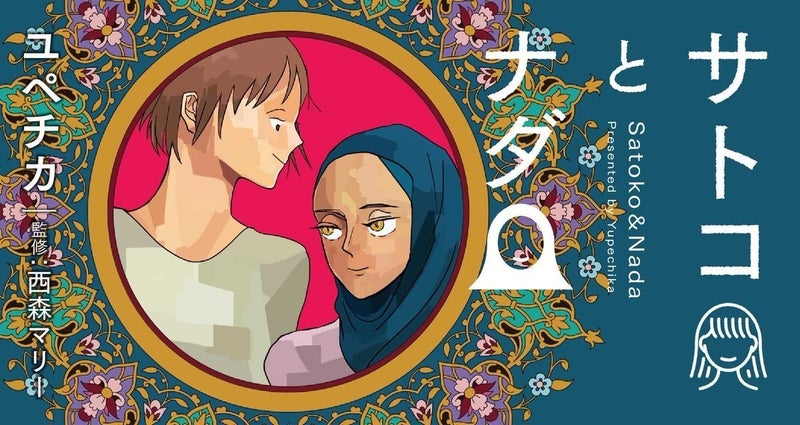
Satoko and Nada" is a four-frame manga about cross-cultural communication by Yupechka. The story is about Satoko, a Japanese student at an American university, and Nada, an exchange student from Saudi Arabia, who share a room and develop a friendship. The work explains Islamic customs and culture in an easy-to-understand manner through the eyes of Satoko, a Japanese student, and shows the differences and similarities with Japan.It was published on the Twitter account "Tsui4" and on the Seikai-sha website "Saizensen" from January 2017 to November 2018.
Muslim / Muslima
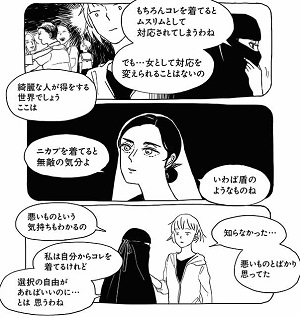
Muslim men are called Muslims and women are called Musrimas. Muslims regard Allah as the only and absolute God, and the Koran, the holy book of Islam, is a book based on the revelation from Allah.
Marriage
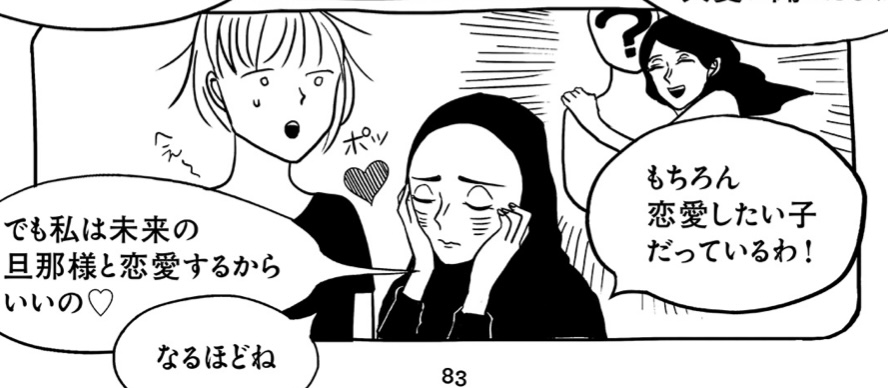
Nada, who doesn't think it's too tight to marry someone their parents have decided
It is customary for Muslims to marry each other. In many cases, Muslims marry someone their parents have decided on. Their parents get along well with each other, and their fathers and brothers choose the same person with the same sense of money and the same atmosphere of the house.
Azaan
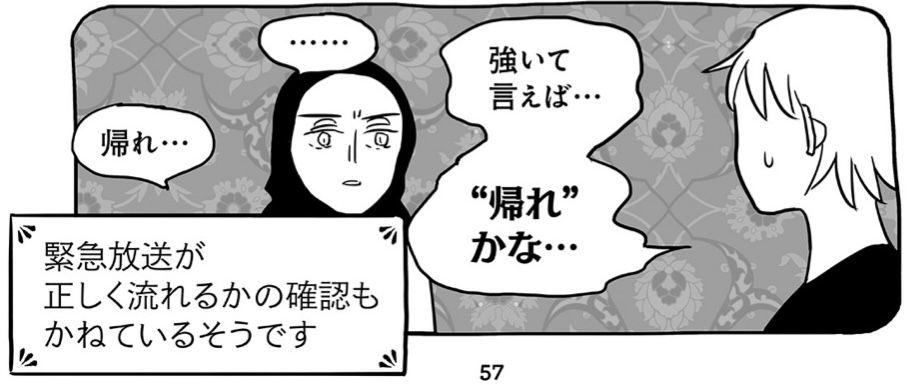
Meaning of the evening broadcast in Japan
In Saudi Arabia, when it is time to pray, a music called "Azaan" is played. Listening to this music, people gather and pray.
In Japan, "Yuyake Koyake" (Sunset Glow) and other music are often played in elementary schools and in town broadcasts in the evening. When asked by Nada, "What does that mean?" Satoko thought for a while and answered, "If I had to say.' Go home'." In the case of Japan, there are many places that also check whether the emergency broadcast is played correctly.
Halal mark
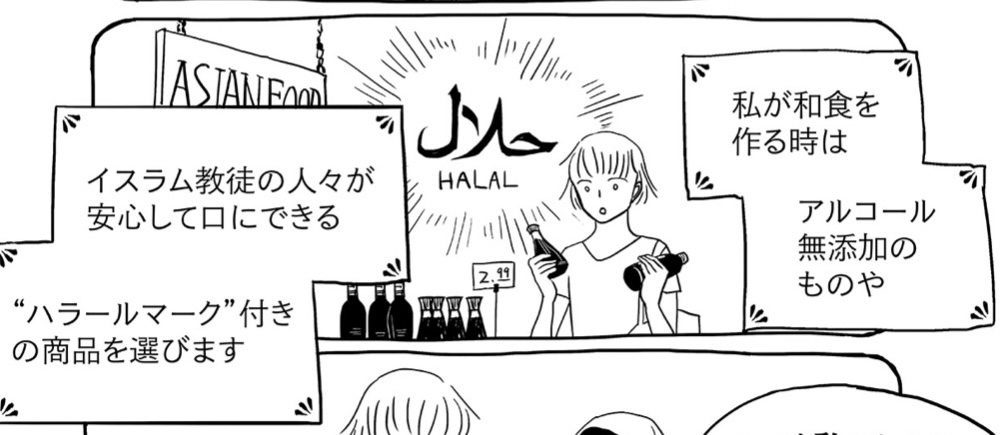
There is a "halal mark" as a mark of products that Muslims can eat with peace of mind. Muslims must not eat alcohol, so they must choose products without alcohol. Caution is required because vinegar is produced during the manufacturing process, soy sauce is a preservative, and mirin itself contains alcohol. Recently, there are many soy sauces made without alcohol, so Nada was happy to eat sashimi with peace of mind.
Polygamy
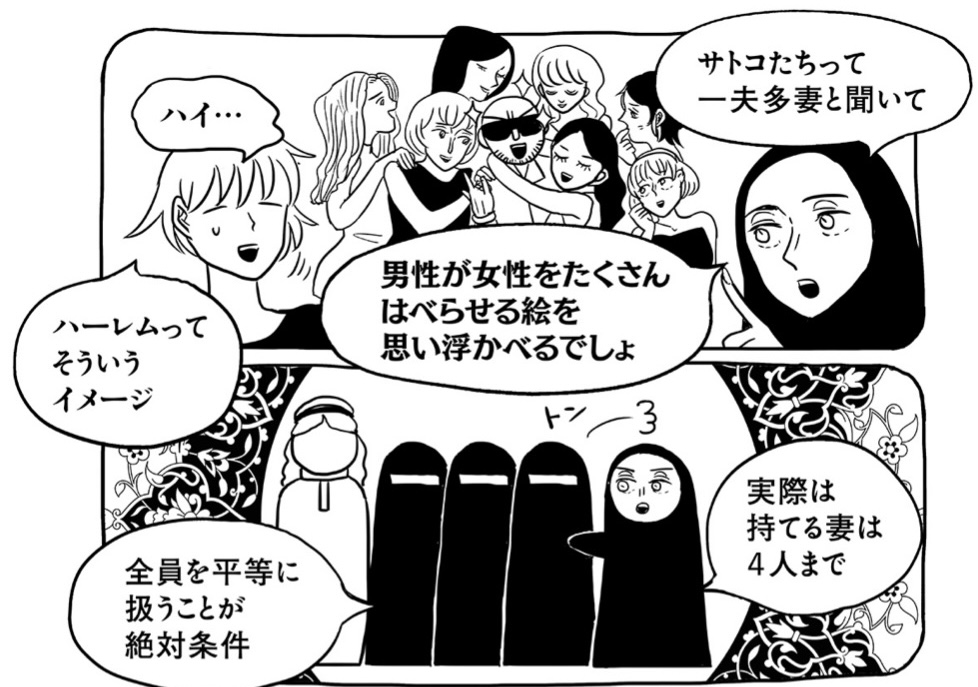
Unlike the Japanese image, polygamy has strict rules.
Nada's family was a polygamous family with two mothers and one father.
When Japanese people hear polygamy, they think of a picture of a man holding a woman. In fact, however, there are strict rules in Saudi Arabia's polygamy system, such as "You can have up to four wives" and "Everyone must be treated equally." If you are not good, you can't take care of many families. It is said that polygamy was born long ago to help wives and families who lost their husbands in the war. Polygamy due to male greed is not allowed at all.
Shawfa
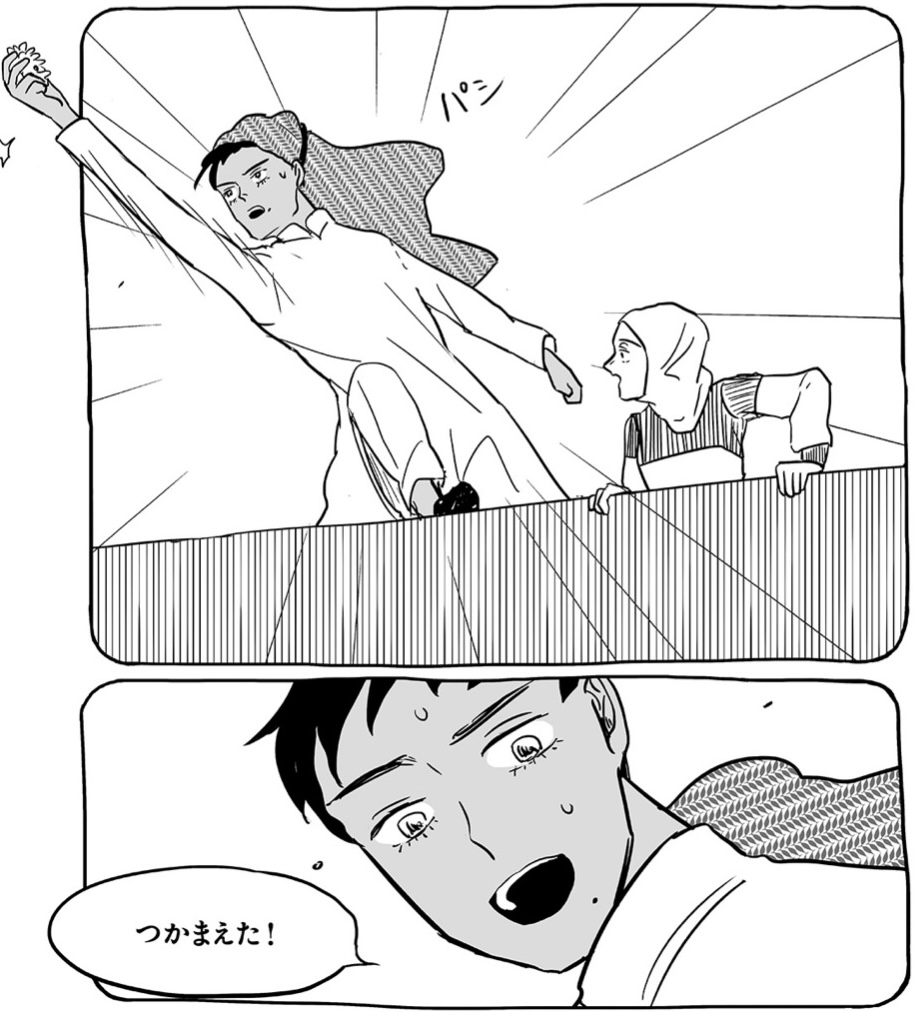
The hair ornament that Satoko put on Nada flew off at Shufa, but Abdallah successfully caught it.
A face-to-face conversation between two people who are about to get married under with the family. Shufa means "to see."
It is a ceremony for parents to meet their fiance, and here you can see the bride's face for the first time.
If they get along with each other on Shaufa, they will deepen their ties by phone and dating (accompanied by a male relative), and they will consult with each other about a full-scale marriage.
Dress
A woman's headgear
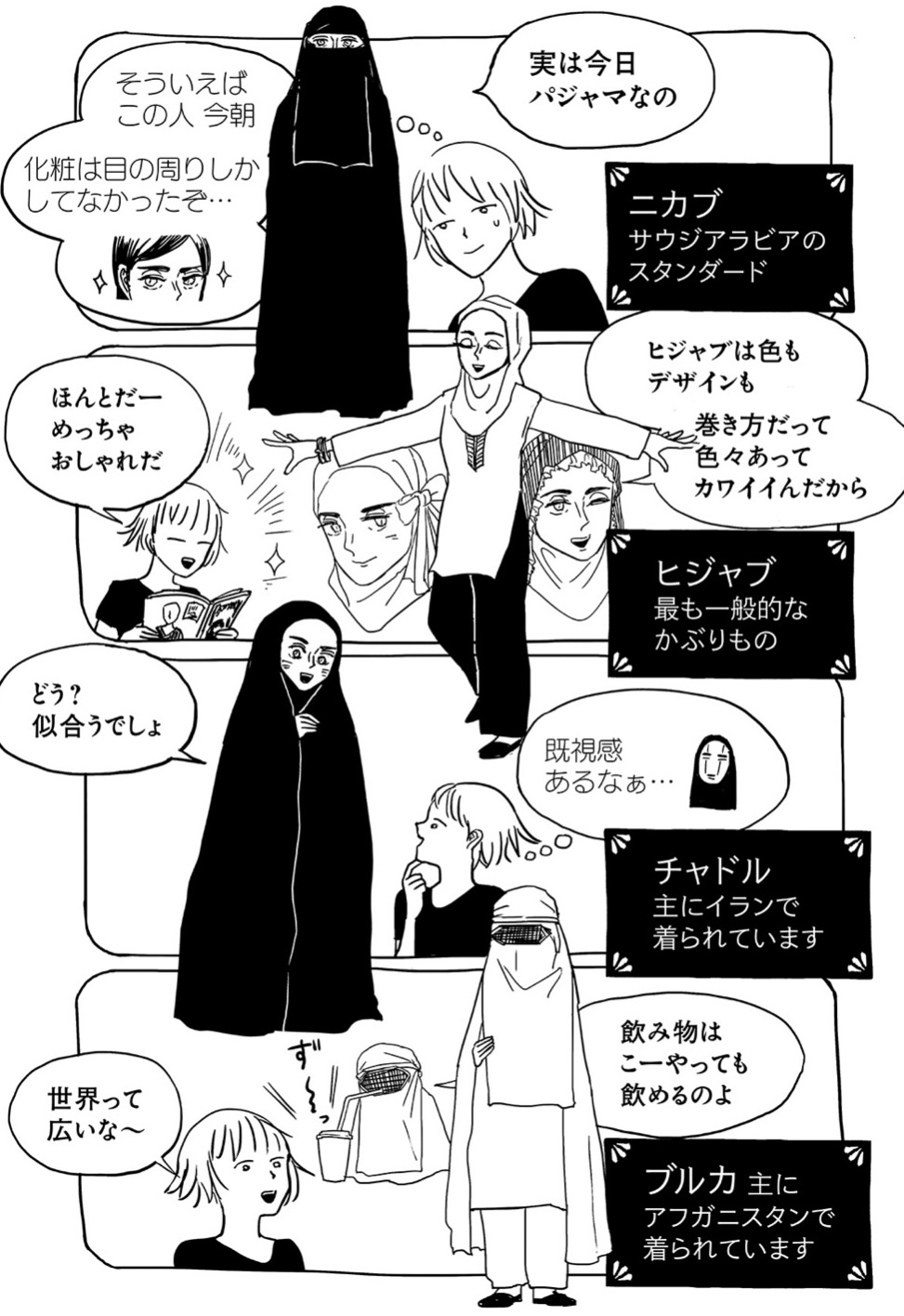
According to the Koran, Muslima (a Muslim woman) must hide everything but her face and hands. There are different types of clothing in Muslima, including "Niqab", "Hijab", "チャドル" and "Burqa". Nada wears a well-sighted Niqab or a hijab with her face out. パキザ, a friend of Nada from Afghanistan, wears mainly burqa.
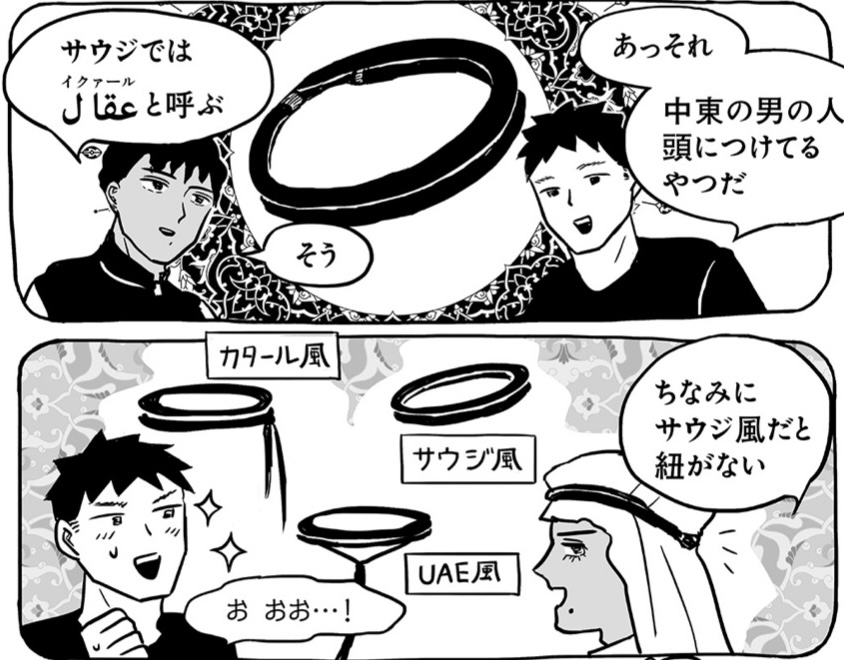
male headgear

Tags
Contents
- Outline of "Satoko and Nada"
- Outline and story of "Satoko to Nada"
- Japanese Satoko Gets Exposed to Saudi Culture Through Nada
- Satoko Kidnapped Incident
- Nada's fiancé.
- Satoko comes into contact with cultures from various countries and changes her shy personality.
- Meet Machiko who came from Japan to study.
- Satoko returns to Japan.
- Characters from "Satoko to Nada"
- Key person
- Satoko
- Nada
- College friends
- Mirakuru
- パキザ
- Kevin.
- Daniel.
- Other people
- Abu Dara
- Rahman
- Machiko
- Term for "Satoko and Nada"
- Culture
- Muslim / Muslima
- Marriage
- Azaan
- Halal mark
- Polygamy
- Shawfa
- Dress
- A woman's headgear
- male headgear
- Words
- Mashallah ibn Athari
- Inshaallah
- Bismiller
- Food
- Kabusa
- Coffee
- Dates
- Bread
- フィルニ
- Gambury
- Words, lines, scenes and scenes from "Satoko to Nada"
- Satoko: "Of course I want to know the culture, but I want to know you, Nada."
- Nada: "Oh, my God? That's not true. You're doing it out of a sense of duty. You're doing it for me."
- Nada: "I buy clothes for me. I only see people I know anyway, so I'll wear my favorite clothes."
- Nada: "I did it! I finally did it! I did it across the border without my brother or father. Satoko!"
- "Satoko to Nada" backstory / trivia / small story / episode / anecdote
- We don't celebrate birthdays much in Saudi Arabia.
- There's too many Abu Dara and Mohammed to tell the difference.
- IT'S SAID THAT THERE'S A RIVER OF ALCOHOL IN HEAVEN WHERE YOU CAN DRINK AS MUCH AS YOU WANT WITHOUT GETTING A HEADACHE FROM IT.
- The bus does not stop without raising the hand
- In the United States, we don't hang laundry outside.