
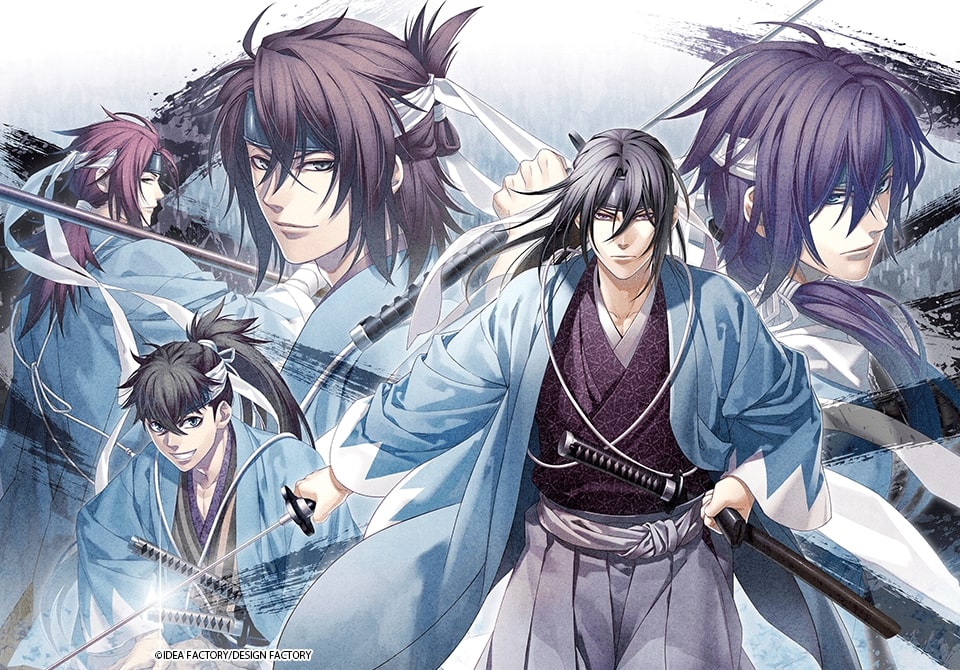
Hakuouki" is an otome game series released by Otomate, a game maker and brand for women. Based on the historical facts of the "Shinsengumi," a group of ronin who actually existed at the end of the Tokugawa shogunate, the series is supported by a wide range of audiences, from otome game fans to women who love history, thanks to its meticulously crafted story background. In addition to many follow-up works, the series has been developed into novelizations, animations, movies, OVAs, stages, musicals, and various other media. The following is a summary of the people who served as models for the characters who appear in "Hakuouki.
Outline of "Hakuouki
Hakuouki" is an otome game series released by Otomate, a women's game brand jointly established by game maker IDEA FACTORY and game graphics creator Design Factory Co. Shinsengumi Kitan" was released on September 18, 2008. Since then, the series has been followed by remakes and fan disks, in addition to subsequent series that inherit the worldview of the first game. The game has also been adapted into novelizations, animations, movies, OVAs, stage performances, musicals, and various other media.
The story begins in Kyoto at the end of the Edo period in 1863. The main character, Chizuru Yukimura, has come from Edo to Kyoto in search of her missing father, Tsunamichi. Tsunamichi was working as a Dutch doctor in Kyoto, but one day he suddenly disappears from sight. Chizuru became worried and went to Kyoto by herself. However, Japan at that time was not a very safe place for a woman to travel alone. So, Chizuru decides to dress up as a man and head for the city of Kyoto. Chizuru arrives safely in Kyoto, but what awaits her there is a group of "Shinsengumi" soldiers who are willing to drink the blood of others.
The Shinsengumi is a group of roshi (samurai without a family to serve) who were created to protect the security of Kyoto. Chizuru is stunned to see them drinking her blood, but the Shinsengumi attack her and try to drink her blood as well. However, the Shinsengumi members saved her from the attack. Chizuru is rescued by the vice captain of the Shinsengumi, Hijikata Toshizo, and his followers, but she is forced to live under their watch because she has learned the Shinsengumi's secret. However, Chizuru discovers that her father, Tsunamichi, is also deeply involved in the secrets of the Shinsengumi, and together with the Shinsengumi, she sets out to track Tsunamichi down.
The game is an end-of-bakumatsu love story that follows the actual history of the Shinsengumi, while also developing its own story as an Otome's game.
Characters and characters in "Hakuouki" and their historical models
Hijikata Toshizo
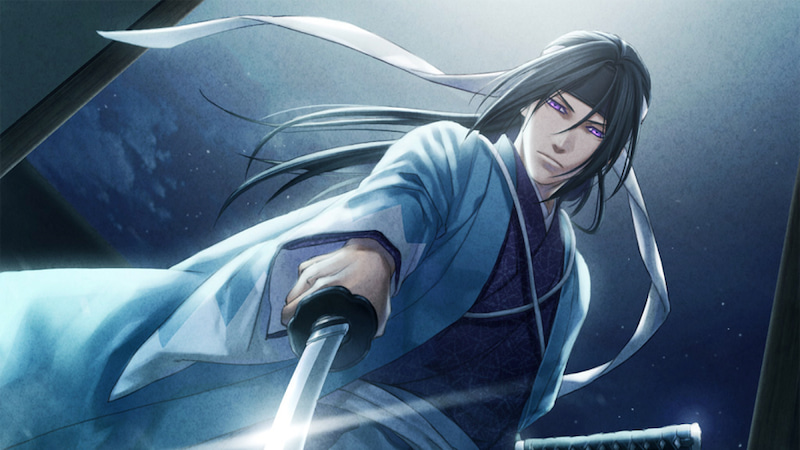
CV: Shinichiro Miki
Deputy captain of the Shinsengumi. Before joining the Shinsengumi, he was a medicine seller.
Because of his strict attitude toward others, he is nicknamed "Oni no XO. However, he does everything for the sake of the Shinsengumi and its leader, Isamu Kondo, and seems to deliberately take on an unapproved role in order to unite the rough and tumble members of the Shinsengumi.
However, at heart, he is a kind and compassionate person. He is able to pay attention to details that no one else would notice, and he sometimes has a hard time following up on the rough and tumble of his troopers. However, it seems that only a few people close to him, such as Harada Sanosuke and Saito Hajime, know about this.
His favorite food is Sawan.
He seems to have a weakness for alcohol, getting drunk immediately after drinking just one sake. However, he does not seem to want to admit it and strongly insists in his works, "It's not that I can't drink, but I just don't drink.
historical information
He was born in 1835 as the son of Hijikata Toshizo, a farmer in Ishida Village, Tama County, Musashino Province (present-day Ishida, Hino City, Tokyo), the youngest of 10 children. He was called "Baragaki," which means a dangerous child like a thorn that causes wounds when touched. There is an anecdote that he used to practice sumo wrestling against a thick pillar of the shrine wearing only a loincloth after taking a bath. His father died of tuberculosis three months before he was born. He had ten siblings, but four of them died prematurely, leaving him with six siblings.
At the age of 11, Hijikata went to work at the Matsuzakaya Ito Drapery Store (the Ueno branch of today's Matsuzakaya department store) in Ueno, Edo (present-day Tokyo), but a quarrel with the head watchman led him to return to his parents' house. With his "yearning for martial arts" in mind, he began training at a number of swordsmanship dojos, competing in many fights while peddling his family's secret "Ishida Sanyaku". During his training, Hijikata Toshizo met Kondo Isamu, the man who would later become the captain of the Shinsengumi, and became a student of the "Natural Rishinryu" school of kobudo, of which he was the headmaster. In February 1863, he heard that the 14th shogun of the Edo Shogunate, Tokugawa Iemochi, was looking for a group of ronin to protect him as he entered Kyoto.
This incident led to the establishment of the Mibu Roshigumi, the predecessor of the Shinsengumi. Later, their activities were recognized and they changed their name to "Shinsengumi.
The Shinsengumi was later recognized for its activities, and its name was changed to "Shinsengumi." As it was transformed from a mere group of martial arts schools into a national organization officially recognized by the government, Hijikata Toshizo began to make several strict regulations for the sake of the Shinsengumi. It is said that he was so strict that he came to be called "Oni no XO." The aspect of Hijikata Toshizo as "Oni no XO" in "Hakuouki" is thought to be based on this aspect. On the other hand, he also has a literary side, enjoying haiku and willow poems, and when he went to Kyoto, he compiled a collection of haiku he had composed so far called "Toyotama haiku shu" (Toyotama's collection of haiku poems). The title of the collection is "Toyotama," which is the pseudonym of Hijikata Toshizo.
Okita Soji
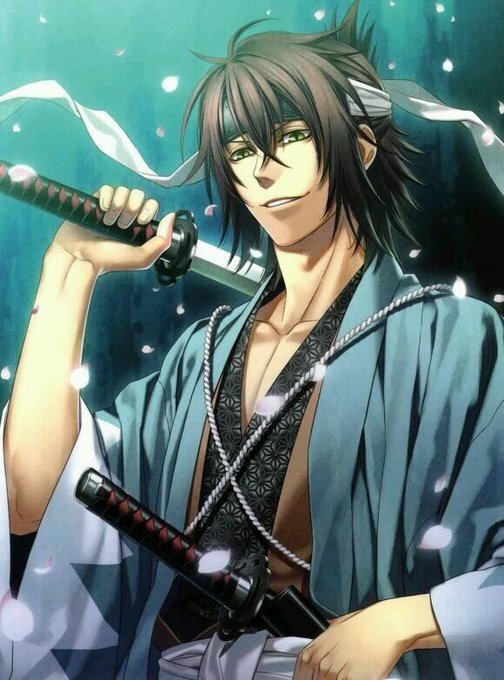
CV: Shotaro Morikubo (as a boy: Naomi Iida)
The leader of the Shinsengumi's first program. He is a swordsman with prodigious talent with the sword.
He is a young man with an aloof demeanor and speaks in a tone that makes it difficult to tell whether he is joking or serious. He often has a somewhat mean attitude toward the main character, Chizuru. He has the utmost respect for his commander, Isamu Kondo, and will never forgive anyone who speaks ill of him, even if they are talking to a young child. Despite his aloof demeanor, he seems to be a single-minded and straightforward young man.
He is not only a skilled swordsman, but also has a great sense for combat itself. He is depicted as always standing on the right side of Saitoichi, an iaido (swordsmanship) expert, when they walk side by side. This is because Saitoichi is a left-handed swordsman, and the sword at his waist is in the opposite position to that of the other members. By standing on the opposite side of Saito Ippo's dominant hand, it is believed that they can check each other when facing a large number of enemies, and at the same time, they can quickly deal with the enemies surrounding them.
His favorite food is kompeito.
His least favorite food is green onion.
historical information
In 1842, Okita Soji was born as the eldest son of three generations of footmen in the Edo Shimoyashiki of the Mutsu Province Shirakawa Clan (Shirakawa City, Fukushima Prefecture). The place of birth is said to be the Shirakawa clan's mansion in Edo (present-day Nishiazabu, Minato-ku, Tokyo). He had two older sisters, one of whom was adopted by his son-in-law and became the heir to the Okita family.
When Okita Soji was nine years old, he became an uchideshi (an apprentice who lives in a master's house or dormitory and assists the master in his work as an attendant) of the Shizen Rishin ryu style. While spending his days as an uchideshi, he met Isamu Kondo and Toshizo Hijikata, who later became central figures in the Shinsengumi, and trained together as members of the same school. In February 1863, he heard that Tokugawa Iemochi, the 14th shogun of the Edo Shogunate, was looking for a group of ronin to protect him as he entered Kyoto. He later became a member of the Mibu Roshigumi, the predecessor of the Shinsengumi, and served as the leader of one of its programs. He was also a prodigy in swordsmanship and became a "Gekken Shihan" (master of swordsmanship). The word "Gekken" means "intense swordsmanship," and it is said that the role of "Gekken Shihan" meant that he was a master of even more rigorous training than normal swordsmanship training. It is said that the practice was not one-on-one, but in a three-on-one format.
However, during the "Ikedaya Incident" (June 5, 1864), which was a major factor in the recognition of the activities of the Mibu Roshigumi, Okita Soji suffered from hemoptysis and was found to have pulmonary tuberculosis. The actual timing of the onset of his illness is unknown, but his condition worsened thereafter, and he left the Shinsengumi in 1867. Unable to participate in the "Battle of Toba-Fushimi," the Shinsengumi's final battlefield, he spent the rest of his life in a hospital bed, and died on May 30, 1868 (July 19, 1868).
I. Saito
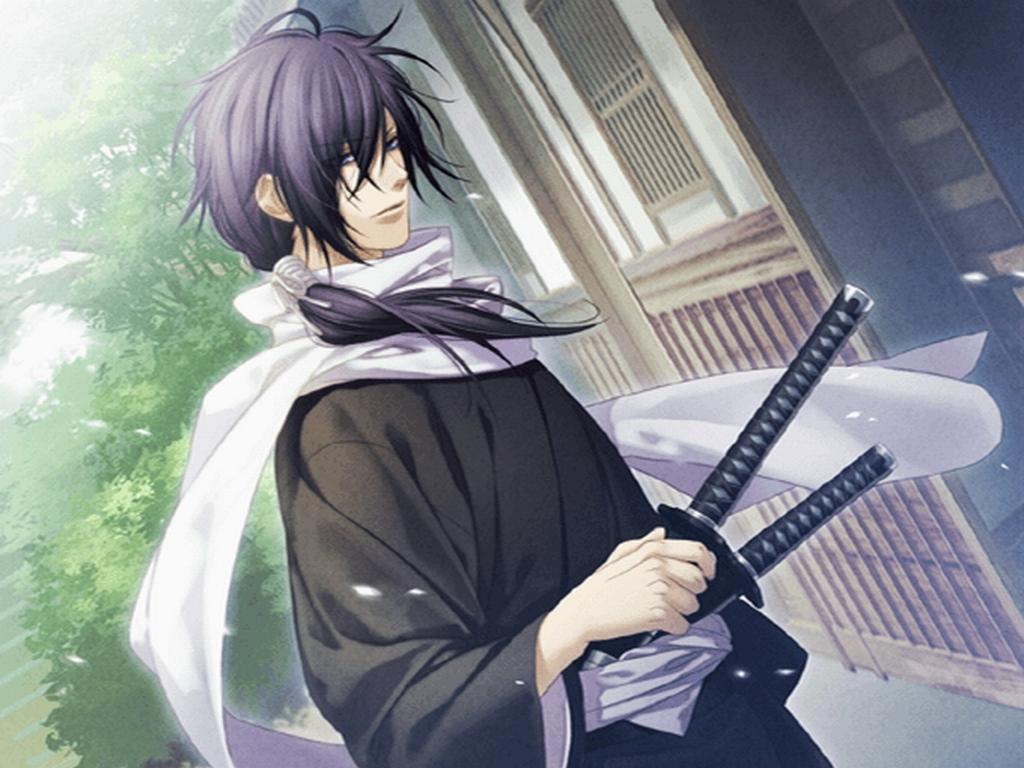
CV: Kosuke Toriumi
The leader of the Shinsengumi's three programs. He is a left-handed iai master. According to Hijikata Toshizo, he is "as strong as Soji when he draws his sword.
He is said to be the youngest executive officer in the Shinsengumi, along with Heisuke Todo, the leader of the eight program. A taciturn young man, he is often alone. He is described as having calm judgment and the ability to take action, and he calmly corrects his subordinates who tend to act rashly and recklessly.
Perhaps in recognition of his calm work ethic, he sometimes works as an intermediary (a spy, a counterintelligence officer who probes the enemy's situation).
In his works, he often appears wearing a black kimono and a collar.
When he drinks alcohol, he preaches endlessly. His usual reticence is belied by the fact that he preaches, but he seems to be the type of person who does not remember, and when he sobers up, he has forgotten all about it. His taciturnity is also said to be due to his shyness.
His favorite food is dried tofu.
He trusts Ishida Sanyaku, a medicine produced and sold by Hijikata Toshizo's family, and is depicted in a scene in which he relies on it when a trooper's arm is cut off.
historical information
Born on January 1, 1844 (February 18, 1844) as the son of a foot soldier of the Akashi clan in Harima Province (a clan that ruled Akashi County in Harima Province and Mikyaku County in Harima Province. The clan is said to have been located in present-day Akashi City, Hyogo Prefecture; Nishi Ward, Kobe City; Tarumi Ward, Kobe City; and Miki City, Hyogo Prefecture). However, some say that he was born in Edo, but the details are unknown. It is said that he may have been born in Edo (present-day Tokyo) after his father, an akigaru of the Akashi clan, moved to Edo (present-day Tokyo). Saito himself called himself "Akashi Ronin" in reference to his father's birthplace, Akashi.
When Saitoichi was 19 years old, he quarreled with a Hatamoto (a group of vassals directly under the Tokugawa Shogun during the Edo period, who had a stone value of less than 10,000 koku, but always attended ceremonies attended by the Shogun, and had a family rank of Gomemi or higher), and killed him. Hajime Saito is pursued by the shogun and heads for Kyoto to hide himself, relying on his father's friends. He went to live under a certain Yoshida, a friend of his father who was the owner of a swordsmanship dojo, and eventually became the head instructor of the dojo.
According to the "Ronin Bunkyu Hokoku-ji," a memoir about the Shinsengumi written by Nagakura Shinpachi, one of the Shinsengumi leaders, he frequented the dojo of "Shizen Rishinryu," a school of kobudo of which the future Shinsengumi leader Kondo Isamu was the head, during this period in Edo, but he was not a member of the Mibu Roshi clan, which was about to start its activities in Kyoto. However, Saito's name is said not to have existed among the users of the weapons purchased by the Mibu Roshi clan, which was about to start its activities in Kyoto. Therefore, some speculate that Saito Hajime may have joined the Shinsengumi when the Shinsengumi was recruiting troops in Kyoto. In the end, however, it is unclear exactly what happened. In the Shinsengumi, he was the leader of the Sanbantai and served as a "Gekken Shihan" (master swordsman) along with other officers. There is also a story that he was also assigned to work as a spies.
He is also one of the few Shinsengumi officers who continued to serve after the Boshin War, in which the old shogunate forces he served were defeated by the new government forces and the Shinsengumi ceased to exist. Although he was under house arrest for a while after the Boshin War, he was hired by the Tokyo Metropolitan Police Department in July 1874, and three years later, in 1877, he was promoted to the rank of assistant inspector. After his retirement, he was recommended by Hideo Takamine, the principal of Tokyo Higher Normal School, who was a former samurai of the Aizu domain, and others to serve as a guard of the Tokyo Museum of Education attached to Tokyo Higher Normal School (now the National Science Museum Historic Site and Yushima Seido), and also as the chief guard. In 1899 (Meiji 32), he retired from this position, but he was still working at Tokyo Women's Higher Normal School (now Ochanomizu University) as a general affairs clerk and treasurer. There are records that she was also in charge of rickshaw traffic control for students going to and from school, a job similar to that of a jailer.
Saito died on September 28, 1915. The cause of death is said to be a stomach ulcer. He is said to have died in Masasago-cho, Hongo-ku, Tokyo. It is said that he passed away in the full lotus position in the alcove of his alcove. In January of the same year, Nagakura Shinpachi, who was one of the few surviving Shinsengumi officers like Saito Ichi, also passed away.
Heisuke Todo
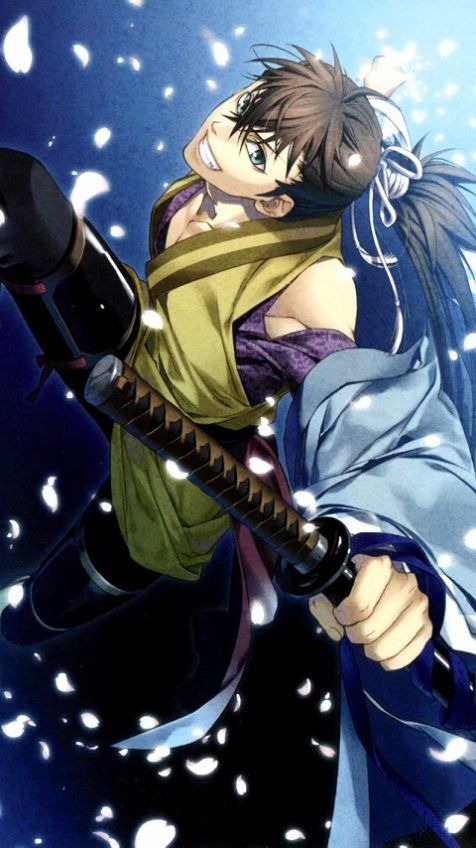
CV: Hiroyuki Yoshino
Captain of the Shinsengumi Hachibantai. He is the youngest boy in the Shinsengumi leadership. He is said to be about the same age as the main character Chizuru (16).
He is a cheerful and vivacious boy who is the first to take the lead in battle, and has a mischievous side that jumps into everything. He is also a festival-loving character, and seems to enjoy the battle itself in a playful way. On the other hand, he also has a sensitive side, as he is always searching for what he can do to help.
He is also an illegitimate son of the Todo clan in Tsu, Ise Province (present-day Tsu City, Mie Prefecture). The existence of the child is said to have been pretended to have never existed, but he seems to receive money from the clan every month to keep his mouth shut, and he is depicted as being troubled by this. He also seems to be troubled by the fact that he is smaller in stature than the other members of the senior management.
His favorite food is sushi.
historical information
Heisuke Todo was born in the 15th year of Tempo/the first year of Koka (1844). His birthplace is said to be in Musashino-kuni, but he is said to have grown up in Edo. His detailed origins are unknown, but according to the "Shinsengumi Names," a list of Shinsengumi members in the 14th volume of "Ishin Kashidai Zasshi," a book held by the Imperial Household Archives (an archive that mainly holds classical books and documents that have been handed down to the imperial family for generations), he was from the Todo family, a 5,000 koku Hatamoto family. In addition, the "Roshi Bunkyu Hokoku Sho", a memoir written by Nagakura Shinpachi, and a book of rumors (a record of various events that were rumored in various places during the Edo period, written by various clans that sent people to Edo. It is said that various clans sent people to Edo to write down rumors they heard in the area, and these documents may refer to the documents written at that time). In some cases, it is said that he was the illegitimate son of the feudal lord of the Ise Tsu domain, Todo Takayou, or the son of Yaza Todo, a retainer of the Ise Kuju domain (a domain said to have existed in present-day Tsu City, Mie Prefecture). Although it is unclear, the name "Heisuke" is said to have been inherited from a vassal of the Todo family, and there is a strong possibility that he was born into the Todo family.
Heisuke Todo is said to have studied swordsmanship as a student of Hokushin Itto-ryu, a school of swordsmanship and naginata-jutsu, although the date of his initiation is unknown. He obtained the Hokushin Itto-ryu Chokuroku, which means "middle catalog license" in Hokushin Itto-ryu, in his mid-teens. Later, he began to visit the dojo of Ito Daizo, who was also a Hokushin Itto-ryu master. Later, he became a student of Shizen Rishinryu and Isamu Kondo. There is a story that he was entrusted with substitute training, which suggests that he was a talented swordsman.
In February 1863, Heisuke Todo heard that the 14th shogun of the Edo Shogunate, Iemochi Tokugawa, was looking for a group of ronin to protect him as he traveled to Kyoto. In the Mibu Roushigumi, which was later reorganized into the Shinsei Gumi, he served as the leader of the Hachibantai, and was also known as "Deputy Chief Sukekitsu. As the name implies, the "assistant deputy chief assistant duty" is a role that assists the deputy chief. It is the third position after the bureau chief and the deputy bureau chief, but not necessarily the third, since there are other positions in the Shinsengumi besides the bureau chief and the deputy bureau chief. He was also the youngest Shinsengumi leader.
However, in November of the first year of the Genji Era (December 1864), his fate changed drastically when Heisuke Todo went to Edo for a large-scale recruiting campaign for the Shinsengumi. Heisuke Todo headed for Edo with Saito Hajime, one of the Shinsengumi leaders, and others, and returned to Kyoto with Ito Daizo Kai and Ito Koshitaro, the owner of a dojo he had frequented in Edo, and his apprentices. As a result, in March 1867 (April 1867), he left the Shinsengumi to form the "Goryo Guard" with Ito Koshitaro and others to guard the tomb of Emperor Komei. Heisuke Todo originally had a desire to become a warrior who would respect the sovereign (the emperor) and expel foreign enemies. It is thought that he decided to join Ito Koshitaro's side because the activities of the Goryo Guard were in line with this desire.
However, the Shinsengumi became wary of Ito Koshitaro's ideology and swordsmanship, partly because the Shinsengumi served the shogunate rather than the emperor. As a result, on the night of November 18, Keio 3 (December 13, 1867), the Shinsengumi launched a campaign aimed at assassinating Ito Koshitaro and destroying the Goryo guards. Eight Goryo guards, including Koshitaro Ito and Heisuke Todo, were killed. According to a story told by Nagakura Shinpachi later, Kondo had instructed him to "save Todo as much as possible since he was still a young and valuable resource. Therefore, it is said that Nagakura Shinpachi tried to escape Heisuke Todo without being noticed by the others, but an unknowing member of the force slashed him to death. There is another story that he took in Nagakura Shinpachi's intentions, but he stood up to them and died in battle out of his pride as a samurai and his will not to abandon his comrades.
It is said that the bodies of Heisuke Todo and others were left by the roadside for several days to be used as decoys to call for other Goryo guards. After that, they were buried together with Ito Koshitaro and other comrades at Kaiko-ji Temple, the head temple of Sennyu-ji Temple. In this temple also rests the soul of Emperor Komei, the owner of the mausoleum that the mausoleum guard tried to protect.
Harada Sanosuke

Related Articles
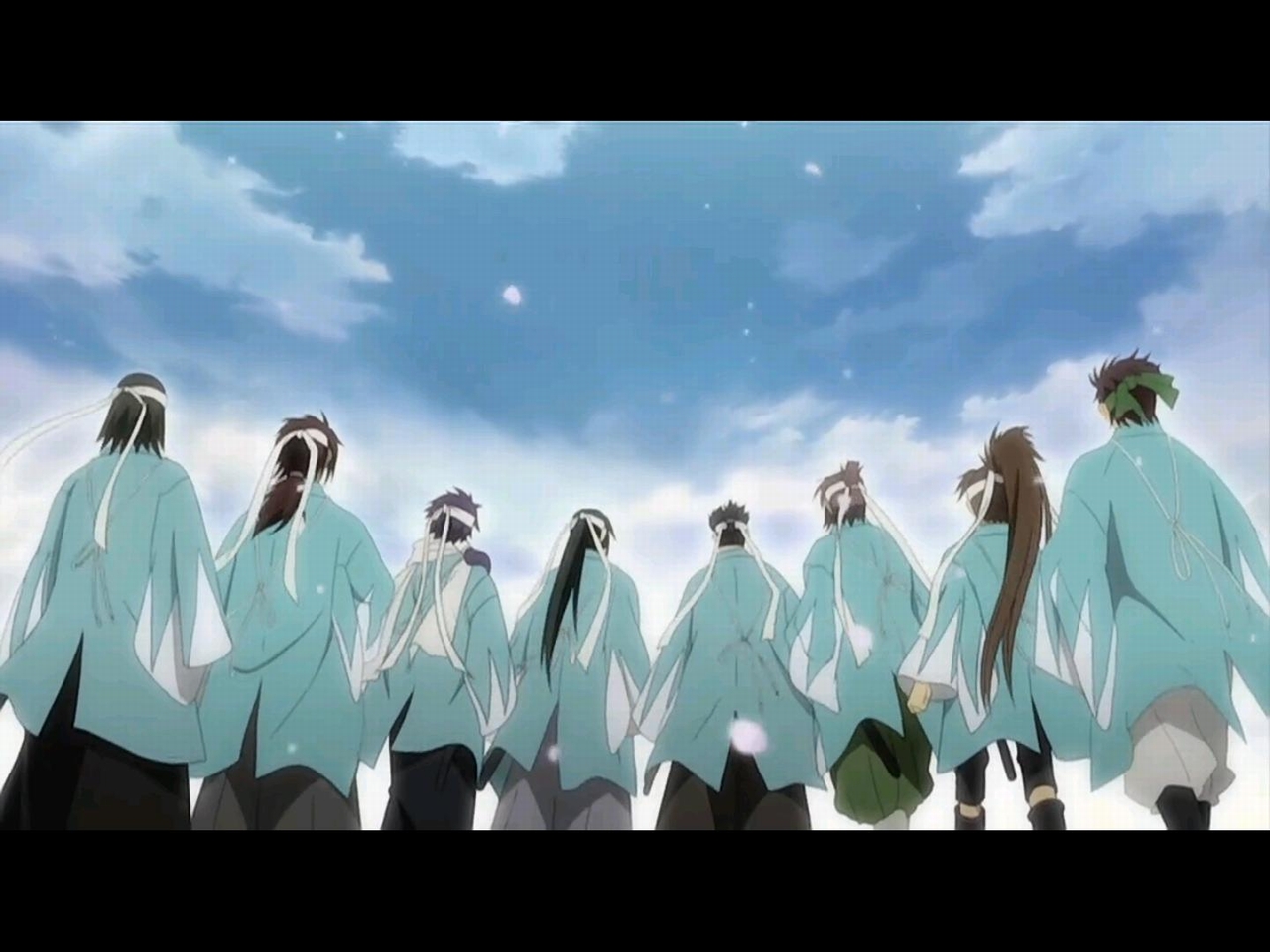
Spoiler commentary and discussion of Hakuouki (game and anime)
A TV anime that aired from April 2010. It is based on the romance adventure game "Hakuouki: Shinsengumi Kitan. The main anime (featuring the same main character) was broadcast separately as the first season "Hakuouki" and the second season "Hakuouki: Heki Bokuroku". The year is Bunkyu 3, the end of the Edo period. The main character "Chizuru Yukimura" disguises herself as a man and visits the city of Kyoto to search for her father. There she has a fateful encounter with the Shinsengumi. The Shinsengumi and Chizuru. Together they run through the turbulent times.
Read Article
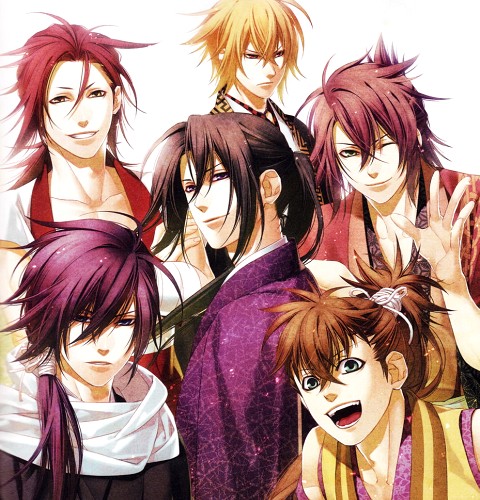
Hakuouki MAD Summary
A romance adventure game for women released by Idea Factory (Otomate) on September 18, 2008. Here is a compilation of its MAD. (Spoiler alert!!!!)
Read Article
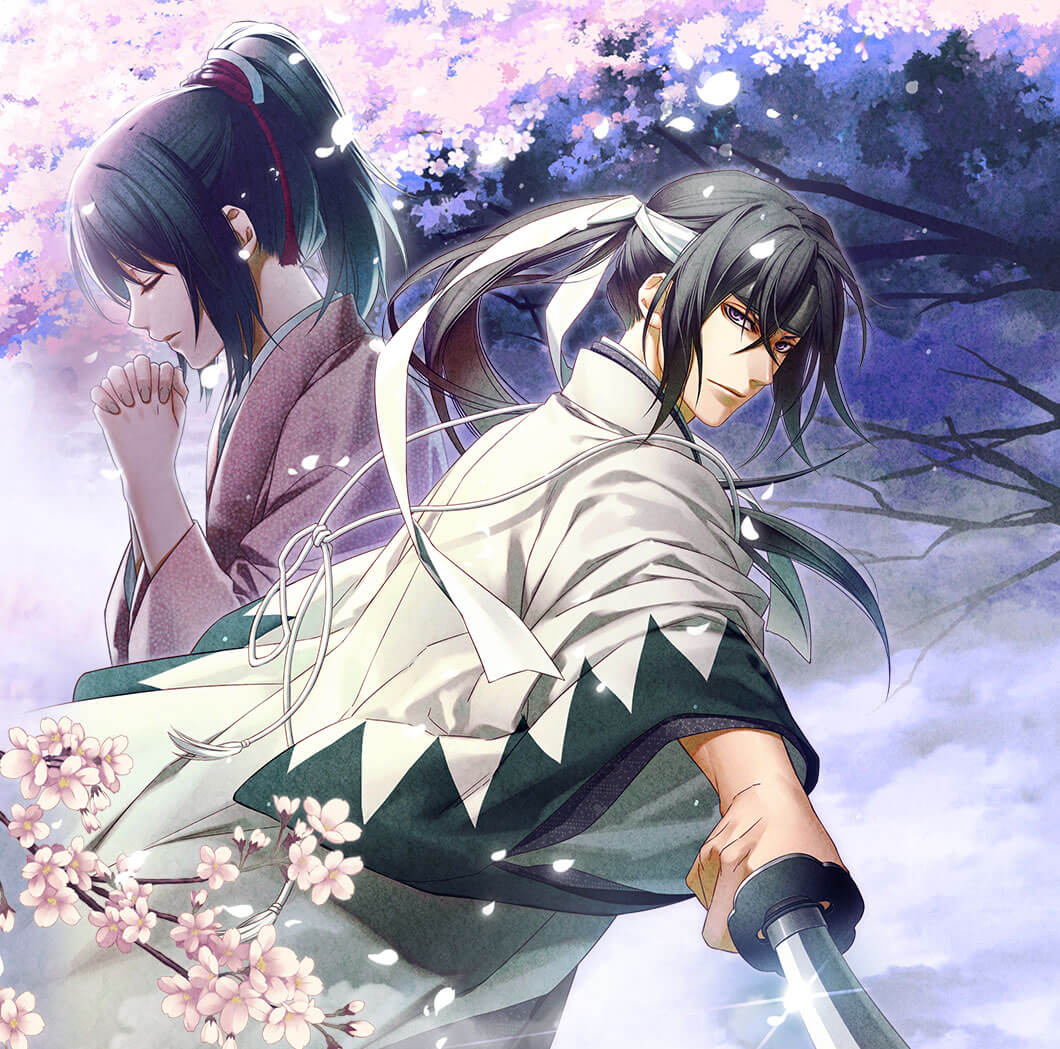
Summary of sacred places of Hakuouki
Hakuouki" is an otome game series released by Otomate, a video game brand for women. The story is based on the real-life Shinsengumi roshi troop. The game is a historical romance adventure game about a group of ronin who fought through the turbulent "Bakumatsu" period. In addition to many follow-up series, a Switch remake "Hakuouki Shinpai Fuukaden" has been released, and the game has been developed into novels, anime, movies, OVA, stage performances, musicals, and various other media, making it a popular title representing the otome game world. We have compiled a list of sacred places associated with the popular game "Hakuouki" and the "Shinsengumi".
Read Article
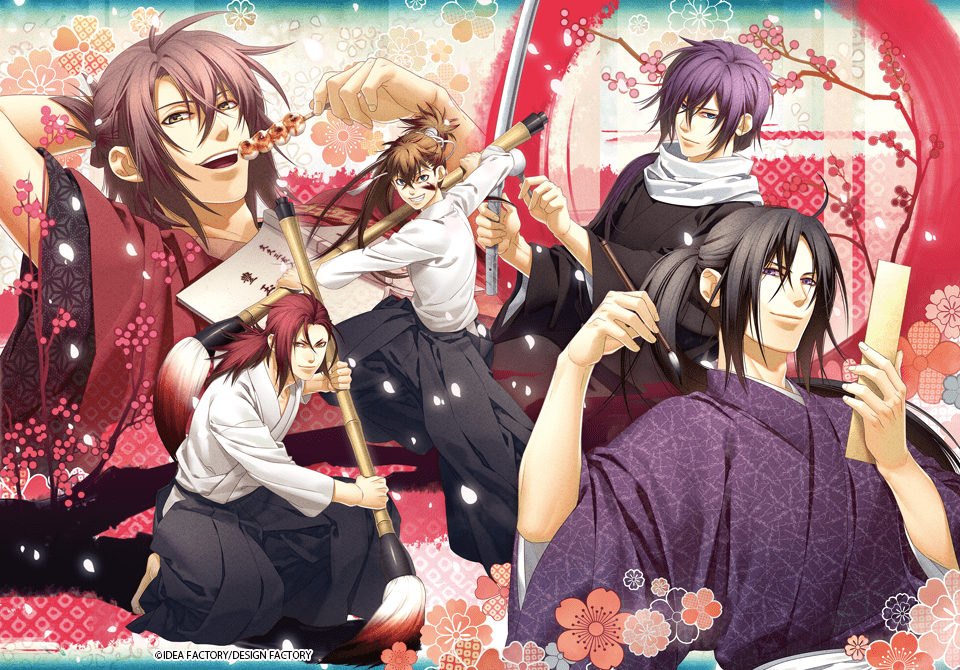
Summary of back stories, trivia, small stories/episodes and anecdotes of Hakuouki
Hakuouki" is an otome game series released by Otomate, a video game brand for women. The story is based on the real-life Shinsengumi roshi troop. The game is a historical romance adventure game about a group of ronin who fought through the turbulent "Bakumatsu" period. In addition to many follow-up series, this popular title has been developed in a variety of media, including the Switch remake "Hakuouki Shinpai Fuukaden," novels, anime, movies, OVA, stage performances, and musicals. We have compiled a list of behind-the-scenes stories, trivia, small stories/episodes, and anecdotes related to the popular otome game "Hakuouki".
Read Article
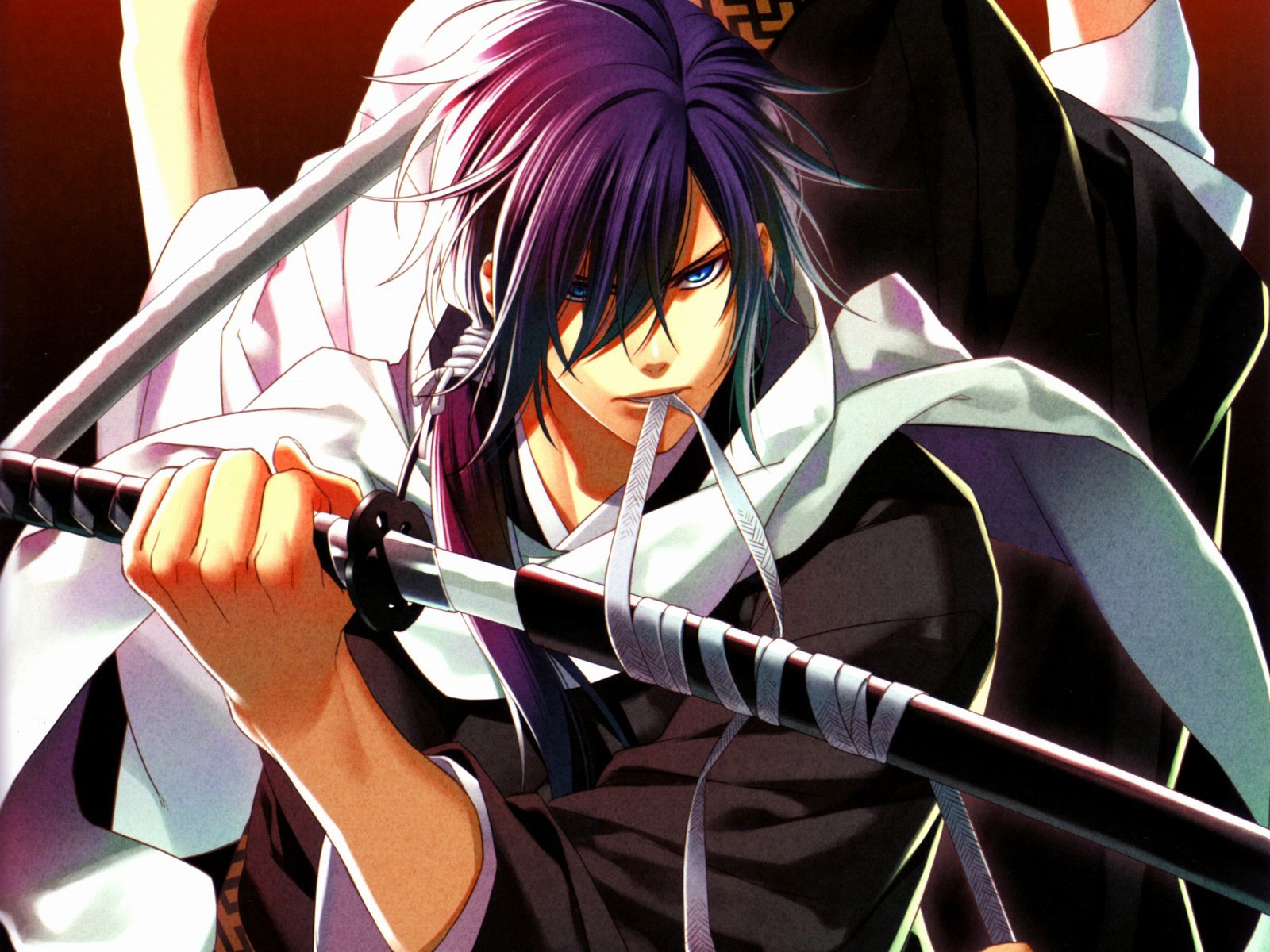
Fudoshi girls obsessed with "virtual boyfriends" were publicly executed on Fuji TV's "Mr. Sunday"! Summary of SNS reactions
Fuji Television's "Mr. Sunday" aired on October 14, 2012, and featured a special program about women who are obsessed with two-dimensional boyfriends. In the program, various manga and anime works for rotten girls were introduced. Here is a collection of reactions and interesting tweets from the fujoshi who watched "Mr. Sunday".
Read Article
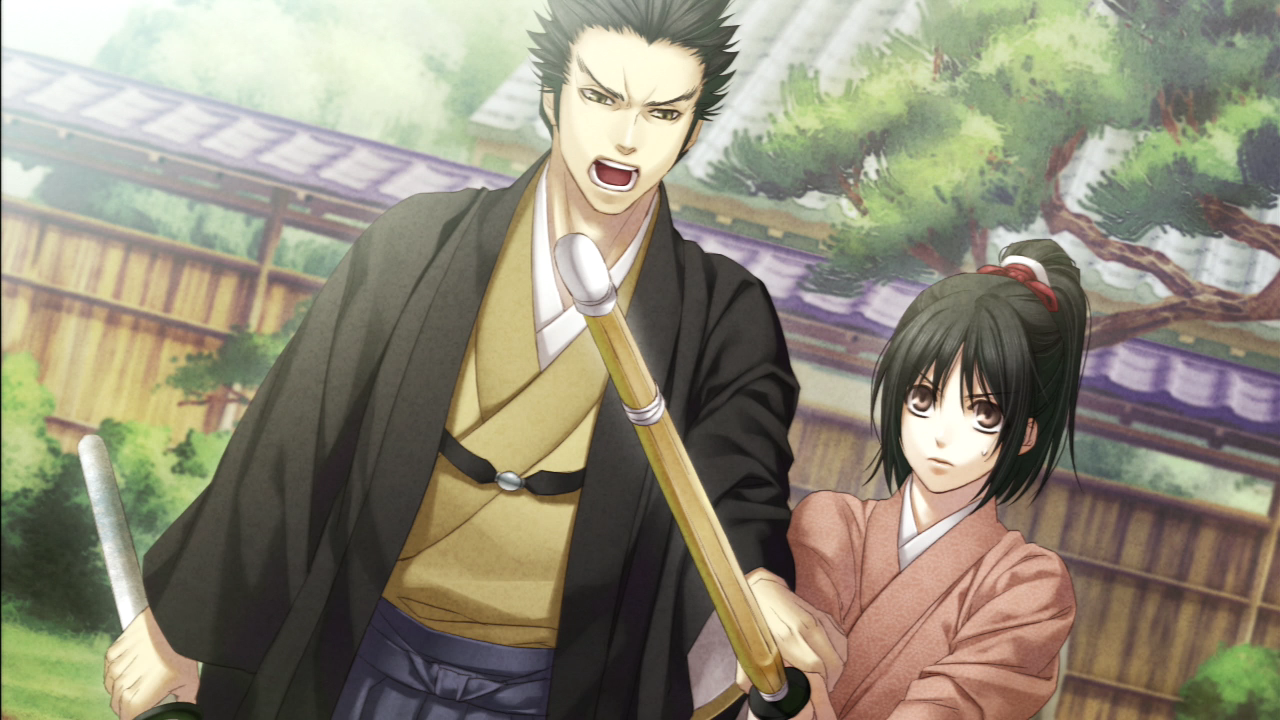
A compilation of manga and anime characters modeled on historical figures! Isamu Kondo, etc.
Here we have compiled a list of anime and manga characters based on historical figures, grouped by character. Famous characters such as Kondo Isamu and Hijikata Toshizo appear in several works. Characters from popular works such as "Hakuouki," "Gintama," and "Rurouni Kenshin" are also listed.
Read Article
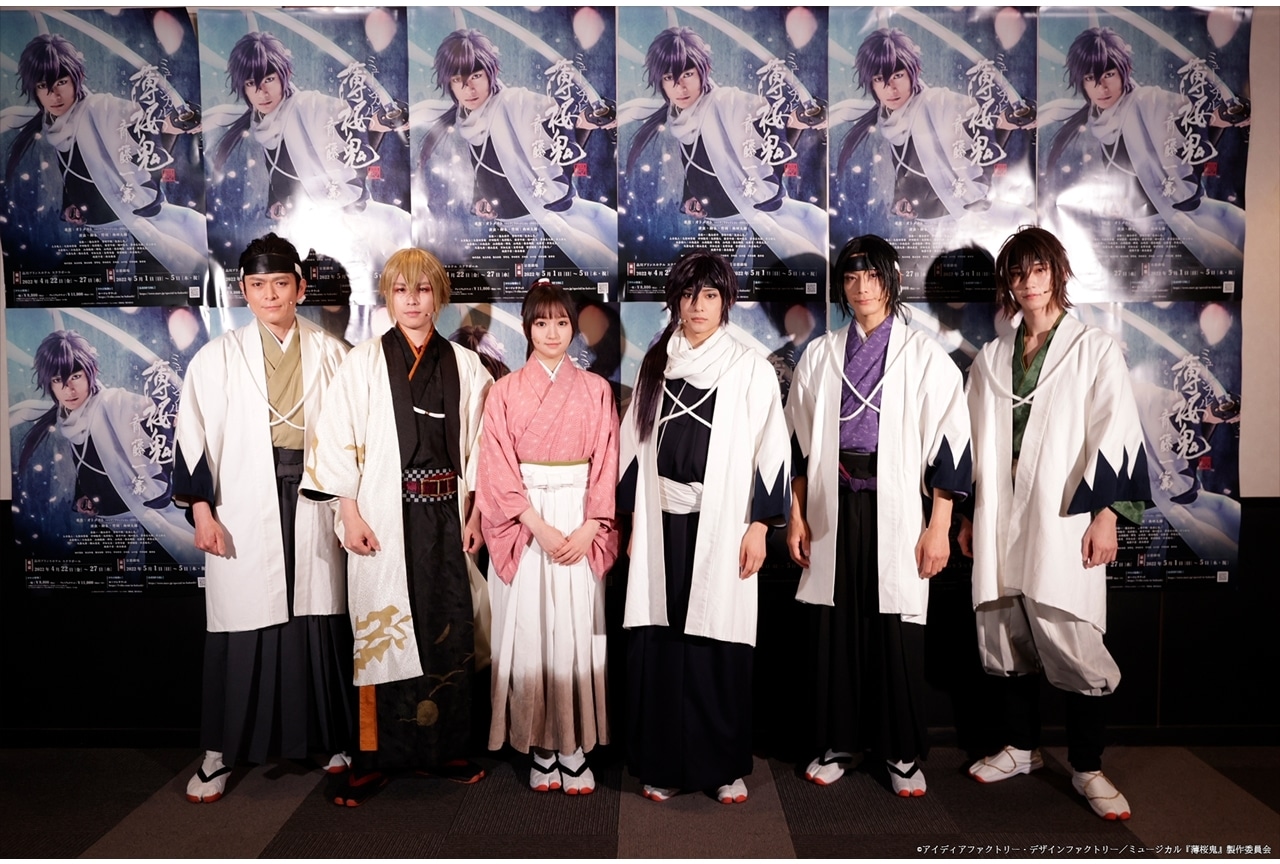
Introducing the musical version of "Hakuouki" cast of Saito, Okita, Hijikata, Kazama, and Todo in the past! In-depth explanation of Reimei, SSL, and Kitan!
The musical version of "Hakuouki: Shinsengumi Kitan" introduces the previous cast members. Set at the end of the Edo period, this work depicts a girl with demon blood who gets involved with the swordsmen of the Shinsengumi and becomes entangled in her own destiny, and is extremely popular, especially among women.
Read Article
![Hakuouki] The charm of "Kazama Chikage," a hidden target character [Shinsengumi Kitan].](https://renote.net/files/blobs/proxy/eyJfcmFpbHMiOnsiZGF0YSI6Mzc1MTUsInB1ciI6ImJsb2JfaWQifX0=--b244661faa50e4ff95c59962525d747c2da9186b/icon_kazama.jpg)
Hakuouki] The charm of "Kazama Chikage," a hidden target character [Shinsengumi Kitan].
This is a brief introduction to Hakuouki and a step-by-step introduction to "Chikage Kazama," a hidden target character in the work. He repeatedly attacks the Shinsengumi in an attempt to take the protagonist as his wife, but he also shows his loyal side, such as "I will keep my promise once I made it.
Read Article
Tags
Contents
- Outline of "Hakuouki
- Characters and characters in "Hakuouki" and their historical models
- Hijikata Toshizo
- historical information
- Okita Soji
- historical information
- I. Saito
- historical information
- Heisuke Todo
- historical information
- Harada Sanosuke
- historical information
- Nagakura Shinpachi
- historical information