
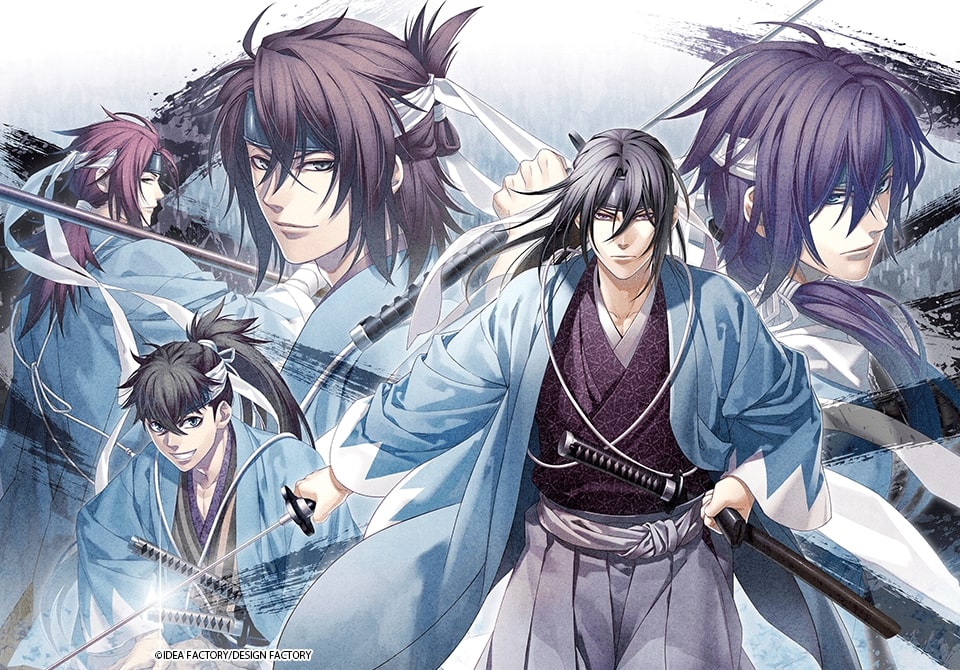
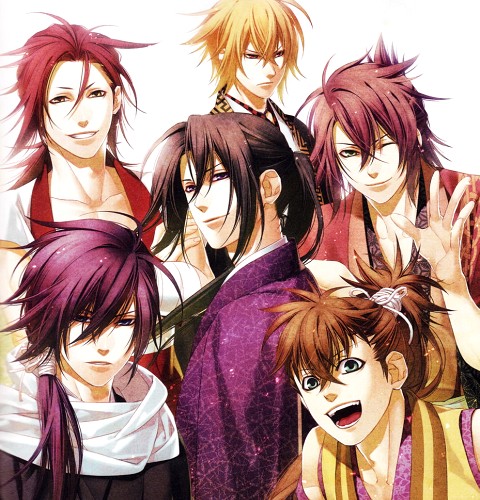
Hakuouki" is an otome game series released by Otomate, a game maker and brand for women. Based on the historical facts of the "Shinsengumi," a group of ronin who actually existed at the end of the Tokugawa shogunate, the series is supported by a wide range of audiences, from otome game fans to women who love history, thanks to its meticulously crafted story background. In addition to many follow-up works, the series has been developed into novelizations, animations, movies, OVAs, stages, musicals, and various other media. The following is a summary of the people who served as models for the characters who appear in "Hakuouki.
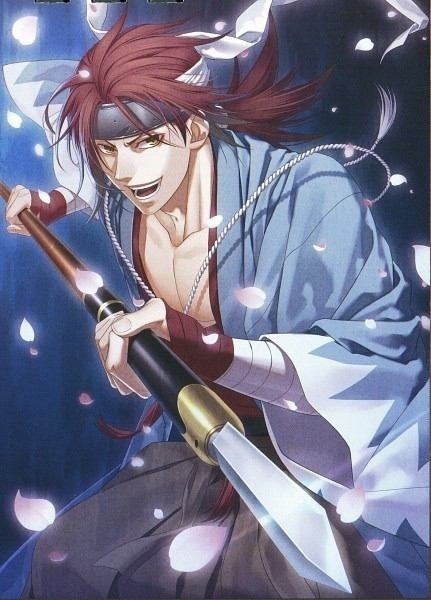
CV: Koji Yusa
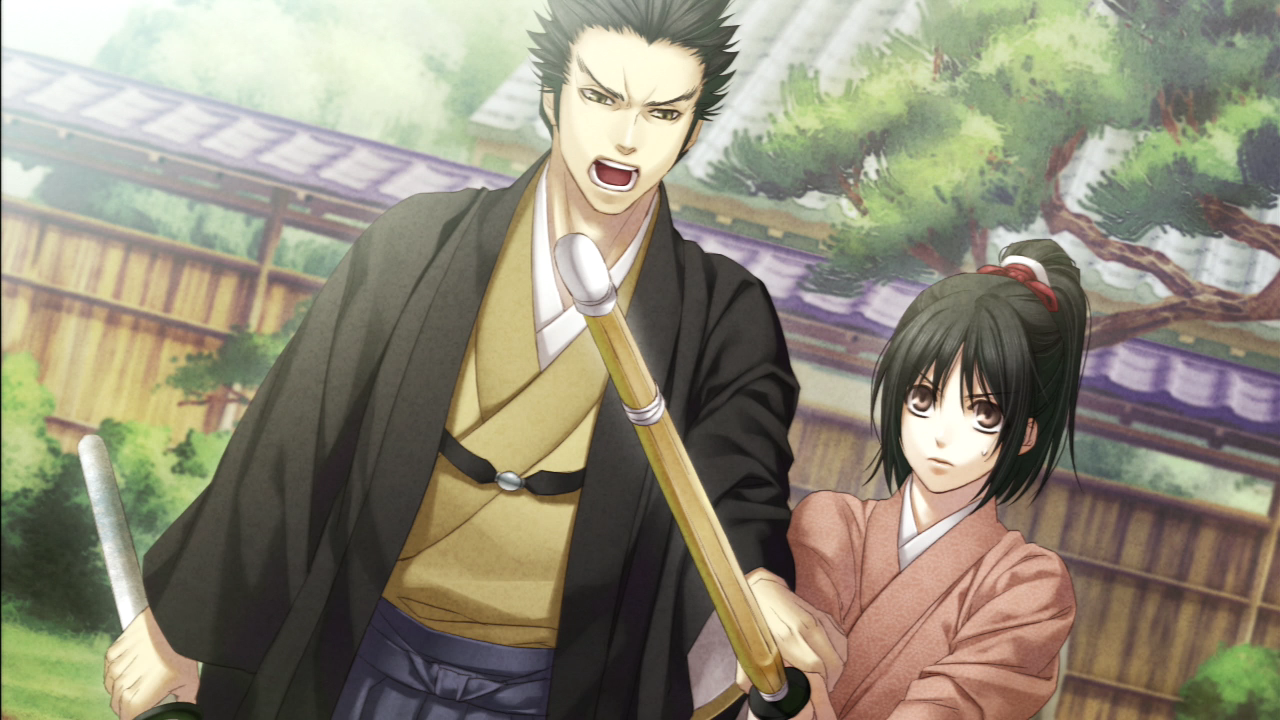
The leader of the Shinsengumi's Juban-tai. He is a red-haired young man with a quarrelsome temper. He is also a foul-mouthed young man, and even got into an argument with the clan he used to belong to, which led to him being forced to go belly-up. He also has a dirty side, and in the beginning of the story, he was even thinking of taking off his clothes to confirm that Chizuru, who was dressed as a man, was a woman. In reality, however, he is a loyal young man with a strong sense of duty to others. He is good friends with Heisuke Todo and Shinpachi Nagakura among the Shinsengumi leaders. They often drink together.
He is better with a spear than with a sword. However, it does not mean that he cannot fight with a sword, and when he does not have a spear, he fights with a sword.
He is also the only character in "Hakuouki" who does not turn into a "Rasetsu" in his individual route (a story prepared for each character to be captured). Rasetsu" is a power that can be obtained by drinking "Henwaka Sui," a medicine that appears in the work, and it gives the character incredible strength and resilience that are unbelievable for a human being. However, when using the power, the character's hair turns white and her eyes turn red, she cannot walk in the sun, and she sometimes has violent blood-sucking urges.
In the ending of the individual routes, he is the only character who is portrayed as having a child with Chizuru, which has earned him the nicknames "Running 18" and "Sex Harada" from his fans. He is an unfortunate handsome character.
historical information
Born in 1840 as a child of the Iyo Matsuyama clan (present-day Matsuyama City, Ehime Prefecture). He became a samurai servant of the clan, but ran away. Tani Mantaro, who later became a member of the Shinsengumi, taught him Taneda-ryu yarijutsu (also called "Hozoin-ryu yarijutsu"), a school that taught spear and naginata techniques using the Jumonji spear, and he was licensed to teach it.
Harada Sanosuke arrived in Kyoto in February 1863. It is said that he heard that the 14th shogun of the Edo Shogunate, Tokugawa Iemochi, was looking for a group of ronin to protect him as he entered Kyoto. In the Mibu Roshigumi Kai Shinseigumi, he served as the leader of the Juban-tai group. As the leader of the Juban-tai group and a spear master, he is said to have participated in a number of major battles (such as the Ikedaya Incident and the Forbidden Gate Incident) that cannot be overlooked when talking about the Shinsengumi.
Sanosuke Harada also participated in the Boshin War, the last battle of the Shinsengumi, between the old shogunate forces and the new government forces. However, he was defeated by the "Goshinzetsu Higashiyama-do Shonbougun" led by Taisuke Itagaki, a samurai on the side of the new government forces, and was forced to flee to Edo (now Tokyo). In Edo, he joined Isamu Kondo and others, but their opinions clashed over the war situation, and he left the Shinsengumi. Just as he was about to leave Edo for the battlefield, he suddenly remembered his business and returned to Edo. However, this was a lie on Harada Sanosuke's part. After returning to Edo, he enlisted in the Shogitai, a unit created to protect Shogun Yoshinobu Tokugawa. He left the Yasubeitai on his own.
Later, however, he was wounded in the "Ueno War," which was fought in Edo Ueno, one of the "Boshin Wars. It is said that he died on May 17, 1868 because of it. He was 29 years old.
Nagakura Shinpachi
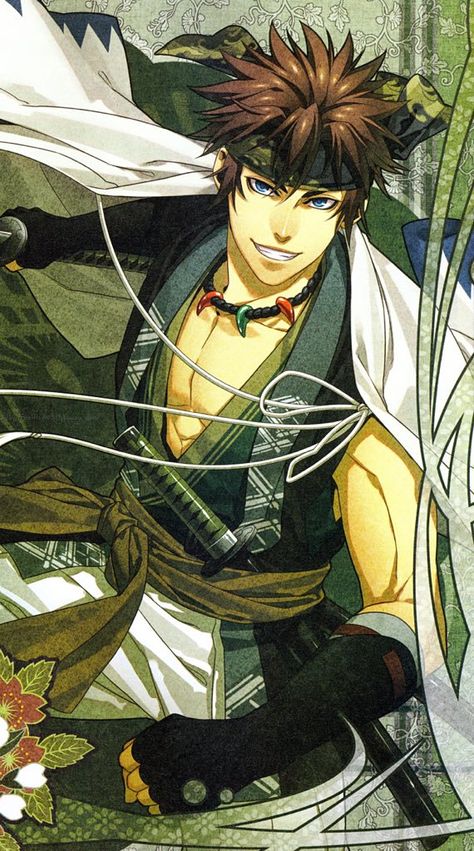
The leader of the second program of the Shinsengumi. He is the most skilled swordsman in the Shinsengumi. He is a muscular and brawny officer who is proud of his muscles, but in fact he is also a well-educated officer who is well versed in politics. He seems to come from a samurai family of some standing.
He is a caring older brother. He often refers to Chizuru as his "cute little sister. However, he tends to love liquor and women too much. Shimabara (a hanamachi in Kyoto, now Shimogyo-ku, Kyoto City). He is often troubled by money problems.
In the early version of "Hakuouki: Shinsengumi Kitan," there were no separate routes for the characters, but due to their popularity and the fact that they are often together with the main characters, separate routes were added in the later Vita remake "Hakuouki Shinpai: Kazenosho/Kazanosho" (Hakuouki: Wind No.1/Hana No.2).
historical information
On April 11, 1839 (May 23, 1839), Nagakura Shinpachi was born as the second son of Nagakura Kanji, an Edo teppu toritsugi (a shogun or feudal lord who settled in Edo or served them) of the Matsumae domain (a domain located in present-day Matsumae-cho, Matsumae-gun, Hokkaido). In 1846 (Koka 3), he was initiated into the Gekkenkan, a Shinto unnenryu kenjutsu dojo. Within a few years, he was given a kirigami (a piece of paper with the rank assigned according to the techniques he had practiced. In 1856, he was given the Hon-mokuroku (a catalog of the ranks of the next highest rank after kiri-shi, which contains various techniques). It serves as a catalog book in which various techniques are written). At this time, Nagakura Shinpachi was a young man of 18.
However, his love of swordsmanship led him to secede from his clan (to leave the clan he belonged to without permission). At that time, he took the family name Nagakura instead of Nagakura. He further studied swordsmanship at a dojo in Honjo Kamezawa-cho, Edo. He then began a journey of swordsmanship with Ichikawa Uyahachiro, a feudal lord of the Matsumae domain, and ended up walking around in various places. After bringing his sword to Edo, he was recognized for his swordsmanship by a student of the Shinkatana style of swordsmanship, Iba Shugyo, and served as the dojo's head instructor. There he met Kai Shimada, a student who later became a Shinsengumi member. He also became acquainted with Isamu Kondo, who later became the captain of the Shinsengumi, and became a monk of the Shizen Rishin-ryu school, whose headmaster was Isamu Kondo (a term used to describe the relationship between sovereigns and talented individuals who are treated as their guests, and who are then helped in times of need). Around February 1863, Nagakura Shinpachi heard that Tokugawa Iemochi, the 14th shogun of the Edo Shogunate, was looking for a group of ronin to guard him as he traveled to Kyoto. He became a member of the Mibu Roshigumi, which was then established, and served as the leader of the second program and a teacher of swordsmanship.
In the "Battle of Toba-Fushimi," one of the Shinsengumi's last battles in the "Boshin War," he is said to have recruited a suicide squad and charged into the enemy forces with a single sword. However, they were ultimately defeated by the "Governor-General's Army of the Spearhead of the Eastern Mountain Route" led by Taisuke Itagaki, a samurai in the new government army, and were forced to flee to Edo (now Tokyo). In Edo, he joined Isamu Kondo and others, but their opinions clashed over the war situation, and he left the Shinsengumi. He formed the "Yasubeitai" with Harada Sanosuke, who was also a Shinsengumi leader, but just as they were about to leave Edo for the battlefield, Harada Sanosuke left the Shinsengumi. Nevertheless, Nagakura Shinpachi took the Yasubeitai with him to the northern Kanto region, where they engaged in battle with the new government forces.
After his return to Edo, Nagakura Shinpachi was allowed to return to Matsumae as a samurai of the Matsumae domain (150 koku), and in 1871, he married the daughter of the domain doctor, Sugimura Keian, and moved to Matsumae as his adopted son-in-law.
In 1873, Nagakura Shinpachi succeeded to the Sugimura family. At that time, he changed his name to Jibi Sugimura. Later, he moved to Otaru, Hokkaido, where he taught swordsmanship to the guards at the Karafuto Shuji Jigyo (prison) as a kenjutsu (swordsmanship) instructor. After retiring, he opened a dojo in Ushigome, Tokyo. In July 1909, he settled in Hanazono-cho, Otaru, Hokkaido. He began coaching the kendo club of Tohoku Imperial University of Agriculture (now Hokkaido University).
Also during the Meiji period, Nagakura Shinpachi wrote a memoir, "Ronishi Bunkyu Hokoku Sho" ("Ronishi Bunkyu Hokoku Articles") and "Shichikasho Teyoshi Shojo Kensho" ("Shichikasho Teyoshi Place Kensho"), which summarized stories about the Shinsengumi. He also responded to an interview about the Shinsengumi by Riki Yoshijima, a reporter for Otaru Shimbun, a local newspaper in Otaru City, and compiled a "Shinsengumi biography. These memoirs and books are valuable materials for unraveling the history of the Shinsengumi.
On January 5, 1915, Nagakura Shinpachi died in Otaru City. The cause of death was said to have been periostitis and septicemia caused by tooth decay. He was 77 years old. On September 28 of the same year, it was discovered that Hajime Saito, another former Shinsengumi leader, had also died. There were only a few Shinsengumi leaders who survived to that age, and Nagakura Shinpachi was one of them.

Related Articles
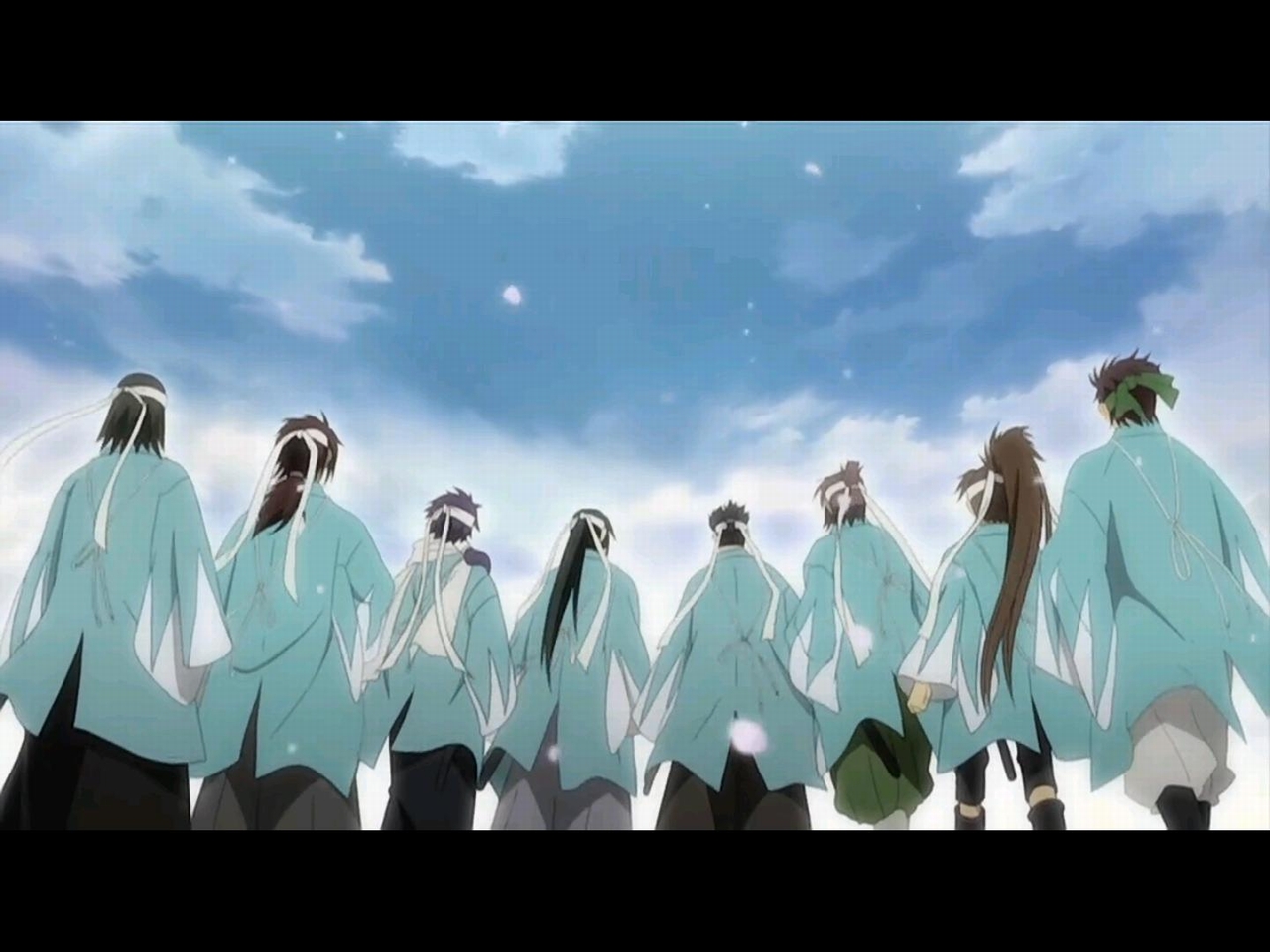
Spoiler commentary and discussion of Hakuouki (game and anime)
A TV anime that aired from April 2010. It is based on the romance adventure game "Hakuouki: Shinsengumi Kitan. The main anime (featuring the same main character) was broadcast separately as the first season "Hakuouki" and the second season "Hakuouki: Heki Bokuroku". The year is Bunkyu 3, the end of the Edo period. The main character "Chizuru Yukimura" disguises herself as a man and visits the city of Kyoto to search for her father. There she has a fateful encounter with the Shinsengumi. The Shinsengumi and Chizuru. Together they run through the turbulent times.
Read Article
Hakuouki MAD Summary
A romance adventure game for women released by Idea Factory (Otomate) on September 18, 2008. Here is a compilation of its MAD. (Spoiler alert!!!!)
Read Article
Summary of sacred places of Hakuouki
Hakuouki" is an otome game series released by Otomate, a video game brand for women. The story is based on the real-life Shinsengumi roshi troop. The game is a historical romance adventure game about a group of ronin who fought through the turbulent "Bakumatsu" period. In addition to many follow-up series, a Switch remake "Hakuouki Shinpai Fuukaden" has been released, and the game has been developed into novels, anime, movies, OVA, stage performances, musicals, and various other media, making it a popular title representing the otome game world. We have compiled a list of sacred places associated with the popular game "Hakuouki" and the "Shinsengumi".
Read Article
Summary of back stories, trivia, small stories/episodes and anecdotes of Hakuouki
Hakuouki" is an otome game series released by Otomate, a video game brand for women. The story is based on the real-life Shinsengumi roshi troop. The game is a historical romance adventure game about a group of ronin who fought through the turbulent "Bakumatsu" period. In addition to many follow-up series, this popular title has been developed in a variety of media, including the Switch remake "Hakuouki Shinpai Fuukaden," novels, anime, movies, OVA, stage performances, and musicals. We have compiled a list of behind-the-scenes stories, trivia, small stories/episodes, and anecdotes related to the popular otome game "Hakuouki".
Read Article
Fudoshi girls obsessed with "virtual boyfriends" were publicly executed on Fuji TV's "Mr. Sunday"! Summary of SNS reactions
Fuji Television's "Mr. Sunday" aired on October 14, 2012, and featured a special program about women who are obsessed with two-dimensional boyfriends. In the program, various manga and anime works for rotten girls were introduced. Here is a collection of reactions and interesting tweets from the fujoshi who watched "Mr. Sunday".
Read Article
A compilation of manga and anime characters modeled on historical figures! Isamu Kondo, etc.
Here we have compiled a list of anime and manga characters based on historical figures, grouped by character. Famous characters such as Kondo Isamu and Hijikata Toshizo appear in several works. Characters from popular works such as "Hakuouki," "Gintama," and "Rurouni Kenshin" are also listed.
Read Article
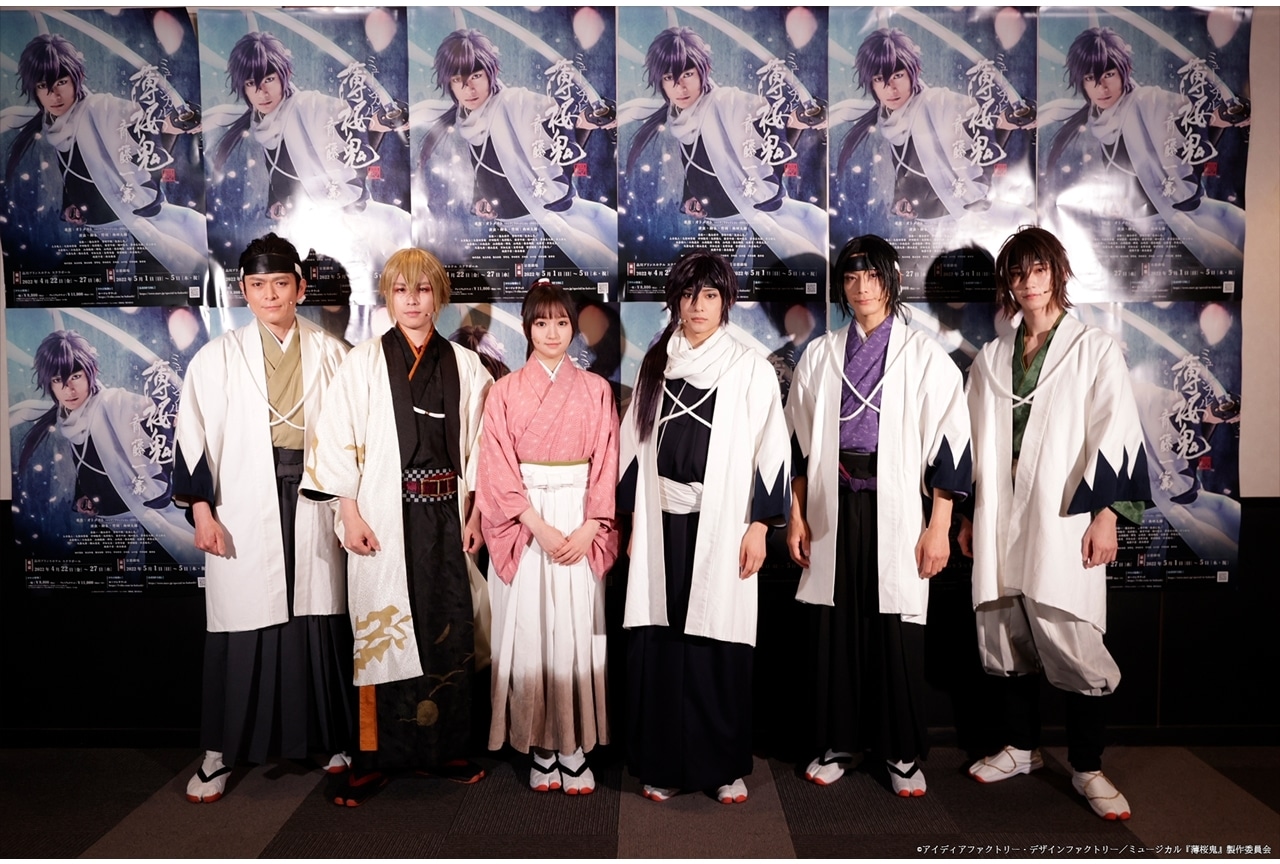
Introducing the musical version of "Hakuouki" cast of Saito, Okita, Hijikata, Kazama, and Todo in the past! In-depth explanation of Reimei, SSL, and Kitan!
The musical version of "Hakuouki: Shinsengumi Kitan" introduces the previous cast members. Set at the end of the Edo period, this work depicts a girl with demon blood who gets involved with the swordsmen of the Shinsengumi and becomes entangled in her own destiny, and is extremely popular, especially among women.
Read Article
![Hakuouki] The charm of "Kazama Chikage," a hidden target character [Shinsengumi Kitan].](https://renote.net/files/blobs/proxy/eyJfcmFpbHMiOnsiZGF0YSI6Mzc1MTUsInB1ciI6ImJsb2JfaWQifX0=--b244661faa50e4ff95c59962525d747c2da9186b/icon_kazama.jpg)
Hakuouki] The charm of "Kazama Chikage," a hidden target character [Shinsengumi Kitan].
This is a brief introduction to Hakuouki and a step-by-step introduction to "Chikage Kazama," a hidden target character in the work. He repeatedly attacks the Shinsengumi in an attempt to take the protagonist as his wife, but he also shows his loyal side, such as "I will keep my promise once I made it.
Read Article
Tags
Contents
- Outline of "Hakuouki
- Characters and characters in "Hakuouki" and their historical models
- Hijikata Toshizo
- historical information
- Okita Soji
- historical information
- I. Saito
- historical information
- Heisuke Todo
- historical information
- Harada Sanosuke
- historical information
- Nagakura Shinpachi
- historical information