
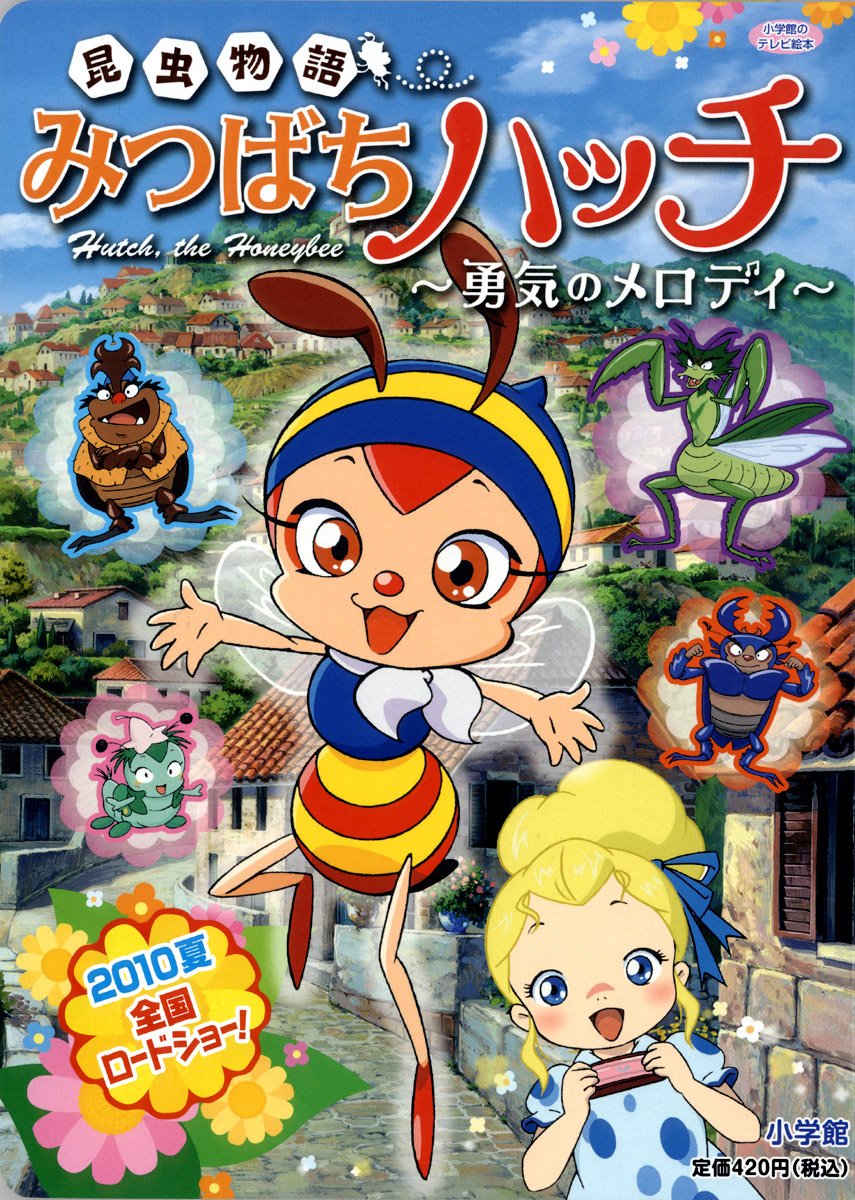
When I think about remakes of works such as "Osomatsu-san" to some extent, the phrase "in keeping with the times" still comes to mind. But why go to the trouble of putting out a human girl, Amie? Was it to fit the times? Because you want to show a cute hatch and a cute girl getting along? I guess not. I read too much into it. (Spoiler alert)
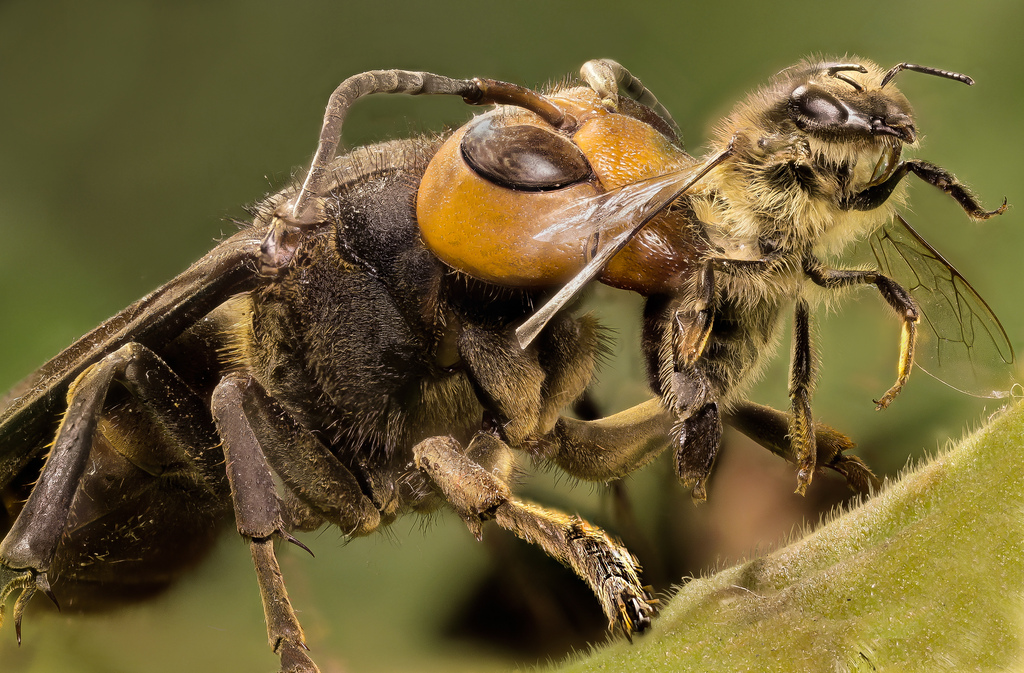
Don't be selfish!
With this in mind, the scene of the wasp attack looks different. Why did the wasps come in the first place? "Because that's what the original story is about," or "To secure food, right? I don't think that is the only reason. Bees and wasps are the same bees. However, honeybees are small and impotent, and they are the ones that are eaten.
I don't know the details of the situation, but I think that one day, Amie was suddenly told that she was moving out. For a shy girl, a change of environment must have been lonely and sad. It could be that the adults were replaced by wasps that were bigger than her and would take her away from her place.
The unbelievably large number of wasps and the weather that conveniently turns into a thunderstorm seem to be a psychological portrayal.
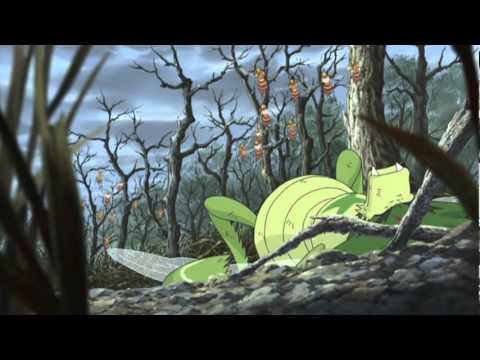
Wasps (adults?) Even wasps (adults?) have their own circumstances.
Even if Amie is a good listener, in her heart she would not have wanted to leave her familiar surroundings and friends. This is not a matter of good or bad. It is as inevitable as a wasp attacking a honeybee's nest.
The bees' desperate resistance may be Amie's inner frustration, and letting Hutch go may be, in a sense, the hope left in Pandora's box.
The scene of the attack, which started suddenly in the original anime, was changed to the disruption of daily life from Hutch's point of view, which also seemed to express Amie's state of mind.
Amie when playing harmonica
Basically, Amy closes her eyes when playing the harmonica. According to the novelized version, "I feel better with my eyes closed" and "I don't want to see the kids playing.
In other words, she didn't want to see reality (her inability to make friends, her weak self), so she closed her eyes and immersed herself in her own world of the harmonica.
Even on an empty bridge, he played with his eyes closed. Then Hutch came along and we met.
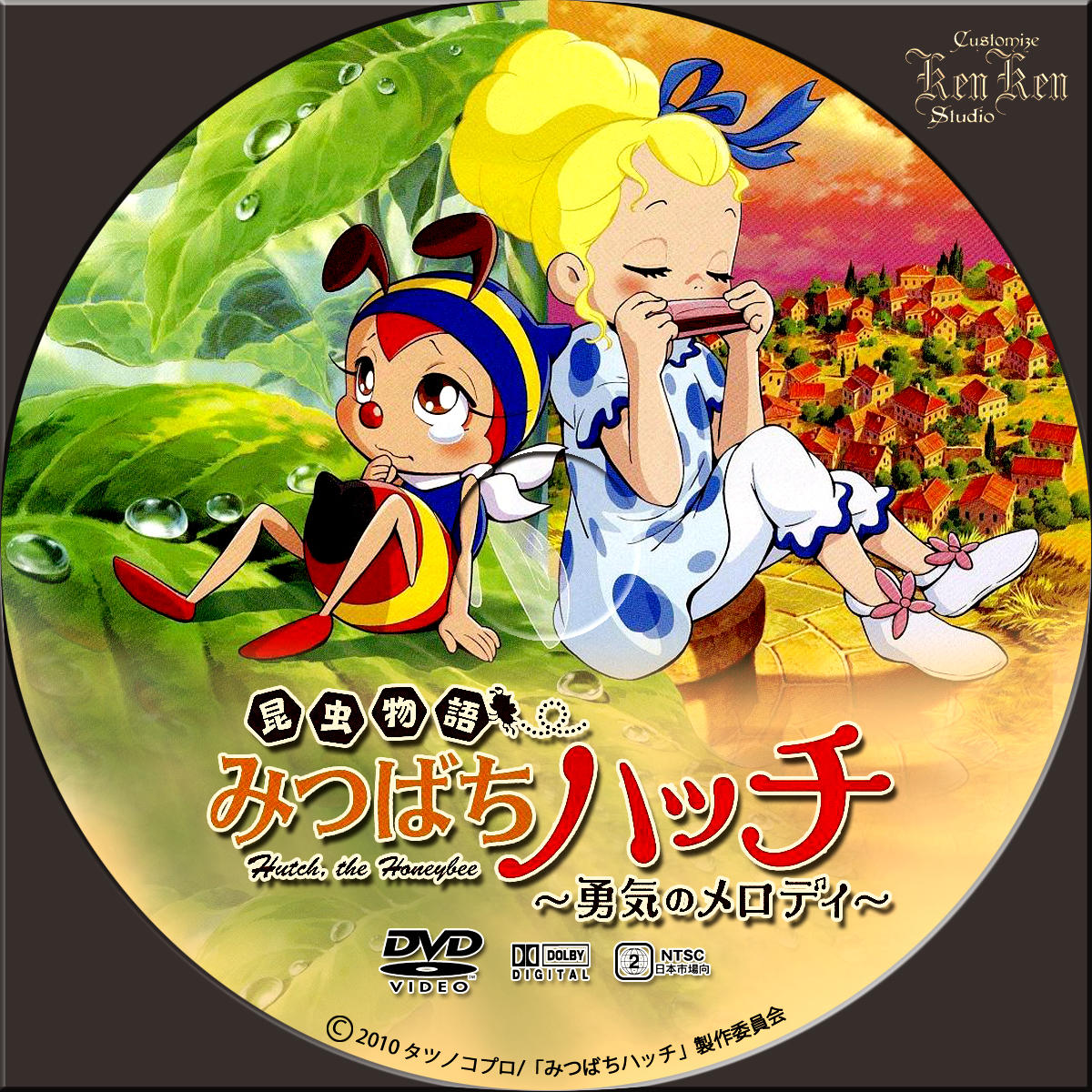
It could be seen as a girl who doesn't want to see reality and her true feelings...?
Is the bug part in Amy's mind?
The insect-only part, in which Amie is not involved, also has the power to make you read deeper. It may all be part of Amie's mind and part of her heart.
The carnivorous insects, including wasps, that devour the weaker insects may represent the unreasonableness of adult or (from Amie's point of view) human society.
Amie is hurt inside by the reality of not being able to make friends. The description of watching the children playing is somewhat sad.
Another alter ego, Kunekune
The second from the left, the green caterpillar, is Kunekune. He, too, is a weakling, threatened by Kamakichi and frightened at the mere mention of wasps. But it seemed to me that he was another alter ego, second only to Hutch.
And when he is on the stage, Hatch changes into an ideal figure. He is slow, he says, "I wish Hutch could fly," which gives me a sense of Amie's complex, and he even defends Hutch to Amie. He also defends Hutch against Amie, perhaps saying, "Don't forget your ideals.
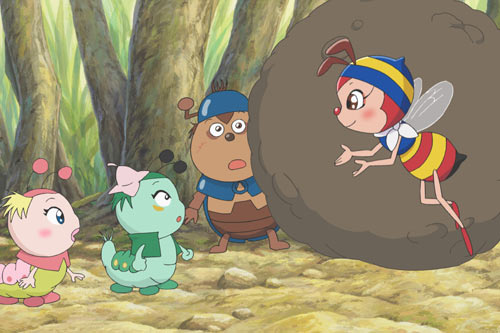
When Kunekune took certain actions, Amy stood up.
Wasps (parents or surrounding adults?) The wasp (parents or surrounding adults?) captures Kunekune and trashes him in its stronghold.
However, he succeeds in escaping, albeit by accident. The wasp scoffs at him as trash again, but it can be read as a kind of social misfit treatment.
But he had an important role to play. What was that role that led to Amie's push back? If you think about what caterpillars are larvae of, you will see.
So Kamakichi cooperated with us.
In the original story, Kamakichi cooperated with Hatch. In this work, too, Kamakichi hates Hutch, but for one reason or another, he agrees to cooperate. This may be a sign that he is beginning to understand and resolve his dissatisfaction with adults and society.
I'll teach you about the world," he says. Kamakichi is not just a strong man, but an adult who has experienced hardship, and this is also the aspect of a dependable adult.
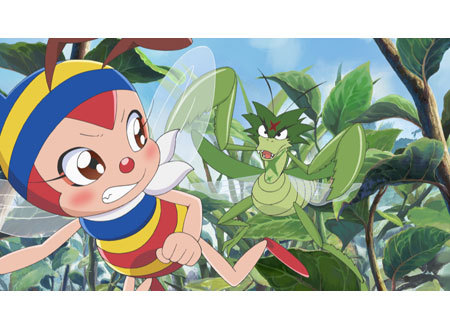
It is precisely because they were not strong from the beginning that the scenes in which they preach (while beating up) the "law of the weak and the strong" are so convincing.
Even the Kamakichi had its moments of ineffectiveness and weakness. Even if Kamakichi's childhood is not directly depicted, it is evident in the scene where the mantis child is chased around by wasps with no way to achieve it.
He became a strong man by winning the world of the weak and the strong. So it is not hard to see that the sweet hatch was unforgivable.
Meaning of "don't stab me."
When wasps and other insects in the area gathered at Baccino's command. Just as when she first exchanged words with Hutch, Amie said, "Don't sting me." This seems to be a ritual to completely dispel her fear of wasps (and distrust of adults).
Knowing that the wasp had been under attack escaping from the water mill, and that it "seemed to cooperate," I was still fearful and asked, "Don't sting me, okay?" I asked him, "Don't stab me, okay? The reply came back, "Stab me!" (I won't hurt you for no reason).
Amie went into the river to rescue Hutch's mom, but she must have been aware of the wasp queen when she got here. The fact that the queen, who was unable to talk at the end, was holding a child shows the aspect that wasps have something to protect.
That may mean that Amie has learned that wasps=adults.
What does Mom represent?
I think it was her strengths that Amie had lost sight of, her true self that she thought the wasps (adults and others around her) had taken away.
Mama was unconscious when her prison was broken, probably because she sank in the river. Hutch tries his best to talk to Mama, who does not move. It seems to be an act of self-affirmation. This act. When Mama wakes up and the reunion between parent and child is realized, Amie finally regains her true self.
I saw a quote on the Internet that says, "Everyone is searching for himself or herself just as Hutch is searching for his or her mommy.
Summary, Meaning of "friends all the way".
Amy and Hutch are only human and bees in the story. They cannot stay together forever. They have their own lives and kingdoms to rebuild. Although they can only assume difficulties, Hutch and Amie make a promise to each other at the end of the play that they will be friends forever.
This can be taken as "It will be all right as long as you remember your courage and goodness. This movie made me think deeply about many things.


Related Articles
Talented voice actors who were not uncomfortable
For more than a decade now, or even longer, there has been a field called "talent voice acting. I am not criticizing, but there is a difference between acting with only a voice and acting with the whole body. There is a certain discomfort. However, there are those who are as good as professional voice actors....
Read Article
Buried remake of the animated film "Hutch the Honeybee: Melody of Courage
Osomatsu-kun" has been re-animated, and I would like to introduce an animated remake of the movie. Like "Osomatsu-kun," "Osomatsu-kun" was reborn from the Showa era to the Heisei era in a modern style, and the title was changed, but is the fact that it is not well known yet a lack of power of the work? No, that is not true. It just happened to be released at the same time as the big two animation giants, Ghibli and Disney, and the timing of its release was just wrong. The film was released in 2010. Based on the book "Minago Hatch".
Read Article
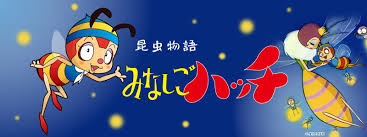
The "zeitgeist" in the first episode of the new old hatch and others
Although "Minago Hatch" was remade into a movie in 2010, it was actually remade once in the first year of the Heisei era. For some people, the "Heisei version" of Hatch is more memorable. So I was astonished when I compared the first episode on YouTube and other video sites. I was amazed to see that it was already "made for the times" almost 30 years ago now... No, it's cute, but...
Read Article
Contents
- Outline of the work
- Main characters
- Hatch (voice: Saito Ayaka)
- Amy (voice: Ayaka Wilson)
- Kamakichi (voice: Nakamura Shido)
- Sepia Town Bug
- honeybee
- hornet
- Hatch = Amy?
- Why was the Honeybee Kingdom attacked?
- Amie when playing harmonica
- Is the bug part in Amy's mind?
- Another alter ego, Kunekune
- So Kamakichi cooperated with us.
- Meaning of "don't stab me."
- What does Mom represent?
- Summary, Meaning of "friends all the way".
- Related Articles