
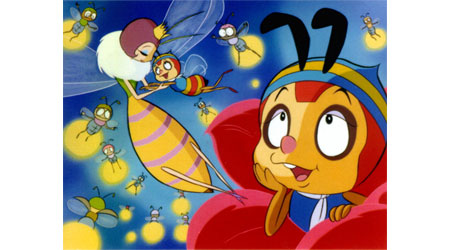
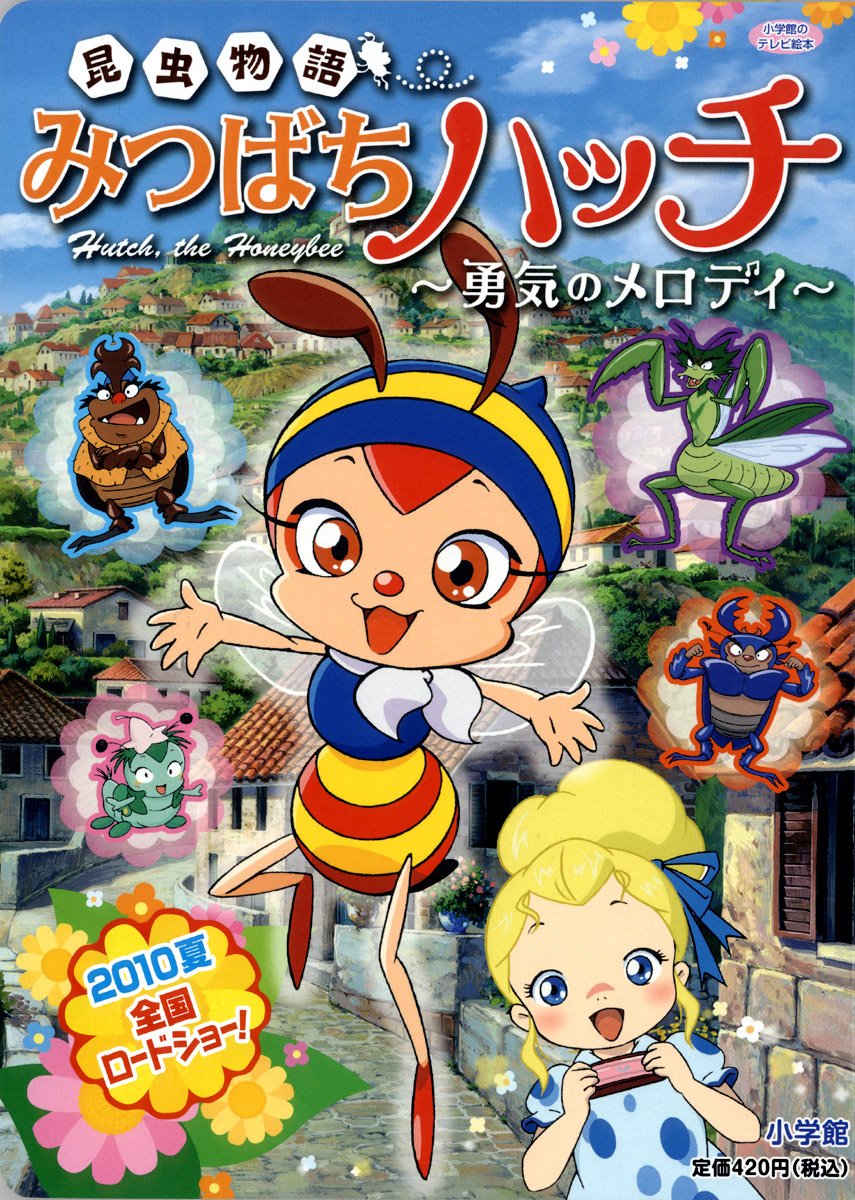
Osomatsu-kun" has been re-animated, and I would like to introduce an animated remake of the movie. Like "Osomatsu-kun," "Osomatsu-kun" was reborn from the Showa era to the Heisei era in a modern style, and the title was changed, but is the fact that it is not well known yet a lack of power of the work? No, that is not true. It just happened to be released at the same time as the big two animation giants, Ghibli and Disney, and the timing of its release was just wrong. The film was released in 2010. Based on the book "Minago Hatch".
summary
The movie was released in 2010 to mark the 40th anniversary of the broadcast of Tatsunoko Productions' "Minago Hatch" anime.
The synopsis is largely the same as the original, but Amie, a human girl who can talk to insects, makes an appearance. The darkness of the original anime has been reduced, and there are no cruel scenes or corpses.
The reason why the title was changed from "Minago" to "Mitsubachi" has not been stated, but it has been suggested that it may be due to the historical background.
Synopsis/Story
Hutch, a honeybee child, lived as a prince in the peaceful Honeybee Kingdom (as described in the pamphlet). However, the kingdom was destroyed by a swarm of wasps, and Hutch was separated from his beloved mother. Believing in his mother's words that he would surely see her again, the grown Hutch sets out on a journey to find her.
He asked around to see if he could find her with a swarm of wasps. He asks around and ends up in Sepia Town, a human town.
He saved an insect from being entangled with a ruthless mantis, Mantis Mantis (actually, it was an accident, and Hutch said, "It just happened before I knew what was happening"), and became friends with the insects there.
Hutch, however, is not ready to give up despite being told to "stop looking for wasps." On the other hand, he is attracted by the sound of the harmonica and approaches a human girl, Amie, who is also a wasp. By chance, he becomes friends with Amie, who has the ability to talk to insects, and she proposes that they search for their mother together.

Source: mitte10.chesuto.jp
At first glance, the world of insects seems joyful, but Minmin, the cicada who encouraged us to "hope to see him, and you will see him," ages within a day. Moreover, a spider appears, waiting in a web to eat him.
In the end, Minmin is eaten, and Hutch learns from Kamakichi that the law of nature is the law of the weak and the strong.
After recovering, he and Amie begin a search for his mommy, but in the process, they come into contact with wasps.
They are relentlessly chased by the wasp, but they are saved because the wasp prioritizes meeting up with the "main group.
The park where the insects befriended Hutch is attacked, and the caterpillar Kunekune is taken away. Hutch escapes because he had sent home a praying mantis child he had saved from a wasp, but when he hears what happened the next day, he tries to go to the wasp's nest to save Kunekune.
Kamakichi, claiming that Hatch had saved his (adopted) child, took over as a guide. The guards beat him to a pulp right in front of the nest, but the wasps leave him alone, anticipating that "the bee's friends are coming. The nest was built in a river, an unlikely place.
Hutch and Kamakichi get to know each other a little better, and together they are collected by the okelas and reunited with their once-separated bee friends.
There, they hear that Mama is being held captive in a hornet's nest, and through a diversionary tactic proposed by Kamakichi, they reduce their forces inside and enter. However, they are unable to fool even the wasp queen, and a battle ensues.
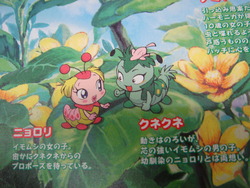
Source: mitte10.chesuto.jp
Amie told Amie that Kunekune had escaped from the wasp's nest by accident and floated down the river, and that there was a bee in the wasp's nest that she thought was Hutch's mom, and she stopped moving.
Amie then went to talk to the forest insects and told them, "Hutch won't be that easy to get rid of. I promised to look for mommy together," and headed for the wasp's nest.
The forest insects also decided to launch an all-out attack, gathering insects they knew from far and wide to counter one of the wasp's weapons: their numbers.
Inside and outside the nest, the wasps and the insects battle it out, while the ants begin to dismantle the nest.
Realizing that the nest will not last long, the queen attempts to escape with her children, but they are trapped. Hutch, on the other hand, makes it to the prison where his mother is, but is unable to save her and is taken outside.
To save each other's queens, the insects on the spot, including wasps, work together to support Amy as she tries to get into the river and pick up her nest. When Hutch comes face to face with Mama, Amie loses her ability to talk to the insects. Still, they promised to be "friends forever" and went their separate ways.
Too many hatch changes!
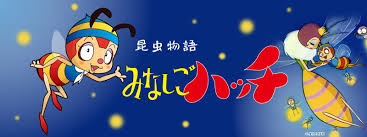
Look at the headline image. This is the original hatch you see in nostalgic anime programs. Although the design was changed in the remake version broadcast in 1989, it was still similar in the main. Then, in 2010, the design was changed, perhaps inspired by the so-called "moe" culture, or perhaps because it was deemed to be out of step with the times.
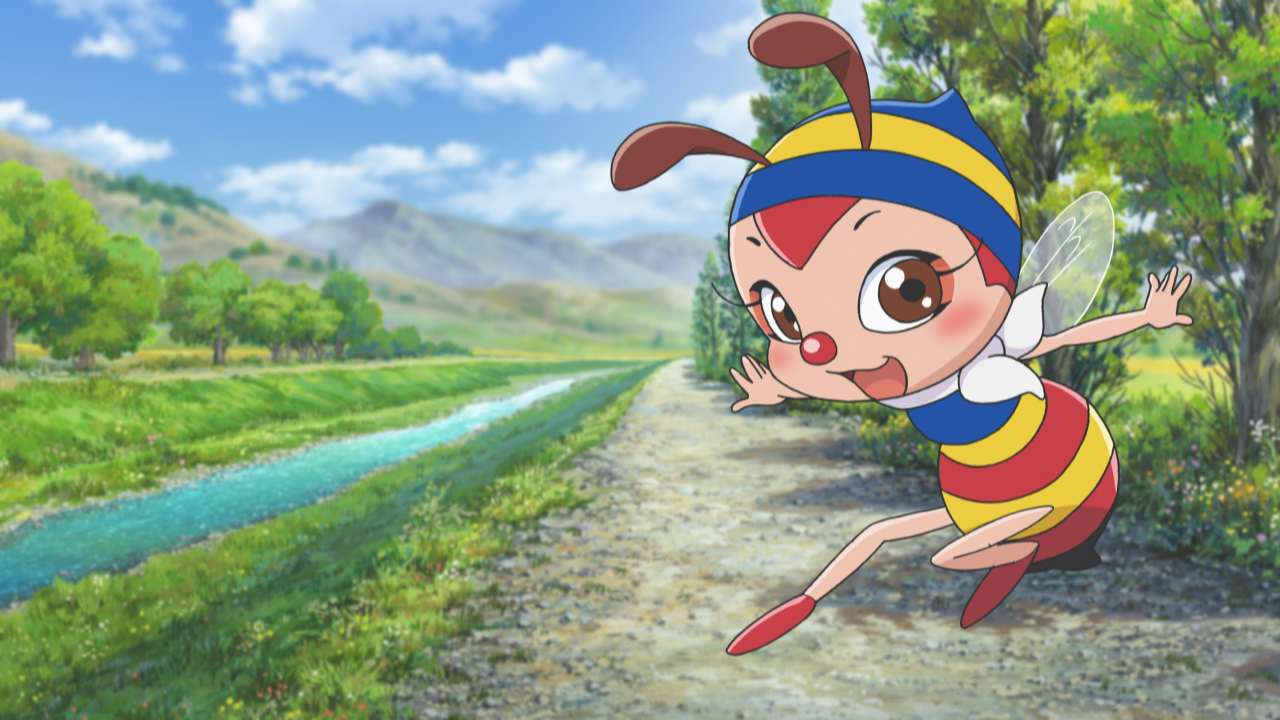
In addition to the face, other changes include larger antennae and scarf, wings that are relatively close to those of a real bee, and a needle-like projection on the tip of the tail (or abdomen, to be precise).
At first, there was a proposal to make the color and body shape closer to that of a real bee, but it was decided that "that's not a hatch," so the color and scarf are the same as the first generation.
While the real bee is about 1 cm in size, the hatch is 3 cm. This size was chosen because the original size would have been too small due to the story's involvement of humans in the story.
Because of the larger hatch, the enemy wasp is even more gigantic.
Incidentally, the largest and strongest wasp in reality is about 3 cm in size. The changes are not limited to the character design of the hatch.

Hutch in his cameo appearance in Heisei Yatterman (2008). Could he have made it over here too?
Aggression is gone from the hatch.
The hatch in this work does not attack. He is still a righteous man, but he is on the defensive. In the Showa version, he throws stones, jumps on people, beats them with sticks, and sometimes even kills them, but he successfully puts himself in situations where he cannot attack, such as flying with a butterfly or praying mantis baby.

Protect this child!
This is not simply a matter of "I can't let a cute hatch attack me!" I don't think this is simply a matter of "I can't let the cute little hutch attack!" or "There are regulations to follow... I think it is to further emphasize the kindness and straightforwardness of the original hatch, which could not leave the old wasp alone and saved it by telling it that it was not its own revenge.

Source: www.hulu.jp
Although they were eventually avenged, they developed a friendship that transcended species affinity and enmity. However, the old wasp had to die to save Hutch.
The "villains" are no longer "bad guys"-the human version.
The biggest change is that you can make human friends. The setting is a human town with a cute name, Sepia Town.
In the Showa version, the humans did not even show their faces and only destroyed nature.
The reason for this is the harmonica. Hutch recognizes the harmonica she plays as a sound and is attracted to her, and after he is able to talk to her, he says to Amie, "Let me hear your beautiful sound.
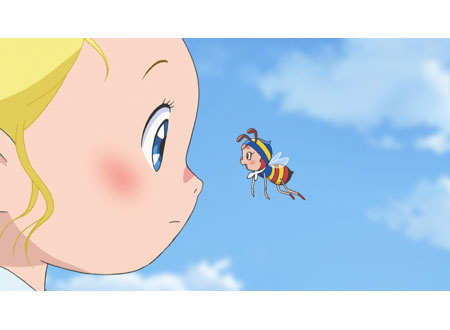
Hello there! I'm Hutch!
Amie, on the other hand, is initially frightened by the mere mention of wasps, but she believes Hutch's words that they do not sting, and hearing his cheerful laughter, she gradually grows closer to him. Amie, who has just moved to the area and is too shy to make friends, decides to go to the dangerous hornet's nest. For the sake of Hutch, of all people.
The "villain" is no longer the "bad guy": Wasps, ed.

Source: blog.goo.ne.jp
Bees are just bait!

Related Articles
Hutch = Amy? A deeper reading of "Hutch the Honeybee: Melody of Courage" from a human perspective.
When I think about remakes of works such as "Osomatsu-san" to some extent, the phrase "in keeping with the times" still comes to mind. But why go to the trouble of putting out a human girl, Amie? Was it to fit the times? Because you want to show a cute hatch and a cute girl getting along? I guess not. I read too much into it. (Spoiler alert)
Read Article
The "zeitgeist" in the first episode of the new old hatch and others
Although "Minago Hatch" was remade into a movie in 2010, it was actually remade once in the first year of the Heisei era. For some people, the "Heisei version" of Hatch is more memorable. So I was astonished when I compared the first episode on YouTube and other video sites. I was amazed to see that it was already "made for the times" almost 30 years ago now... No, it's cute, but...
Read Article
Tags
Contents
- summary
- Synopsis/Story
- Too many hatch changes!
- Aggression is gone from the hatch.
- The "villains" are no longer "bad guys"-the human version.
- The "villain" is no longer the "bad guy": Wasps, ed.
- Other things of interest
- Did Hatch get caught up in the mess?
- The Queen's Left Hand
- One person and one animal passing each other
- What happens to two species of bees? Floatability of hatches
- Original animation "Minago Hatch
- Sequels and Remakes
- New Nanny Hatch (sequel)
- Heisei version of "Minago Hatch" (remake)